

Originally published: 10/06/2024 07:36
Last version published: 19/12/2024 10:38
Publication number: ELQ-86018-2
View all versions & Certificate
Last version published: 19/12/2024 10:38
Publication number: ELQ-86018-2
View all versions & Certificate

Web Hosting Company Financial Model 3 Statement
MS Excel spreadsheet for tracking web hosting company finances includes Income Statements, Balance Sheets, & Cash Flow Statements.
 by AllFinancialModels
AllFinancialModels offer a curated selection of high-quality yet financial model templates designed to support a wide range of business needs.Follow
web hostingcloud hostinghosting companyexcelfinancial modelstartupfinance modelhosting servicesstatementwebsite hosting
Description
Web Hosting Company Financial Model: Detailed Outline 1. Overview
A financial model for a web hosting company evaluates performance across subscription revenue, one-time services, infrastructure costs, and growth strategies.
A 4-tier subscription model forms the foundation of the company's revenue. The model also highlights customer acquisition dynamics, churn management, and the scalability of server infrastructure.
2. Income StatementRevenue Streams
Web Hosting Company Financial Model: Detailed Outline 1. Overview
A financial model for a web hosting company evaluates performance across subscription revenue, one-time services, infrastructure costs, and growth strategies.
A 4-tier subscription model forms the foundation of the company's revenue. The model also highlights customer acquisition dynamics, churn management, and the scalability of server infrastructure.
2. Income StatementRevenue Streams
- Subscription Monthly Recurring Revenue (MRR):
- Revenue from tiered web hosting plans offered to customers.4-Tier Subscription Structure:
- Basic Tier: Entry-level shared hosting with essential features.
- Pro Tier: Mid-range hosting with added performance and storage capacity.
- Business Tier: High-performance hosting suitable for small and medium businesses.
- Enterprise Tier: Customized hosting solutions, such as dedicated servers and advanced features.
- Subscription price per tier.
- Number of subscribers in each tier.
- Monthly churn rate (percentage of customers leaving).
- Growth rate (new subscribers and upgrades).
- Revenue from tiered web hosting plans offered to customers.4-Tier Subscription Structure:
- Additional Revenue Streams:
- Domain Registration: Revenue from purchasing and renewing domains.
- Add-On Services: Security features, SSL certificates, CDN, backup solutions.
- One-Time Professional Services: Website migration, setup, or custom configuration.
- Affiliate Income: Commissions from referring services like software or platforms.
- Advertising or Partnerships: Placement revenue from SaaS tools and plugins.
- Direct costs tied to providing hosting services.Components:
- Server and Infrastructure Costs:
- Data center rental or server purchases.
- Networking bandwidth costs.
- Customer Support Costs:
- Salaries for support staff handling inquiries or technical issues.
- Licensing Costs: For control panel software (e.g., cPanel, Plesk).
- Payment Gateway Fees: Transaction costs for subscription billing.
- Fixed and variable expenses incurred in daily operations.Categories:
- Marketing: Customer acquisition costs (ads, SEO, affiliate commissions).
- Salaries and Overheads: Employee wages (development, admin, sales).
- Development and Maintenance: Platform improvements and service enhancements.
- Rent and Utilities: For offices or on-premises infrastructure.
- Software Costs: CRM tools, automation platforms, billing software.
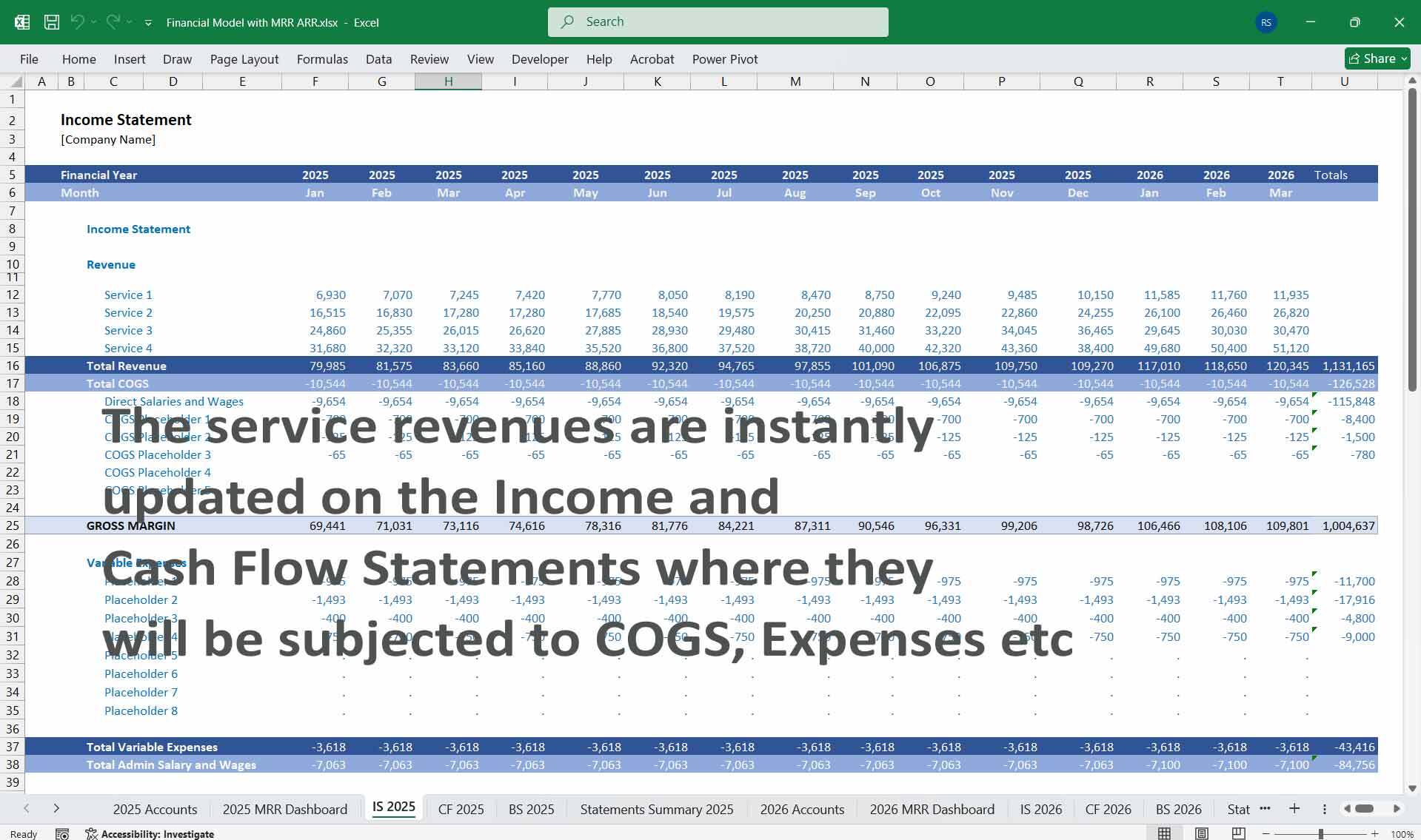
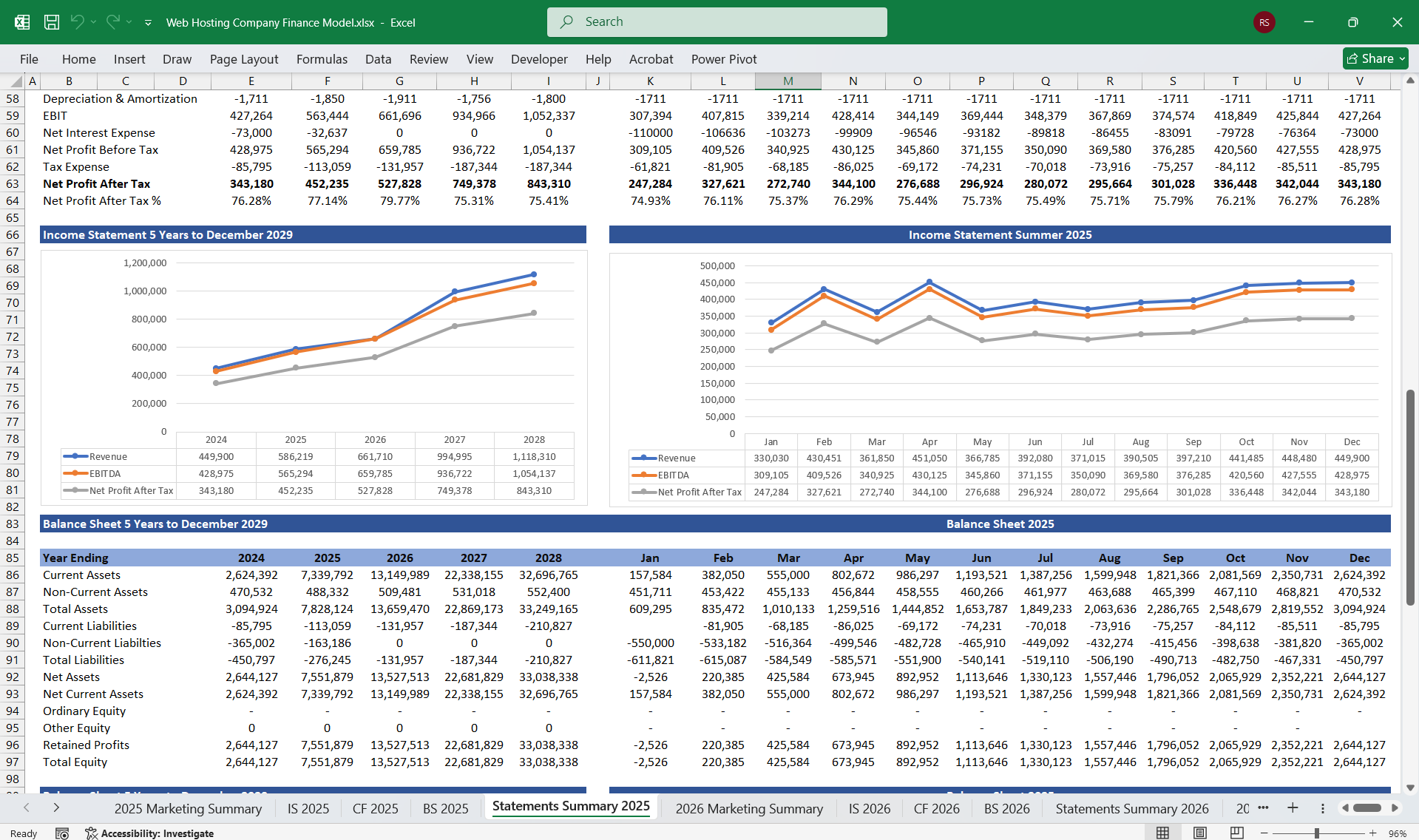
- Gross Profit = Revenue - COGS.
- Operating Profit = Gross Profit - Operating Expenses.
- Net Profit = Operating Profit - Taxes & Interest.
- Subscription revenue (recurring).
- Revenue from one-time domain registrations and add-on purchases.
- Affiliate and advertising commissions.
- Initial investment or funding injections.
- Infrastructure Costs: Regular payments for servers, networking equipment, and data center rent.
- Operational Expenses: Salaries, software licensing, and marketing spend.
- Capital Expenditures (CapEx):
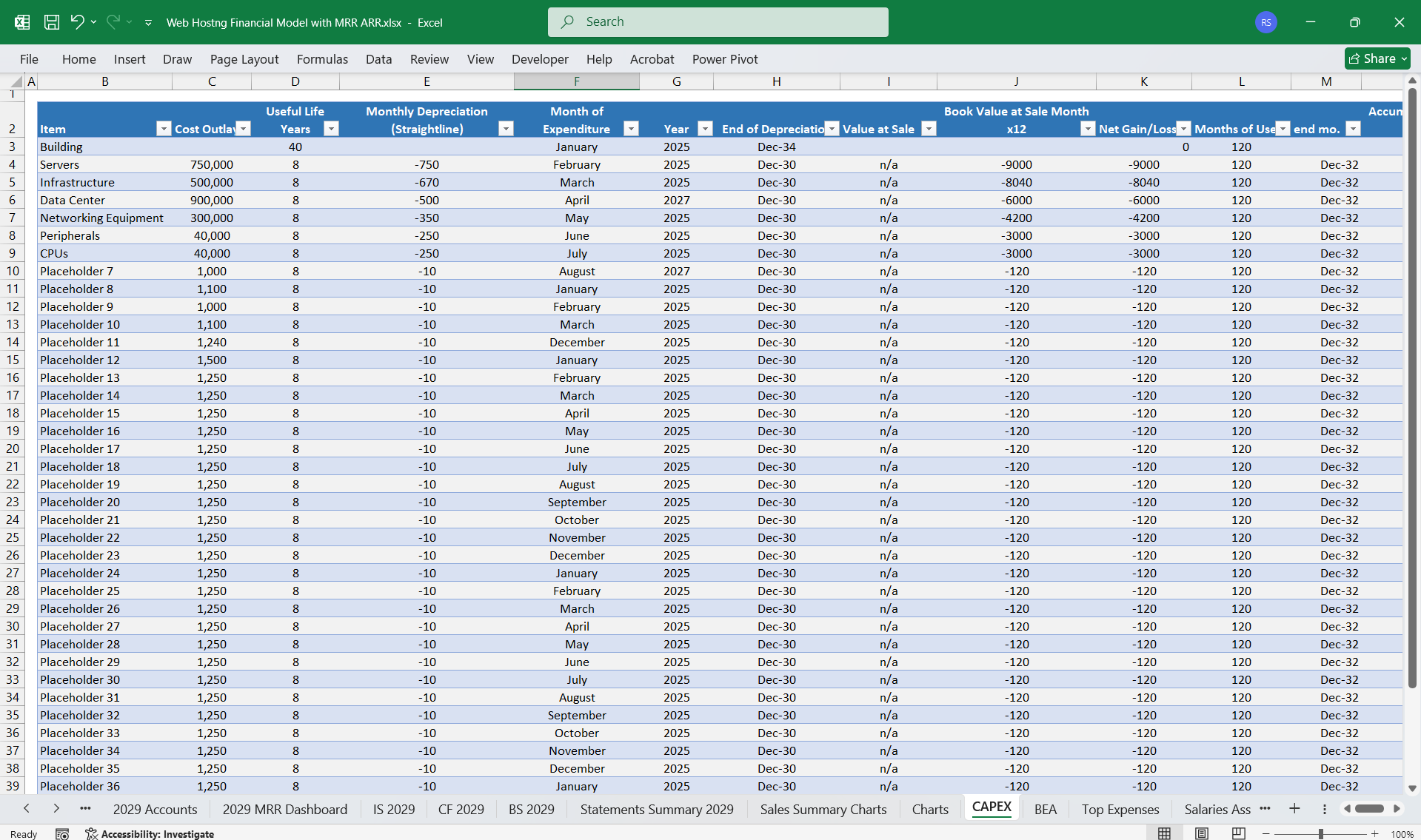
- New server purchases or data center build-out.
- Debt Servicing:
- Loan repayments and interest.
- Taxes: Payments on company earnings.
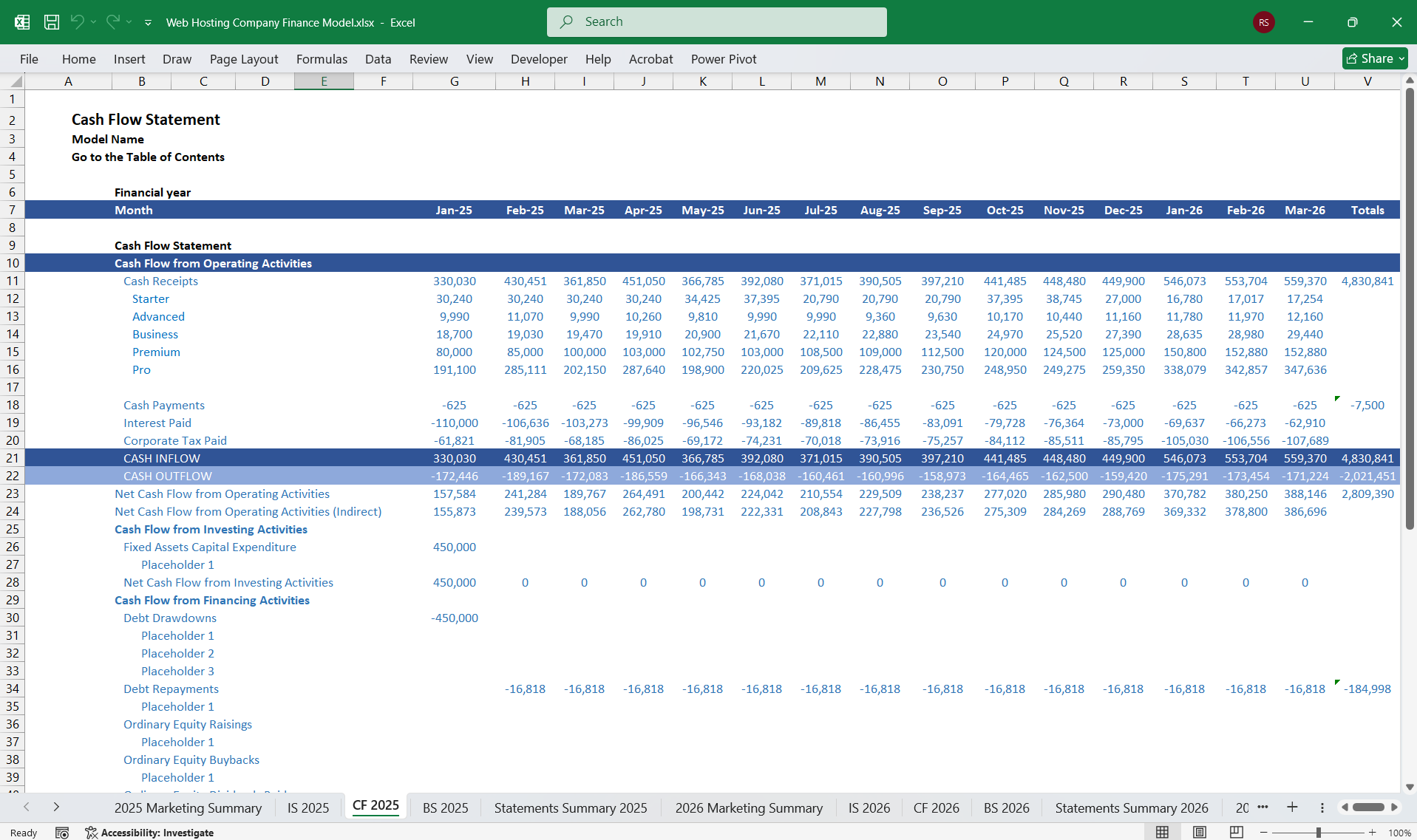
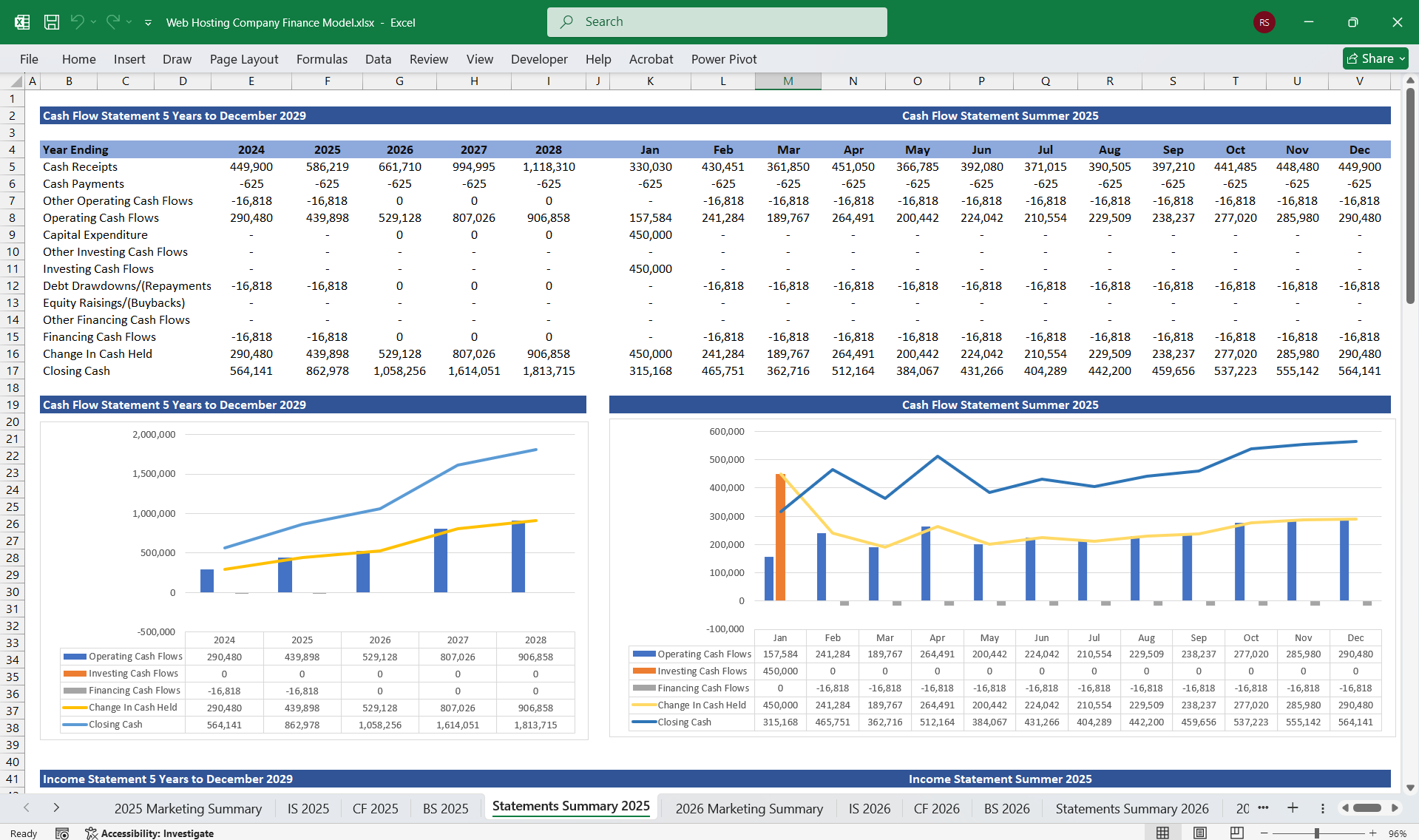
- Net Cash Flow = Total Inflows - Total Outflows.
- Free Cash Flow (FCF): Net Cash Flow after CapEx.
- Cash Burn Rate: Monthly outflow in non-revenue-generating months.
- Operating Cash Flow Margin: Operating Cash Flow ÷ Revenue.
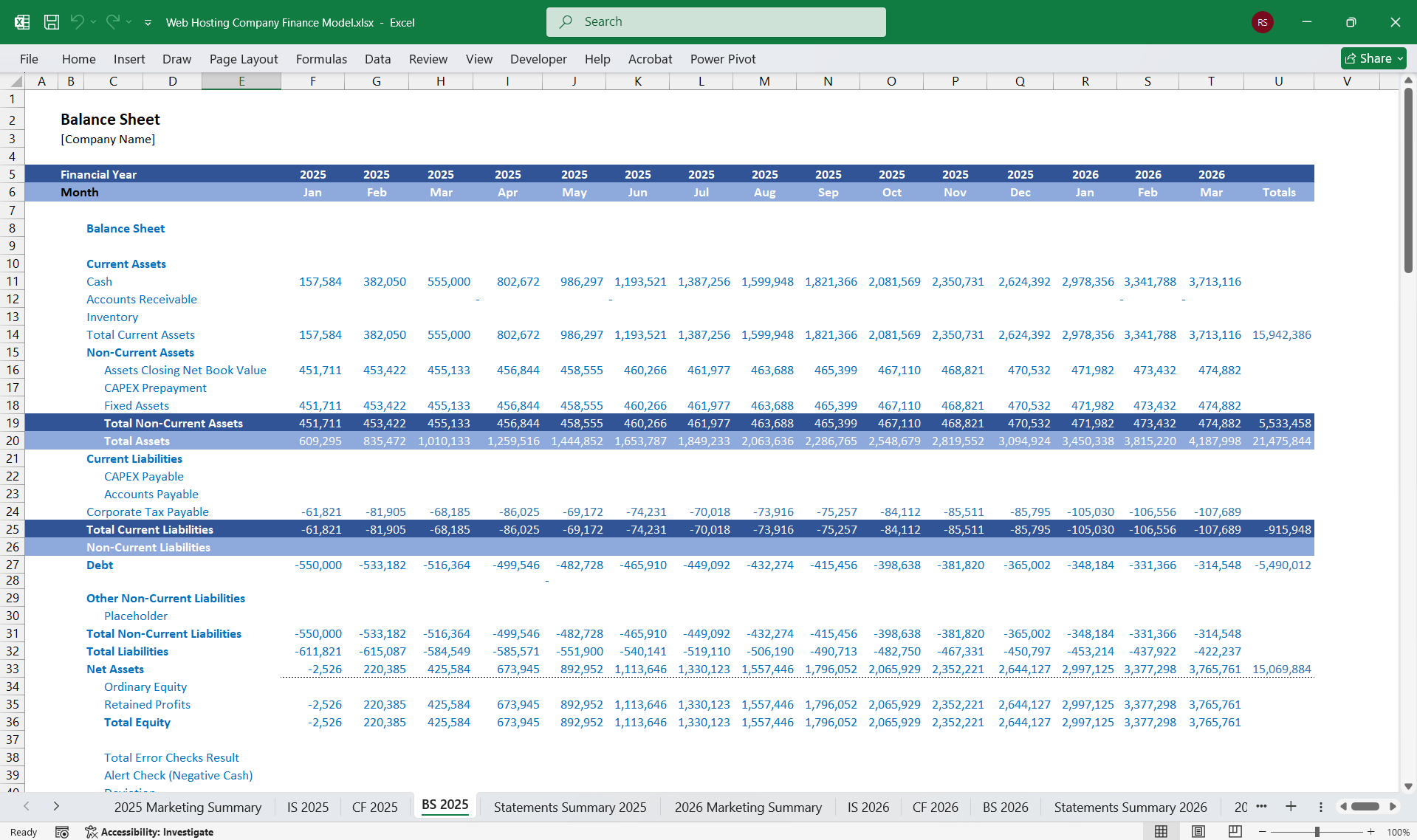
- Current Assets:
- Cash and cash equivalents.
- Accounts receivable (e.g., pending subscription payments).
- Prepaid expenses (e.g., long-term domain registration licenses).
- Non-Current Assets:
- Servers and networking equipment (recorded as CapEx).
- Intangible assets (intellectual property, brand value).
- Software licenses or platform R&D.
- Current Liabilities:
- Accounts payable (e.g., unpaid vendor bills, affiliate commissions).
- Short-term debts or leases.
- Deferred revenue (prepaid subscriptions yet to be earned).
- Non-Current Liabilities:
- Long-term loans for server infrastructure or capital investments.
- Lease obligations for data centers or offices.
- Owner’s equity (capital + retained earnings).
- Retained earnings (profits reinvested into growth and scalability).
- Basic Tier:
- Cost-effective shared hosting for individuals or small projects.
- Moderate customer volume at low price points.
- Pro Tier:
- Upsell opportunity for more performance, space, and resources.
- Geared toward growing businesses and professionals.
- Business Tier:
- Higher revenue segment with small-medium businesses as primary clients.
- Offers advanced integrations like cloud hosting or managed services.
- Enterprise Tier:
- Customizable solutions for corporate or high-demand users.
- Includes value-added services like SLAs, 24/7 support, and scalability options.
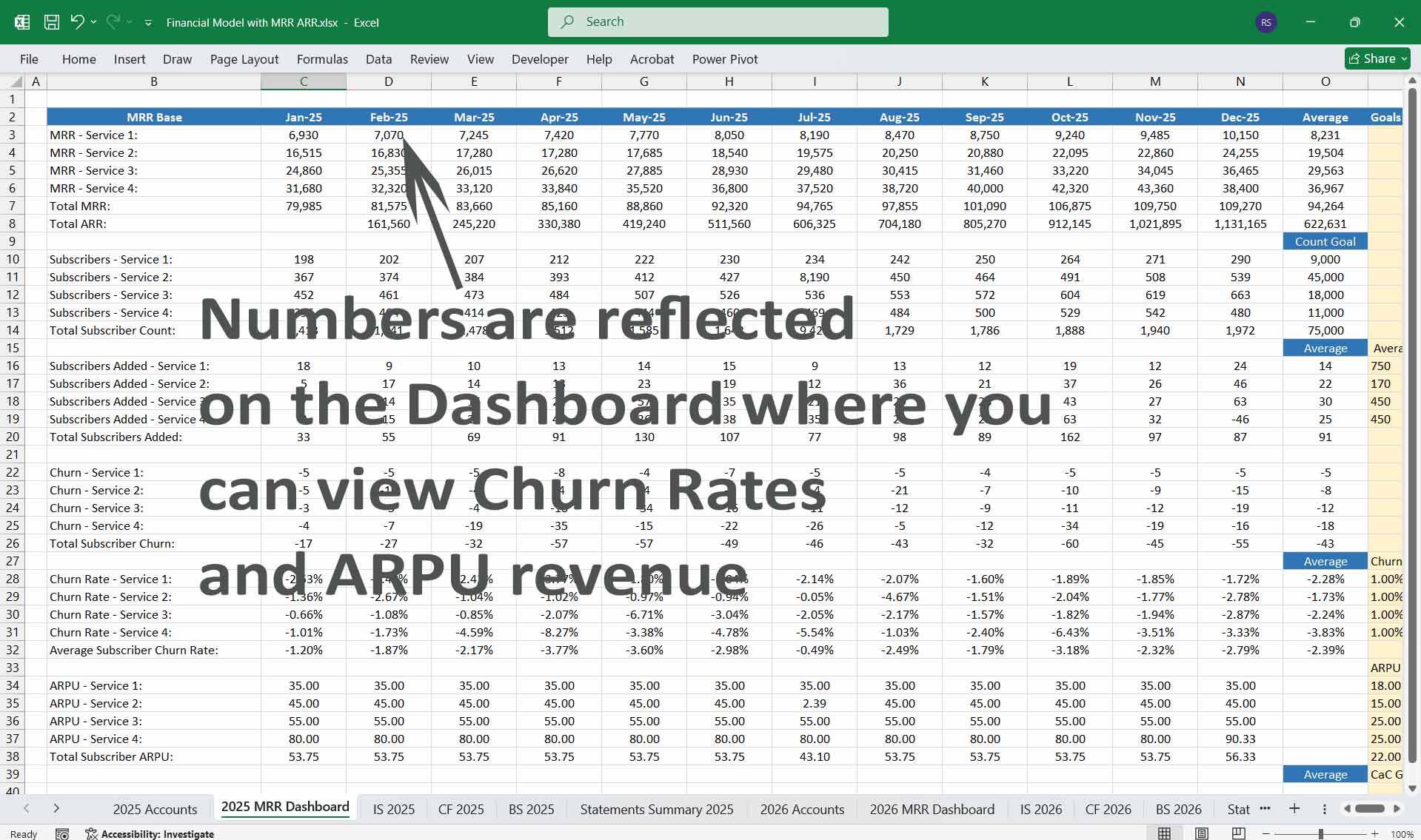
- ARPU (Average Revenue Per User): MRR ÷ Active Users.
- MRR Growth Rate: Net MRR Growth ÷ Starting MRR.
- Churned MRR: Revenue loss from customer churn each month.
- Expansion MRR: Revenue gained from customer upgrades to higher tiers.
- Base MRR: Active subscribers × Tier price.
- Expansion MRR: Upsells to higher tiers.
- Churn MRR: Customers lost × Price per tier.
- Free trials converted to Basic or Pro tiers.
- Upsell rates between tiers (e.g., Basic → Business).
- Seasonal churn adjustments.
- Best Case:
- High subscriber growth, effective upsell, low churn rates.
- Stable infrastructure costs with economies of scale.
- Base Case:
- Steady subscription growth, moderate churn, manageable infrastructure scaling.
- Worst Case:
- Increased churn, rising customer acquisition costs, scalability issues with infrastructure.
- Churn Impact: How a 1-2% change in churn affects MRR.
- Server Scaling Costs: Impact of subscriber growth on server spend.
- Pricing Adjustments: Effect of pricing increases or decreases on ARPU and churn.
- MRR Growth and Retention: Measure recurring revenue stability.
- CAC (Customer Acquisition Cost): Total acquisition spend ÷ New Customers.
- LTV (Lifetime Value): ARPU × Average Customer Lifetime (months).
- LTV:CAC Ratio: Ideal ratio of 3:1 for scalable business.
- Server Utilization: Efficient use of purchased server space.
- Gross Margin: Revenue - Direct Infrastructure Costs ÷ Revenue.
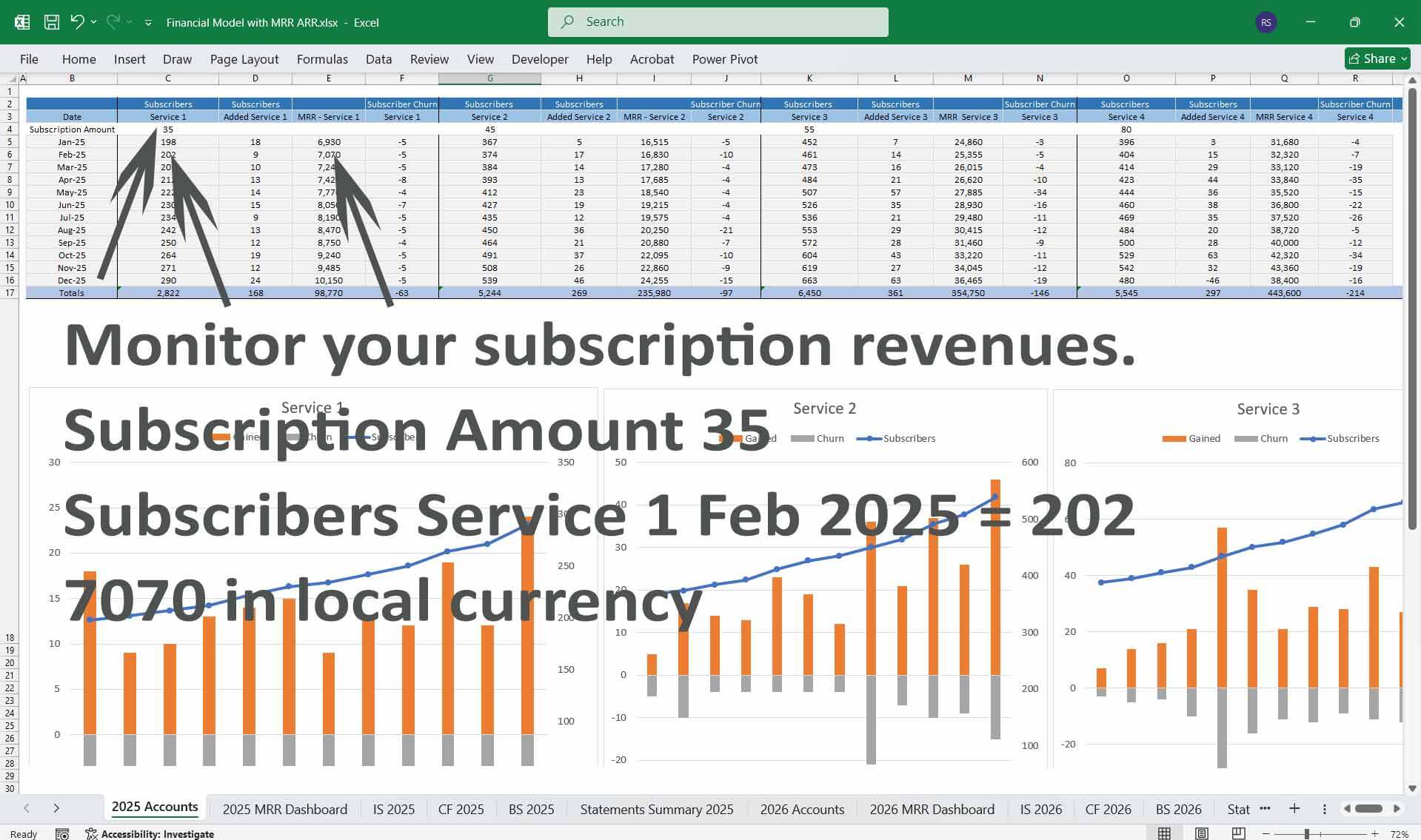
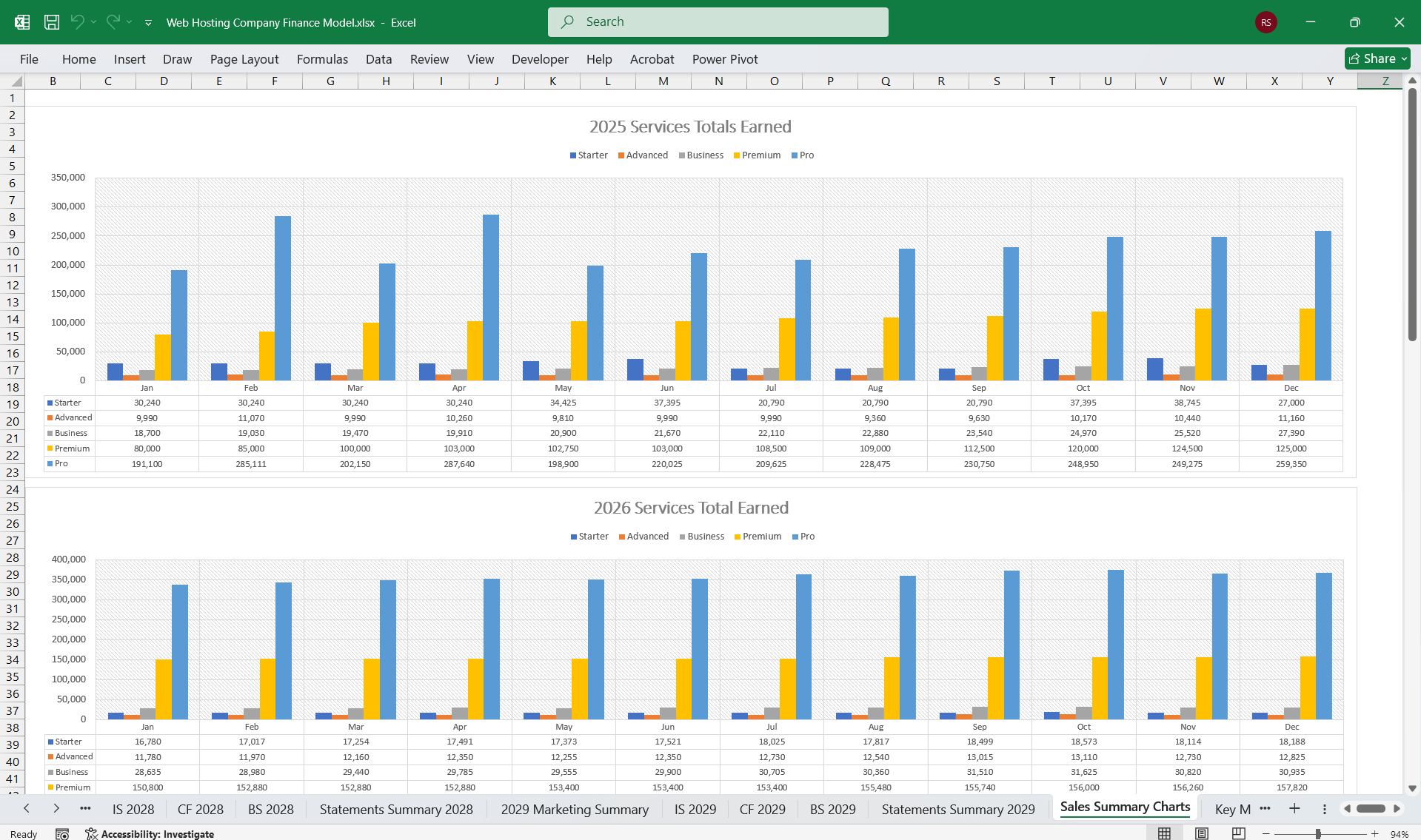
- Real-time MRR by subscription tier.
- Subscriber churn and upgrades/downgrades tracking.
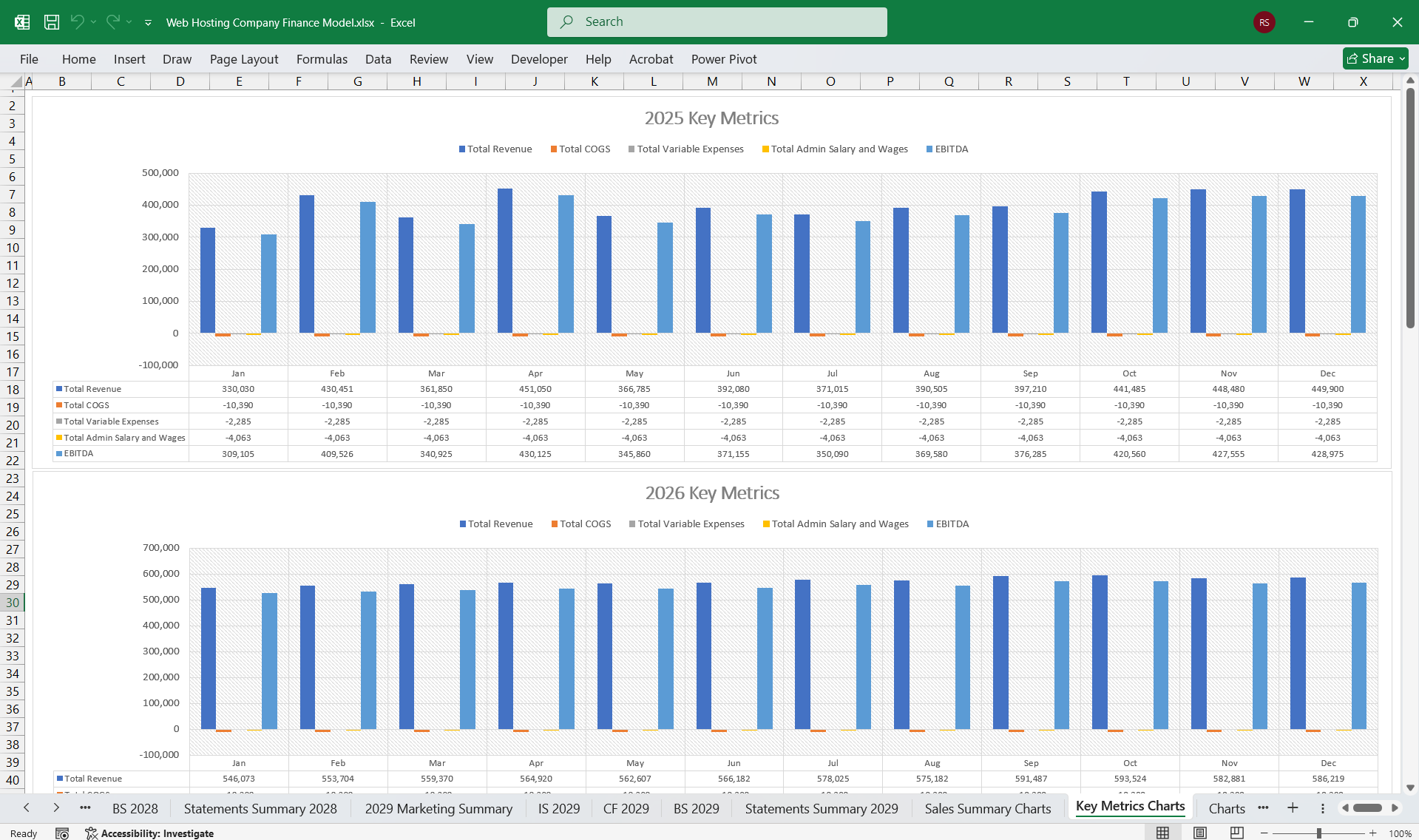
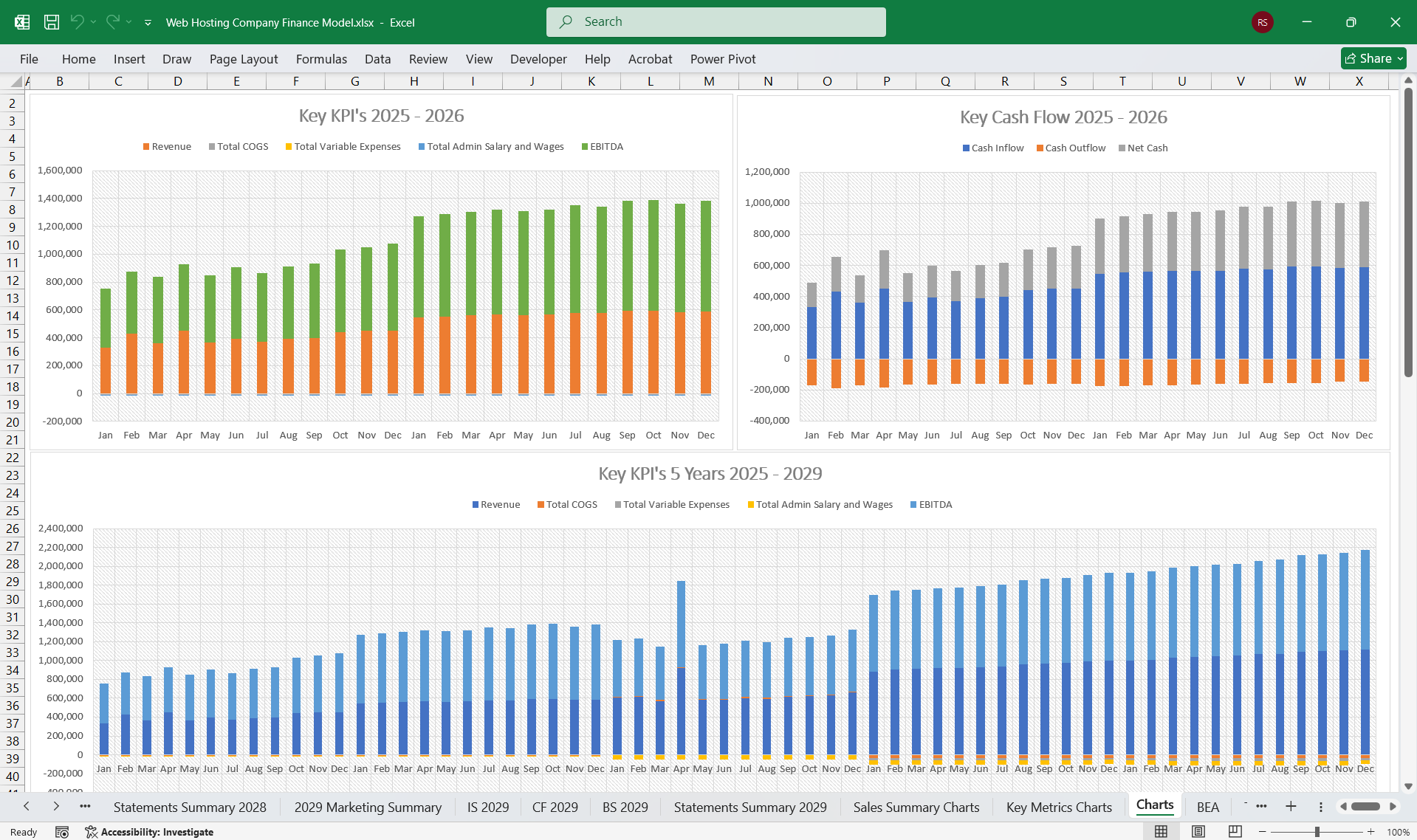
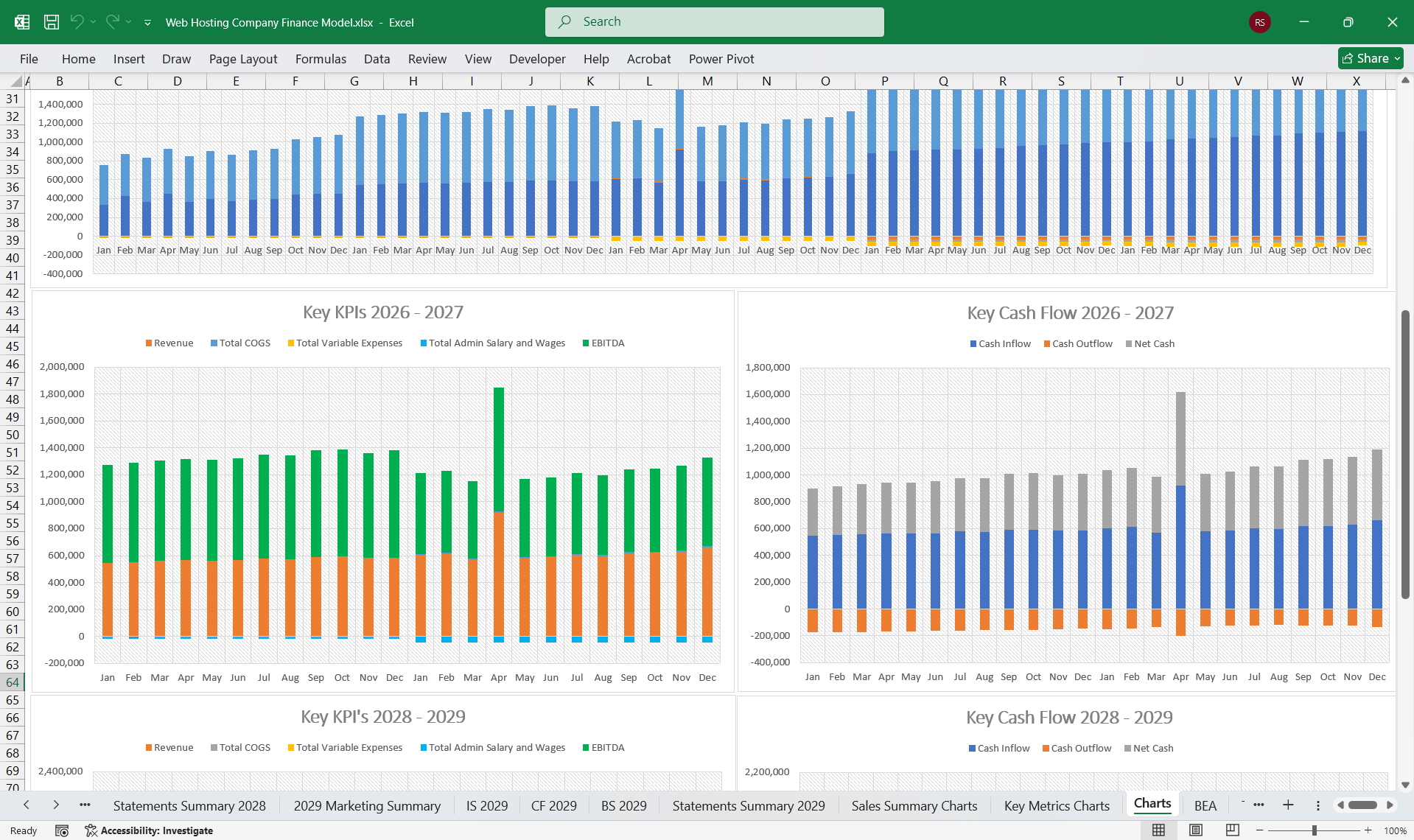
- Gross margin and cash flow projections.
- ARPU and LTV trends across the subscription tiers.
This Best Practice includes
1 Excel Financial Model
Further information
Provides thorough oversight, tracking, and reporting of web hosting company finances, including updates on budget utilisation and projections.