Publication number: ELQ-25000-1
View all versions & Certificate

Waste-to-Energy Financial Model — Techno-Economic Analysis & Project Finance (Excel)
A ready-to-use Excel model to assess the financial viability of a waste-to-energy plant — full P&L, cash flow, project & equity returns, debt sizing and DSCR.
 by Fabiano Souza
Waste-to-Energy & Circular Economy Financial Models | 20+ Years Hands-On ExperienceFollow
Further information
This model enables users to assess the financial viability of a waste-to-energy (WtE) or broader waste valorization project from first principles. Specifically, it allows you to:
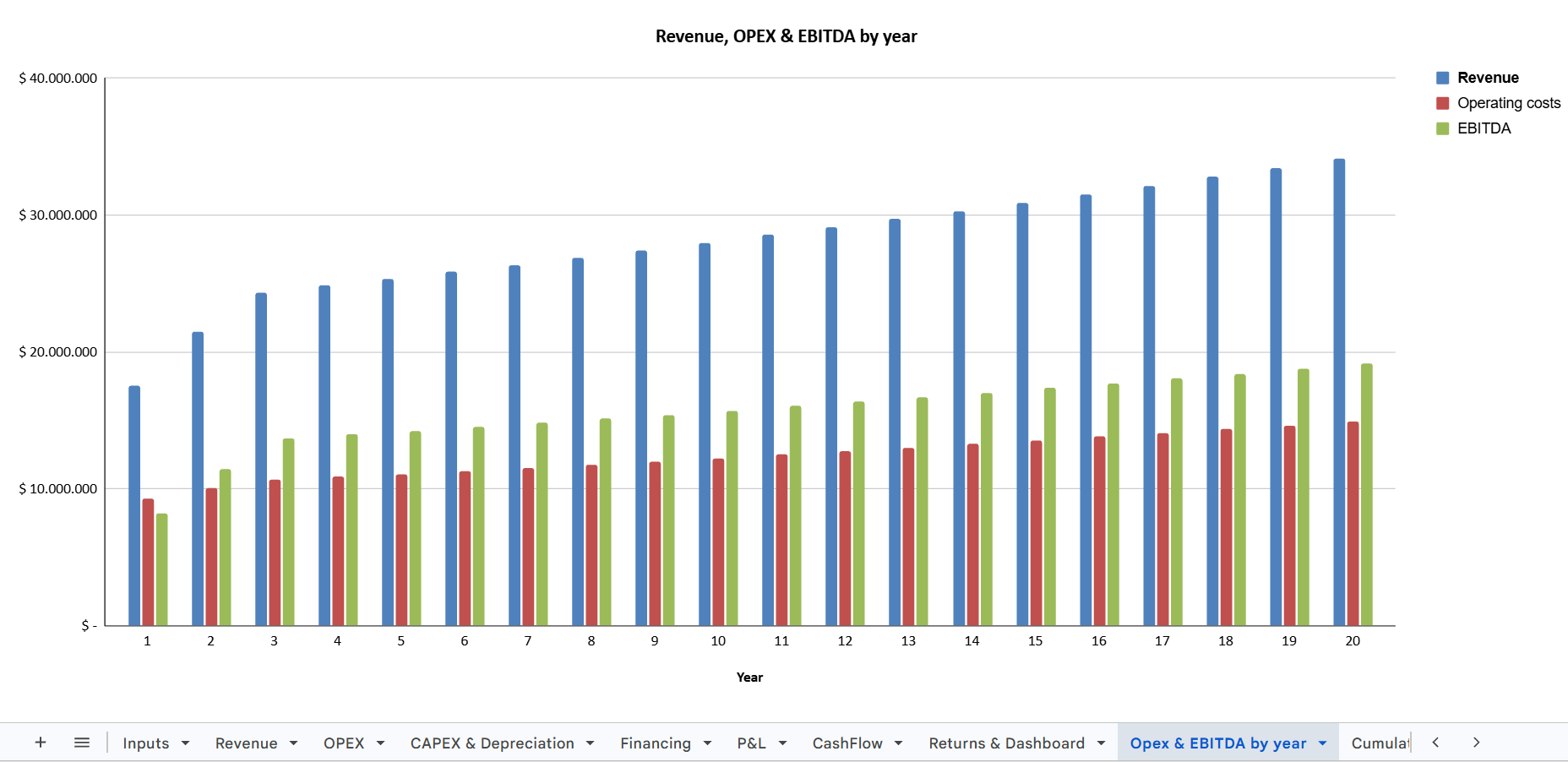
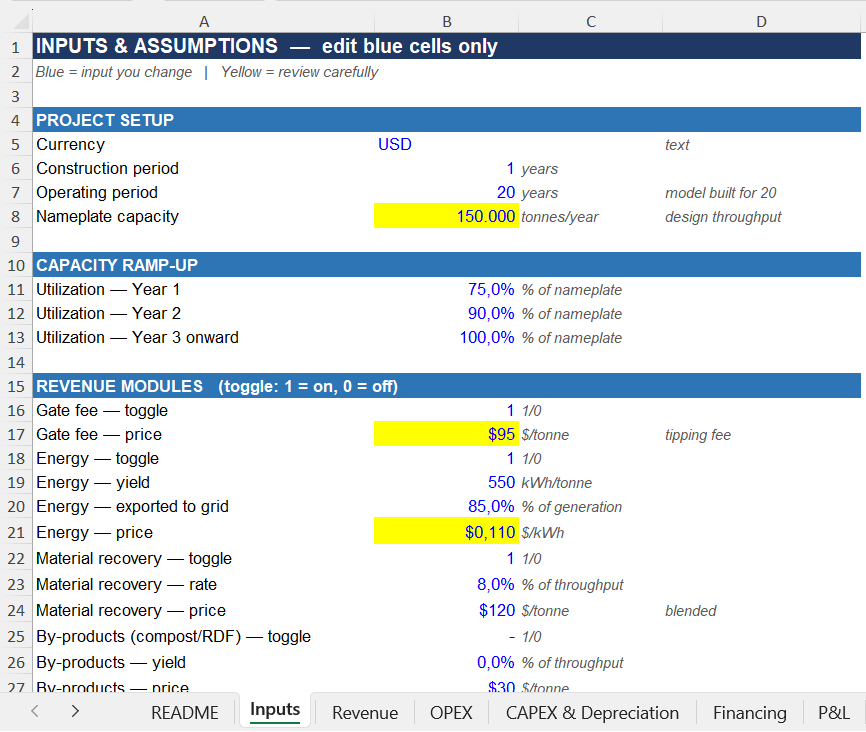
- Build a revenue model from multiple streams (gate fee, energy sales, recovered materials, by-products) using toggleable modules adaptable to different plant configurations;
- Size capital expenditure, operating costs and financing structure;
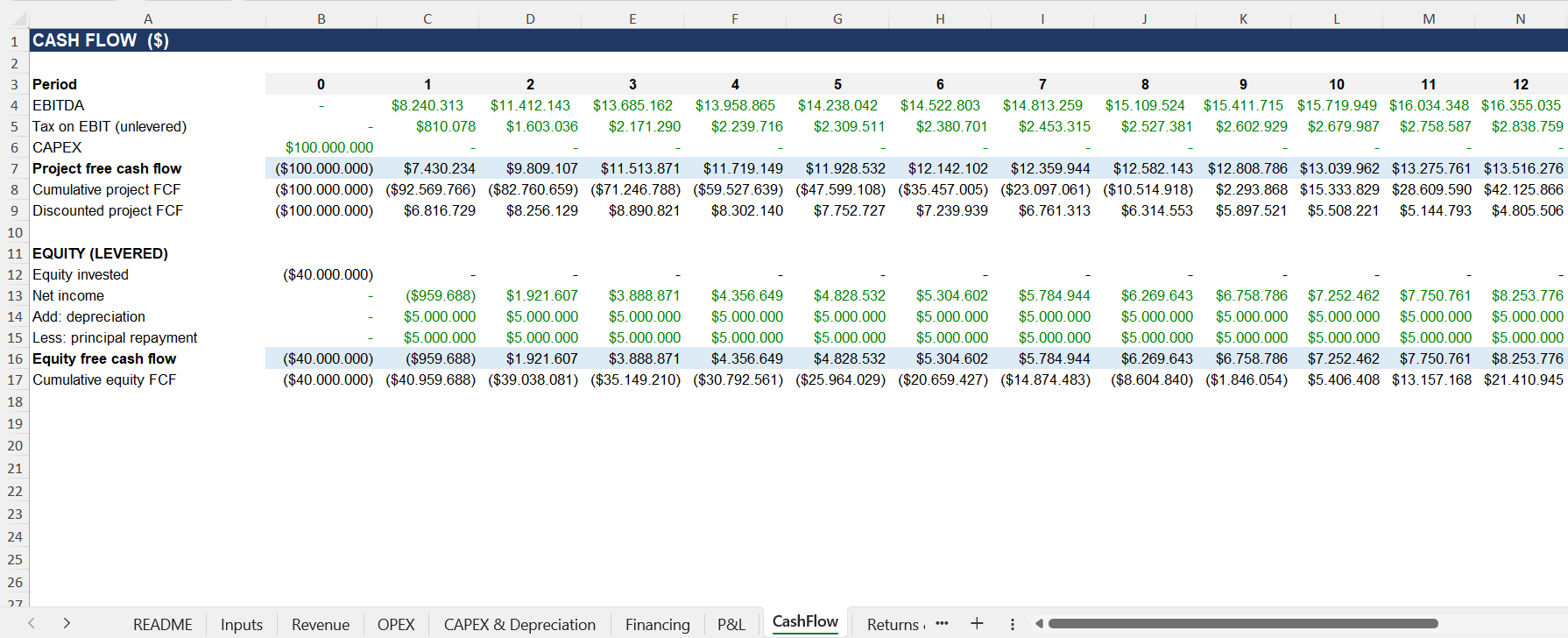
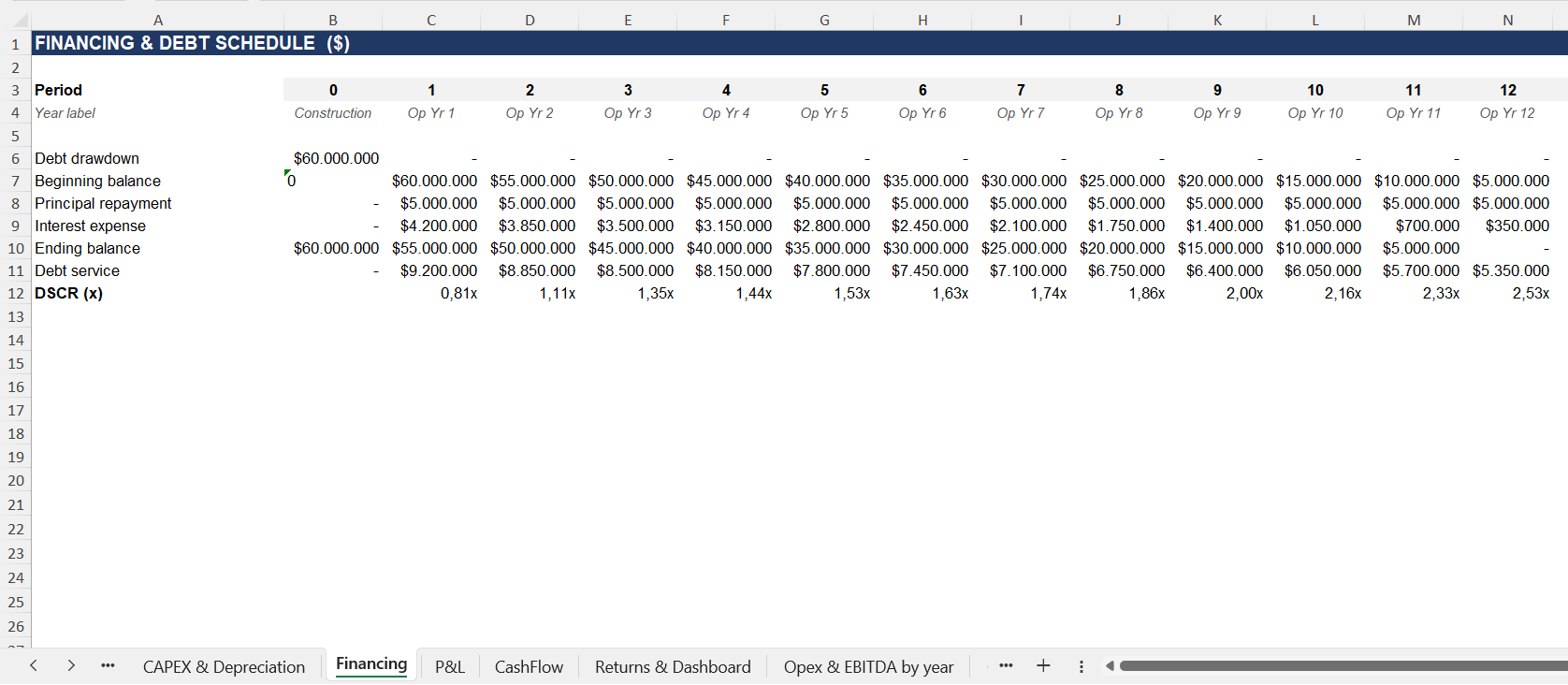
- Generate a full set of financial statements (P&L, cash flow, debt schedule) linked to a single input tab;
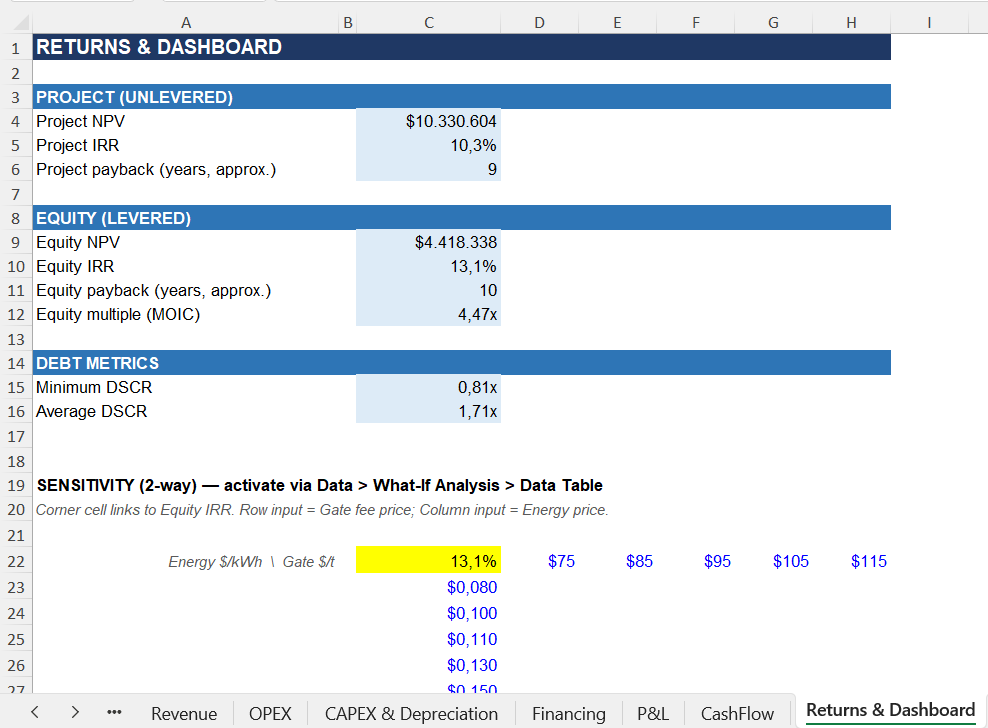
- Calculate and interpret key project and equity returns: NPV, IRR, payback, DSCR and equity multiple (MOIC);
- Stress-test assumptions using a built-in 2-way sensitivity grid;
- Produce lender-ready output, including debt service coverage metrics.
This model is best suited for:
- Early-stage and pre-feasibility analysis of waste-to-energy, energy-from-waste, waste valorization or circular economy projects;
- Developers, EPCs and independent consultants building an initial investment case or feasibility study;
- Investors and lenders running a first-pass due diligence on a WtE opportunity;
- Circular economy startups preparing a financial narrative for fundraising;
- Projects with a single main treatment technology (incineration, RDF, gasification, biogas) and a clearly defined revenue mix;
- Users who need a transparent, auditable model they can adapt and present to third parties;
This model is not the best fit if:
- Your project involves multiple treatment stages with complex material flow interdependencies requiring process simulation software (e.g. Aspen, CHEMCAD);
- You need a multi-scenario or Monte Carlo probabilistic model — this is a deterministic model with sensitivity analysis, not a full risk simulation tool;
- Your financing structure involves complex instruments such as mezzanine debt, convertible notes or sculpted debt service — the financing module uses equal principal repayment;
- You require jurisdiction-specific tax treatment, loss carry-forward or depreciation schedules beyond straight-line;
- Your project horizon exceeds 20 operating years without modification to the column structure;
- You need a fully automated model without any manual calibration — all blue input cells require the user's own project data to produce meaningful output.