Originally published: 24/07/2025 13:49
Publication number: ELQ-37936-1
View all versions & Certificate
Publication number: ELQ-37936-1
View all versions & Certificate

The Business Model Blueprint PowerPoint Template
Transform vague business model triangles into systematic frameworks with this actionable template.
Every Organization Needs a Strategy. Unlock Free Insights and Templates to Master Yours.Follow 104
Description
The Blueprint Approach
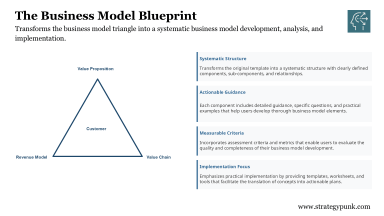
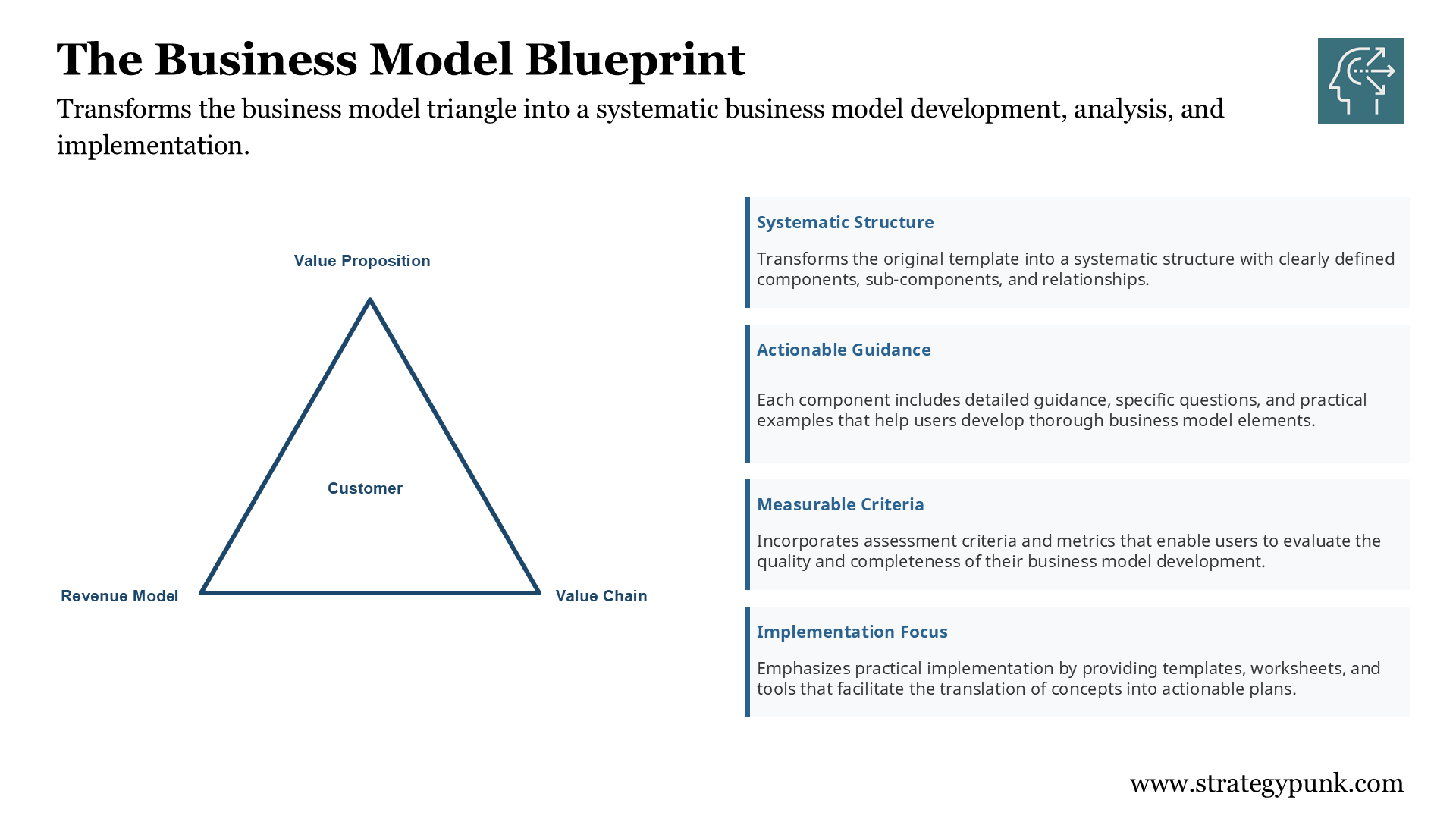
The Business Model Blueprint keeps the four core components but adds structure, guidance, and implementation tools. Instead of vague prompts, you get detailed worksheets. Instead of isolated thinking, you get systematic analysis.
Here's what makes it different:
🎯 Systematic Structure
Every component breaks down into specific sub-components with clear guidance. No more wondering "what do I do next?"
📊 Validation Requirements
You can't just fill in blanks. Every assumption needs validation with real customer data, financial analysis, or operational testing.
⚡ Implementation Focus
This isn't theoretical. It's designed to create actual business plans that work in the real world.
The framework covers four enhanced components:
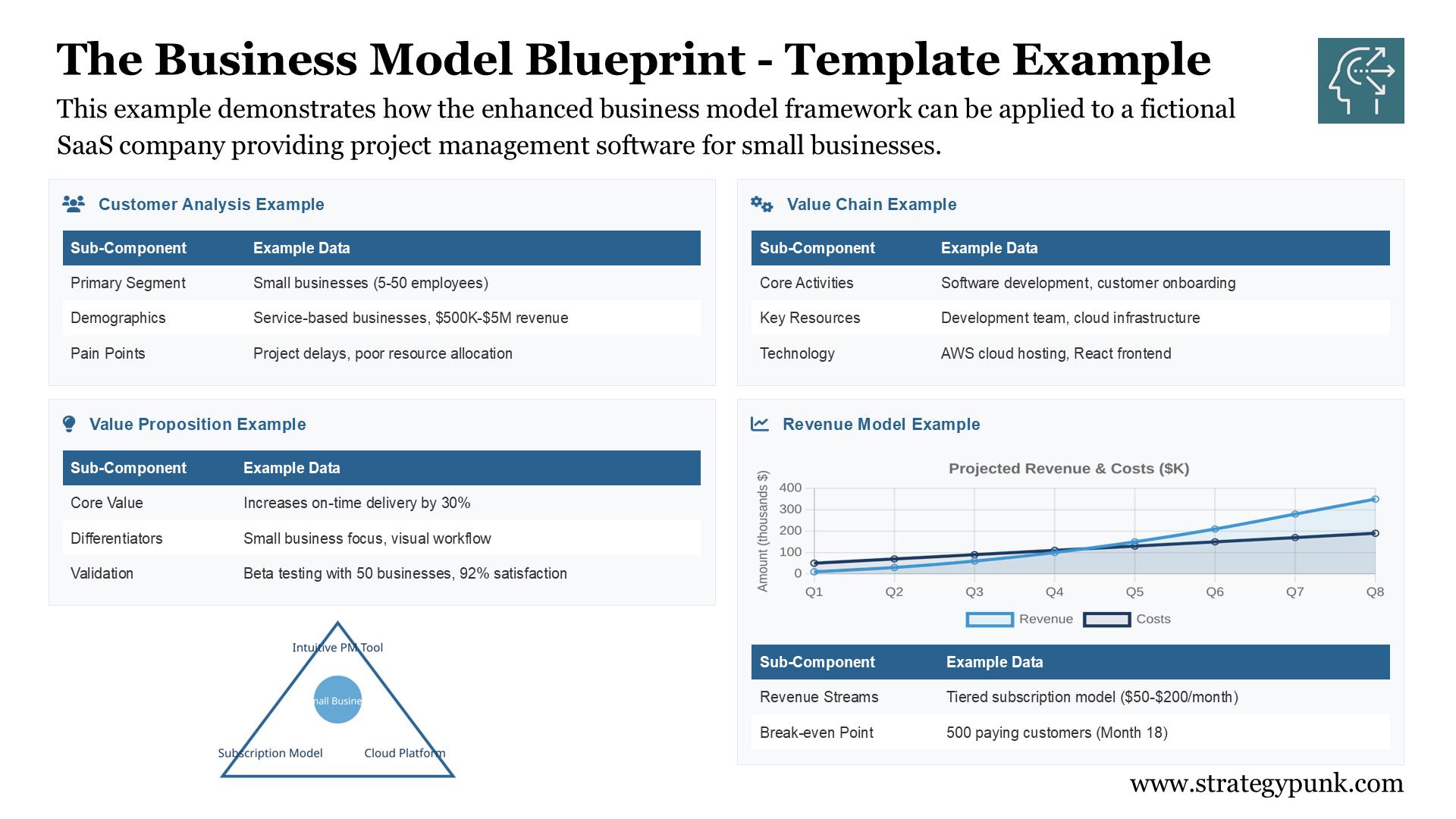
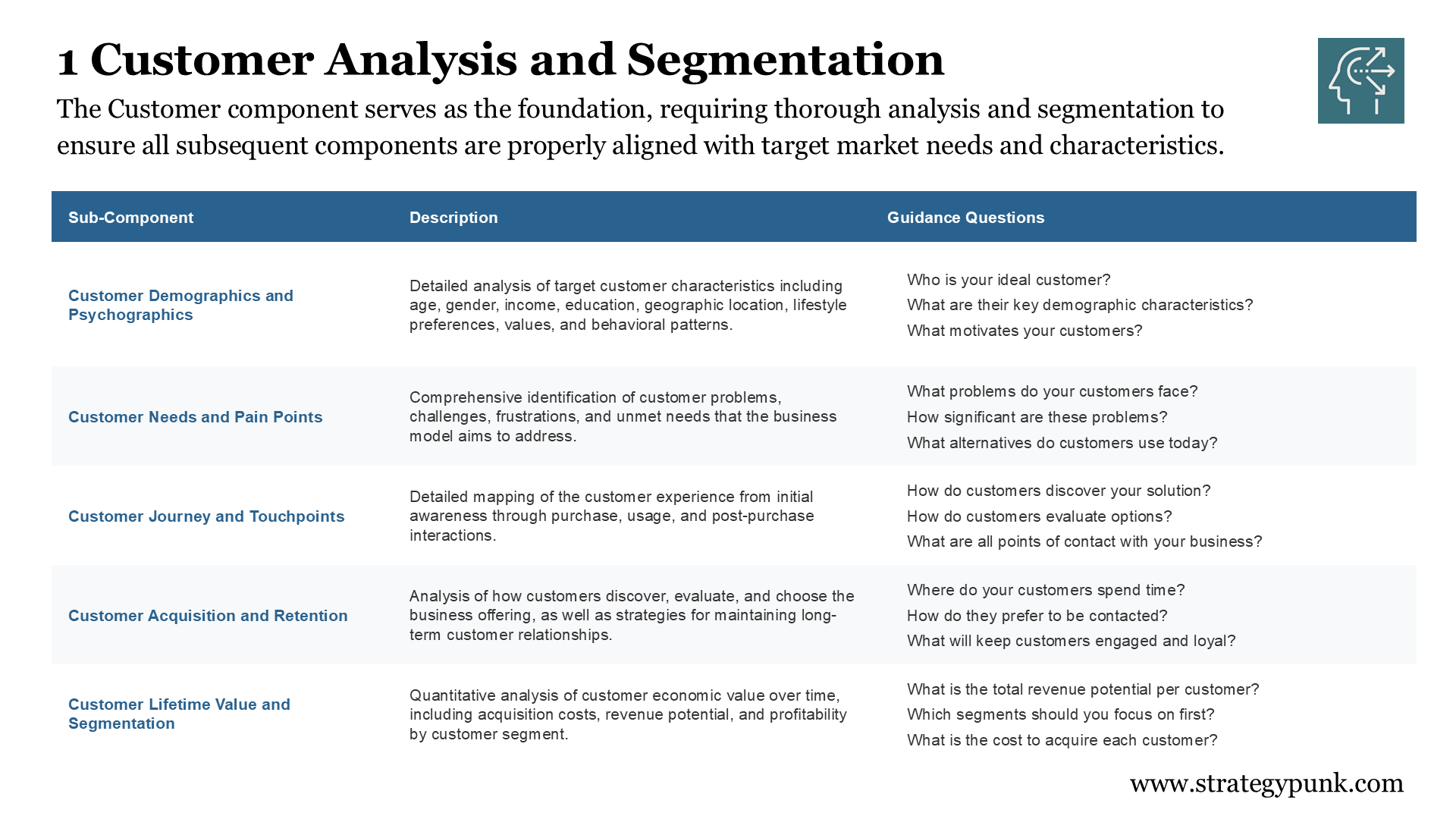
1. 𝐂𝐮𝐬𝐭𝐨𝐦𝐞𝐫 𝐅𝐨𝐮𝐧𝐝𝐚𝐭𝐢𝐨𝐧 → Deep analysis across 5 dimensions (not just "who are they?")
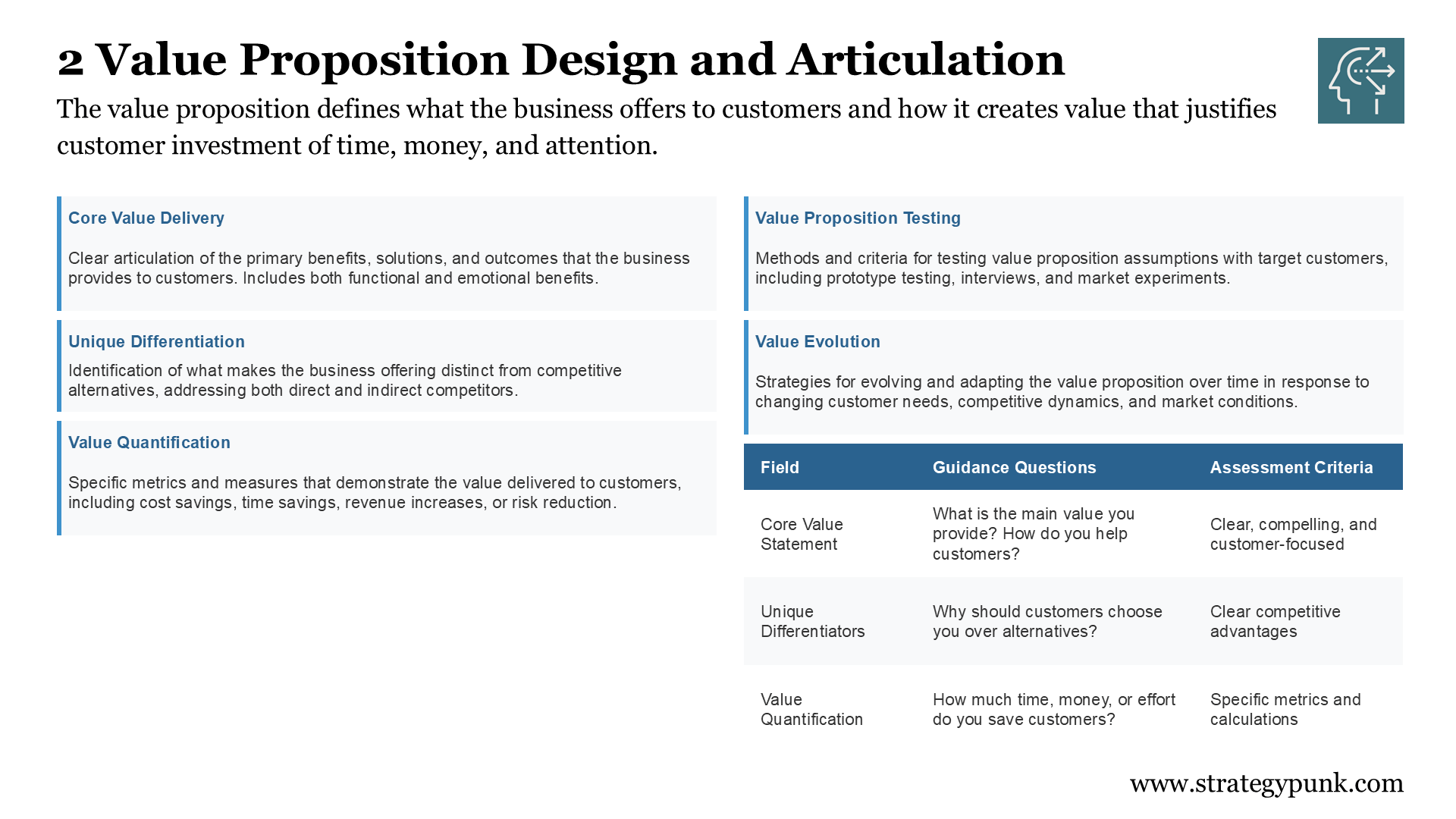
2. 𝐕𝐚𝐥𝐮𝐞 𝐏𝐫𝐨𝐩𝐨𝐬𝐢𝐭𝐢𝐨𝐧 𝐃𝐞𝐬𝐢𝐠𝐧 → Strategic assets with data validation (not just marketing copy)
3. 𝐕𝐚𝐥𝐮𝐞 𝐂𝐡𝐚𝐢𝐧 𝐄𝐱𝐜𝐞𝐥𝐥𝐞𝐧𝐜𝐞 → Where value gets created or destroyed (not an afterthought)
4. 𝐑𝐞𝐯𝐞𝐧𝐮𝐞 𝐌𝐨𝐝𝐞𝐥 𝐀𝐫𝐜𝐡𝐢𝐭𝐞𝐜𝐭𝐮𝐫𝐞 → Sustainable, scalable models aligned with customer value
From Framework to Implementation
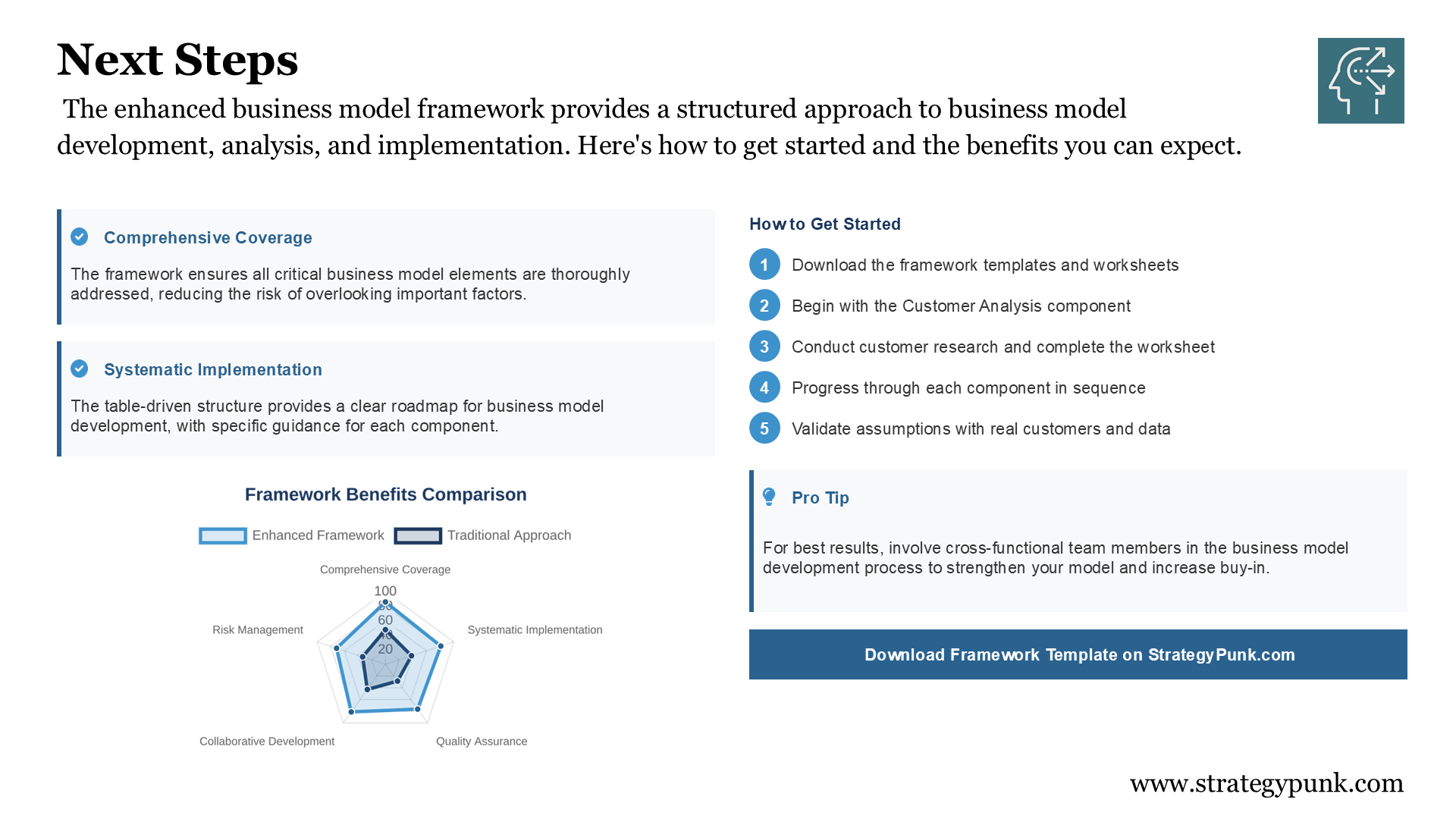
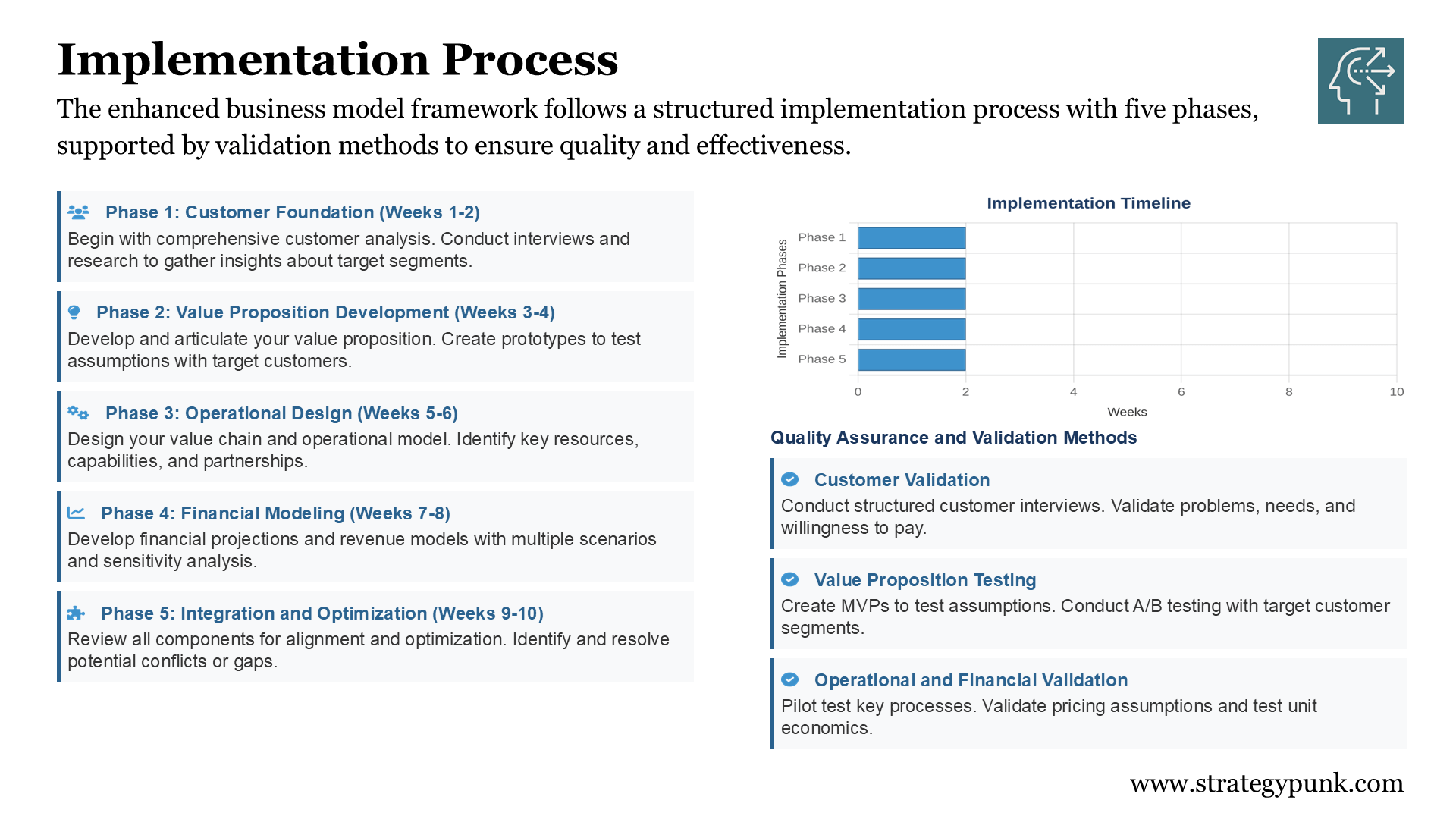
Five phases, systematic validation:
Phase 1-2 (Weeks 1-4): Customer foundation and value proposition development. Start with customer research. Build and test your value proposition. Get validation before moving forward.
Phase 3-4 (Weeks 5-8): Operational design and financial modeling. Design your delivery capabilities. Build comprehensive financial models. Validate assumptions with pilots.
Phase 5 (Weeks 9-10): Integration and optimization. Ensure all components align. Identify and fix gaps. Create your final business model documentation.
Each phase includes specific deliverables and validation checkpoints. You can't move forward until you've validated your assumptions with real data.
The Blueprint Approach
The Business Model Blueprint keeps the four core components but adds structure, guidance, and implementation tools. Instead of vague prompts, you get detailed worksheets. Instead of isolated thinking, you get systematic analysis.
Here's what makes it different:
🎯 Systematic Structure
Every component breaks down into specific sub-components with clear guidance. No more wondering "what do I do next?"
📊 Validation Requirements
You can't just fill in blanks. Every assumption needs validation with real customer data, financial analysis, or operational testing.
⚡ Implementation Focus
This isn't theoretical. It's designed to create actual business plans that work in the real world.
The framework covers four enhanced components:
1. 𝐂𝐮𝐬𝐭𝐨𝐦𝐞𝐫 𝐅𝐨𝐮𝐧𝐝𝐚𝐭𝐢𝐨𝐧 → Deep analysis across 5 dimensions (not just "who are they?")
2. 𝐕𝐚𝐥𝐮𝐞 𝐏𝐫𝐨𝐩𝐨𝐬𝐢𝐭𝐢𝐨𝐧 𝐃𝐞𝐬𝐢𝐠𝐧 → Strategic assets with data validation (not just marketing copy)
3. 𝐕𝐚𝐥𝐮𝐞 𝐂𝐡𝐚𝐢𝐧 𝐄𝐱𝐜𝐞𝐥𝐥𝐞𝐧𝐜𝐞 → Where value gets created or destroyed (not an afterthought)
4. 𝐑𝐞𝐯𝐞𝐧𝐮𝐞 𝐌𝐨𝐝𝐞𝐥 𝐀𝐫𝐜𝐡𝐢𝐭𝐞𝐜𝐭𝐮𝐫𝐞 → Sustainable, scalable models aligned with customer value
From Framework to Implementation
Five phases, systematic validation:
Phase 1-2 (Weeks 1-4): Customer foundation and value proposition development. Start with customer research. Build and test your value proposition. Get validation before moving forward.
Phase 3-4 (Weeks 5-8): Operational design and financial modeling. Design your delivery capabilities. Build comprehensive financial models. Validate assumptions with pilots.
Phase 5 (Weeks 9-10): Integration and optimization. Ensure all components align. Identify and fix gaps. Create your final business model documentation.
Each phase includes specific deliverables and validation checkpoints. You can't move forward until you've validated your assumptions with real data.
This Best Practice includes
1 PowerPoint Template, 9 slides