Job Leveling Architecture Diagnostic Tool – Role Evaluation and Level Validation
Originally published: 31/08/2026 08:25
Publication number: ELQ-95574-1
View all versions & Certificate
certified

Job Leveling Architecture Diagnostic Tool – Role Evaluation and Level Validation

Evaluate roles, validate proposed job levels, identify architecture risks, and support structured calibration decisions with a professional Excel toolkit.

Description
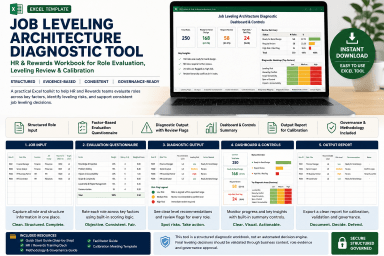
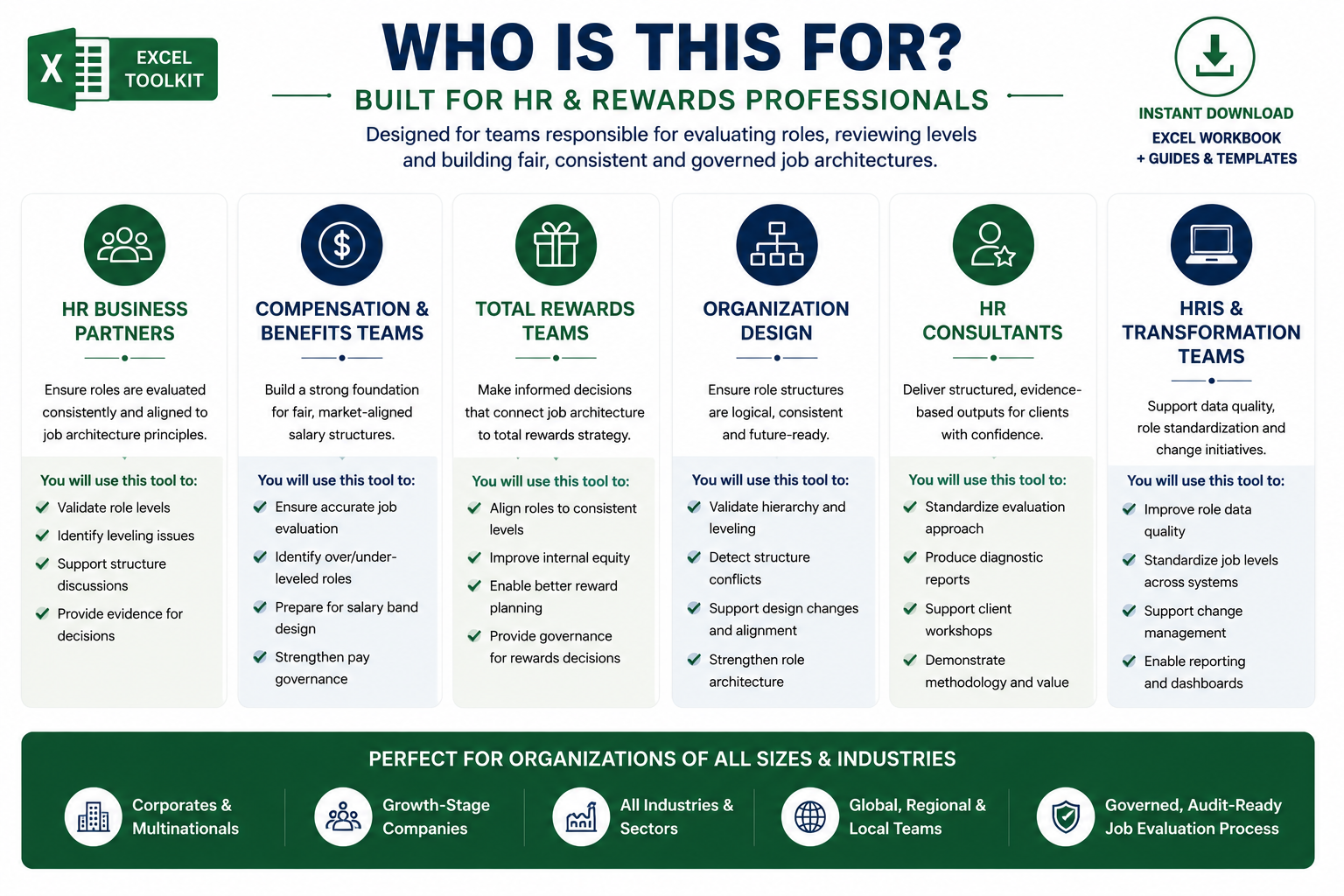
The Job Leveling Architecture Diagnostic Tool is a professional Excel-based toolkit designed to help HR, Compensation, Total Rewards, Organization Design, and consulting professionals evaluate roles, validate proposed job levels, and improve job-architecture consistency.


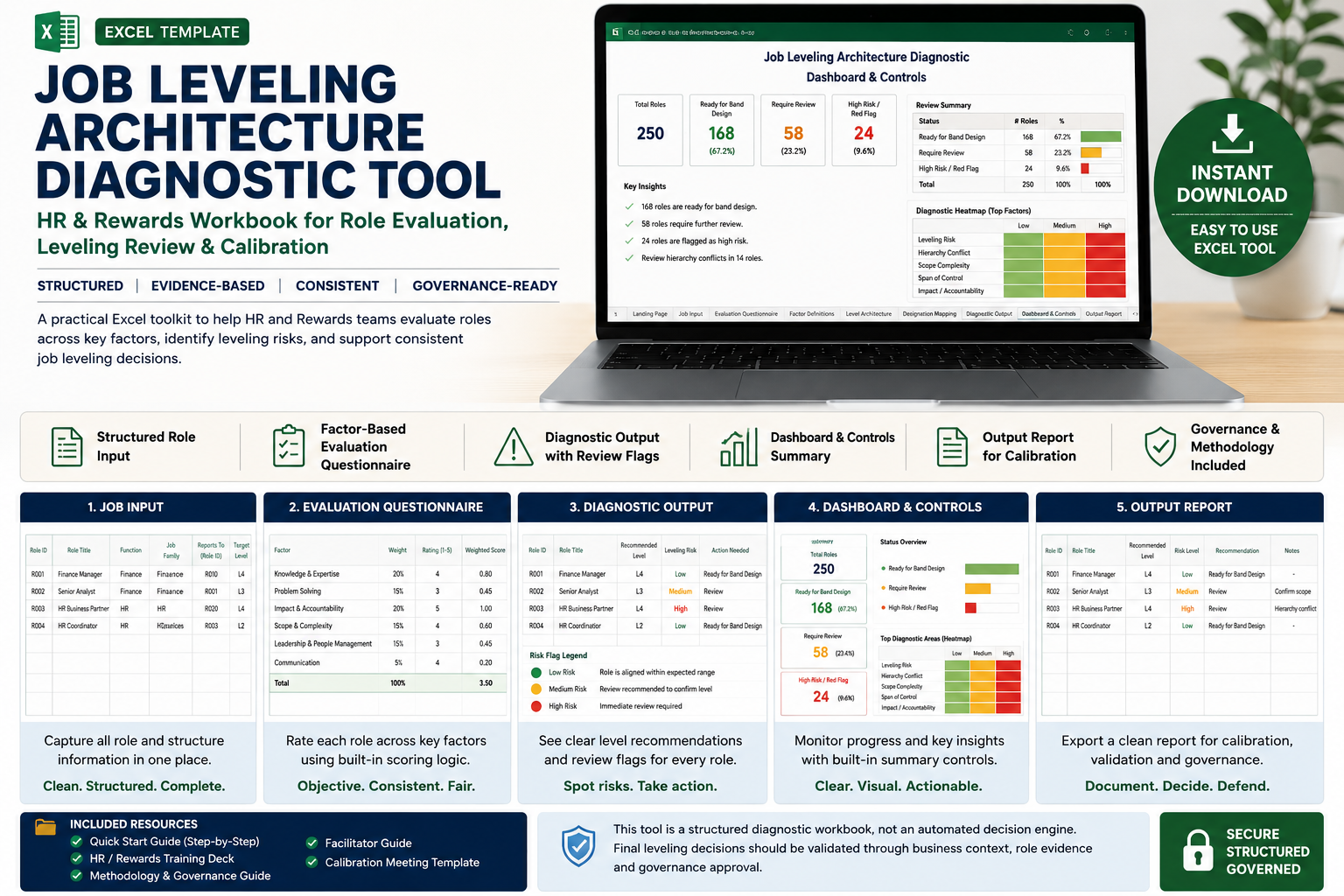
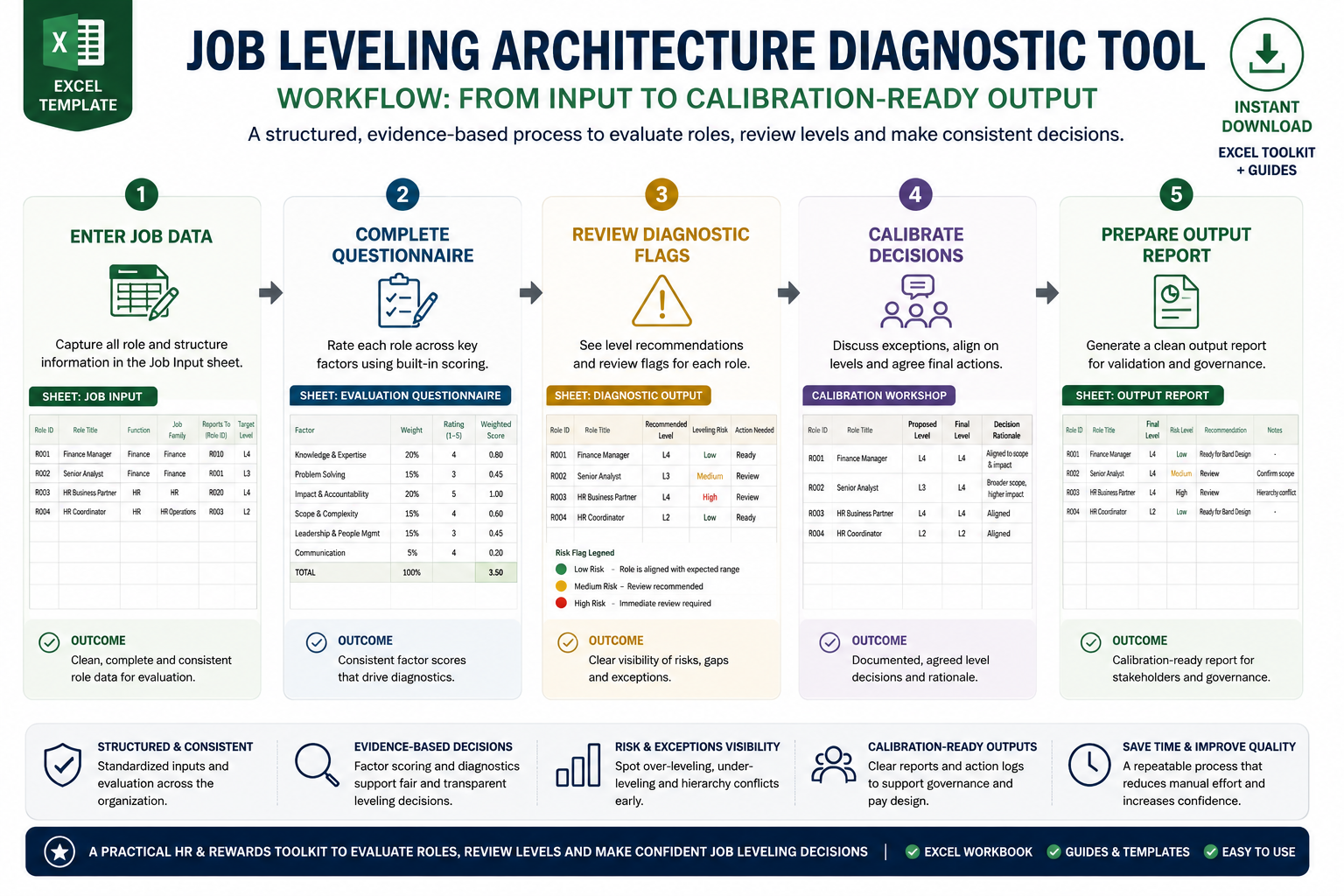
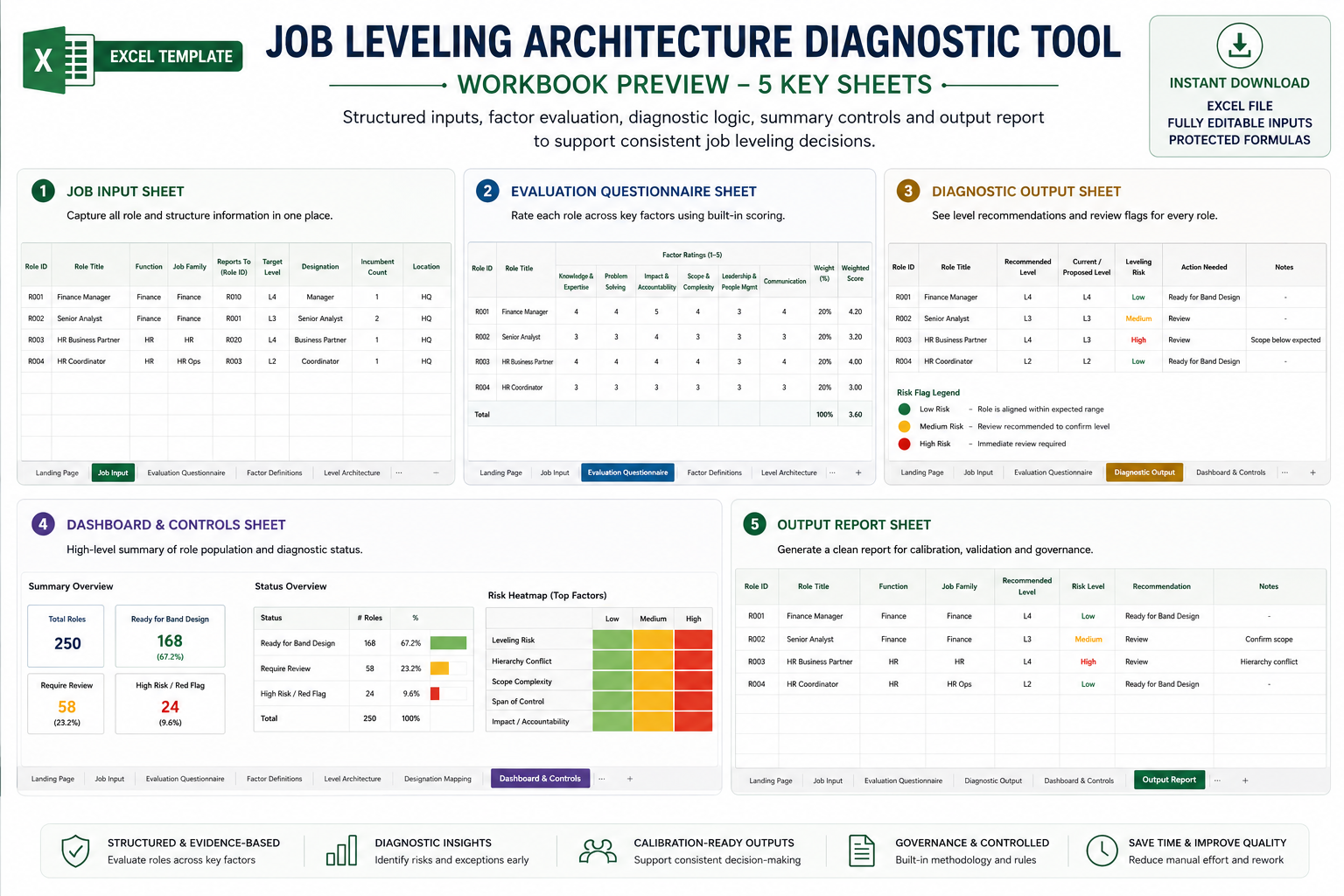
The workbook combines structured role-data collection, factor-based job evaluation, automated diagnostic logic, hierarchy-conflict detection, risk flags, dashboards, and calibration-ready outputs in one integrated solution.


Users can assess roles using consistent evaluation factors and compare evaluation results with proposed organizational levels. Automated diagnostics help highlight potential leveling inconsistencies, hierarchy conflicts, unusual reporting relationships, incomplete role information, and cases requiring further professional review.


Interactive dashboards provide visibility into evaluation progress, proposed and assessed levels, diagnostic outcomes, and areas of organizational risk. Calibration-ready reports help HR teams and business leaders discuss roles using a shared framework, improving transparency and consistency across job-leveling decisions.


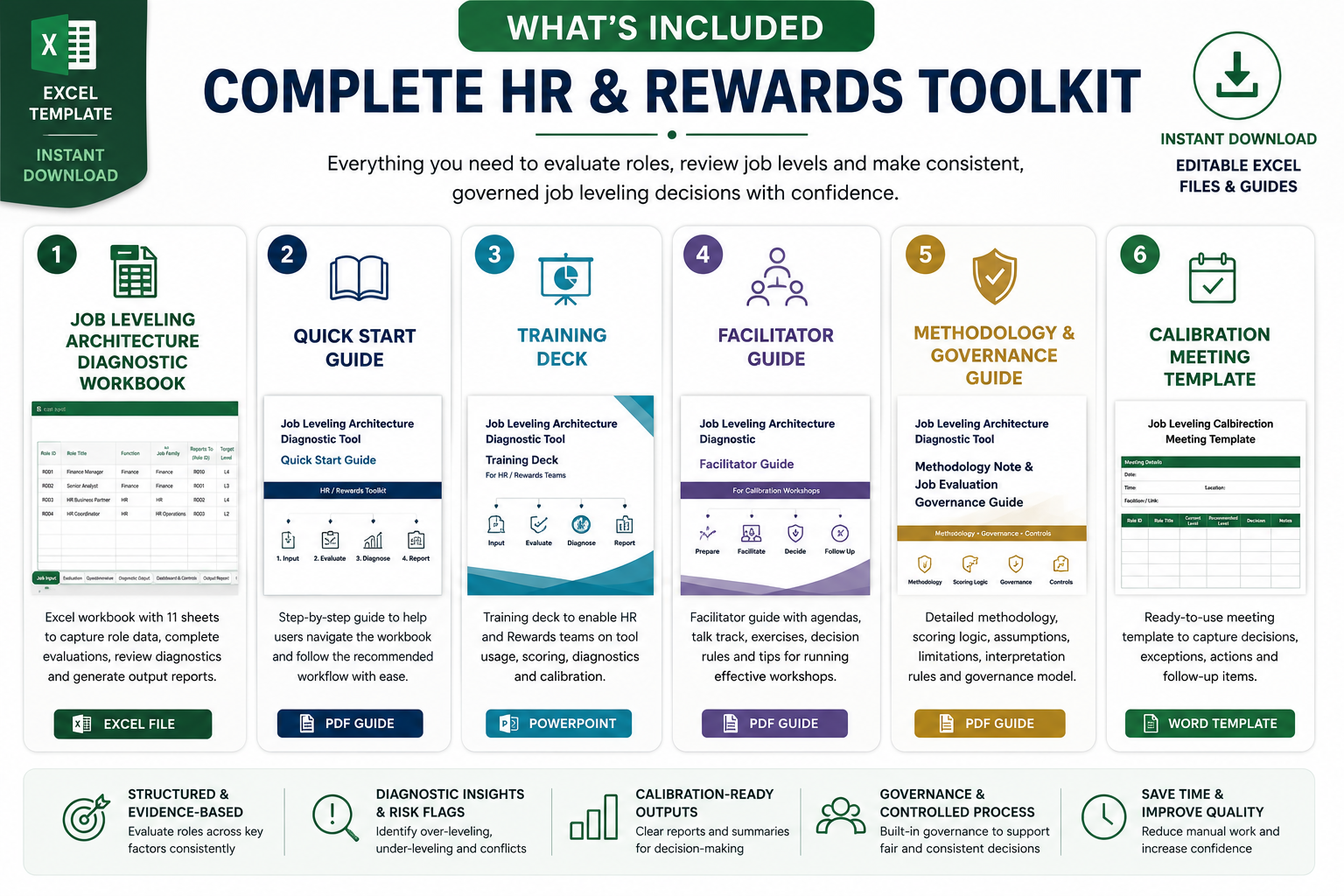
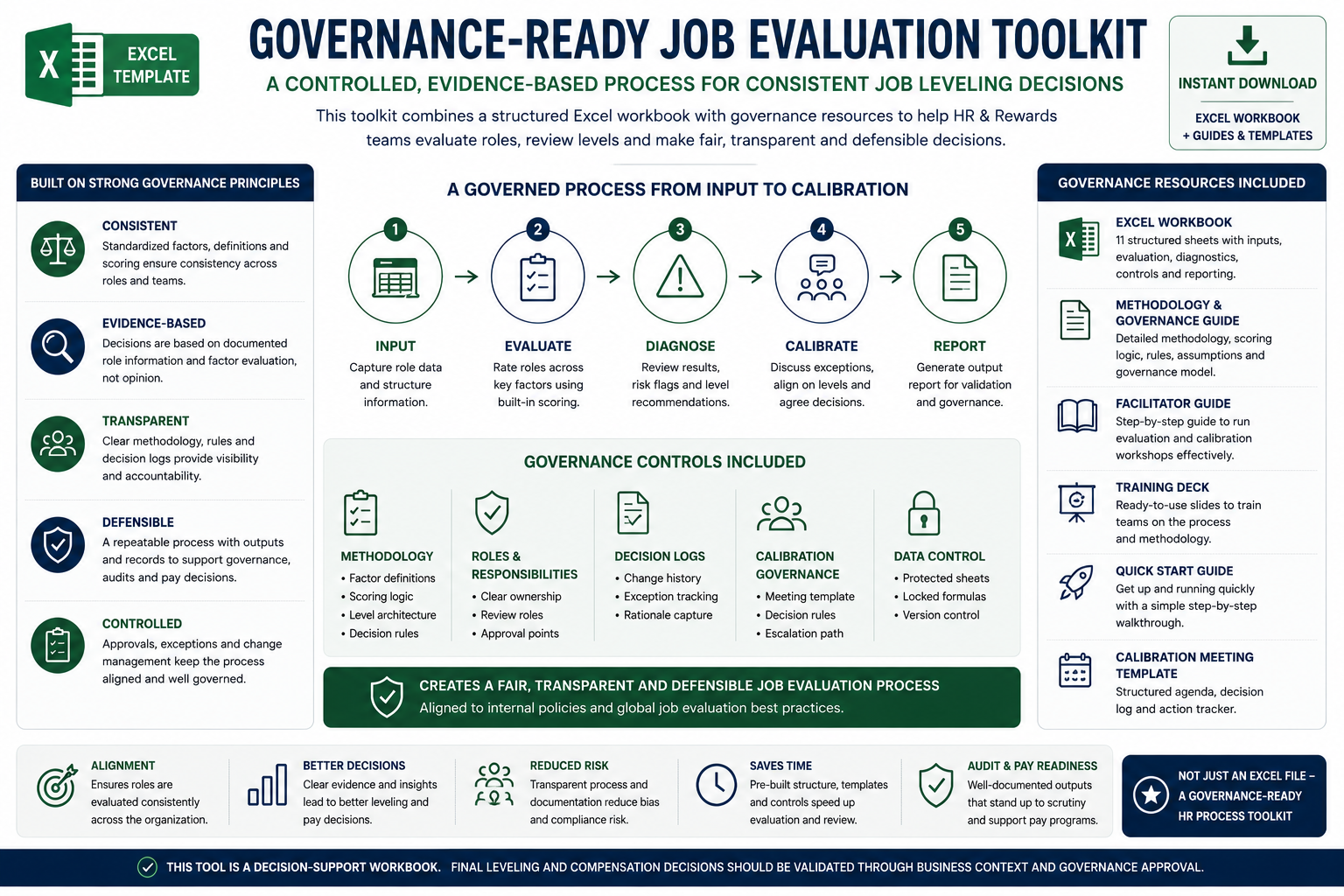
The toolkit can support job-architecture development, organizational redesign, role harmonization, governance reviews, HR transformation projects, and structured calibration workshops. Supporting documentation includes practical implementation guidance, methodology and governance principles, workshop resources, and training materials.


The Excel workbook contains editable input sheets and protected calculation formulas. Microsoft Excel Desktop is required for full functionality.


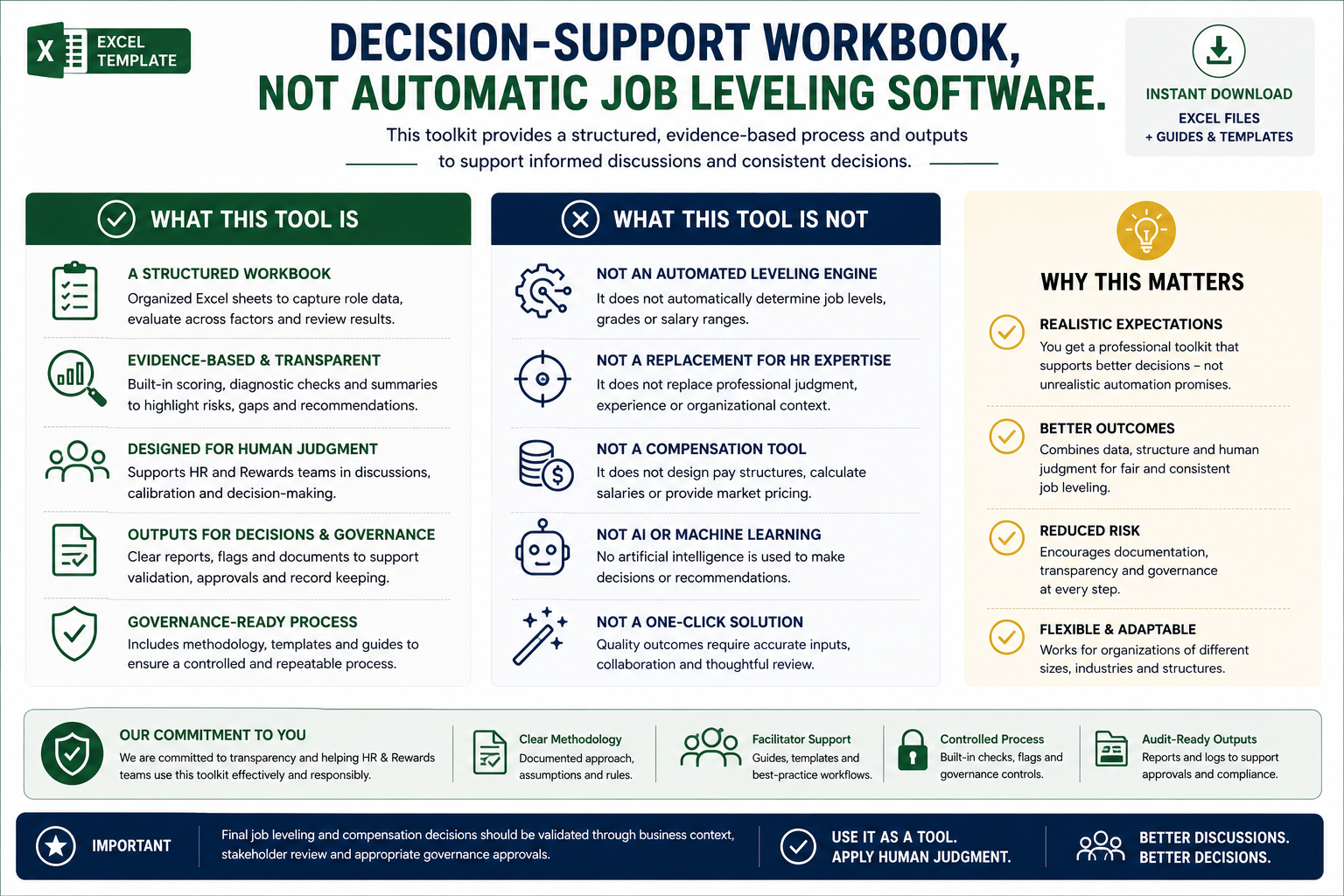
This toolkit supports structured evaluation and professional discussion but does not replace business context, formal job-evaluation methodology, legal advice, or experienced HR and Organization Design judgment. Final job-leveling decisions should always be validated through appropriate governance and stakeholder calibration.

This Best Practice includes
One Job Leveling Architecture Diagnostic Excel workbook, one Quick Start Guide PDF, one Facilitator Guide PDF, one Metho

Acquire business license for $44.99

Add to cart

Add to bookmarks

Discuss

Further information

• Evaluate roles using a structured and consistent factor-based methodology.

• Compare assessed role requirements with proposed job levels and organizational hierarchy.

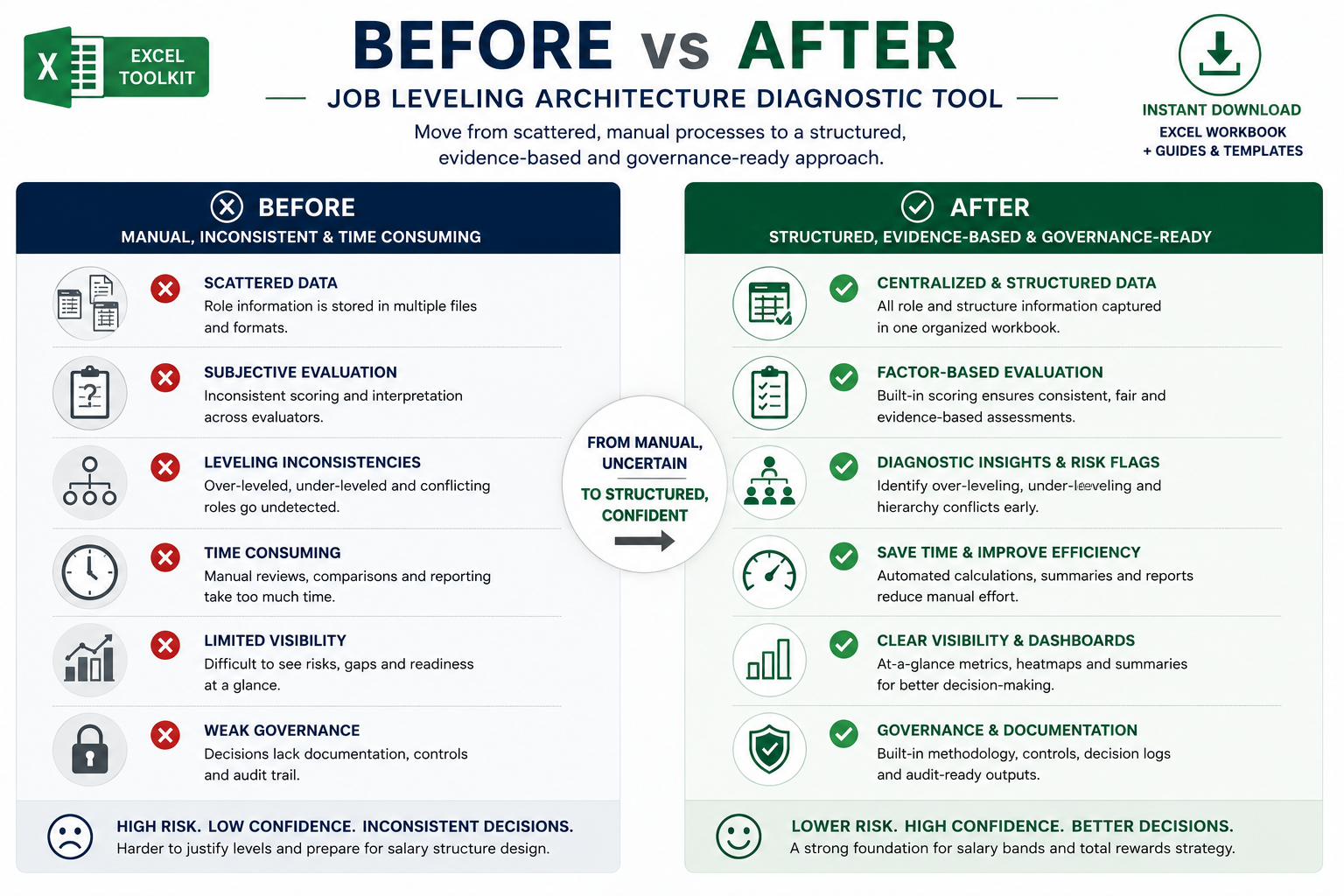
• Identify potential leveling inconsistencies, hierarchy conflicts, and governance risks.

• Improve transparency and consistency across job-evaluation and calibration decisions.

• Provide dashboards, diagnostic outputs, and reports that support structured calibration workshops.

• Strengthen job-architecture governance and support organization-design and HR-transformation initiatives.

This toolkit applies best to HR, Compensation, Total Rewards, Organization Design, and consulting teams that are building, reviewing, or harmonizing a job architecture. It is ideal for organizations with defined roles and reporting relationships that need a structured Excel-based framework for role evaluation, level validation, diagnostic review, and stakeholder calibration.

This toolkit is not ideal for organizations without reliable role information, reporting relationships, or defined job-level criteria. It does not replace a formally licensed job-evaluation methodology, an integrated job-architecture platform, legal advice, or experienced professional judgment. Final leveling decisions should not be based solely on automated outputs and must be validated through business context and governance.


0.0 / 5 (0 votes)

please wait...