Construction Project Costing & Cash Flow System in Excel | BOQ | WIP | Job Costing | 13-Week Cash Flow
Originally published: 30/08/2026 12:50
Publication number: ELQ-20746-1
View all versions & Certificate
certified

Construction Project Costing & Cash Flow System in Excel | BOQ | WIP | Job Costing | 13-Week Cash Flow

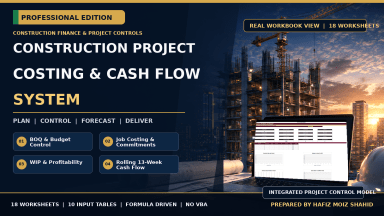
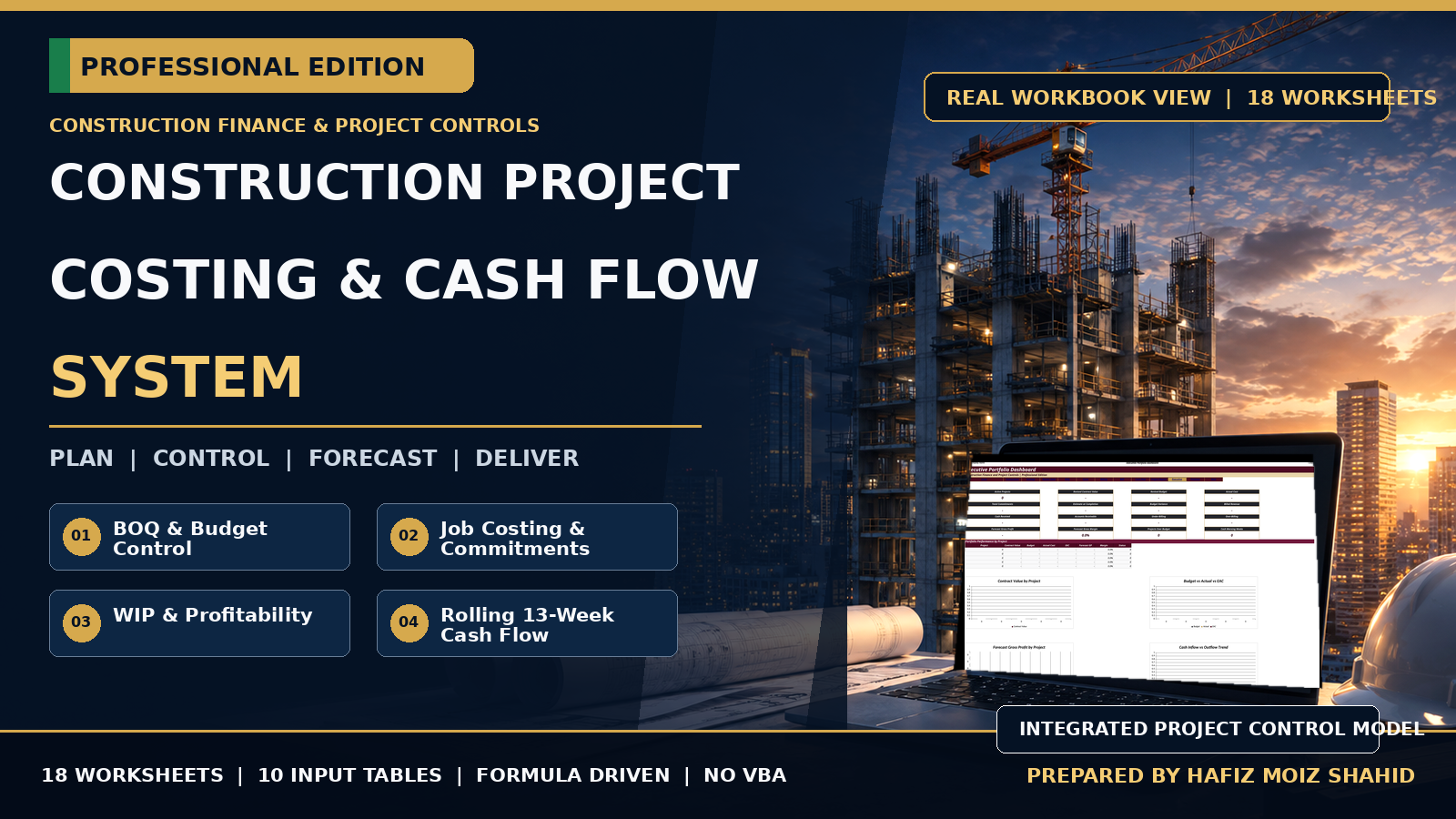
Integrated Excel system for construction job costing, BOQ budgets, commitments, WIP, project profitability and rolling 13-week cash-flow control.

Description
The Construction Project Costing & Cash Flow System is a professional Excel-based management model designed for contractors, subcontractors, property developers, engineering firms, quantity surveyors, project managers, cost controllers and construction finance teams.

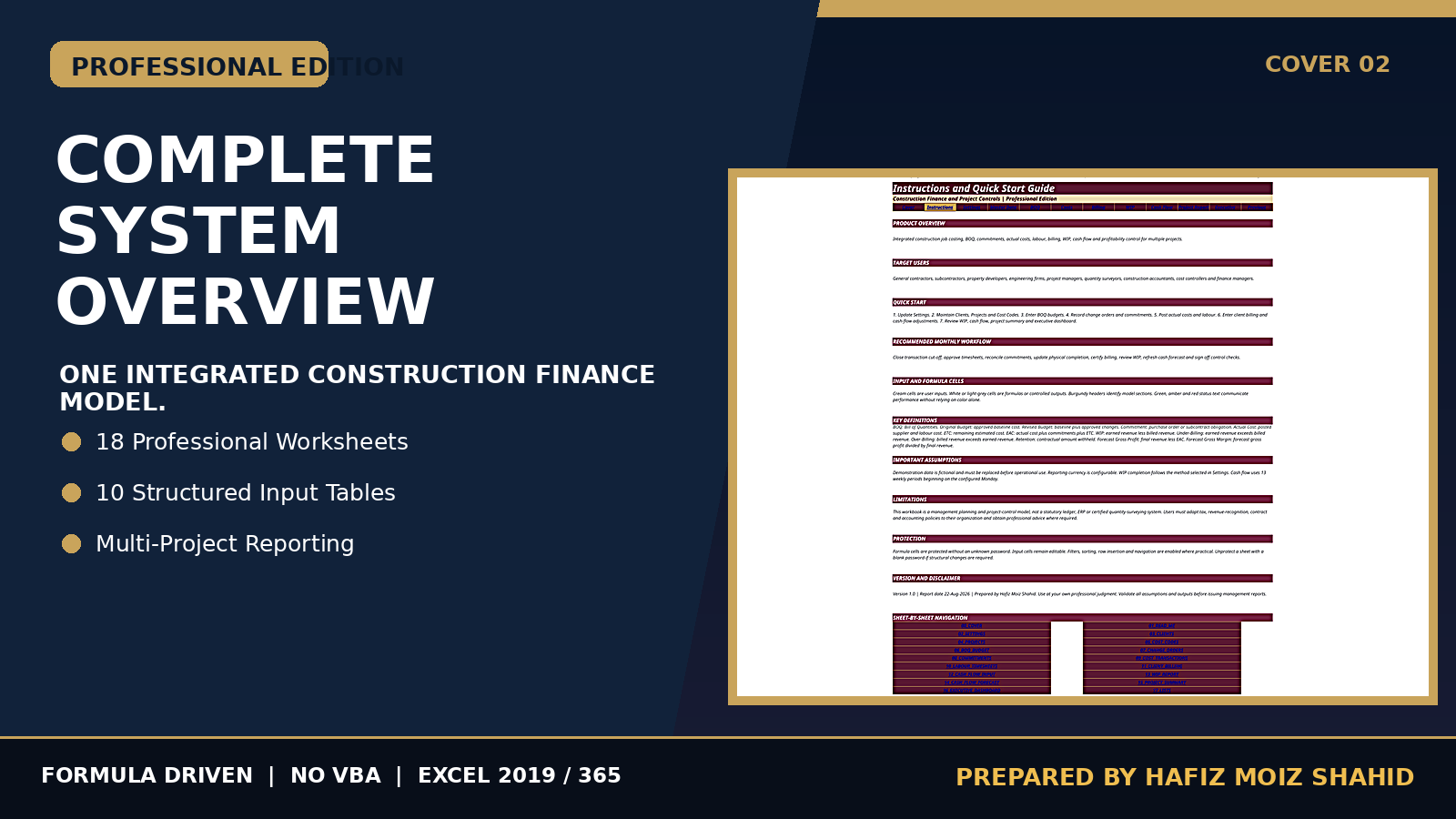
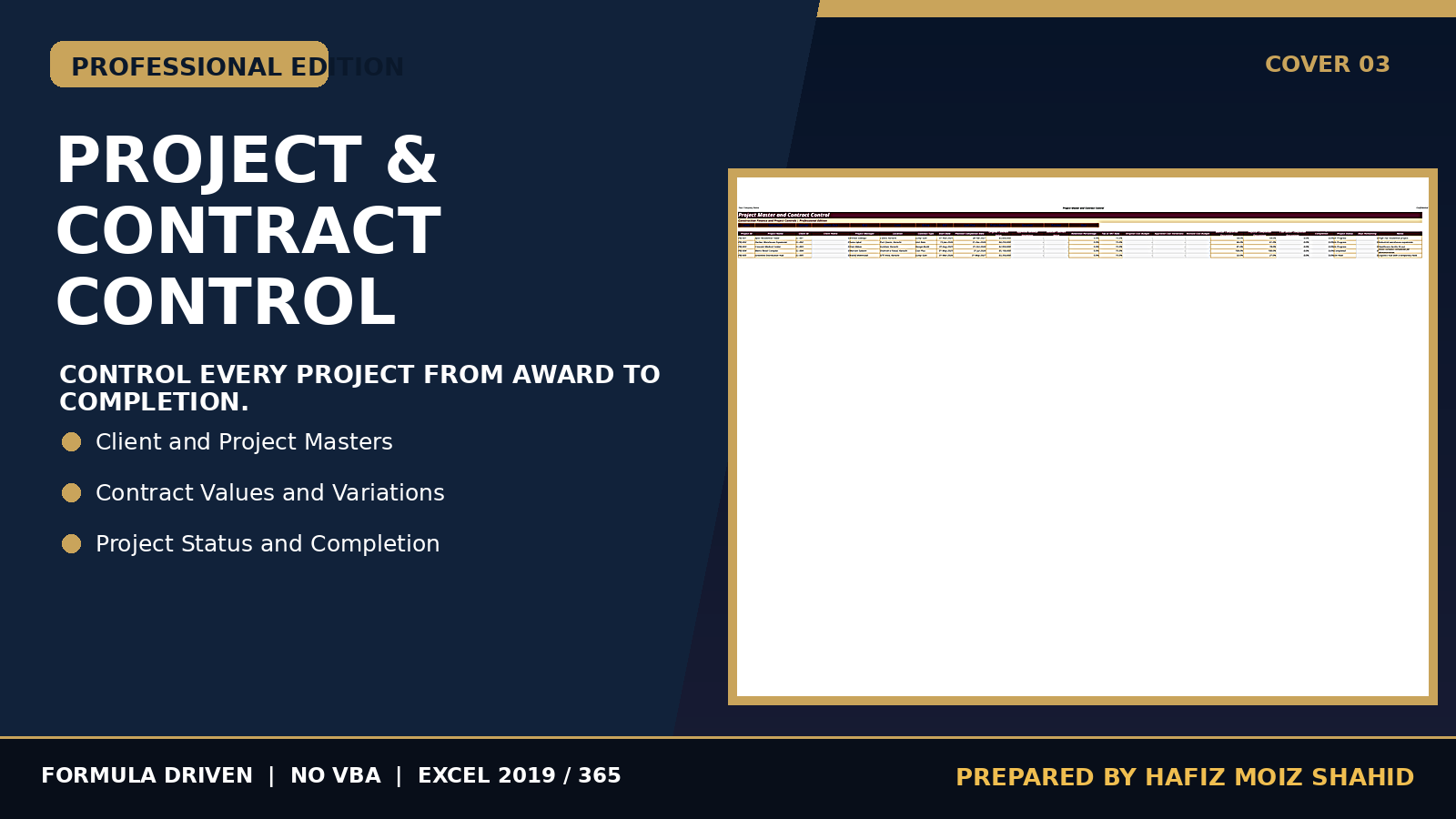
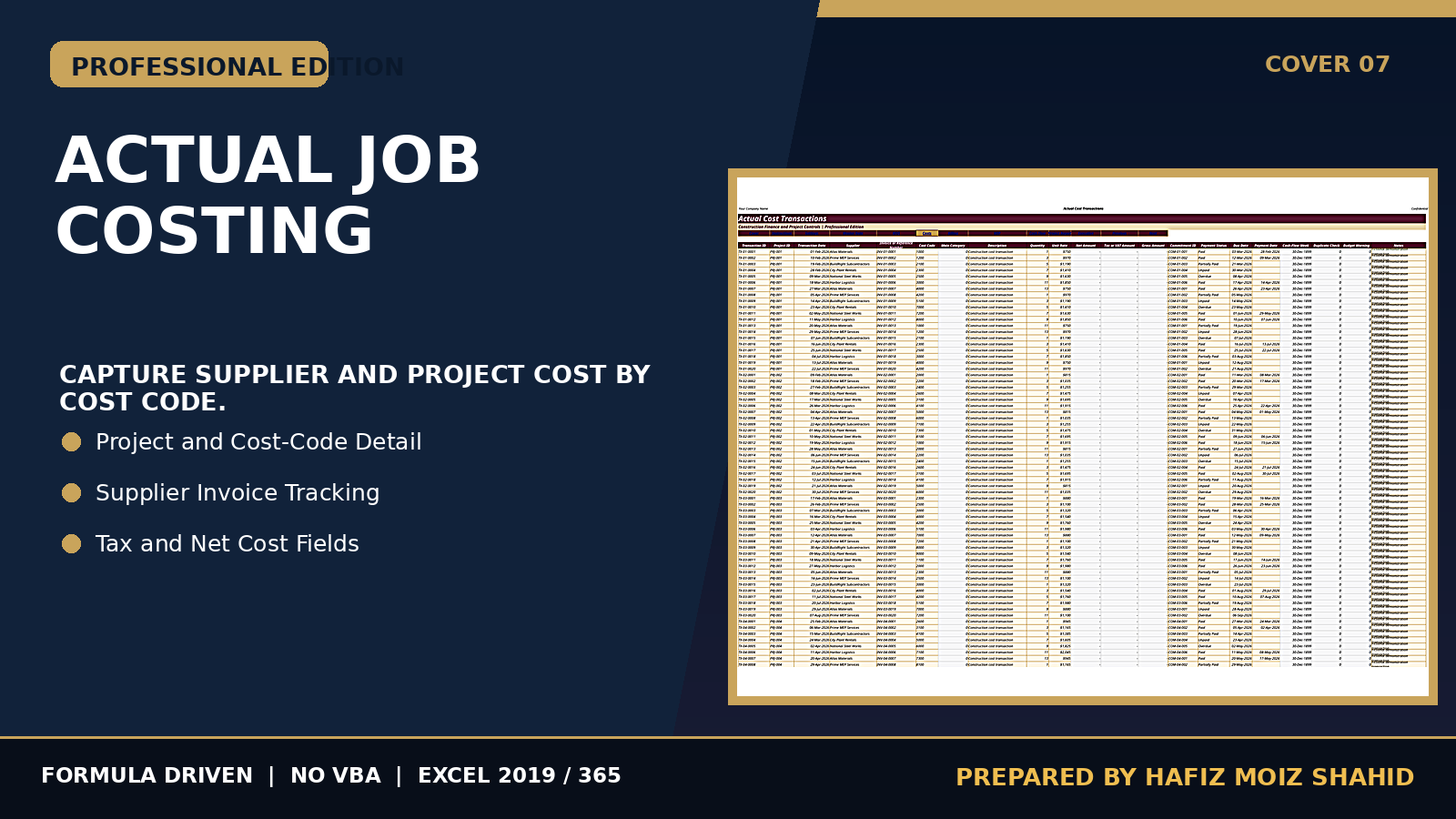
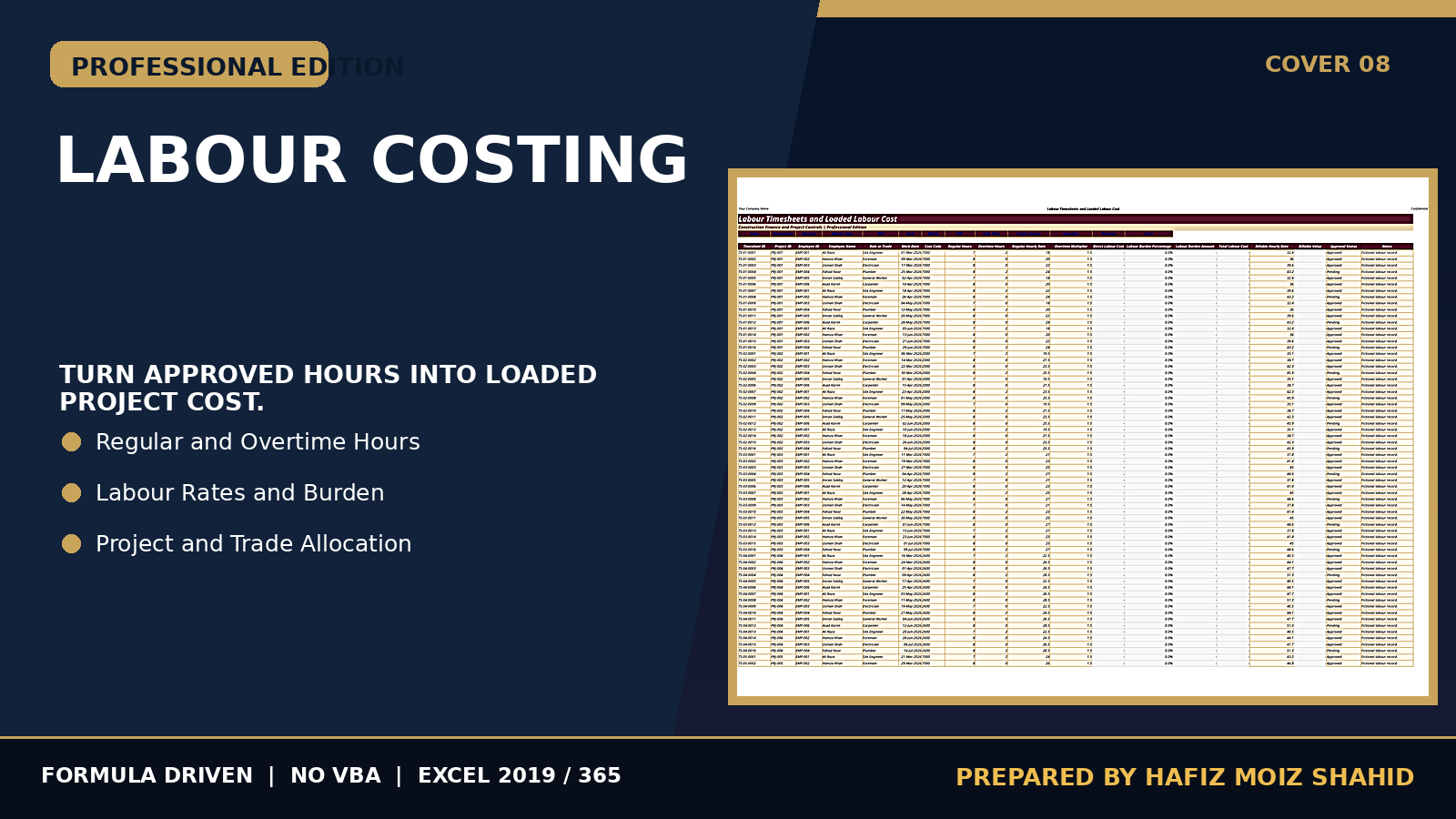
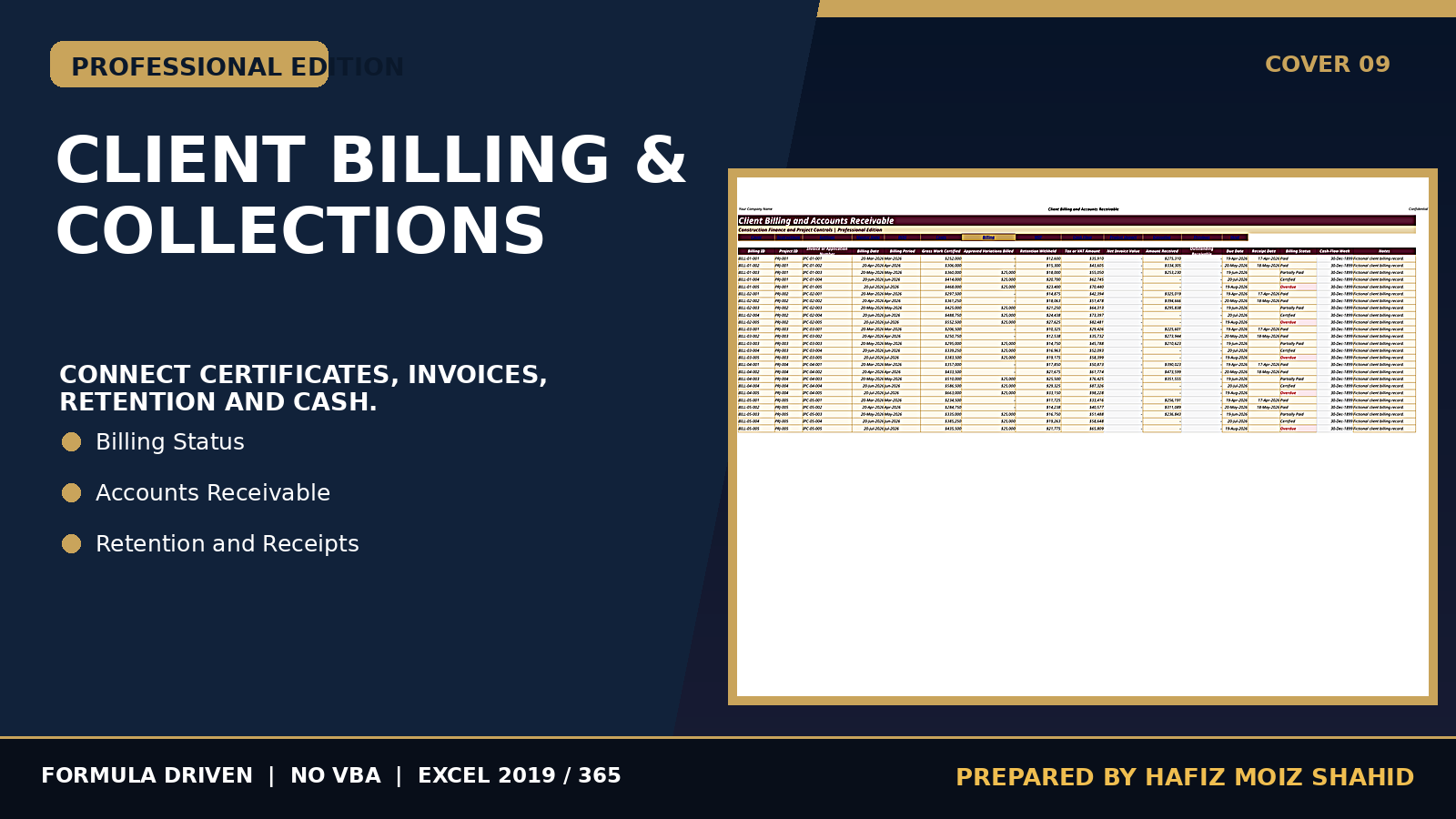
The system connects the complete commercial and financial lifecycle of multiple construction projects in one structured workbook. Users can maintain clients, projects and construction cost codes; prepare original and revised BOQ budgets; record change orders; monitor purchase orders and subcontract commitments; capture supplier costs and loaded labour costs; manage client billing and collections; calculate work in progress; prepare rolling cash-flow forecasts; and review project and portfolio performance.

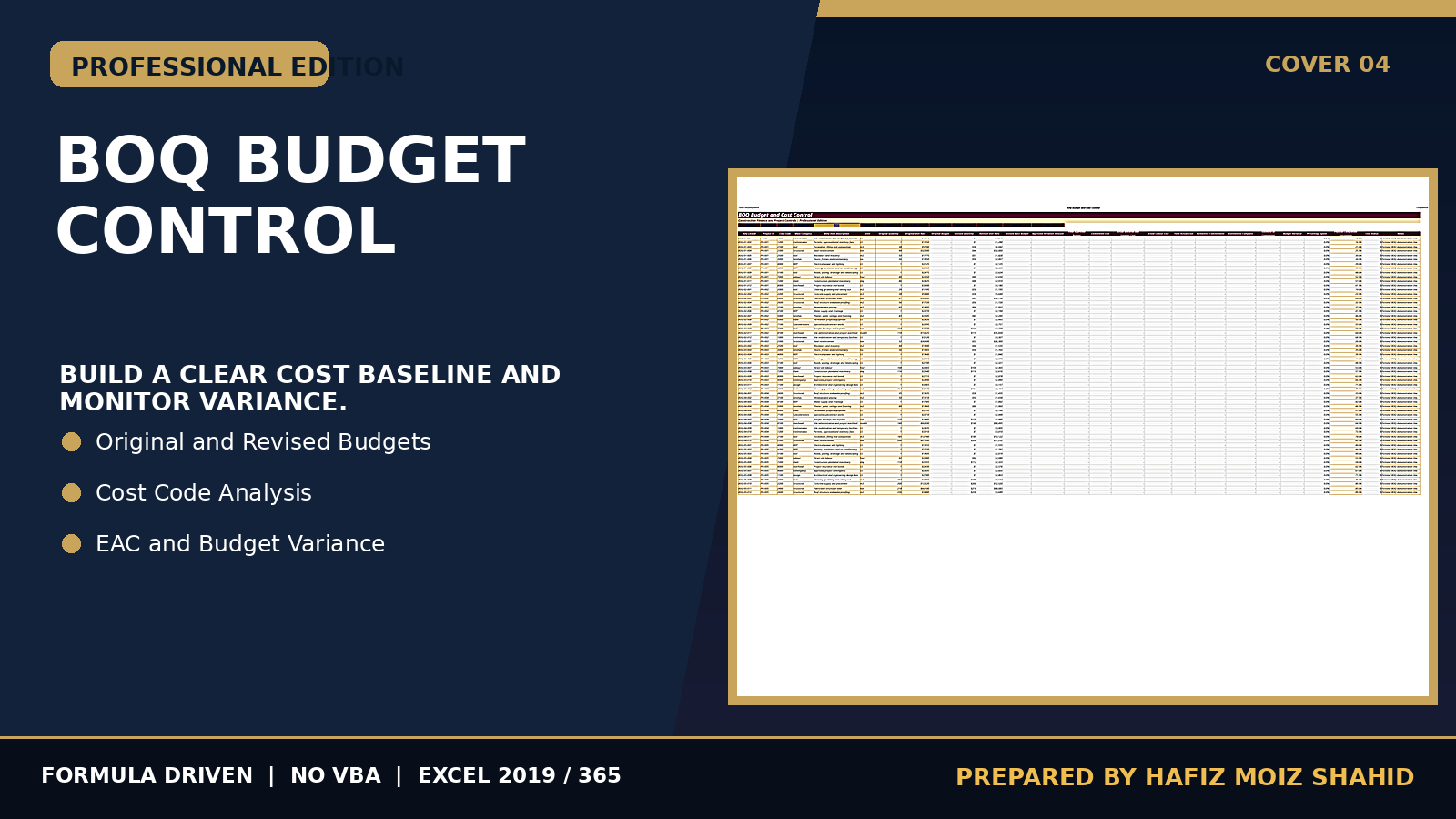
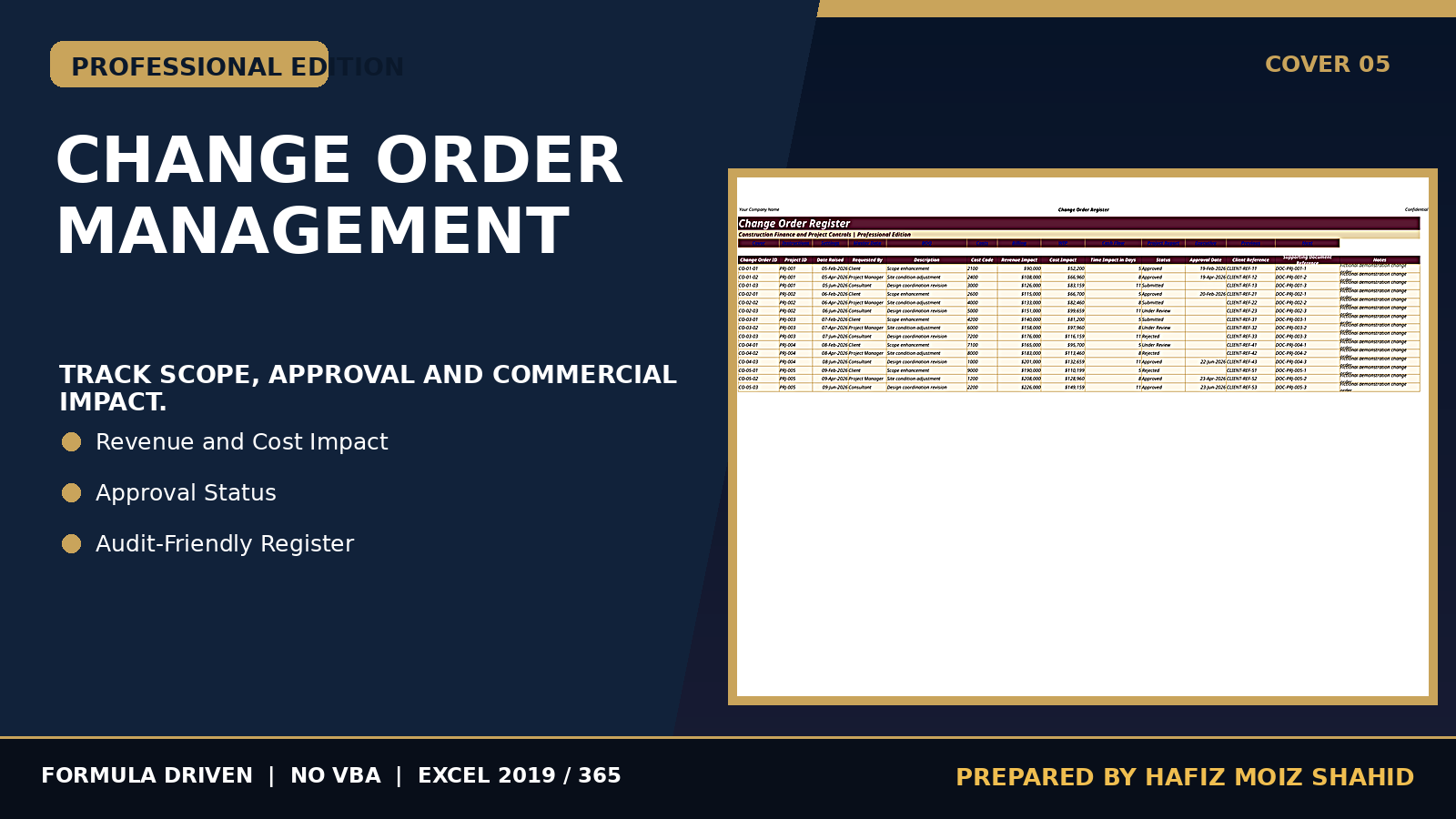
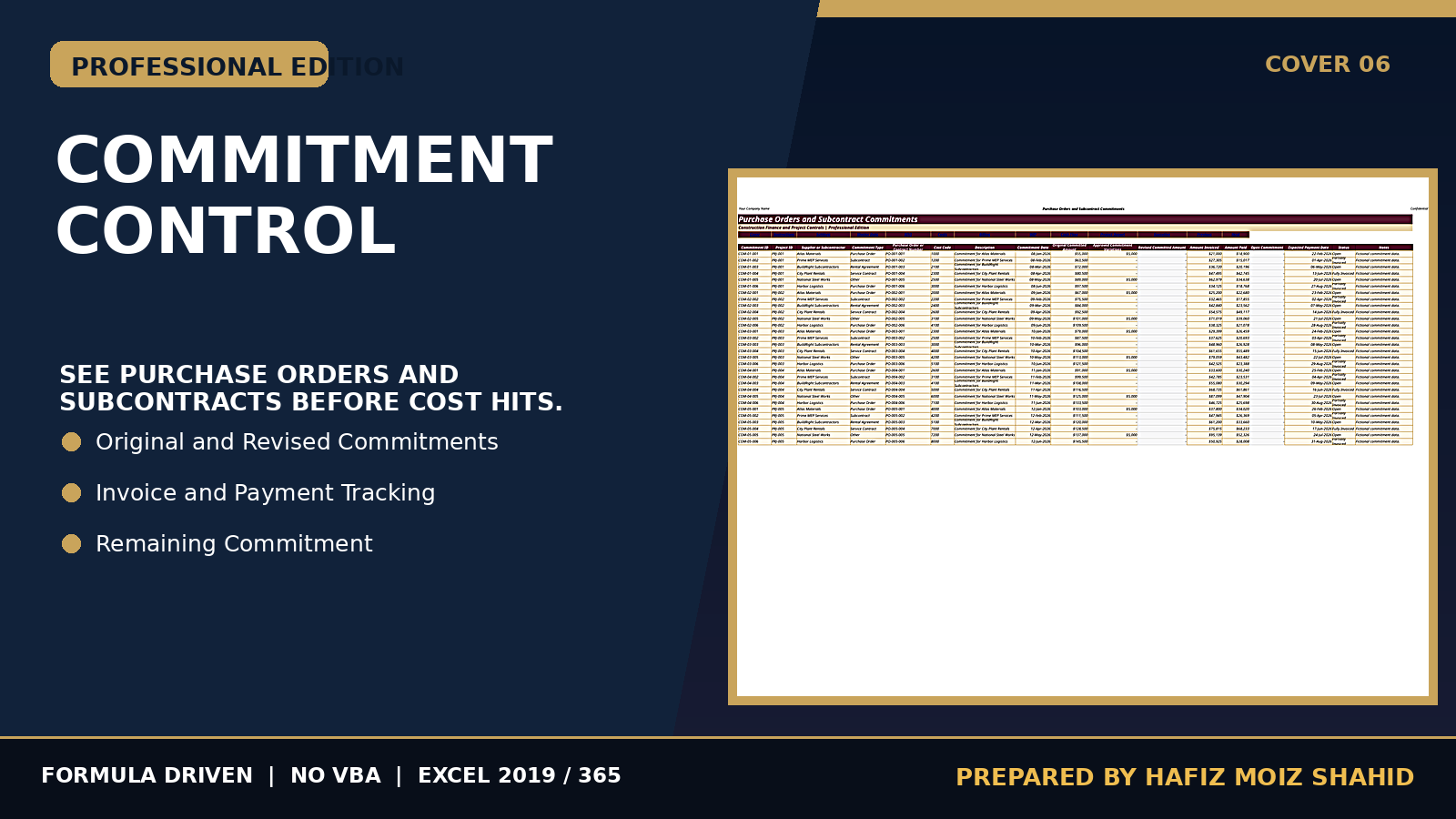
The BOQ module provides project and cost-code level visibility over original budgets, revised budgets, commitments, actual cost, remaining commitments, estimate to complete, estimate at completion and budget variance. Change-order and commitment registers support better control over approved variations, supplier obligations, invoicing, payments and future project exposure.
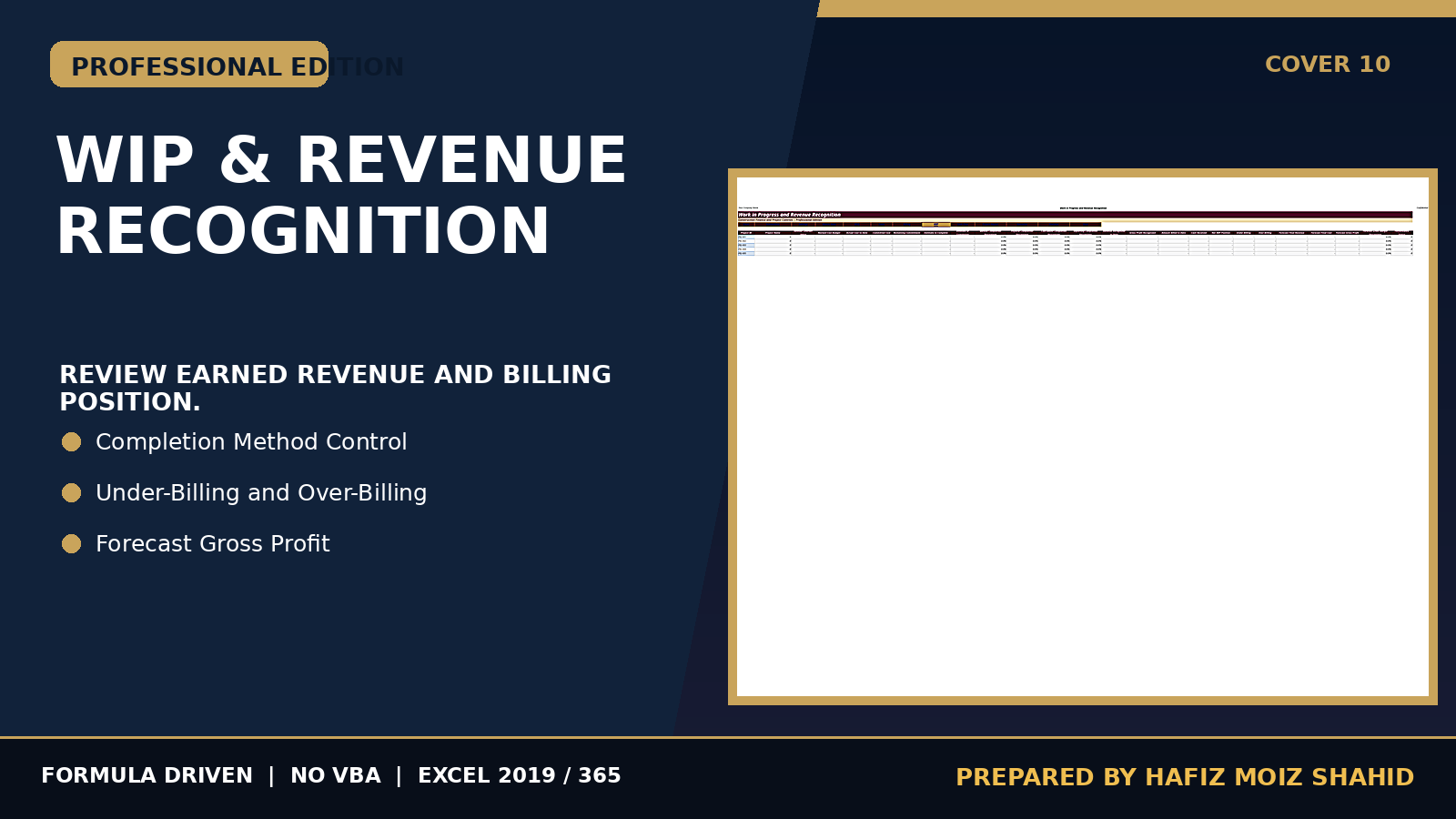
The WIP module connects contract values, costs, commitments, completion percentages, earned revenue and amounts billed. It supports Manual, Cost-Based and Physical completion methods, enabling users to review under-billing, over-billing, forecast final revenue, forecast final cost, forecast gross profit and forecast gross margin.

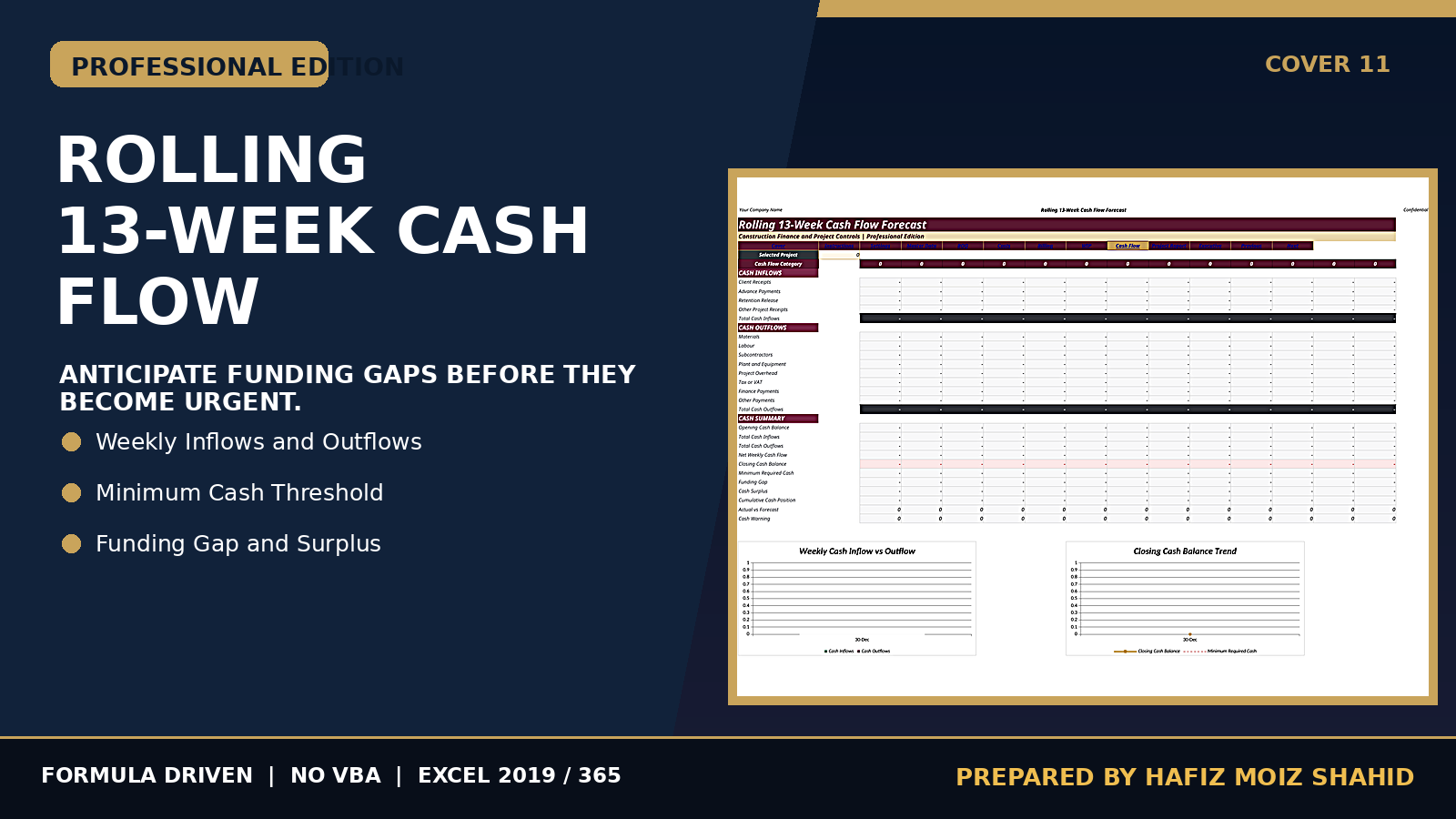
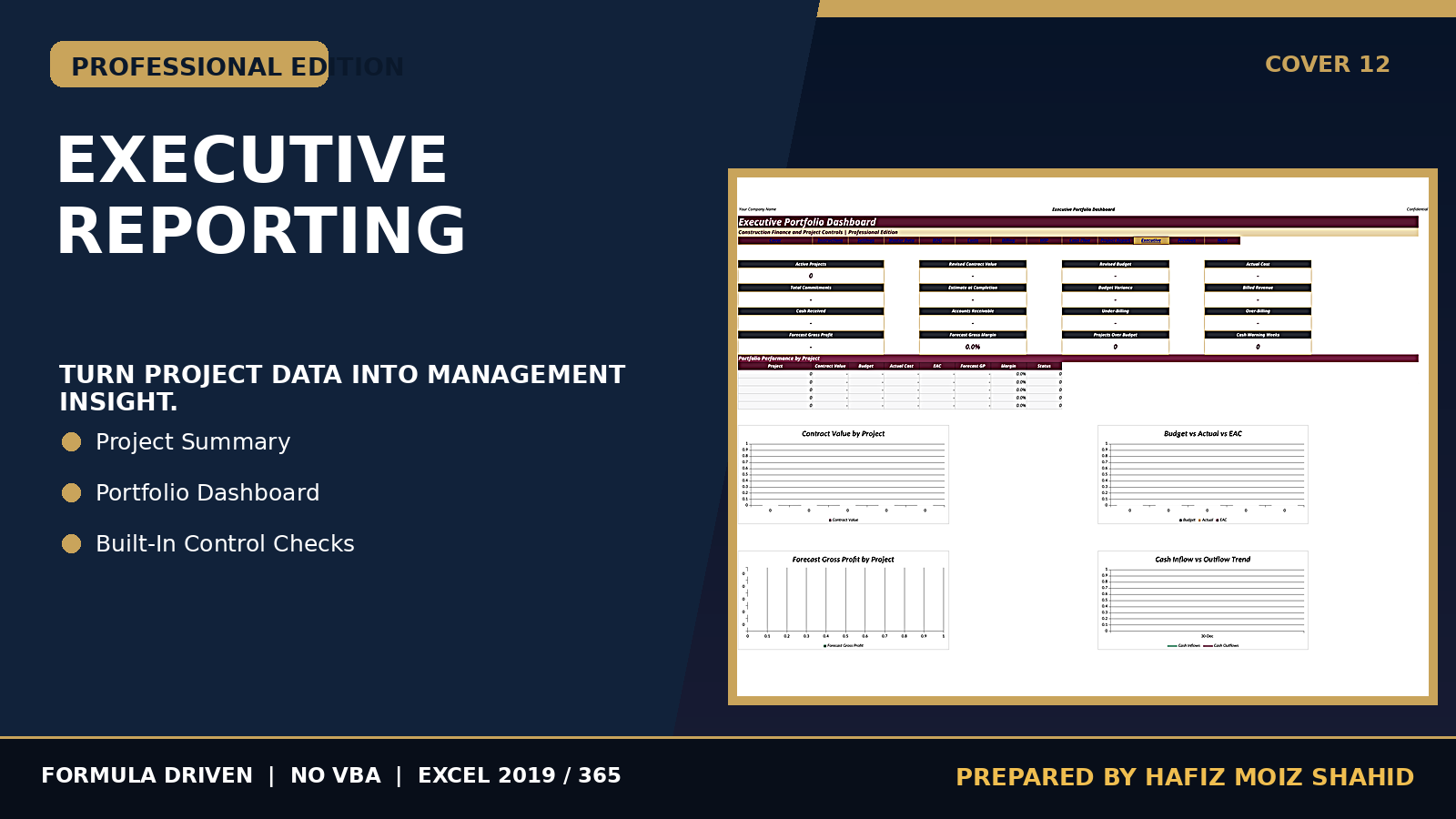
A rolling 13-week cash-flow forecast summarizes expected project receipts and payments, closing cash balances, minimum cash requirements, cash surpluses and potential funding gaps. Project and executive dashboards present key performance indicators, risk tables and charts for management review.

The professional package includes an 18-worksheet Excel workbook, a detailed 35-page User Manual, an 11-page Quick Start Guide and a 20-page Product Preview. The workbook is 100% formula-driven, contains no VBA and has no external workbook links. It is designed for Microsoft Excel 2019 and Microsoft 365.
All included records and financial figures are fictional demonstration data and must be replaced before operational use. This workbook is a management planning and project-control model, not a statutory accounting ledger, ERP system or certified quantity-surveying application. Users must validate all data, assumptions, accounting policies, contract terms and outputs before making business decisions.

This Best Practice includes
1 professional Excel workbook with 18 worksheets and 10 structured input tables; 1 detailed User Manual PDF containing 3

Acquire business license for $99.00

Add to cart

Add to bookmarks

Discuss

Further information

The objective of this Downloadable Best Practice is to provide construction finance and project-control teams with an integrated, transparent and repeatable Excel framework for managing project budgets, BOQ lines, commitments, actual supplier costs, labour, client billing, work in progress, profitability and short-term cash flow.

The model is designed to improve cost visibility, strengthen budget control, identify potential overruns, monitor under-billing and over-billing, anticipate funding gaps and support informed project and portfolio management decisions.

This Downloadable Best Practice applies best to general contractors, subcontractors, property developers, engineering firms, quantity surveyors, construction accountants, commercial managers, project managers and cost controllers that maintain project data in Excel and require structured management reporting without implementing a complex ERP system.

It is most effective when users maintain consistent Project IDs and Cost Codes, approved BOQ budgets, change-order registers, commitment records, supplier costs, labour timesheets, billing certificates and weekly cash-flow assumptions. It is suitable for organizations that can assign a responsible model owner and perform regular reconciliations and monthly close reviews.

This Downloadable Best Practice does not apply ideally where an organization requires simultaneous multi-user data entry, automated integration with accounting or procurement systems, live bank feeds, automated foreign-currency translation, document-workflow approvals, transaction-level access security, regulatory tax filing or certified quantity-surveying functionality.

It is not intended to replace a statutory accounting ledger, construction ERP, payroll system, procurement platform, contract-management system or professional accounting, tax, legal or engineering advice. Organizations with these requirements should use the workbook as a management reporting layer or customize it under appropriate professional and technical supervision.


0.0 / 5 (0 votes)

please wait...