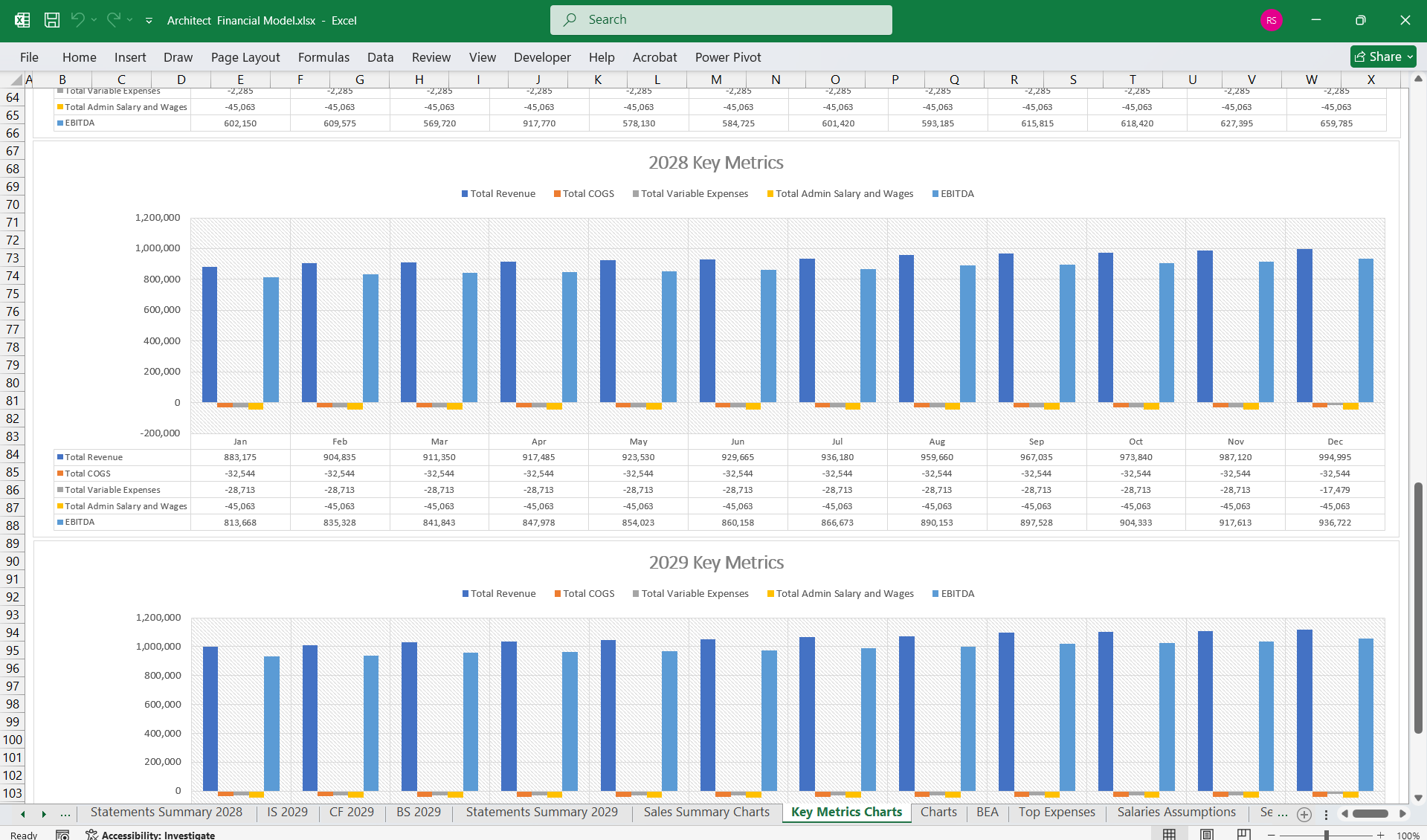
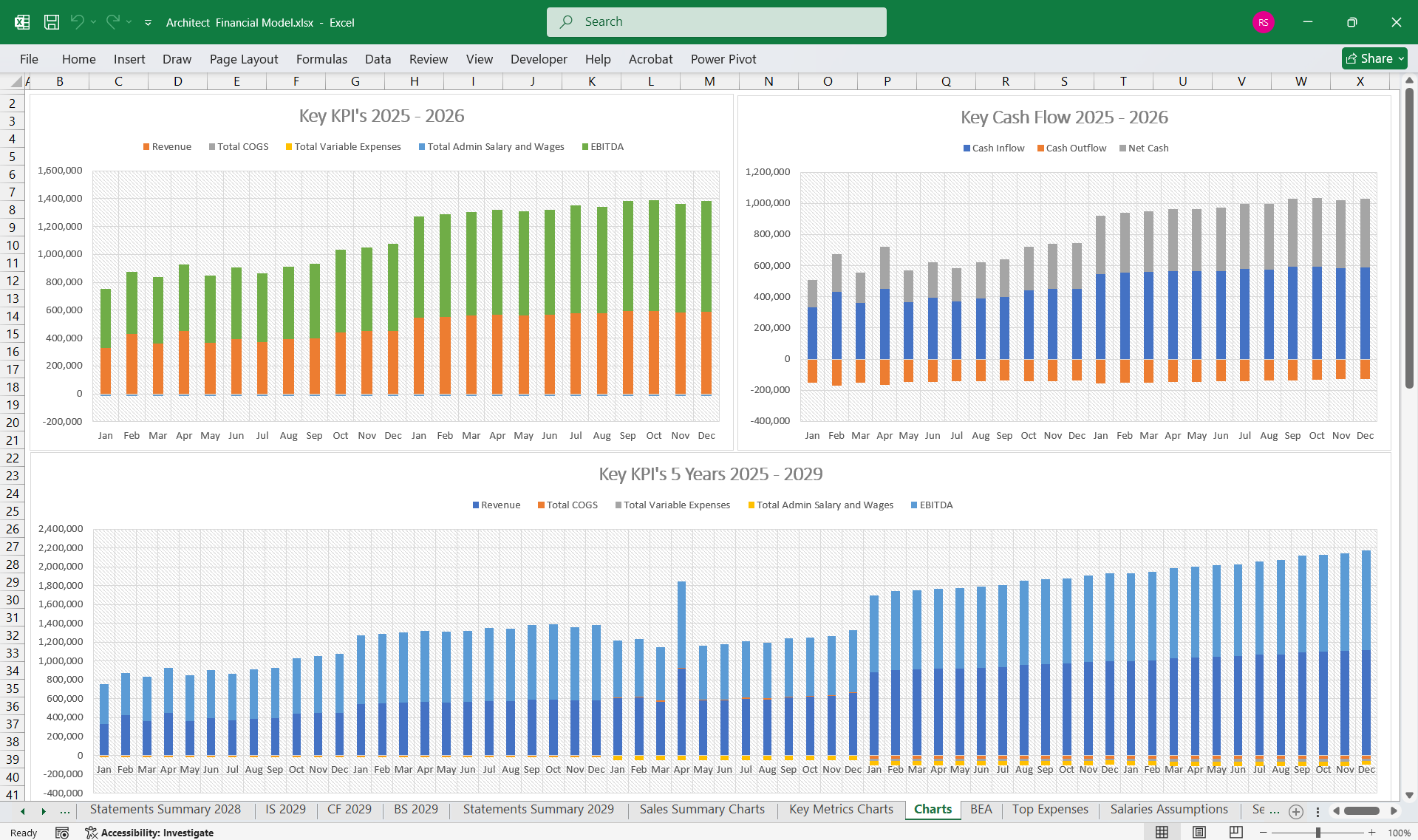
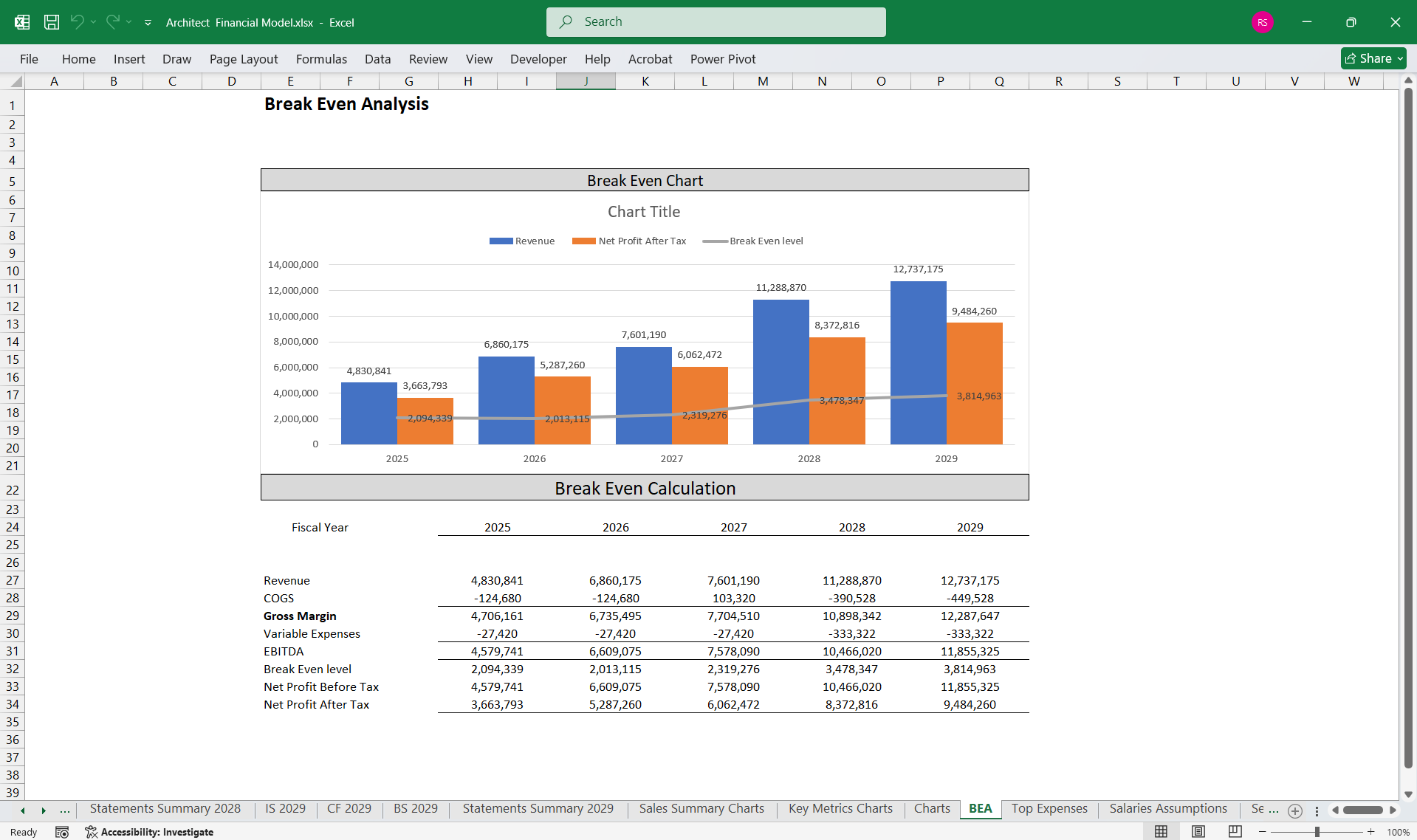
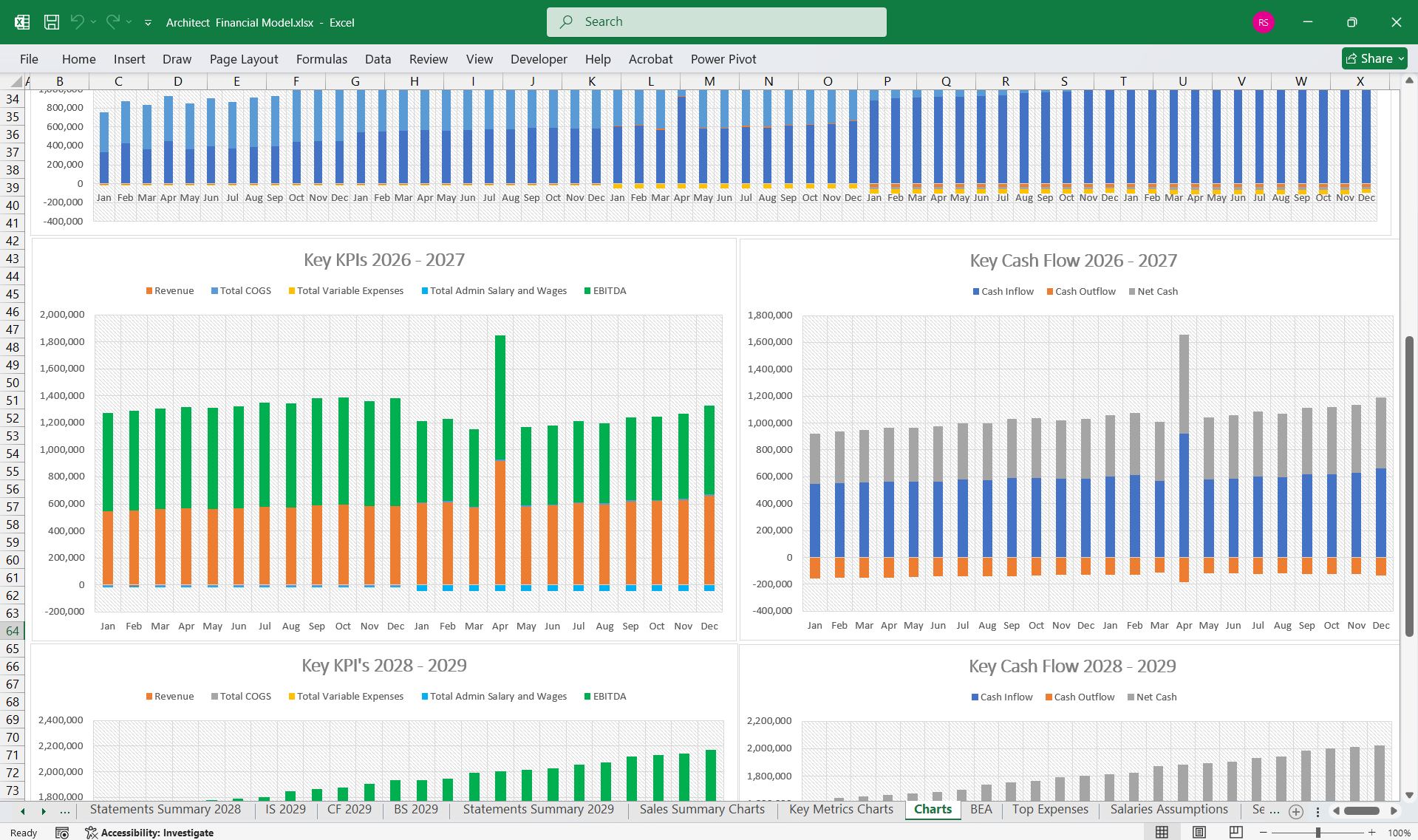
Architect Company Finance Model 5 Year 3 Statement
Originally published: 21/05/2024 07:46
Last version published: 19/12/2024 10:37
Publication number: ELQ-78177-2
View all versions & Certificate
certified

Architect Company Finance Model 5 Year 3 Statement

A comprehensive editable, MS Excel model for tracking Architect Company finances, Income Statements, Balance Sheets, & CF Statements & development revenue.

Description
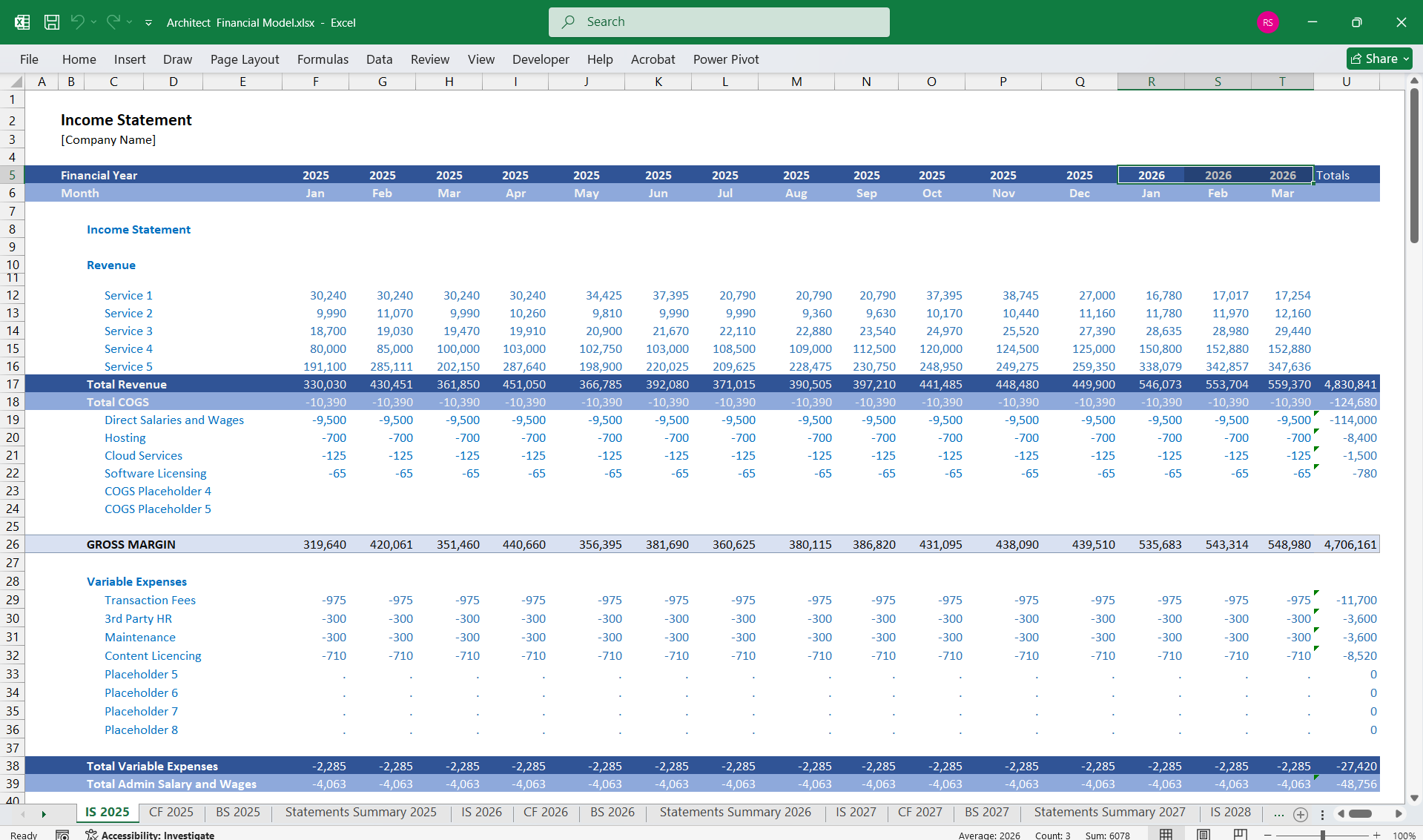
This financial model for an architect provides a structured framework for evaluating your architectural practice's financial performance and viability. It includes an interconnected Income Statement, Cash Flow Statement, and Balance Sheet.
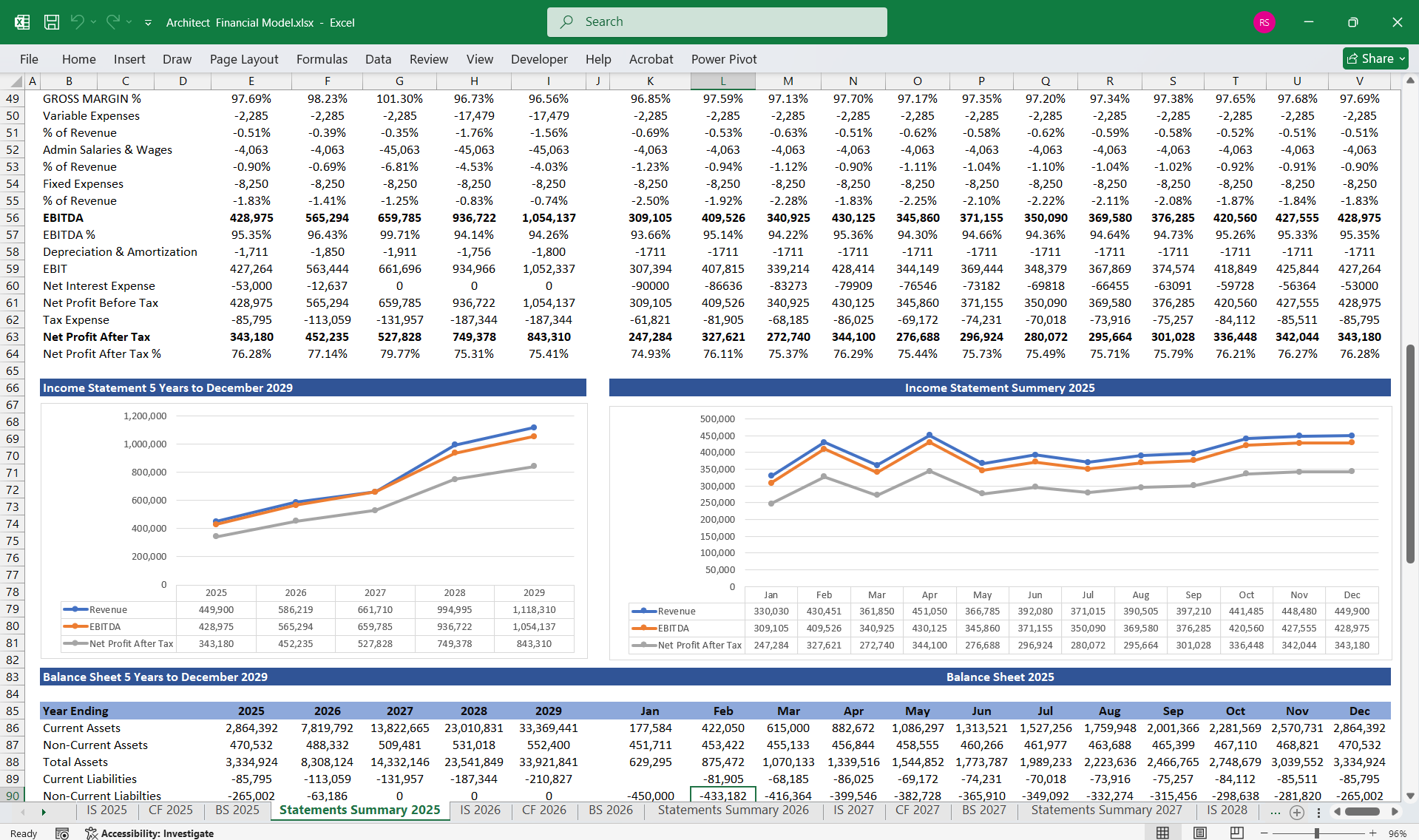
1. Income Statement
The Income Statement provides a snapshot of profitability over a specific period, typically monthly, quarterly, or annually.
Key Components:
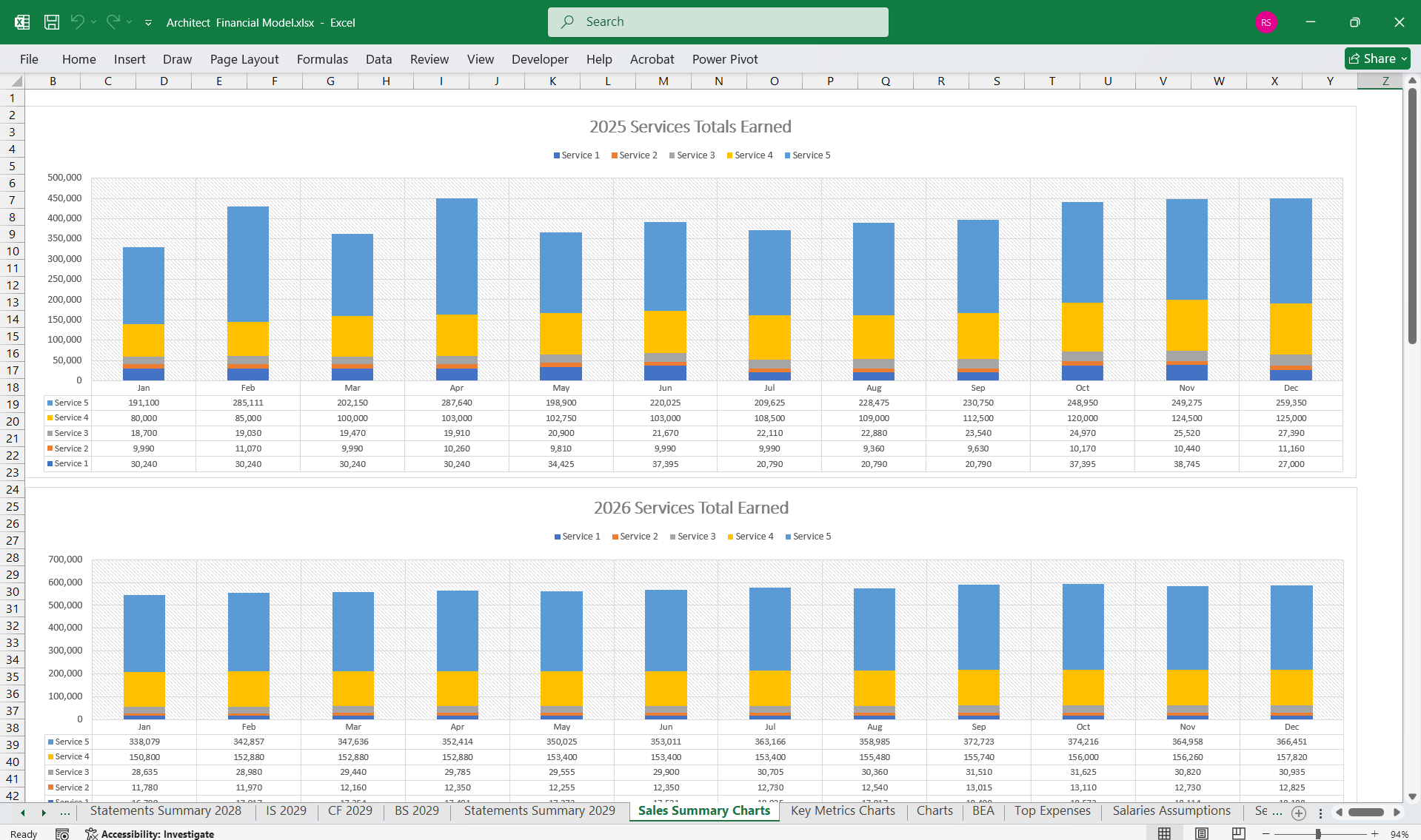
  1. Revenue:
    • Project Fees: Income from design and architectural projects.
    • Consultation Fees: Revenue from advisory or consultancy services.
    • Other Revenue Streams: Income from workshops, publications, or teaching.
  2. Cost of Goods Sold (COGS):
    • Direct Project Costs: Costs directly tied to projects (e.g., subcontractors, software for project-specific needs, travel for client visits).
  3. Gross Profit:
    • Revenue−COGS\text{Revenue} – \text{COGS}
  4. Operating Expenses:
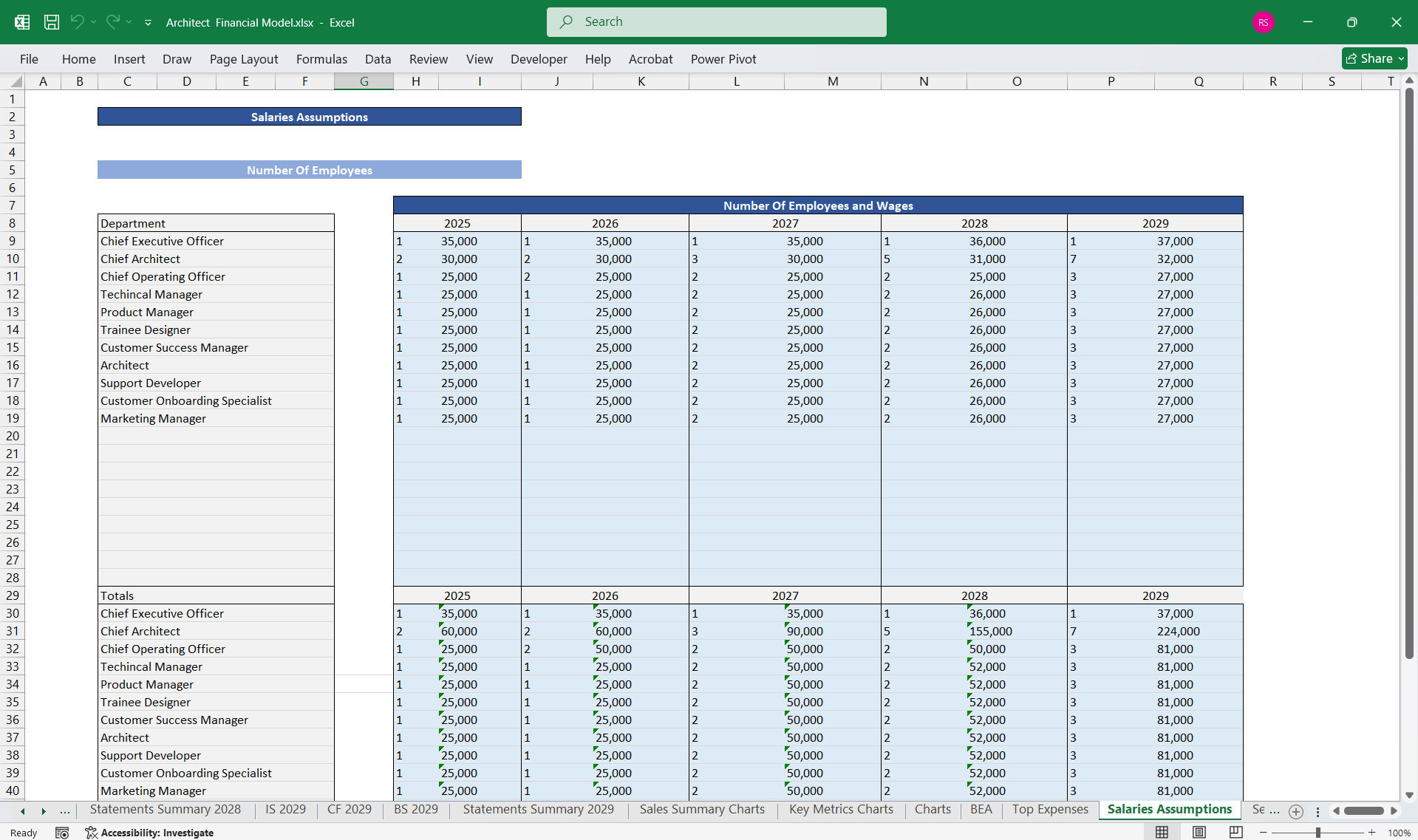
    • Salaries and Wages: For architects, draftsmen, and administrative staff.
    • Office Rent and Utilities: Costs of maintaining office space.
    • Software Subscriptions: For CAD, BIM, or other architectural tools.
    • Marketing and Advertising: For portfolio showcases and client acquisition.
    • Professional Development: Training, workshops, and certifications.
    • Depreciation and Amortization: For office equipment and software.
  5. Operating Profit (EBIT):
    • Gross Profit−Operating Expenses\text{Gross Profit} – \text{Operating Expenses}
  6. Other Income and Expenses:
    • Interest Income or Expense: On loans or investments.
    • Taxes: Corporate taxes or self-employment taxes.
  7. Net Profit:
    • Operating Profit+Other Income and Expenses\text{Operating Profit} + \text{Other Income and Expenses}
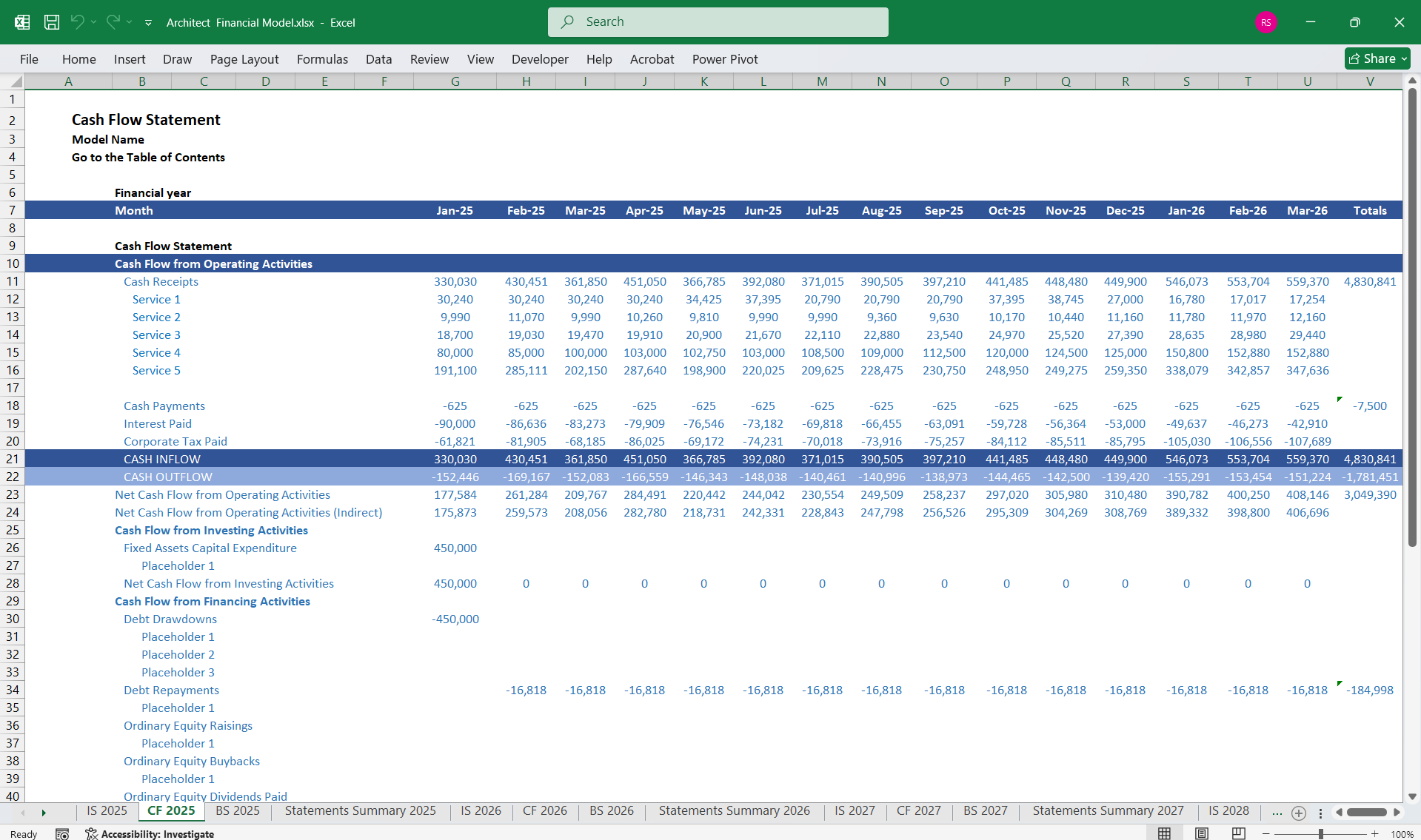
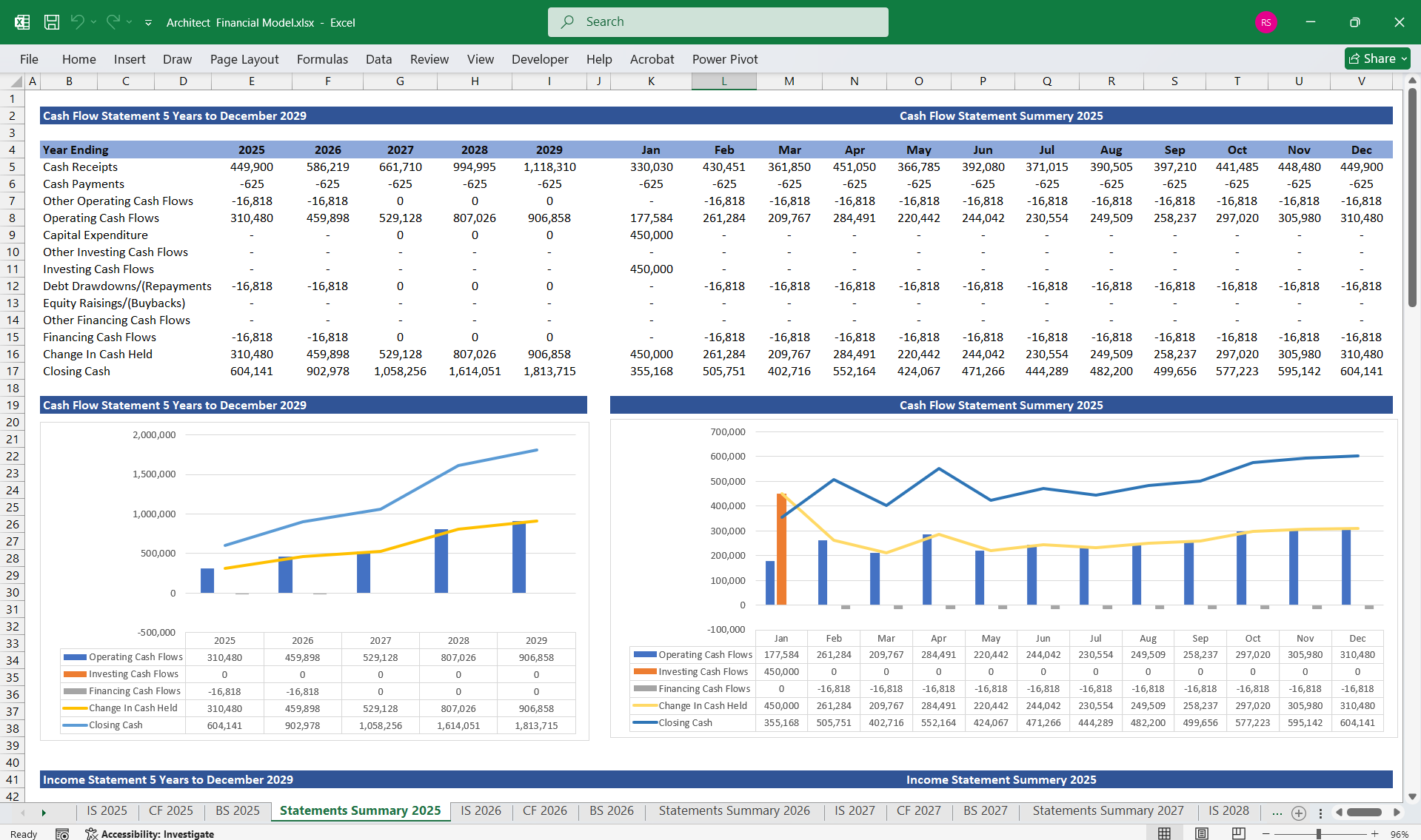
2. Cash Flow Statement
The Cash Flow Statement focuses on the cash inflows and outflows, segmented into three activities: operating, investing, and financing.
Key Components:
  1. Cash Flow from Operating Activities:
    • Cash Inflows: Payments received from clients.
    • Cash Outflows: Payments for project expenses, salaries, rent, utilities, and taxes.
  2. Cash Flow from Investing Activities:
    • Outflows: Purchase of office equipment, software licenses, or office renovations.
    • Inflows: Sale of unused equipment or real estate.
  3. Cash Flow from Financing Activities:
    • Inflows: Loans or external investments.
    • Outflows: Loan repayments, interest payments, or dividend distributions (if any).
  4. Net Cash Flow:
    • Operating Cash Flow+Investing Cash Flow+Financing Cash Flow\text{Operating Cash Flow} + \text{Investing Cash Flow} + \text{Financing Cash Flow}
  5. Opening and Closing Cash Balance:
    • Links the beginning cash position to the end cash position after factoring in net cash flows.
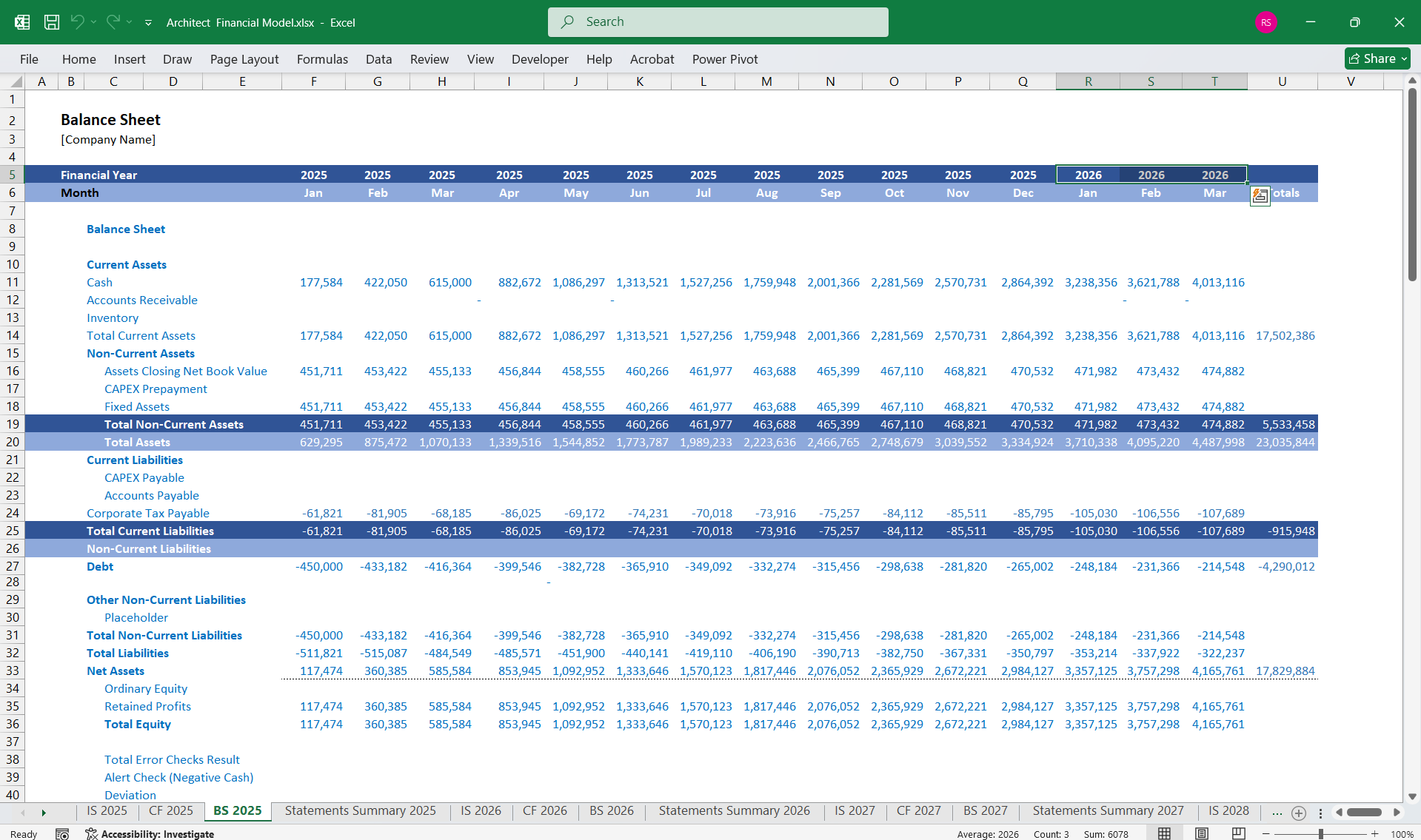
3. Balance Sheet
The Balance Sheet provides a snapshot of the architect’s financial position at a specific date, detailing assets, liabilities, and equity.
Key Components:
  1. Assets:
    • Current Assets:
      • Cash and Cash Equivalents: Bank account balances, petty cash.
      • Accounts Receivable: Unpaid invoices from clients.
      • Prepaid Expenses: Software licenses or rent paid in advance.
    • Non-Current Assets:
      • Equipment: Computers, printers, and office furniture.
      • Software: Architectural software like Revit or AutoCAD.
      • Real Estate: Owned office space.
  2. Liabilities:
    • Current Liabilities:
      • Accounts Payable: Outstanding payments for subcontractors or suppliers.
      • Short-Term Debt: Loan instalments due within a year.
      • Accrued Expenses: Salaries or taxes owed but not yet paid.
    • Long-Term Liabilities:
      • Loans: Long-term business loans or mortgages.

  3. Equity:

    • Owner’s Capital: Initial investment or retained earnings.

    • Retained Earnings: Cumulative profits reinvested into the business.


    Balance Sheet Equation:
    Assets=Liabilities+Equity\text{Assets} = \text{Liabilities} + \text{Equity}
Interlinkages Between Statements:
  • Net Profit from the Income Statement flows into the Cash Flow Statement (Operating Activities) and increases Retained Earnings in the Balance Sheet.
  • Changes in Assets and Liabilities affect the Cash Flow Statement under Operating or Investing Activities.
  • Financing activities in the Cash Flow Statement update Liabilities and Equity on the Balance Sheet.
Additional Considerations:
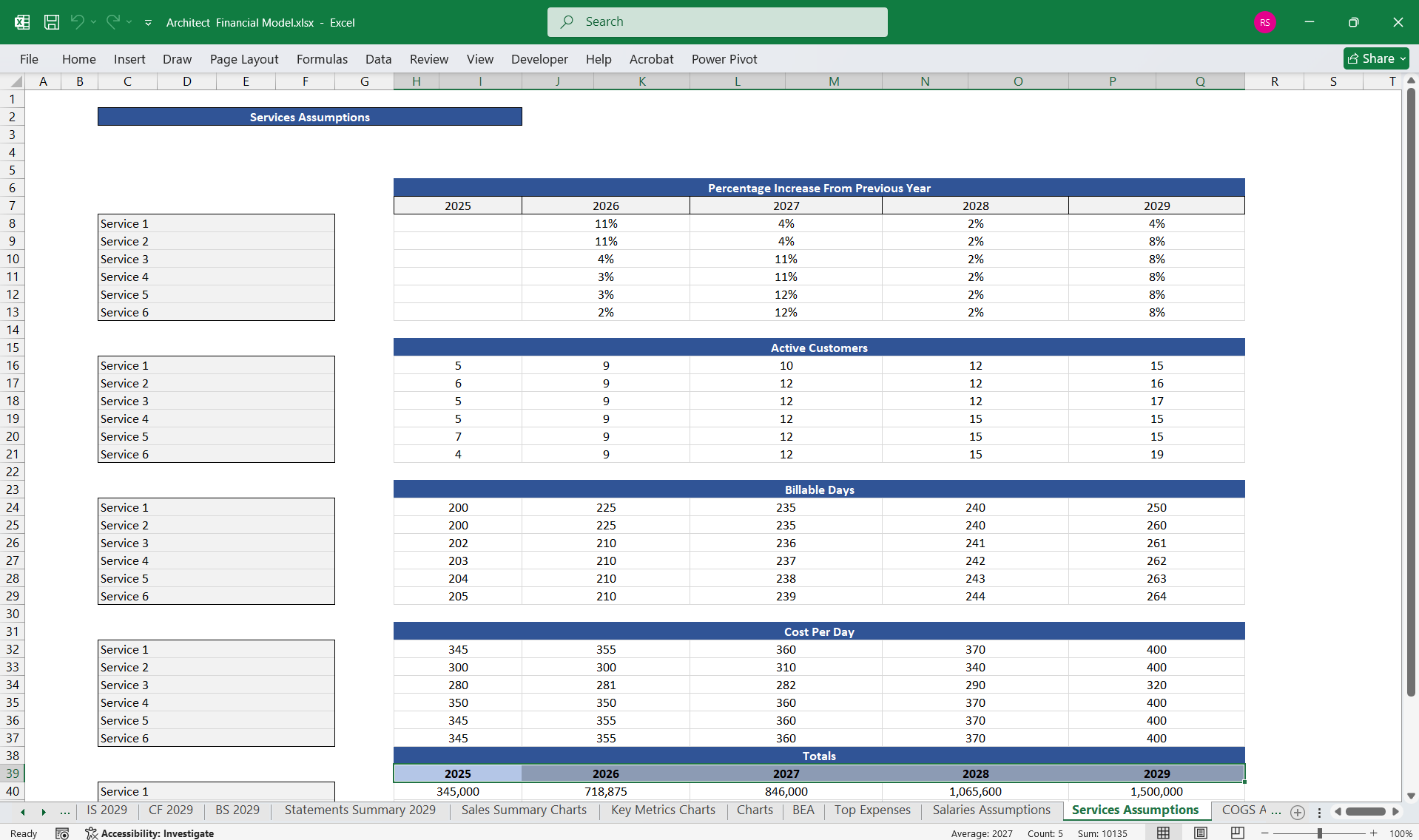
  1. Scenario Planning: The model can incorporate different assumptions, such as variations in project volume, payment delays, or cost overruns.
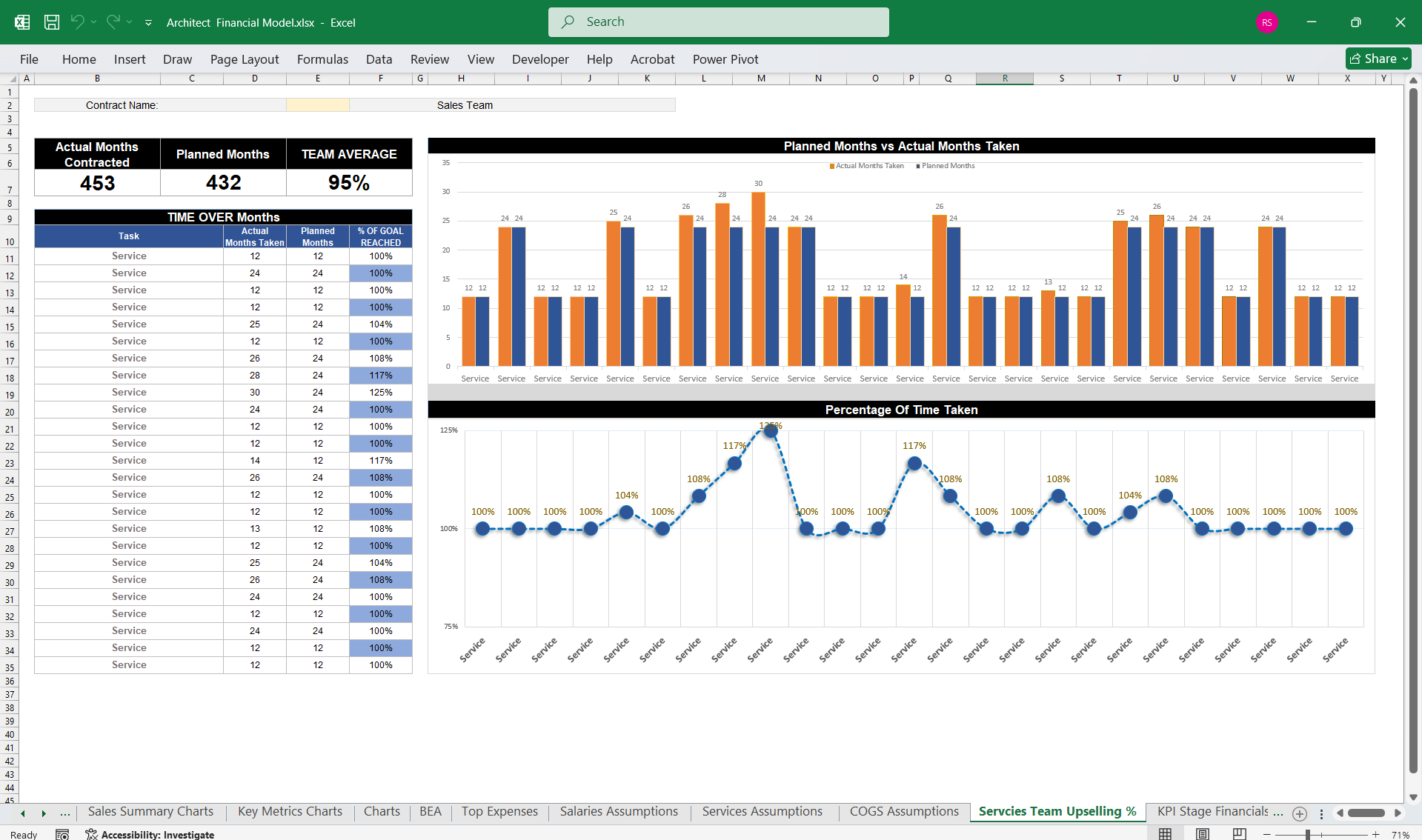
  2. KPIs: Key Performance Indicators (e.g., profit margins, receivables turnover, utilization rates) can be integrated for better insights.
  3. Automation: Use tools like Excel software to streamline calculations and forecasts.
This model helps architects manage profitability, cash flow, and financial stability, ensuring informed decision-making and sustainable growth.

This Best Practice includes
1 Architect Company Finance Model in Excel

Acquire business license for $80.00

Add to cart

Add to bookmarks

Discuss

Further information

Provides thorough oversight, tracking, and reporting of architect company finances, including updates on budget utilisation and projections.


0.0 / 5 (0 votes)

please wait...