Electric Vehicle (EV) Charging Infrastructure EPC (Engineering, Procurement & Construction) Financial Forecast Model
Originally published: 15/01/2026 11:37
Last version published: 06/02/2026 16:27
Publication number: ELQ-30389-2
View all versions & Certificate
certified

Electric Vehicle (EV) Charging Infrastructure EPC (Engineering, Procurement & Construction) Financial Forecast Model

EV charging infrastructure EPC providing design, procurement, and installation services for residential, commercial, fleet, and public fast-charging projects.

Description
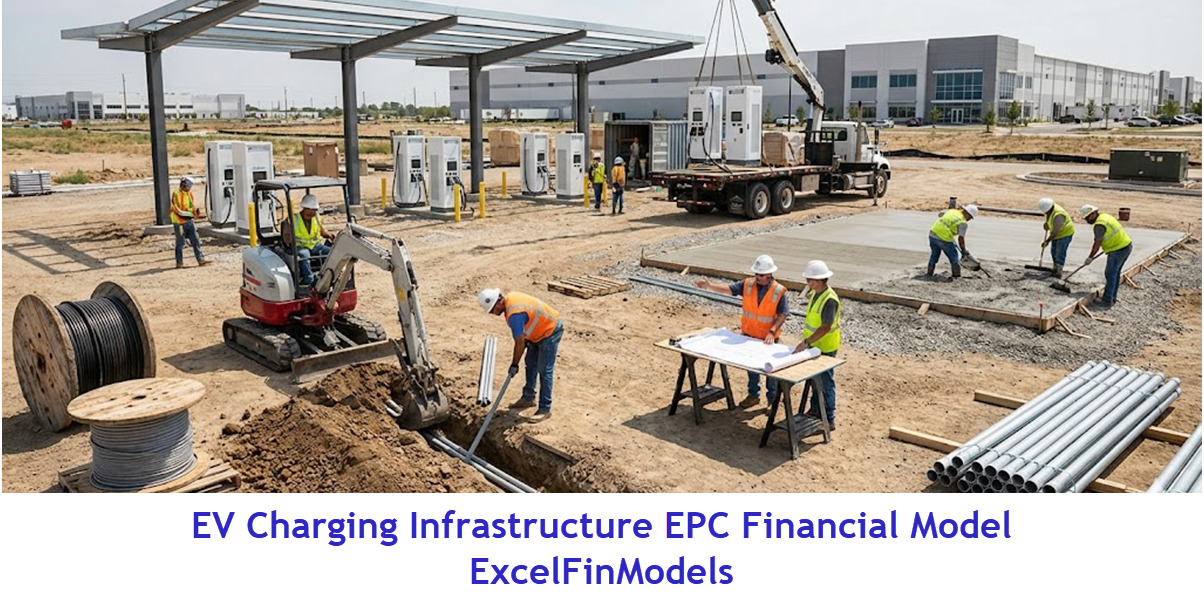
This financial model is designed to evaluate and forecast the operating and financial performance of an EV Charging Engineering, Procurement, and Construction (EPC) business, which designs, supplies, and installs end-to-end electric vehicle charging infrastructure, delivering turnkey projects from site engineering through commissioning.


The model captures project-driven revenue, civil and electrical installation economics, and monthly operating dynamics across configurable business segments. It provides a 5-year (60-month) forward-looking forecast, enabling decision-makers to assess scalability, revenue and direct cost trajectories, project-level margins, working capital requirements, and overall profitability.


Model Structure – Five Core Sections
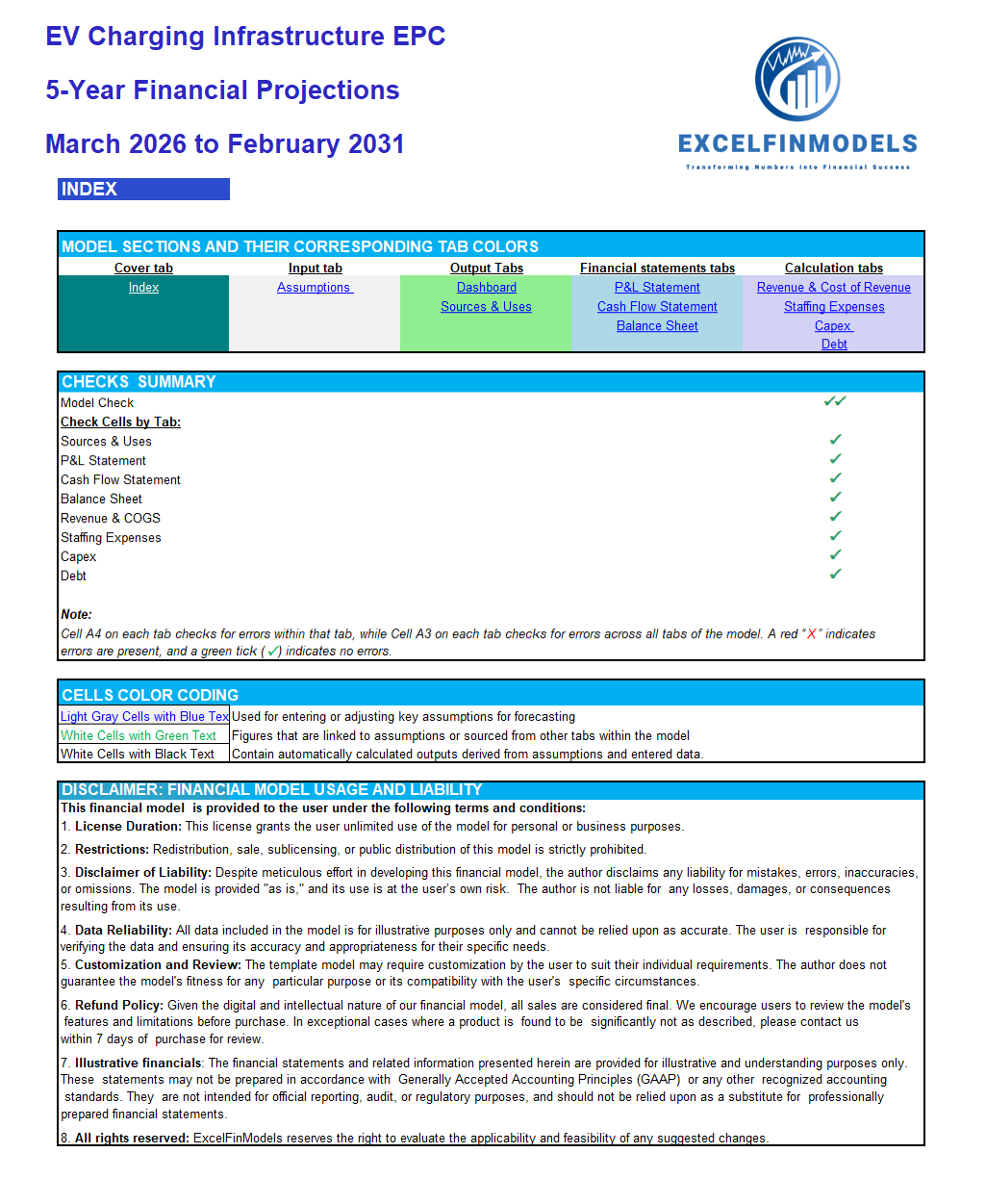
1. Cover & Navigation
  • Clear index with easy navigation.
  • Summary checks confirming model structure and consistency.
  • Color coding for tabs and cells


2. Input Assumptions
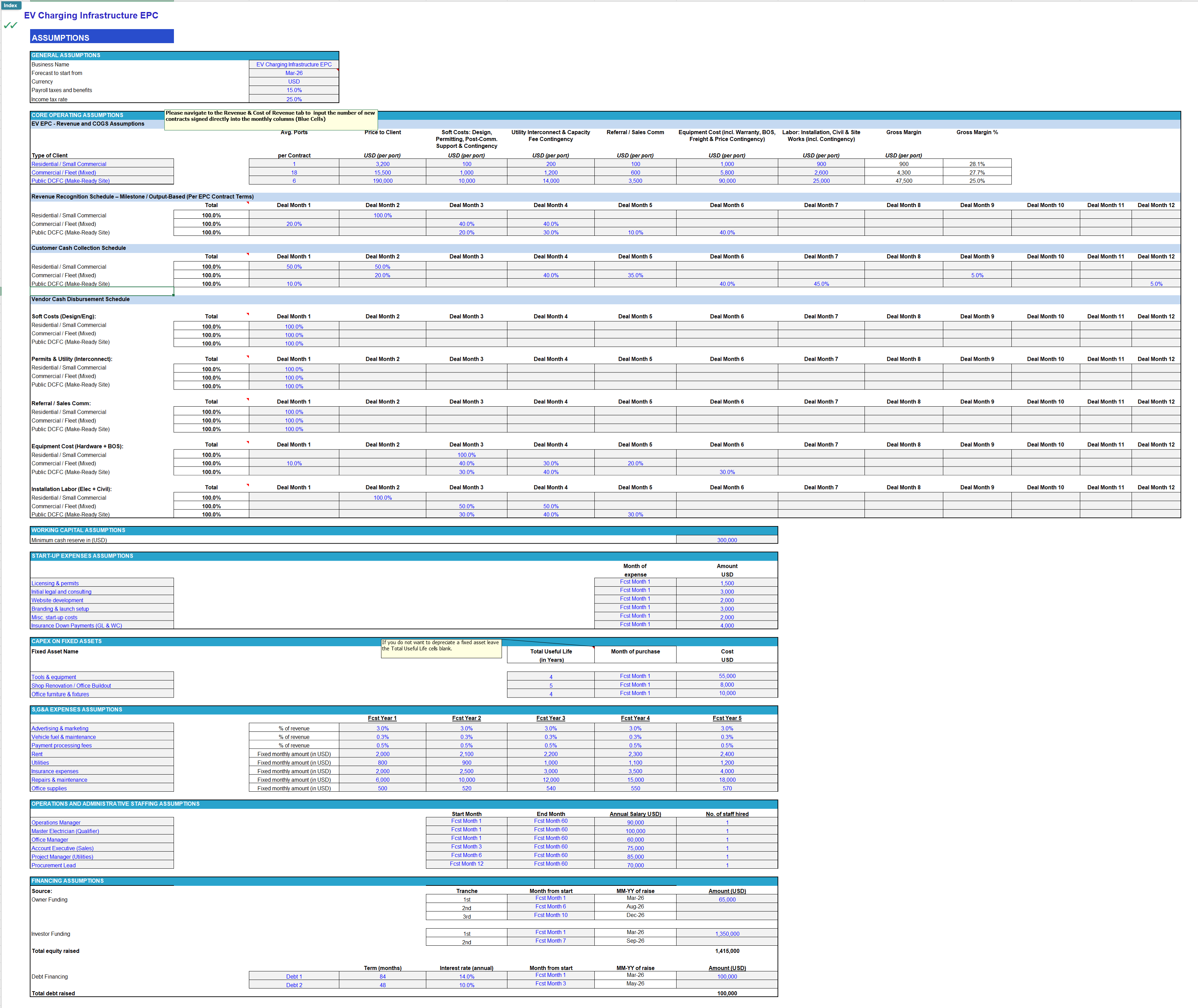
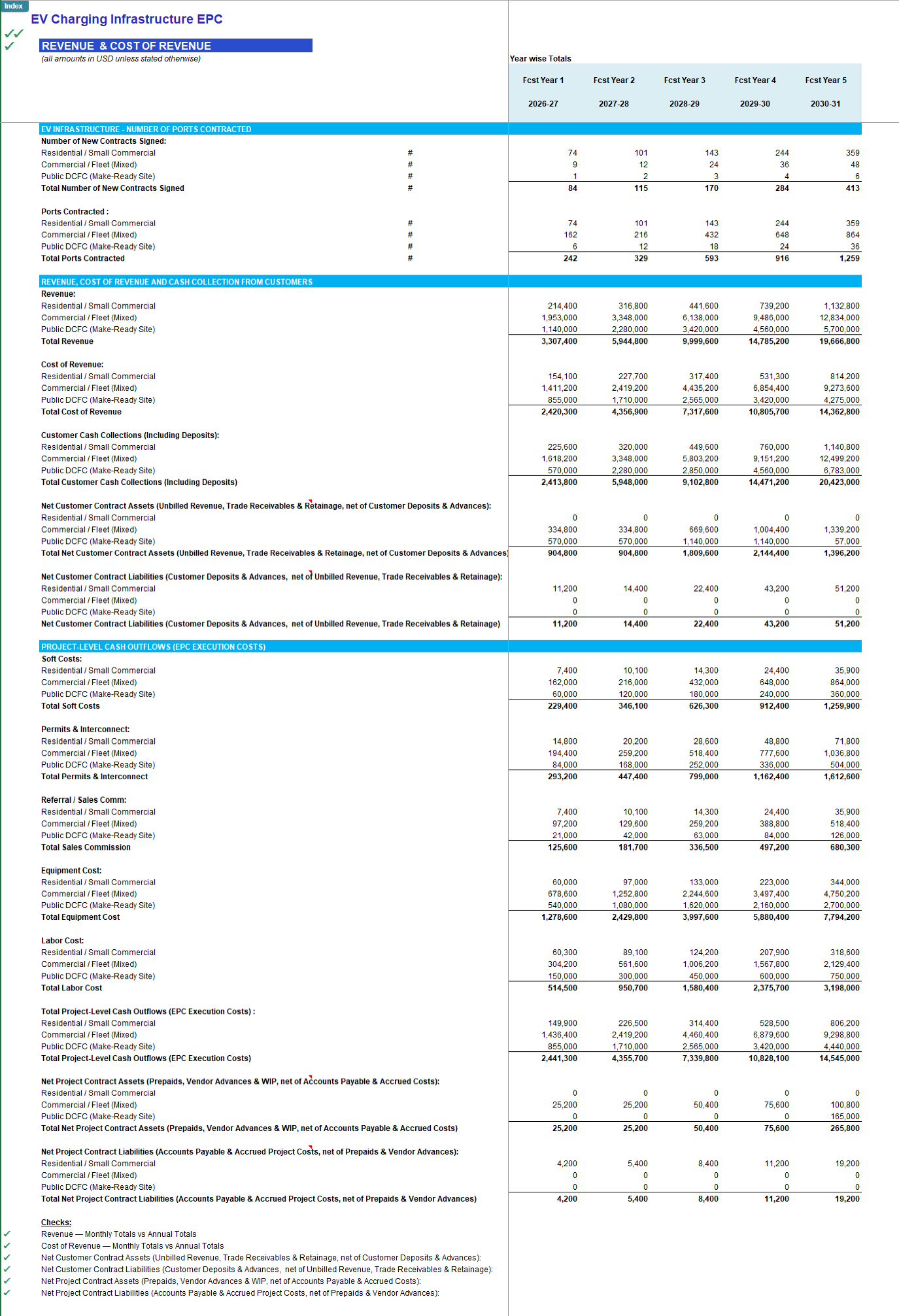
Key business drivers are consolidated into a centralized assumptions interface. To support granular monthly forecasting, assumptions related to the number of new contracts signed are located within the Revenue & Cost of Revenue tab.


Revenue Assumptions
The model supports industry-standard EV Infrastructure EPC revenue frameworks, including:
  • Customer Segments: Fully customizable segments (default placeholders include Residential, Commercial Fleet, and Highway/Public DCFC).
  • Project Specifications: Volume drivers based on the number of charging ports and pricing per port ($/Port).
  • Revenue Timing: Milestone-based billing and revenue recognition.
Direct Costs (COGS) & Procurement
  • Hardware: EVSE (chargers), switchgear, transformers, and balance-of-system (BOS) components.
  • Execution Costs: Civil and electrical installation labor
  • Soft Costs: Permitting, utility interconnection, and engineering/design expenses.
SG&A & Operating Expenses
  • Variable Costs: Merchant processing fees, marketing and advertising etc.
  • Fixed Costs: Management payroll, office rent, software subscriptions, fleet and general insurance.
Balance Sheet & Capital Structure Drivers
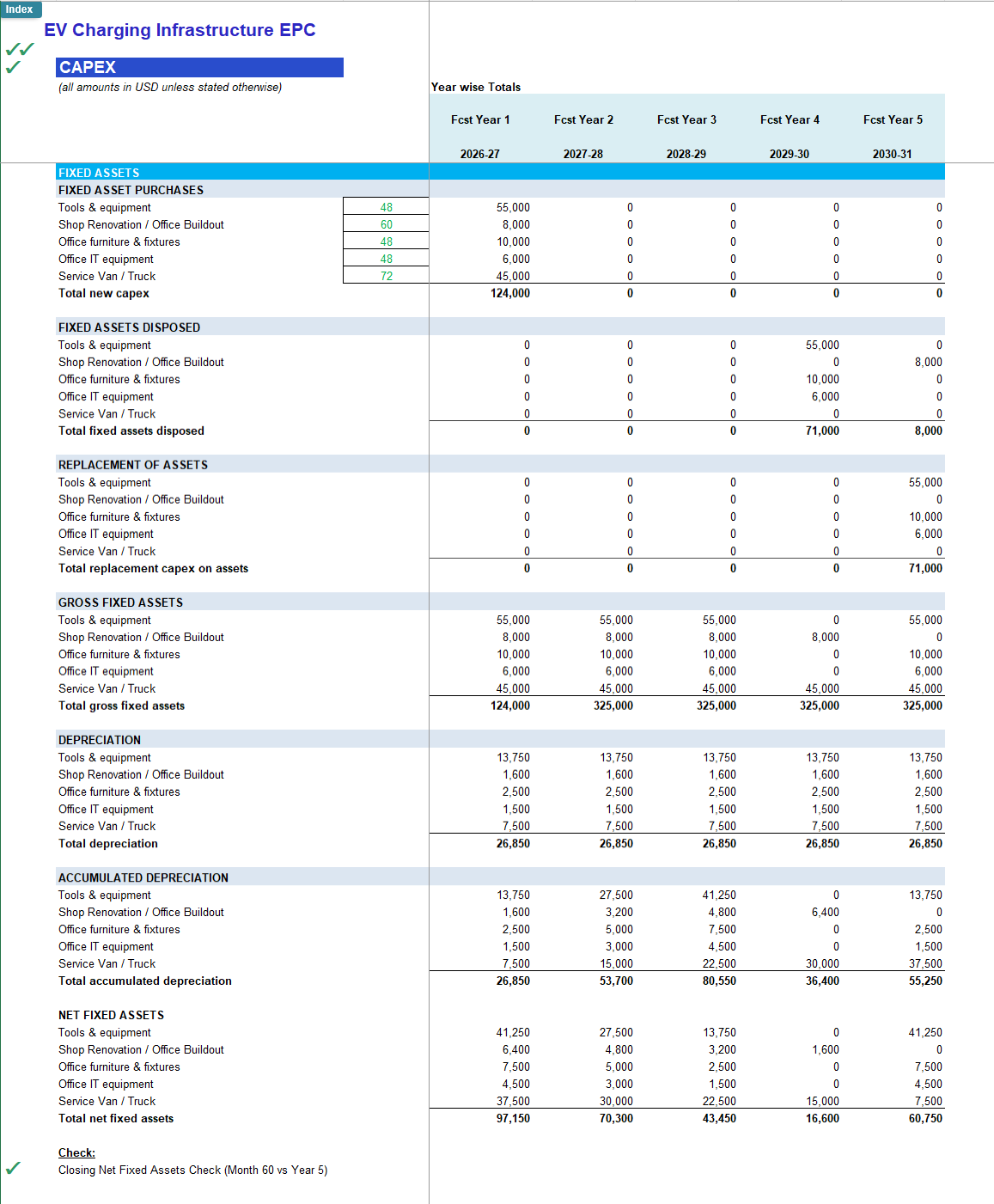
  • CapEx: Vehicle fleet (trucks), tools, and office asset acquisition schedules.
  • Financing: Equity injections, revolving credit facilities, and term-loan amortization.


3. Output & Analytics
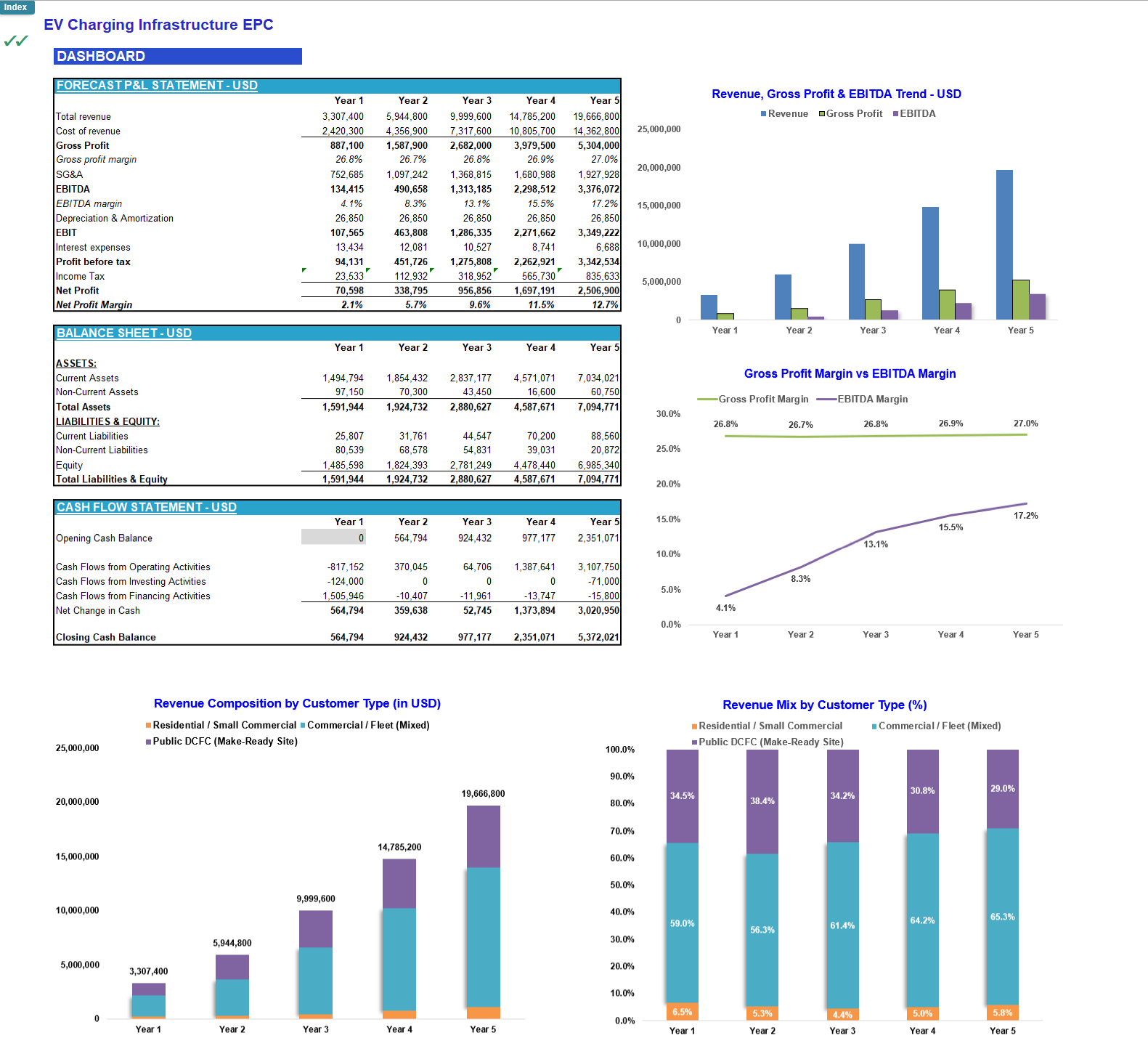
Dashboard
  • Revenue trends segmented by customer type.
  • Gross profit and EBITDA margin evolution.
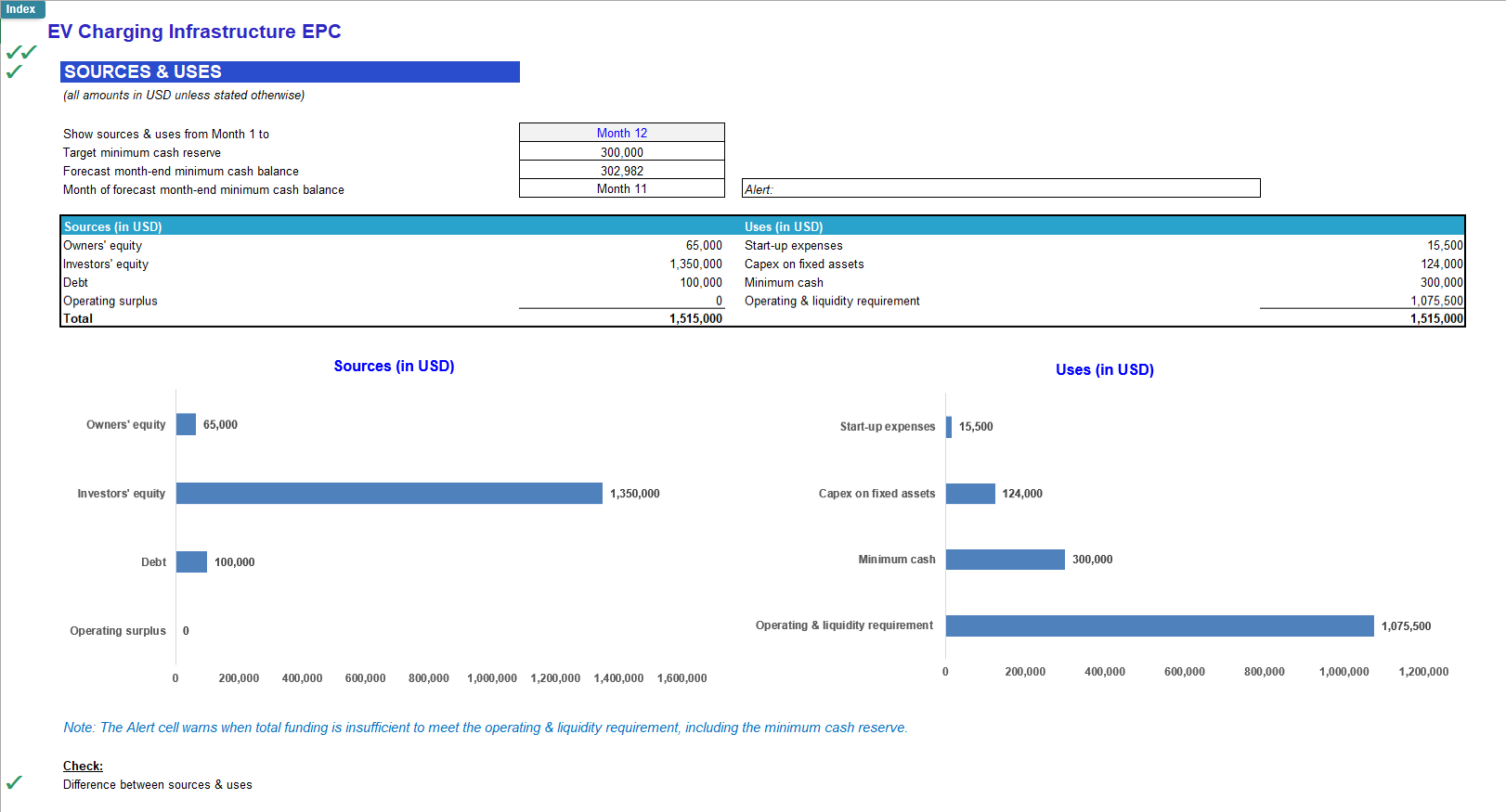
Sources & Uses
  • Uses: Pre-development costs, working capital requirements, and start-up expenditures.
  • Sources: Equity contributions and debt financing.


4. Integrated Financial Statements
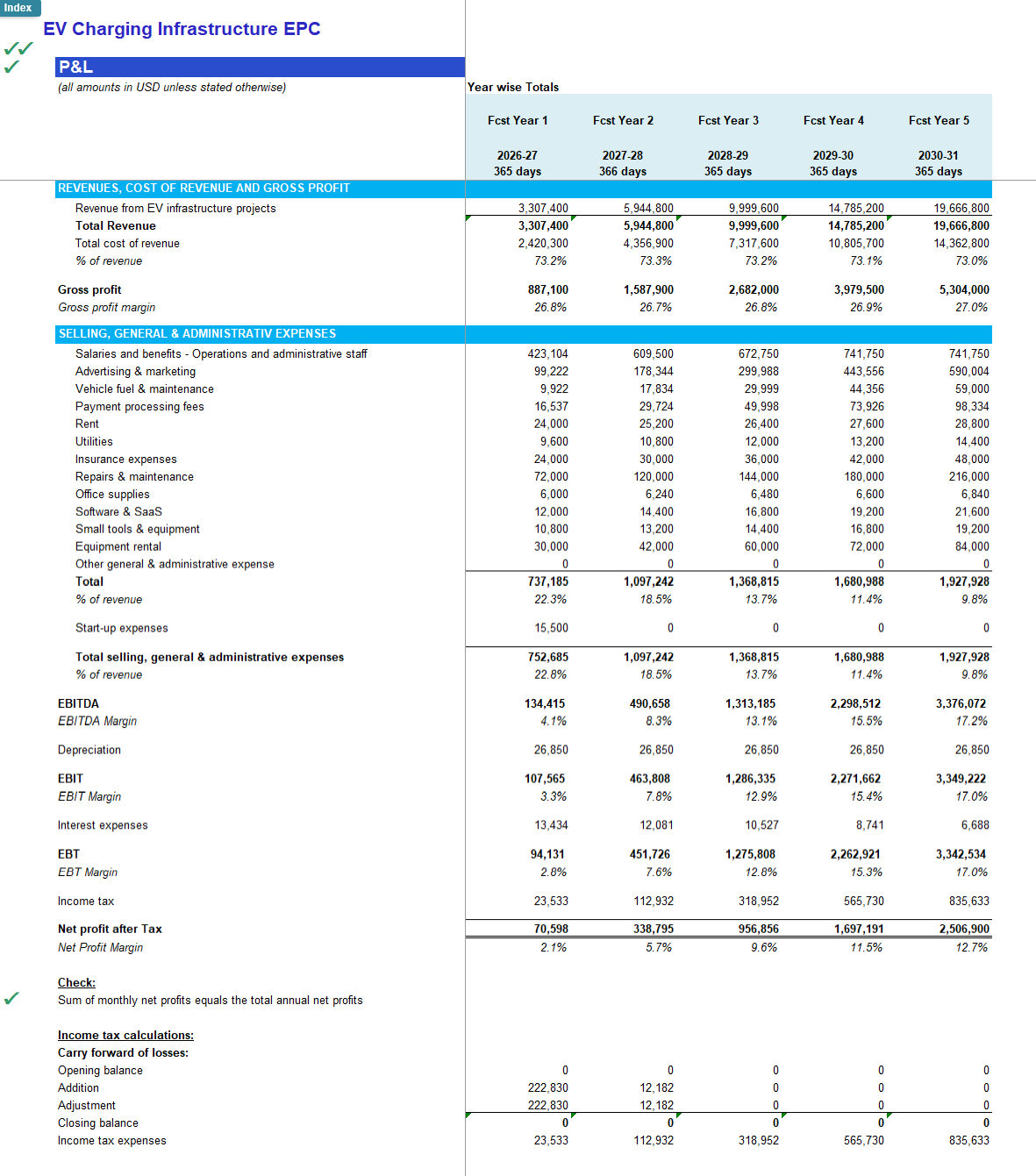
  • Profit & Loss Statement
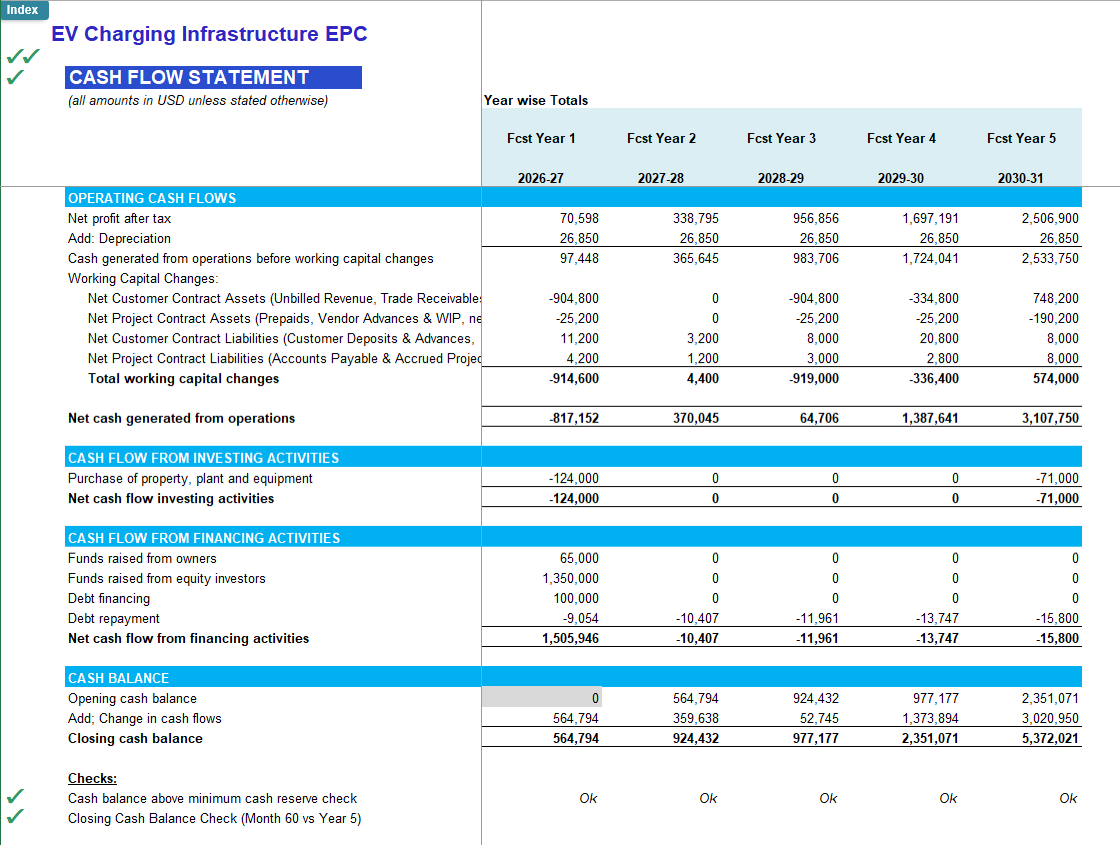
  • Cash Flow Statement
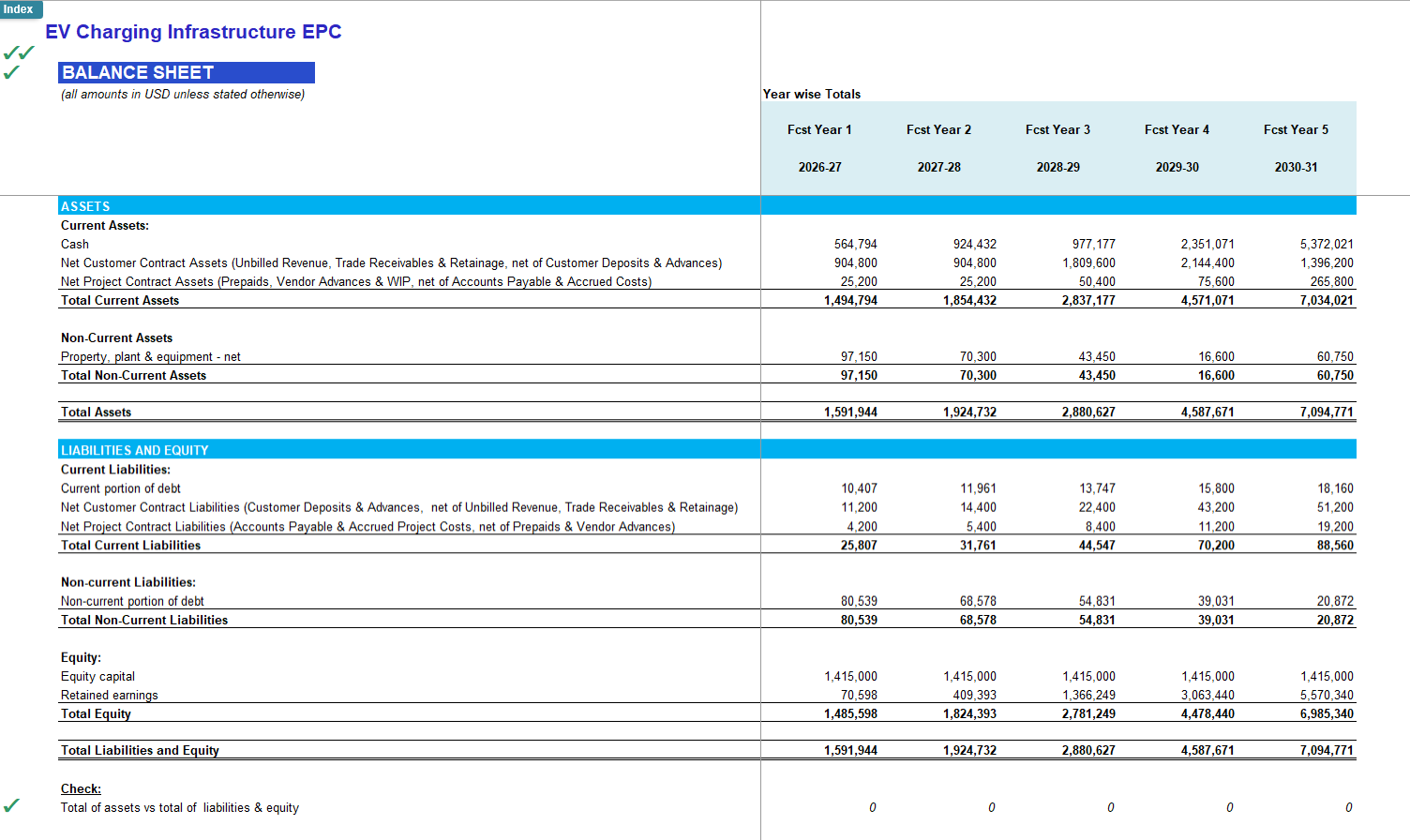
  • Balance Sheet
All statements are fully integrated and dynamically linked.


5. Core Calculations
  • Revenue and COGS recognition aligned with construction milestones.
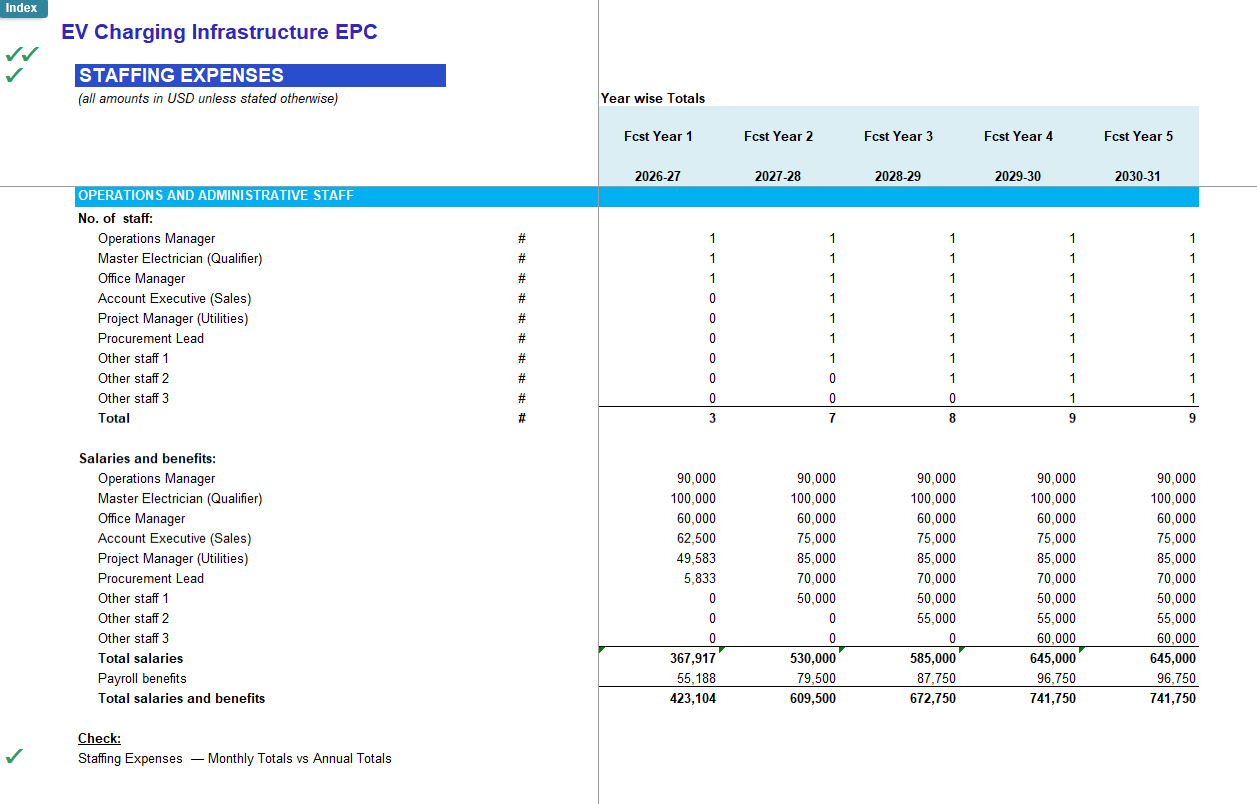
  • Staffing and payroll expense calculations.
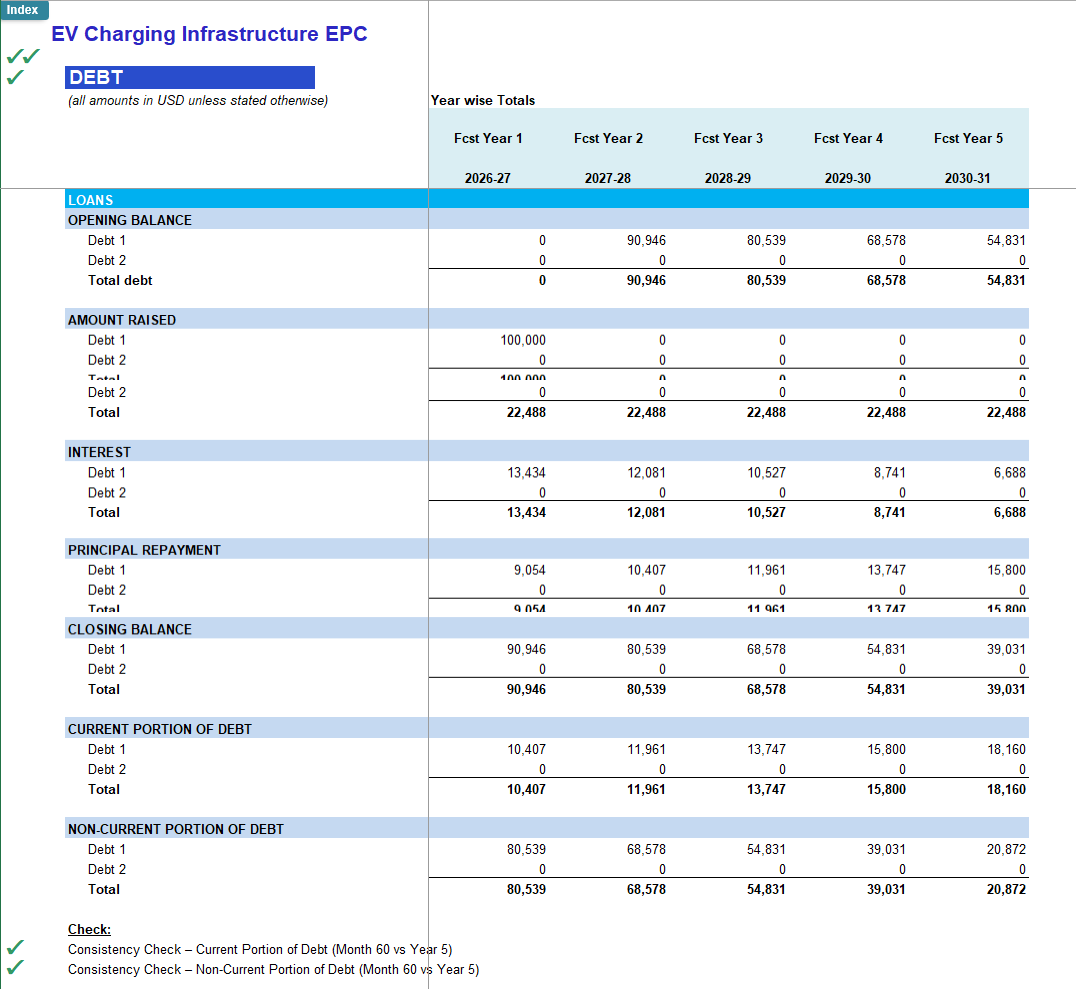
  • Debt schedules and capital expenditure roll-forwards.
Technical Specifications
  • Fully transparent structure (no VBA or macros).
  • Circular reference–free.
  • Compatible with Excel 2021 or newer.


Excel 2010–2019 Users:
Certain calculations use array formulas and may require Ctrl + Shift + Enter for proper execution.


Validation & Control Checks
Built-in validation controls ensure model integrity:
  • Green checkmarks (✓): Logic and calculations are consistent.
  • Red indicators (✗): Inputs or assumptions require attention.


Why This Model Is Well-Suited for EV Infrastructure EPC Businesses
This model supports institutional-grade financial planning for EV charging infrastructure installers. It is specifically designed to address the “lumpy” cash-flow profile inherent in EPC and infrastructure projects, while maintaining clarity across revenue recognition, cost execution, and working capital dynamics.

This Best Practice includes
1 Excel Sheet

Acquire business license for $139.00

Add to cart

Add to bookmarks

Discuss

Further information

This downloadable best-practice financial model is designed to help EV charging infrastructure EPC businesses develop investor-ready 5-year financial forecasts with clear visibility into revenue, costs, margins, and cash flows. It enables founders, advisors, and operators to evaluate scalability, funding requirements, and profitability under multiple growth scenarios using standardized, decision-grade assumptions.

This best practice is most suitable for EV charging EPC businesses experiencing rapid contract growth, margin variability, and working capital pressure due to multi-month project execution cycles. It is particularly effective when management needs a standardized, repeatable forecasting framework to support lender discussions, investor diligence, or strategic expansion planning.


0.0 / 5 (0 votes)

please wait...