

Renewable Energy Project Finance — A Practical Guide for Developers, Investors and Analysts
Originally published: 01/06/2026 16:20
Publication number: ELQ-75327-1
View all versions & Certificate
certified

Renewable Energy Project Finance — A Practical Guide for Developers, Investors and Analysts

43-page practical guide to renewable energy project finance: SPV structure, debt sizing, DSCR, cash flow waterfall, term sheet negotiation and financial close

Description
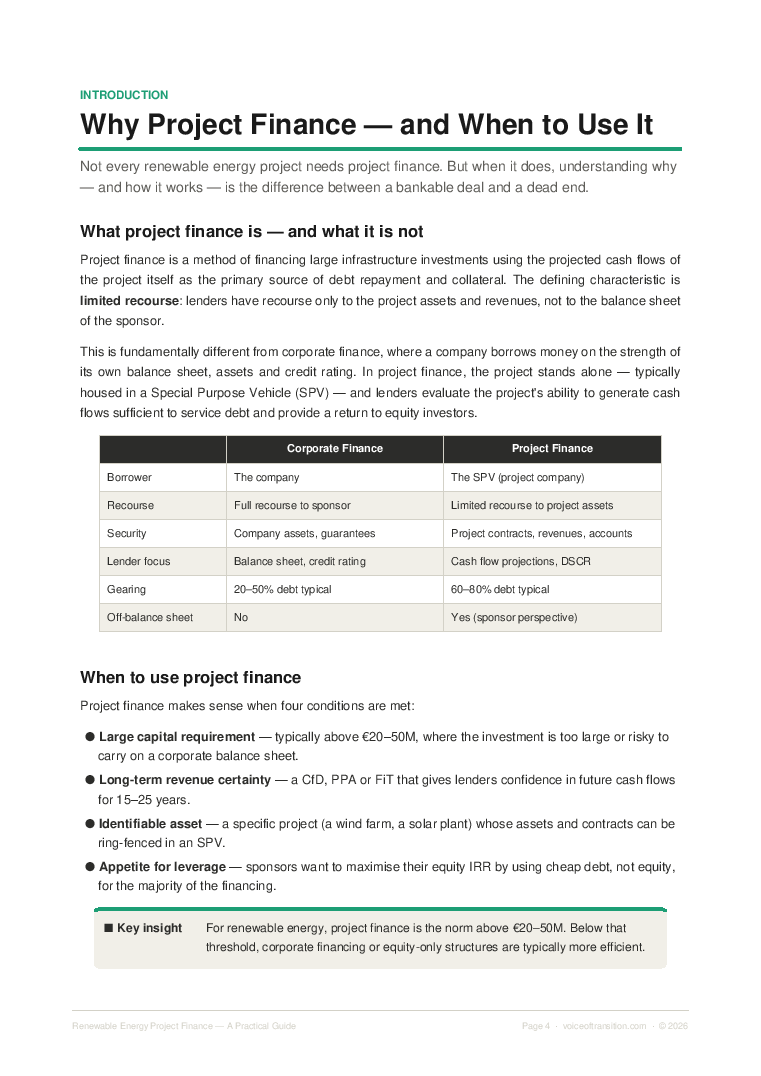
Project finance is the standard financing structure for utility-scale renewable energy above €20–50M, yet most developers, analysts and energy managers encounter it without a specialist background. This guide explains the full mechanics from first principles, following the logic of an actual transaction from structuring through to financial close and beyond.


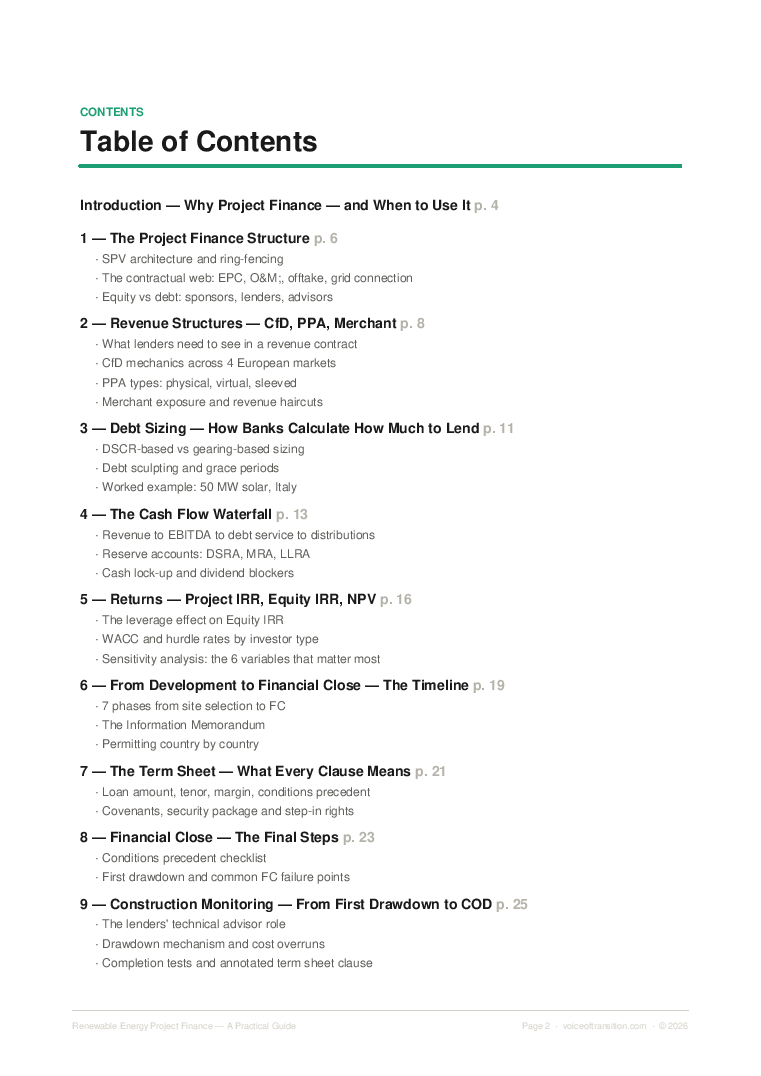
The guide opens by defining what project finance is and when it makes sense — distinguishing it clearly from corporate finance and explaining the four conditions that make it the right tool: large capital requirement, long-term revenue certainty, an identifiable ring-fenced asset, and appetite for leverage. It then builds the complete picture chapter by chapter.


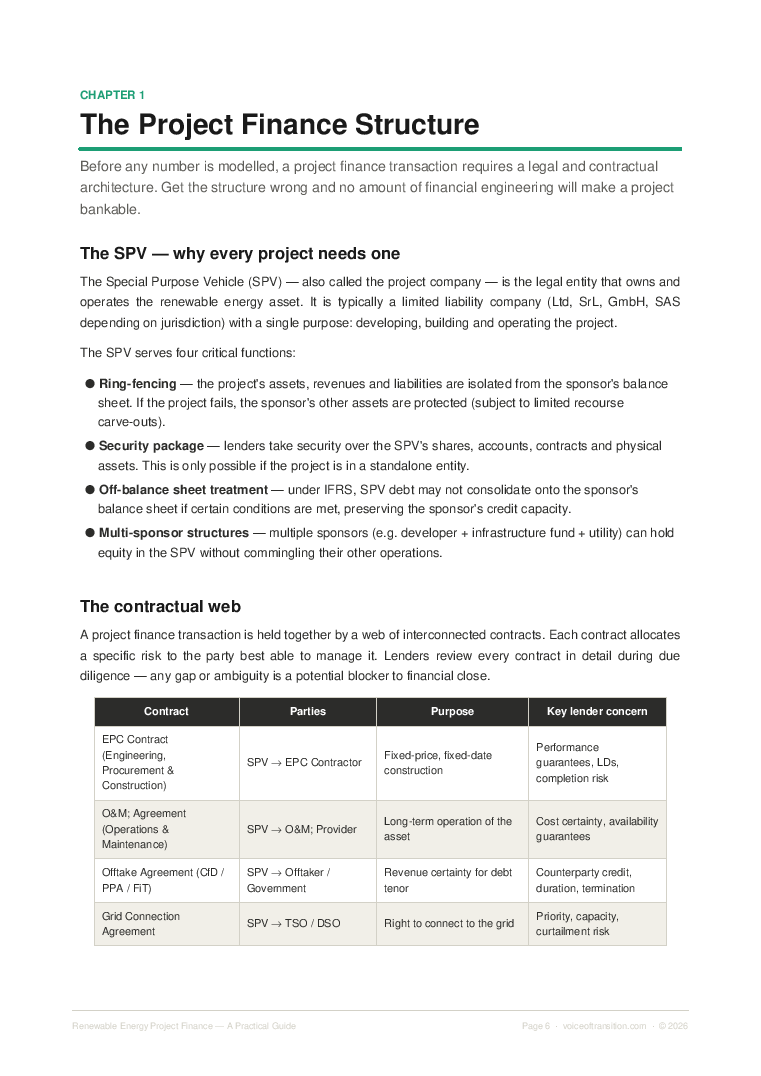
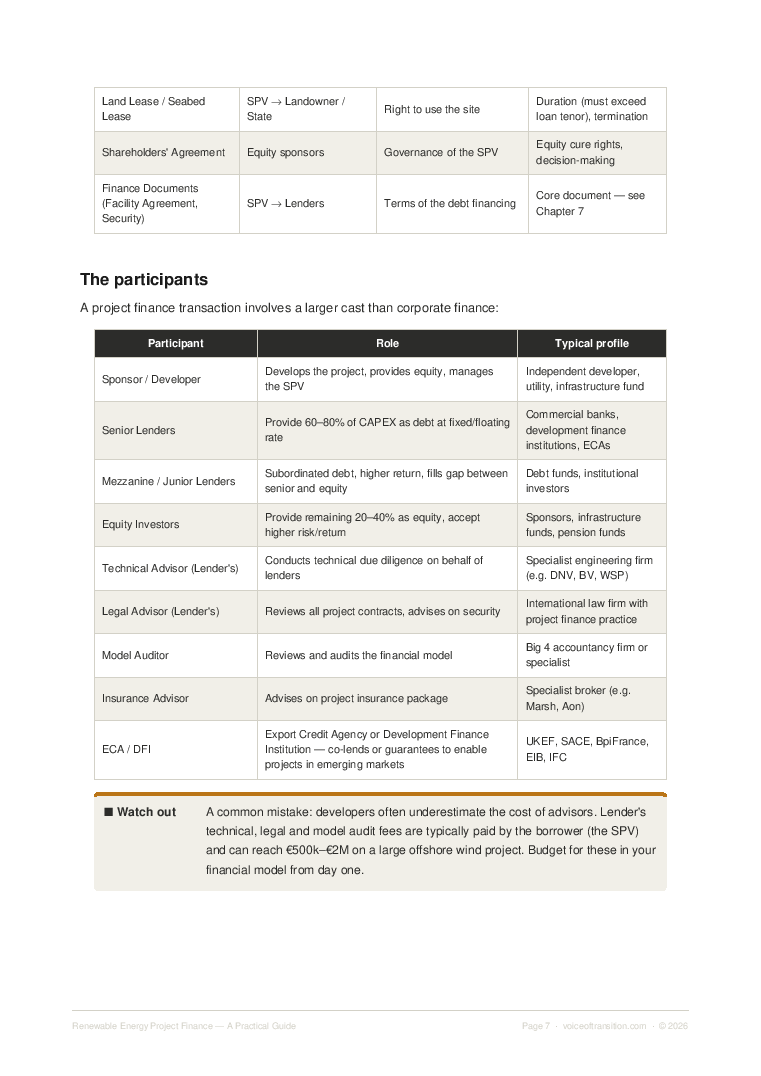
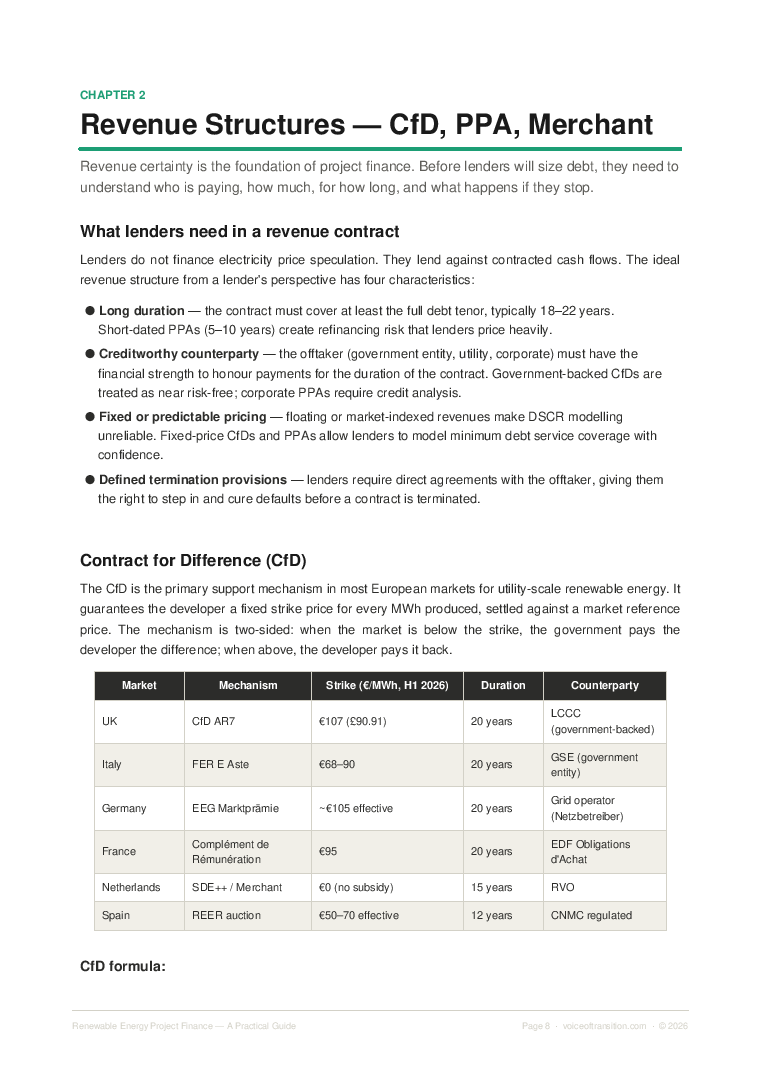
The SPV structure chapter explains why every project needs a standalone legal entity, how the contractual web of EPC, O&M, offtake and grid connection agreements allocates risk to the parties best able to manage it, and who the full cast of participants is — from sponsors and senior lenders to technical advisors, model auditors and ECAs. The revenue structures chapter covers CfD mechanics across four European markets with a fully worked numerical example, the three types of PPA and how lenders view each, and the haircut logic that governs how merchant revenue is credited in debt sizing.
Debt sizing is covered in depth: the DSCR-based and gearing-based methods, how debt sculpting works and why it matters, and a complete worked example for a 50 MW solar project in Italy showing max debt, annual debt service and DSCR in Year 1 and Year 15. The cash flow waterfall chapter walks through every line from gross revenue to equity distribution, explains the three reserve accounts — DSRA, MRA and LLRA — and sets out the dividend blocker tests that govern when equity investors can receive cash.


The returns chapter distinguishes Project IRR from Equity IRR, demonstrates the leverage effect through a three-scenario worked example, and provides hurdle rates by investor type. A sensitivity matrix covers the six variables that account for the majority of return variance, with IRR and DSCR impact ranges for each.


From development to financial close, the guide maps the seven phases of a project finance transaction, country-by-country permitting context, and the structure of a credible Information Memorandum. The term sheet chapter annotates every key clause — facility amount, tenor, margin, covenants, security package and events of default — explaining what each means in practice and what to negotiate. Financial close, construction monitoring, refinancing mechanics and equity structures are covered in the same depth, each with worked numerical examples.


Appendices include a key metrics quick reference, a lender matrix for six European markets with typical gearing, DSCR covenants, tenor and margin ranges, a glossary of 50 project finance terms, and a 30-point pre-financial-close checklist.

This Best Practice includes
1 PDF Guide

Acquire business license for $49.00

Add to cart

Add to bookmarks

Discuss


0.0 / 5 (0 votes)

please wait...