Rental Property DSCR Underwriting Model - Loan Sizing on LTV, DSCR & Debt Yield (Excel)
Originally published: 07/08/2026 12:56
Publication number: ELQ-11296-1
View all versions & Certificate
certified

Rental Property DSCR Underwriting Model - Loan Sizing on LTV, DSCR & Debt Yield (Excel)

Sizes the loan the way a DSCR lender does: LTV, DSCR and debt-yield caps, lends the lowest, and names the binding constraint. 14 tabs, no macros.

Description
THE LOAN AMOUNT IS NOT AN INPUT.
Most rental property calculators ask you to type in the loan amount, then show you the cash flow. A lender does the opposite: they underwrite the income and tell you how much they will lend. This Excel model works the way the lender works, so you find out what a deal actually finances before you write the offer.

HOW THE LOAN IS SIZED
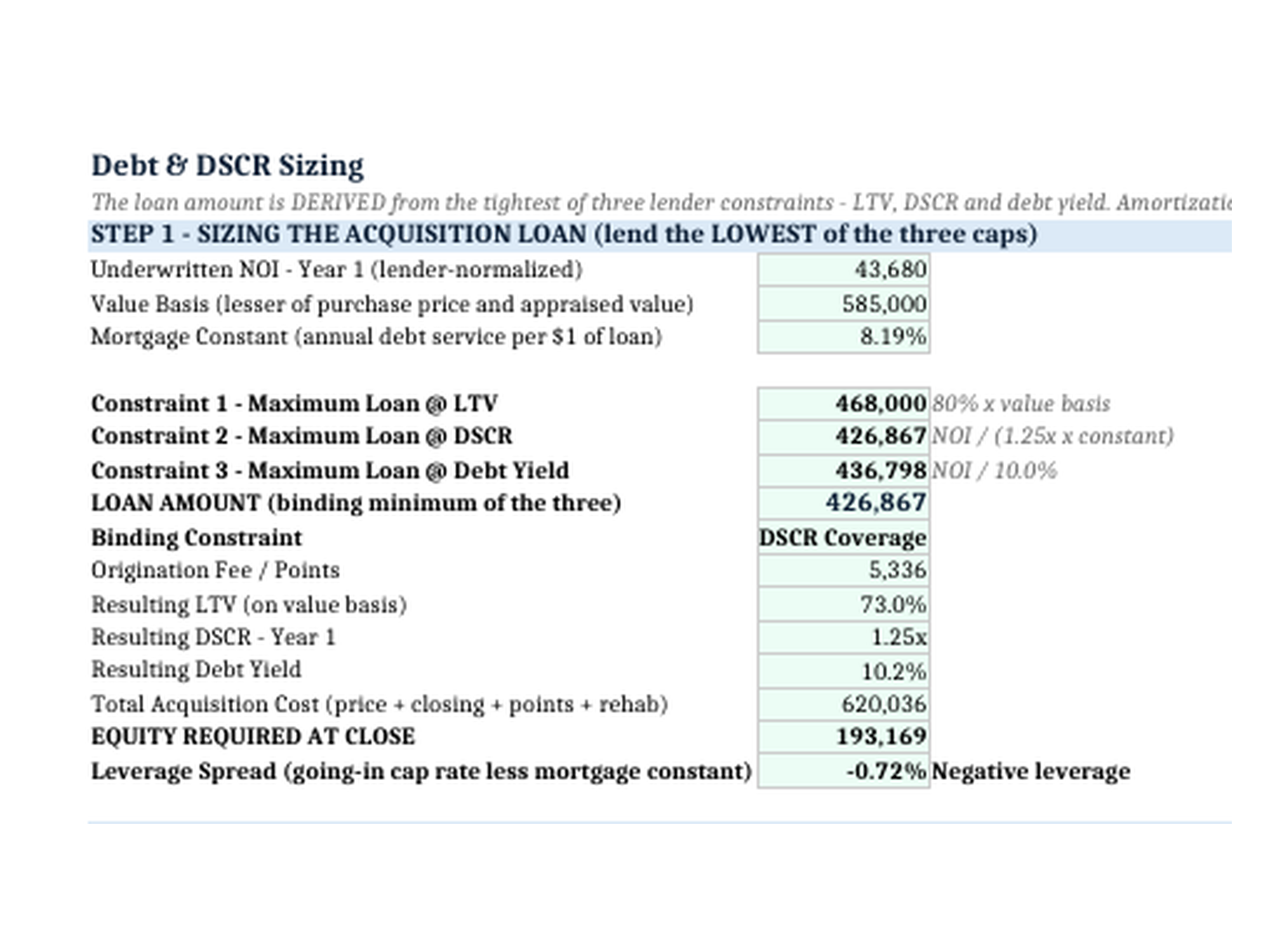
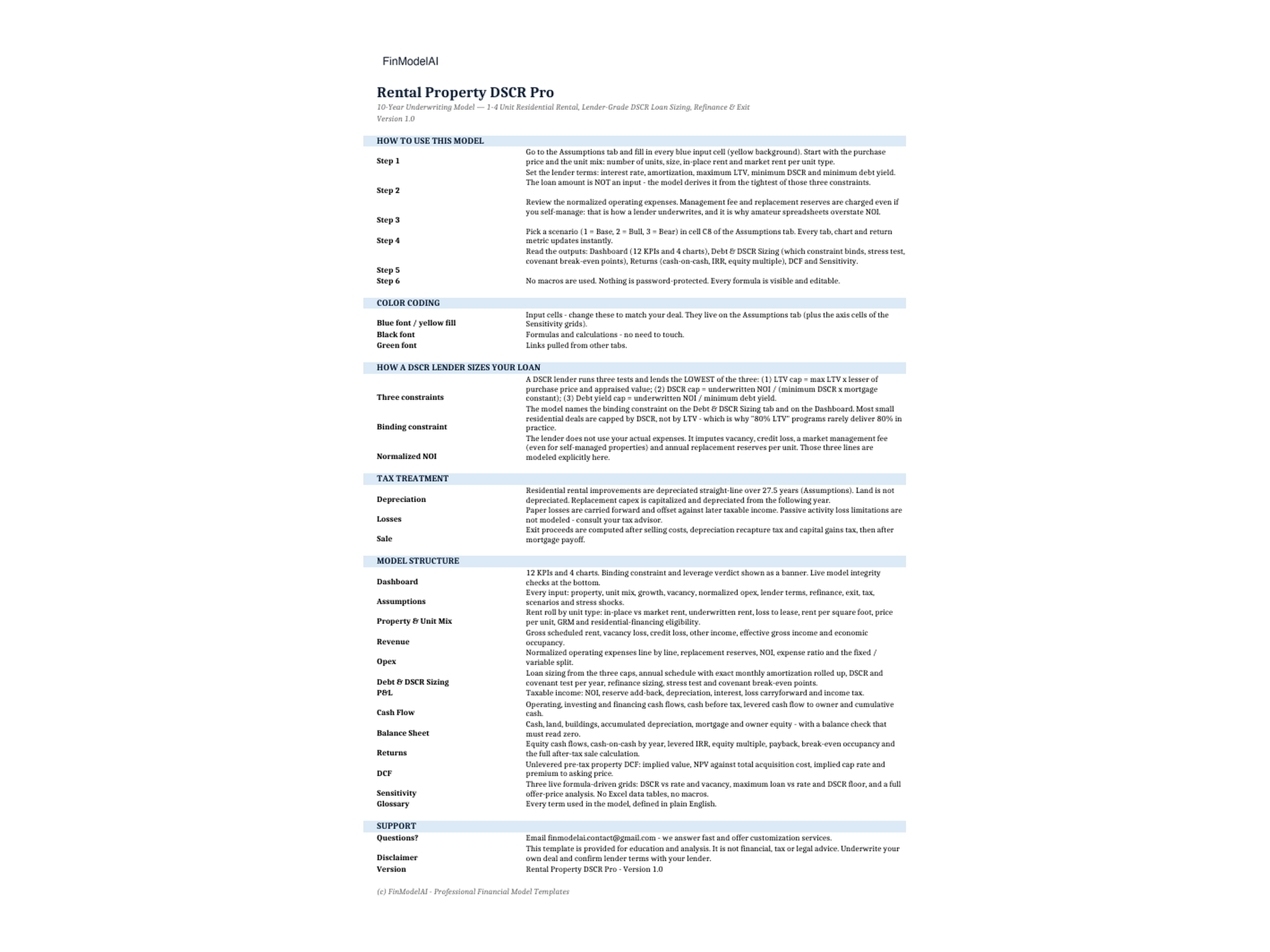
The model computes all three lender caps and lends the LOWEST of the three: the LTV cap (max LTV x the lesser of purchase price and appraised value), the DSCR cap (underwritten NOI / (minimum DSCR x mortgage constant)), and the debt yield cap (underwritten NOI / minimum debt yield).

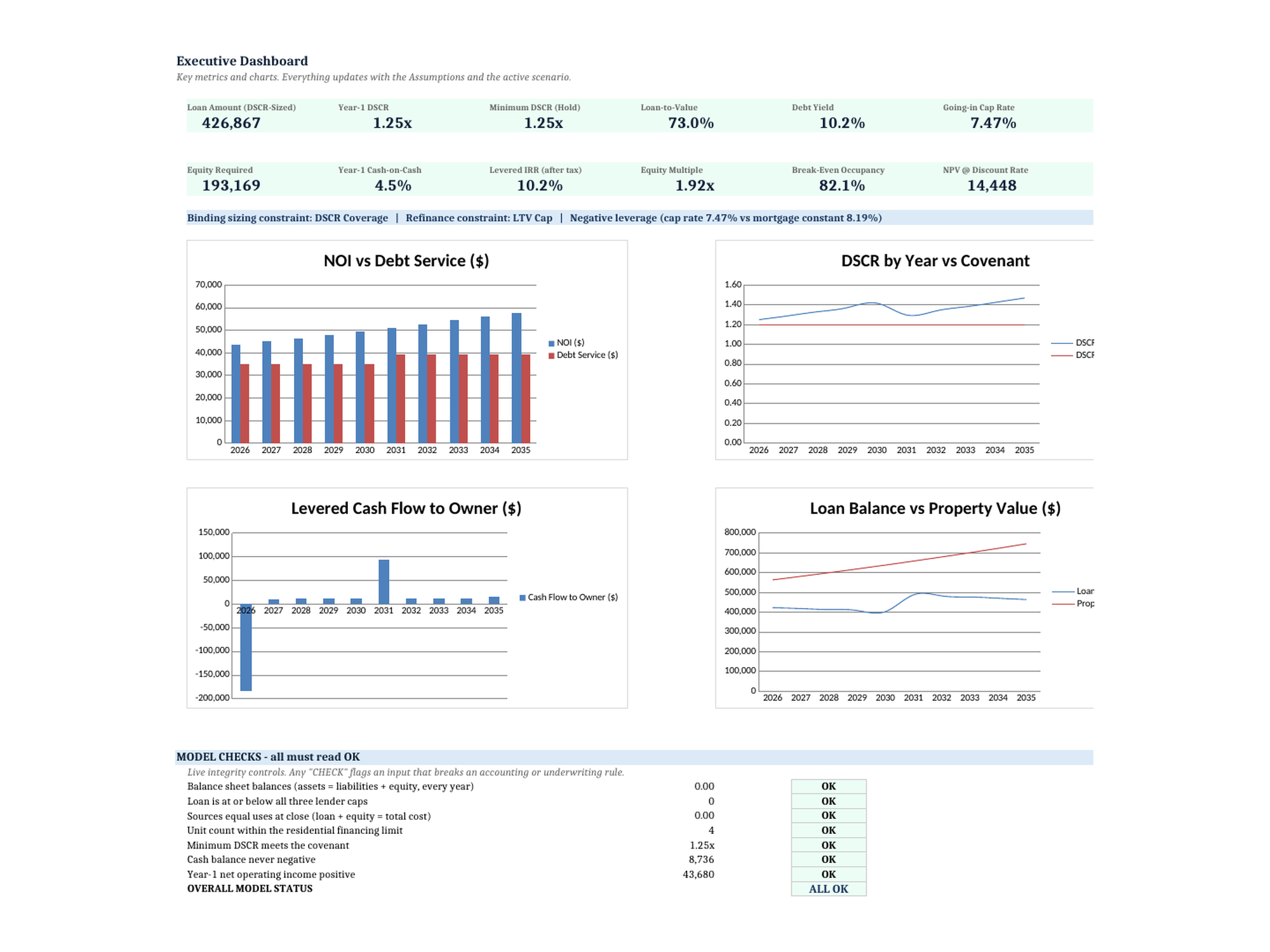
It then NAMES the binding constraint on the dashboard. You see instantly whether your deal is LTV-bound, DSCR-bound or debt-yield-bound, which tells you what to negotiate: the price, the rate, or the rent roll.

LENDER-NORMALIZED NOI
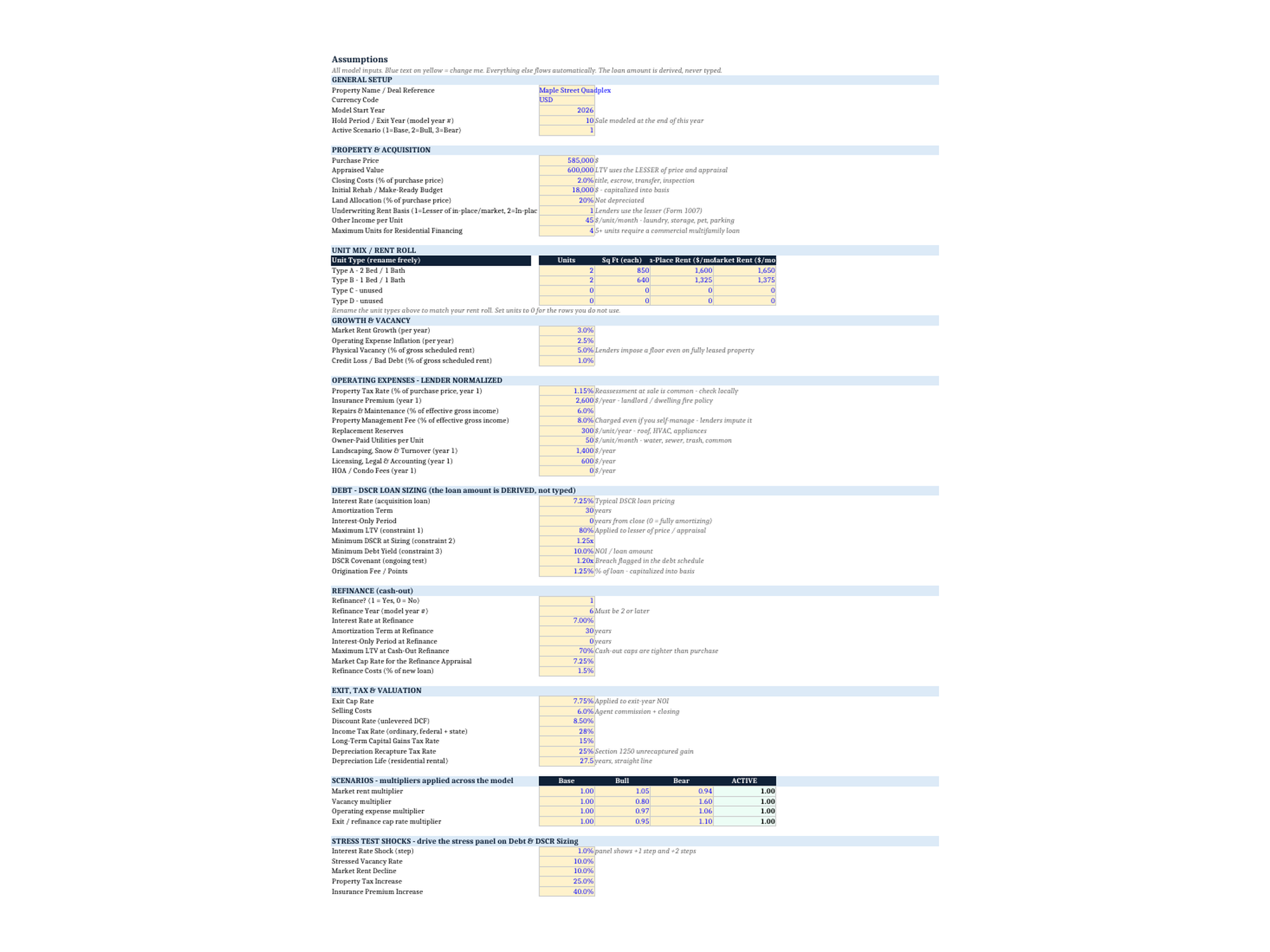
NOI is rebuilt the way a DSCR lender rebuilds it, not the way an owner wishes it looked: physical vacancy and credit loss deducted, a market management fee charged even if you self-manage, annual replacement reserves per unit, and each operating line inflated separately. Rent is underwritten on the lesser of in-place and market rent (Form 1007 convention), with loss to lease shown in dollars and in percent.

WHAT IS INSIDE - 14 CONNECTED WORKSHEETS
START HERE, DASHBOARD, ASSUMPTIONS (with a Base/Bull/Bear toggle), PROPERTY & UNIT MIX, REVENUE, OPEX, DEBT & DSCR SIZING, P&L, CASH FLOW, BALANCE SHEET (with an automatic balance check), RETURNS, DCF, SENSITIVITY and GLOSSARY. 1,596 live formulas. 0 macros. 0 circular references. Nothing password-protected.

WHAT ELSE IT DOES
STRESS TEST: 7 scenarios, each with a covenant PASS/BREACH flag - two rate shock steps, stressed vacancy, market rent decline, property tax increase, insurance increase, and a combined downside. Every row re-sizes the loan AND shows the DSCR on the loan you already have.
BREAK-EVEN POINTS: the exact vacancy rate, rent decline, reset interest rate and occupancy at which your DSCR covenant breaks, plus your cushion in percentage points.
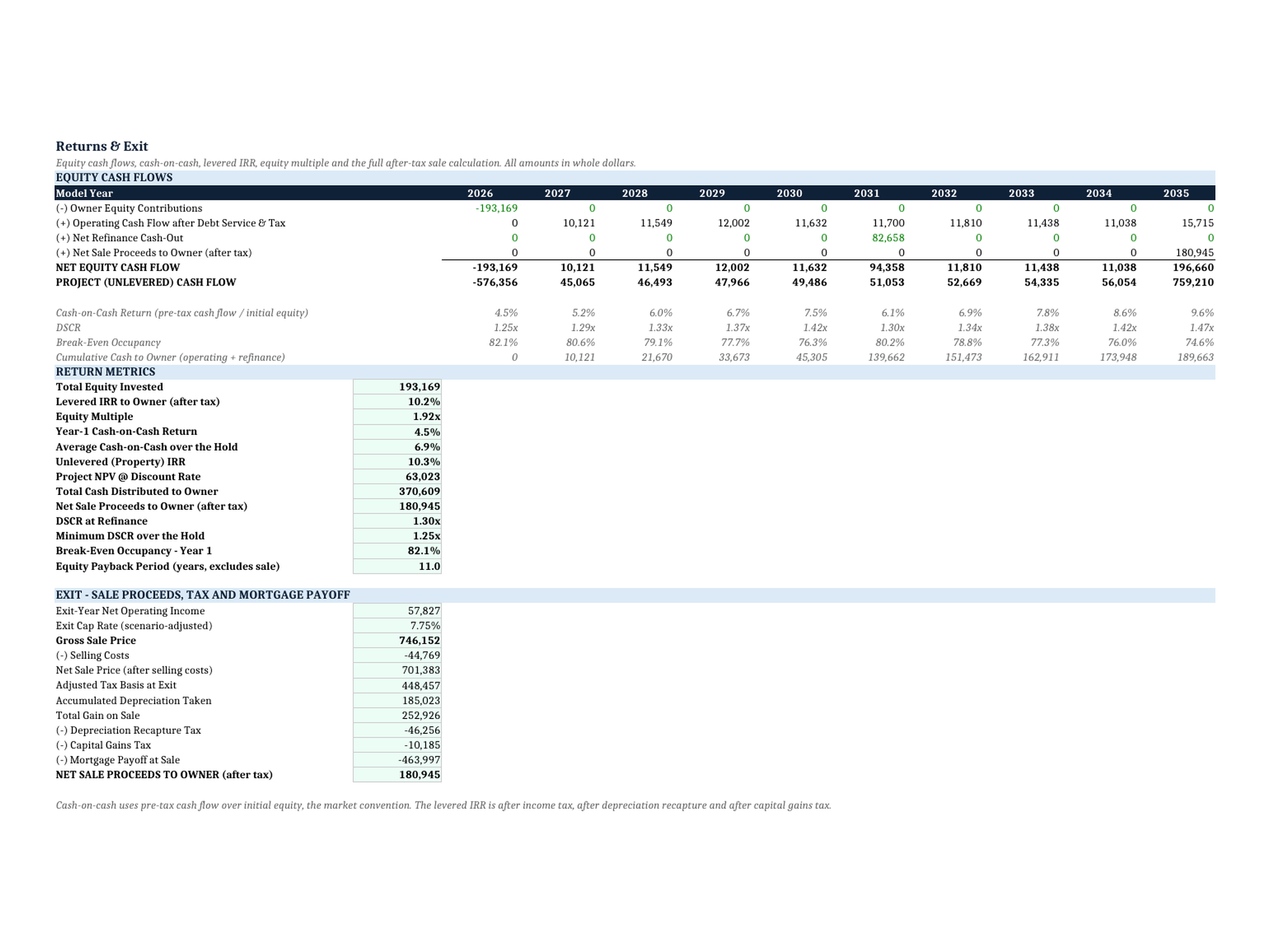
CASH-OUT REFINANCE: re-run through the same three caps at the refi year, with the binding refi constraint named, old balance paid off, refi costs deducted, down to net tax-free cash.
AFTER-TAX EXIT: sale on your exit cap rate, selling costs, adjusted basis, depreciation recapture taxed at 25%, capital gains tax, mortgage payoff, down to net proceeds. Straight-line 27.5-year residential depreciation runs through the statements, with loss carryforwards.
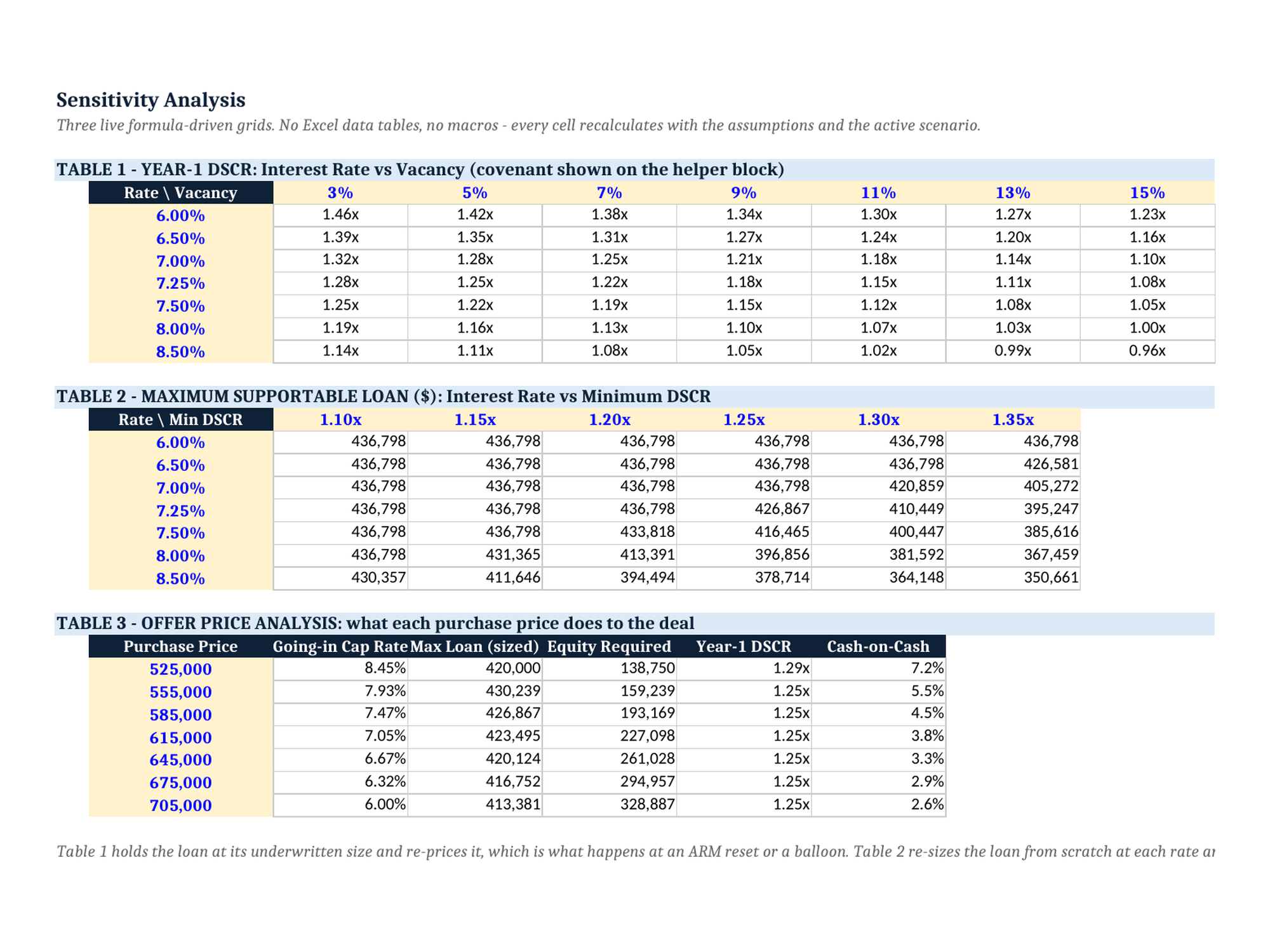
SENSITIVITY: three formula-driven grids (no data tables, no macros) - Year-1 DSCR vs rate and vacancy, maximum supportable loan vs rate and DSCR floor, and an offer-price grid.

IT DOES NOT SHIP BLANK
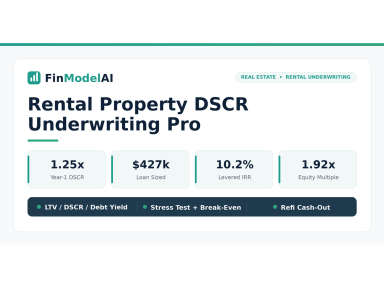
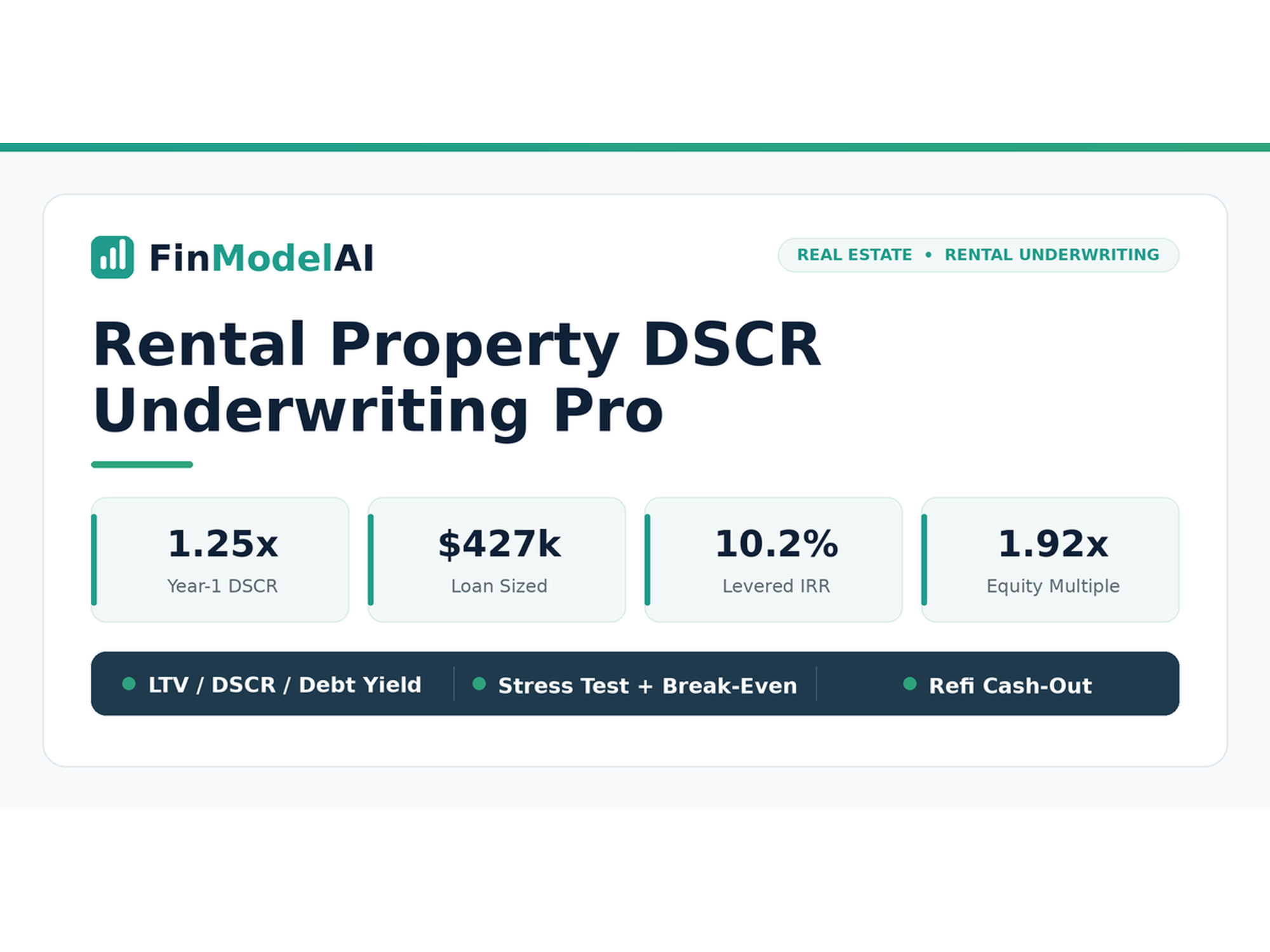
A complete worked deal is already in the file: 4 units, $585,000 purchase, 10-year hold. In that demo the model sizes the loan at $426,867 and reports it as DSCR-bound - Year-1 DSCR 1.25x, LTV 73.0%, debt yield 10.2%, equity required $193,169, going-in cap rate 7.47%, Year-1 cash-on-cash 4.5%, levered after-tax IRR 10.2%, equity multiple 1.92x, break-even occupancy 82.1%. Overwrite the blue cells with your deal and everything updates.
SCOPE

1 to 4 unit residential rental: acquisition of a stabilized property, held, optionally refinanced, then sold, from the individual landlord's point of view. The model flags any deal above 4 units as outside residential financing. No ground-up construction, no GP/LP promote waterfall, no commercial multifamily.
Built and tested for Microsoft Excel (Windows and Mac), 2016 and later, including 365. Color code: BLUE = your input, BLACK = formula, GREEN = link to another tab.

This Best Practice includes
1 Excel workbook (.xlsx), 14 worksheets, no macros + 1 README, delivered as a single ZIP

Acquire business license for $79.00

Add to cart

Add to bookmarks

Discuss

Further information

Determine the maximum loan a 1-4 unit rental property actually supports under real lender rules, identify which of the three caps (LTV, DSCR, debt yield) is binding, and see the after-tax return, refinance and exit that follow from it - before making an offer.

You are buying or refinancing a 1 to 4 unit residential rental and you need the lender answer first: how much debt the income supports, what the DSCR and debt yield look like once NOI is normalized, and where the covenant breaks. Also for house hackers and BRRRR investors who need the refinance modeled rather than guessed.

You are underwriting commercial multifamily above 4 units, ground-up construction, or a GP/LP deal with a promote waterfall. This model is scoped to individual residential financing and will flag anything above 4 units as out of scope.


0.0 / 5 (0 votes)

please wait...