Last version published: 16/07/2025 14:59
Publication number: ELQ-41039-15
View all versions & Certificate

Advanced Solar (PV) Project Finance Model – With Tariff Optimiser (Brent's Method Algorithm)
Advanced Solar (PV) model with Levelized Cost of Energy (LCOE), debt sculpting, target return tariff solver, circularity breaker, and a dashboard summary.
Background
As the demand for clean, reliable power rises, utility-scale solar projects have become essential to the global energy transition. Unlike rooftop systems, solar farms deliver electricity directly to the grid, supporting national supply and decarbonisation goals.
With growing investments and supportive policies, the need for clear, credible financial planning is greater than ever. This model was built to meet that need—offering a structured, transparent framework to assess feasibility, optimise returns, and support investment decisions from early-stage development through to financial close.
Model Overview
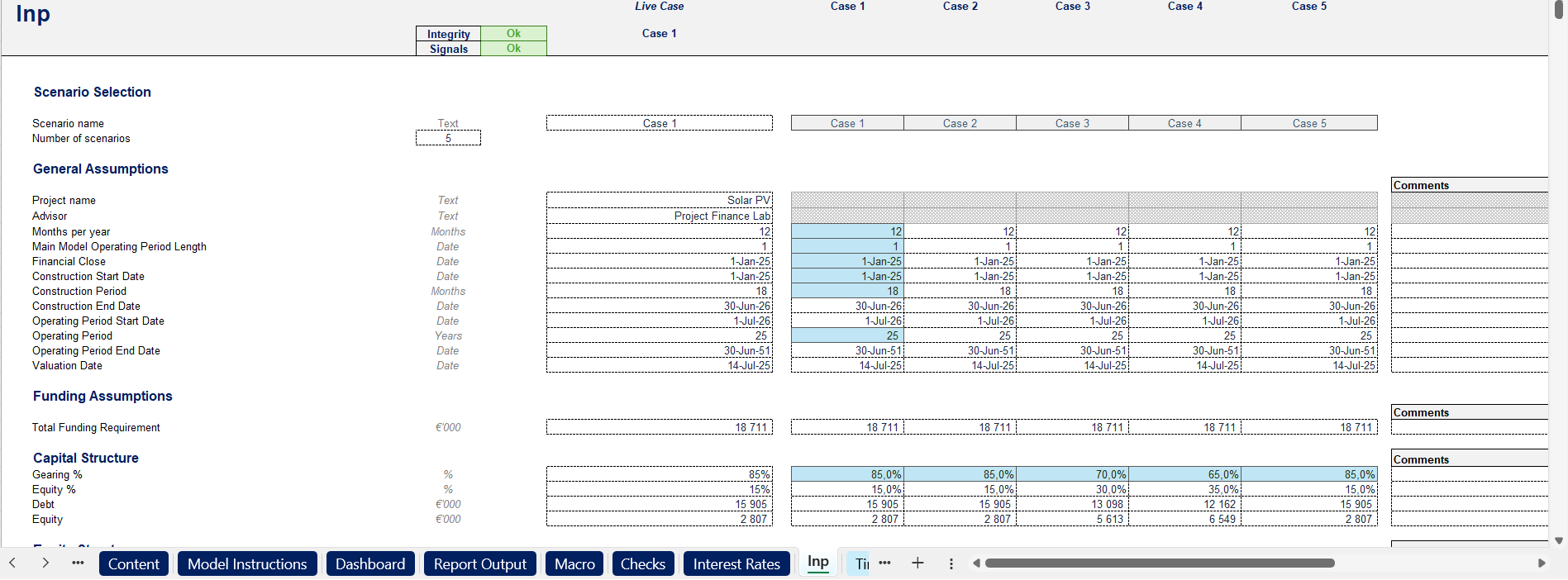
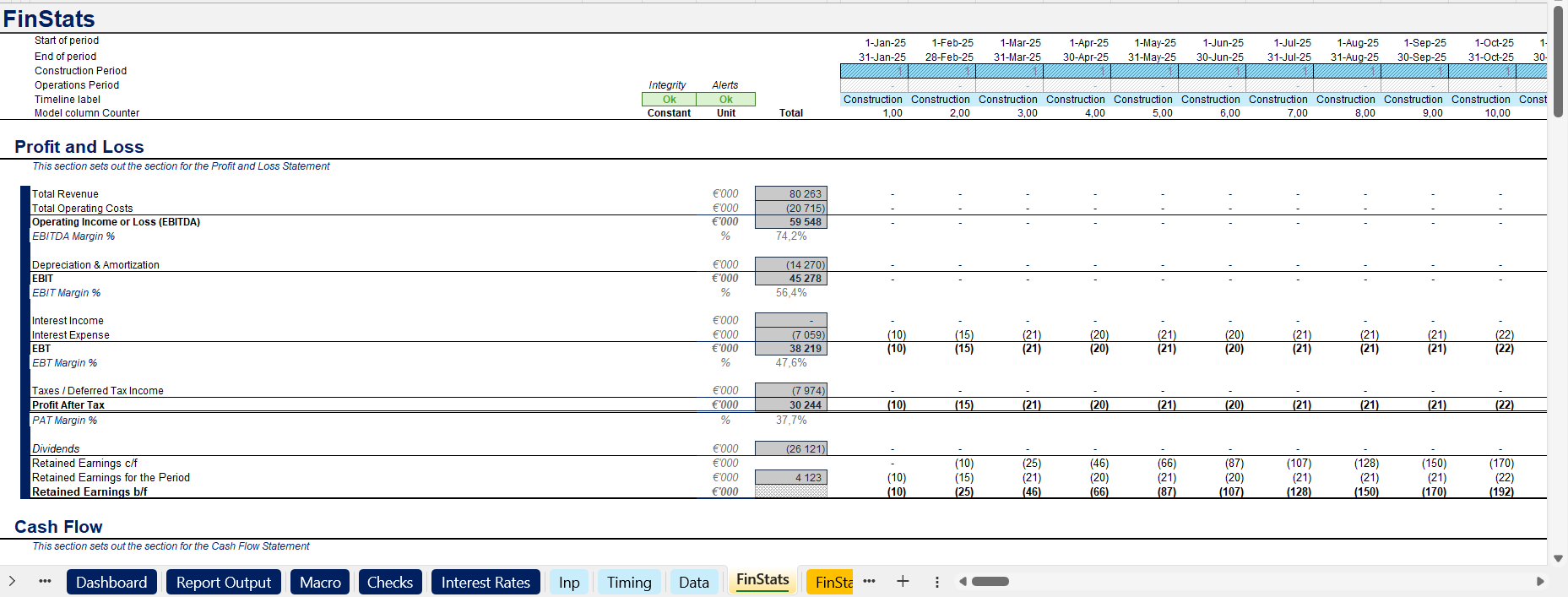
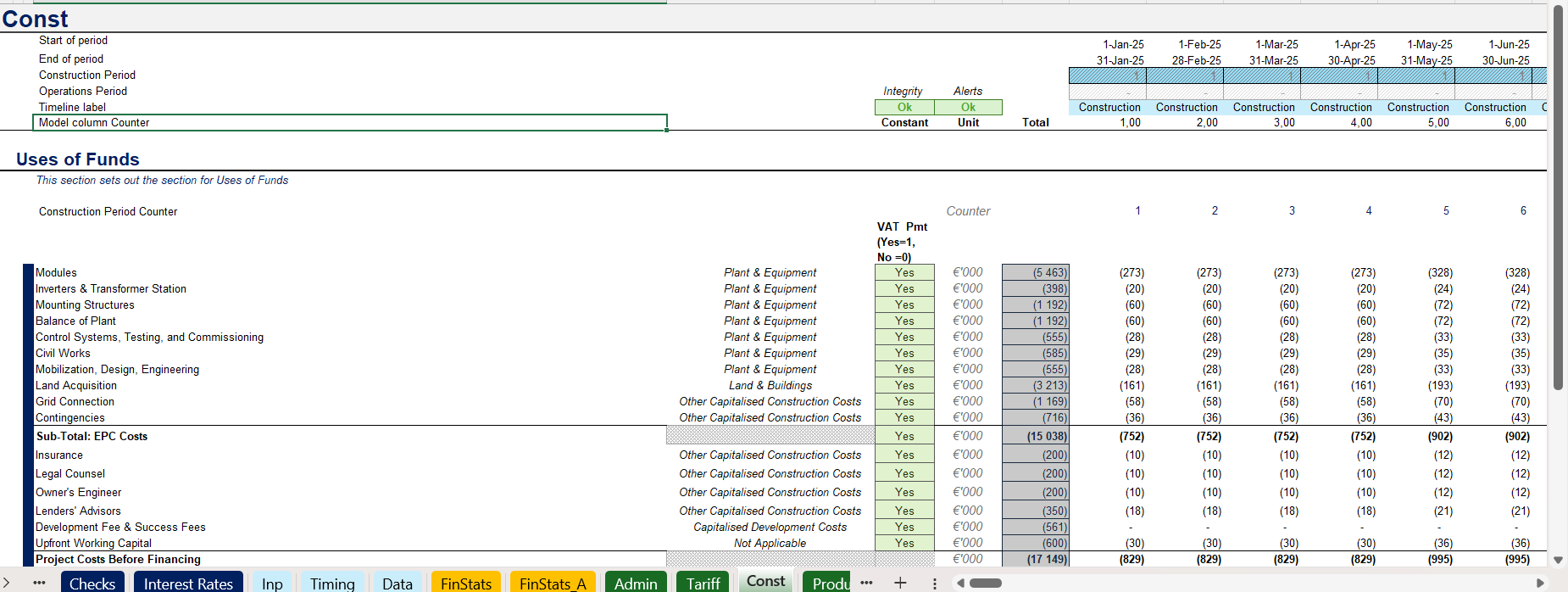
This Solar PV Financial Model delivers a robust 25-year forecast, capturing key metrics across energy generation, revenue flows, operating costs, and financing obligations. At its core is a detailed energy production module that integrates project-specific solar irradiation data to estimate electricity output and associated revenues.
By incorporating seasonal variations, degradation rates, and probability scenarios (P50, P75, P90, and P99), the model enables developers and investors to assess the bankability, financial viability, and risk-adjusted performance of utility-scale solar projects.
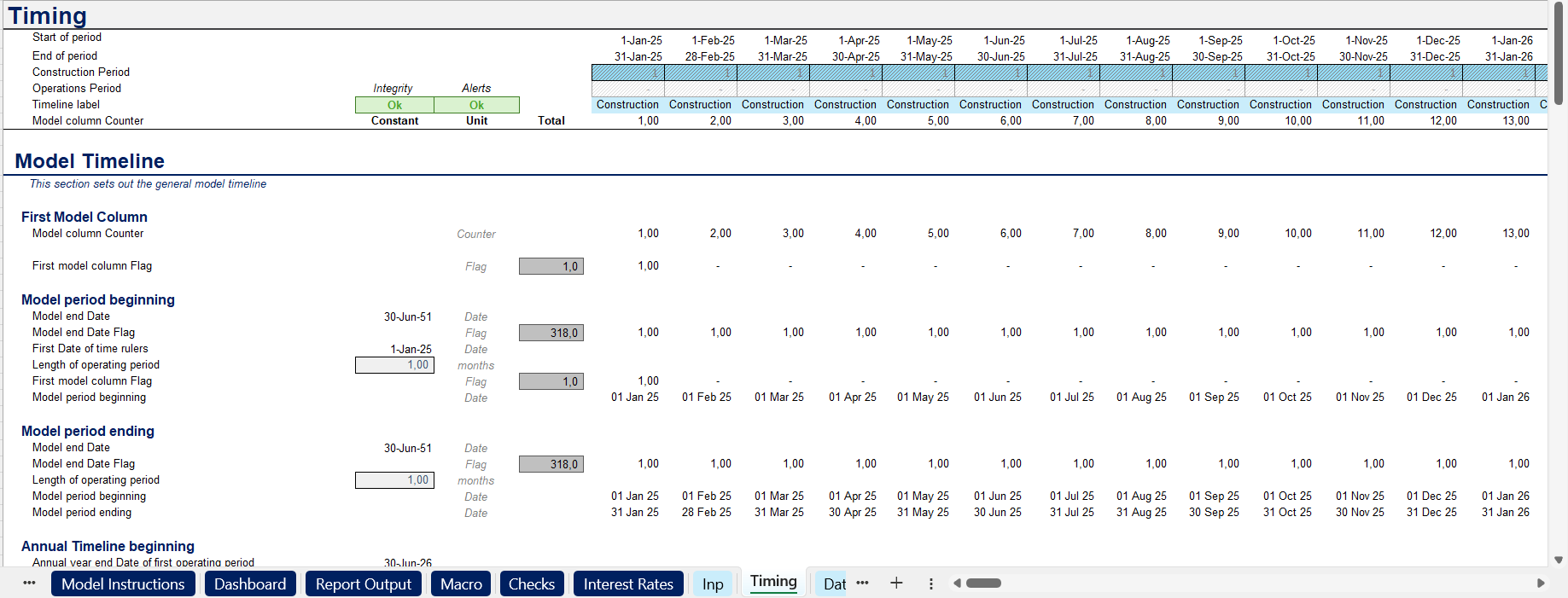
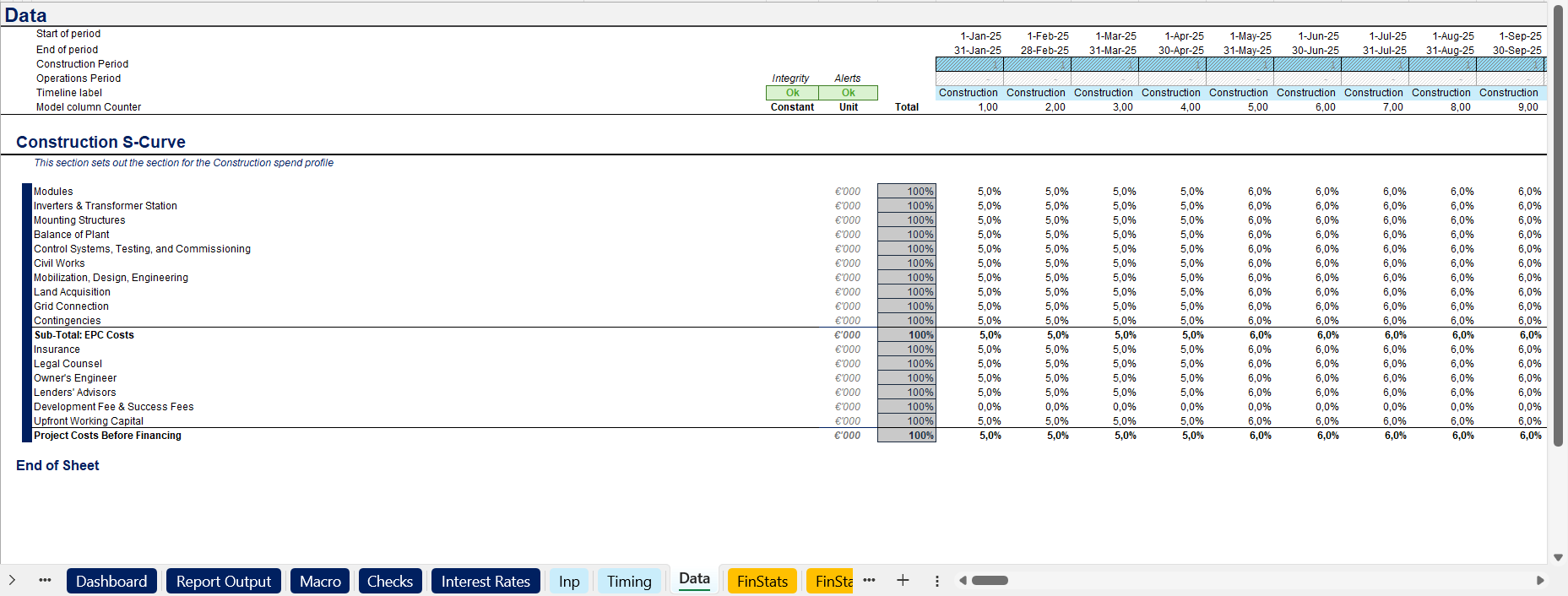
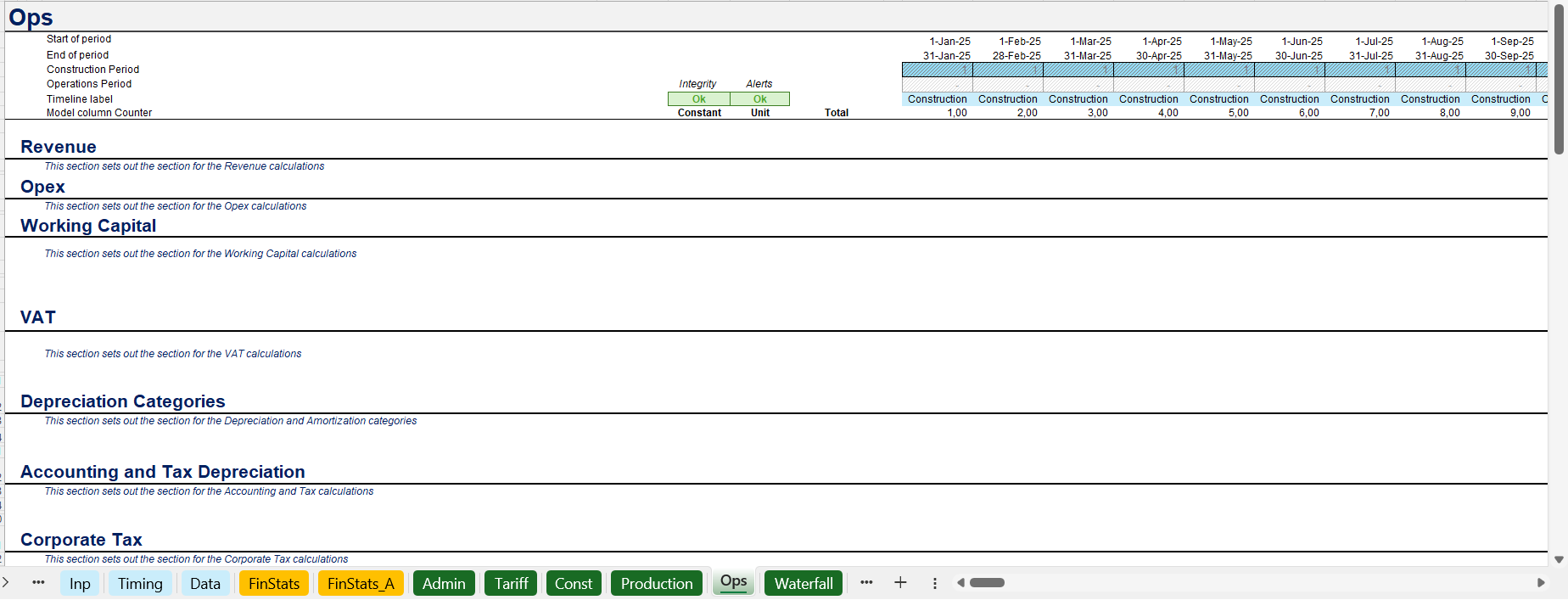
The Excel-based model follows the FAST modelling standard, ensuring clarity, modularity, and auditability. It is structured to cover the full lifecycle of a utility-scale solar project—from energy production and tariff formulation to financial close and equity returns.
Component SummaryProduction
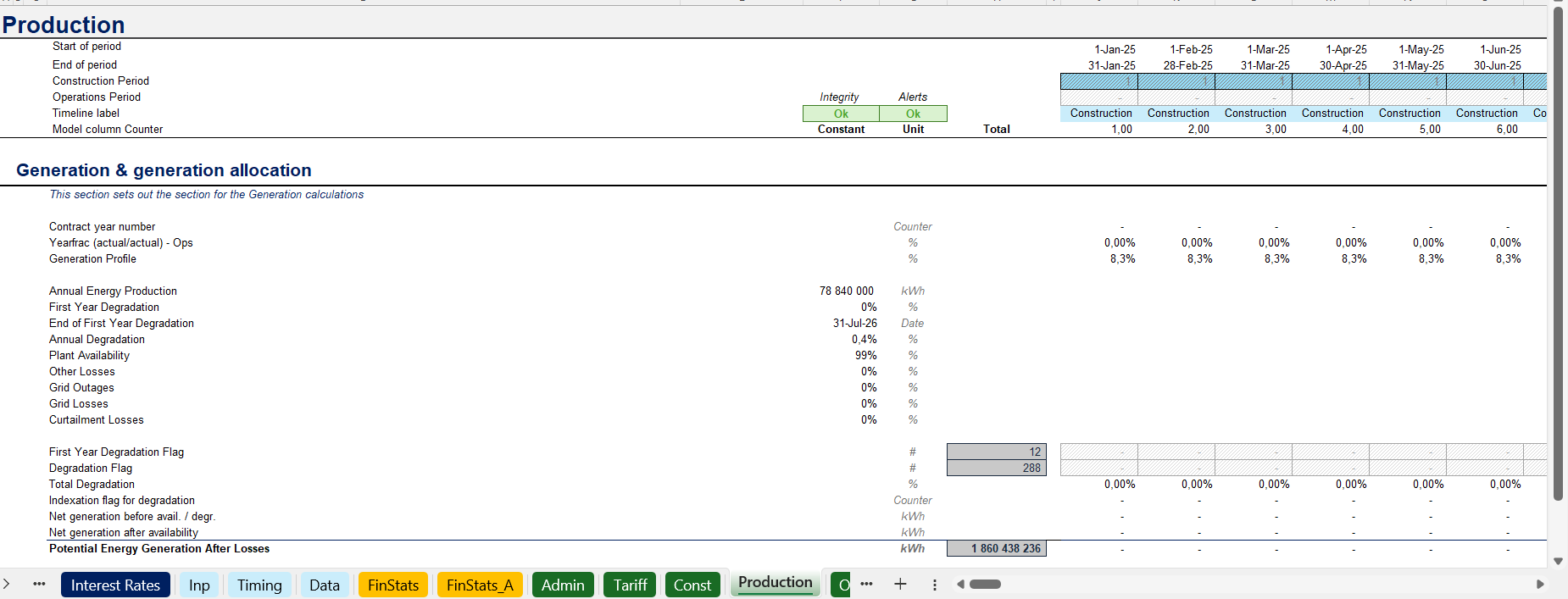
Models gross annual generation, degradation, availability, curtailment, and grid losses.
Calculates net deliverable energy after technical and operational losses.
Includes generation profiles and probability scenarios.
Revenue
Applies fixed or escalatable tariffs to net energy produced.
Method 1: User-defined input.
Method 2: Solver-based calculation to meet a target equity IRR.
Operating Costs (Opex)
Captures all operating costs, escalated by inflation.
Includes expensed DSRA letter of credit (L/C).
Working Capital
Models receivables and payables.
Impacts cash flow and funding requirements.
VAT Treatment
Separately models input VAT recovery and output VAT obligations.
Assumes VAT is refunded during construction.
A VAT facility and related fees are included.
Depreciation & Tax
Models accounting and tax depreciation schedules.
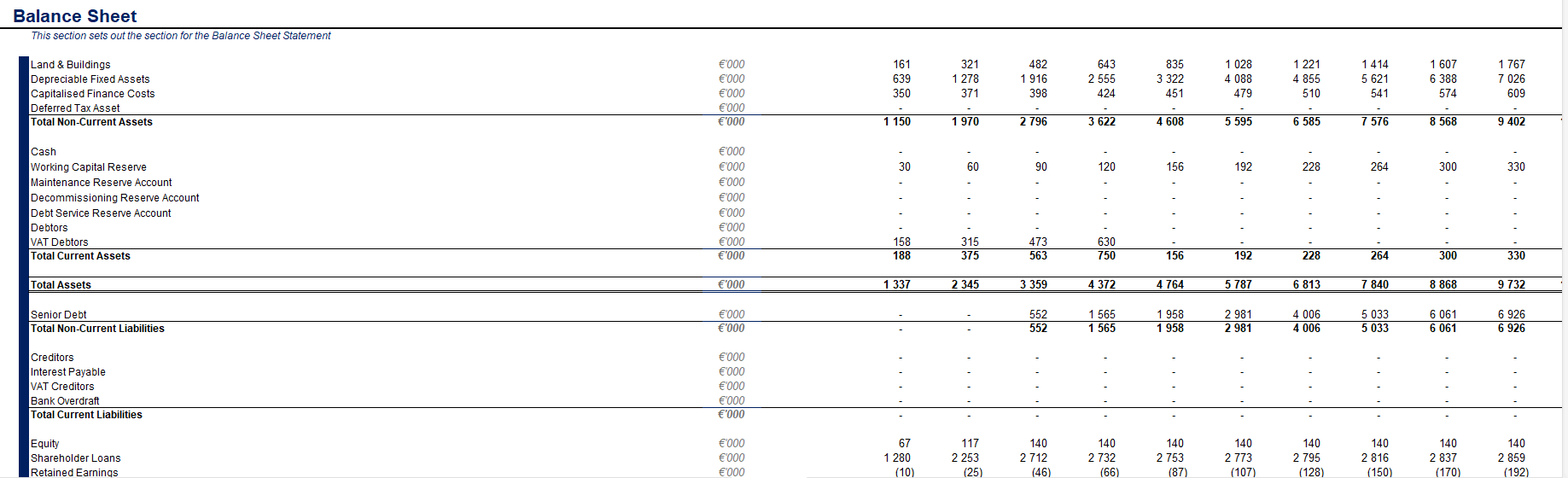
Includes fixed asset summaries and capitalised finance costs.
Reserves & Upfront Working Capital
Models upfront working capital and interest earned on cash balances.
Includes DSRA and DSRA L/C arrangements.
Financing StructureDebt
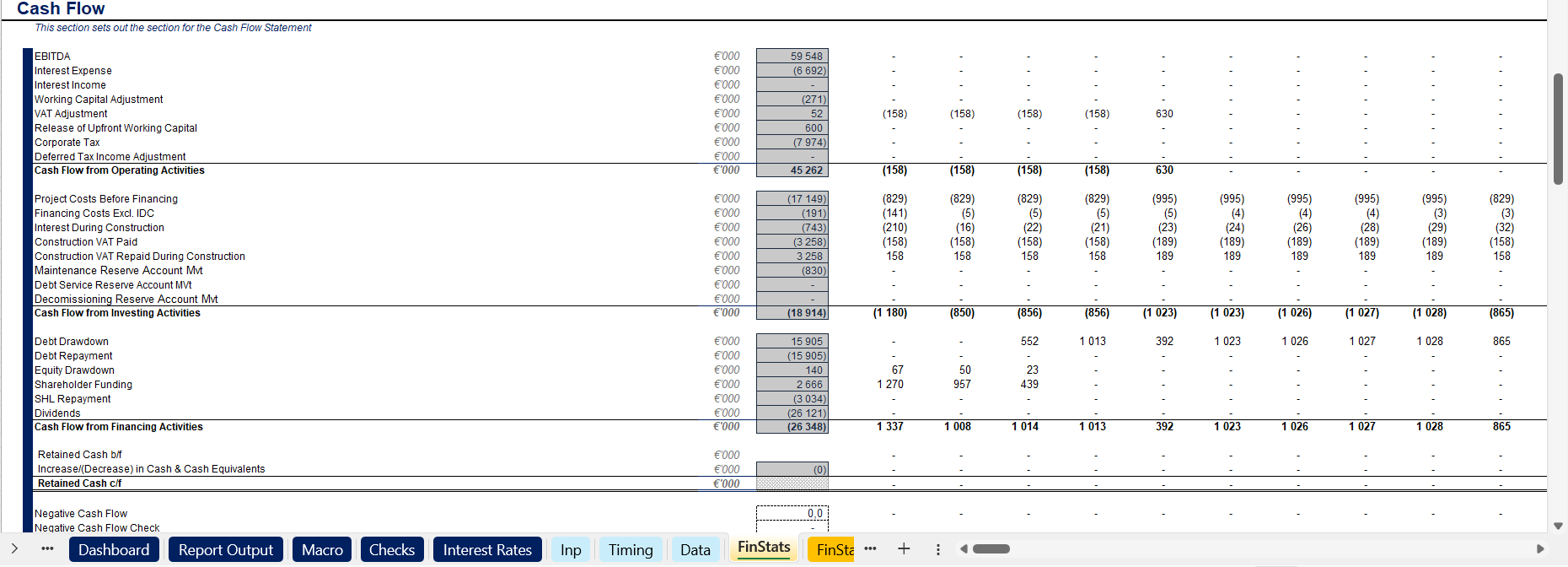
Models drawdowns, interest, repayments, sculpted cash flows, DSCR monitoring, and related fees.
Equity
Includes paid-up capital and shareholder loans with associated returns and repayments.
Drawdown Sequencing
Configurable as Pari Passu or Equity First.
Circularity breaker aligns tariff, IRR, and Interest During Construction (IDC).
Interest Rate Assumptions
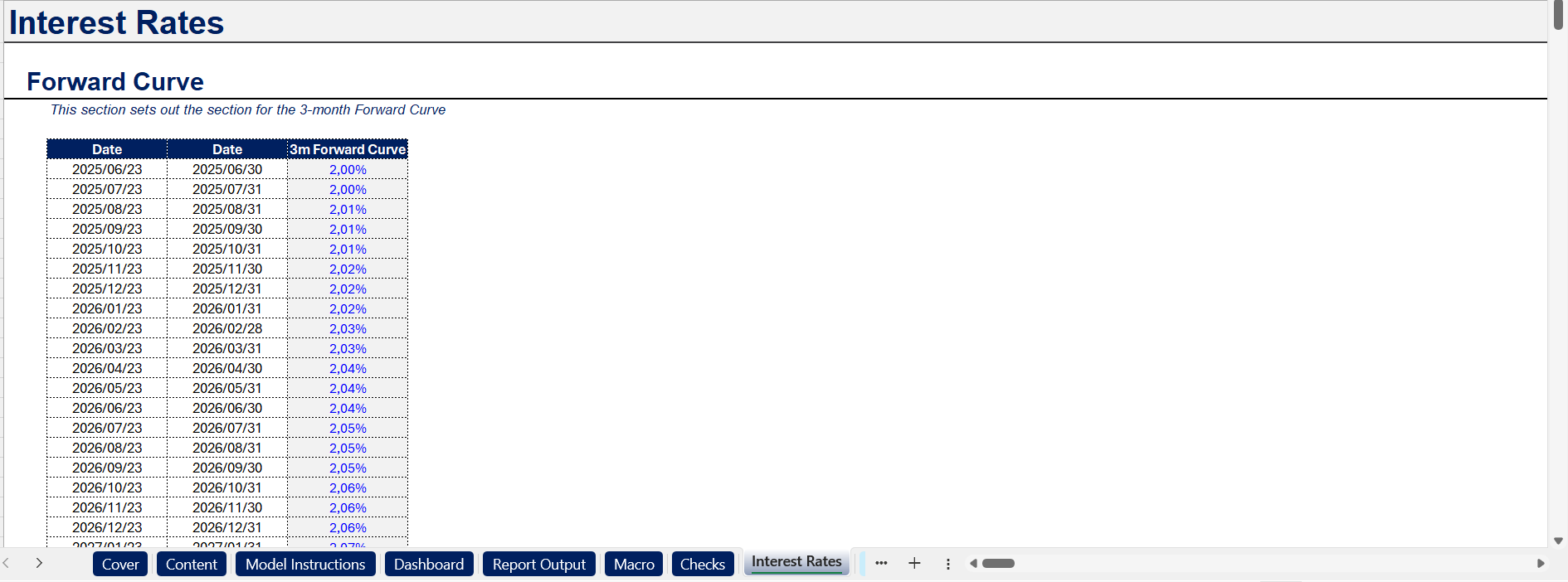
The model uses a dummy 3-month interest rate curve to simulate financing cost assumptions over time. This curve:
Is embedded into the Debt section.
Can be adjusted to reflect short-term market trends or hedging.
Feeds into:
Interest on senior debt (construction and operation).
IDC (Interest During Construction).
Valuation & Returns
Calculates project and equity IRRs (pre- and post-tax).
Computes project NPV, equity payback periods, and dividend flows.
Outputs & Interface
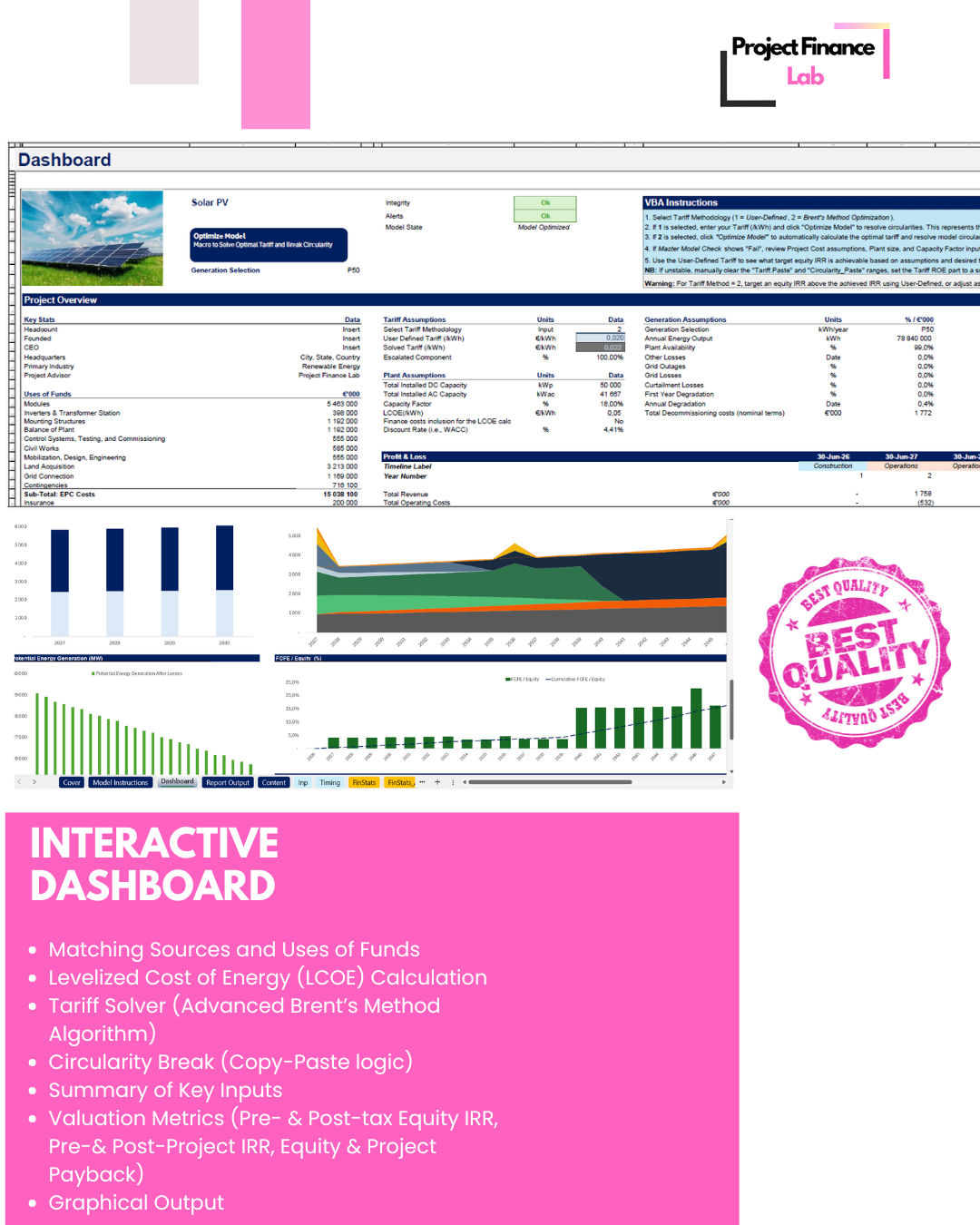
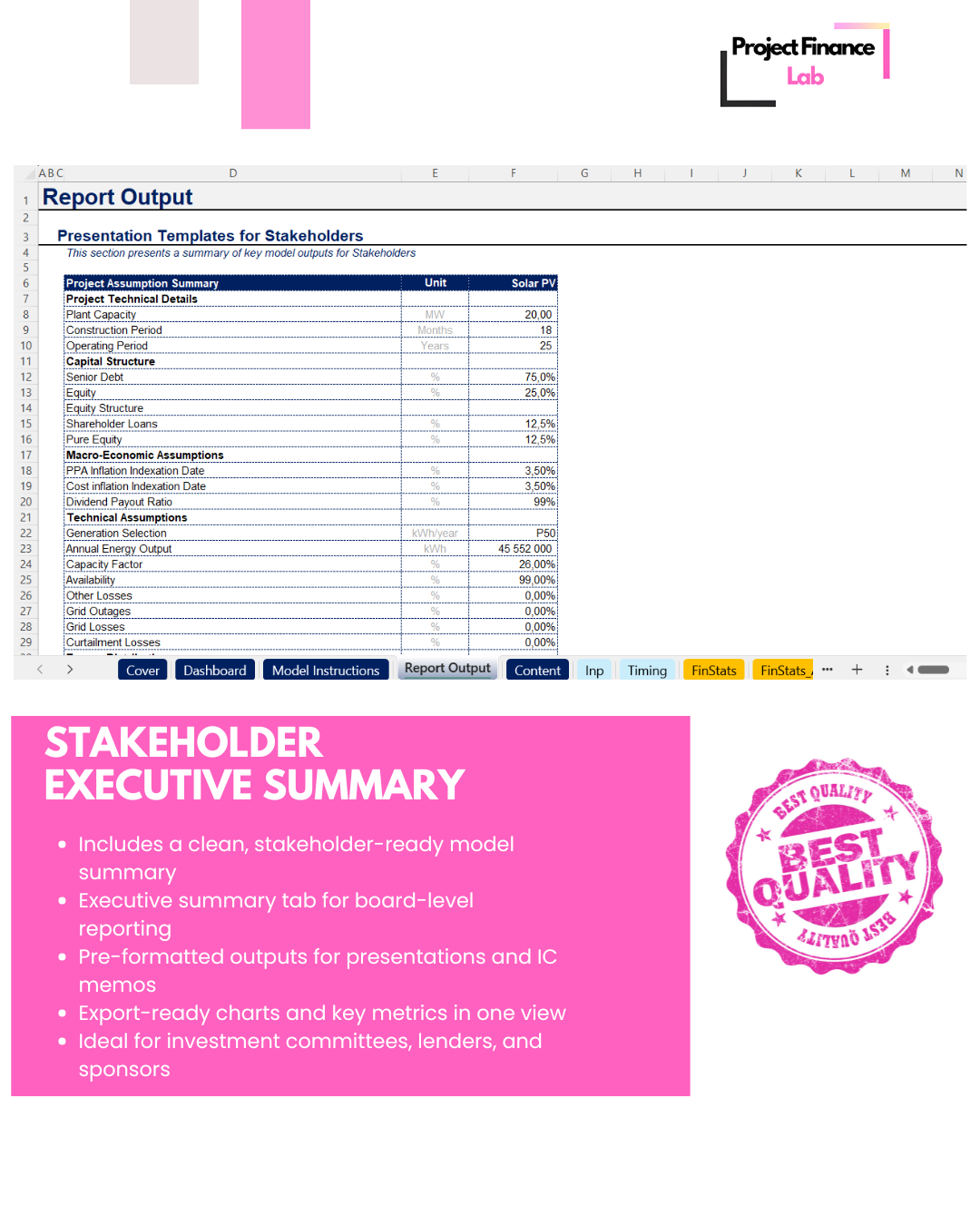
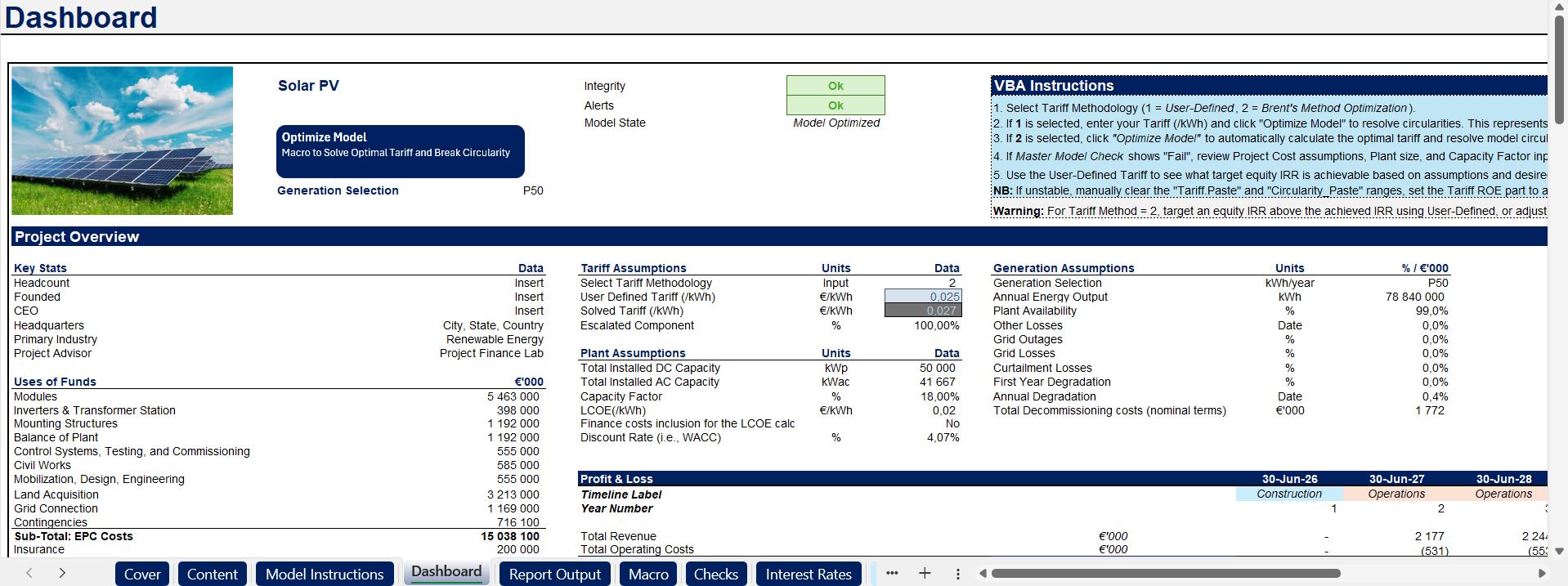
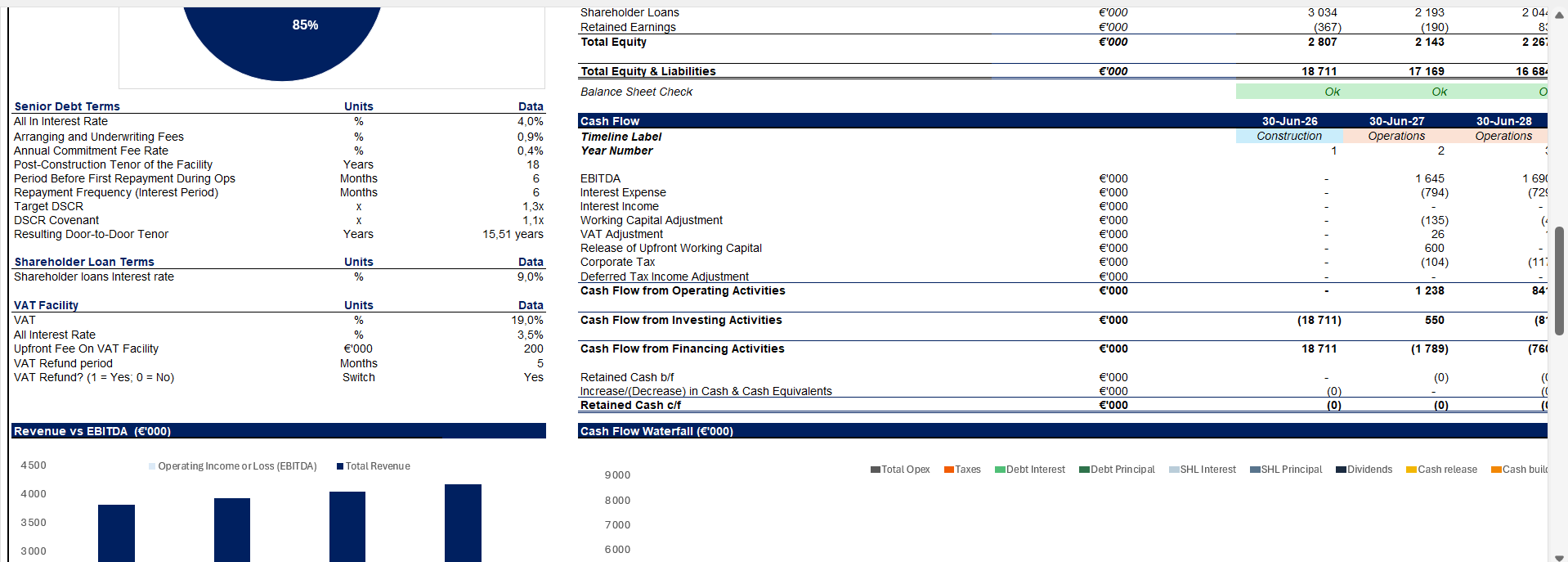
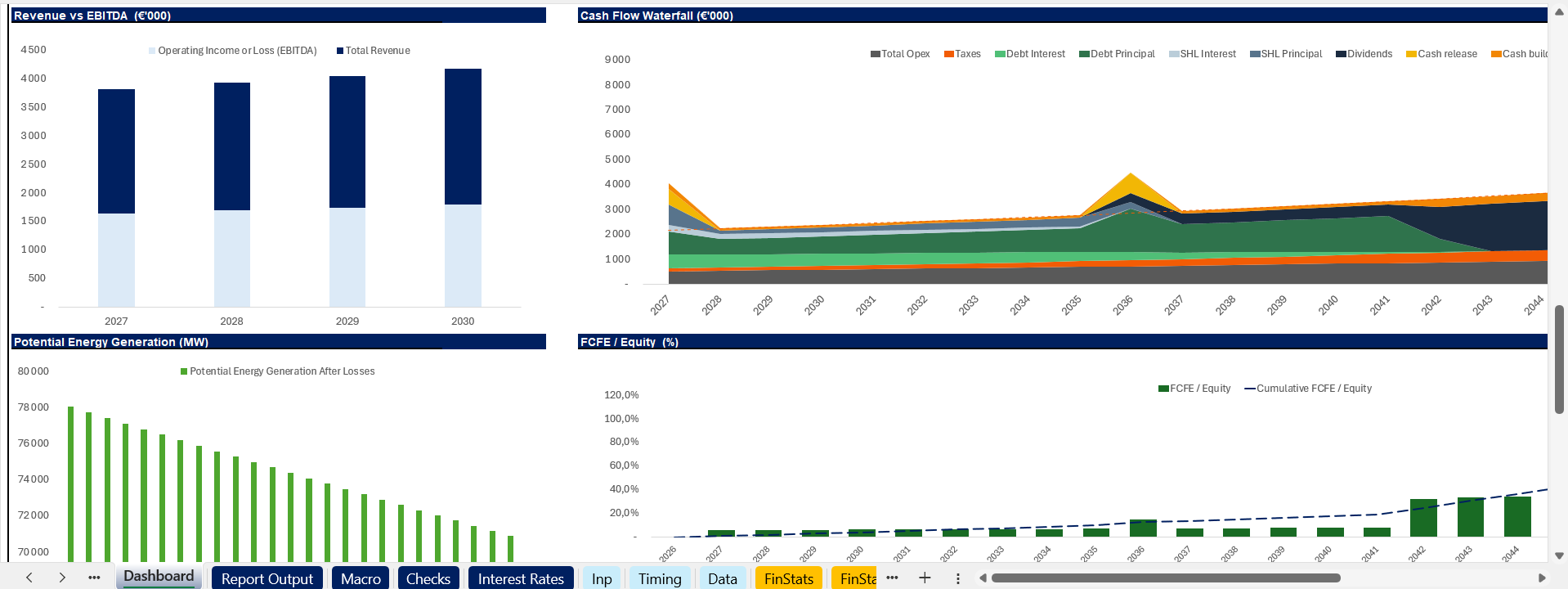
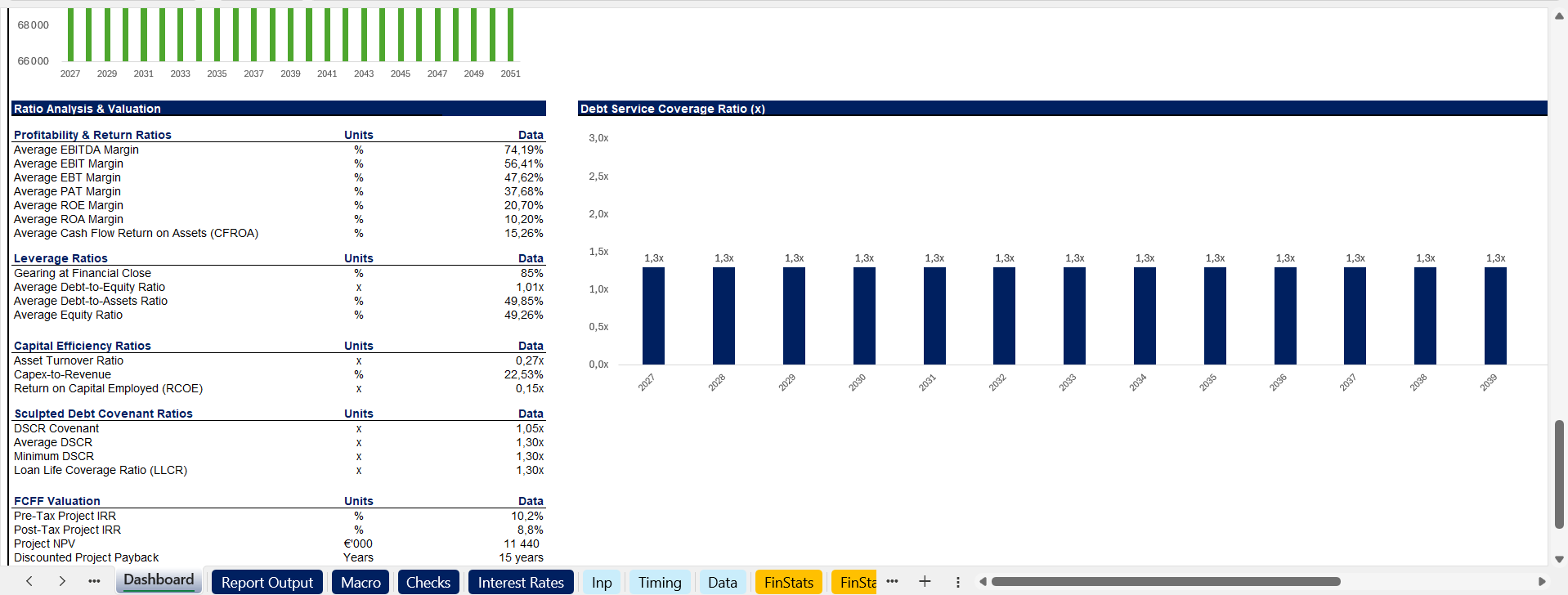
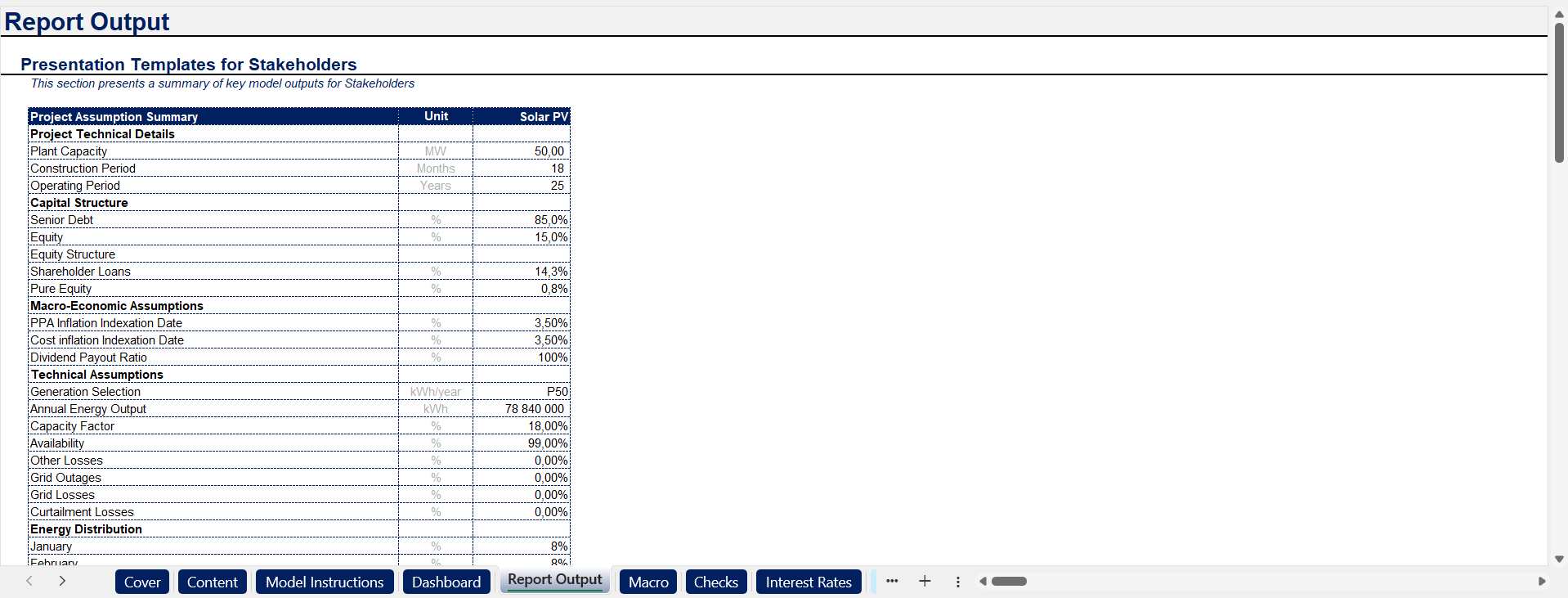
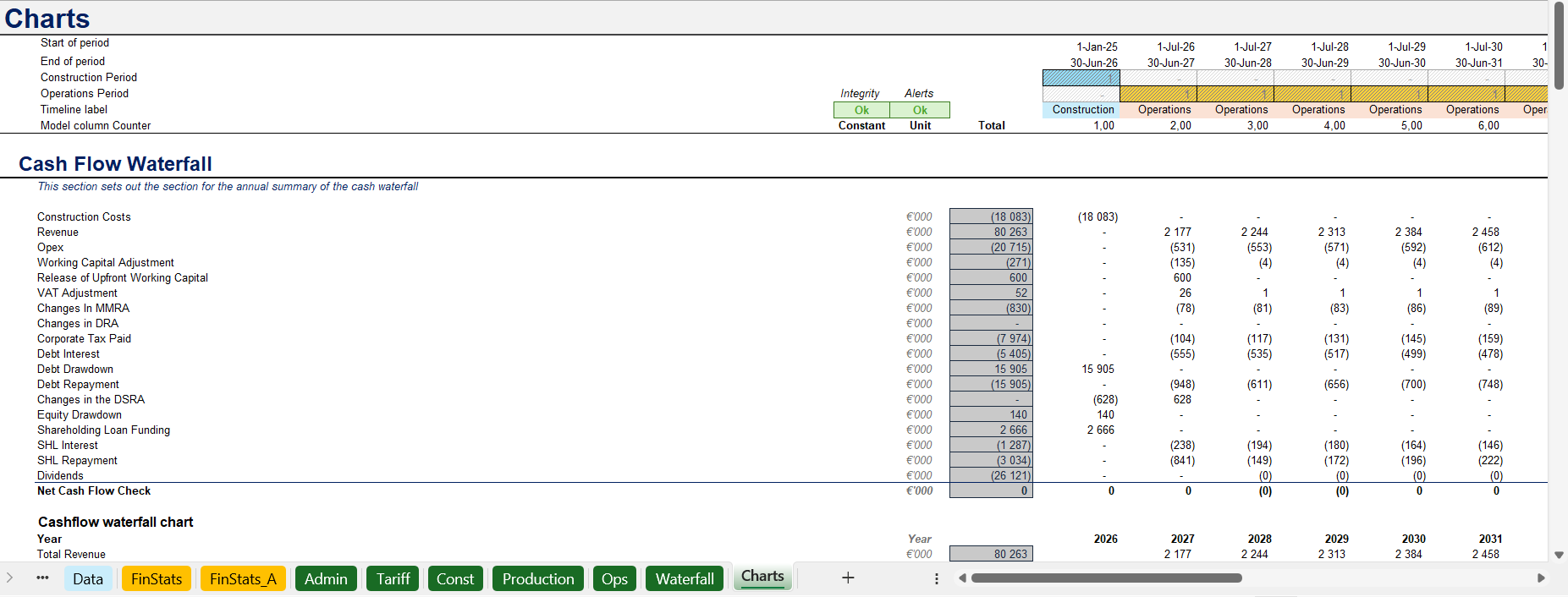
Stakeholder-ready Dashboard with KPIs, summary assumptions, and return metrics.
Clean, user-friendly interface suitable for investment committee presentations.
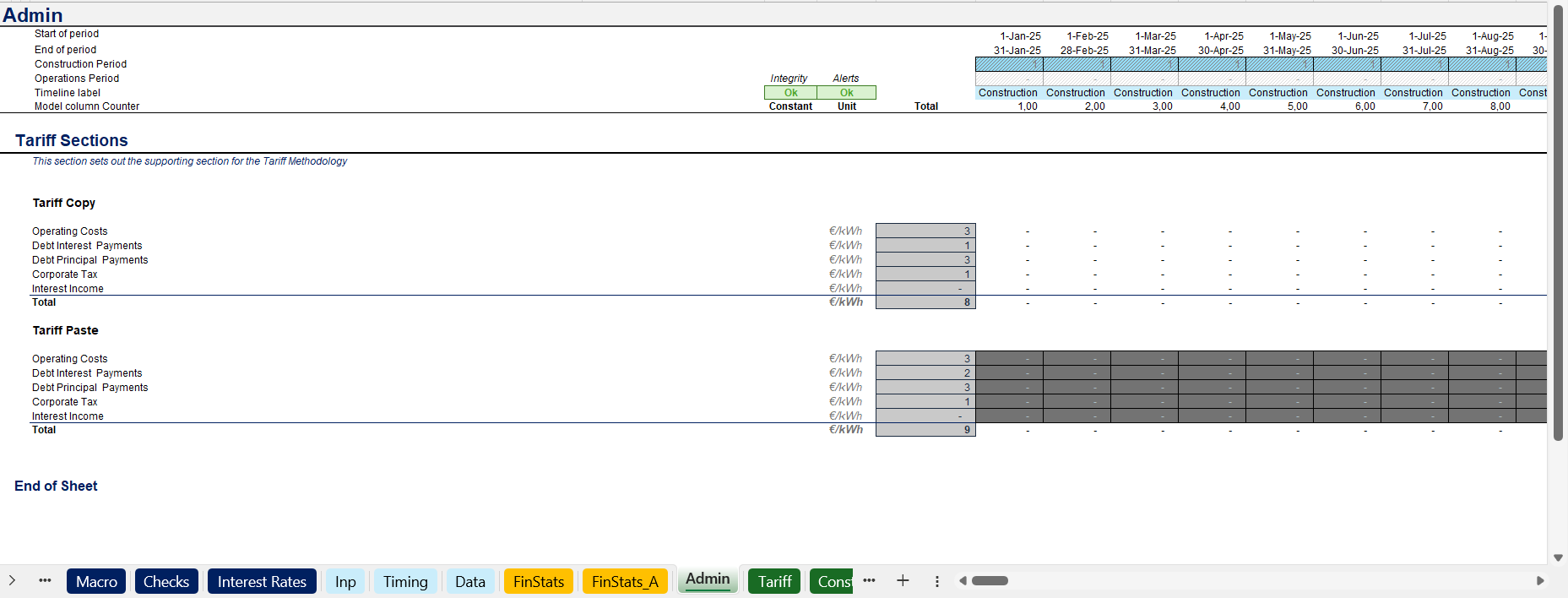
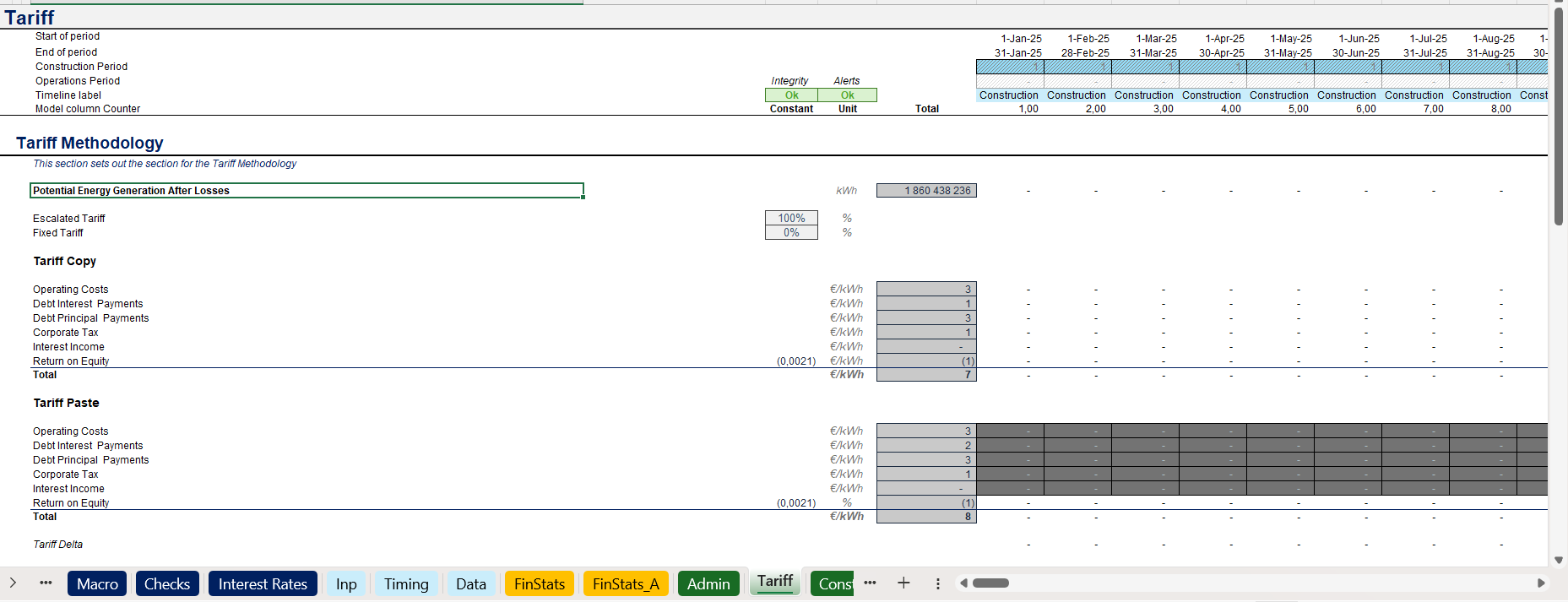
Tariff Methodology & Advanced Solver
The model uses a custom-built tariff optimisation engine powered by Brent’s Method to solve for the tariff that achieves a user-defined equity IRR.
Operation
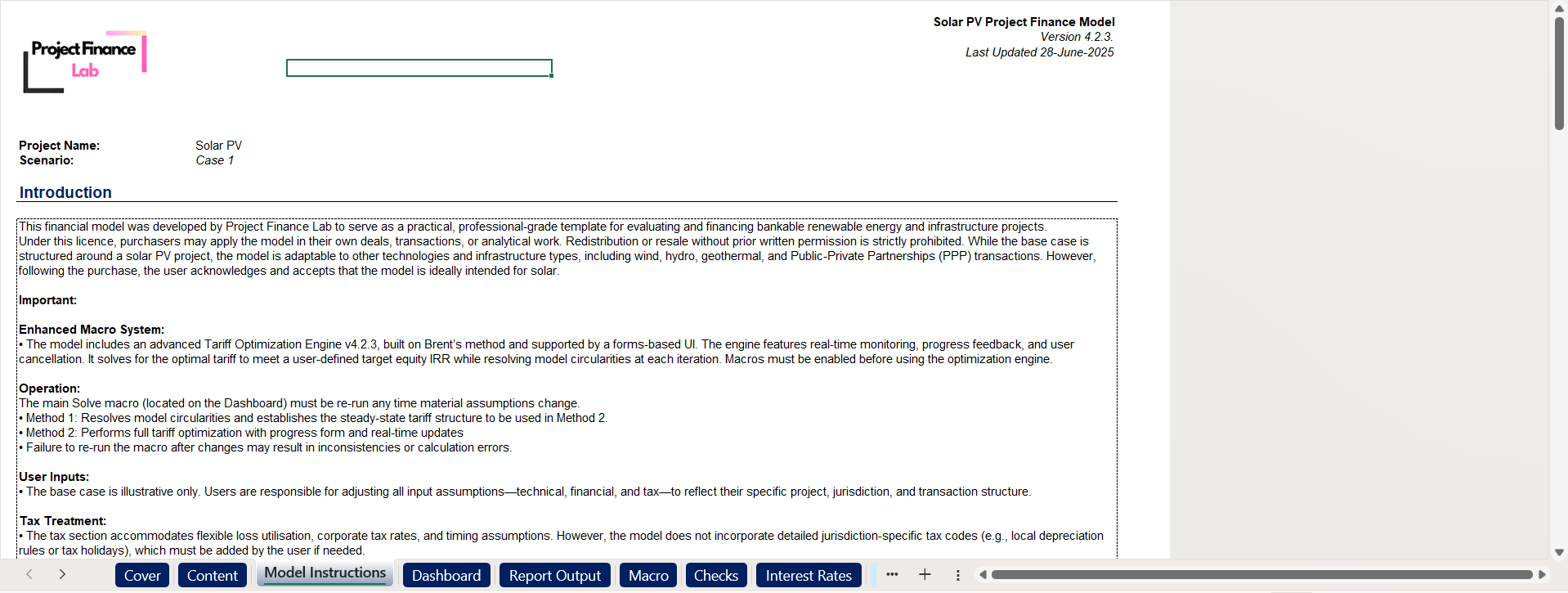
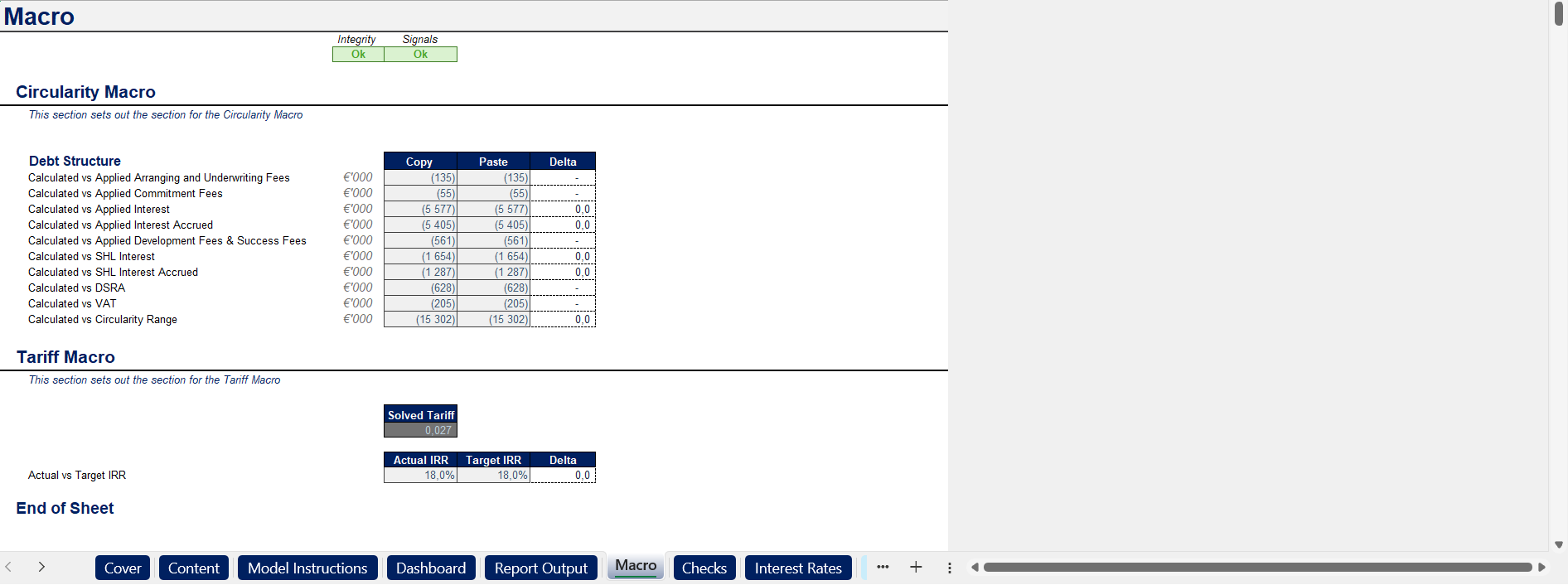
Re-run the Solve macro (on the Dashboard) whenever material inputs change.
Method 1: Resolves circularities and updates tariff structure.
Method 2: Runs full Brent-based tariff optimisation with real-time feedback.
Failure to re-run the macro after key changes may lead to inconsistent results.
About Brent’s Method
Brent’s method is a hybrid root-finding algorithm that merges:
Bisection method
Secant method
Inverse quadratic interpolation
It ensures convergence without requiring derivatives, making it ideal for the non-linear, circular cash flows common in project finance models.
Why Brent’s Method?
Guaranteed convergence under typical project finance conditions.
Superior to Excel’s Goal Seek and GRG Nonlinear Solver.
Handles models with circularities (e.g., IDC, DSRA) more reliably.
How the Solver WorksPhase 1 – Feasibility Check
Scans tariff ranges for a valid, positive IRR.
Phase 2 – Anchor Point
Builds a second IRR calculation to initiate secant approximation.
Phase 3 – Iterative Optimisation
Executes Brent’s method using adaptive secant updates until IRR converges.
Real-Time User Interface
A custom UI form displays tariff and IRR values for each iteration.
Users can observe progress and cancel the run if needed.
Circularity Resolution
Each iteration invokes the ResolveCircularities routine.
Ensures correct resolution of IDC, DSRA, and related interdependencies.
Key Solver Features
User-defined target IRR input
Real-time dashboard updates
Built-in failsafes for undefined IRRs
Adaptive damping, step size, and tolerance
Typical runtime: under 5 minutes
Technology Adaptability
While tailored for solar PV, this model can be adapted to:
Wind
Hydro
Geothermal
PPP/infrastructure projects
Note: The model is designed primarily for solar PV, and structural changes are required for other technologies.
What’s Included in Your Purchase
Excel Model: Fully functional and VBA-enabled
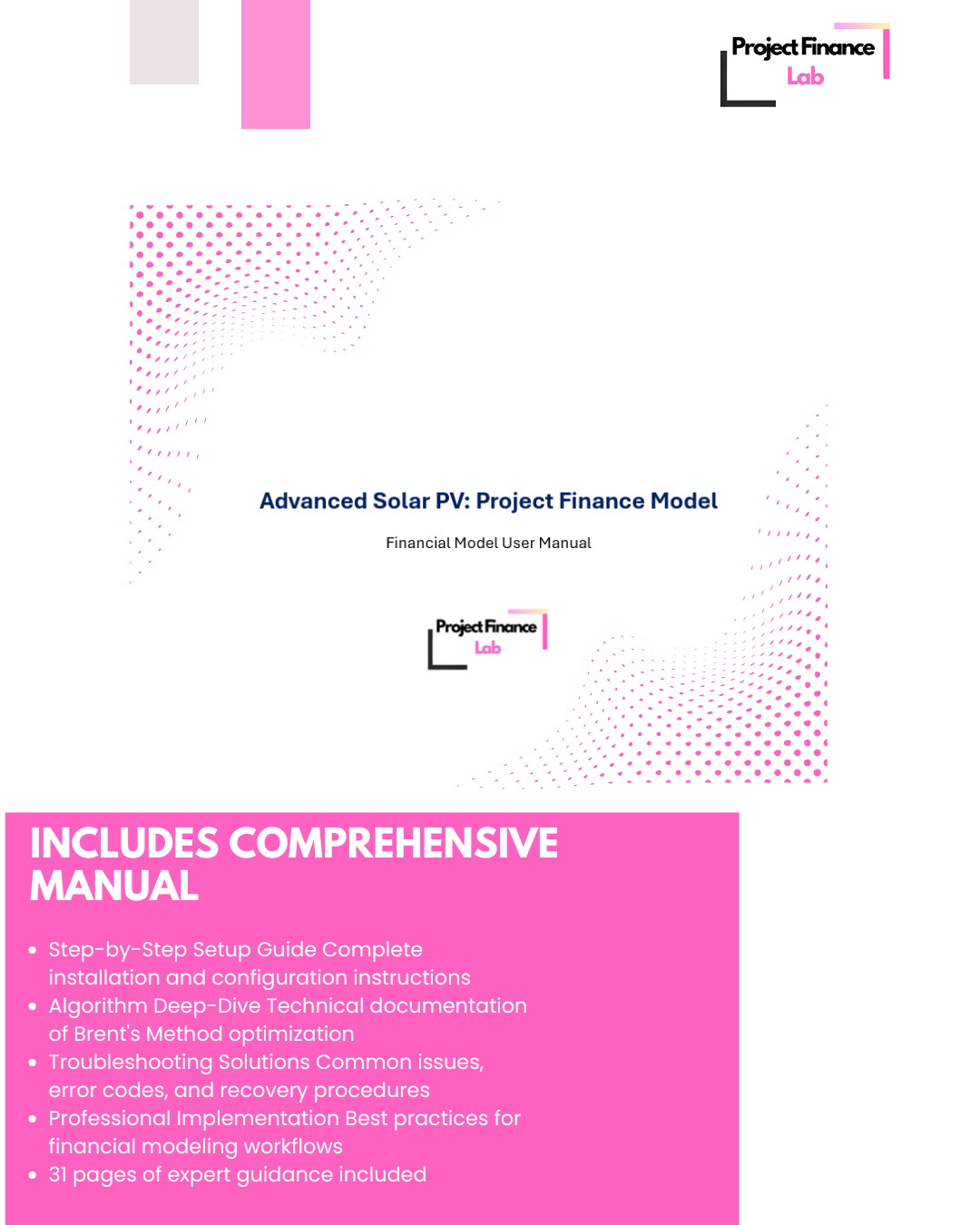
31-page Model Manual: Detailed methodology and instructions
PDF Printout: Printable version of the model
"Read Me" File: Version history and usage notes
Disclaimer
This financial model is the intellectual property of Project Finance Lab and is licensed for commercial use only. Redistribution, resale, or modification without written permission is prohibited.
While the model has been developed for robustness and reliability, no warranties are offered regarding:
Jurisdictional compliance
Completeness or fitness for purpose
Users must input assumptions, exercise professional judgment, and adapt the tool to suit specific legal, technical, and commercial contexts.
Project Finance Lab disclaims liability for losses resulting from model use.
Fair Use Expectations & Support Policy
This model is designed for professionals with a working knowledge of Excel, VBA, and project finance.
Support Scope: Functional questions only
Exclusions: No training, debugging, or consulting unless arranged separately
Expectations:
Review product materials before use
This is a professional tool—not a tutorial or automated app
Best Use Cases
This model performs best in low-tariff environments, particularly:
United States
European Union
United Kingdom
Latin America
MENA
Ideal for projects with average tariffs of ~$0.06/kWh, and USD/EUR/GBP-denominated funding structures.
This Best Practice includes
Zipped Folder: Text File ('Read Me' Instructions), Excel File (Financial Model), PDF Print-out, PDF (31 pg Model Manual)
Further information
To provide a professional-grade Excel template model designed to assess the bankability of utility-scale solar PV.
Solar PV Projects and low tariff regions such as the US, UK, EU, LATM, MENA, etc.
High Tariff regions and projects not US / GBP / EUR denominated