Feasibility Study Financial Model with Debt Sizing, DSCR, NPV and IRR (Excel)
Originally published: 14/09/2026 09:12
Publication number: ELQ-65076-1
View all versions & Certificate
certified

Feasibility Study Financial Model with Debt Sizing, DSCR, NPV and IRR (Excel)

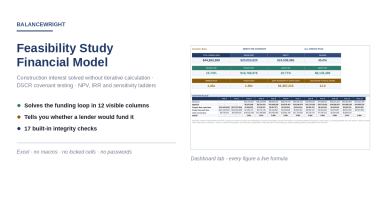
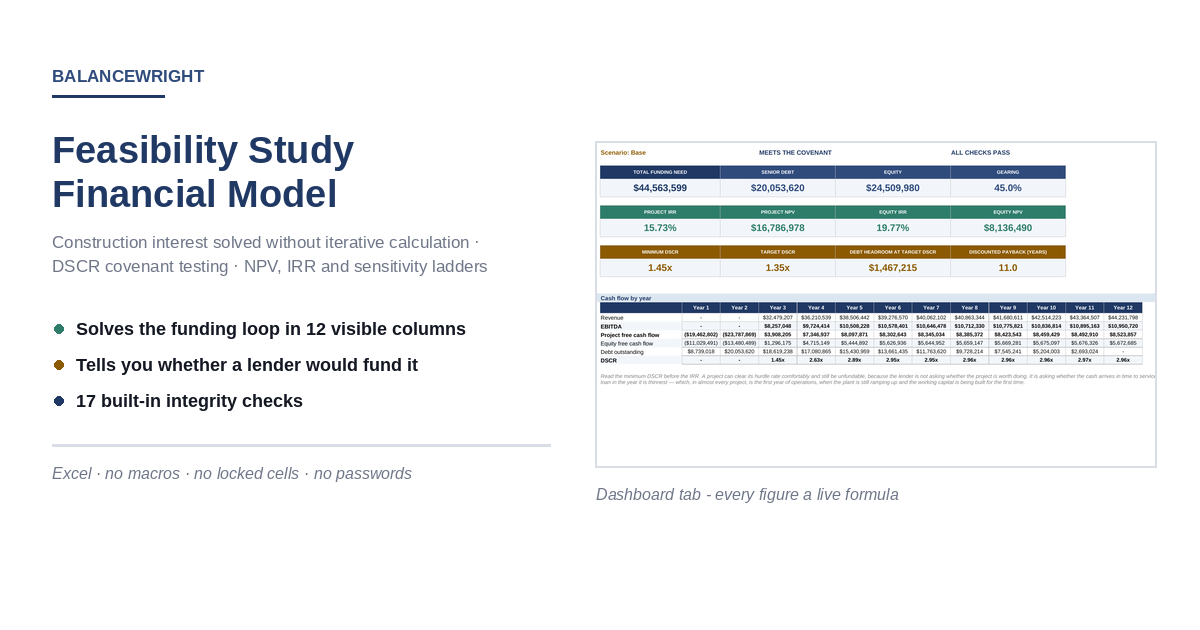
Is the project worth doing, and can it be financed? Sizes funding including construction interest in 12 visible columns, then tests DSCR.

Description
A feasibility study exists to answer two questions, and most templates answer only the first. Is the project worth doing, and can it be financed?

THE CIRCULAR REFERENCE EVERY PROJECT MODEL HAS
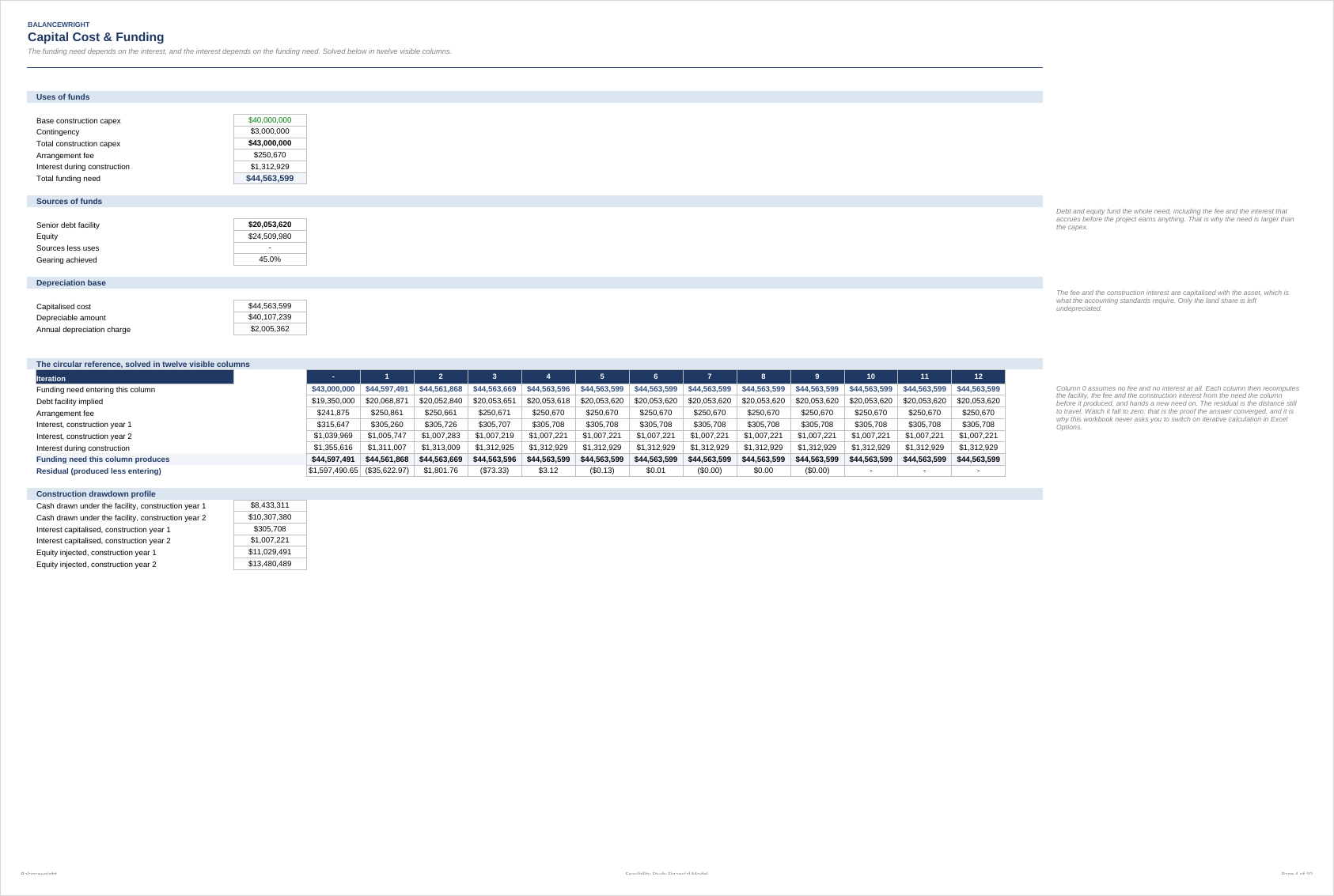
The interest that accrues while a project is being built has to be funded. Funding it enlarges the amount to be raised. Raising more means the debt is larger, and a larger debt accrues more interest. That is a circular reference, and a spreadsheet cannot resolve it without either iterative calculation or a solve.

Most feasibility templates deal with this by pretending it does not exist. They size the debt on the capex alone and add the construction interest afterwards, which understates the funding need and overstates the equity return. In the worked example the difference is 1.56 million on a 43 million project.

This model puts the loop on the page. Twelve columns run left to right; column zero assumes no fee and no interest at all, and each column afterwards recomputes the facility, the fee and the construction interest from the funding need the column before it produced. The residual row falls from 1.6 million to zero. Excel's iterative calculation setting is never touched.

THE QUESTION A LENDER ASKS
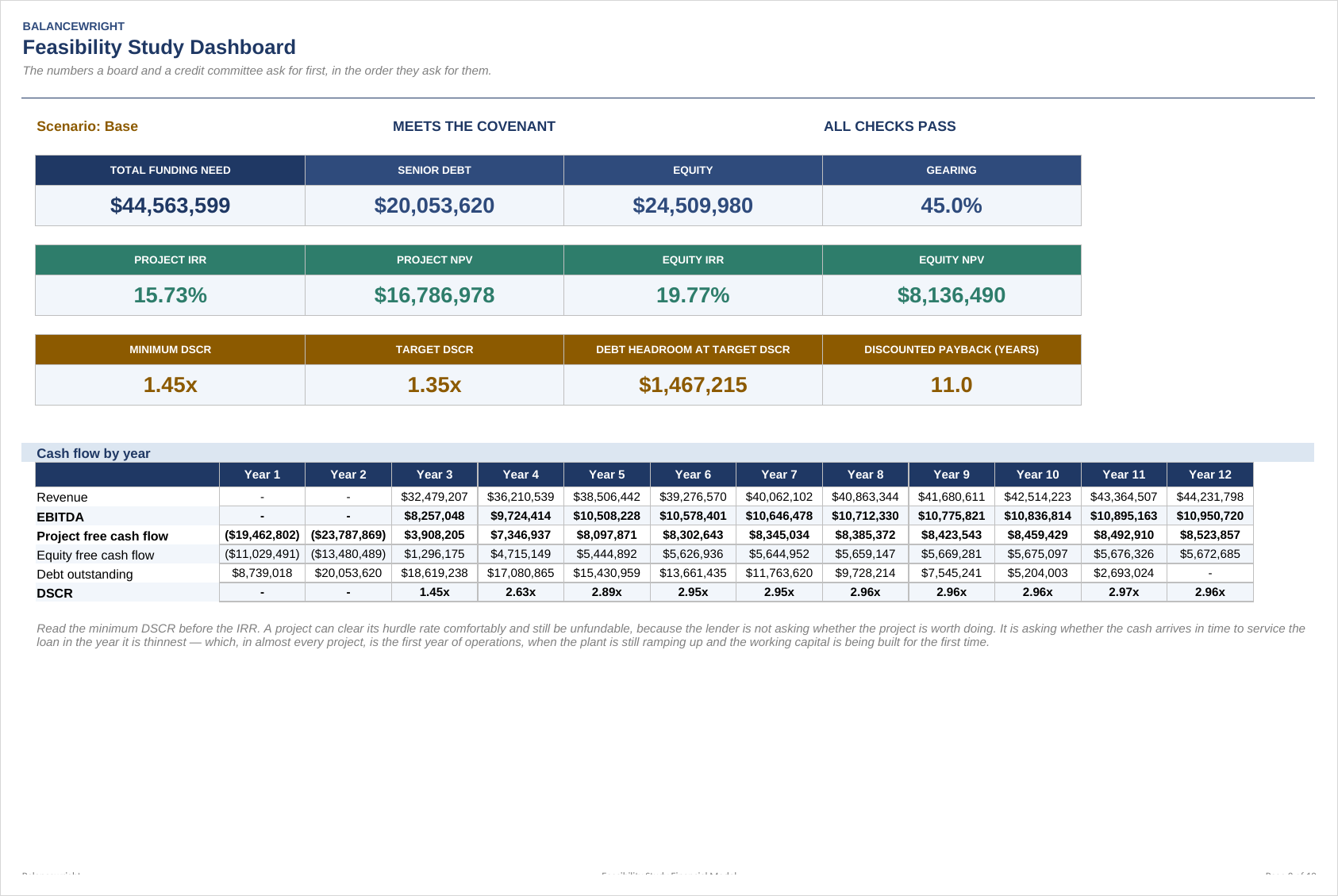
An investor asks whether the return beats the cost of capital. A lender asks something narrower and harder: does the cash arrive in time to service the loan in the year it is thinnest. A project can clear its hurdle rate comfortably and still be unfundable.

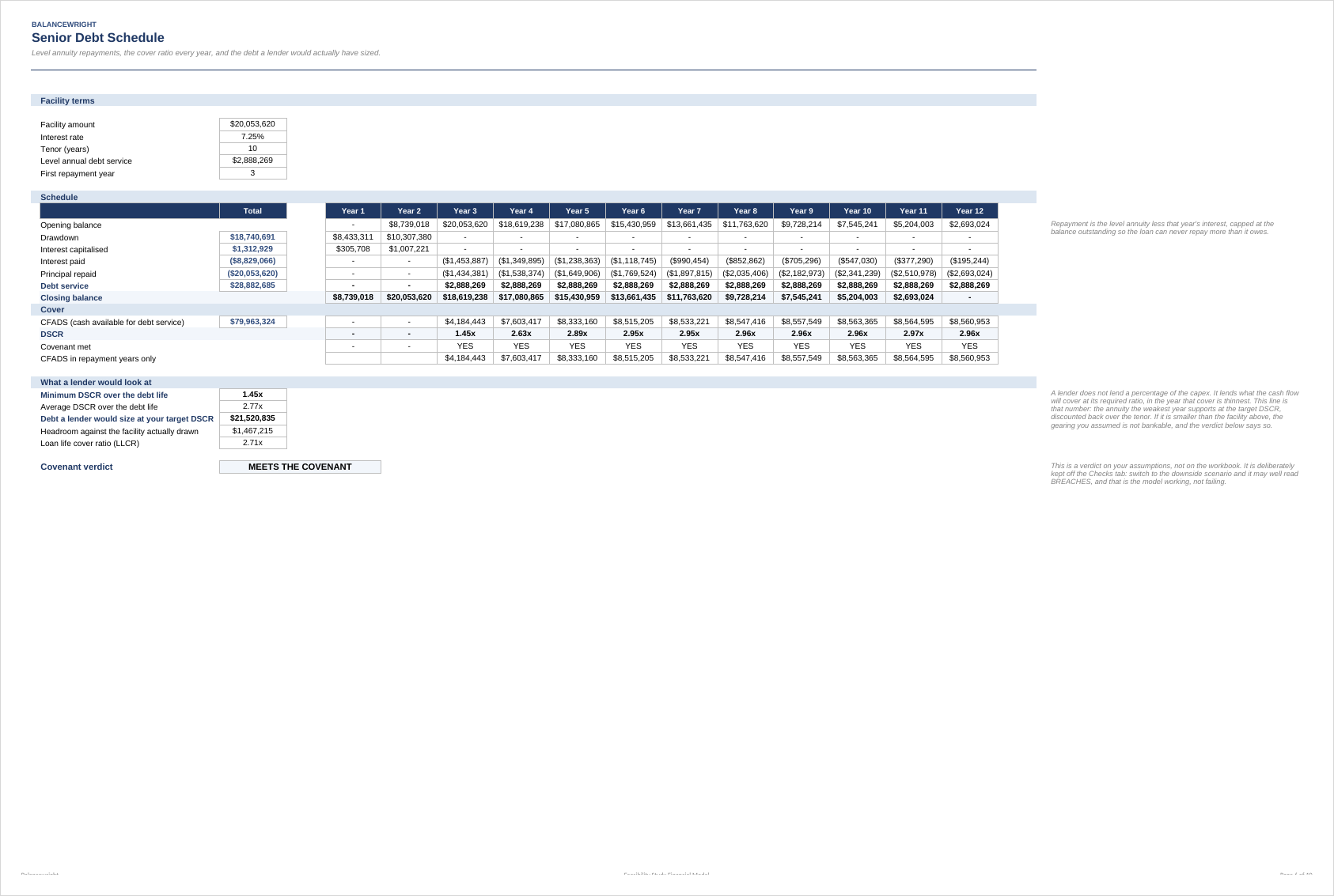
The Debt Schedule tab reports the debt service cover ratio in every operating year, tests it against your covenant, and gives a verdict. It also reports the debt a lender would have sized on this cash flow - the annuity the weakest year supports at your target ratio, discounted back over the tenor. In the worked example that is 21.5 million against a facility of 20.1 million: the gearing survives, with 1.5 million to spare and no more.

TWO TAX LINES
Interest is deductible, so a geared project pays less tax than an ungeared one. That saving belongs to the financing, not to the project. A project IRR that quietly includes it is flattering the asset with a benefit that came from the balance sheet. This model computes tax twice, charges the unlevered figure to the project cash flow and the levered one to the equity, and an integrity check proves the two differ by exactly the financing and the shield.

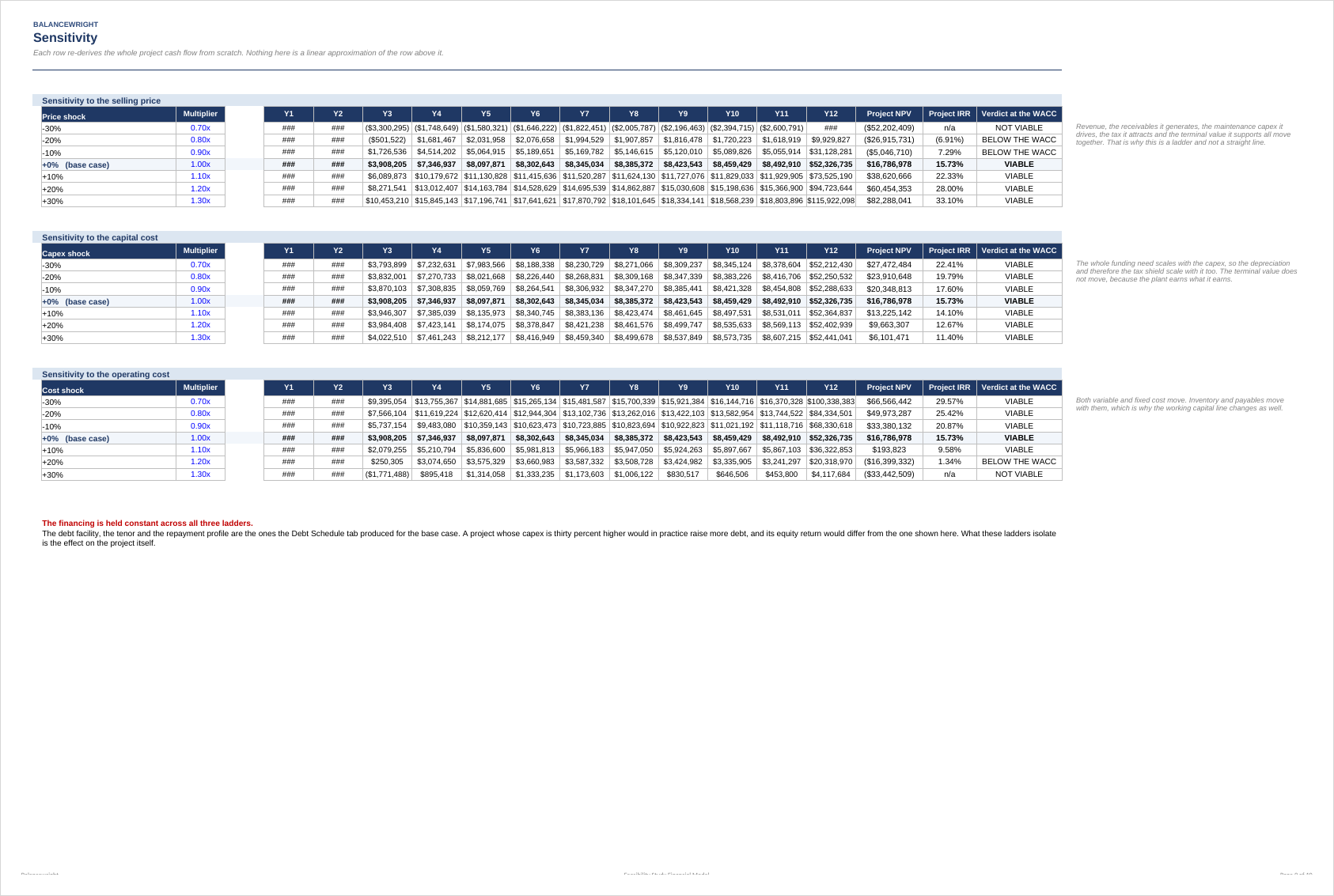
Three sensitivity ladders - price, capital cost, operating cost - each re-derive the whole project cash flow from scratch. In the worked example a ten percent fall in price takes the return below the cost of capital, and so does a twenty percent rise in operating cost. That is the honest headline of the study, and it is not visible anywhere on the dashboard.

Seventeen integrity checks must all read PASS. No macros, no locked cells, no passwords.

This workbook models the arithmetic of your own project. It is not investment advice, and the worked example is invented.

This Best Practice includes
1 Excel workbook (10 tabs, 1,419 live formulas) and 1 five-page PDF guide.

Acquire business license for $59.00

Add to cart

Add to bookmarks

Discuss

Further information

Decide whether a capital project should go ahead, and whether a bank would fund it at the gearing you assumed.

You are appraising a plant, a hotel, a fleet, a processing line or any project with a construction period followed by an operating life; you need a bankable answer rather than a spreadsheet that only computes NPV.

You need multiple debt tranches, mezzanine, a debt service reserve account, cash sweeps, refinancing or monthly construction phasing. This is one project, one tranche, one currency, annual periods.


0.0 / 5 (0 votes)

please wait...