Originally published: 29/08/2025 15:32
Last version published: 10/09/2025 09:23
Publication number: ELQ-40238-2
View all versions & Certificate
Last version published: 10/09/2025 09:23
Publication number: ELQ-40238-2
View all versions & Certificate

Talent Retention Risk Matrix Template
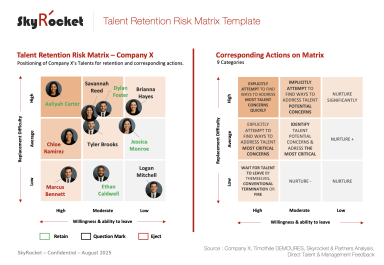
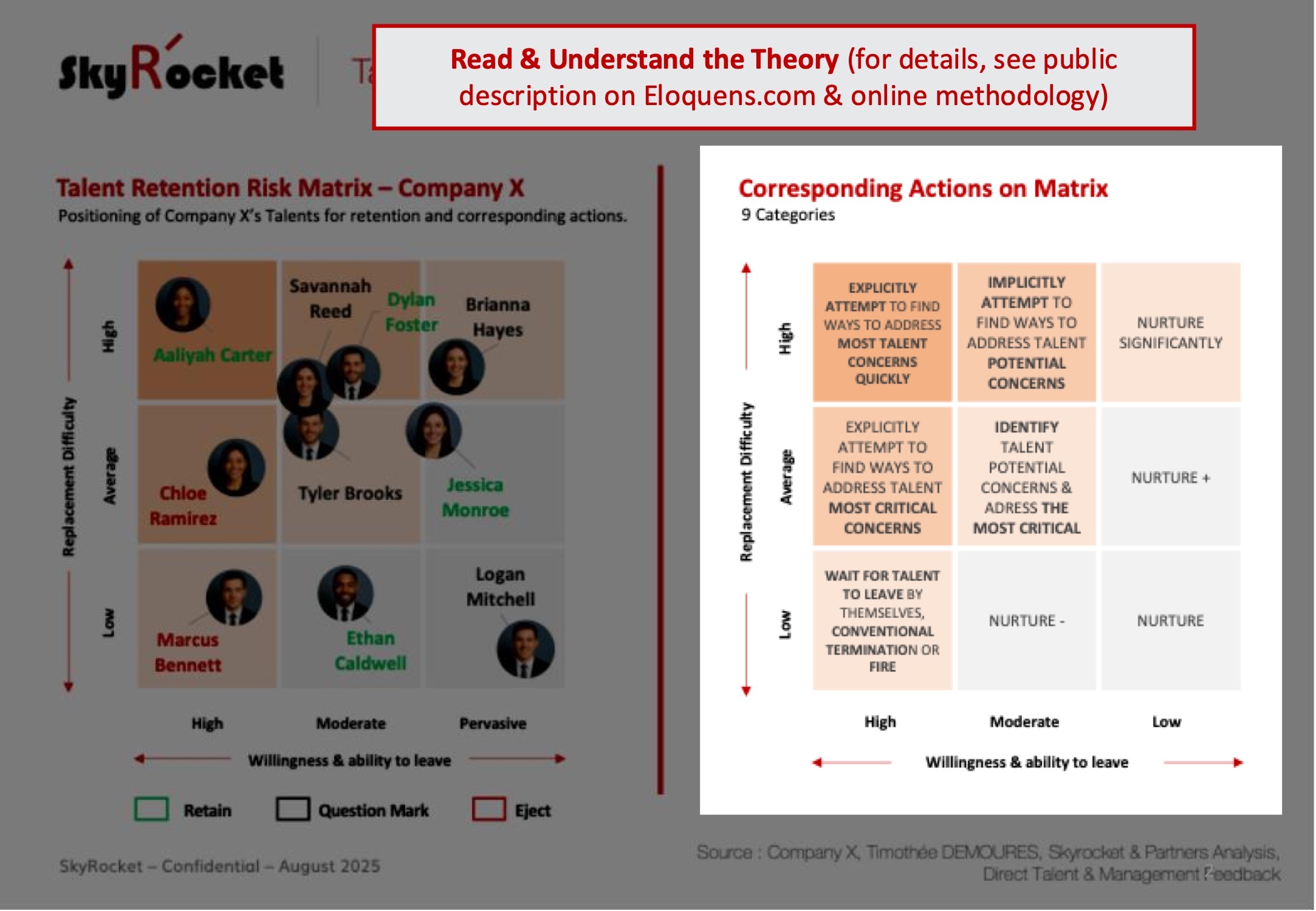
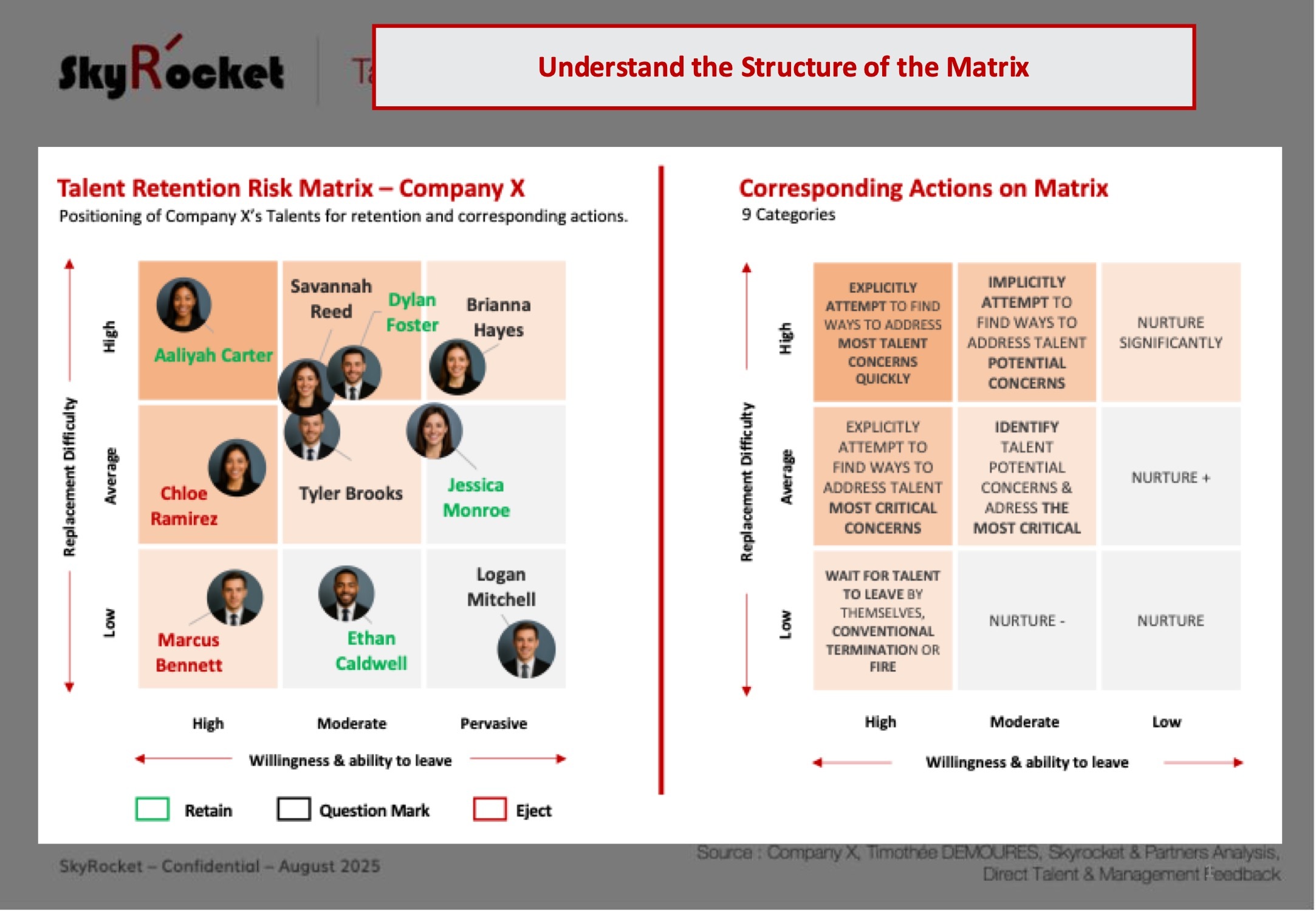
A practical 3×3 matrix to assess employee churn risk, map key talent, & guide targeted retention actions based on replacement difficulty & likelihood to leave.


talent retentionemployee churnworkforce planninghr strategysuccession planningemployee engagementretention strategyhuman capital managementtalent risk assessmentorganizational development
Description
Over the past decade of Venture Building (at adVentures, Wimi, Eloquens, Kroqi...), I’ve navigated and observed multiple business cycles — from periods of rapid growth to moments of intense pressure. In the most challenging phases, workforce stress inevitably rises, and the risk of losing valuable team members increases.
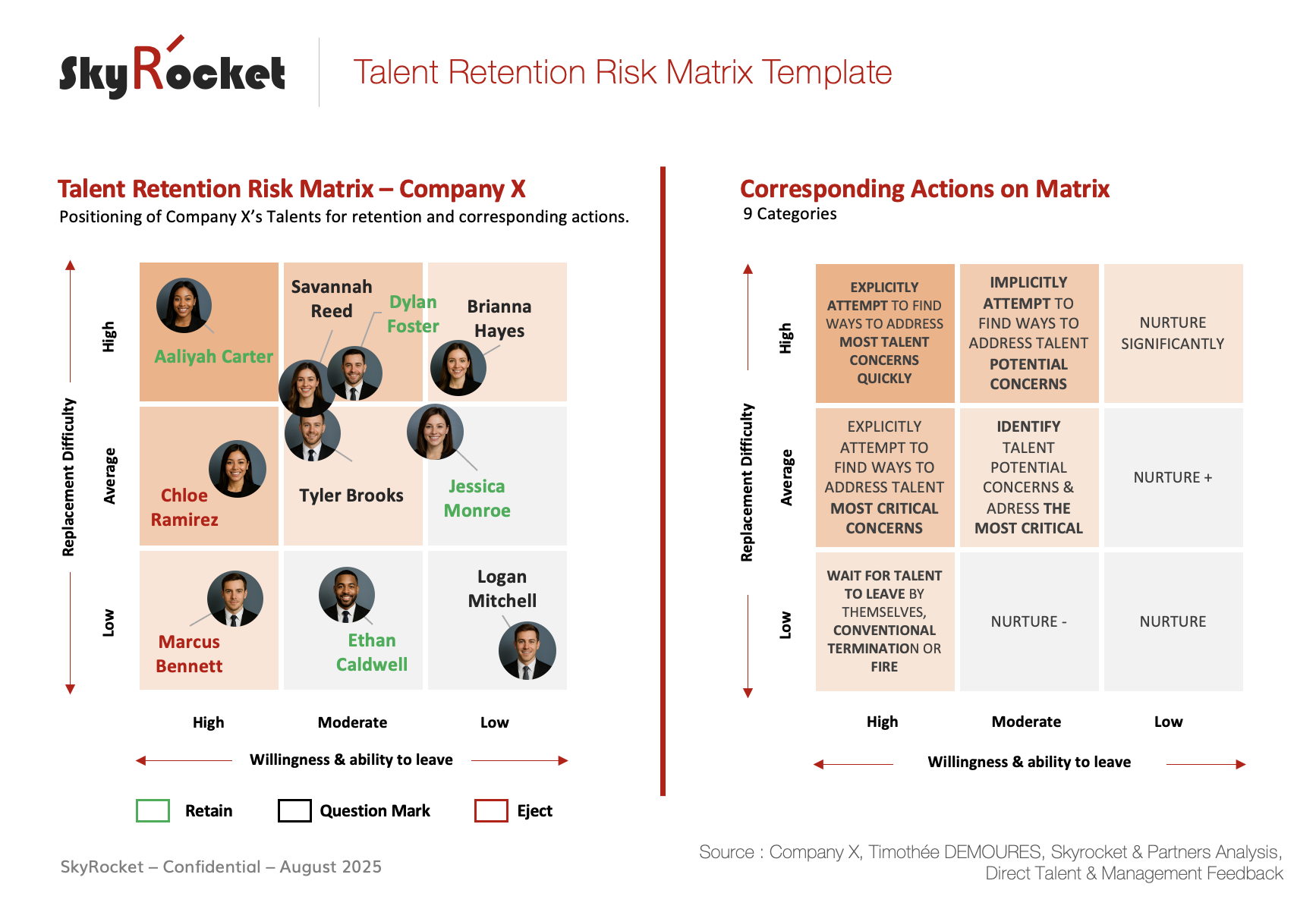
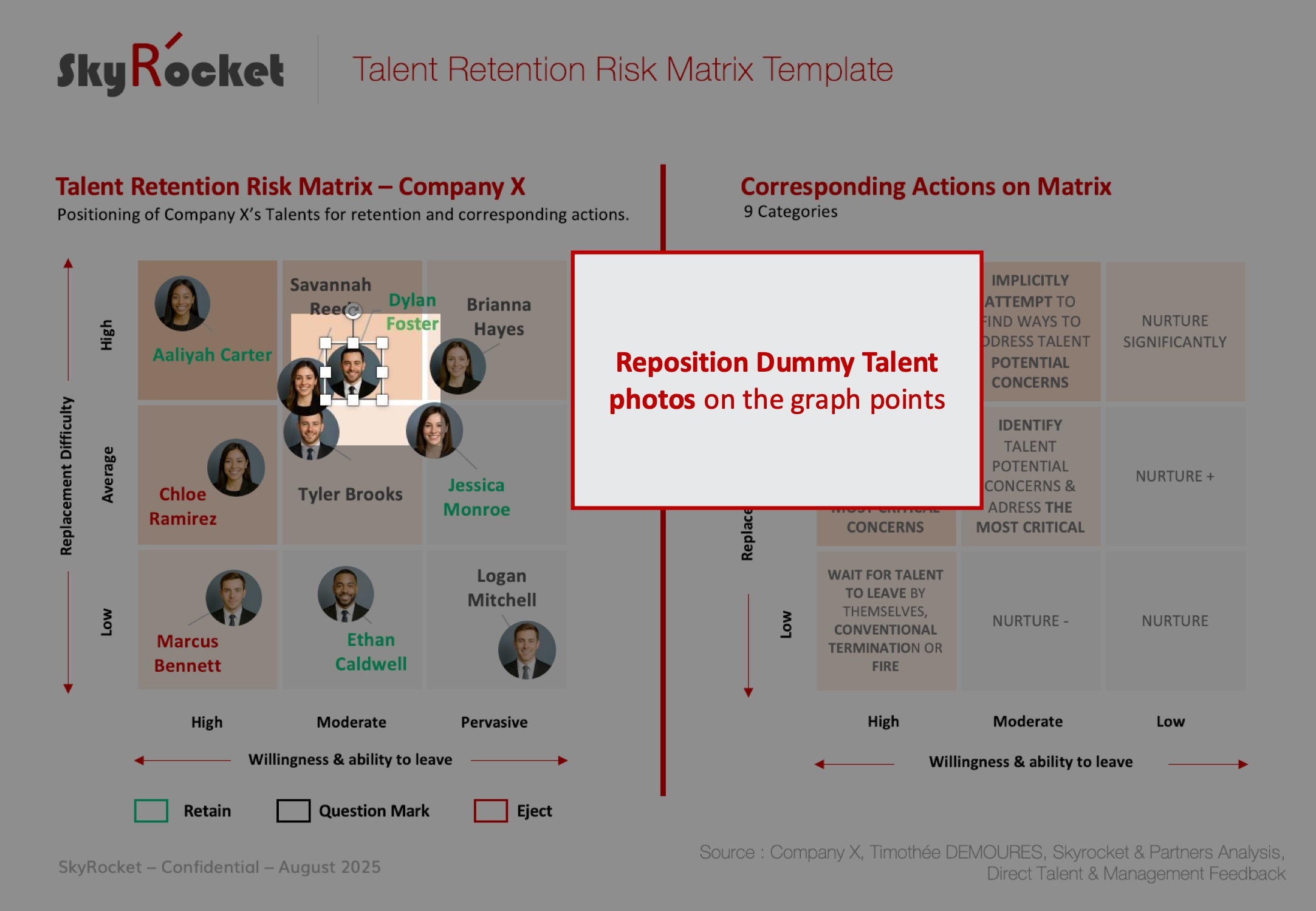
To better monitor key talent, anticipate potential departures, and make informed, strategic decisions, I distilled our internal thinking process into a 3×3 Nine-Box Matrix. This framework helps leaders quickly assess both the likelihood of an employee leaving and the impact their departure would have — and then act accordingly.
🛠️ THE TWO AXIS:
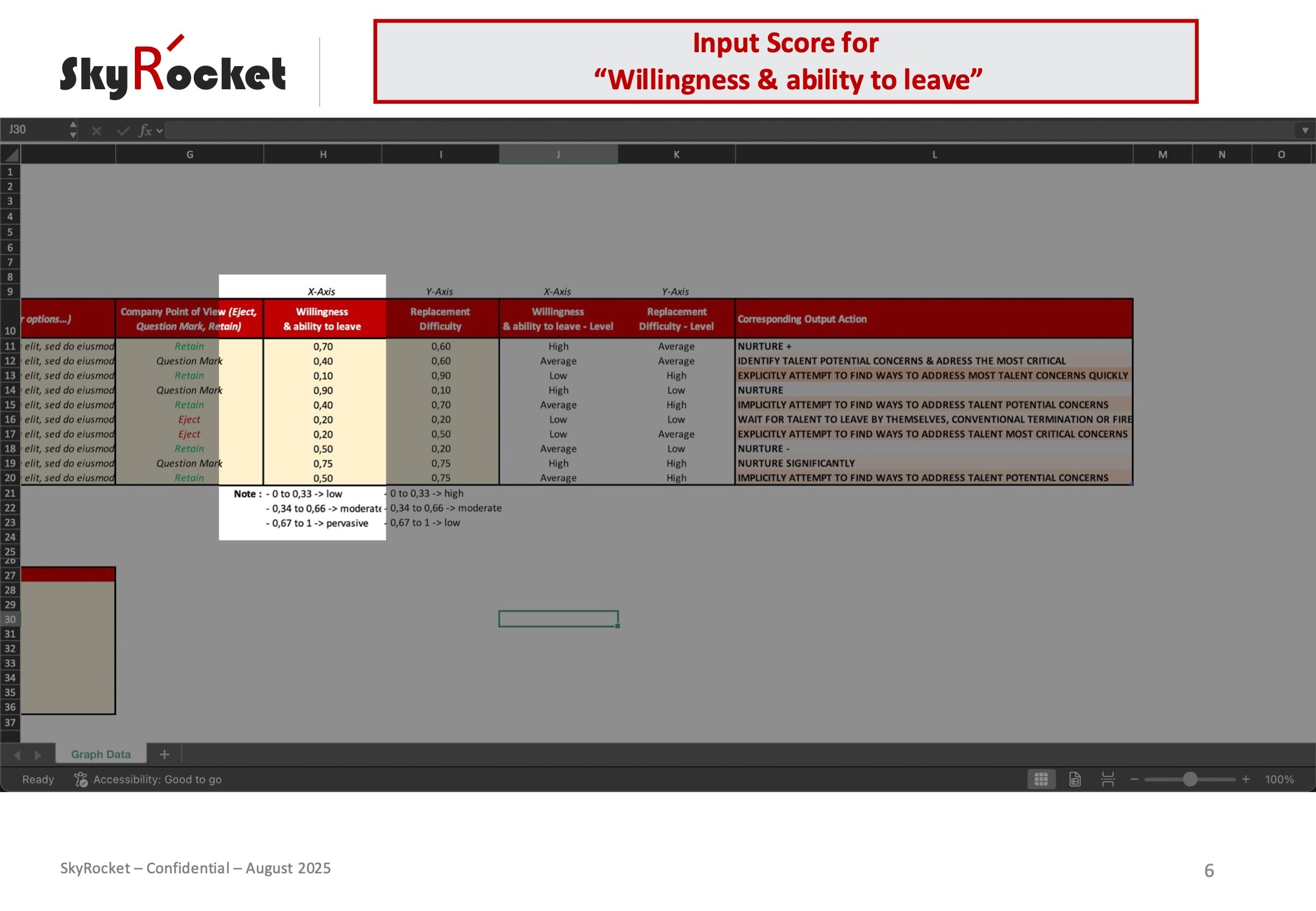
X-Axis: Willingness & Ability to Leave 🚶
This dimension measures how likely it is that an employee could and would leave the organization, based on both motivation and opportunity.
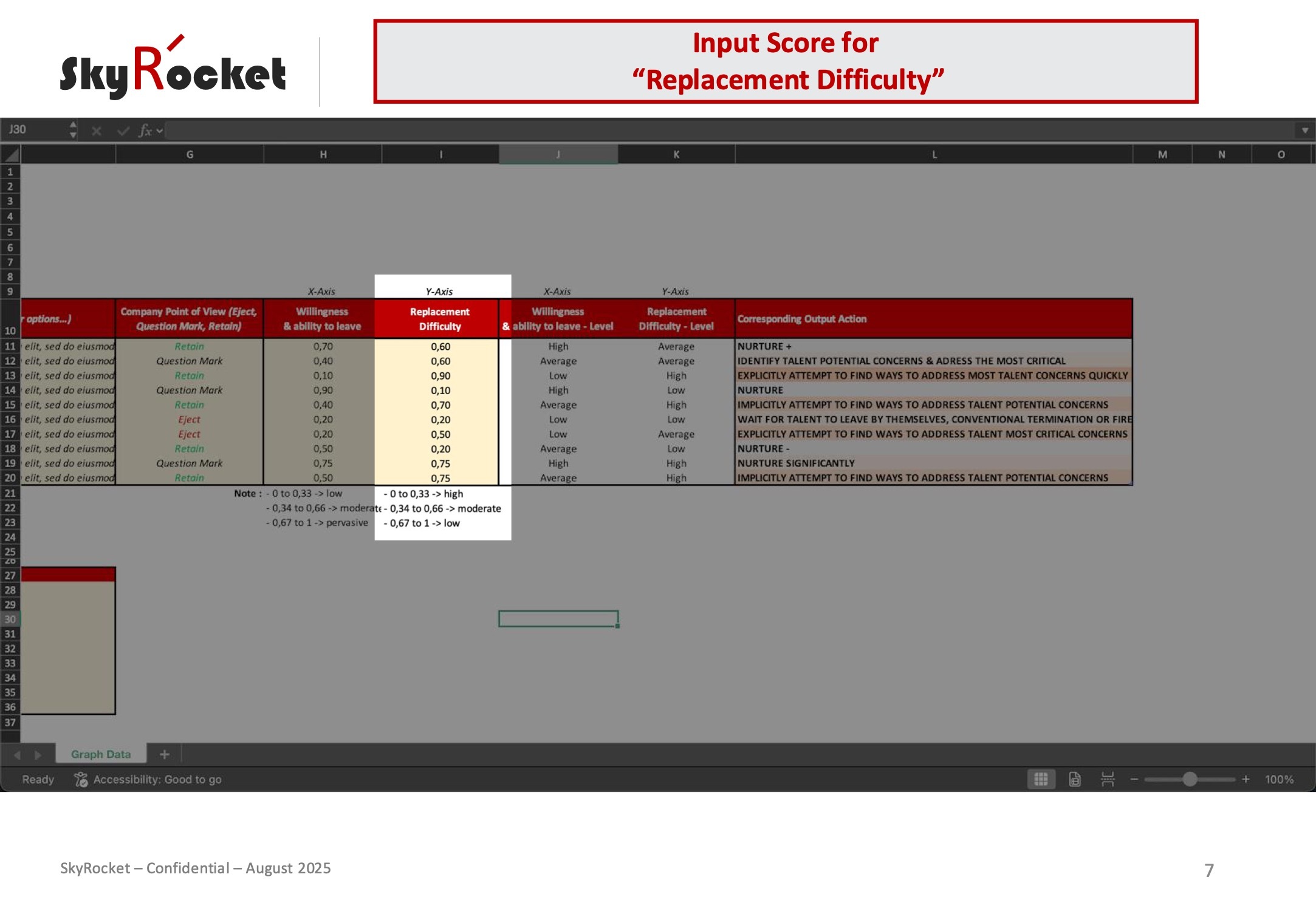
Y-Axis: Replacement Difficulty 😰
This dimension assesses how challenging it would be to replace the employee if they left, factoring in skills, experience, and market availability.
🧭 HOW THE MATRIX WORKS:
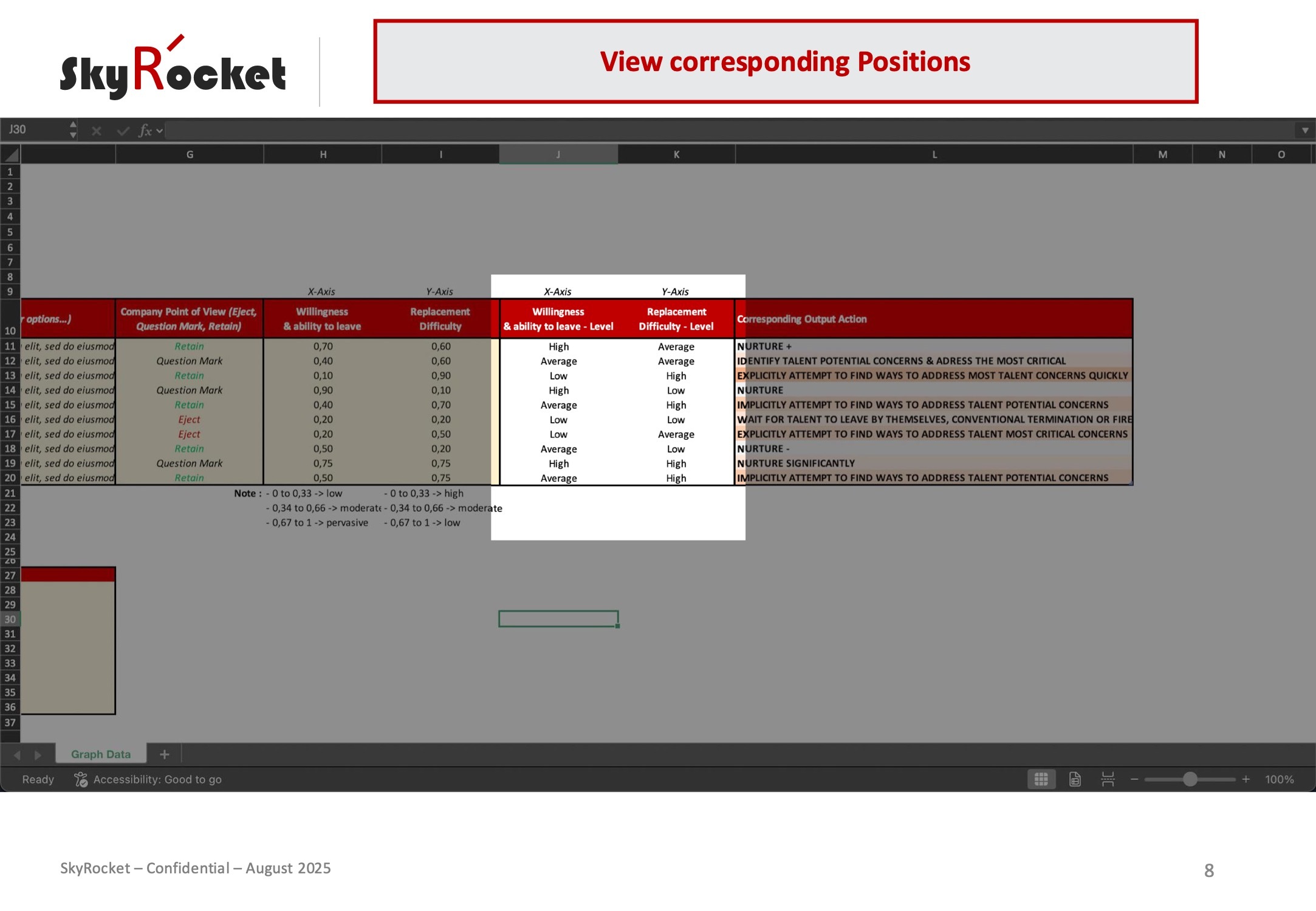
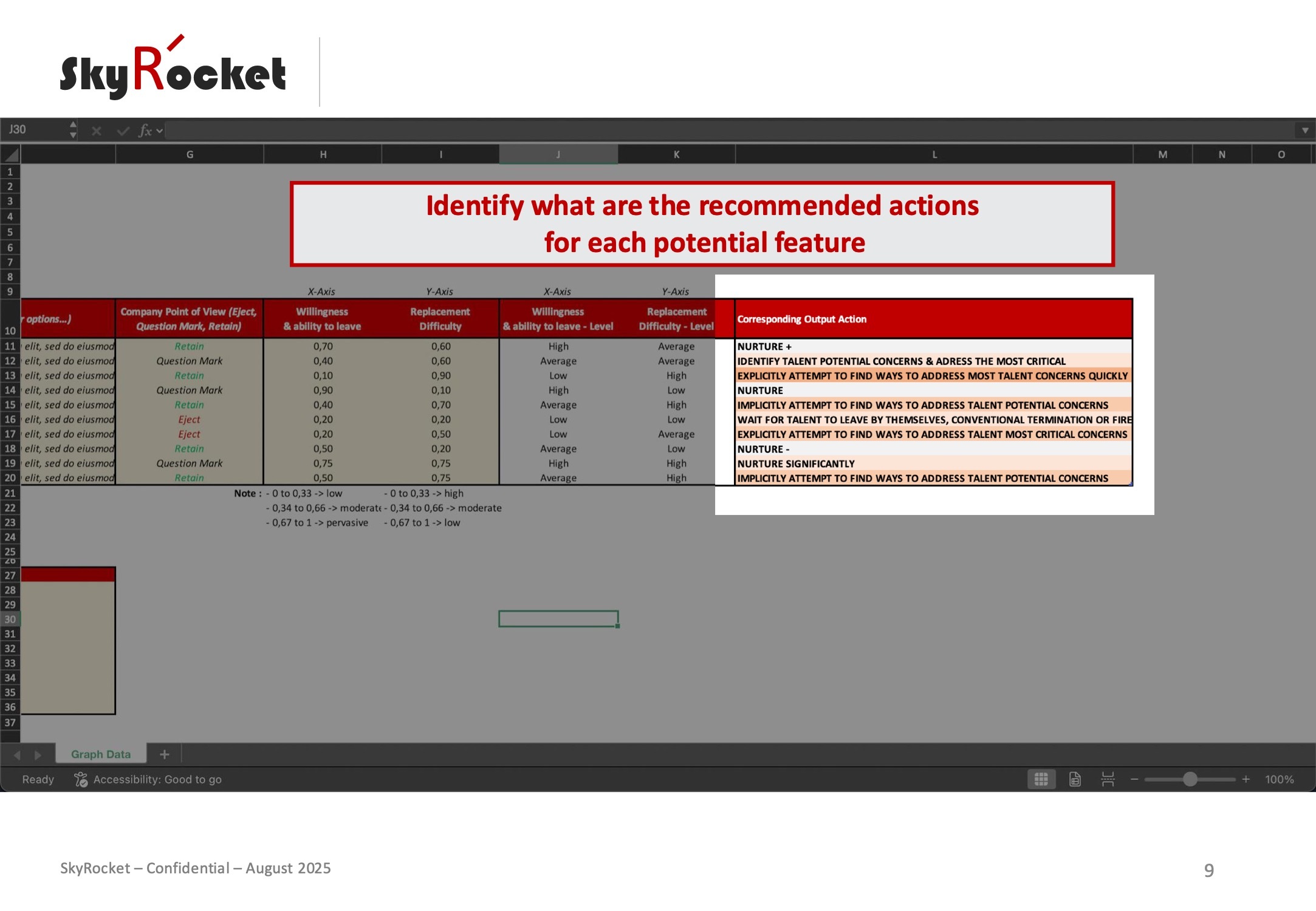
By combining the three levels of each axis, the model produces nine possible scenarios. Each scenario comes with a recommended action — from urgent retention efforts for high-risk, hard-to-replace talent, to minimal intervention for low-risk, easily replaceable roles.
This structured approach ensures that retention resources are focused where they matter most, while also providing a clear, shared language for managers and business leaders to discuss talent risk.
🔴 High Replacement Difficulty
These are your most critical employees—losing them would be painful.
Important talent, but not irreplaceable. Still worth proactive effort.
These roles are easier to fill, so the strategy shifts.
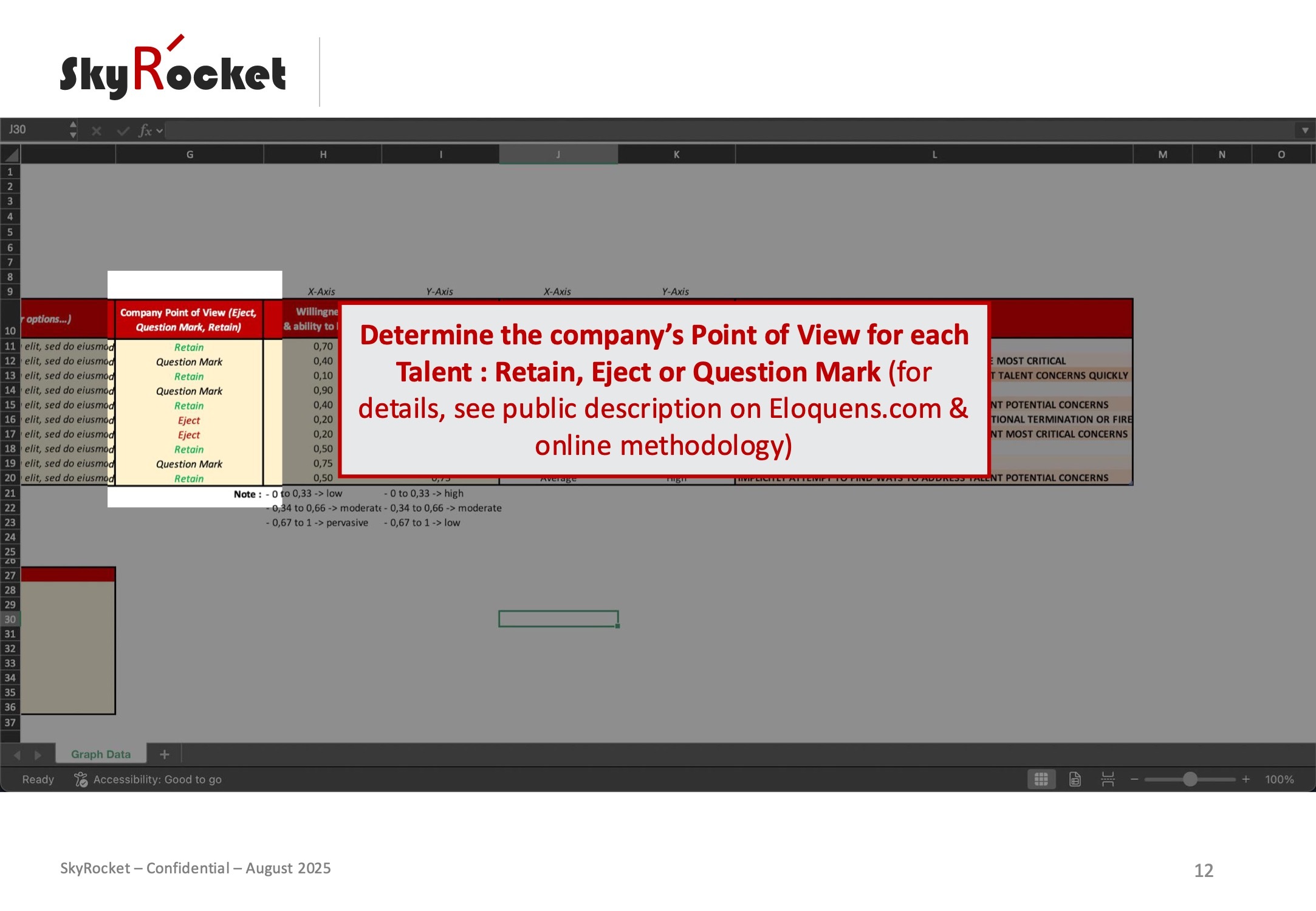
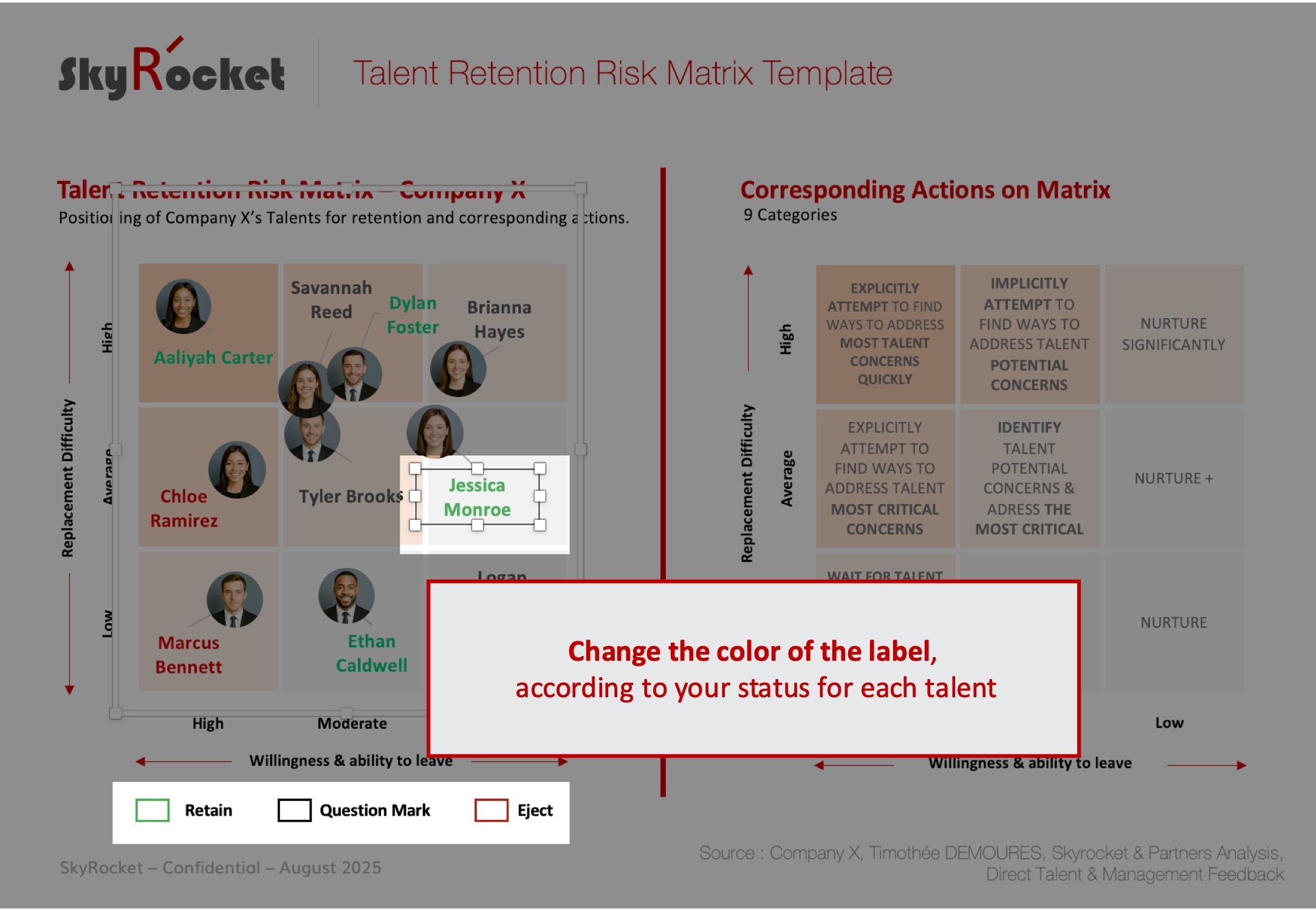
- 🟥 Red -> EJECT: Company is OK for talent to leave
- 🟩 Green -> RETAIN: Company would like to retain talent
- 🟧 Orange -> QUESTION MARKS: Company is not quite sure if they'd like to retain or eject the talent. More data and time is necessary to categorise.
🤔WHY IS THIS MATRIX USEFUL?
This 3x3 matrix is exceptionally useful for managers and business leaders—especially those navigating the complexities of talent retention, succession planning, and organizational resilience. Here's why it packs a strategic punch:
🎯 1. It Sharpens Focus on High-Impact Talent
Instead of treating all employees equally in retention strategies, the matrix helps leaders prioritize those who are:
🧠 2. It Encourages Proactive, Not Reactive, Management
By mapping out potential churn risks before they materialize, leaders can:
This matrix gives HR and line managers a shared language to discuss talent:
📊 4. It Aligns Talent Strategy with Business Risk
Employee churn isn’t just an HR issue—it’s a business risk. This matrix helps:
🛠️ 5. It’s Adaptable Across Teams and Cultures
Whether you're managing a tech startup in Paris or a manufacturing plant in Lyon, the matrix can be customized:
In short, this matrix transforms talent management from a reactive scramble into a strategic capability.
The Best Practice is:
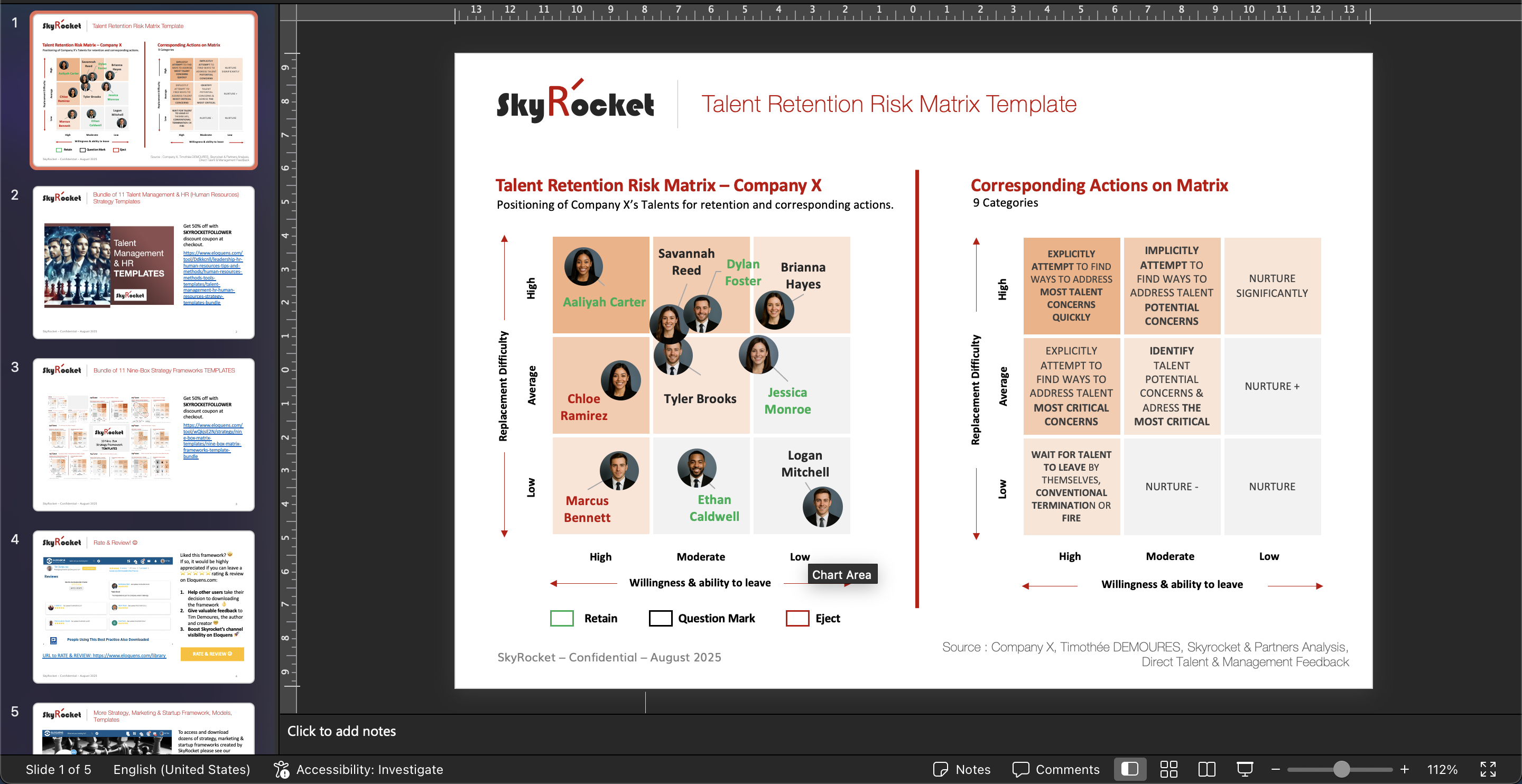
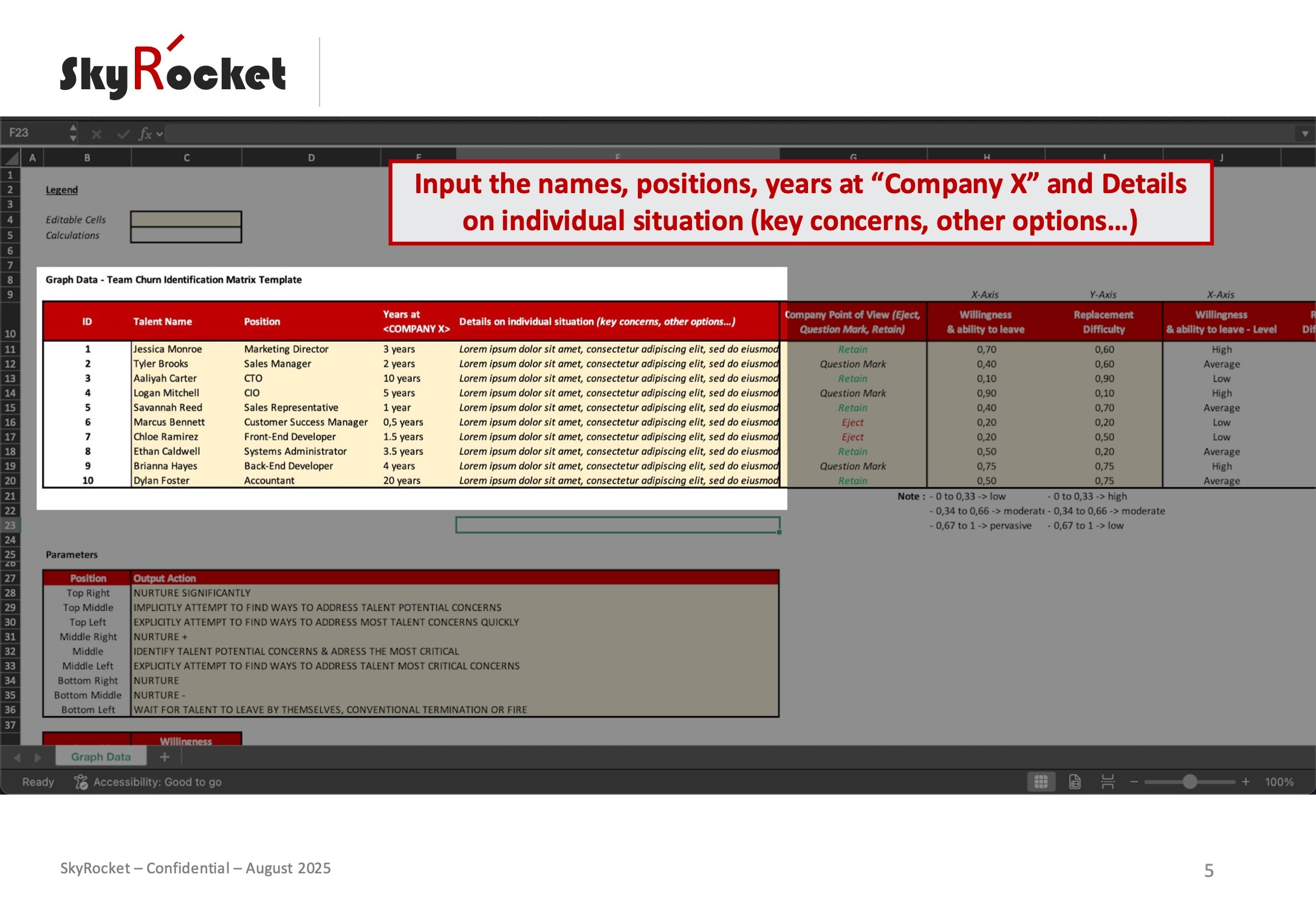
- 1 editable Microsoft PowerPoint Template Slide
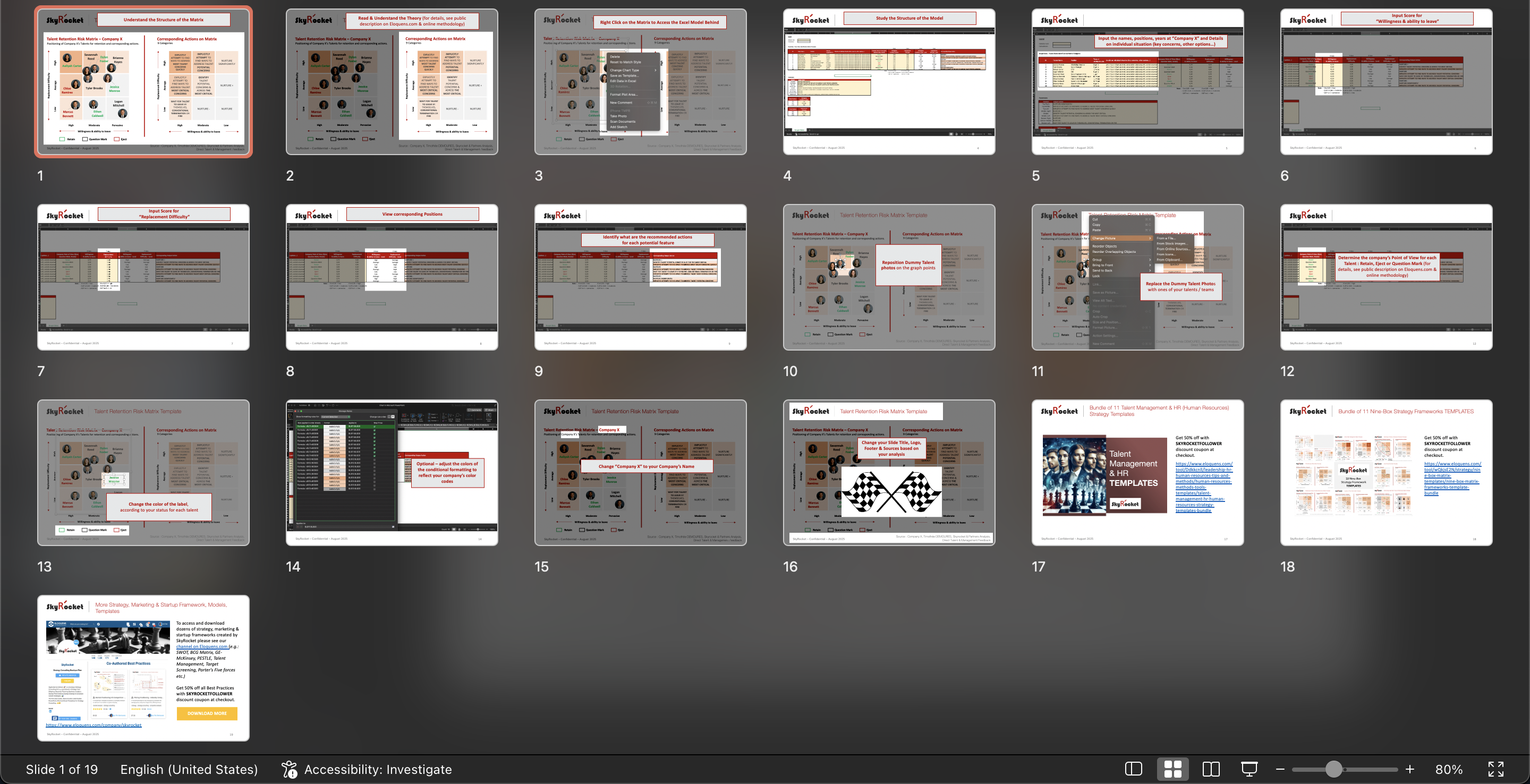
- with an online & offline 11 step-by-step methodology, with pedagogical illustrations for each step.
Should you have any questions on using this top tier Talent Retention Risk Matrix Template slide, you're welcome to reach out to me via Private Message.
Good luck and enjoy!
- Tim
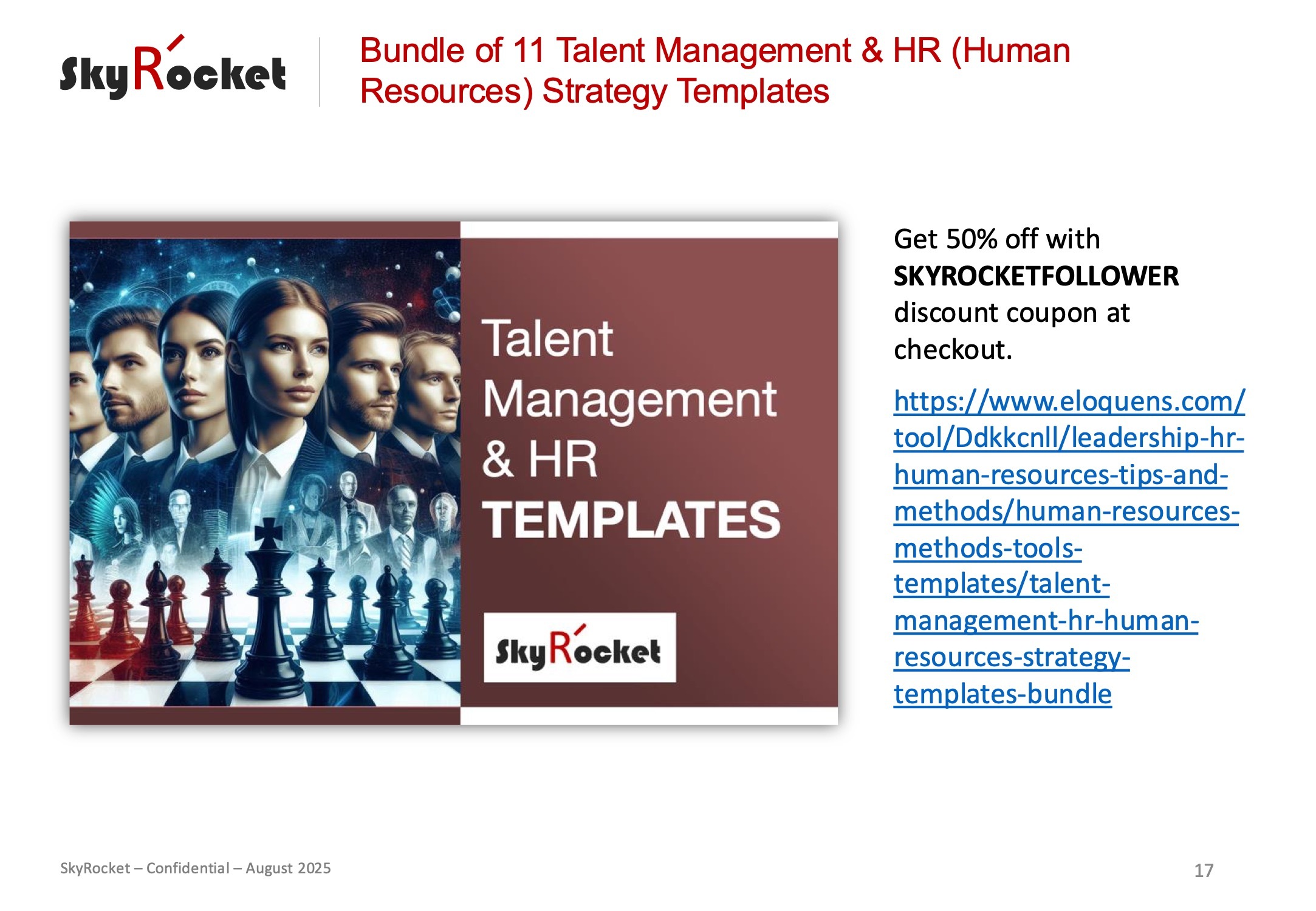
⭐️ Bundle of 10+ Talent Management & HR Templates (including this one)
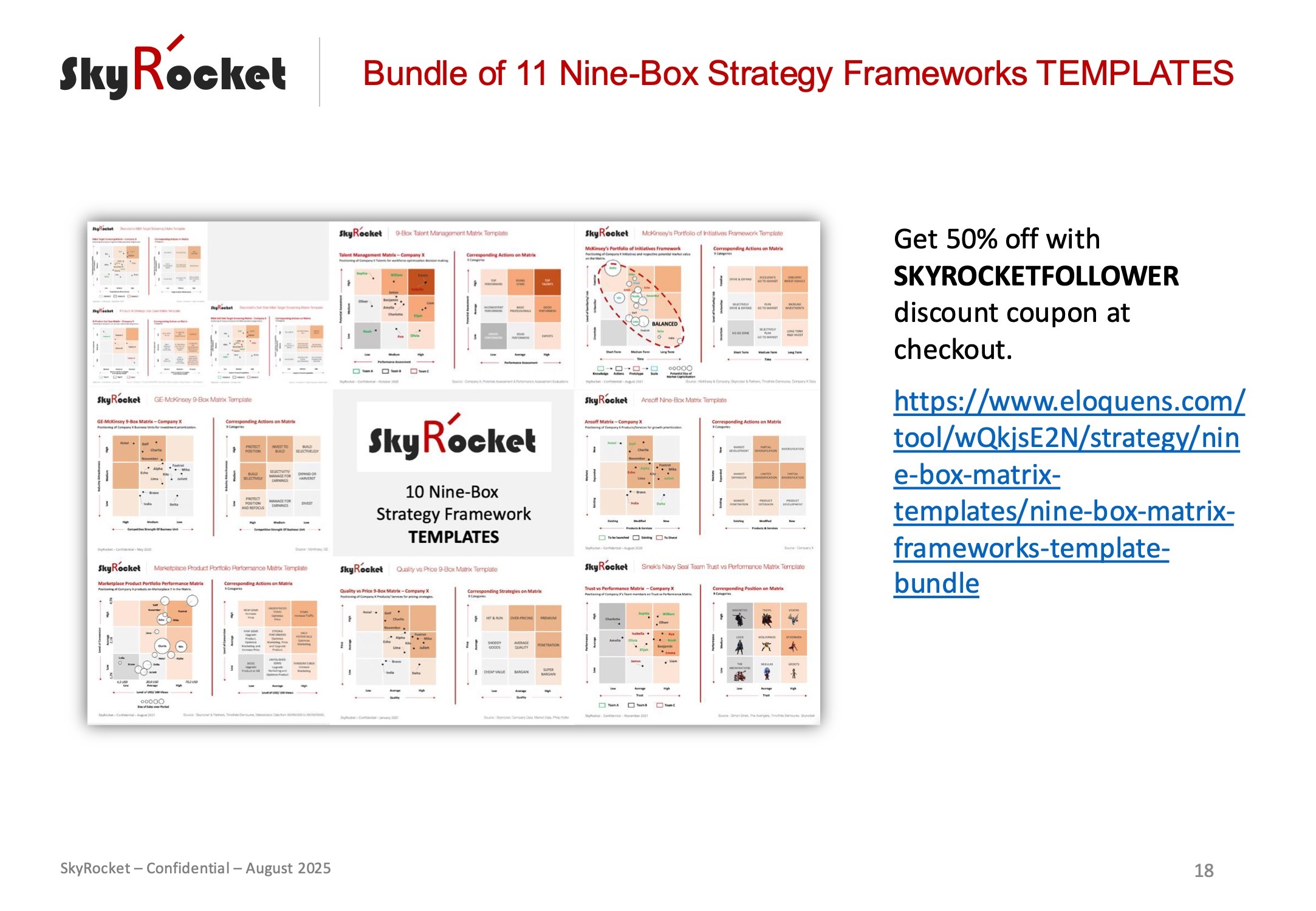
⭐️ Nine-box Matrix frameworks template bundle (including this one)
Over the past decade of Venture Building (at adVentures, Wimi, Eloquens, Kroqi...), I’ve navigated and observed multiple business cycles — from periods of rapid growth to moments of intense pressure. In the most challenging phases, workforce stress inevitably rises, and the risk of losing valuable team members increases.
To better monitor key talent, anticipate potential departures, and make informed, strategic decisions, I distilled our internal thinking process into a 3×3 Nine-Box Matrix. This framework helps leaders quickly assess both the likelihood of an employee leaving and the impact their departure would have — and then act accordingly.
🛠️ THE TWO AXIS:
X-Axis: Willingness & Ability to Leave 🚶
This dimension measures how likely it is that an employee could and would leave the organization, based on both motivation and opportunity.
- High → Actively seeking or open to offers, with strong external demand for their skills.
- Moderate → Not actively looking, but could be tempted by the right opportunity or change in circumstances.
- Low → Highly committed to the organization, with few external pull factors or personal desire to leave.
Y-Axis: Replacement Difficulty 😰
This dimension assesses how challenging it would be to replace the employee if they left, factoring in skills, experience, and market availability.
- High → Critical, specialized expertise or leadership role; long ramp-up time for a replacement.
- Average → Valuable skills but available in the market; moderate onboarding and adaptation required.
- Low → Skills and experience are relatively common; replacement can be found and onboarded quickly.
🧭 HOW THE MATRIX WORKS:
By combining the three levels of each axis, the model produces nine possible scenarios. Each scenario comes with a recommended action — from urgent retention efforts for high-risk, hard-to-replace talent, to minimal intervention for low-risk, easily replaceable roles.
This structured approach ensures that retention resources are focused where they matter most, while also providing a clear, shared language for managers and business leaders to discuss talent risk.
🔴 High Replacement Difficulty
These are your most critical employees—losing them would be painful.
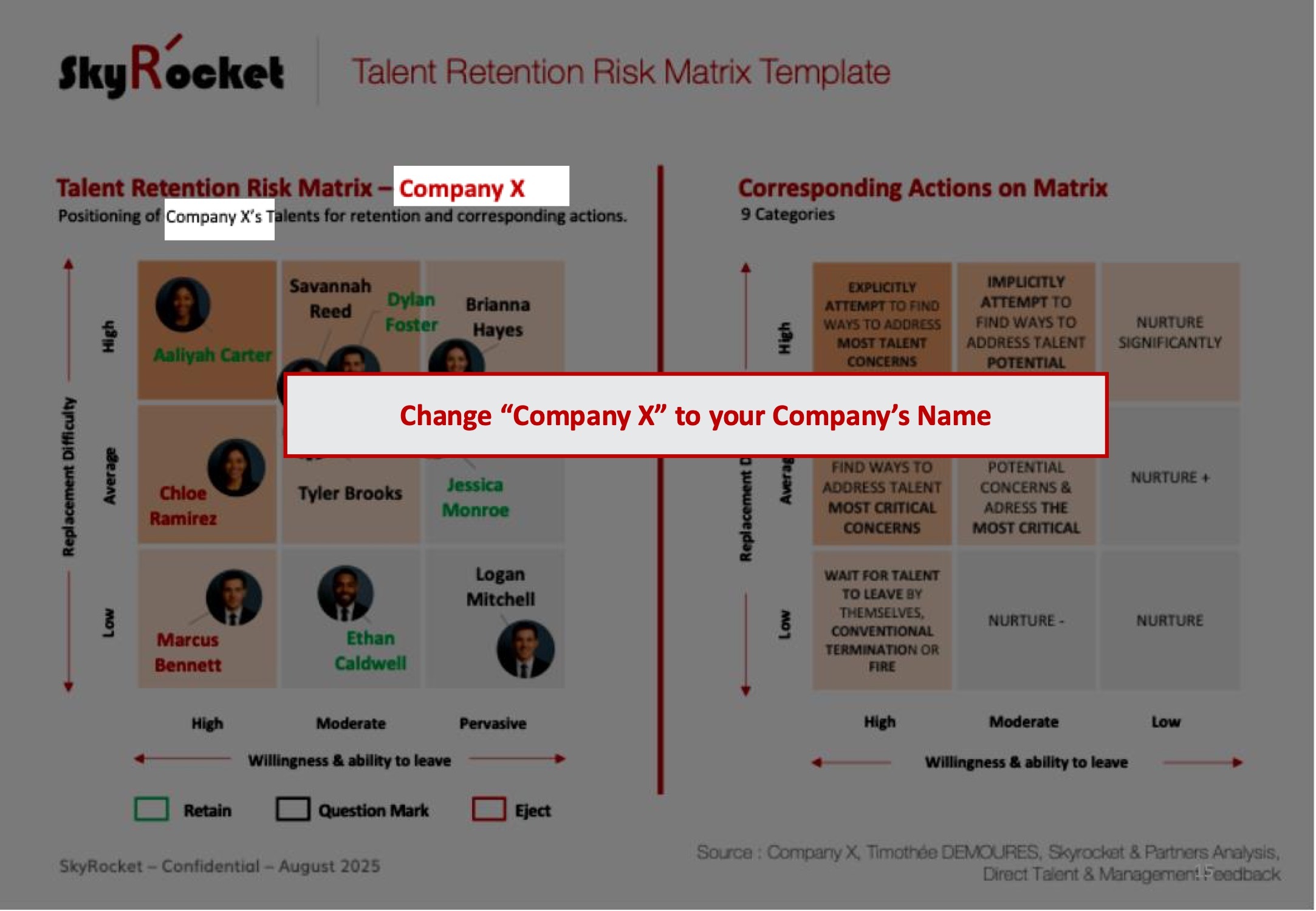
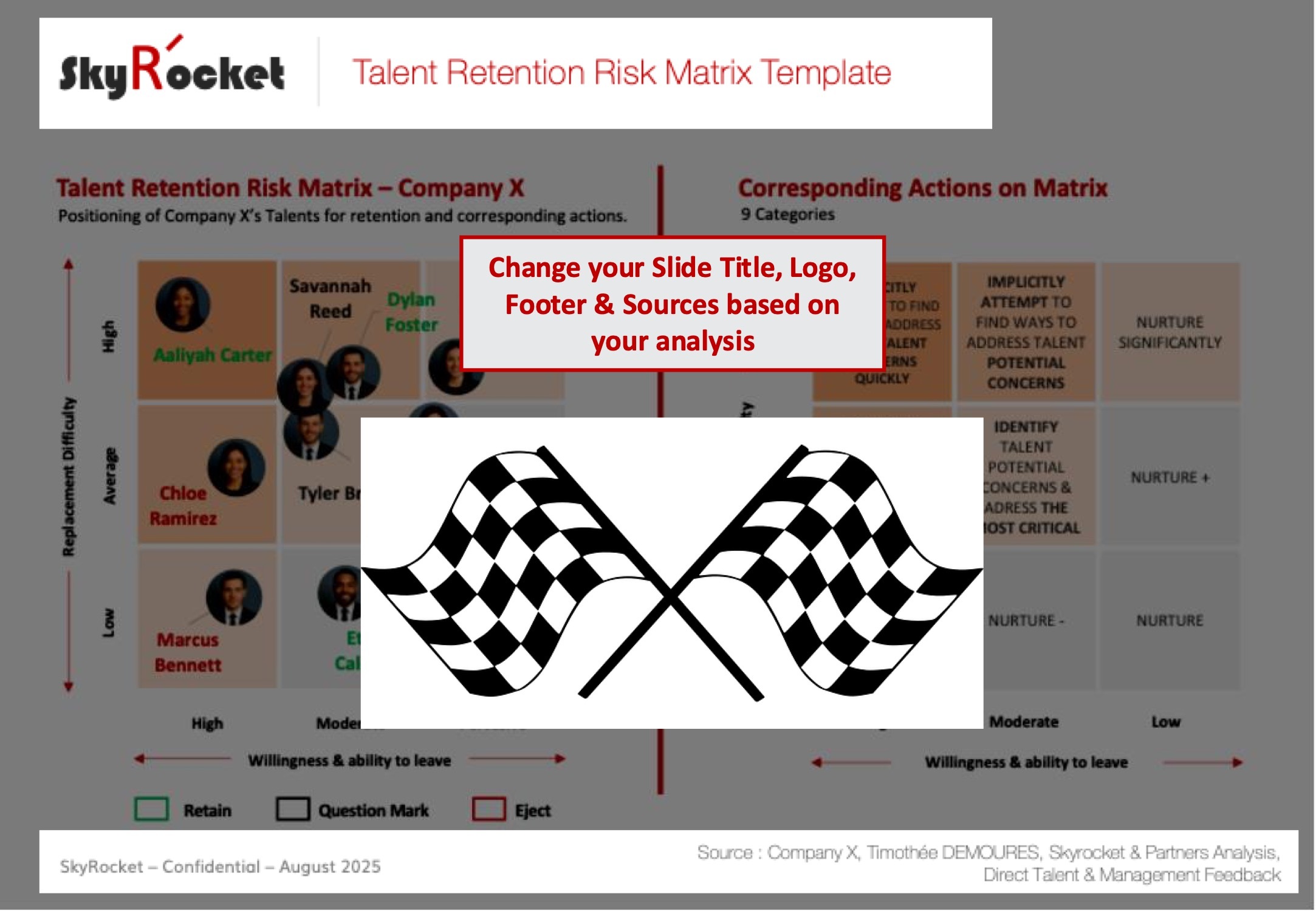
- HIGH - Willingness to Leave : EXPLICITLY ATTEMPT TO FIND WAYS TO ADDRESS MOST TALENT CONCERNS QUICKLY →These employees are both valuable and at risk. Prioritize retention: offer career development, compensation reviews, or personal outreach.
- MODERATE - Willingness to Leave : IMPLICITLY ATTEMPT TO FIND WAYS TO ADDRESS TALENT POTENTIAL CONCERNS →They’re not actively leaving, but don’t wait. Monitor engagement, offer growth opportunities, and keep communication open.
- LOW - Willingness to Leave : NURTURE SIGNIFICANTLY →They’re loyal and hard to replace. Invest in long-term development, mentorship, and recognition to maintain their satisfaction.
Important talent, but not irreplaceable. Still worth proactive effort.
- HIGH - Willingness to Leave : EXPLICITLY ATTEMPT TO FIND WAYS TO ADDRESS TALENT MOST CRITICAL CONCERNS → Focus on what matters most to them—flexibility, role clarity, or leadership support.
- MODERATE - Willingness to Leave : IDENTIFY TALENT POTENTIAL CONCERNS & ADRESS THE MOST CRITICAL → Use pulse surveys or manager check-ins to uncover hidden issues. Act on the most pressing ones.
- LOW - Willingness to Leave : NURTURE + → Keep them engaged with stretch assignments, team leadership roles, or cross-functional exposure.
These roles are easier to fill, so the strategy shifts.
- HIGH - Willingness to Leave : WAIT FOR TALENT TO LEAVE BY THEMSELVES, CONVENTIONAL TERMINATION OR FIRE → If they’re disengaged and easily replaceable, it may be more efficient to part ways.
- MODERATE - Willingness to Leave : NURTURE - → Provide basic support, but don’t over-invest. Keep them productive and aligned.
- LOW - Willingness to Leave : NURTURE → Maintain a positive environment, but minimal intervention needed. They’re stable and replaceable.
- 🟥 Red -> EJECT: Company is OK for talent to leave
- 🟩 Green -> RETAIN: Company would like to retain talent
- 🟧 Orange -> QUESTION MARKS: Company is not quite sure if they'd like to retain or eject the talent. More data and time is necessary to categorise.
🤔WHY IS THIS MATRIX USEFUL?
This 3x3 matrix is exceptionally useful for managers and business leaders—especially those navigating the complexities of talent retention, succession planning, and organizational resilience. Here's why it packs a strategic punch:
🎯 1. It Sharpens Focus on High-Impact Talent
Instead of treating all employees equally in retention strategies, the matrix helps leaders prioritize those who are:
- Hard to replace due to specialized skills, institutional knowledge, or leadership roles
- At risk of leaving, based on engagement signals, market demand, or personal circumstances
🧠 2. It Encourages Proactive, Not Reactive, Management
By mapping out potential churn risks before they materialize, leaders can:
- Spot brewing issues early (e.g., moderate willingness to leave in critical roles)
- Avoid costly surprises like losing key talent during strategic transitions
- Build contingency plans for roles with low replacement difficulty
This matrix gives HR and line managers a shared language to discuss talent:
- “This person is in the top-left box—we need to act fast.”
- “She’s in the bottom-right—we can nurture but don’t need to over-invest.”
📊 4. It Aligns Talent Strategy with Business Risk
Employee churn isn’t just an HR issue—it’s a business risk. This matrix helps:
- Quantify that risk across departments
- Align retention efforts with strategic priorities
- Justify investments in employee experience, learning, or leadership development
🛠️ 5. It’s Adaptable Across Teams and Cultures
Whether you're managing a tech startup in Paris or a manufacturing plant in Lyon, the matrix can be customized:
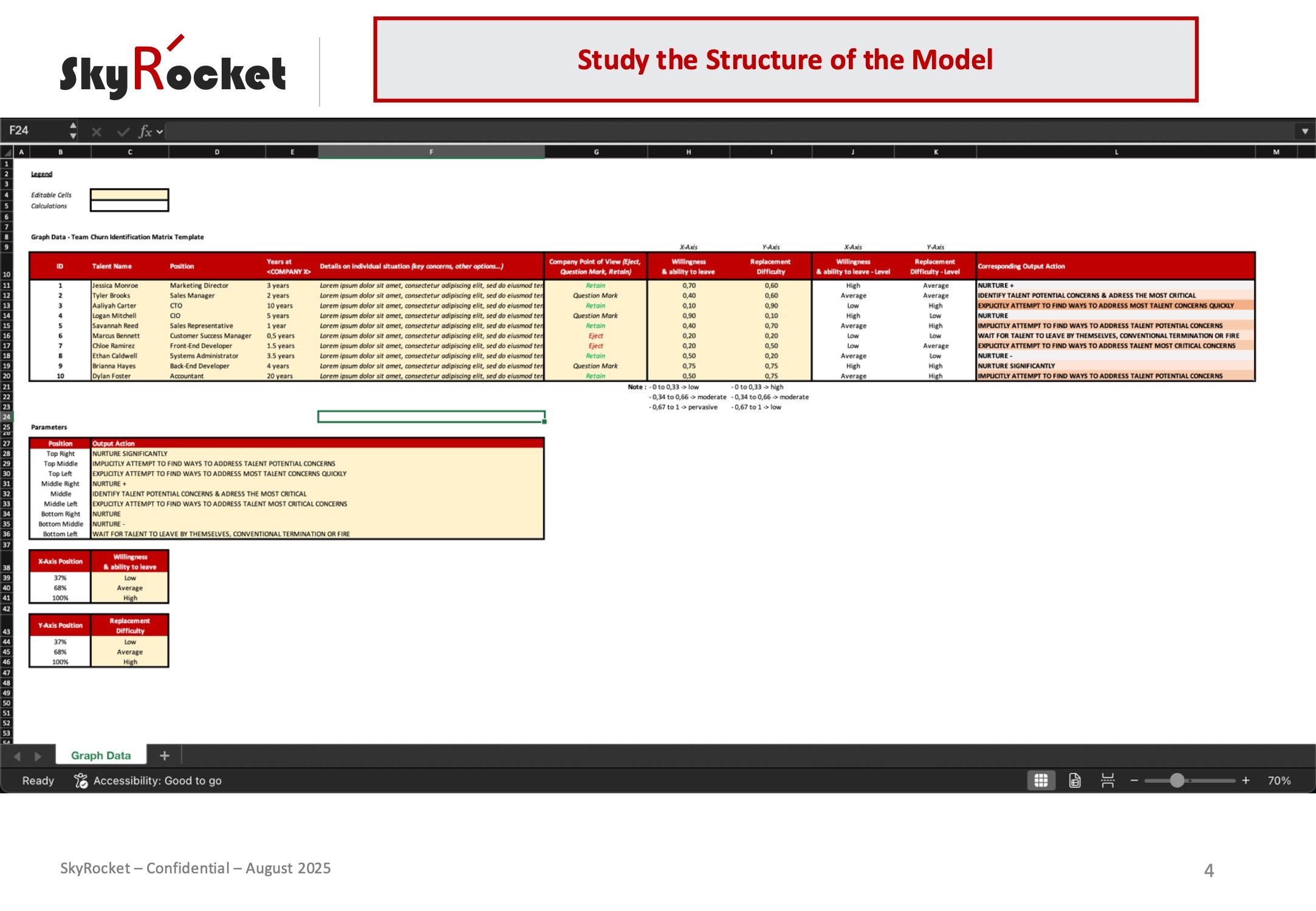
- Add data inputs like engagement scores, tenure, or market salary benchmarks
- Use it to guide exit interviews, onboarding strategies, or internal mobility plans
In short, this matrix transforms talent management from a reactive scramble into a strategic capability.
The Best Practice is:
- 1 editable Microsoft PowerPoint Template Slide
- with an online & offline 11 step-by-step methodology, with pedagogical illustrations for each step.
Should you have any questions on using this top tier Talent Retention Risk Matrix Template slide, you're welcome to reach out to me via Private Message.
Good luck and enjoy!
- Tim
⭐️ Bundle of 10+ Talent Management & HR Templates (including this one)
⭐️ Nine-box Matrix frameworks template bundle (including this one)
This Best Practice includes
1 PowerPoint Talent Retention Risk Matrix Template + Associated Step-by-Step Methodology (11 steps)