


Publication number: ELQ-81560-1
View all versions & Certificate

12–24 Month Turnaround Simulation & Exit Planning Model
A uniquely built framework for consultants to use in financial planning for distressed businesses looking to make a turnaround.
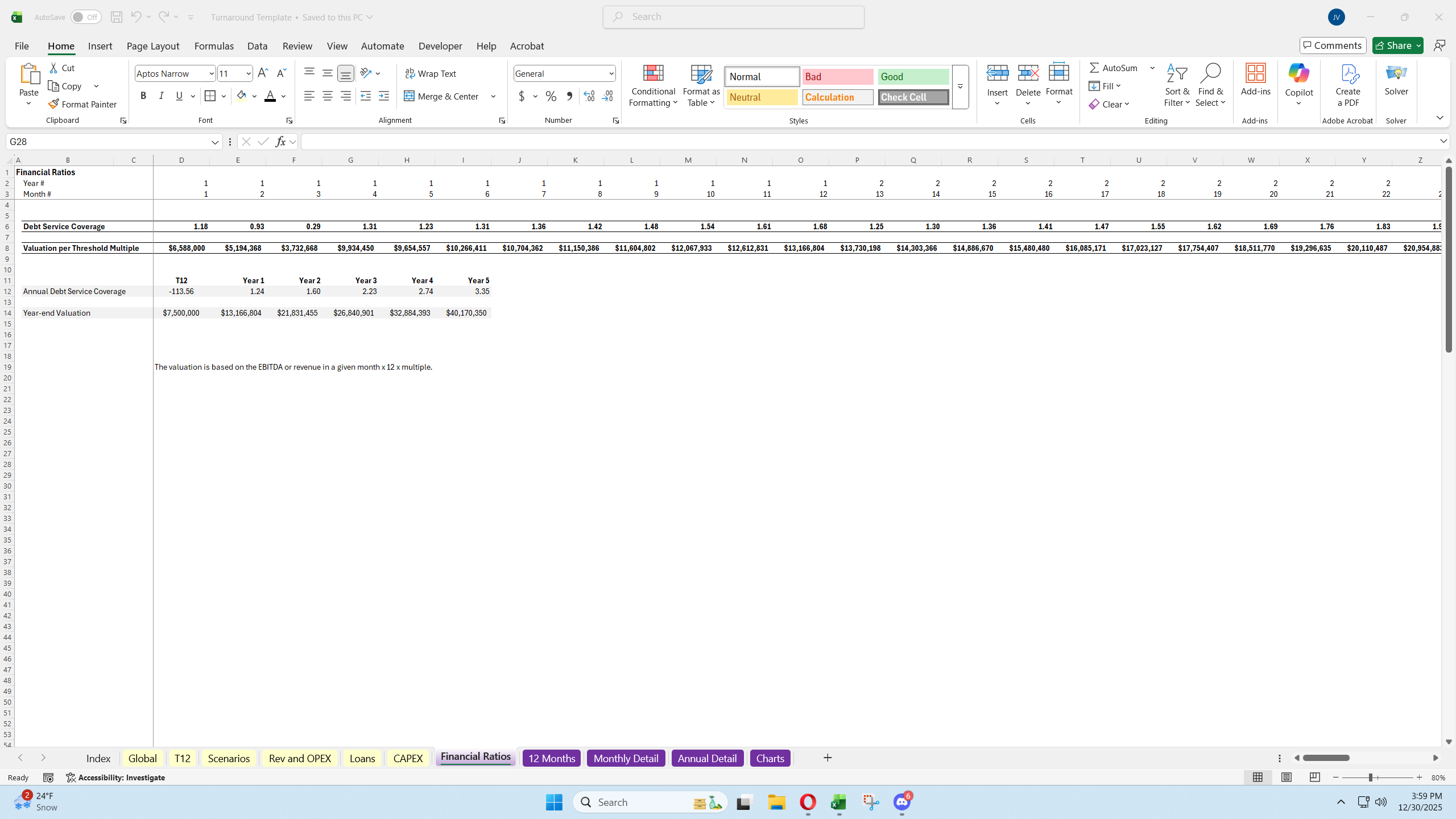
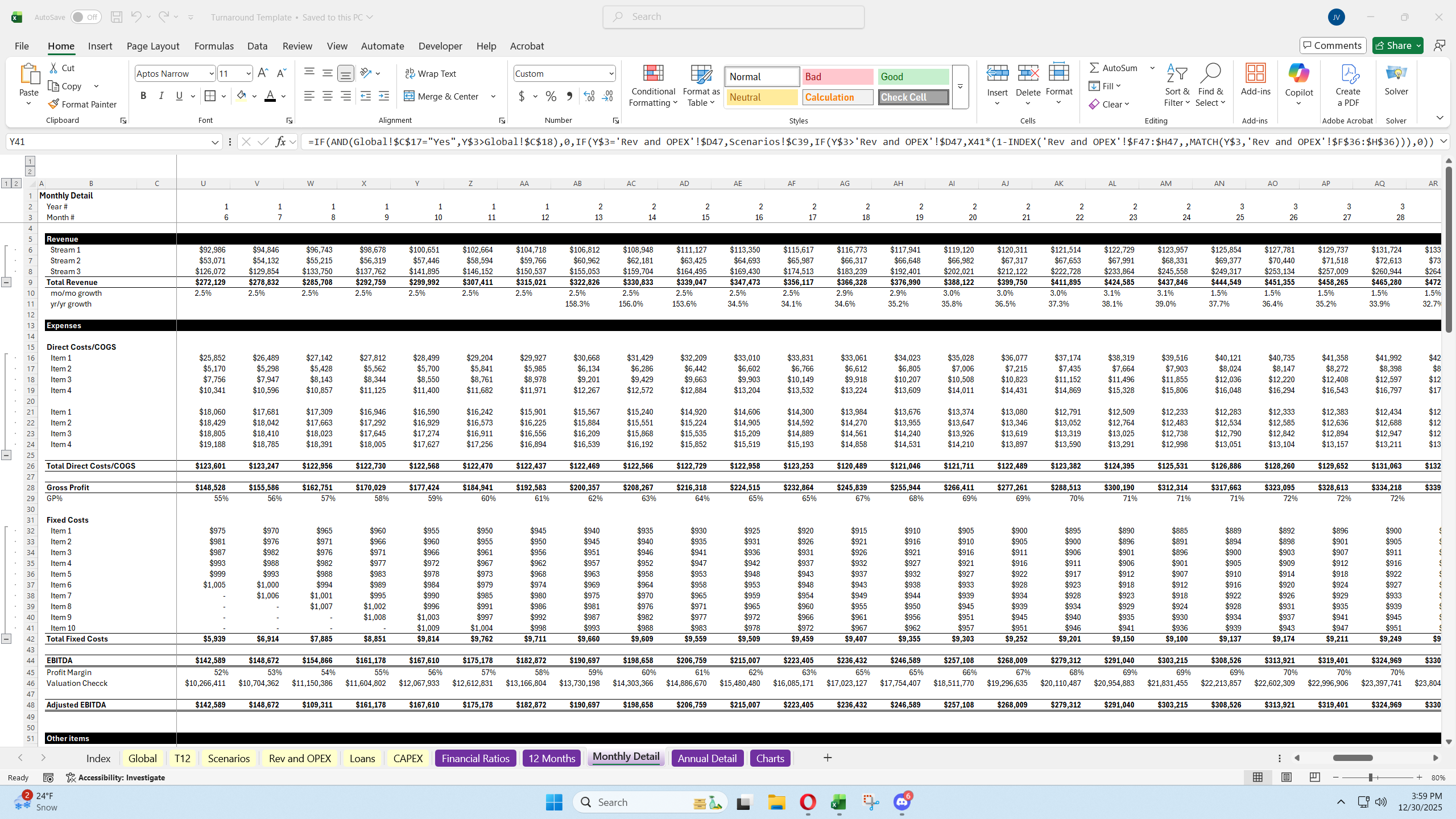
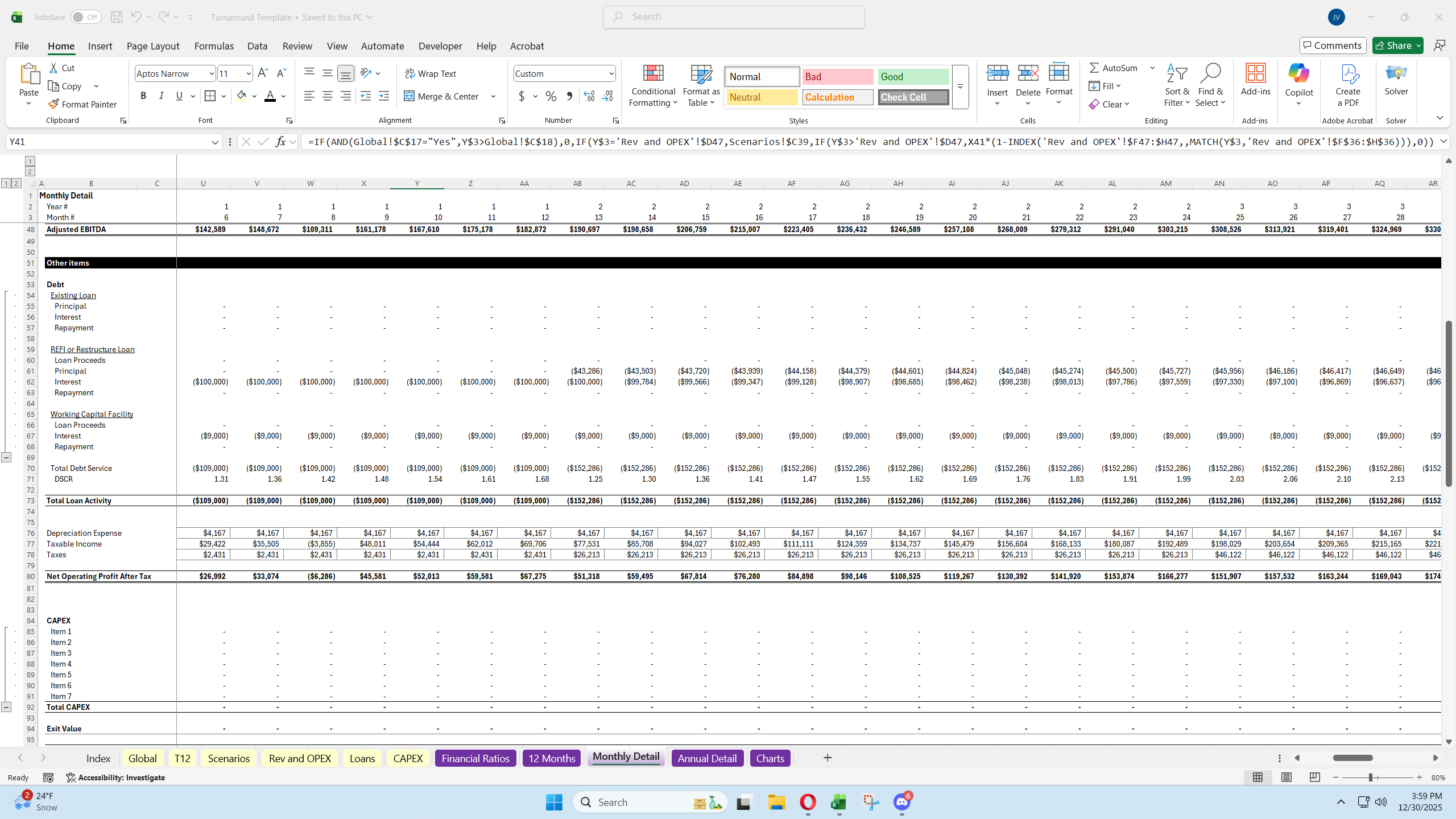
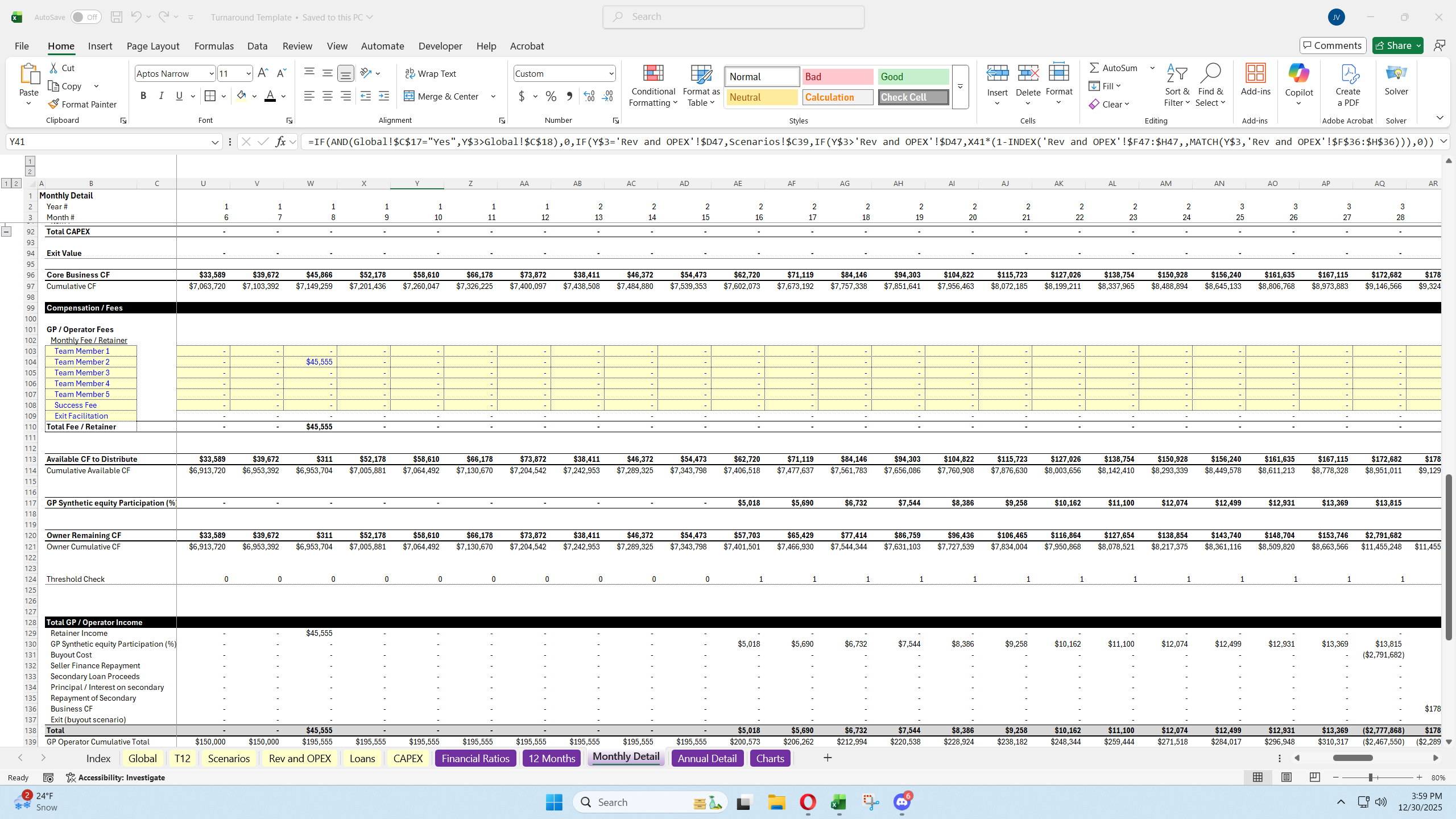
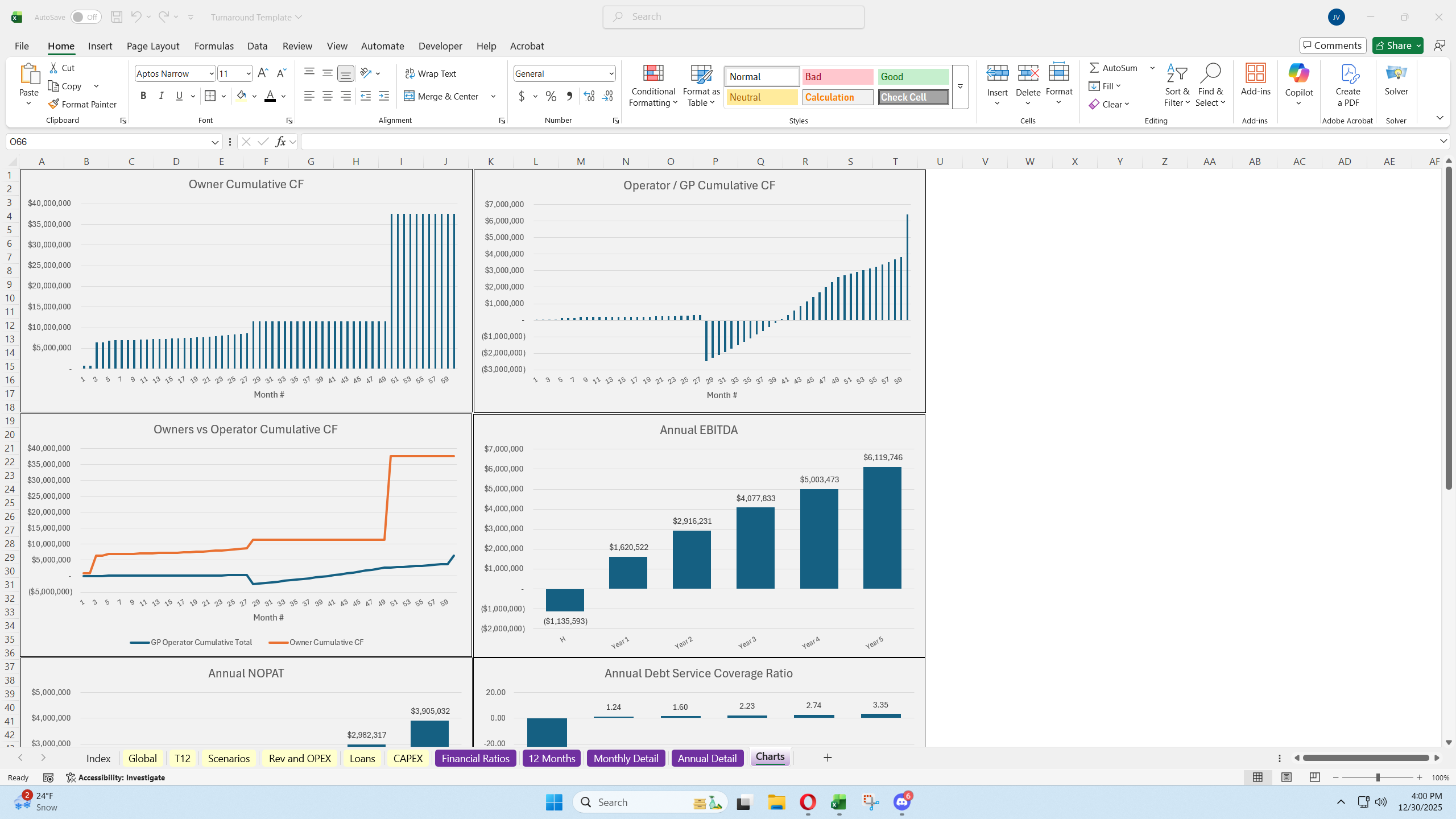
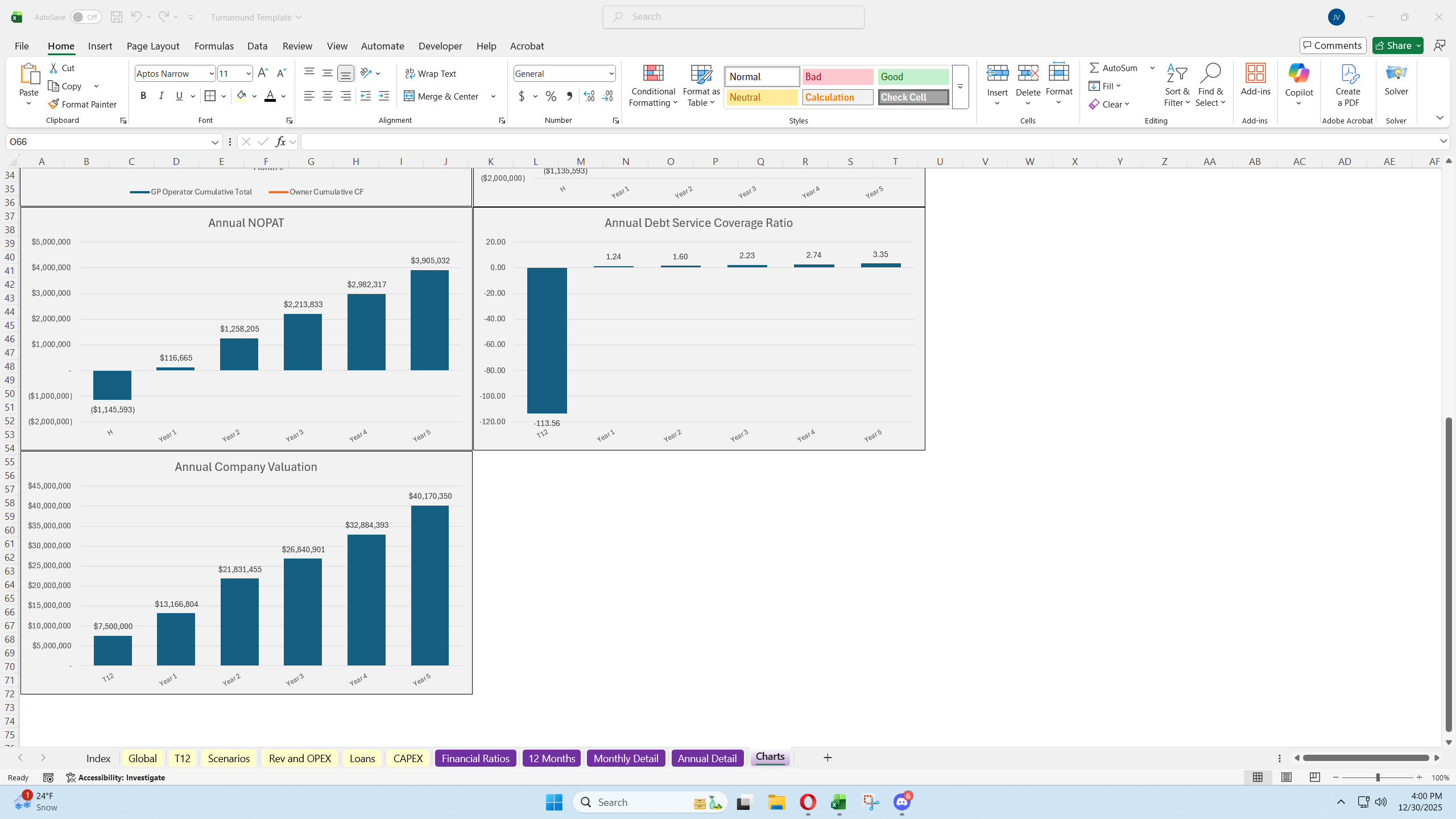
This turnaround financial model template is a driver-based simulation built to help plan the stabilization and improvement of a struggling business over 12–24 months, with an extended view into Years 3–5 for valuation, refinancing, and exit decision-making. It was designed primarily for two stakeholder perspectives: the GP/operator who is contracted to execute the turnaround, and the existing owners who are evaluating whether to retain the business, sell it, or enable a future buyout. The goal is to make the “story” of the turnaround—operational improvements and deal economics—clear, testable, and comparable across outcomes.
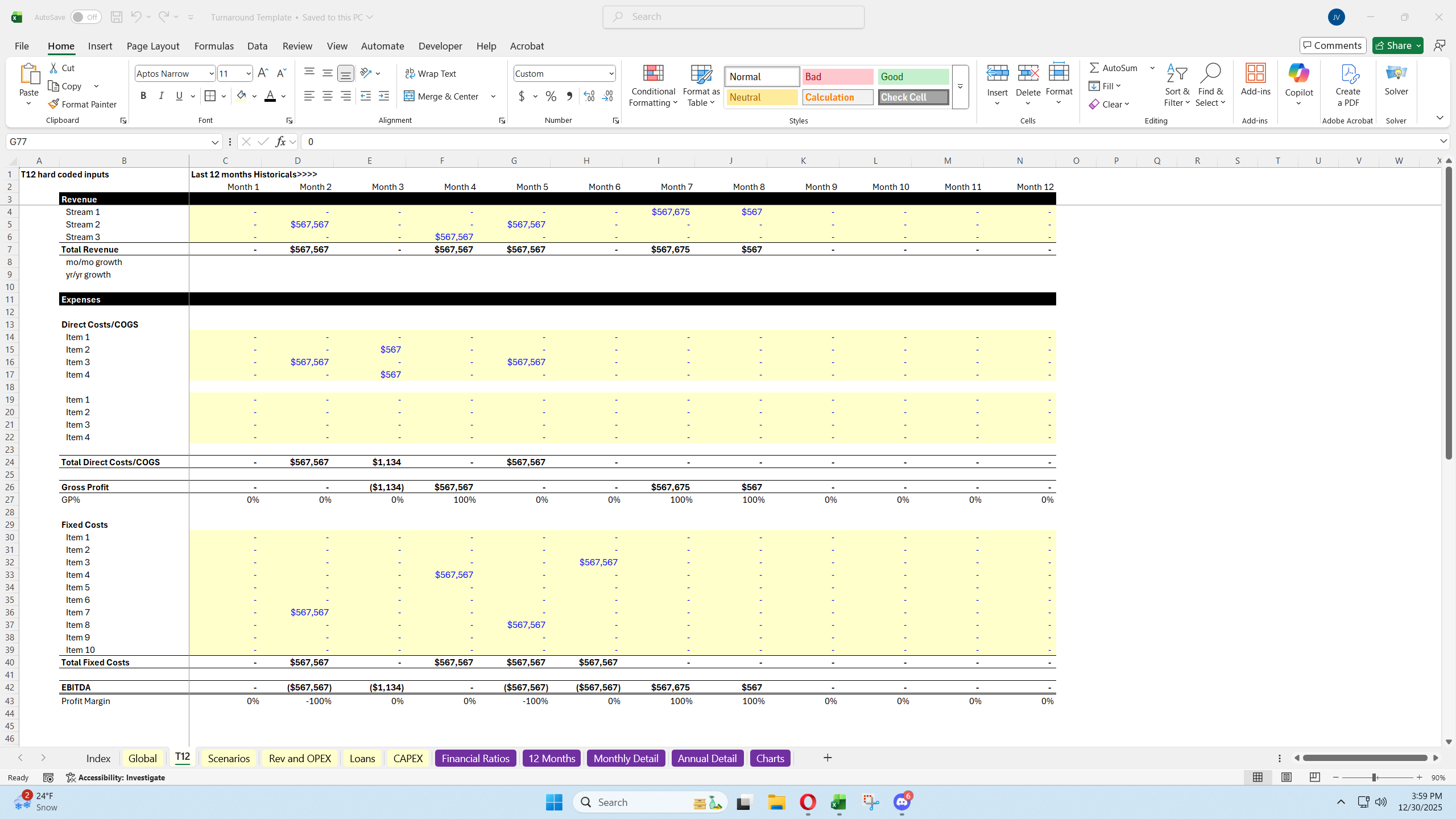
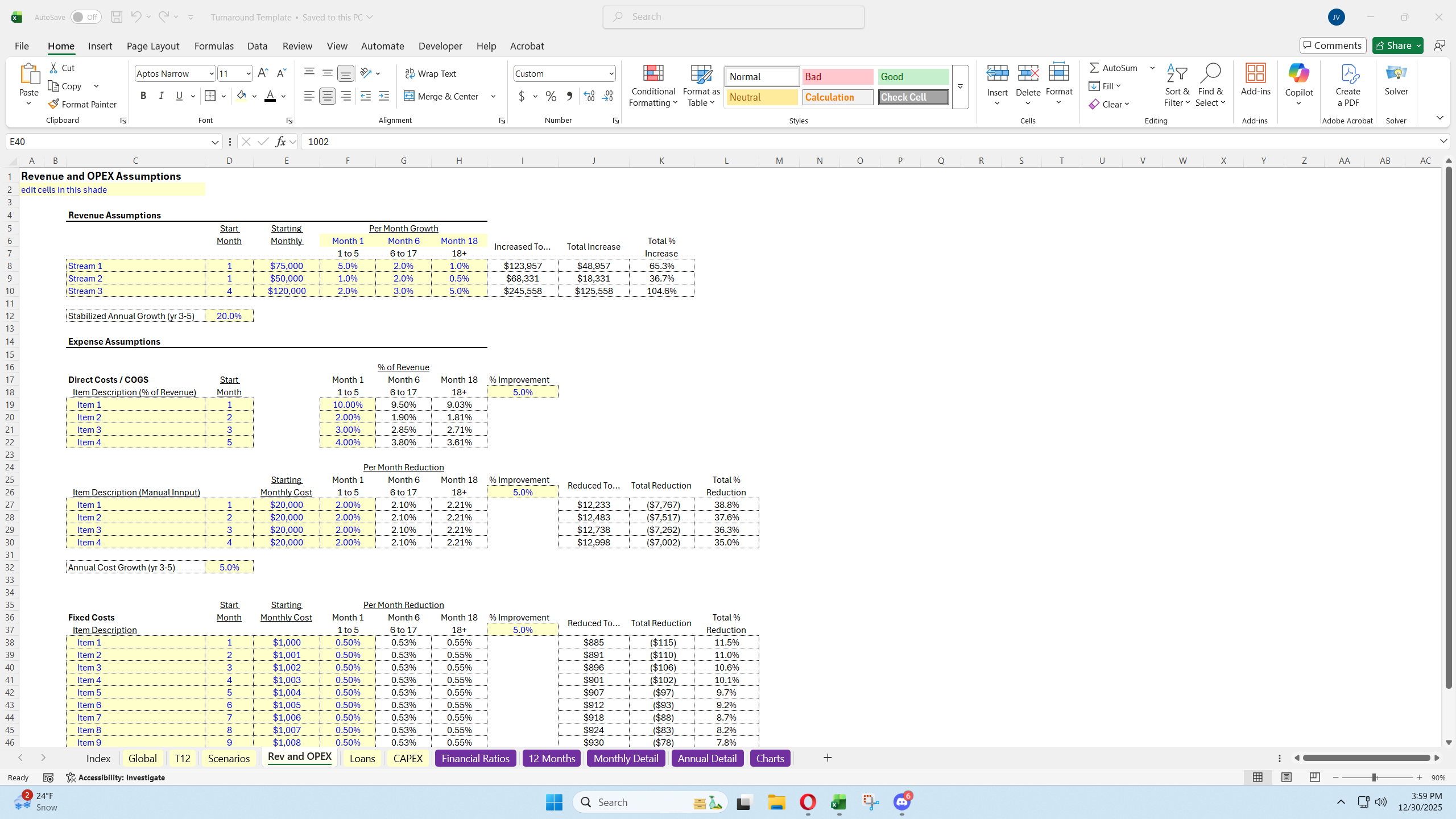
To make the template work for nearly any business, it uses broad-strokes inputs rather than requiring a deeply customized operating model. The user anchors the forecast with historical T12 performance and a starting monthly run-rate, then projects forward using monthly percentage changes that can be adjusted across three time blocks over the first 24 months (useful for representing early triage, mid-course improvements, and late stabilization). For Years 3–5, the model shifts to annualized assumptions so the long-range view stays simple, consistent, and appropriate for valuation and exit planning.
Direct costs are flexible by design, recognizing that some turnarounds are primarily margin repairs while others are cost-structure fixes. The template includes two direct cost methods that can be used together: direct costs as a percentage of revenue (variable component) and direct costs as a dollar-value input (fixed or semi-fixed component). Both can change over time, allowing you to model vendor renegotiations, pricing/mix shifts, productivity gains, temporary transition inefficiencies, and other common turnaround dynamics without needing granular line-by-line cost accounting.
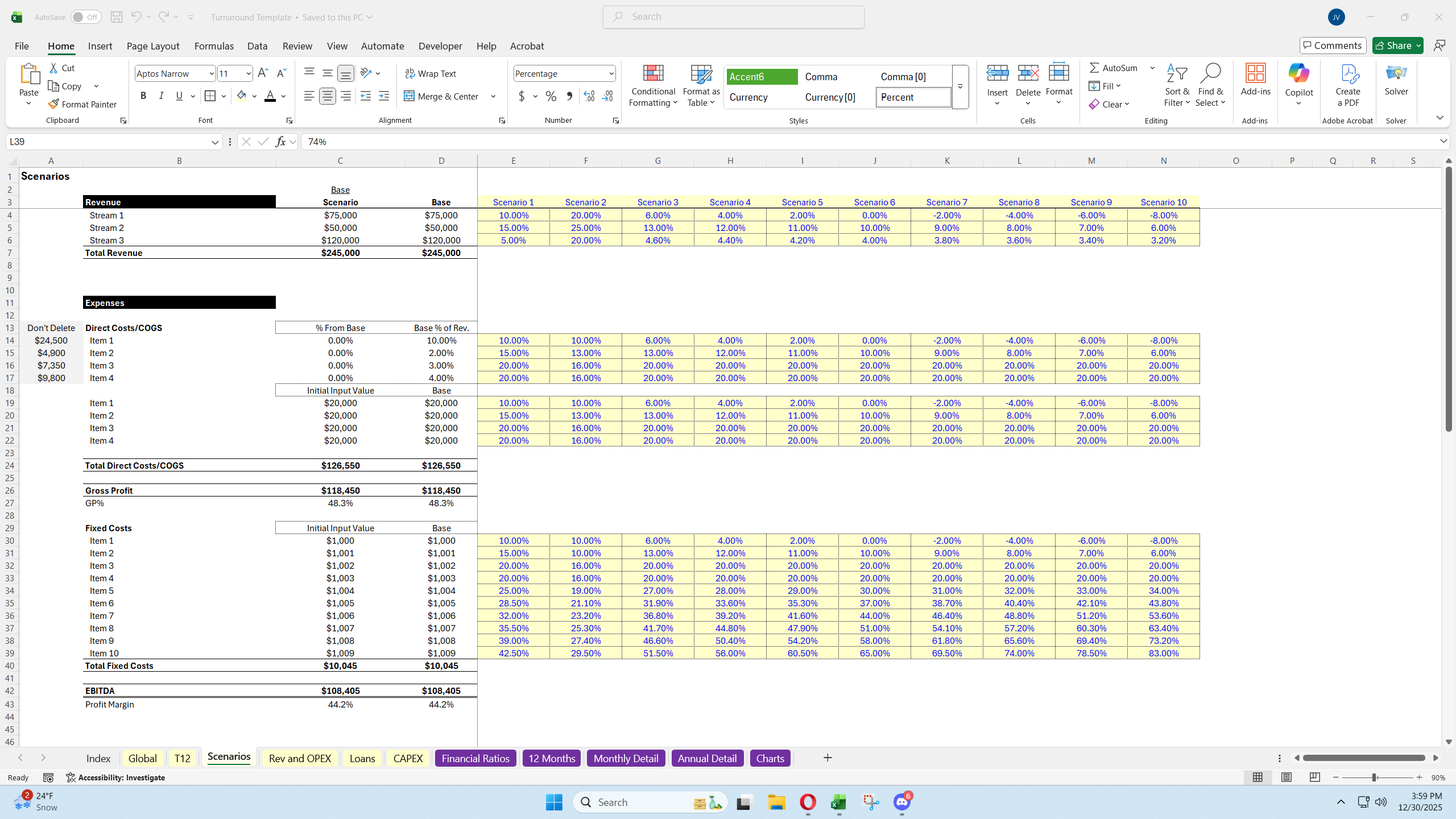
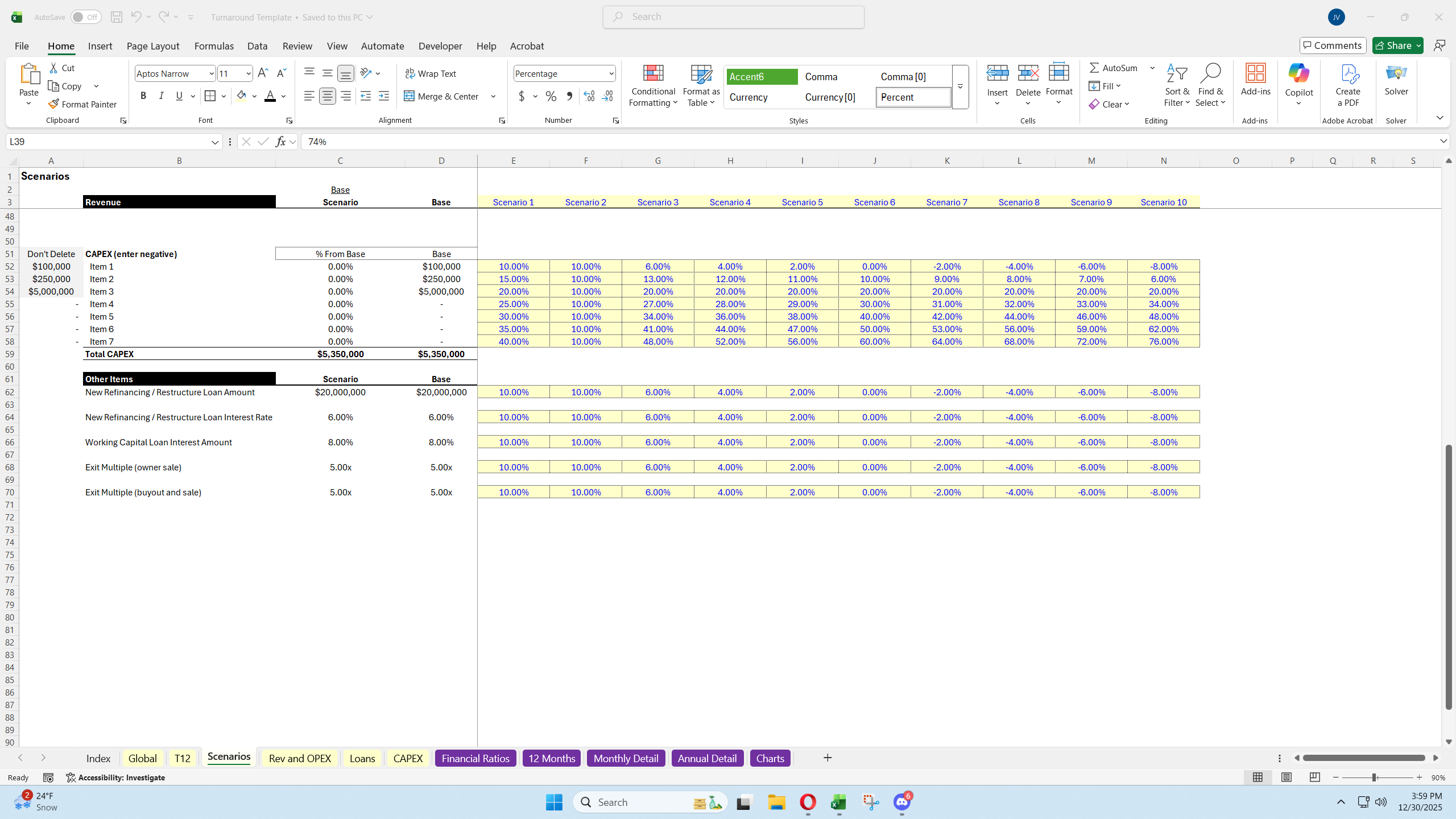
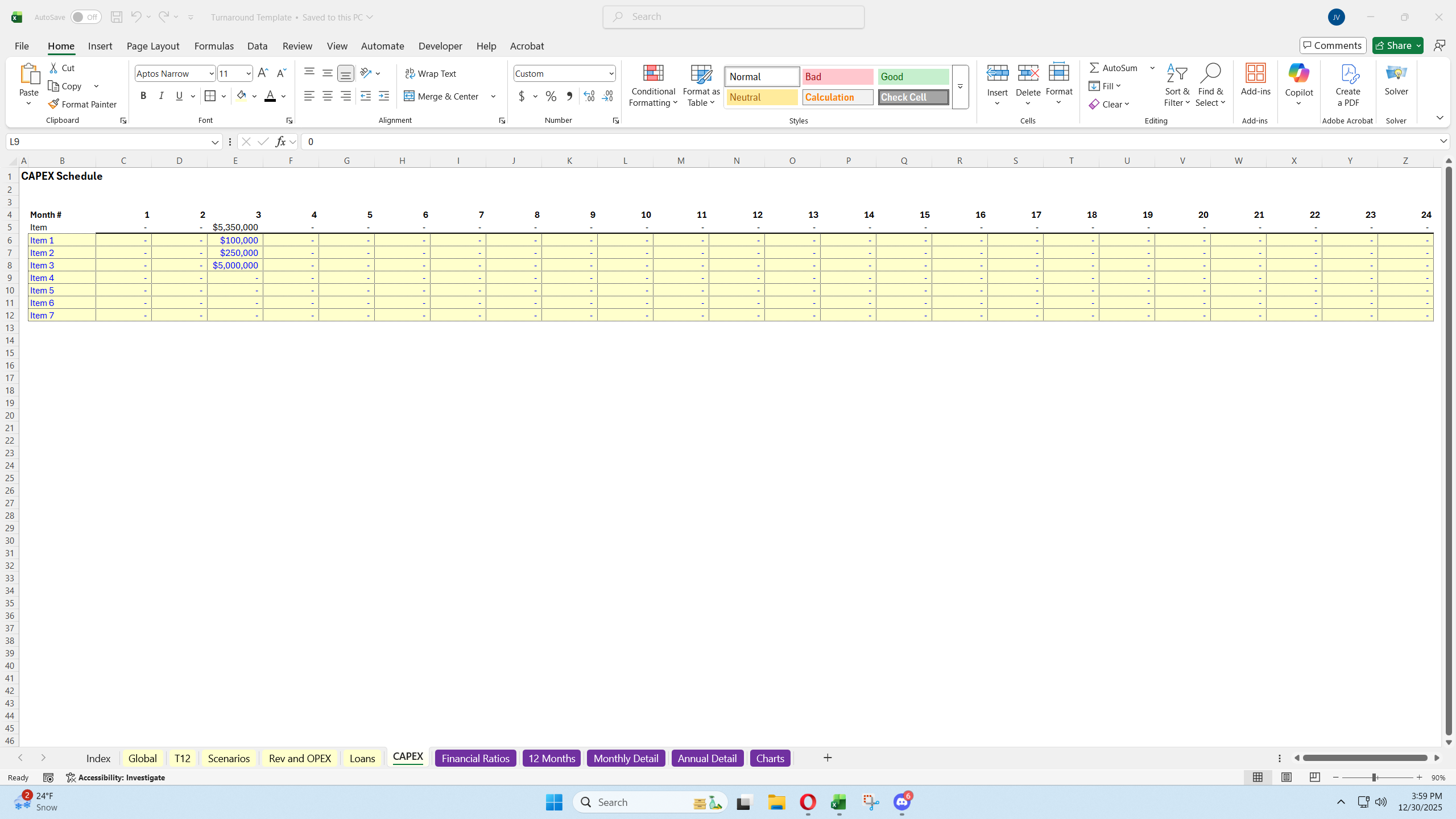
A key feature is the built-in scenario analysis engine supporting up to 10 scenarios, configurable at both the line-item level and for major assumptions (exit timing, debt structure, capex, and valuation/multiples). After scenarios are defined, the user simply toggles the active scenario to see the complete financial impact throughout the model. The template also includes side-by-side sensitivity tables that present the most important outputs across all scenarios in one view, making it easier to identify the biggest drivers and communicate tradeoffs to partners, owners, lenders, or investors.
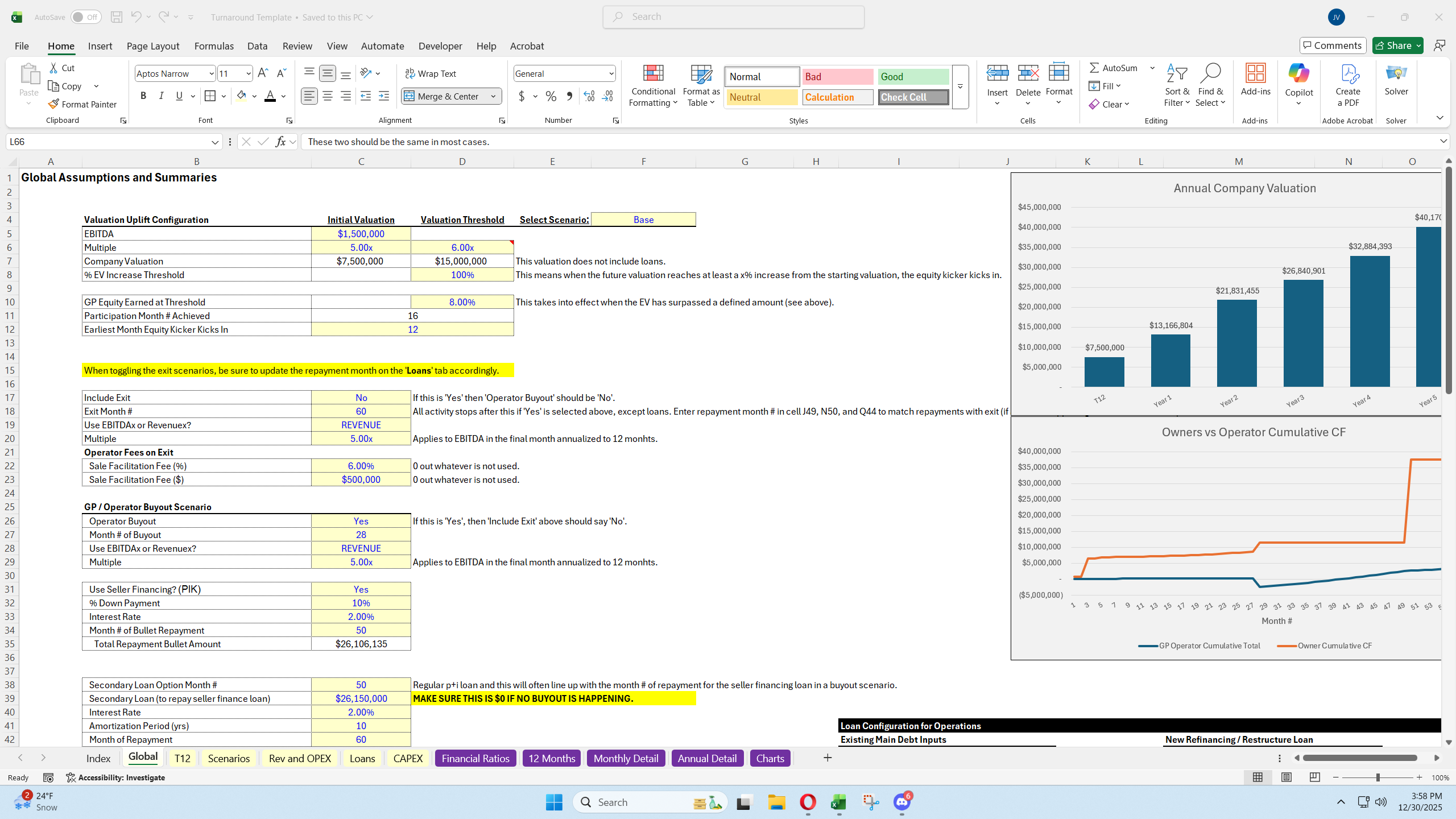
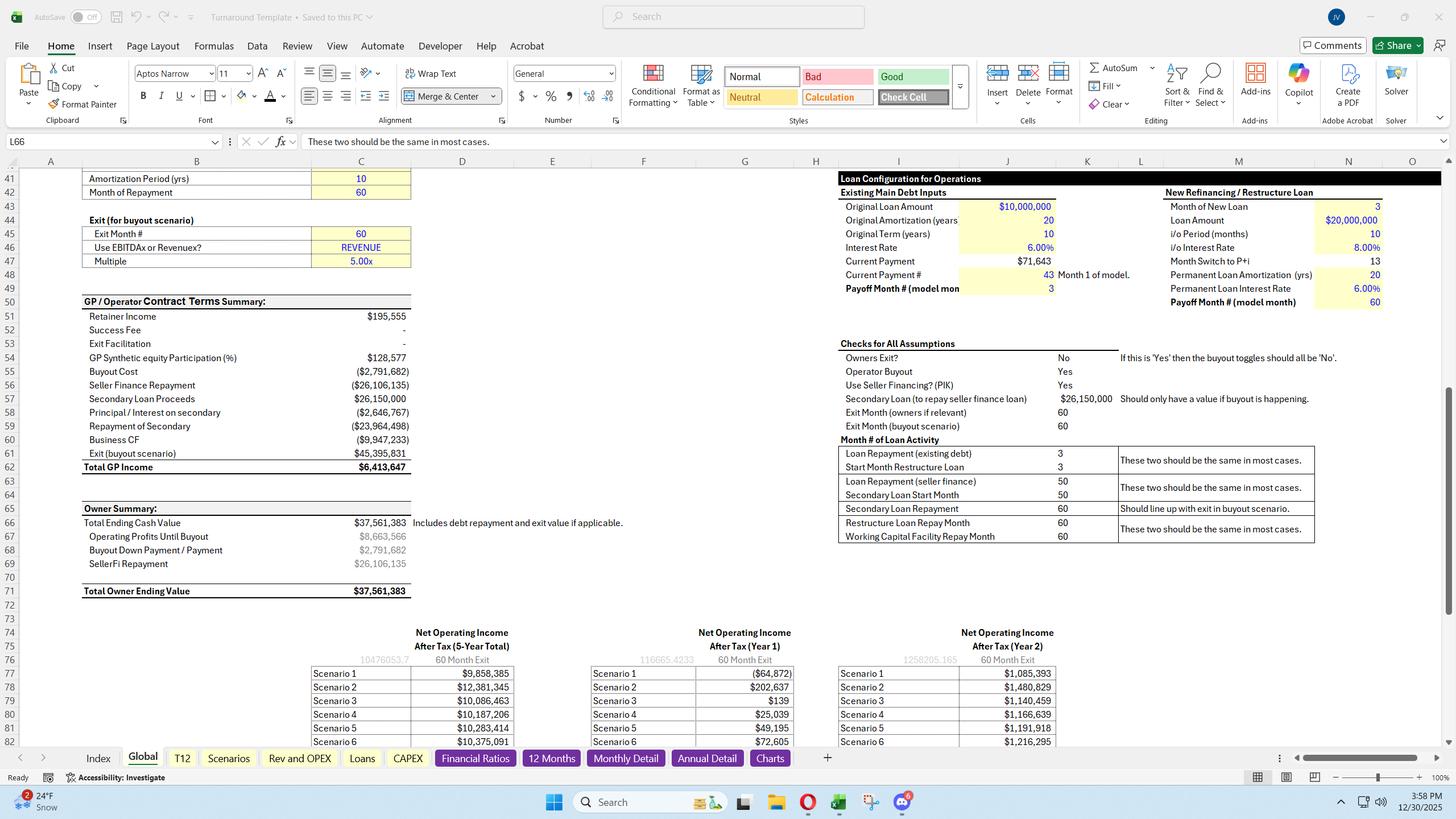
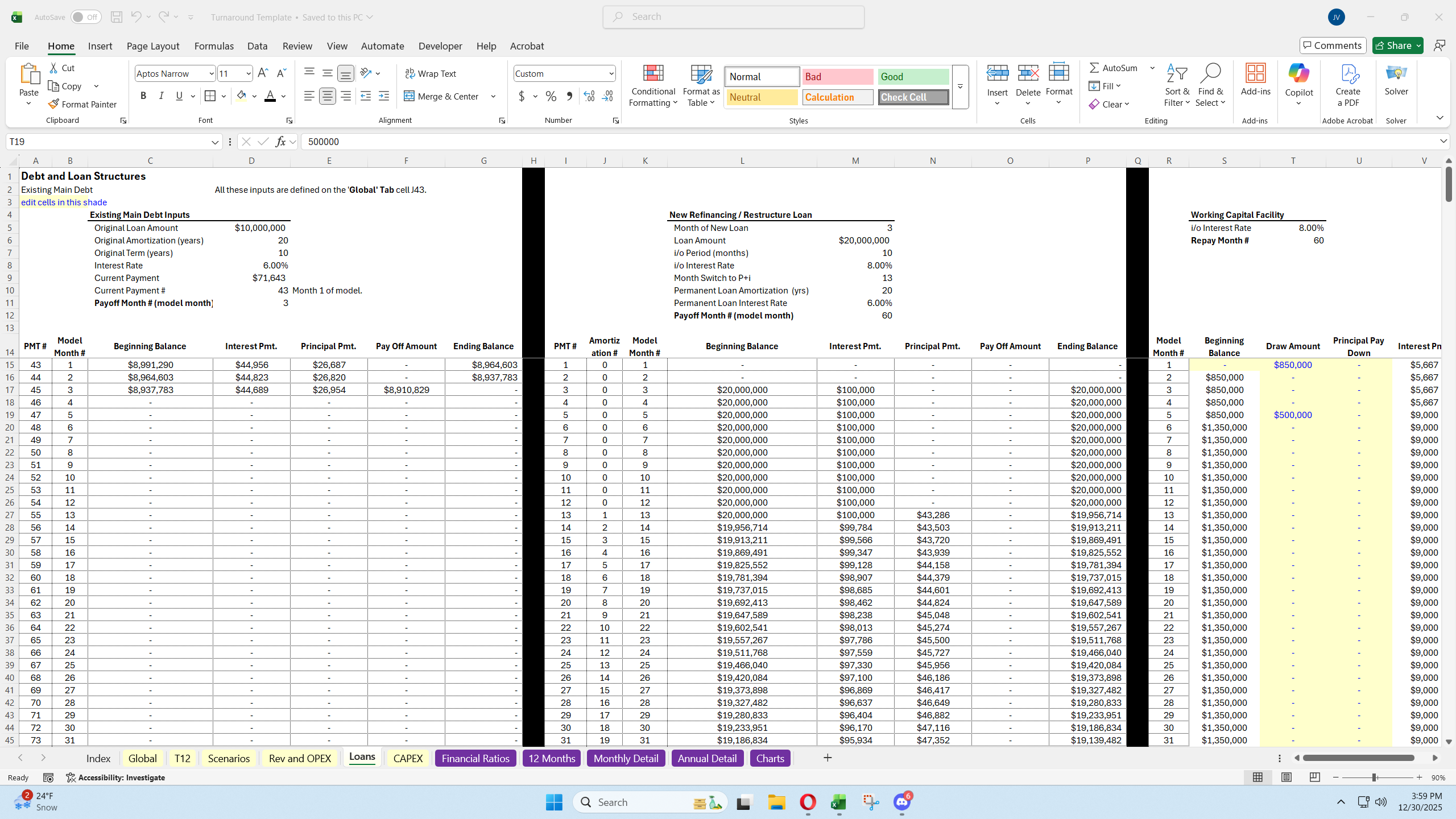
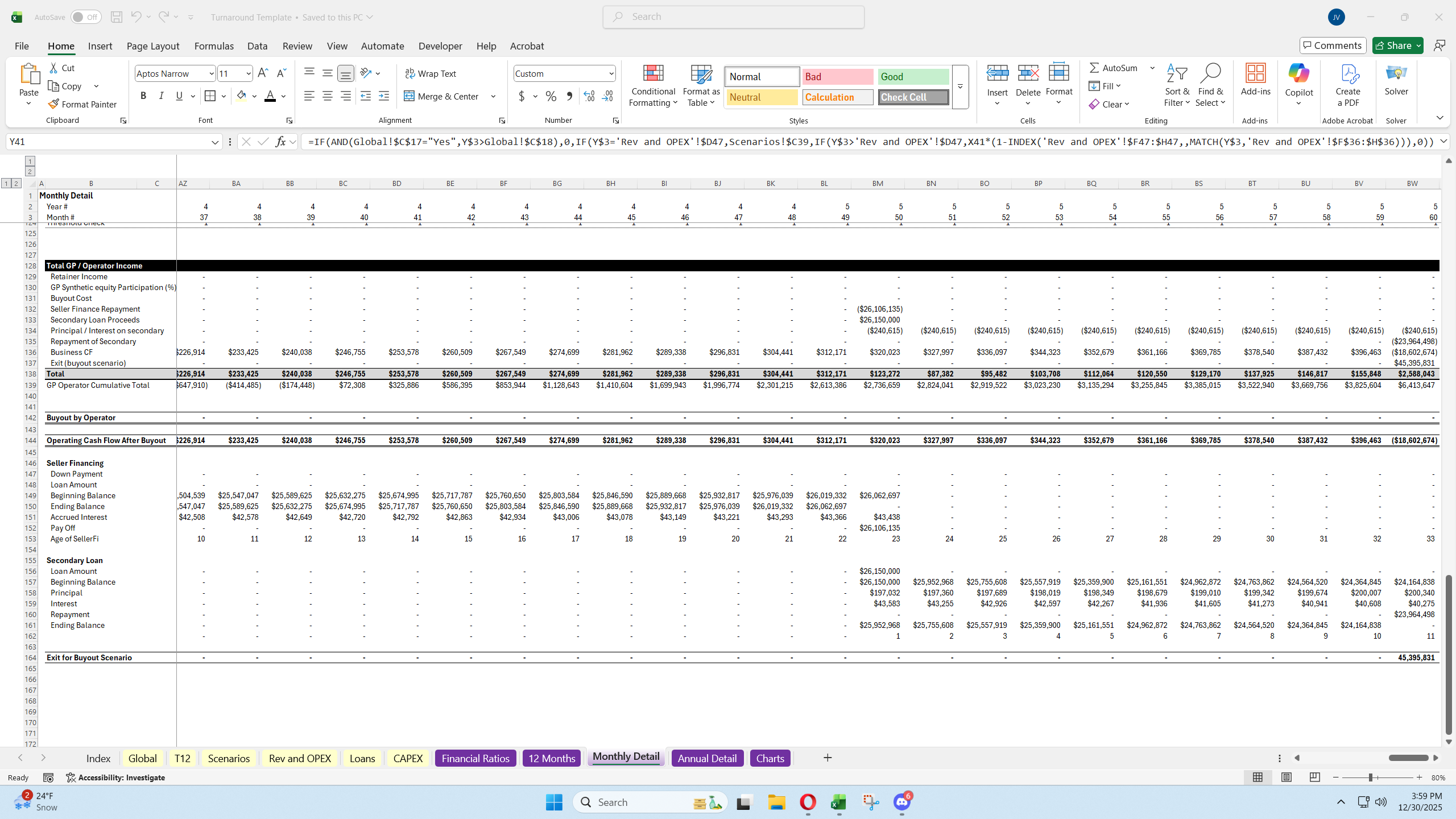
Finally, the model is structured around real-world turnaround deal mechanics: a 12-month contract where the GP/operator earns some combination of fees over time and potential equity kickers tied to increases in company valuation. It supports multiple endgames, including an owner exit via sale (with an optional GP facilitation fee), owners continuing operations, or a GP buyout at a defined point in the future. For buyouts, the template incorporates assumptions for seller financing (PIK), a stabilized loan, and exit multiples. To keep the logic coherent, a dedicated check table on the Global tab highlights conflicting or illogical settings (e.g., “owners exit = yes” and “GP buyout = yes” simultaneously), helping ensure the inputs align with a consistent transaction and operational timeline.
This Best Practice includes
1 Excel model, 1 overview video
Further information
Provide a financial planning tool for the owners of struggling businesses and turnaround consultants.
Used to help struggling businesses that are brining on turnaround specialists.