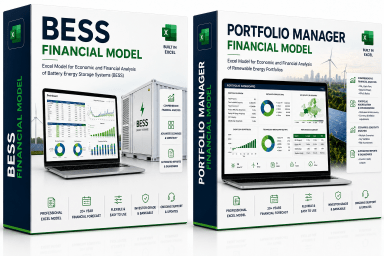
BESS Ultimate Model + Portfolio Manager — From Single Storage Project to Full Pipeline in One Purchase
Originally published: 16/05/2026 07:28
Publication number: ELQ-38896-1
View all versions & Certificate
certified

BESS Ultimate Model + Portfolio Manager — From Single Storage Project to Full Pipeline in One Purchase

The BESS Ultimate Model and Portfolio Manager bundled together. Build a bankable standalone battery storage business case for any of 8 markets

Description
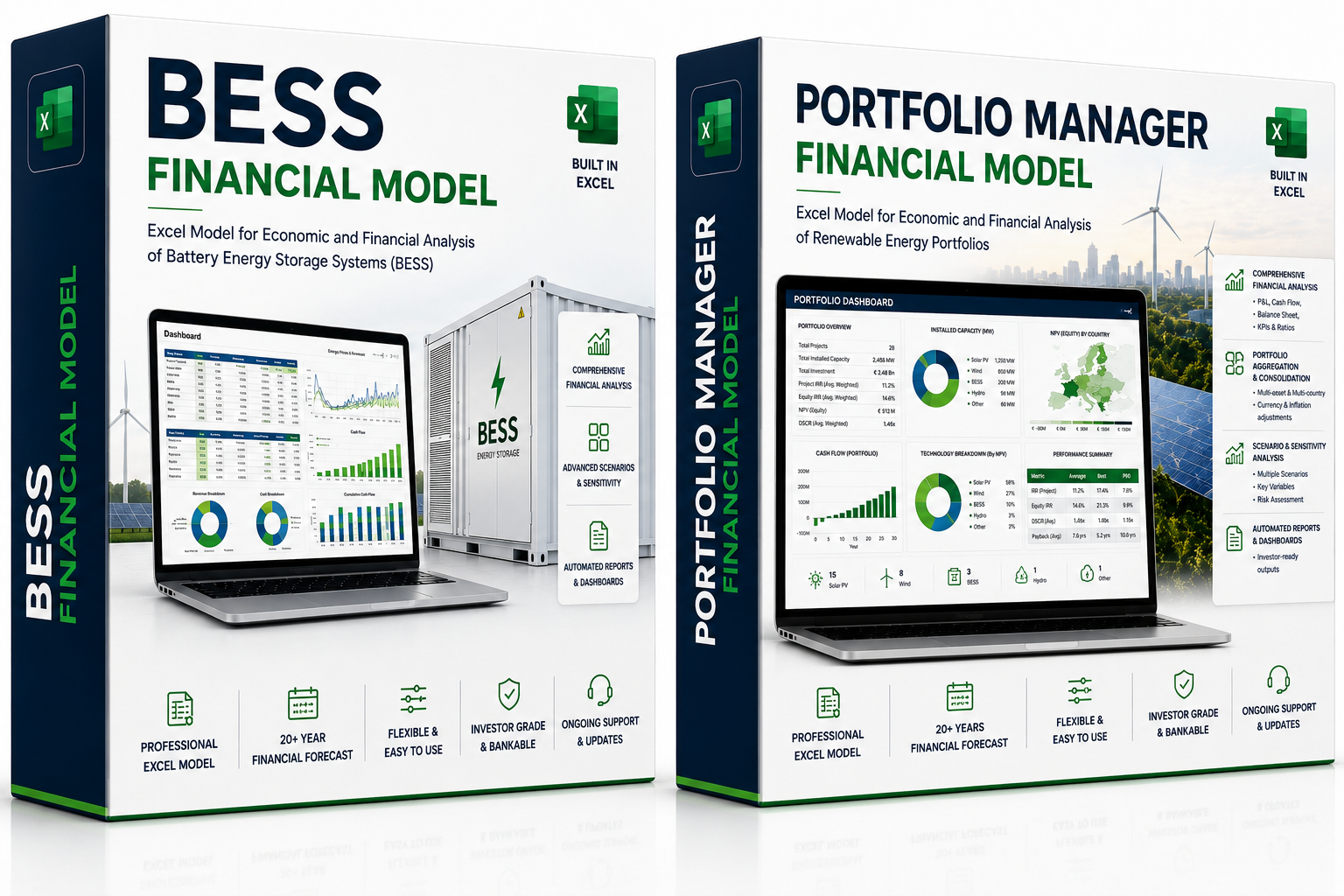
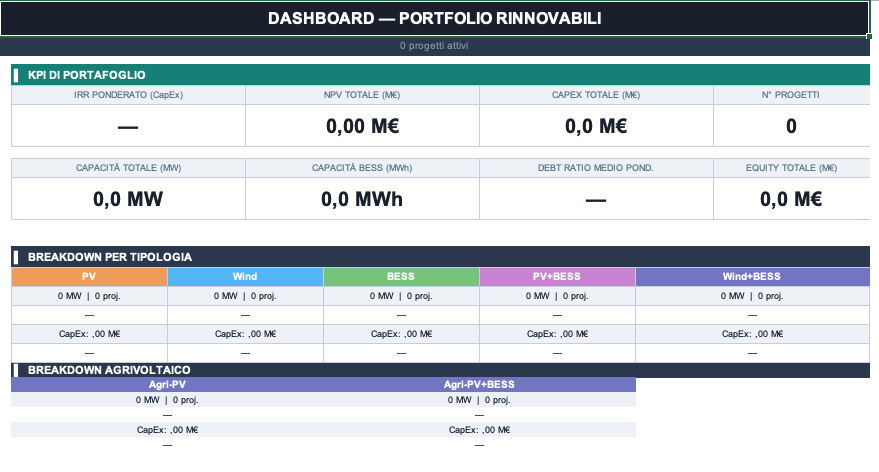
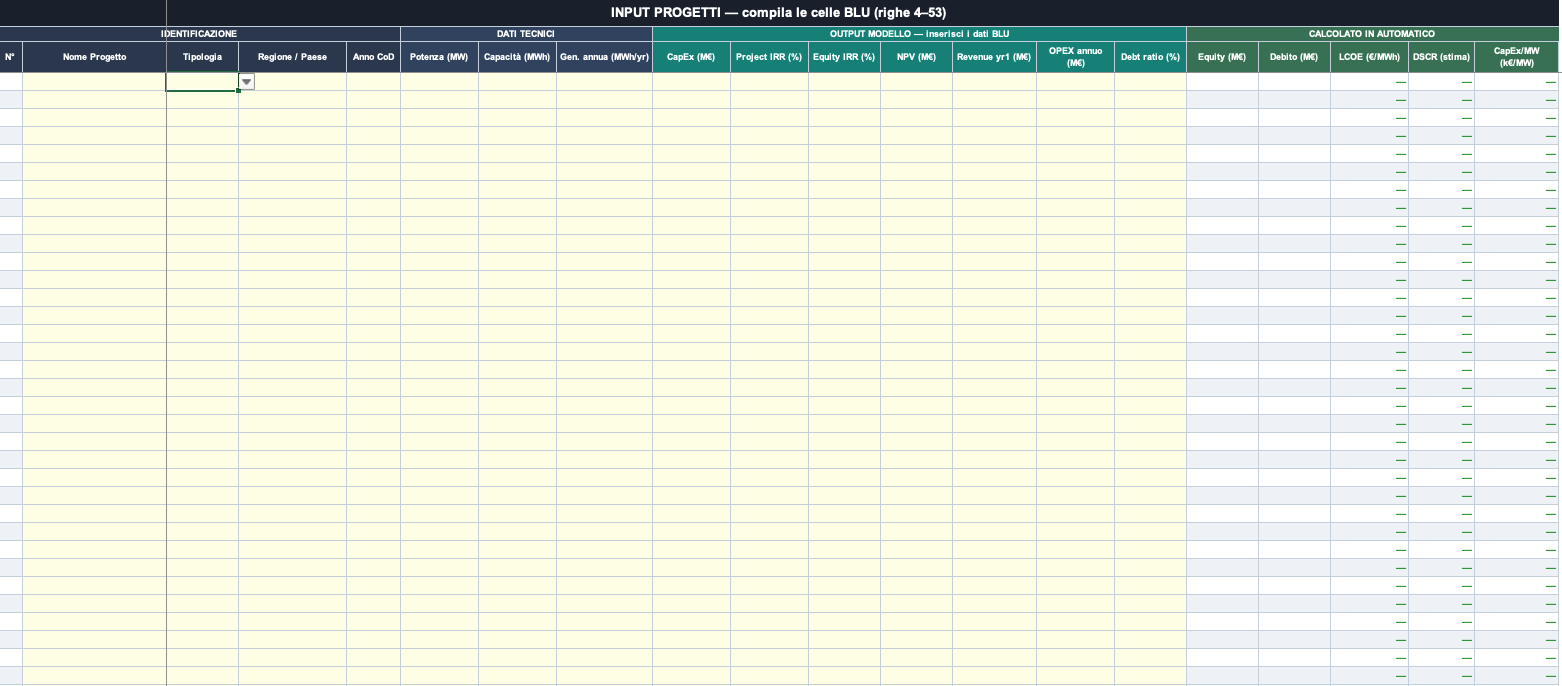
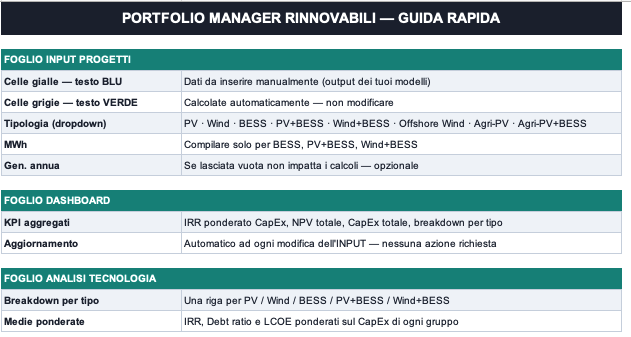
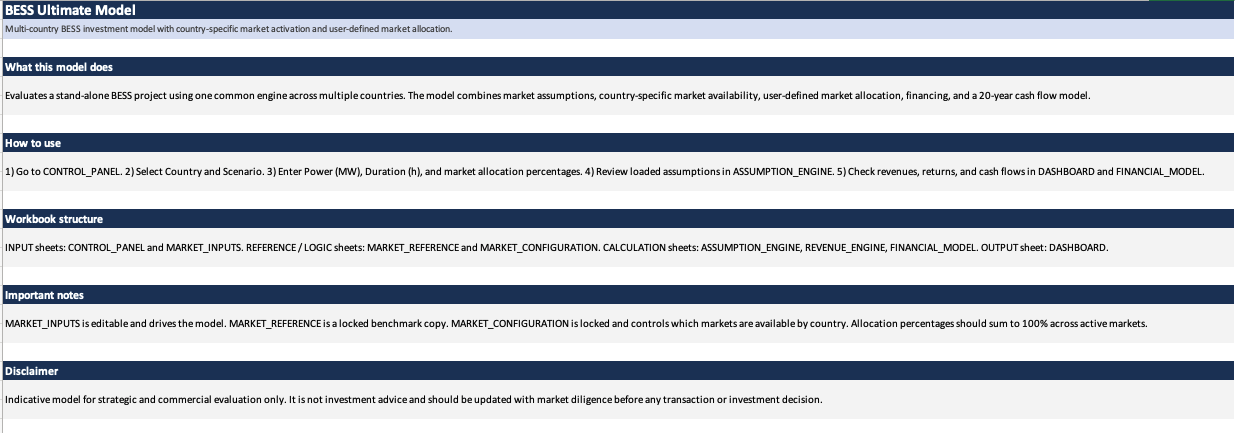
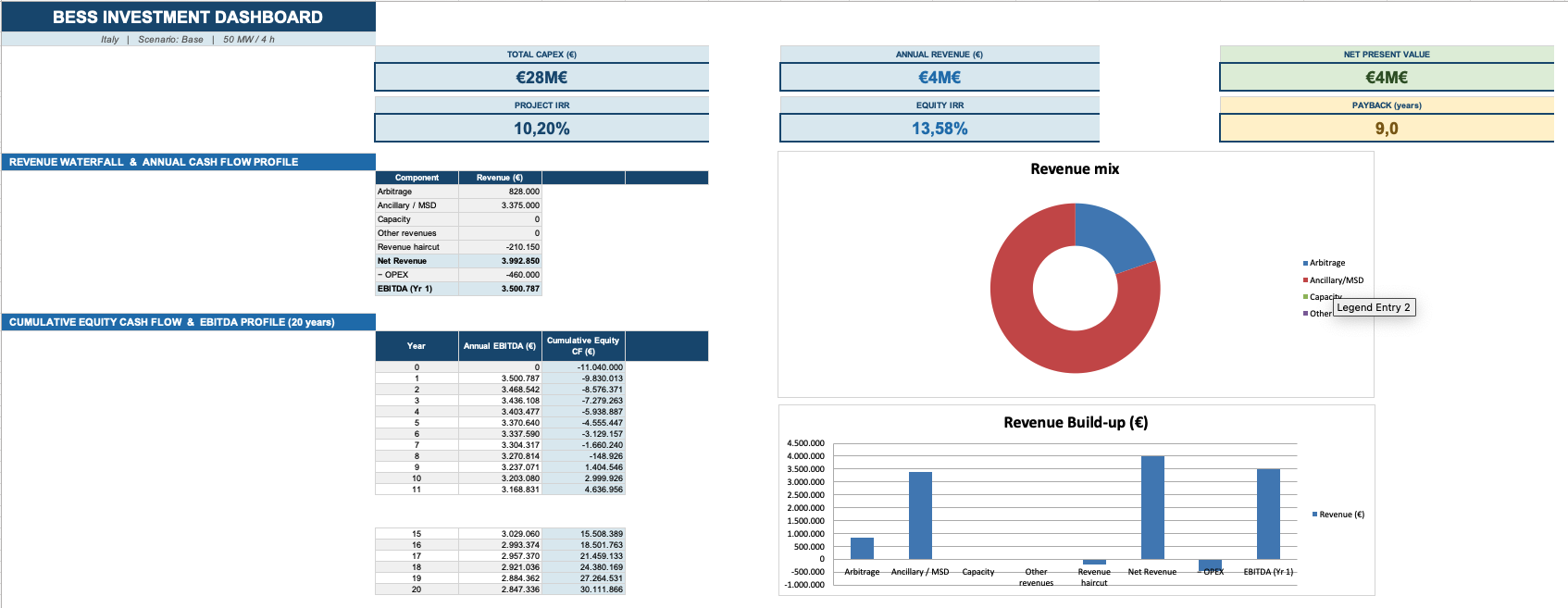
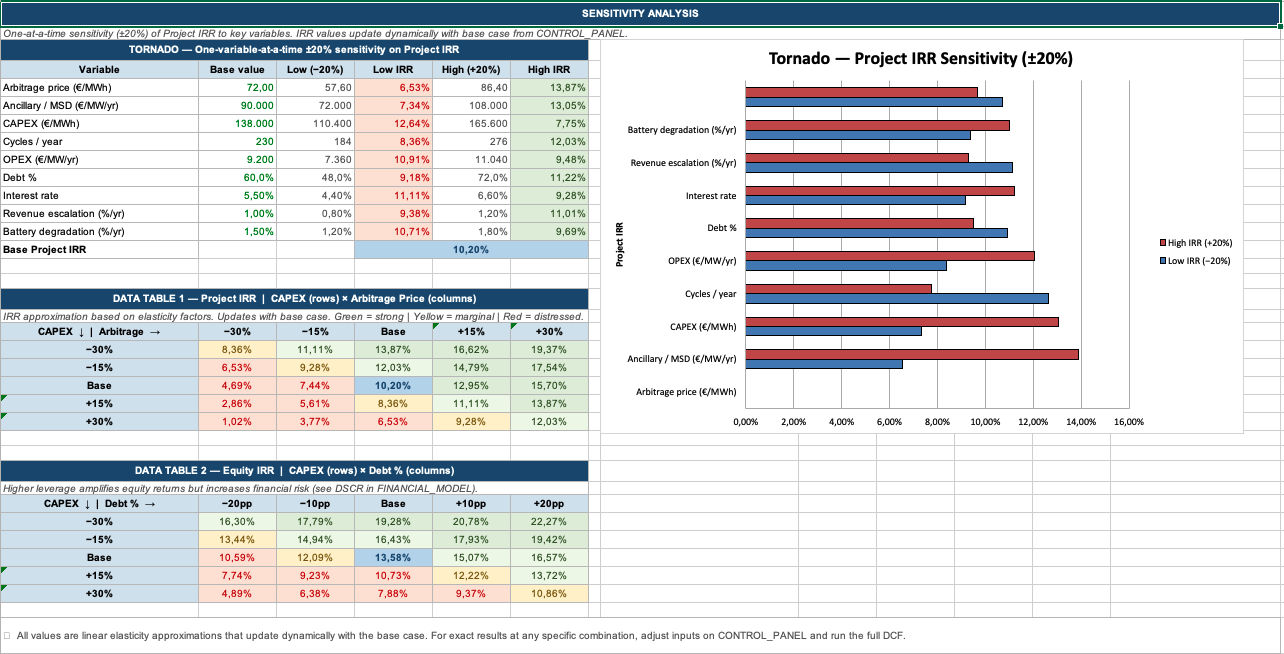
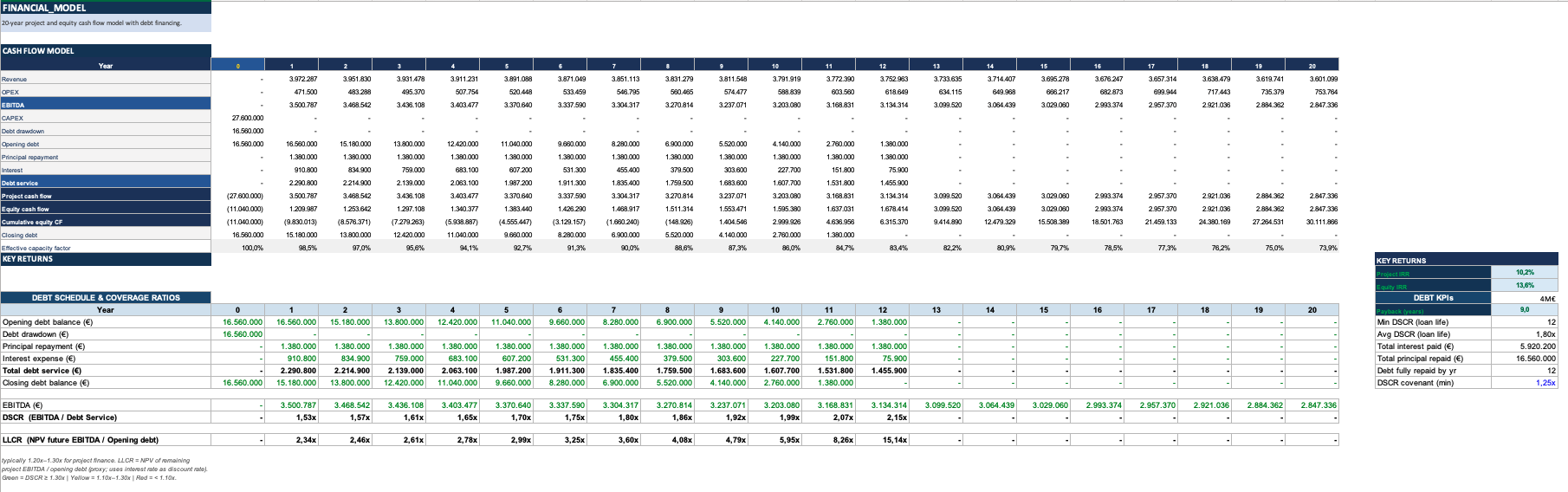
This bundle combines two complementary tools that most energy storage professionals end up needing together. The BESS Ultimate Model handles the project-level analysis — a fully calibrated 20-year DCF for standalone battery storage across 8 countries and 3 scenarios, with four configurable revenue streams and country-specific market availability controls. The Portfolio Manager handles the portfolio-level view — aggregating up to 50 projects across all technologies into a single dashboard with weighted IRR, total NPV, LCOE, DSCR and a technology breakdown.
Used separately, each tool solves half the problem. Used together, they cover the full workflow from individual project evaluation to portfolio reporting.


How they work together
You run your BESS deal in the BESS Ultimate Model. Once you have your Project IRR, Equity IRR, NPV, Revenue, OPEX and Debt ratio, you transfer those outputs directly into a row in the Portfolio Manager. The portfolio KPIs update immediately. No reformatting, no manual aggregation, no formula rebuilding — the output structure of the project model maps directly to the input structure of the portfolio tracker.
As you add more projects — Solar PV, Wind, Agrivoltaic, or additional BESS — the Portfolio Manager accumulates them all, keeping the portfolio view current without any extra work.


What makes the BESS model different from a generic DCF template
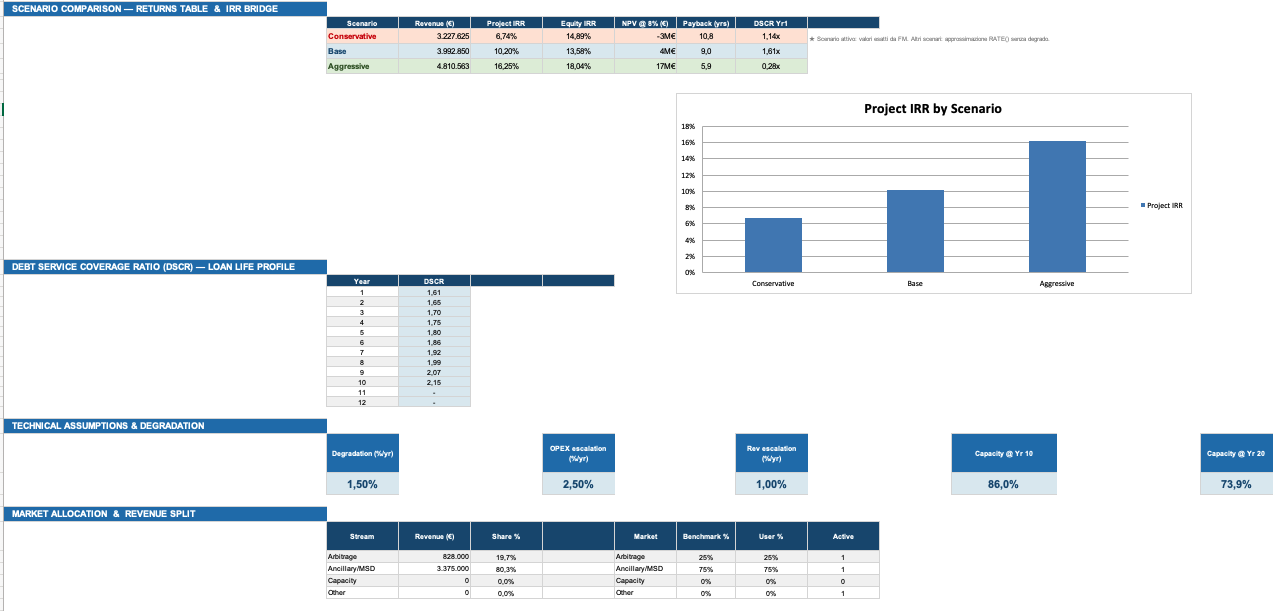
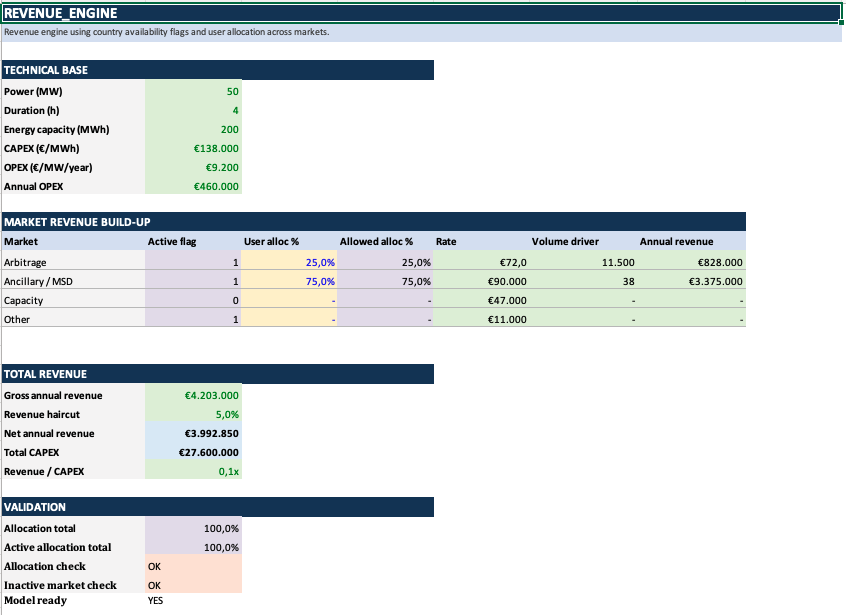
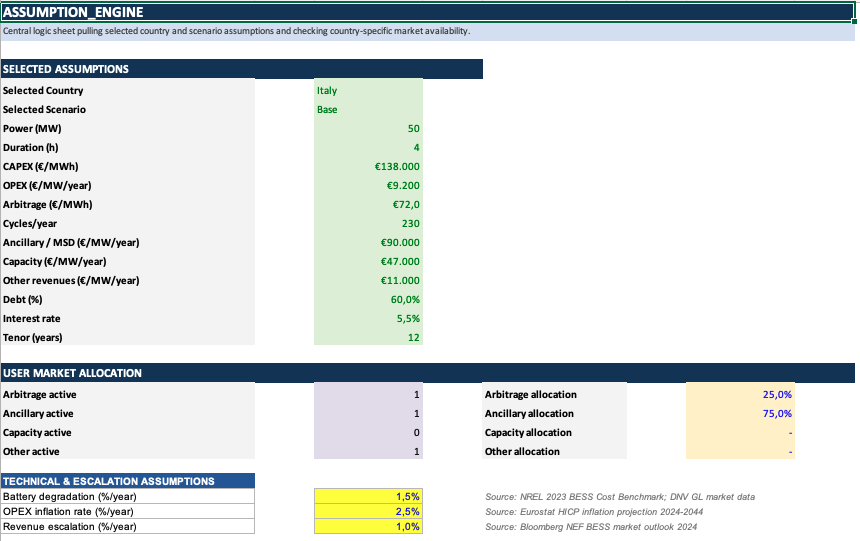
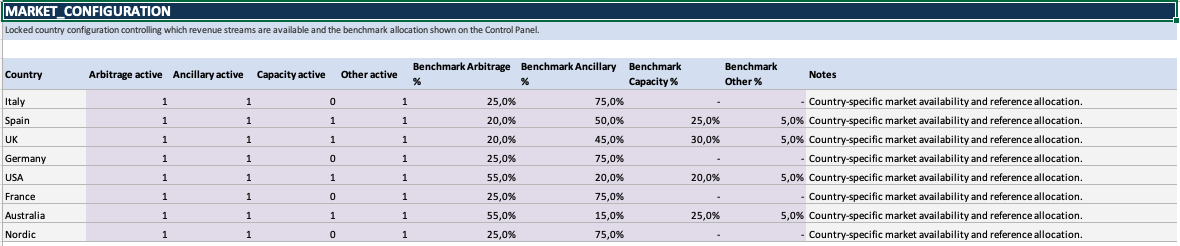
The revenue engine is built around how battery storage projects actually earn money. Four streams — Arbitrage, Ancillary/MSD, Capacity and Other — are each configurable independently, with country-specific market availability controls that reflect regulatory reality: the Capacity market is active in Spain, UK, USA and Australia but not in Italy, Germany, France or Nordic markets, because that is how those markets work. Benchmark allocations are pre-loaded by country and fully overridable.
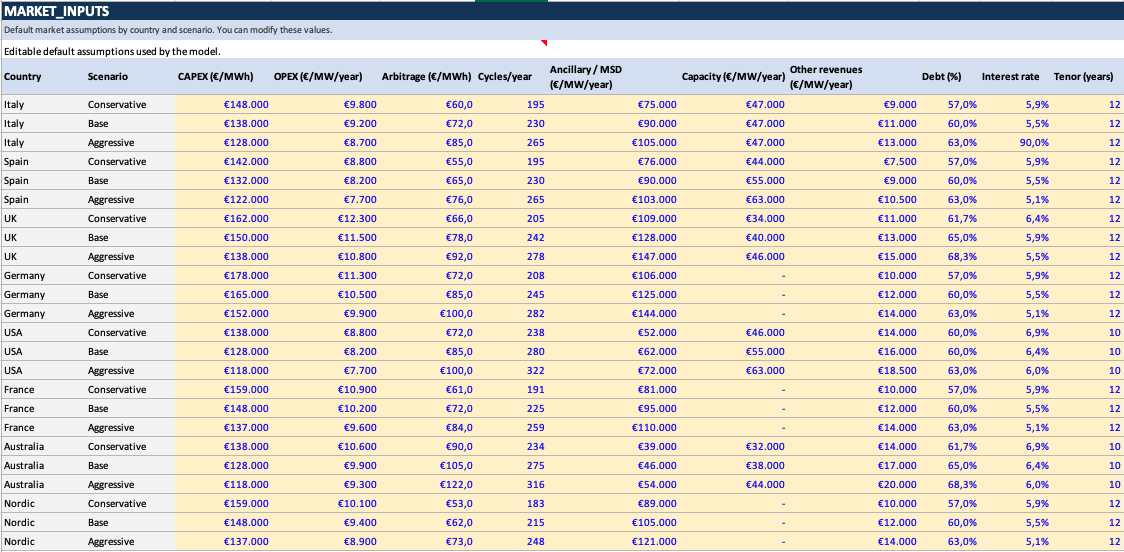
The assumptions are calibrated for standalone BESS economics, not solar or wind CAPEX adapted to storage. 8 countries — Italy, Spain, UK, Germany, USA, France, Australia, Nordic — each with Conservative, Base and Aggressive scenarios updated in April 2026 from Modo Energy Q1 2026, Capstone DC, BESS Index, enspired and Rystad Energy. A locked benchmark reference copy sits alongside the editable assumption sheet, so you always know what you have changed and can restore the original with a copy-paste.
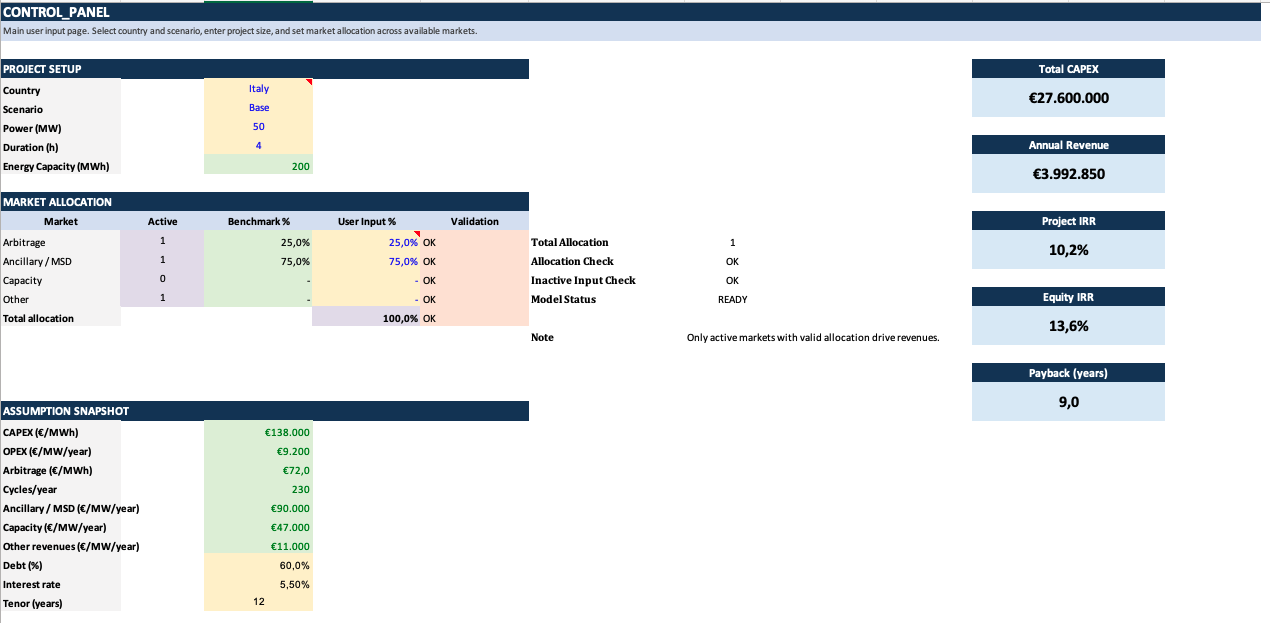
The model is structured around Power (MW) and Duration (h) as primary inputs, with Energy Capacity calculated automatically. CAPEX is expressed in €/MWh — the standard for storage — and debt terms reflect the shorter financing tenors typical of BESS projects: 12 years for European markets, 10 years for USA and Australia.


Who this is for
Developers evaluating standalone BESS projects across European and international markets. Financial advisors preparing investment memoranda or lender presentations for storage deals. Infrastructure investors screening battery storage assets where the revenue stack — arbitrage, ancillary, capacity — needs to be structured explicitly. Anyone who needs a defensible, market-calibrated number fast on a technology where assumptions vary enormously by country.


Workbook BESS: CONTROL_PANEL · MARKET_INPUTS · MARKET_REFERENCE · MARKET_CONFIGURATION · ASSUMPTION_ENGINE · REVENUE_ENGINE · FINANCIAL_MODEL · DASHBOARD.


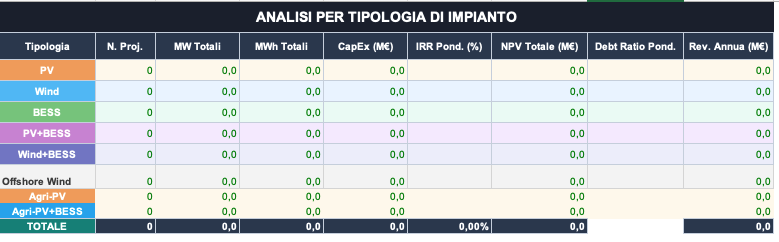
Workbook Portfolio Manager: Istruzioni · INPUT PROGETTI · Dashboard · Analisi Tecnologia.


For custom versions or specific requests, contact us at [email protected]

This Best Practice includes
2 Excel Models, 2 PDF Guides

Acquire business license for $193.00

Add to cart

Add to bookmarks

Discuss

Further information

This bundle enables developers, advisors and investors to evaluate individual standalone BESS projects across 8 international markets and aggregate their results into a consolidated portfolio view without building either tool from scratch. The BESS Ultimate Model produces Project IRR, Equity IRR, NPV and a full 20-year cash flow with country-specific market availability controls and four configurable revenue streams — Arbitrage, Ancillary/MSD, Capacity and Other — calibrated from April 2026 market sources. The Portfolio Manager aggregates those outputs — alongside projects of any other technology — into a CapEx-weighted portfolio IRR, total NPV, LCOE per project, DSCR traffic light and a technology breakdown across up to 50 active projects.

This bundle is best suited to professionals evaluating standalone battery storage projects and simultaneously managing or reporting on a broader renewable energy pipeline that includes storage alongside generation assets. It works particularly well when the revenue stack is a structuring decision — for example, choosing between an ancillary-heavy allocation in Italy or a capacity-market-driven allocation in the UK or Spain — and the financial impact of each configuration needs to be tested quickly. It is also well suited to advisory and financing contexts where a clean, auditable Excel model is required alongside a portfolio-level view for investment committee or lender presentations.

This bundle covers standalone BESS only. For co-located battery storage integrated with a solar PV or wind plant, the Solar PV Ultimate Model and Wind Ultimate Model each include a dedicated BESS module that handles combined CAPEX, revenue and debt structuring in a single integrated model. The standalone BESS model is not suited to grid-scale virtual power plant configurations or aggregated distributed storage, which have fundamentally different dispatch and revenue logic. Neither tool replaces full project finance models for final investment decisions, and both should be supplemented with market diligence on ancillary and capacity revenue assumptions before any transaction.


0.0 / 5 (0 votes)

please wait...