

Project-Based Consulting Financial Forecast Model
Originally published: 27/02/2026 08:47
Publication number: ELQ-32667-1
View all versions & Certificate
certified

Project-Based Consulting Financial Forecast Model

5-year integrated financial forecast model for project-based consulting firms with revenue recognition, utilization tracking, and KPI dashboard.

Description
This financial model is designed to forecast the operating and financial performance of a project-based consulting firm delivering milestone-driven advisory and implementation services. Designed for firms delivering advisory, implementation, digital transformation, technical, or similar project-driven services, the model reflects the operational and financial dynamics of structured engagement-based businesses.

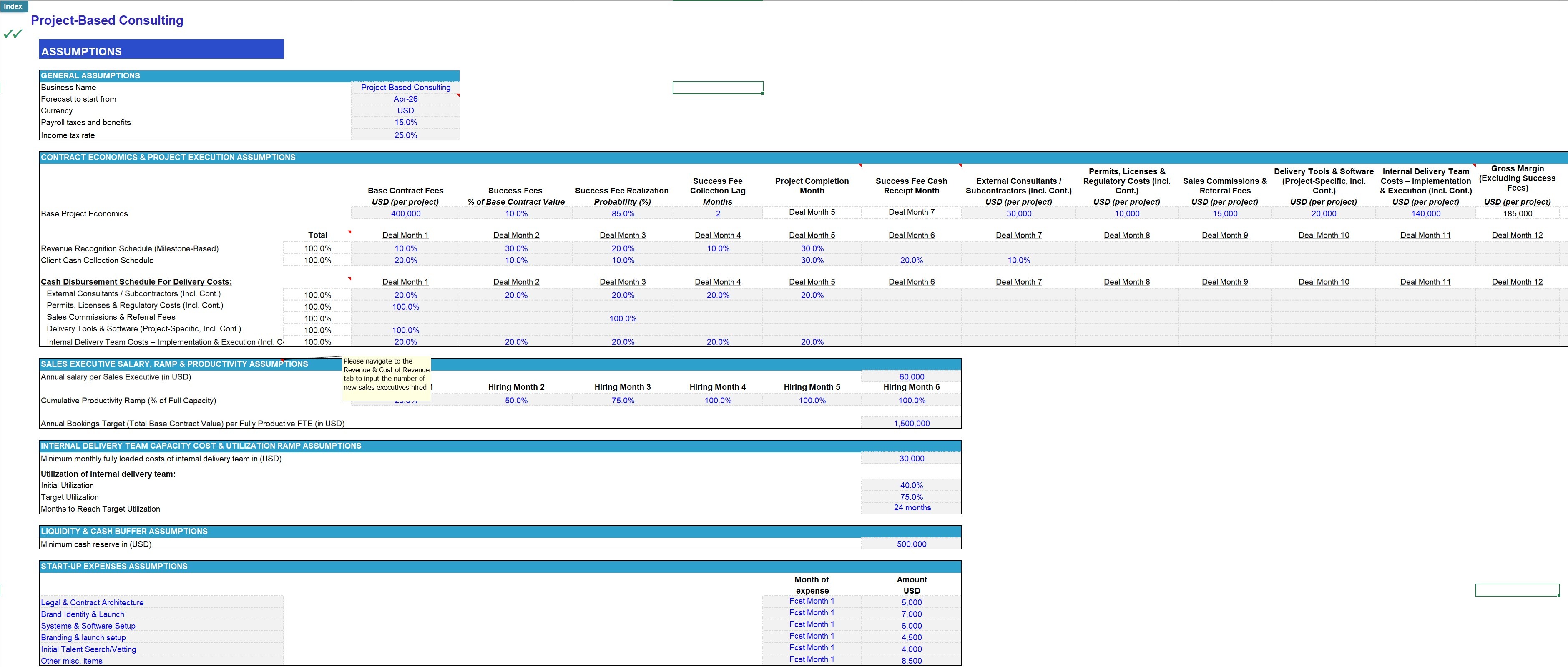
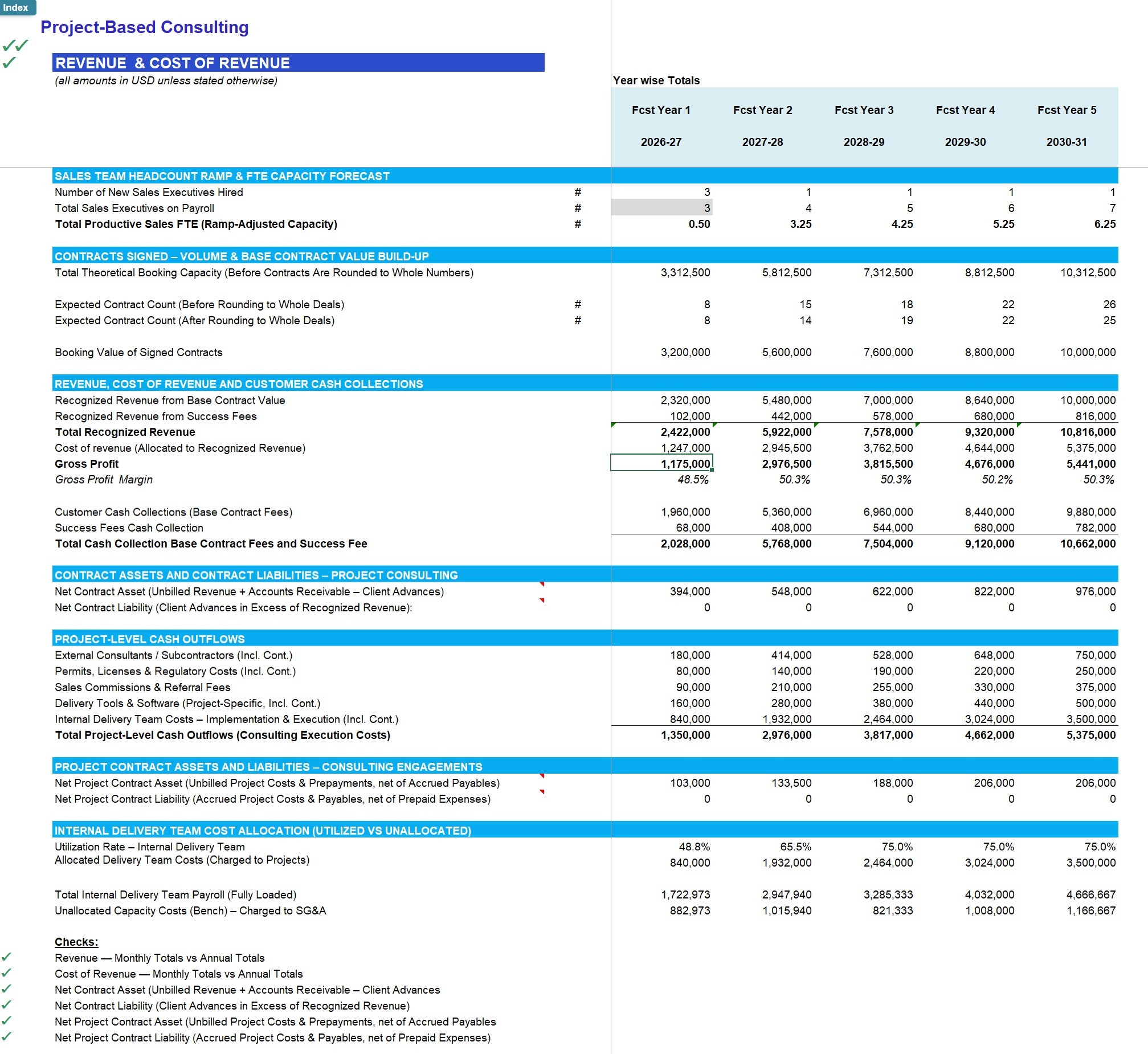
The model provides structured placeholders for projects with an 18-month lifecycle, meaning each engagement can be modeled across up to 18 months from contract start to completion, with configurable allocation of revenue recognition, client cash collections, direct cost recognition, and direct cost cash payments across those project months.

What the Model Covers


Revenue Modeling

• Base project fees per engagement
• Optional success fees with realization probability
• Milestone-based revenue recognition through allocation of total revenue percentages across defined project months
• Configurable client cash collection percentages allocated across project months and post-completion collection periods

Direct Project Cost Configuration

• External consultants and subcontractors
• Permits, Licenses & Regulatory Costs
• Sales commissions and referral fees
• Project-specific delivery tools and software
• Internal delivery team costs with utilization ramp assumptions
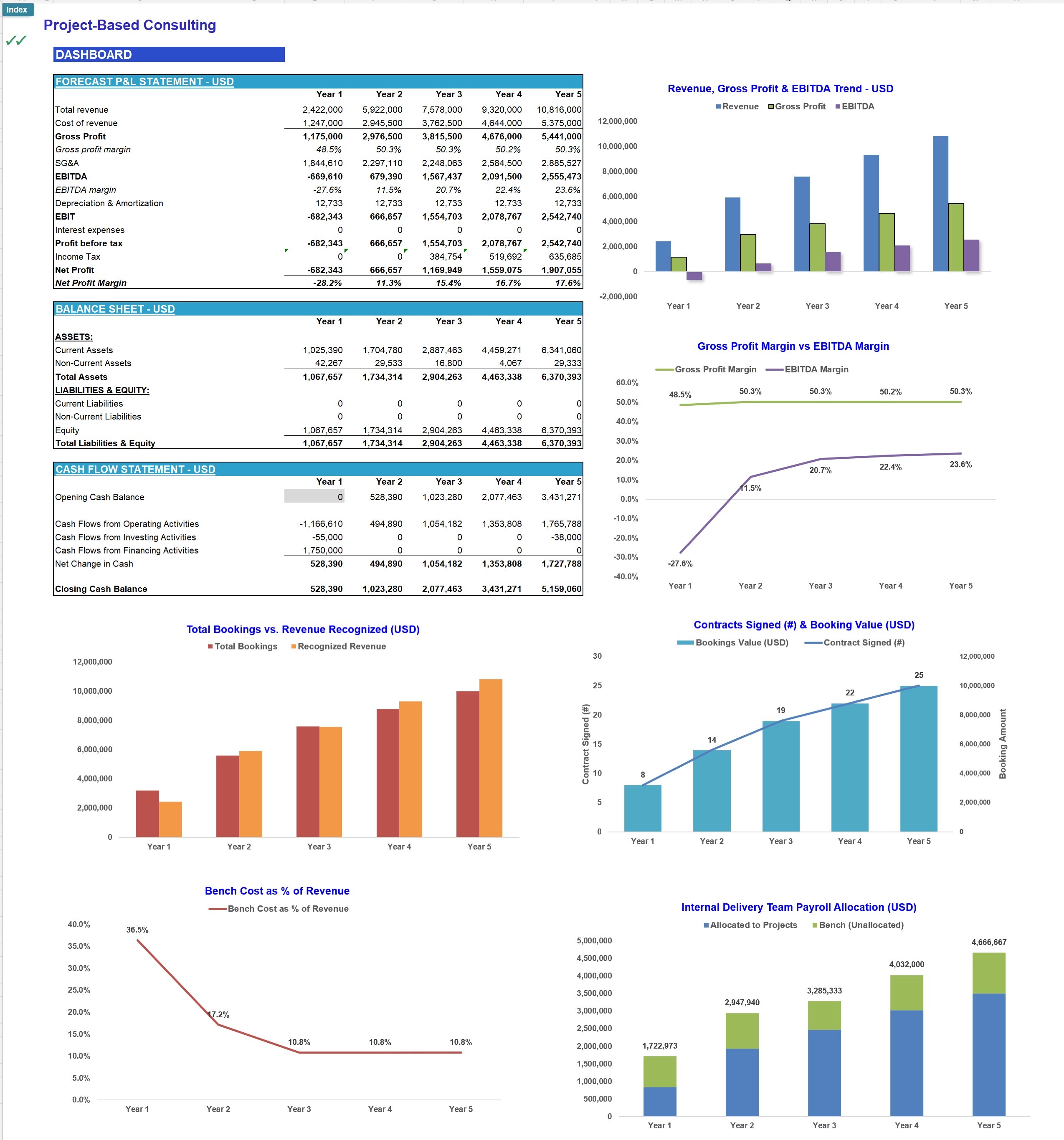
• Bench / idle capacity visibility (unallocated capacity tracking)
• Configurable cash payment percentages for each direct cost category across project months

Operating & Corporate Structure

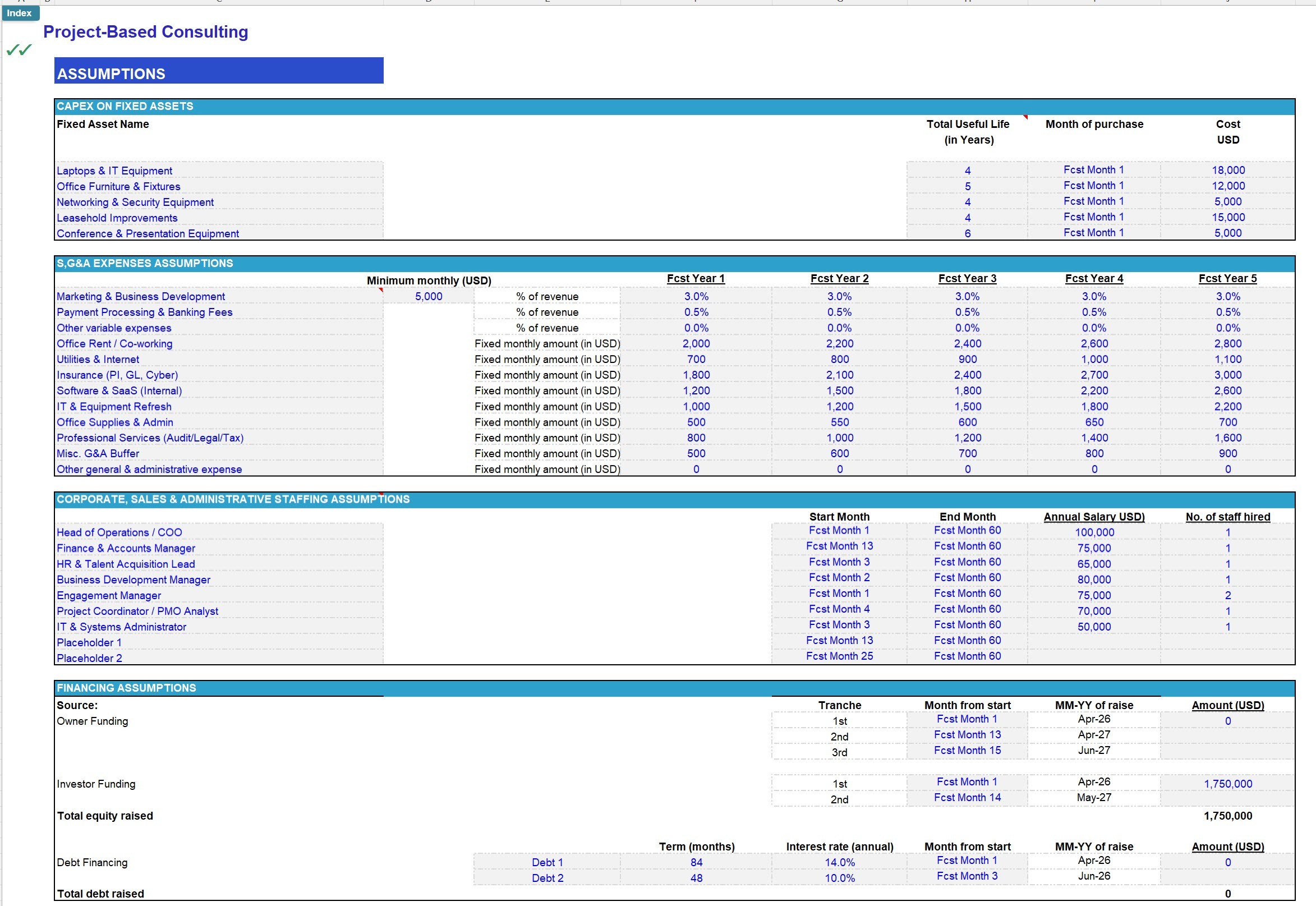
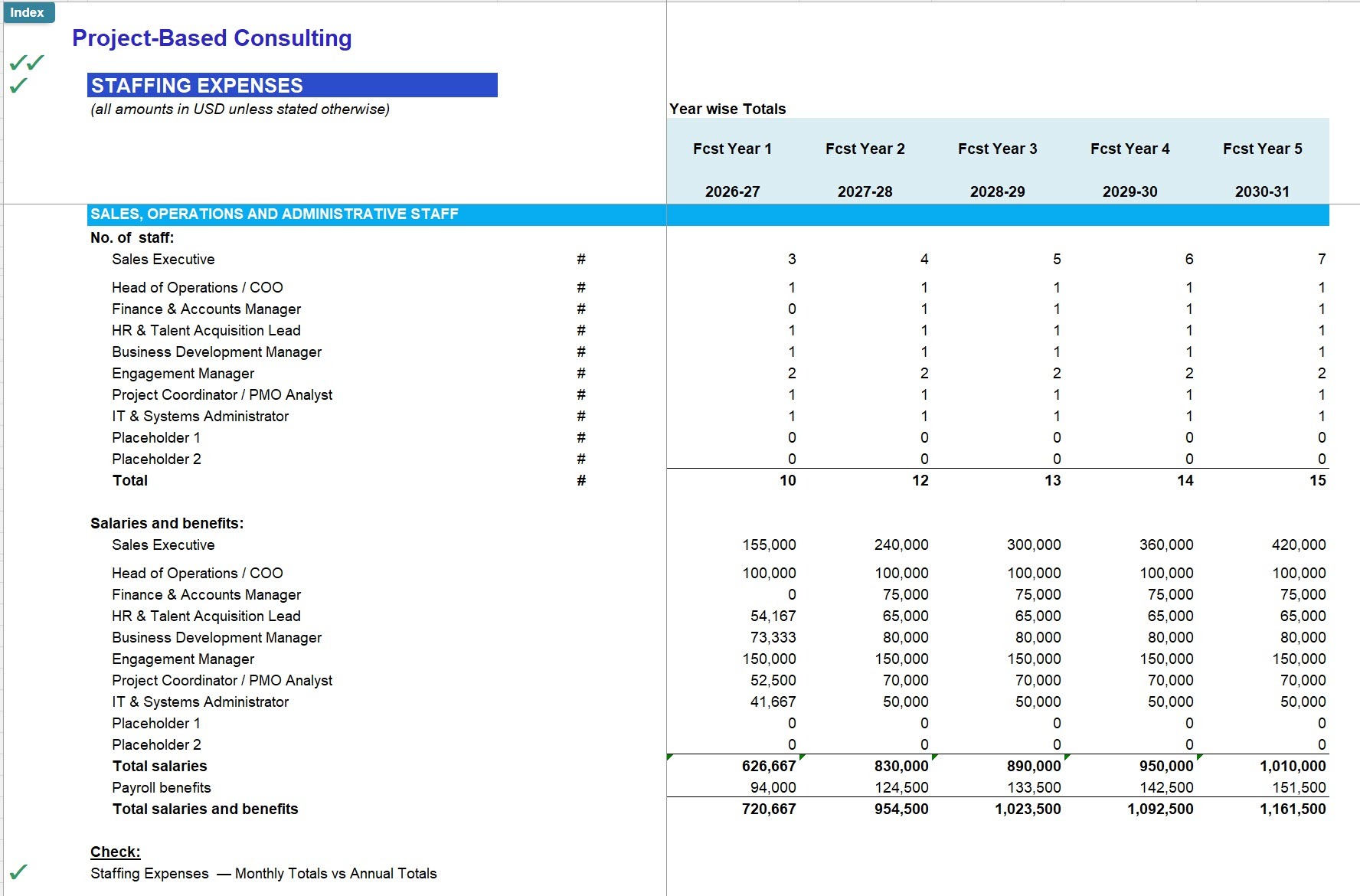
• Corporate, sales, and administrative payroll (excluding delivery team costs)
• SG&A cost drivers (fixed and % of revenue inputs)
• Start-up expenses
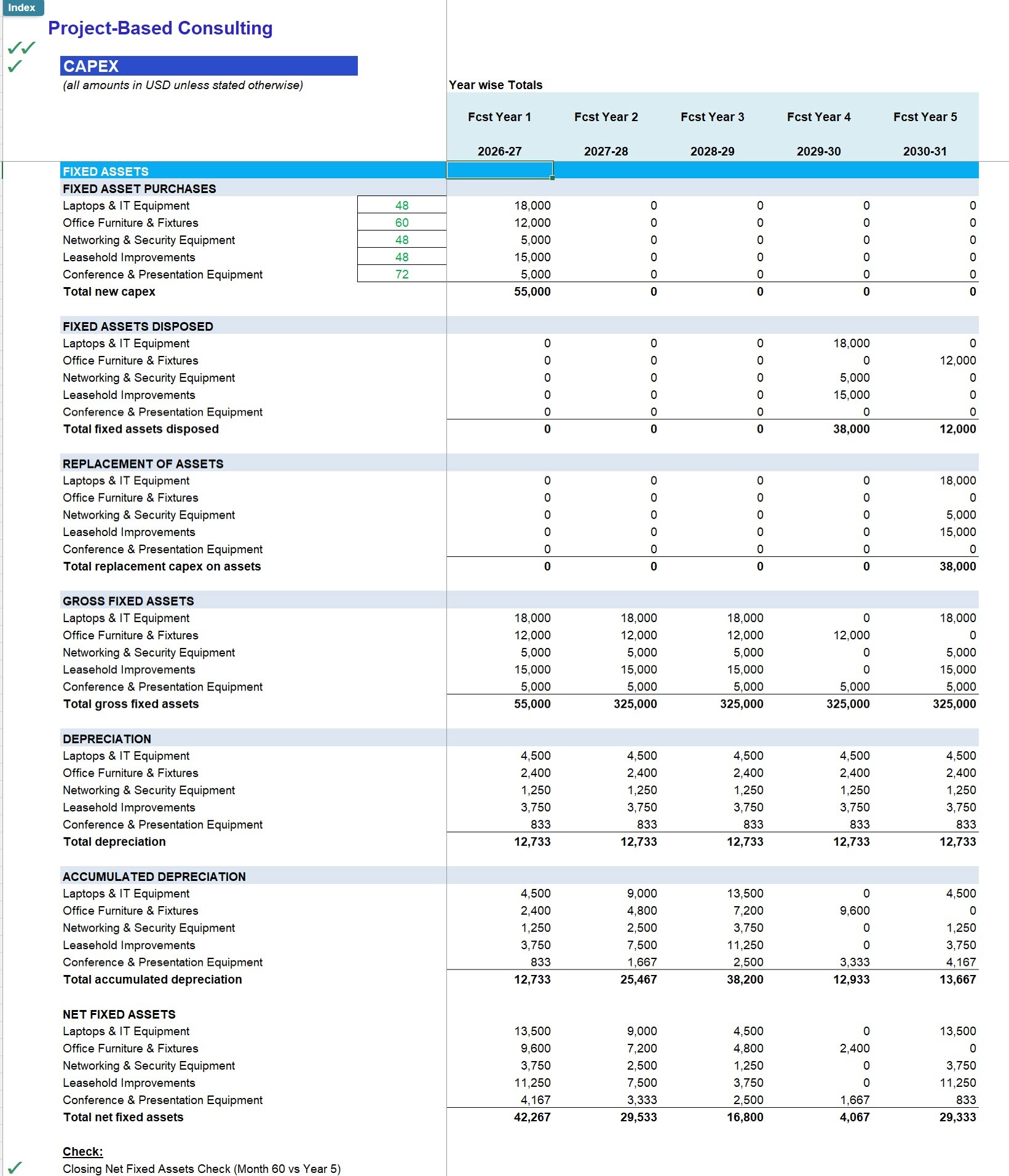
• Capital expenditures and depreciation
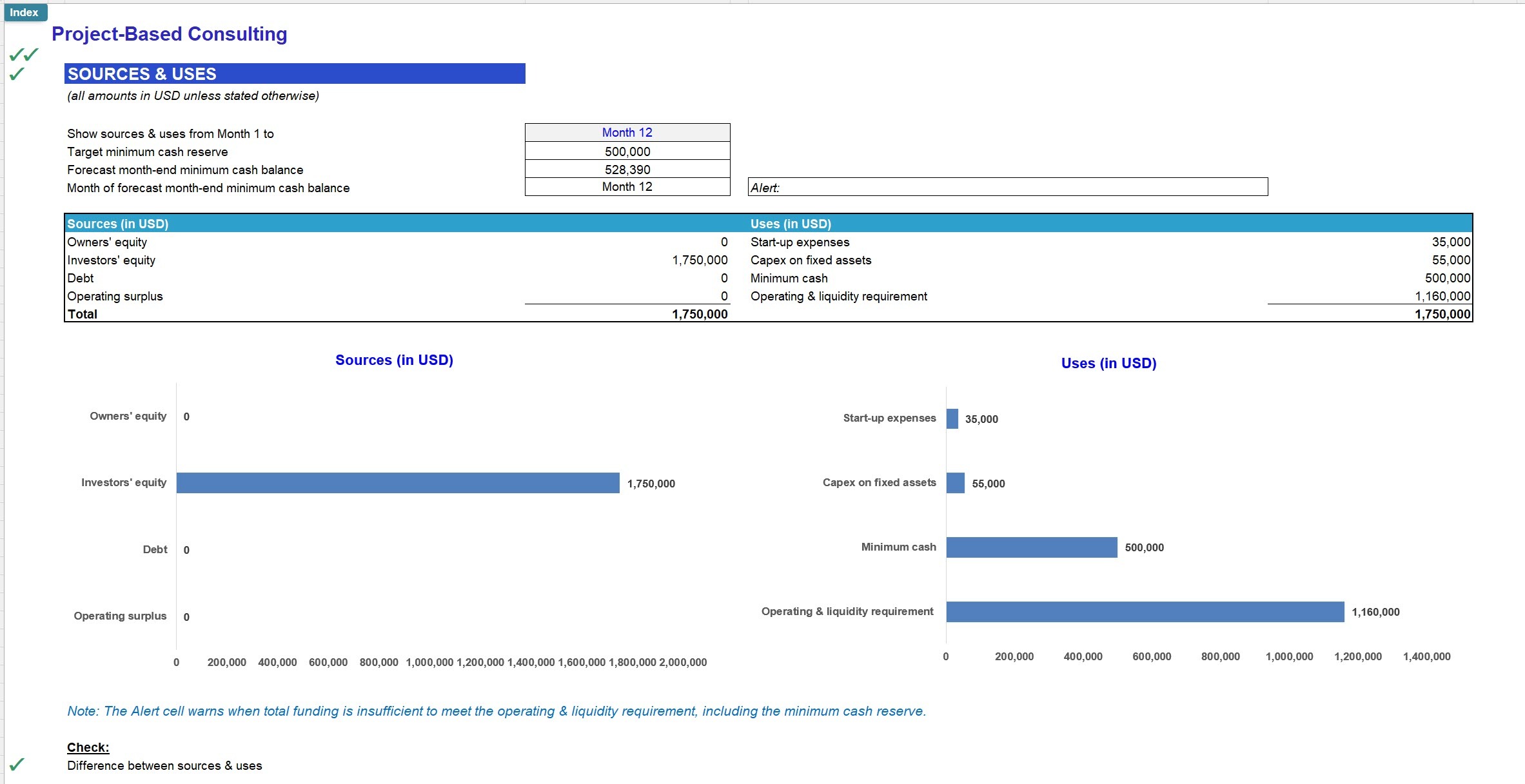
• Debt and equity funding assumptions

Financial Outputs

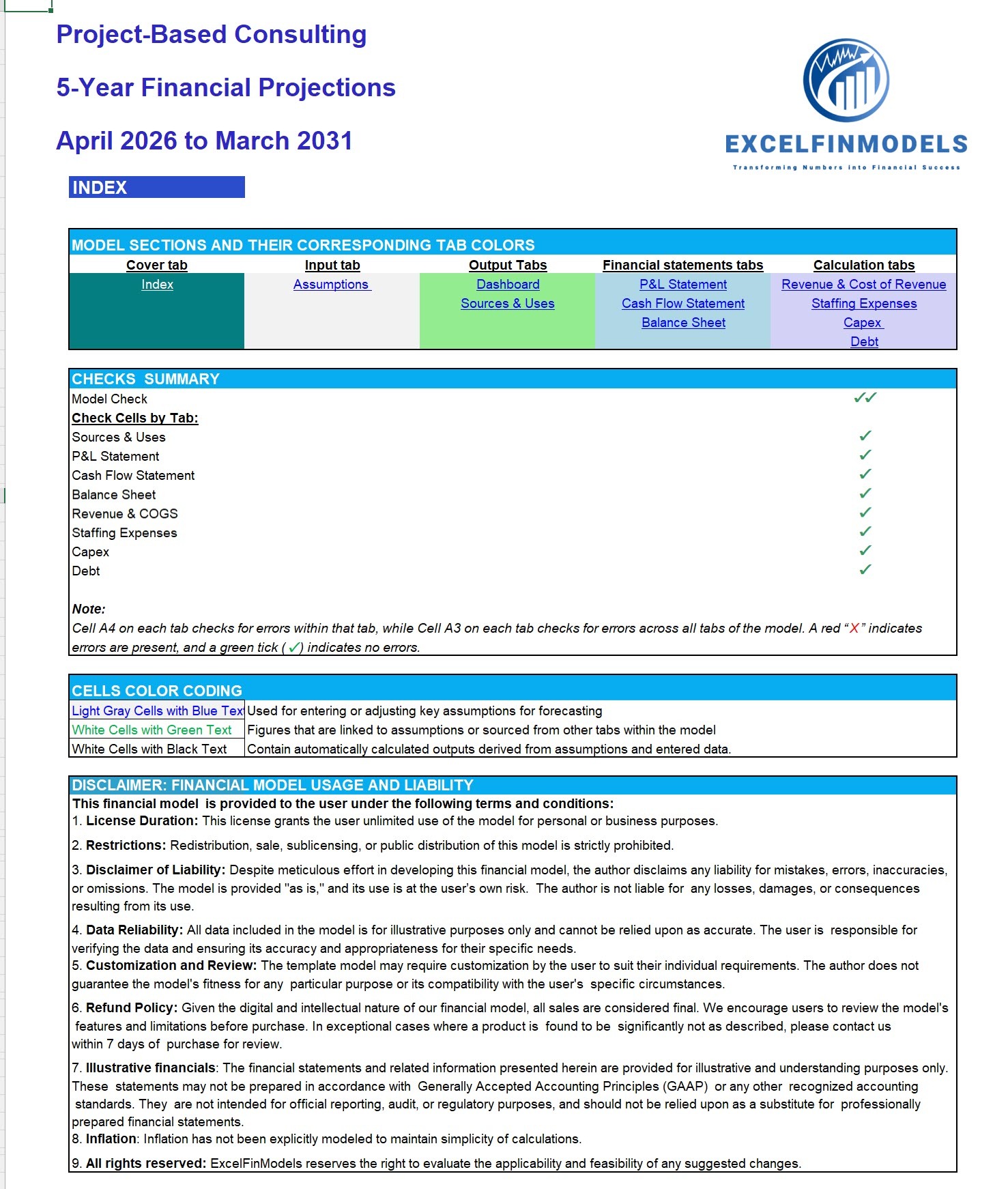
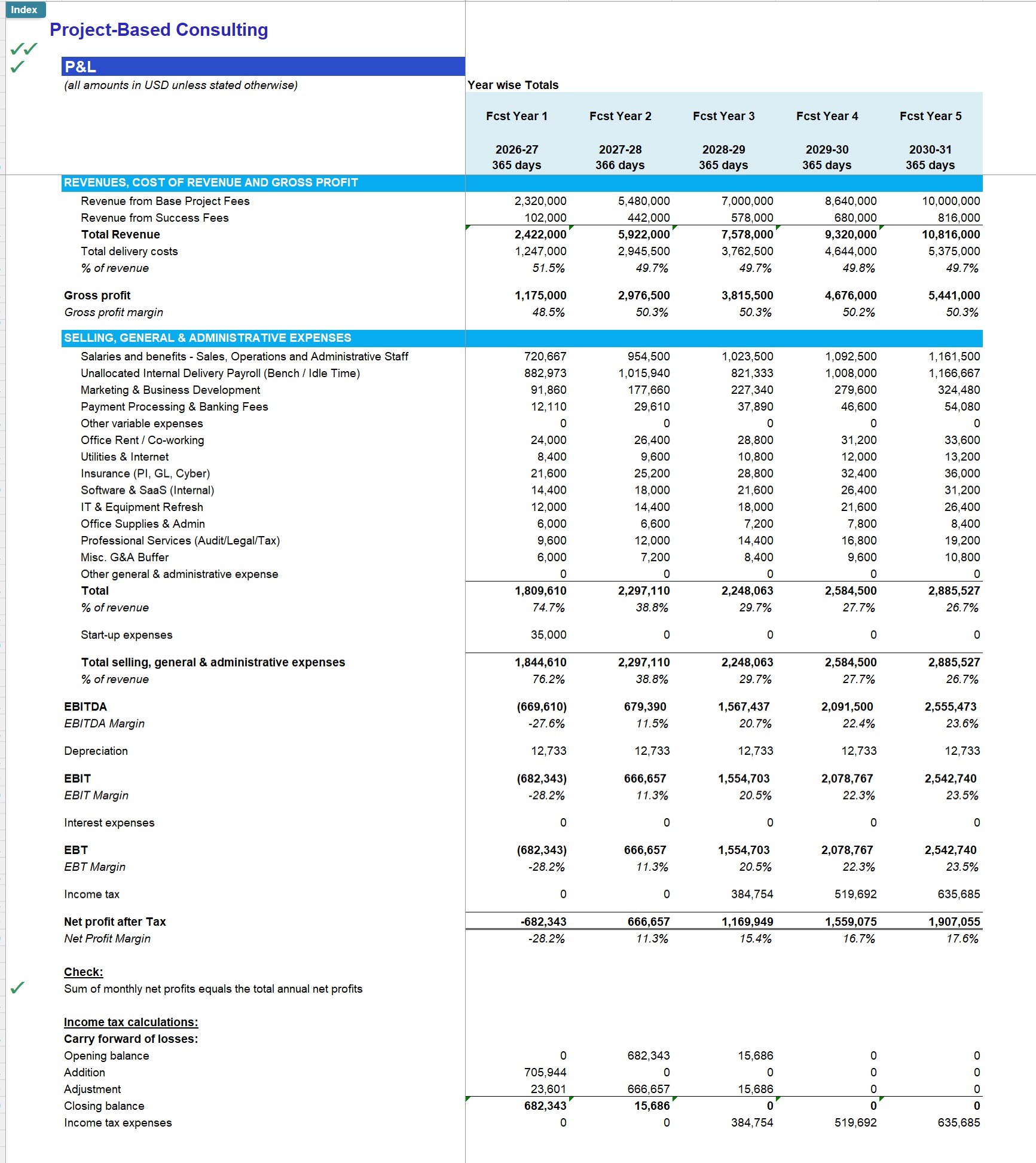
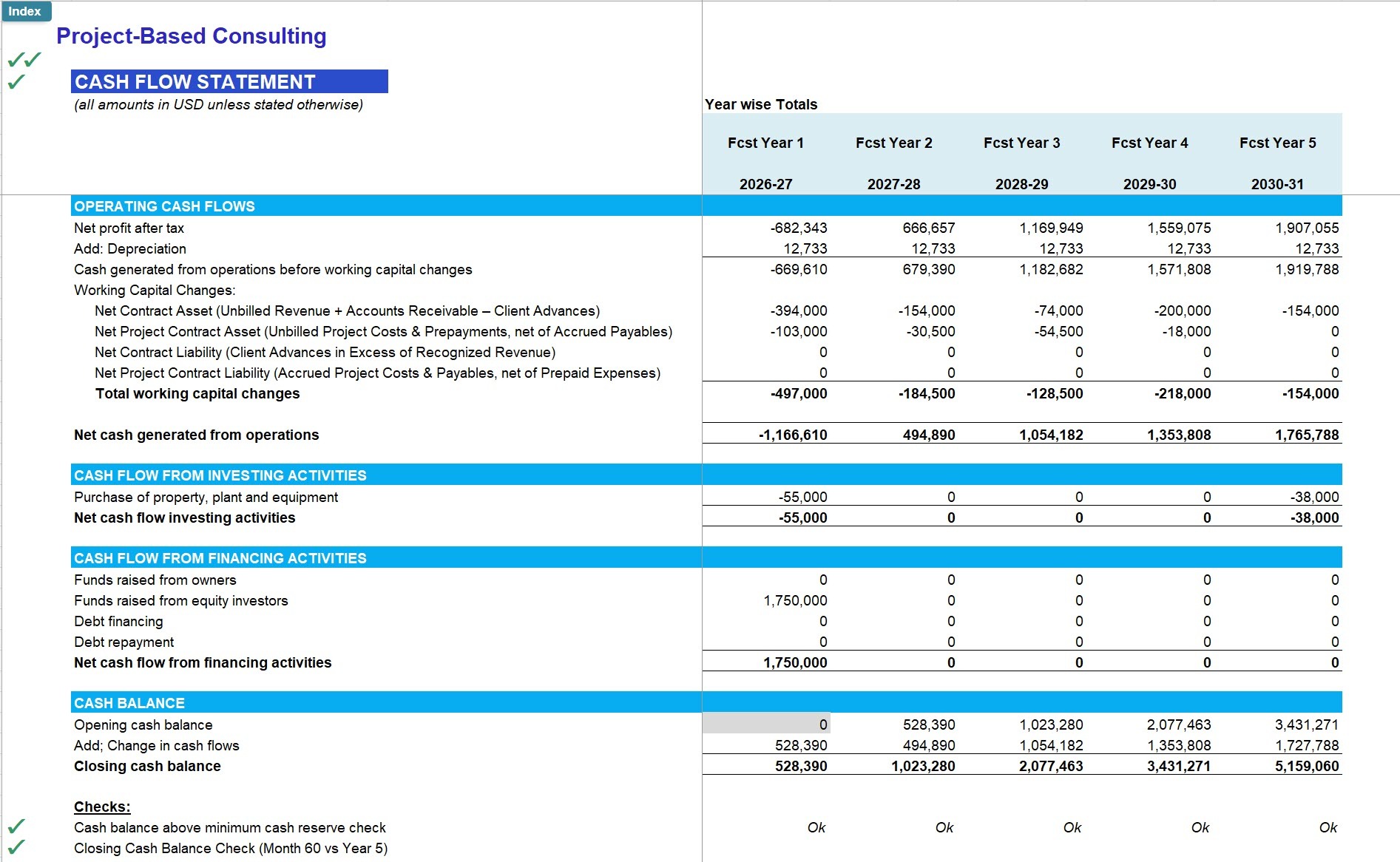
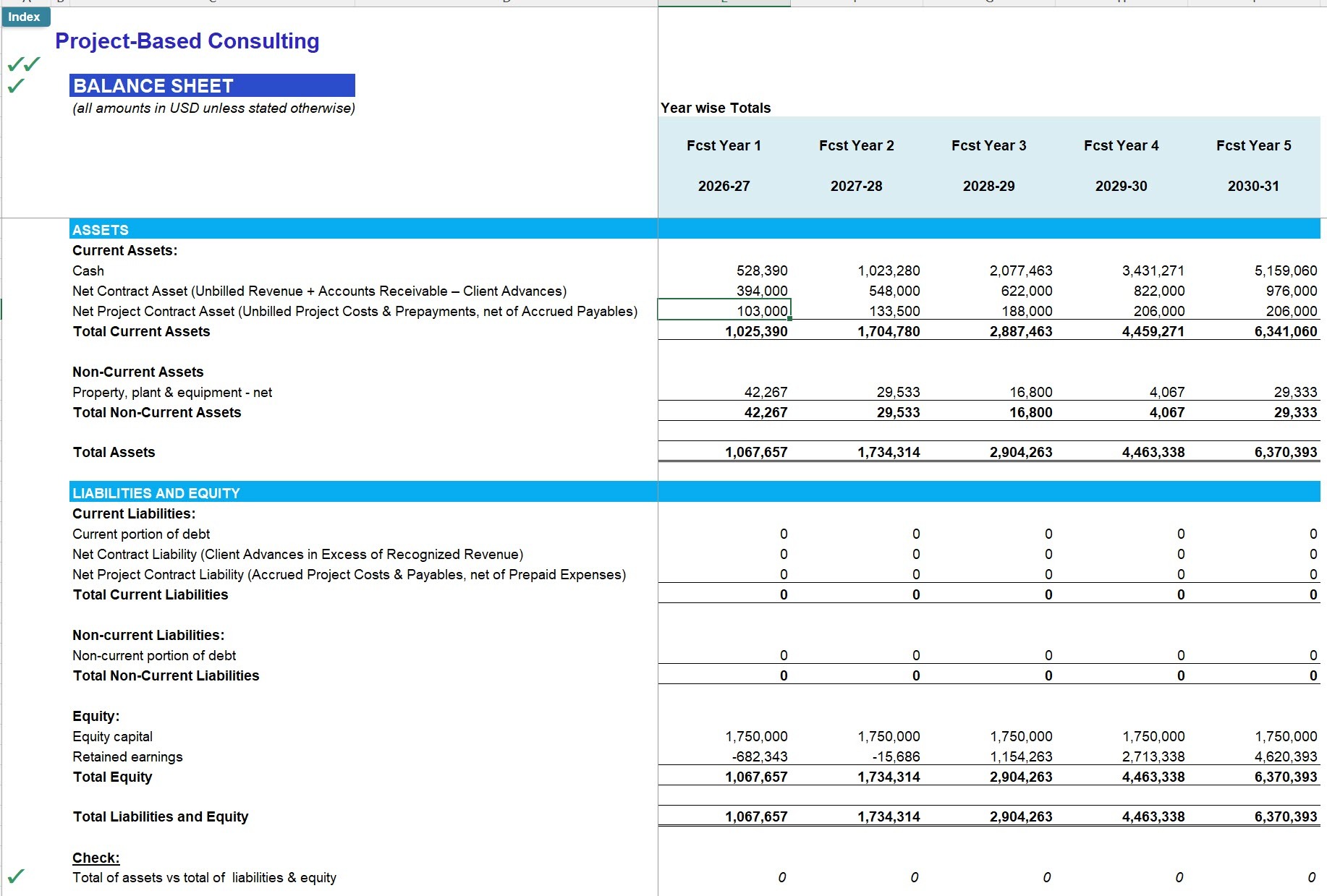
• 5-year (60-month) integrated forecast
• Profit & Loss Statement
• Balance Sheet
• Cash Flow Statement

Technical Features

• Fully transparent structure (no VBA / no macros)
• Circular-reference free
• Compatible with Excel 2021 or newer

This model is ideal for founders, CFOs, and financial advisors seeking a structured, investor-ready framework to evaluate growth, utilization efficiency, margin expansion, and capital requirements in a project-driven consulting business.

Note:
The model does not include recurring retainer revenue. Inflation has not been incorporated to maintain structural simplicity and transparency of calculations.

This Best Practice includes
1 Excel Sheet

Acquire business license for $159.00

Add to cart

Add to bookmarks

Discuss

Further information

This downloadable best-practice financial model is designed to help project-based consulting and professional services firms build structured, investor-ready financial forecasts with clarity and discipline. It enables accurate revenue recognition, cost projections, utilization tracking, and cash flow planning across a 5-year integrated proforma. The objective is to support informed decision-making, profitability optimization, and scalable growth.

This downloadable best practice applies best to project-based consulting, advisory, implementation, and other professional services firms that operate on milestone-driven contracts and variable utilization models. It is particularly suitable for startups and growing firms that require structured revenue forecasts, cost projections, and integrated proforma financial statements for internal planning, investor discussions, or lending purposes. The model is most effective where revenue recognition timing, bench capacity management, and cash flow visibility are critical to performance management.

This downloadable best practice is not ideally suited for product-based businesses, inventory-driven operations, manufacturing companies, or subscription/SaaS models with recurring revenue mechanics. It is also less applicable to firms with long-term fixed retainer contracts without milestone-based revenue recognition or utilization-driven cost structures.


0.0 / 5 (0 votes)

please wait...