

Publication number: ELQ-30951-1
View all versions & Certificate

Bitcoin Farm Model – Economics
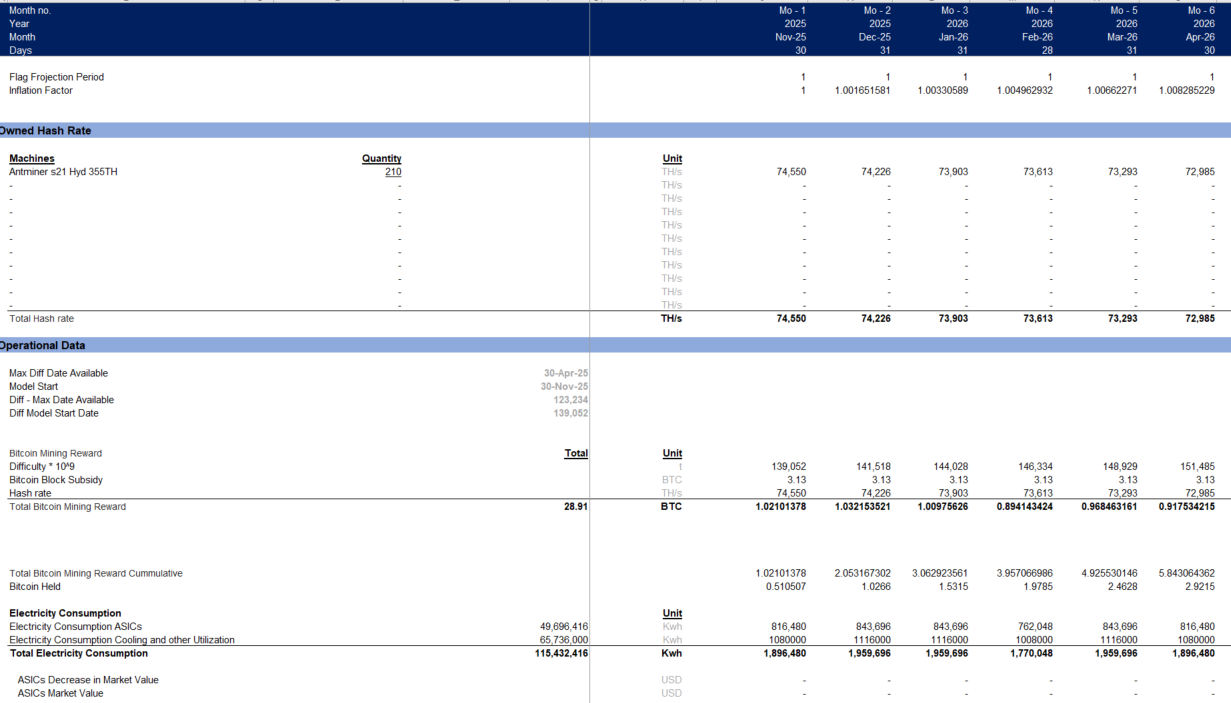
The primary purpose of this model is to assess the feasibility of a Bitcoin farm by taking into account key factors that affect the economics of mining Bitcoin.
The Bitcoin Farm Model – Economics
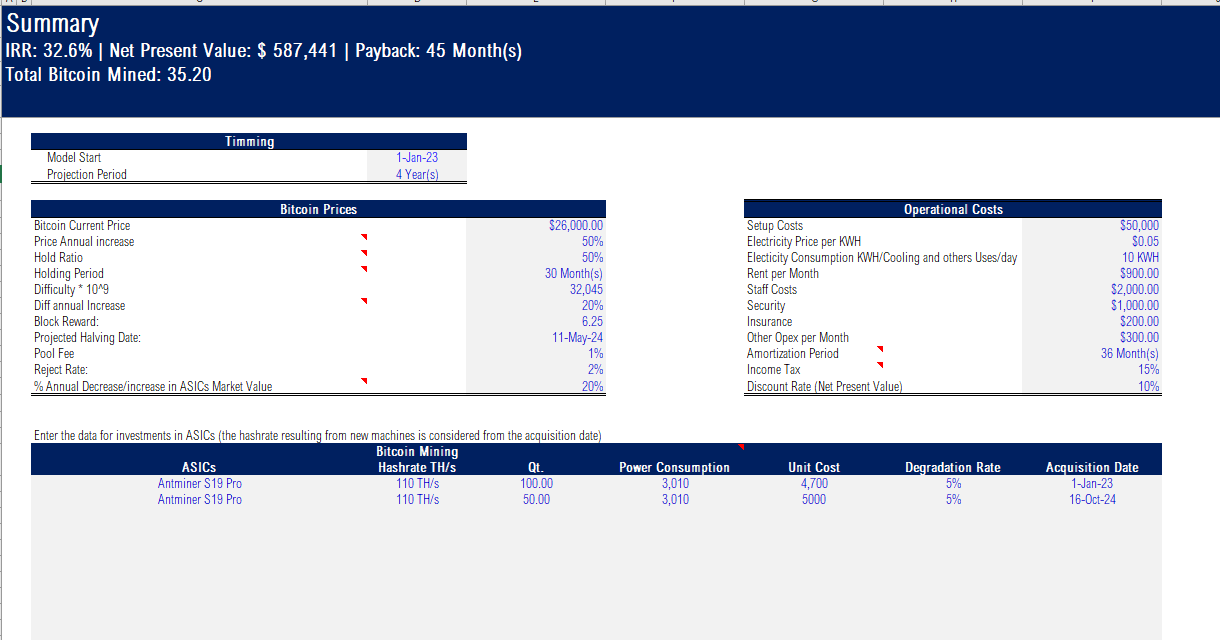
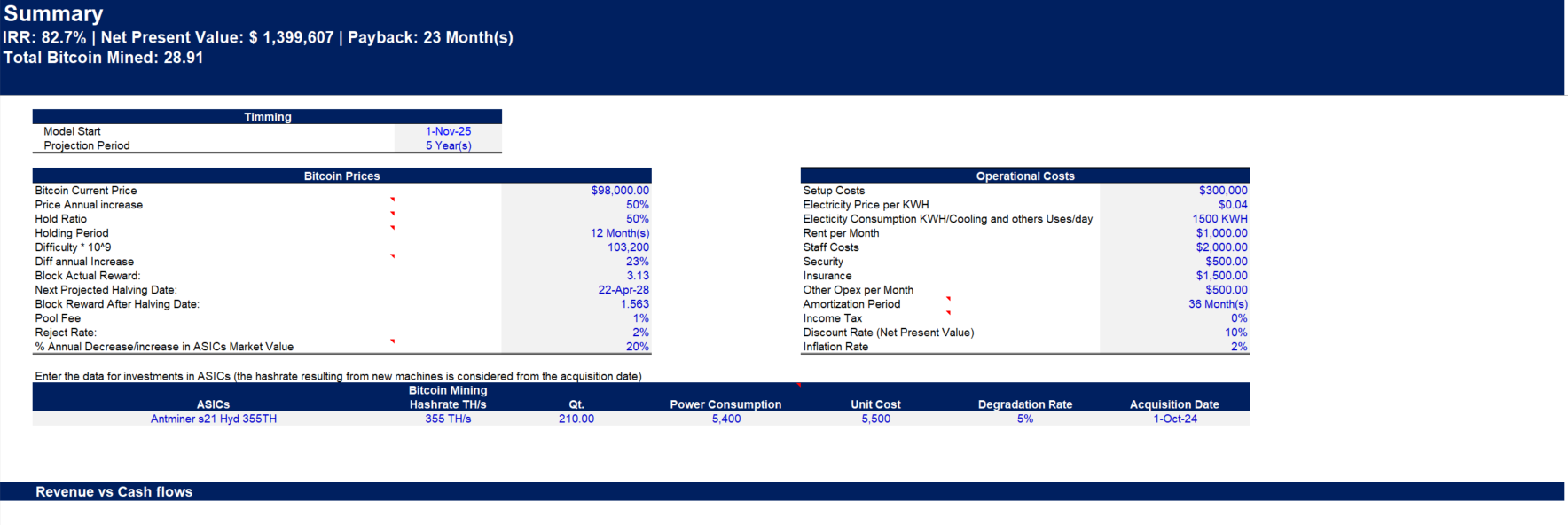
The primary purpose of this model is to assess the feasibility of a Bitcoin farm by taking into account key factors that affect the economics of mining Bitcoin, such as:
Bitcoin’s current price and price predictions
Mining difficulty and its growth
Mining pool fees
Electricity prices
ASIC prices and investment plans
Other operational expenses
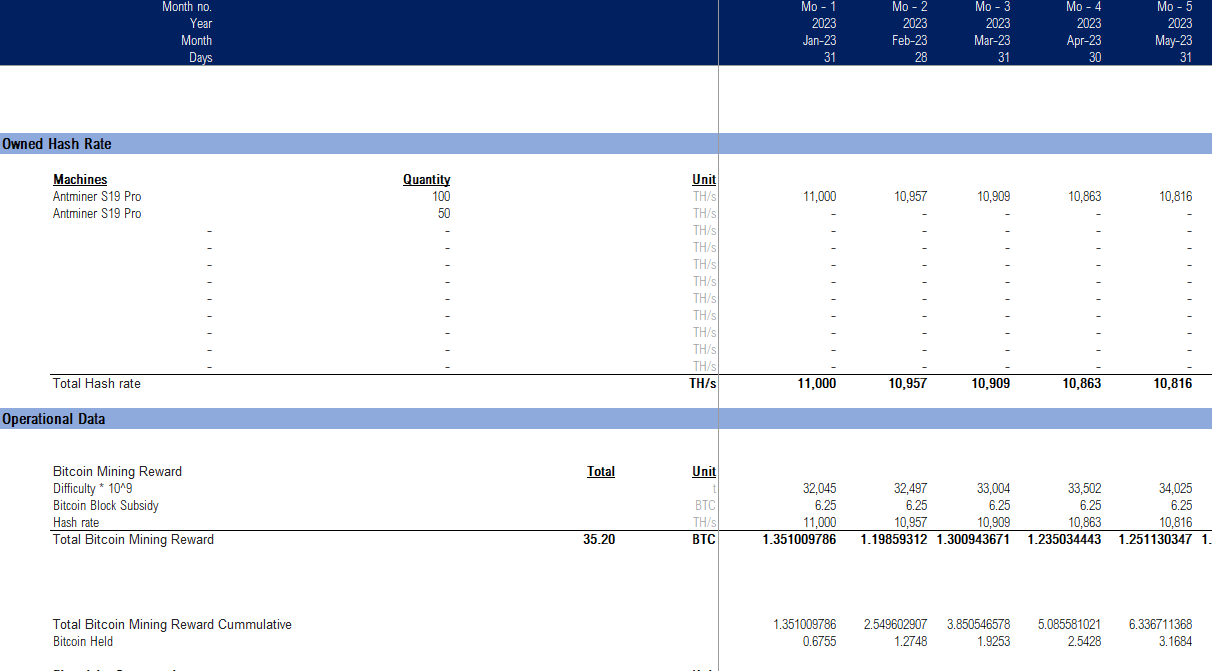
ASIC specifications (hash rate, electricity consumption, yearly degradation rate)
Projected halving dates
Bitcoin holding strategy
The model allows users to assess the mining project’s:
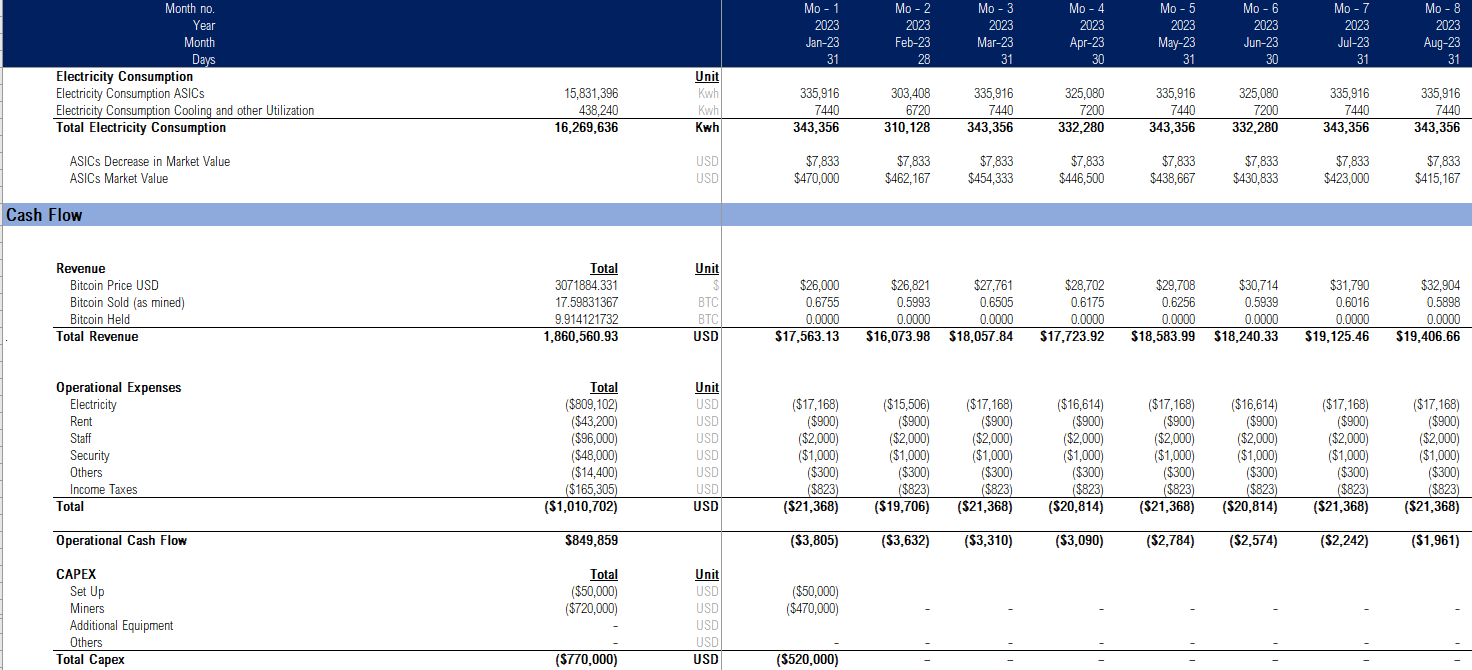
Required capital expenditures
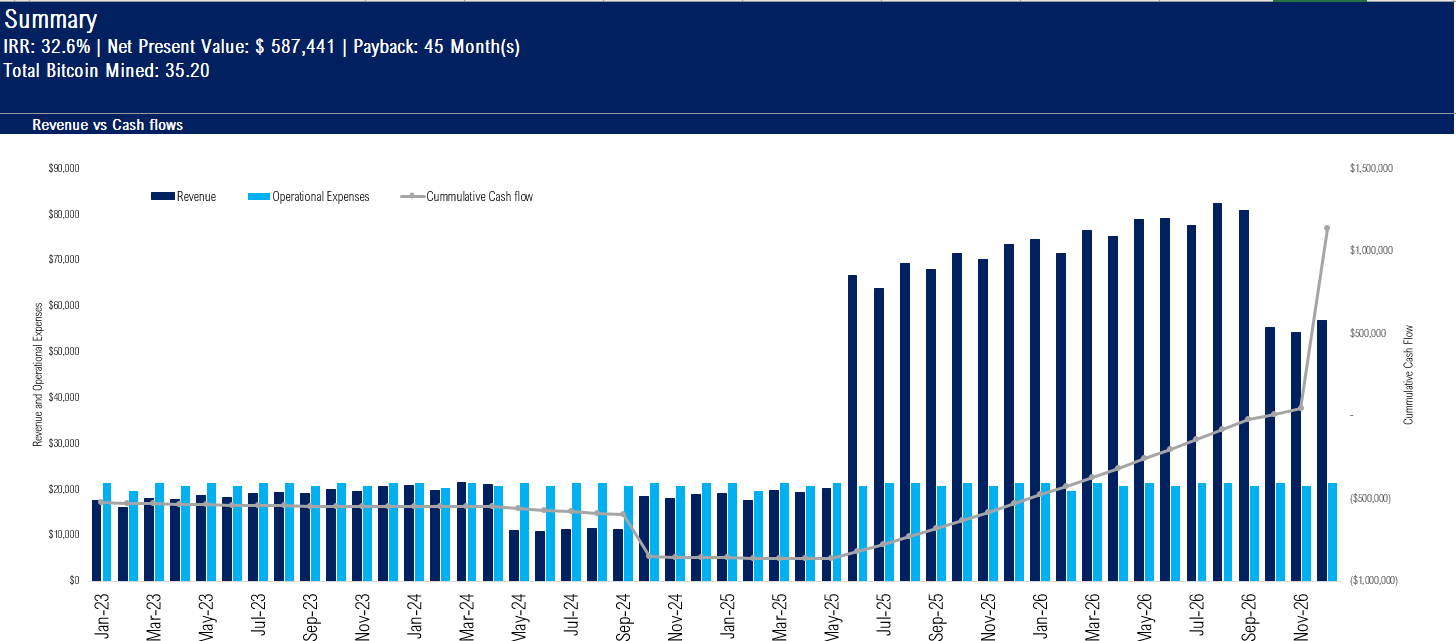
Farm revenue in BTC and USD
Operational expenditures (electricity, rent, salaries)
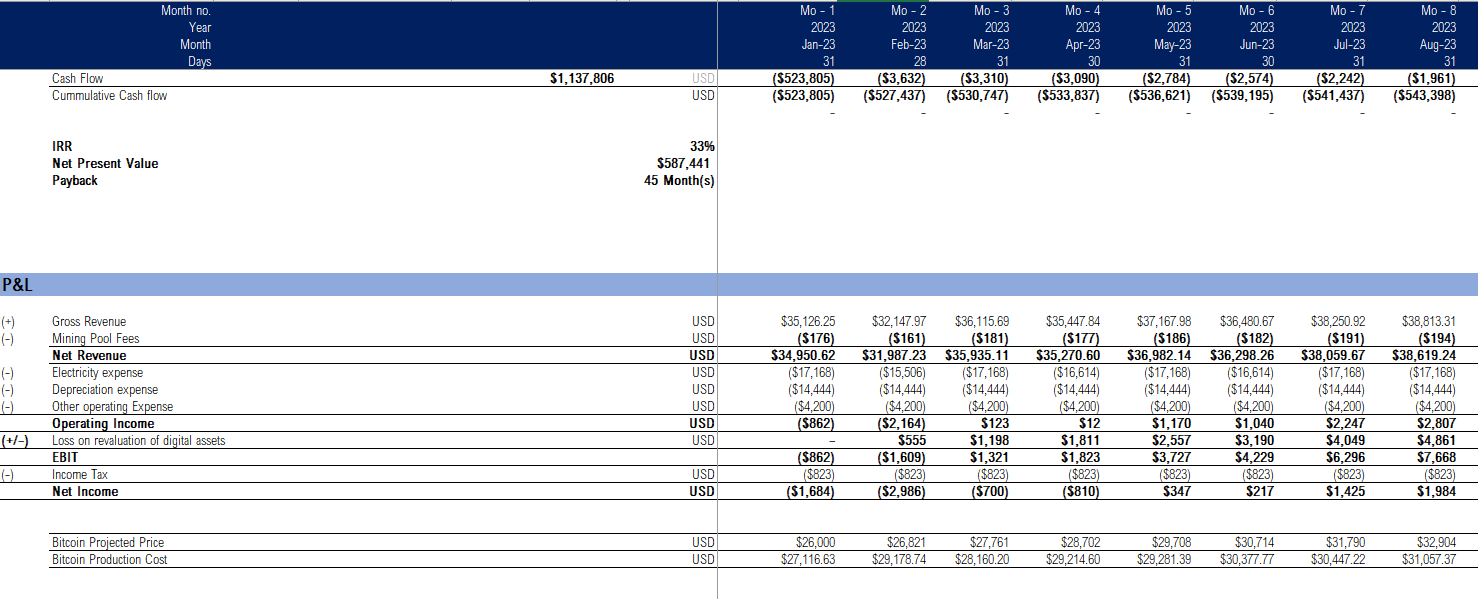
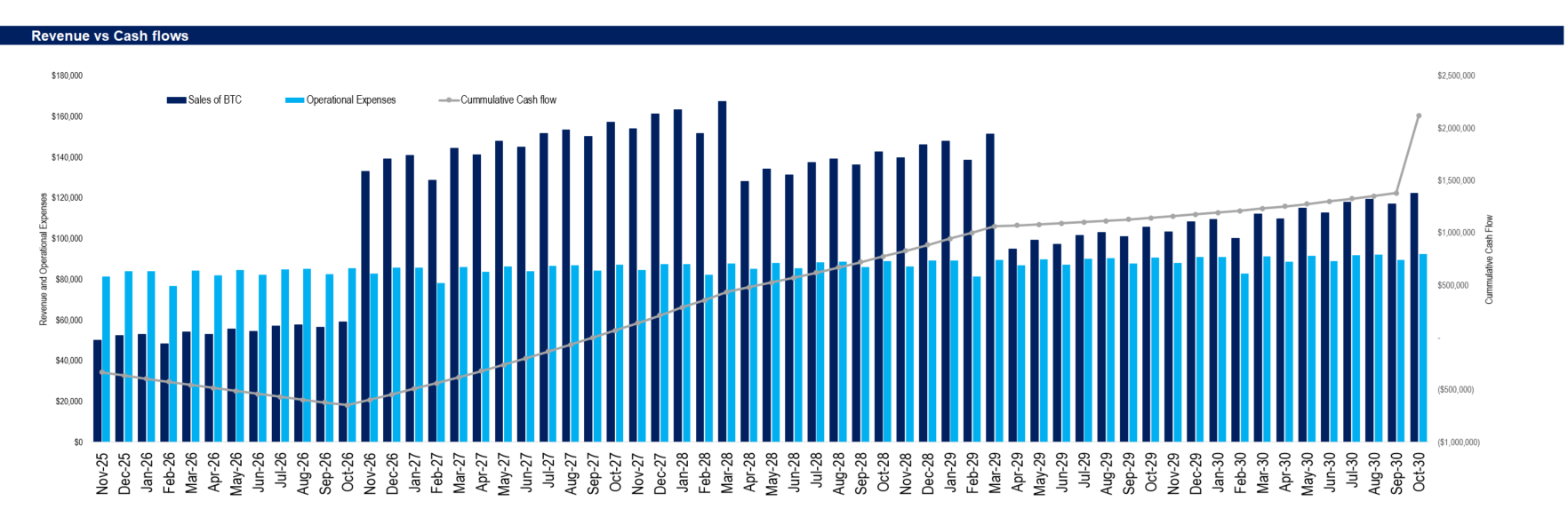
Net cash flow
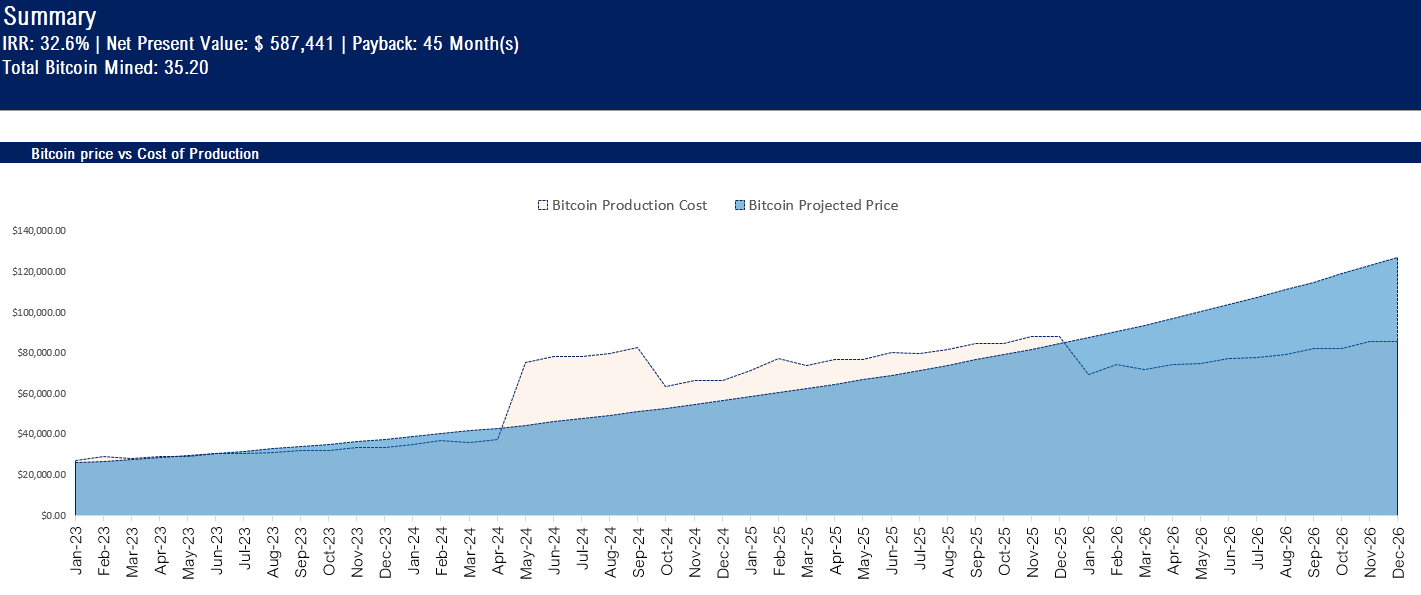
Payback period
Internal rate of return (IRR)
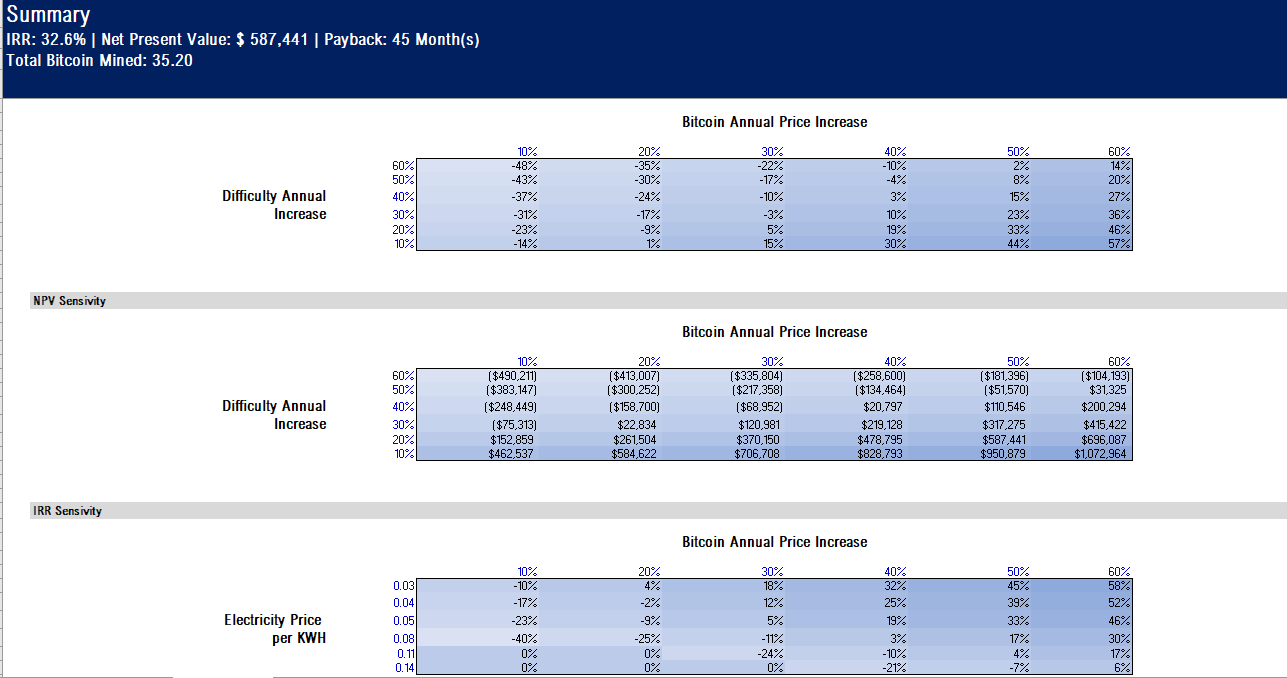
The model projects five years of cash flows and is structured into two main sheets: the Summary and the Calc Sheet. Users only need to input data into the cells formatted in dark blue in the Summary sheet. This sheet also functions as a dashboard, with charts and sensitivity tables that enable users to test multiple scenarios and instantly see the impact on key financial metrics.
In the Calc Sheet, no input is required unless users wish to make manual adjustments. As the name suggests, this sheet calculates the results based on the inputs provided in the Summary sheet.
Additionally, there are two more sheets: Mining Difficulty and Bitcoin Prices. The first pulls data from the web via Power Query (updated by pressing F5), while the latter contains historical Bitcoin prices since 2015. Users can extend this table by adding more data.
The inclusion of historical data enables users to backtest scenarios using real market conditions, as the model takes into account historical Bitcoin prices and mining difficulty (based on the model's start date).
An interesting feature is the Bitcoin holding strategy, which allows mined Bitcoin to be held rather than sold immediately. These holdings can be converted into fiat currency after a user-defined period. For cash flow purposes, the model assumes that all held Bitcoin is converted to fiat at the end of the projection period, and ASICs are sold at market value.
The model includes a simplified Profit and Loss (P&L) statement to assist with tax calculations (if applicable) and to provide a more accurate picture of mining costs.
Revenue is calculated by multiplying the number of bitcoins mined by the average monthly price. In the P&L, the value of held Bitcoin is marked to market using the price for the month being analyzed. However, in line with accounting practices used by some miners, unrealized gains from held Bitcoin are not considered revenue but are reflected below the operational profit line.
What Is Bitcoin Mining?
Bitcoin mining is the process by which new bitcoins are introduced into circulation. It is also how the network confirms recent transactions and is a critical part of maintaining and developing the blockchain ledger.
“Mining” is performed using sophisticated hardware to solve highly complex computational math problems. The first machine to solve the problem receives the next block reward in Bitcoin, and the process then restarts.
Key Takeaways:
Mining allows individuals to earn cryptocurrency without having to purchase it directly.
Bitcoin miners are rewarded with Bitcoin for completing blocks of verified transactions that are added to the blockchain.
Mining rewards are given to the miner who first solves a complex hashing puzzle. The likelihood of solving it depends on the share of total network mining power the miner contributes.
To set up a mining rig, you need a graphics processing unit (GPU) or an application-specific integrated circuit (ASIC).
This Best Practice includes
Excel Template
Further information
The primary purpose of this model is to assess the feasibility of a Bitcoin farm by taking into account key factors that affect the economics of mining Bitcoin