

-
+
122
more

Originally published: 01/07/2026 13:07
Publication number: ELQ-73978-1
View all versions & Certificate
Publication number: ELQ-73978-1
View all versions & Certificate

THE AI FINANCIAL MODELLER - A Best Practice Guide to Building Spreadsheet Models with AI
A Best Practice Guide to Building Spreadsheet Models with AI
financial modellingthree financial statementscloude aiclaude in excelai-modellingmicroosft excelprompt engineeringfinancestartupdcf model
Description
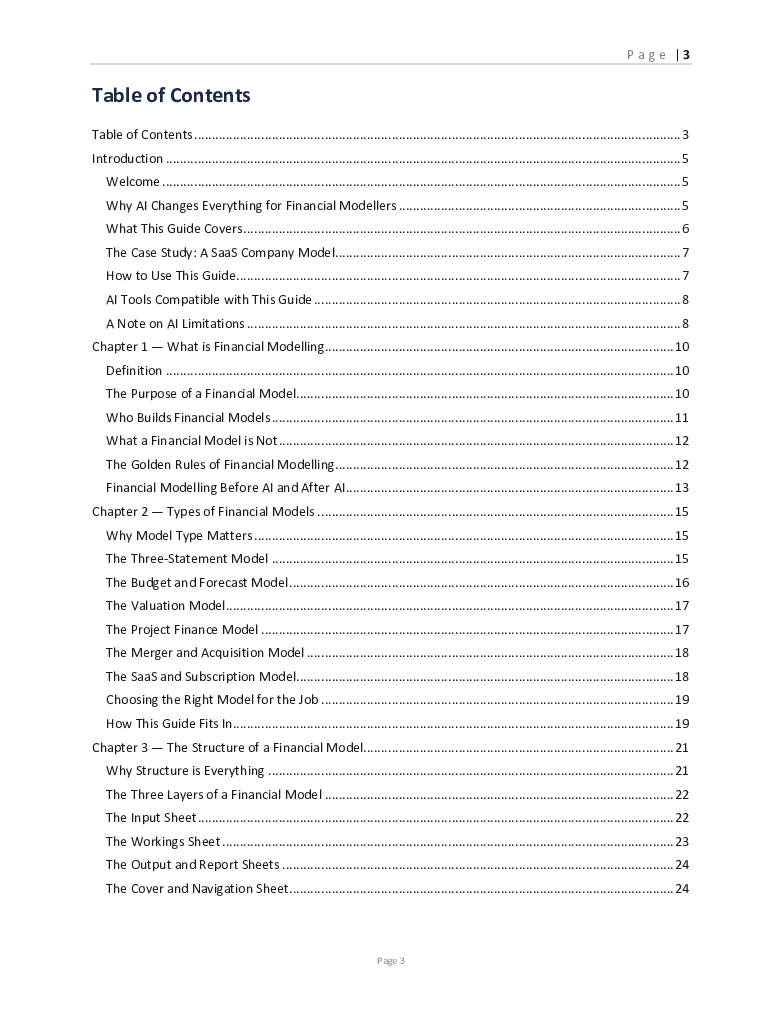
This guide takes you through the complete process of building a financial model with AI assistance, from first principles to a finished, professional output. Here is how the chapters are organised:
Chapter 1 — What is Financial Modelling introduces the discipline, its purpose, and its role in business decision-making. If you are new to financial modelling, this chapter gives you the foundation. If you are experienced, it will sharpen how you think about what a model is actually trying to do.
Chapter 2 — Types of Financial Models walks through the most common financial model types used in practice — from three-statement models and valuations to project finance and budget models — so you understand the landscape before narrowing in on the build process.
Chapter 3 — The Structure of a Financial Model covers how a well-built spreadsheet model should be organised — its sheets, its layers, and the logic that holds it together. Understanding structure is what separates a professional model from a spreadsheet that happens to have numbers in it.
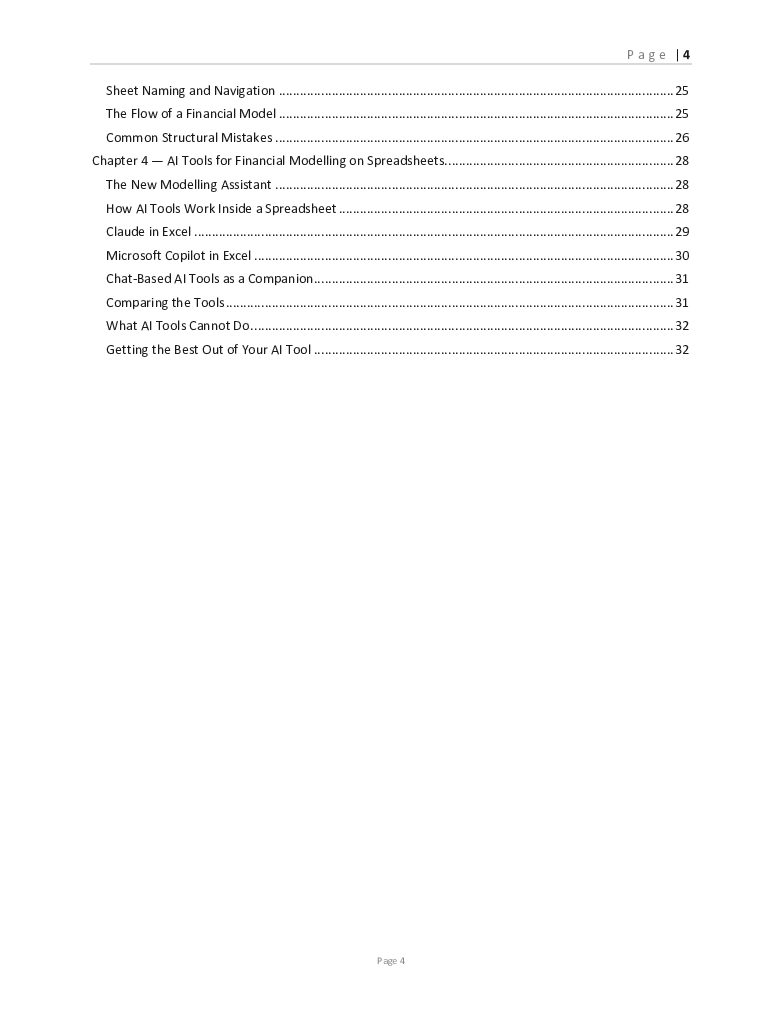
Chapter 4 — AI Tools for Financial Modelling on Spreadsheets introduces the AI tools available to modellers today, with a focus on those that work directly inside your spreadsheet. This chapter helps you choose the right tool and understand what each one is capable of.
Chapter 5 — Model Instructions and Preferences to AI covers one of the most important and often overlooked steps in AI-assisted modelling — briefing your AI properly before a single cell is built. This chapter shows you how to set formatting standards, structural preferences, naming conventions, and professional guidelines that will govern the entire model build.
Chapter 6 — Building the Input Sheet with AI is where the hands-on build begins. You will learn how to instruct AI to construct a clean, well-organised input sheet — the foundation on which the rest of the model sits.
Chapter 7 — Building the Workings Sheet with AI takes you through the calculation engine of the model, section by section, using a step-by-step prompting approach that builds, checks, and validates as it goes.
Chapter 8 — Building Reports and Summaries with AI covers the output layer — the Income Statement, Balance Sheet, Cash Flow Statement, and KPI dashboard that turn your calculations into decisions.
Chapter 9 — Strategies to Optimise the Use of AI for Financial Modelling steps back from the build process to share broader principles for working effectively with AI over time — how to prompt better, how to handle errors, and how to continue improving your AI-assisted workflow.
Chapter 10 — Confidentiality and Data Privacy in AI-Assisted Financial Modelling addresses one of the most important professional responsibilities when using AI — understanding what data you should and should not share, and how to protect client and company information.
Conclusion — Where AI and Financial Modelling is Headed Next closes the guide with a look at where this technology is going and what it means for the financial modelling profession.
This guide takes you through the complete process of building a financial model with AI assistance, from first principles to a finished, professional output. Here is how the chapters are organised:
Chapter 1 — What is Financial Modelling introduces the discipline, its purpose, and its role in business decision-making. If you are new to financial modelling, this chapter gives you the foundation. If you are experienced, it will sharpen how you think about what a model is actually trying to do.
Chapter 2 — Types of Financial Models walks through the most common financial model types used in practice — from three-statement models and valuations to project finance and budget models — so you understand the landscape before narrowing in on the build process.
Chapter 3 — The Structure of a Financial Model covers how a well-built spreadsheet model should be organised — its sheets, its layers, and the logic that holds it together. Understanding structure is what separates a professional model from a spreadsheet that happens to have numbers in it.
Chapter 4 — AI Tools for Financial Modelling on Spreadsheets introduces the AI tools available to modellers today, with a focus on those that work directly inside your spreadsheet. This chapter helps you choose the right tool and understand what each one is capable of.
Chapter 5 — Model Instructions and Preferences to AI covers one of the most important and often overlooked steps in AI-assisted modelling — briefing your AI properly before a single cell is built. This chapter shows you how to set formatting standards, structural preferences, naming conventions, and professional guidelines that will govern the entire model build.
Chapter 6 — Building the Input Sheet with AI is where the hands-on build begins. You will learn how to instruct AI to construct a clean, well-organised input sheet — the foundation on which the rest of the model sits.
Chapter 7 — Building the Workings Sheet with AI takes you through the calculation engine of the model, section by section, using a step-by-step prompting approach that builds, checks, and validates as it goes.
Chapter 8 — Building Reports and Summaries with AI covers the output layer — the Income Statement, Balance Sheet, Cash Flow Statement, and KPI dashboard that turn your calculations into decisions.
Chapter 9 — Strategies to Optimise the Use of AI for Financial Modelling steps back from the build process to share broader principles for working effectively with AI over time — how to prompt better, how to handle errors, and how to continue improving your AI-assisted workflow.
Chapter 10 — Confidentiality and Data Privacy in AI-Assisted Financial Modelling addresses one of the most important professional responsibilities when using AI — understanding what data you should and should not share, and how to protect client and company information.
Conclusion — Where AI and Financial Modelling is Headed Next closes the guide with a look at where this technology is going and what it means for the financial modelling profession.
This Best Practice includes
1 PDF Document