SAAS start up financial model
Originally published: 30/04/2026 18:15
Publication number: ELQ-48909-1
View all versions & Certificate
certified

SAAS start up financial model

A 36-month SaaS startup financial model with cohort-based subscriber projections, monthly P&L, cash flow and runway tracking, multi-round cap table.

Description
A comprehensive 36-month financial model designed specifically for early-stage SaaS startups navigating the journey from pre-revenue through to Series A and beyond. This template gives founders, CFOs, and financial advisors everything needed to build a credible financial plan, model fundraising outcomes, and present to investors with confidence.

The model is built around a cohort-based subscriber engine that tracks new customer acquisition, monthly churn, and expansion upgrades across all 36 months — delivering a realistic MRR and ARR trajectory rather than relying on top-down guesswork. Revenue is calculated from a blended ARPU derived from three pricing tiers (Starter, Pro, and Enterprise) with configurable plan mix percentages, giving founders the flexibility to model pricing strategy changes and their impact on unit economics.

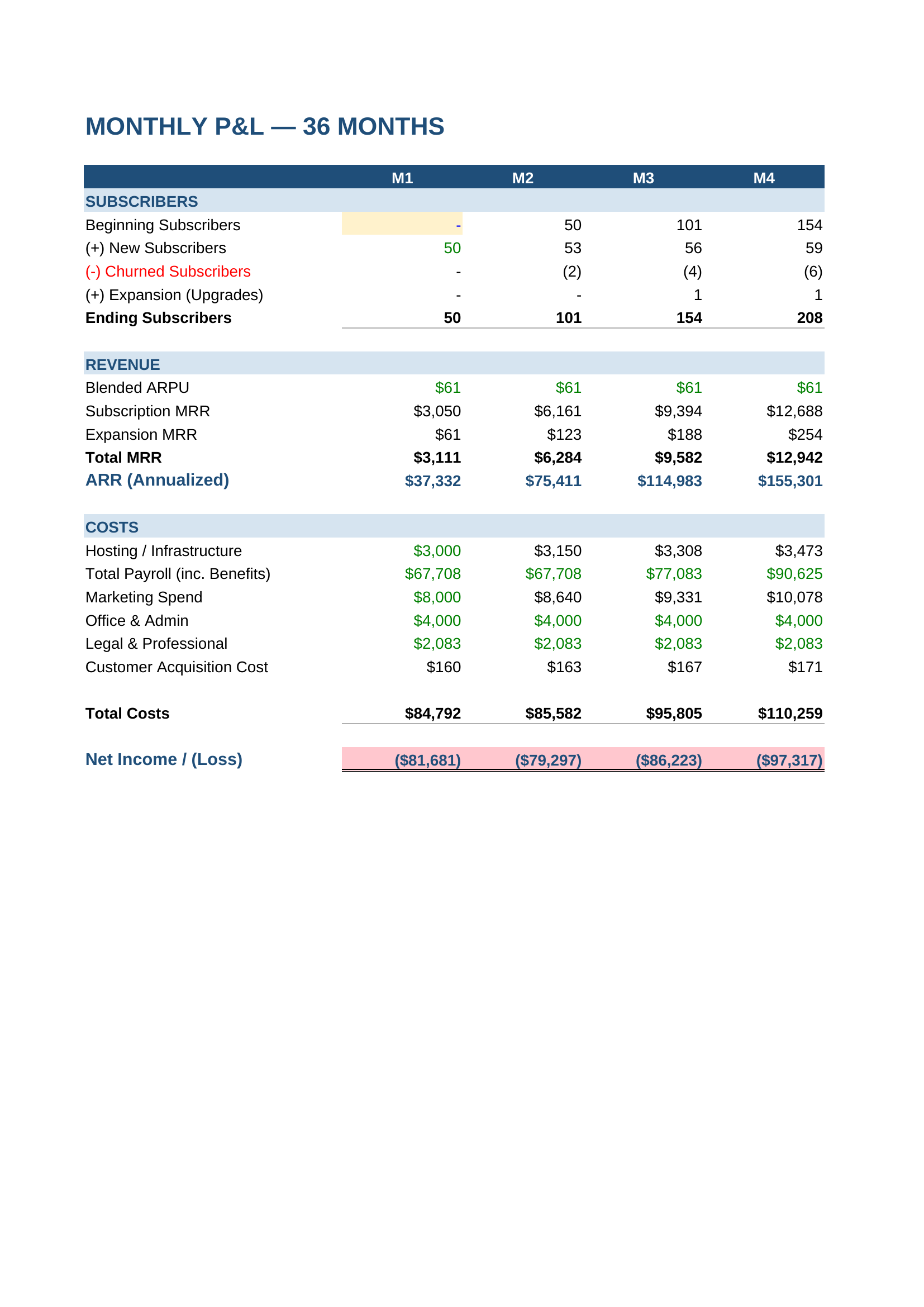
The monthly P&L spans 36 months with annual summaries, covering subscription revenue, expansion MRR, hosting and infrastructure costs (with monthly escalation), a fully detailed payroll model linked to a month-by-month hiring plan across four departments (Engineering, Sales, Customer Success, and G&A), marketing spend with configurable growth rates, and overheads. Net income is conditionally formatted — loss months highlight red, profitable months highlight green — so founders can instantly see when the business crosses the breakeven threshold.

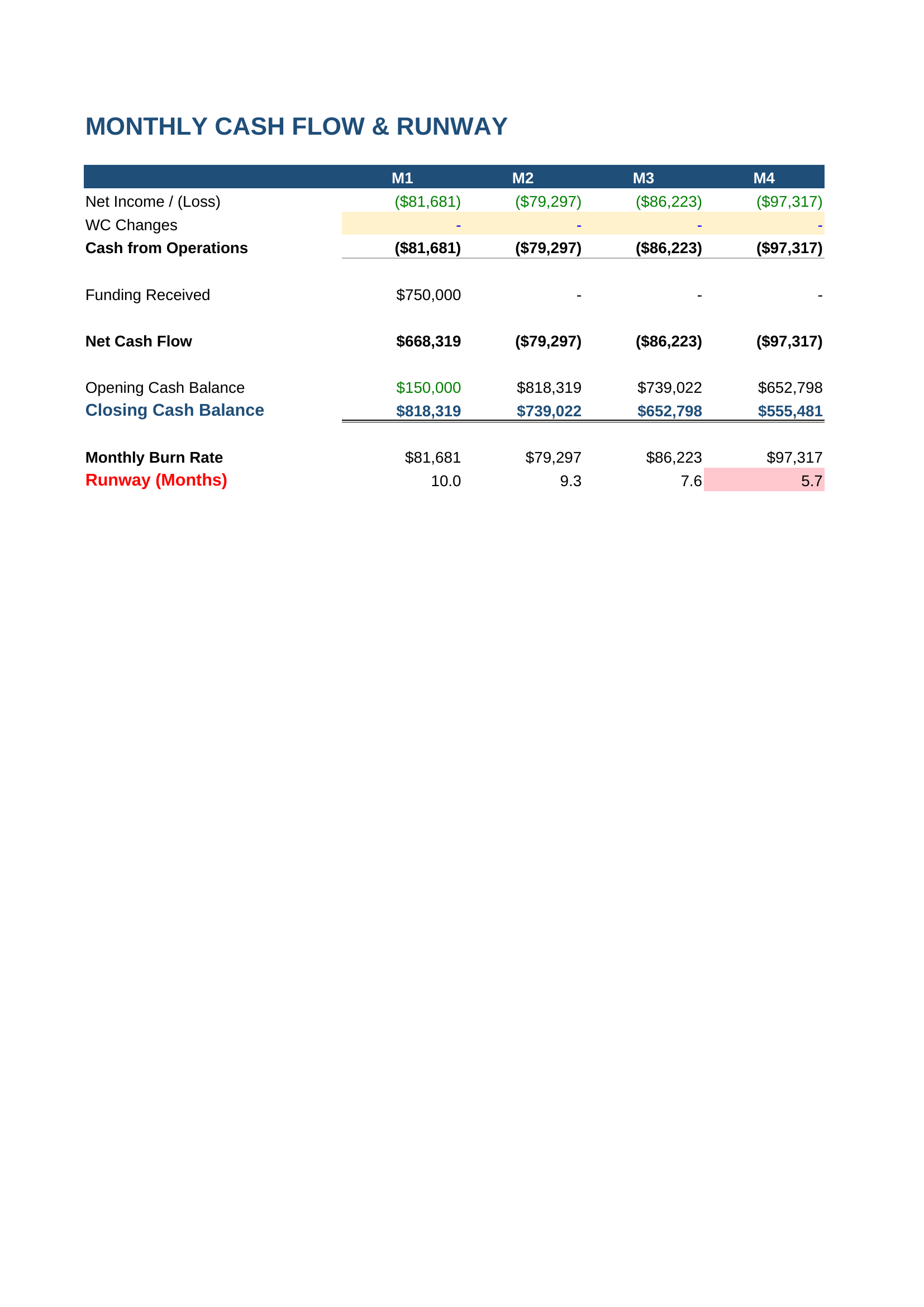
The cash flow and runway tab models monthly burn rate, funding inflows (with configurable close month for each round), opening and closing cash balances, and a dynamic runway calculation that flags when cash drops below 6 months (red) or exceeds 12 months (green). Funding rounds hit the cash flow in the exact month specified in assumptions, so founders can model the timing impact of delayed closes.

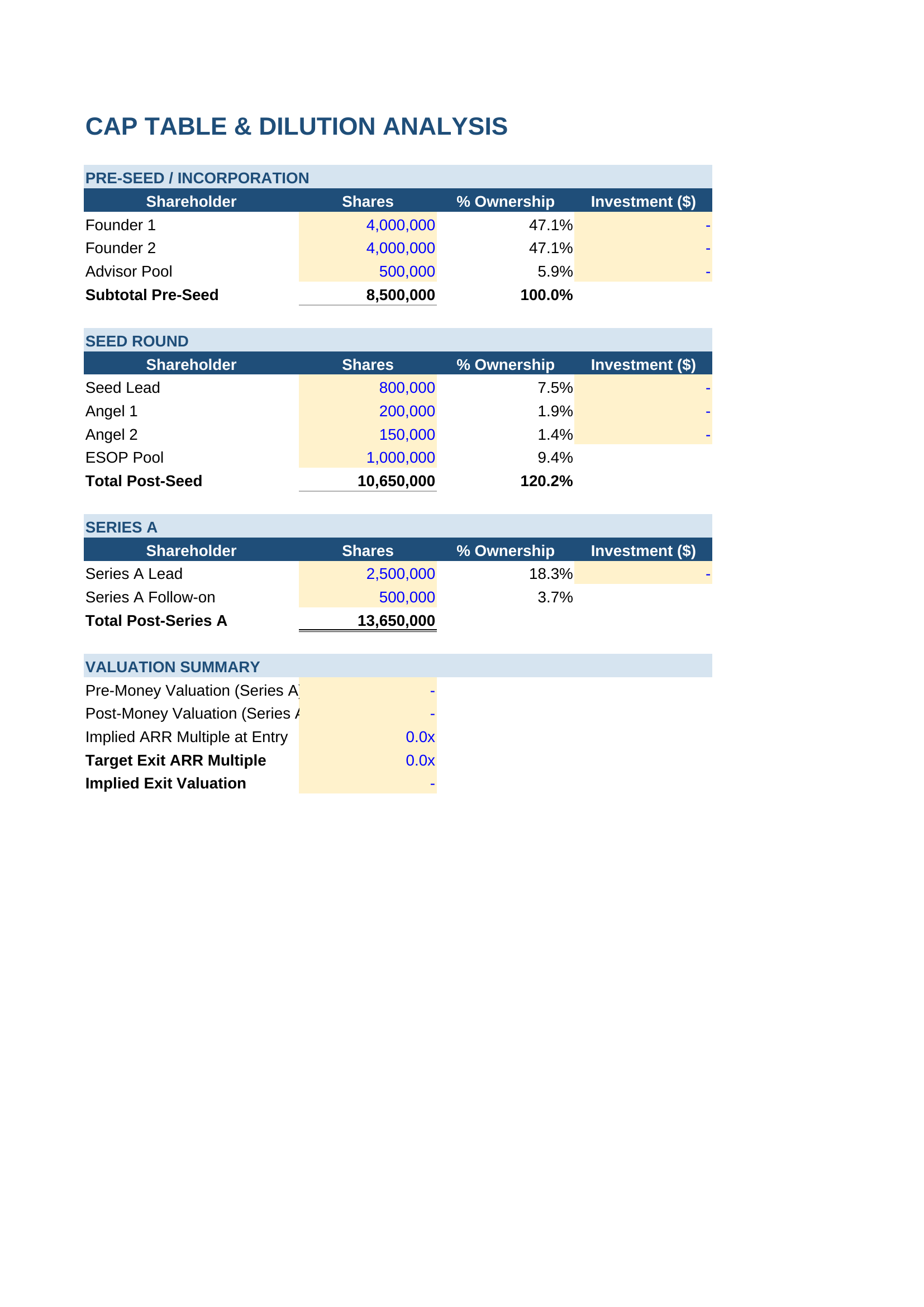
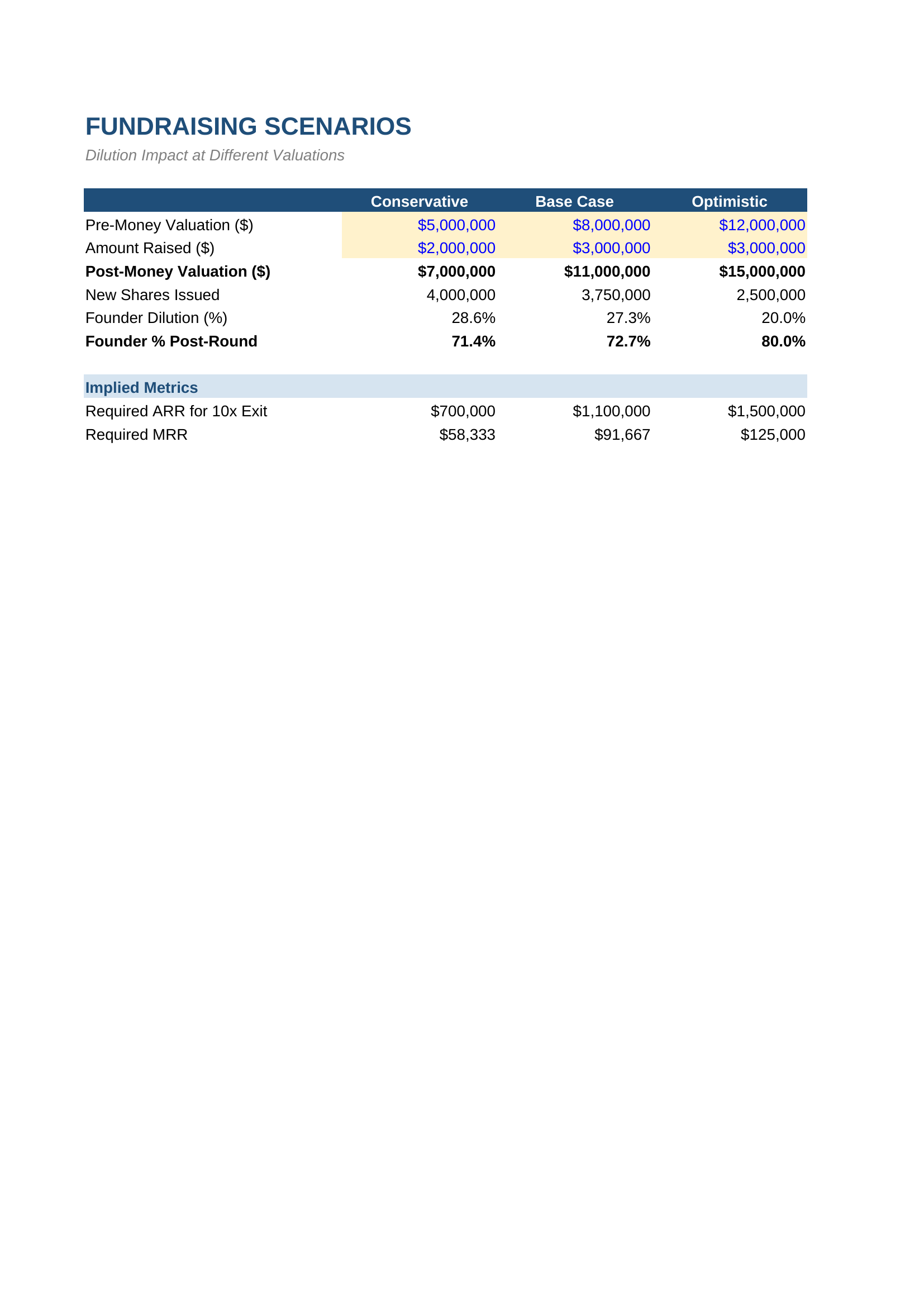
The cap table models three rounds (pre-seed/founders, seed, and Series A) with individual shareholder detail, share counts, ownership percentages, investment amounts, and liquidation preference fields. A dedicated fundraising scenarios tab lets founders model three valuation scenarios (conservative, base, and optimistic) side by side, showing dilution impact, post-money valuation, founder ownership post-round, and the implied ARR required to justify each valuation at exit.

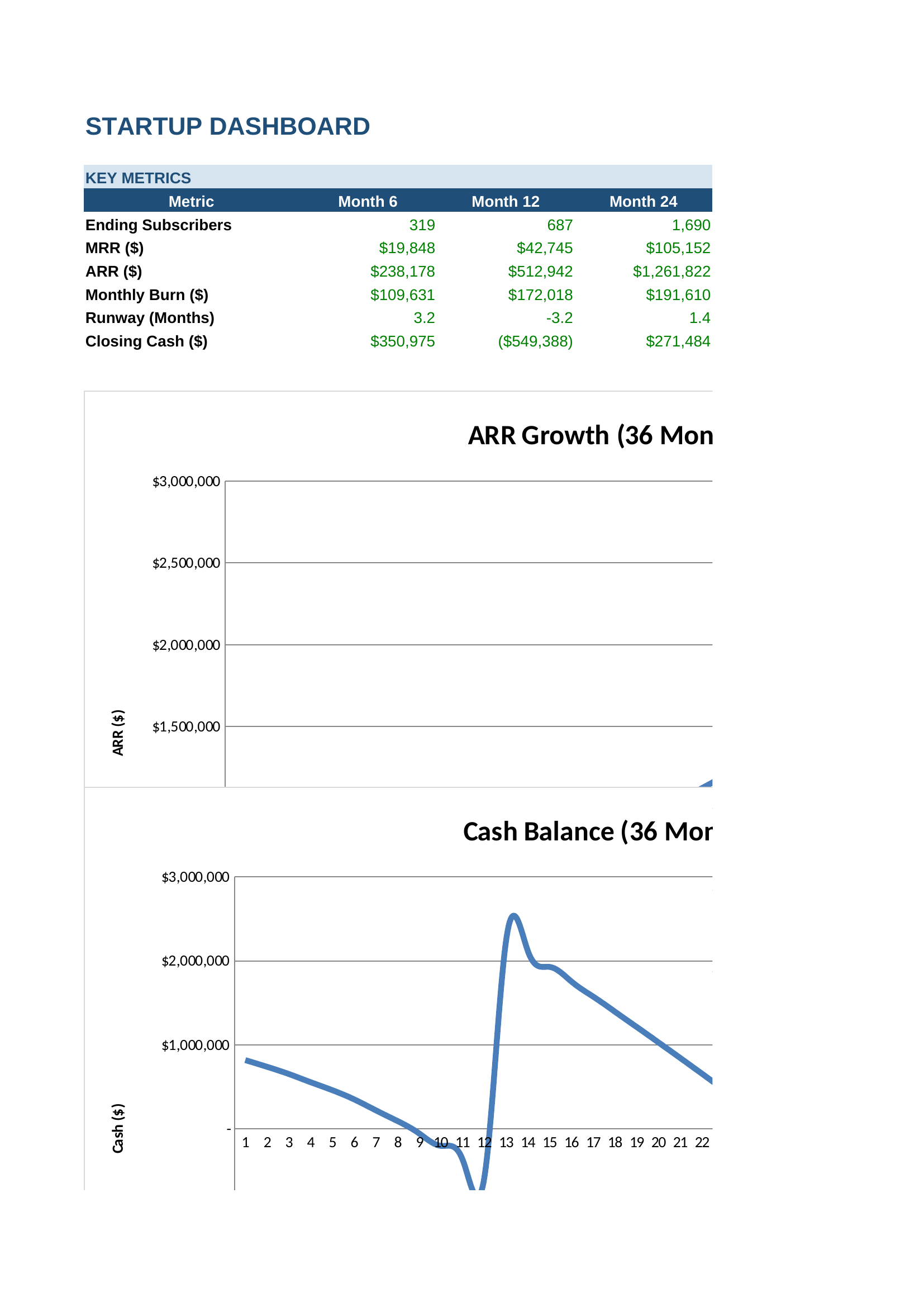
The dashboard pulls key metrics at months 6, 12, 24, and 36 — including ending subscribers, MRR, ARR, monthly burn, runway, and closing cash — alongside an ARR growth chart and cash balance trend chart, ready for investor decks and board presentations.

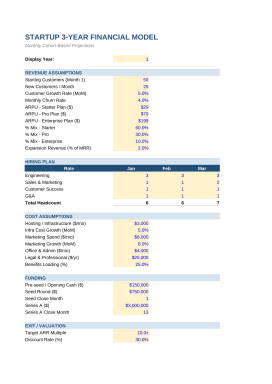
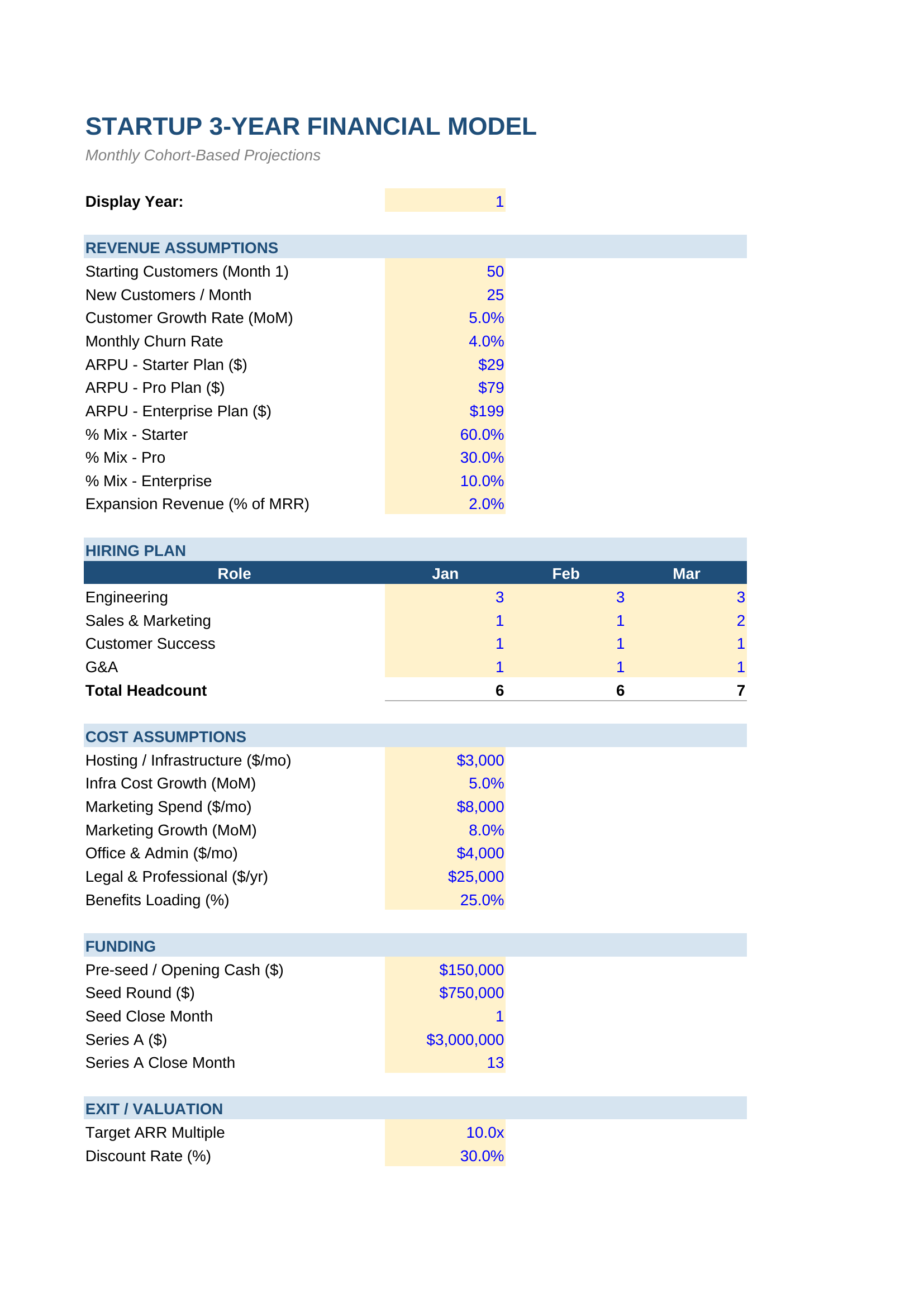
All assumptions are centralised on a single input tab covering revenue drivers (starting customers, growth rate, churn, ARPU by plan, expansion rate), a month-by-month hiring plan with configurable headcount per department, cost assumptions with growth escalators, funding amounts and timing, and exit valuation parameters. Every formula is dynamically linked — change one assumption and the entire 36-month forecast, cash flow, cap table, and dashboard update instantly.

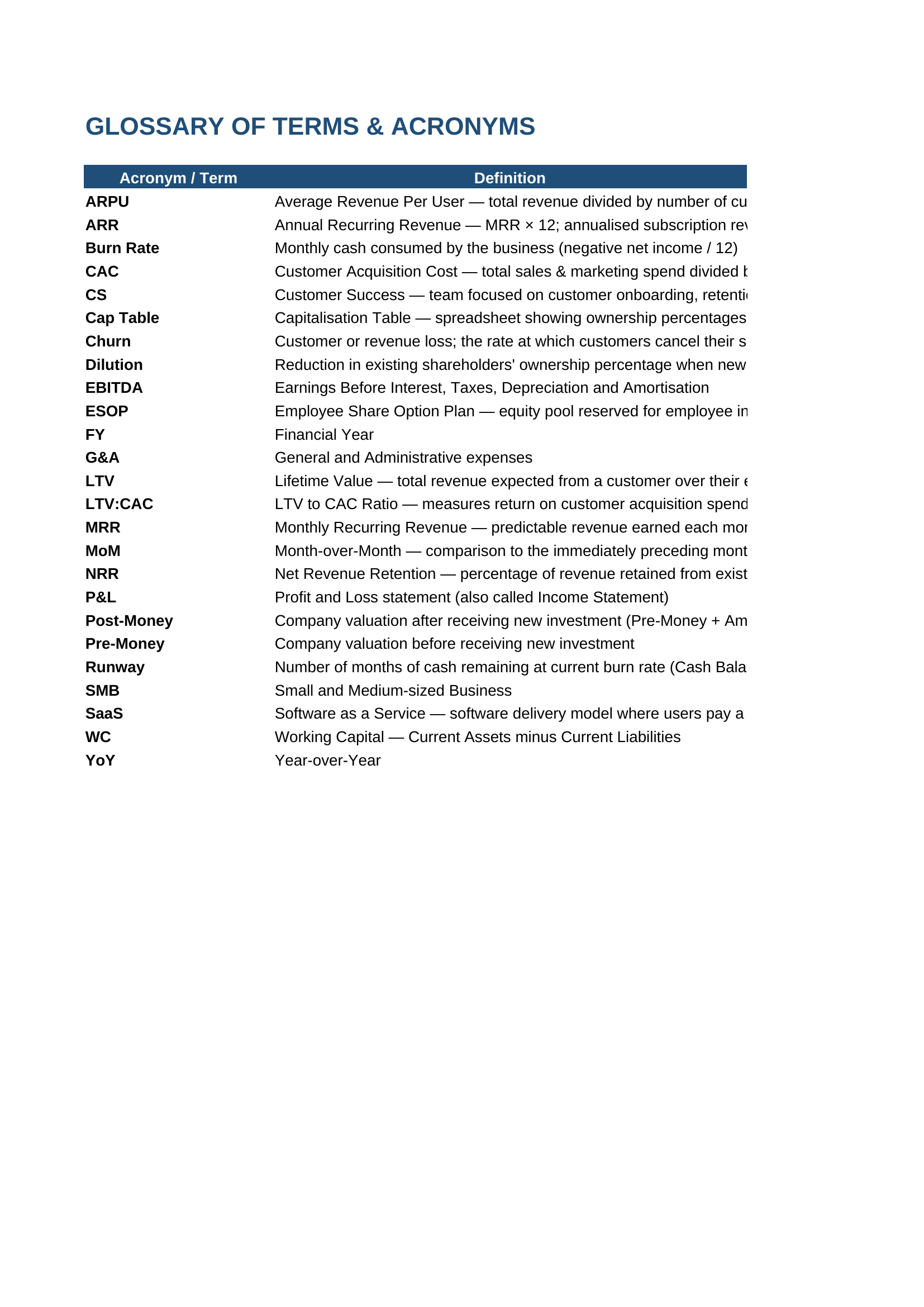
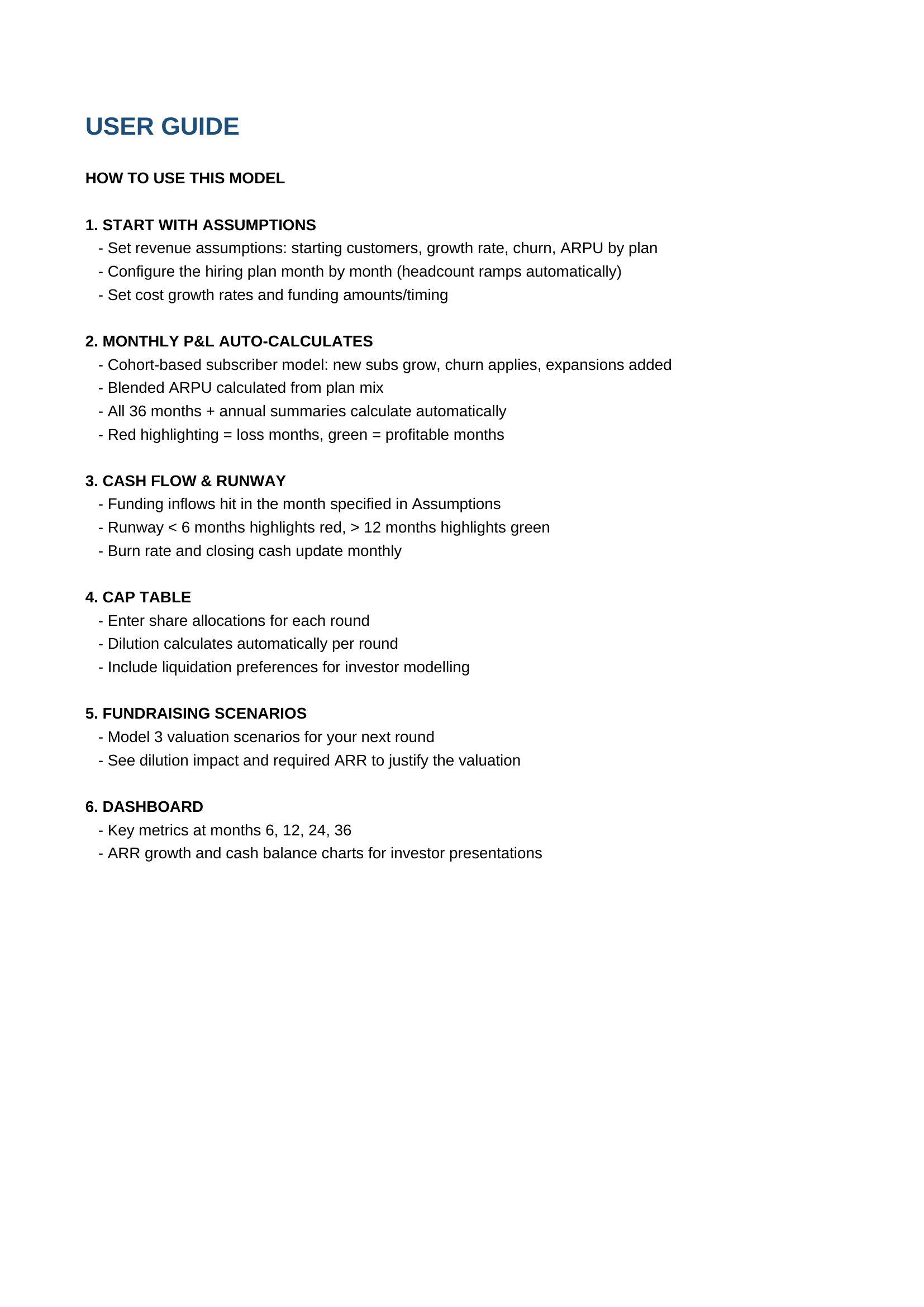
Colour-coded to industry standard: blue text on yellow background for inputs, black for formulas, green for cross-sheet links. Conditional formatting highlights loss months, low runway, and dilution thresholds. Includes a 25-term glossary defining all SaaS and fundraising terminology (MRR, ARR, ARPU, CAC, LTV, NRR, churn, burn rate, runway, dilution, pre-money, post-money, ESOP, and more) and a step-by-step user guide.

This Best Practice includes
Excel Workbook

Acquire business license for $25.00

Add to cart

Add to bookmarks

Discuss

Further information

Provide early-stage SaaS founders and startup operators with a ready-to-use 36-month financial model that translates business assumptions into investor-grade projections — covering subscriber growth, revenue, costs, cash runway, cap table, and fundraising scenarios — so they can plan, pitch, and make informed decisions without building a model from scratch.


0.0 / 5 (0 votes)

please wait...