Publication number: ELQ-70740-1
View all versions & Certificate

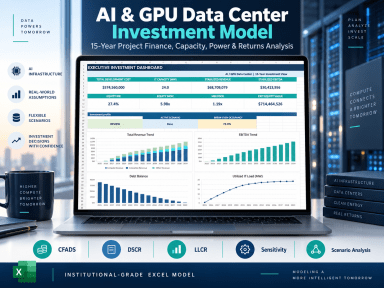
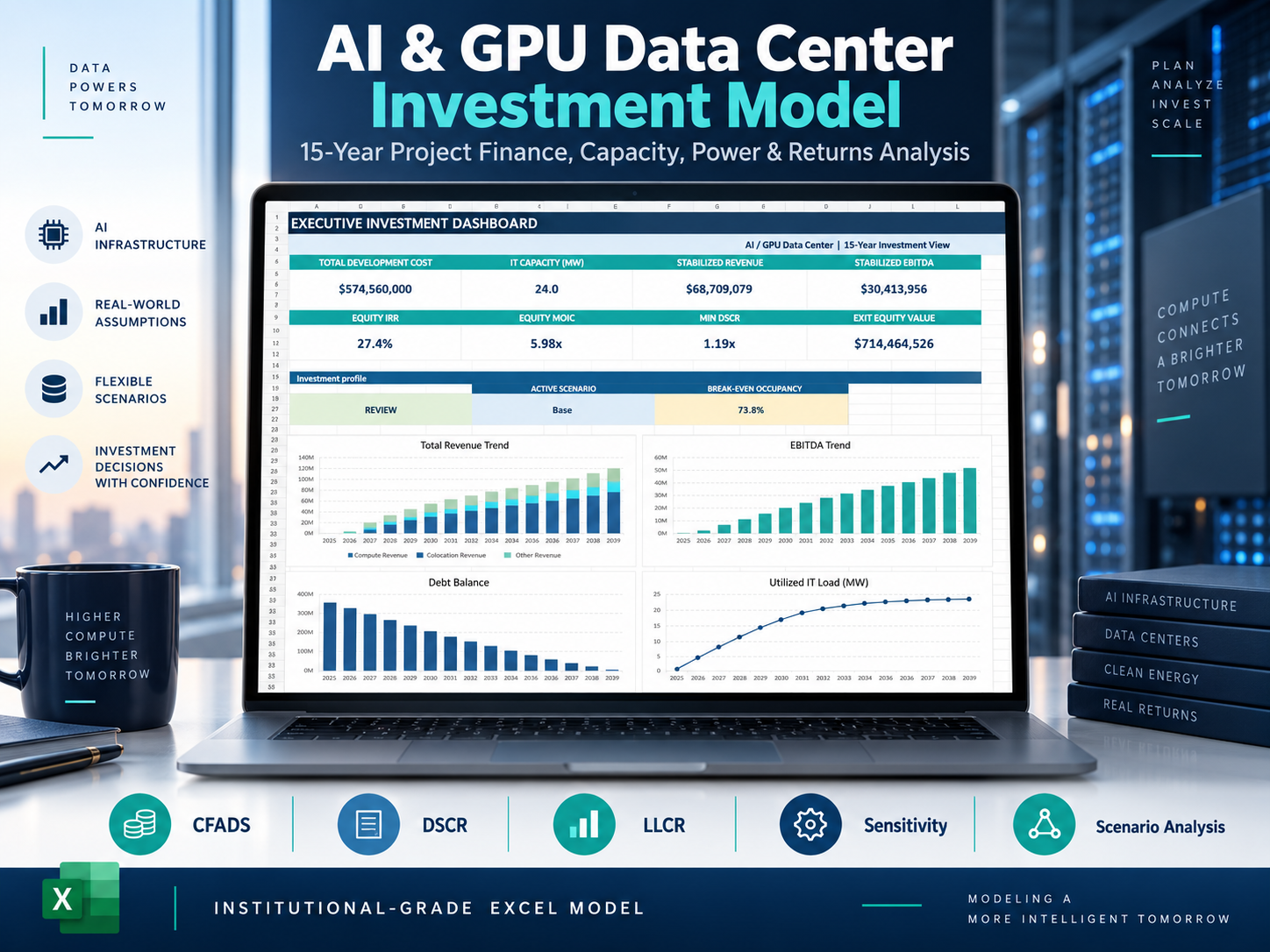
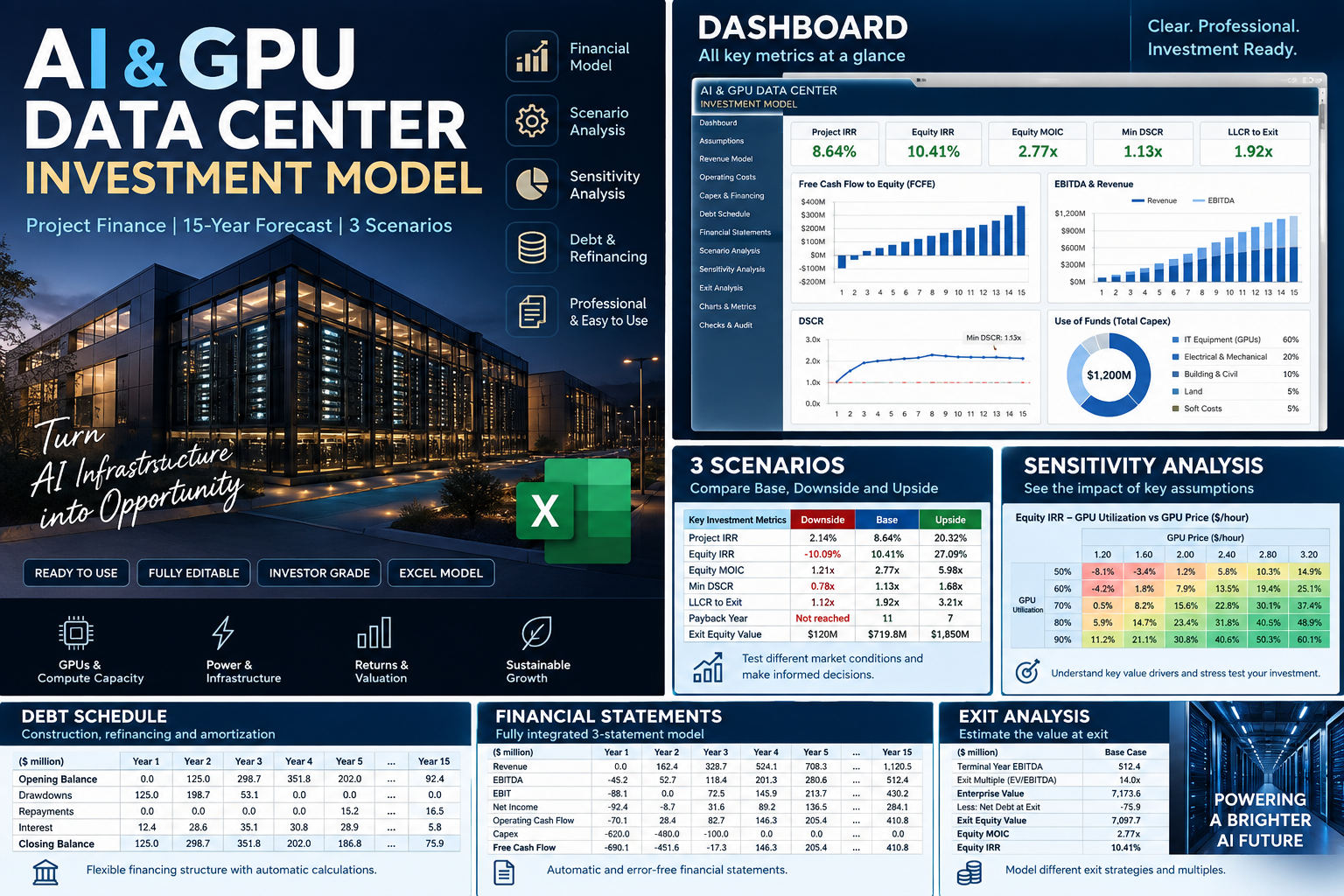
AI & GPU Data Center Investment Model – 15-Year Project Finance & Returns Analysis
Evaluate AI and GPU data center investments with a 15-year Excel model covering capacity, revenue, power, debt, CFADS, DSCR, LLCR, scenarios, sensitivity and ex
Further information
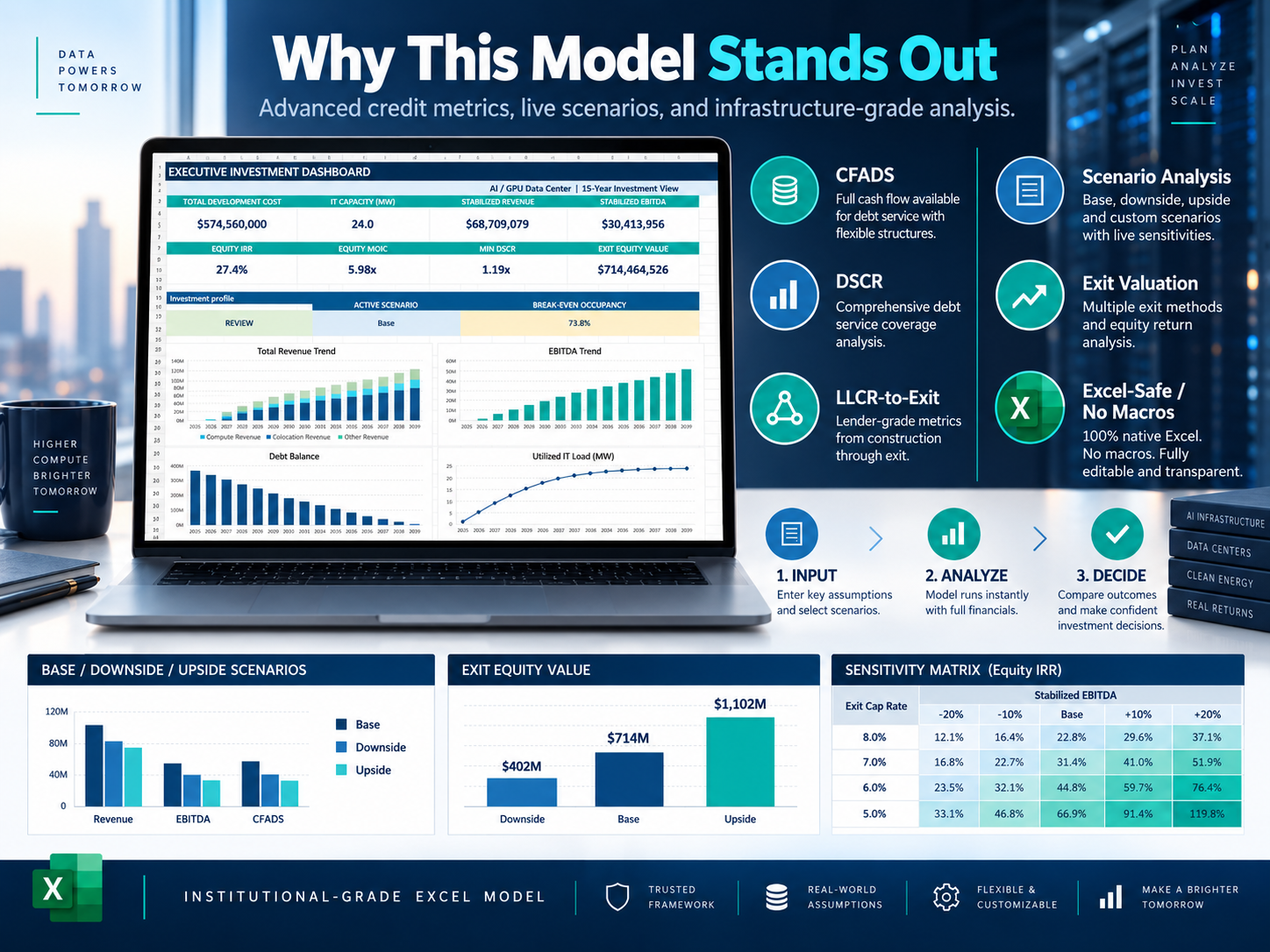
This model is designed to help users evaluate the financial viability, financing capacity and investment returns of AI and GPU data center projects.
It can be used to assess development economics, operating performance and investor returns throughout the full investment lifecycle.
Key objectives include evaluating:
AI / GPU data center profitability
development CAPEX and total project cost
installed IT capacity and utilization
GPU and colocation revenue
power consumption and electricity costs
PUE and infrastructure efficiency
operating expenses and EBITDA
CFADS and debt service capacity
construction financing
refinancing and debt amortization
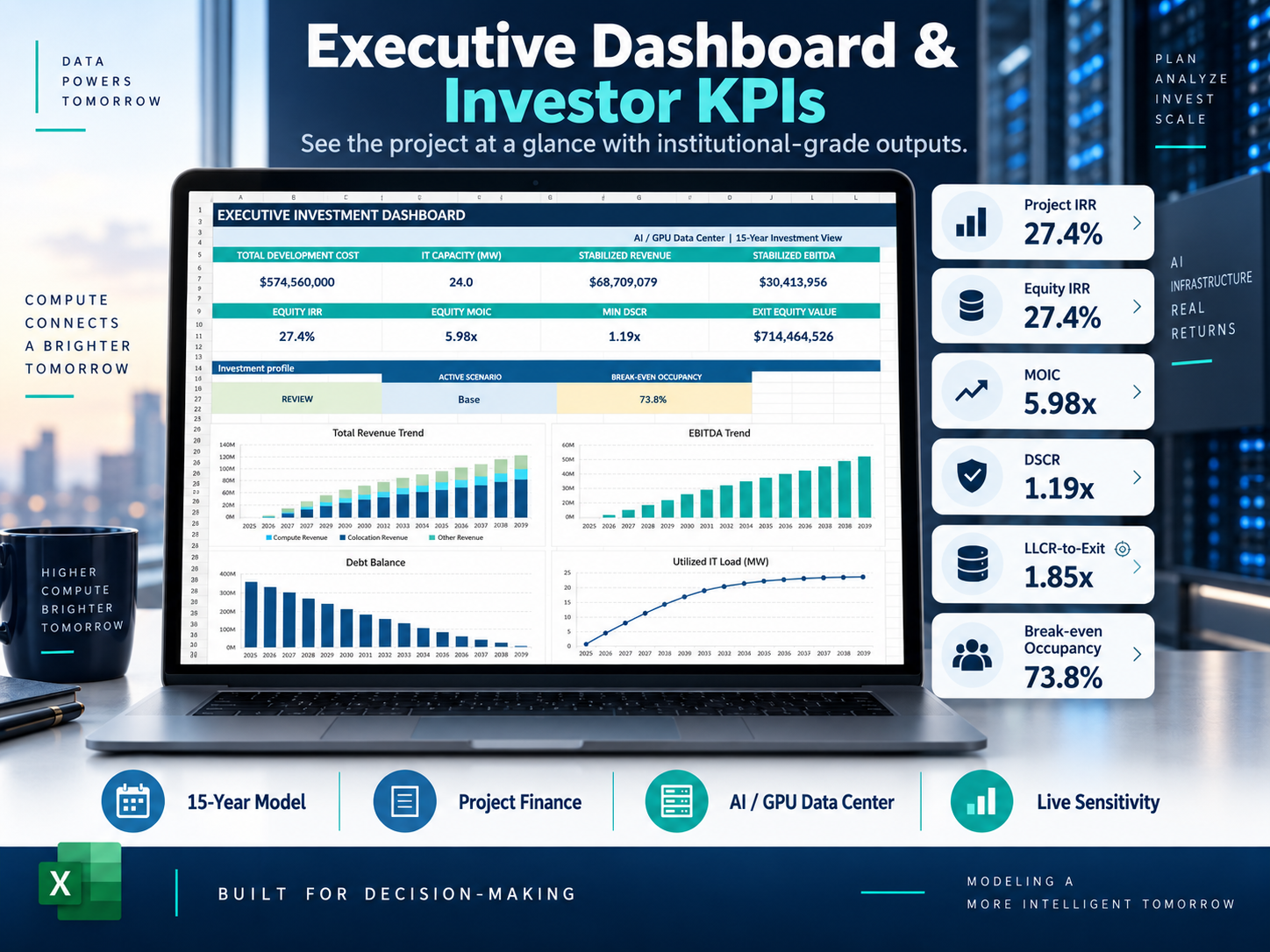
DSCR and LLCR-to-Exit
Project IRR and Equity IRR
Equity MOIC
break-even occupancy
terminal value and exit proceeds
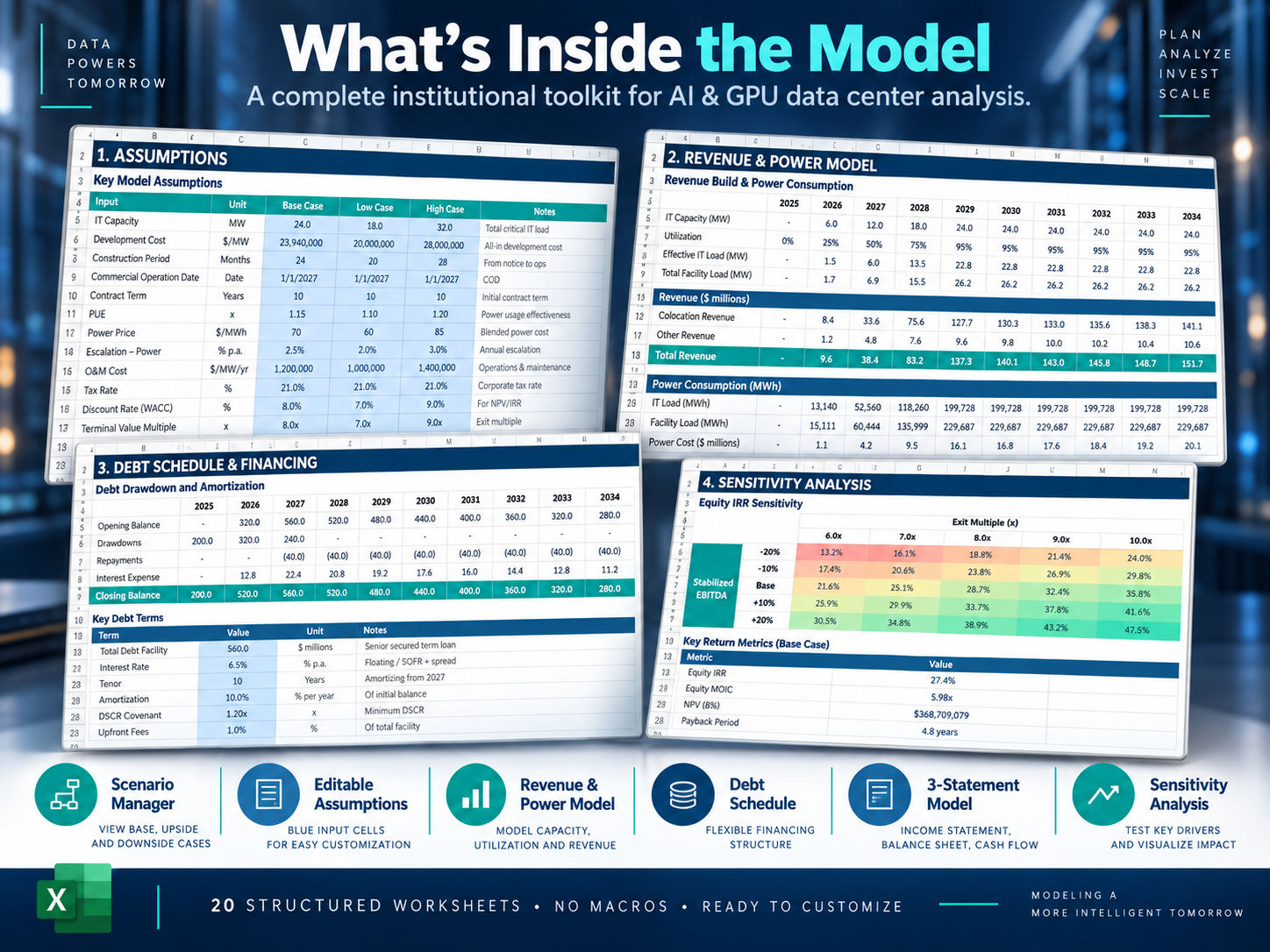
Base / Downside / Upside scenarios
sensitivity to key commercial and operating assumptions
The model provides a structured framework for comparing scenarios, identifying risk drivers and supporting investment and financing decisions.
This model applies best to:
AI data centers
GPU cloud infrastructure
high-density computing facilities
colocation data centers
hybrid colocation and GPU projects
new data center developments
infrastructure investment analysis
project finance assessments
leveraged data center investments
preliminary underwriting
investment committee analysis
refinancing analysis
15-year infrastructure forecasts
scenario and sensitivity analysis
It is particularly suitable for infrastructure investors, developers, financial analysts, consultants, lenders, investment professionals and data center operators requiring a structured Excel-based investment framework.
The model is not intended to replace detailed legal, engineering, technical, tax or accounting due diligence.
It may not be ideal for:
hyperscale projects requiring highly customized financing structures
complex multi-tier equity waterfalls
multiple investor classes
detailed tax structuring
country-specific tax compliance
monthly construction draw modelling
detailed GPU hardware procurement schedules
power purchase agreement modelling
highly complex hedging structures
portfolio-level analysis of multiple data centers
accounting compliance reporting
engineering-level power and cooling design
Users should adapt all assumptions to the specific project, location, market and financing structure being evaluated.