

Publication number: ELQ-25477-1
View all versions & Certificate

Beyond the Single-Point DCF: Probabilistic Valuation & Monte Carlo Model
Probabilistic DCF valuation with Monte Carlo simulation, sensitivity analysis, downside-risk metrics, and automated model checks.
Further information
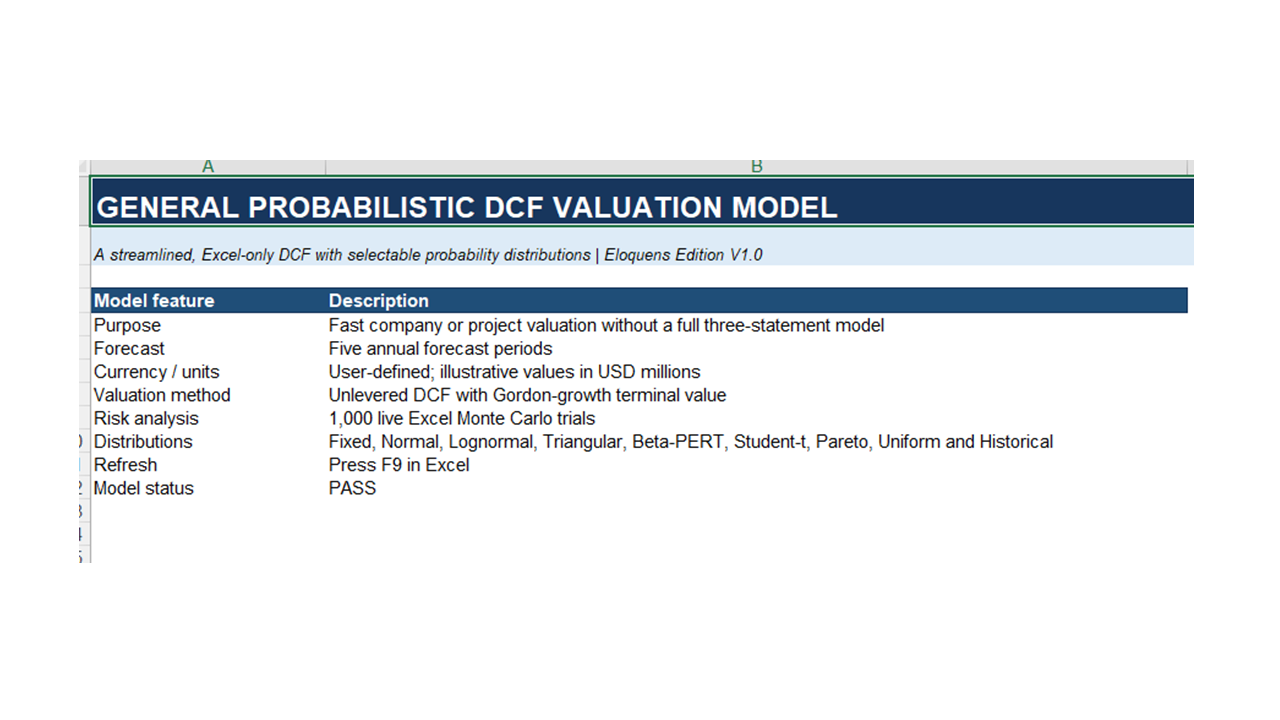
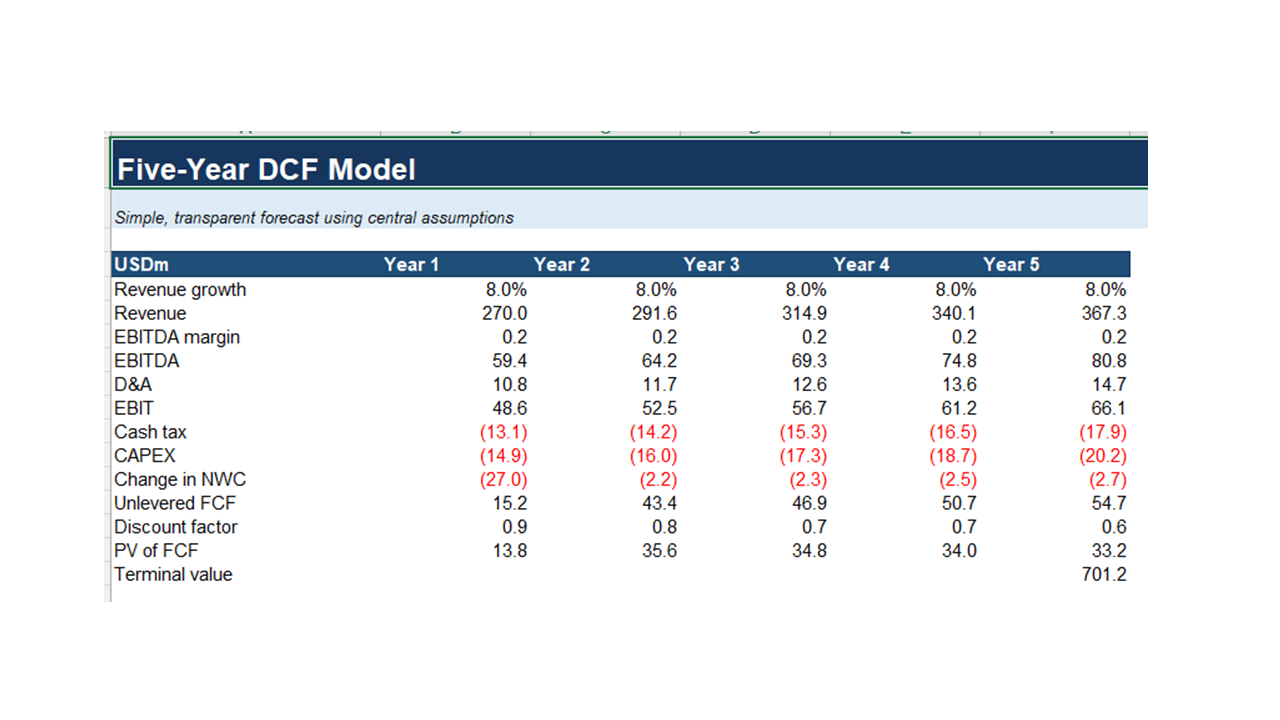
Estimate enterprise value, equity value, and value per share using a transparent five-year DCF.
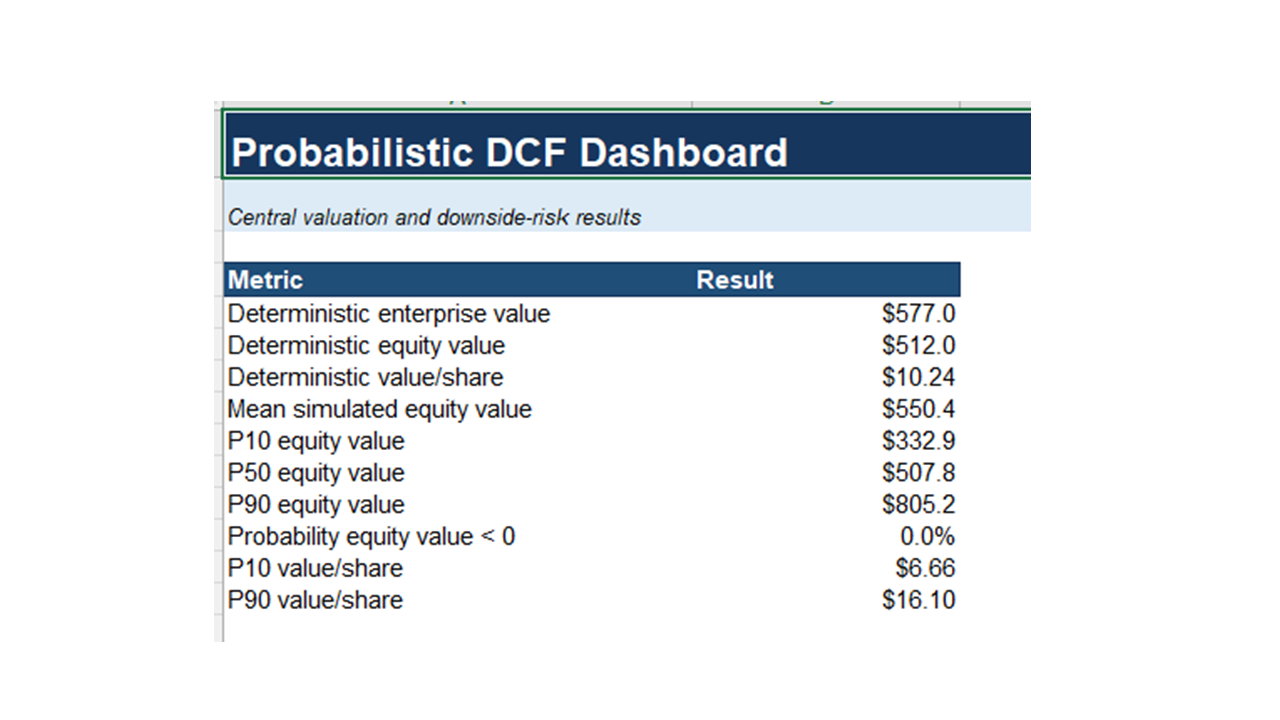
Replace single-point valuation with probability-based valuation ranges.
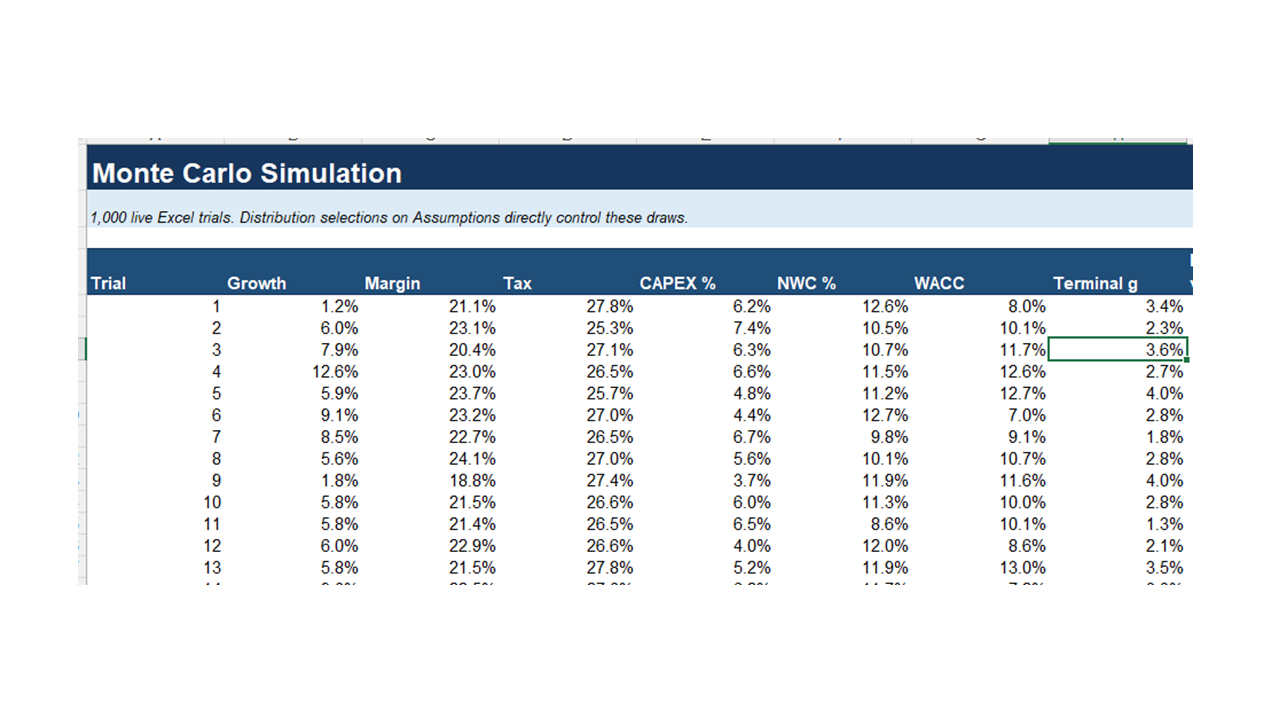
Quantify downside risk through Monte Carlo simulation and percentile outcomes.
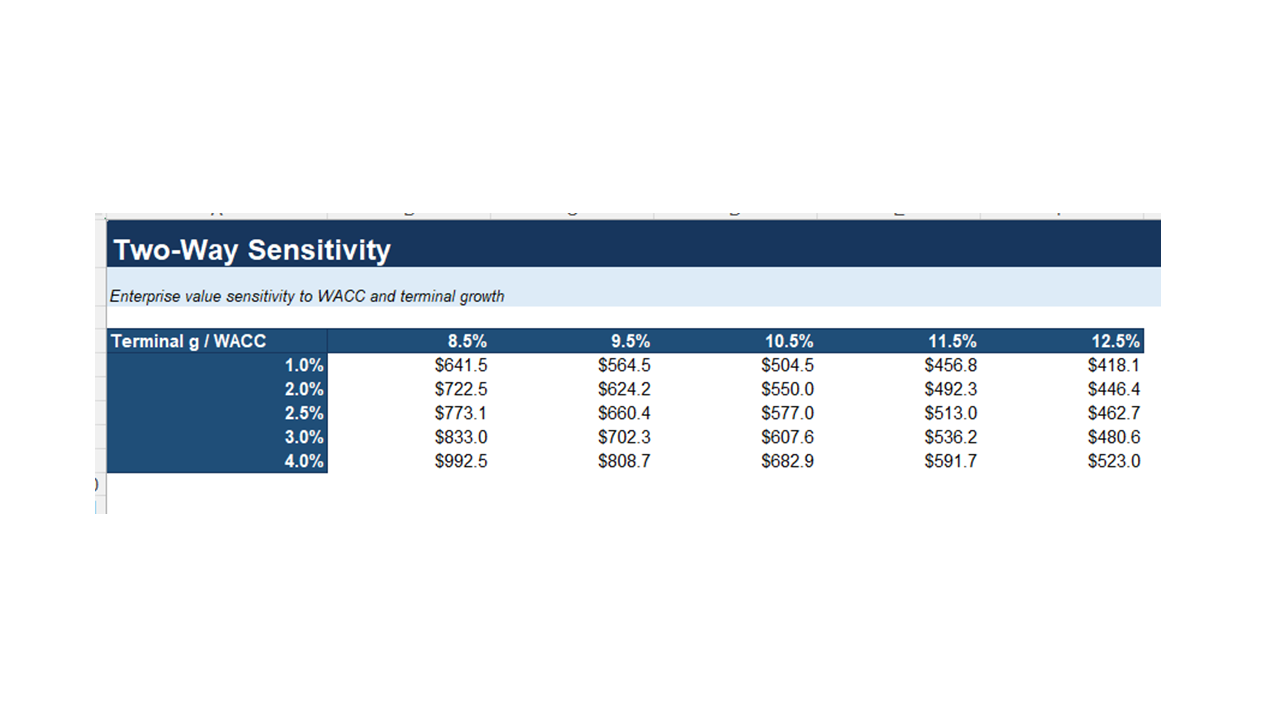
Test valuation sensitivity to WACC and terminal growth assumptions.
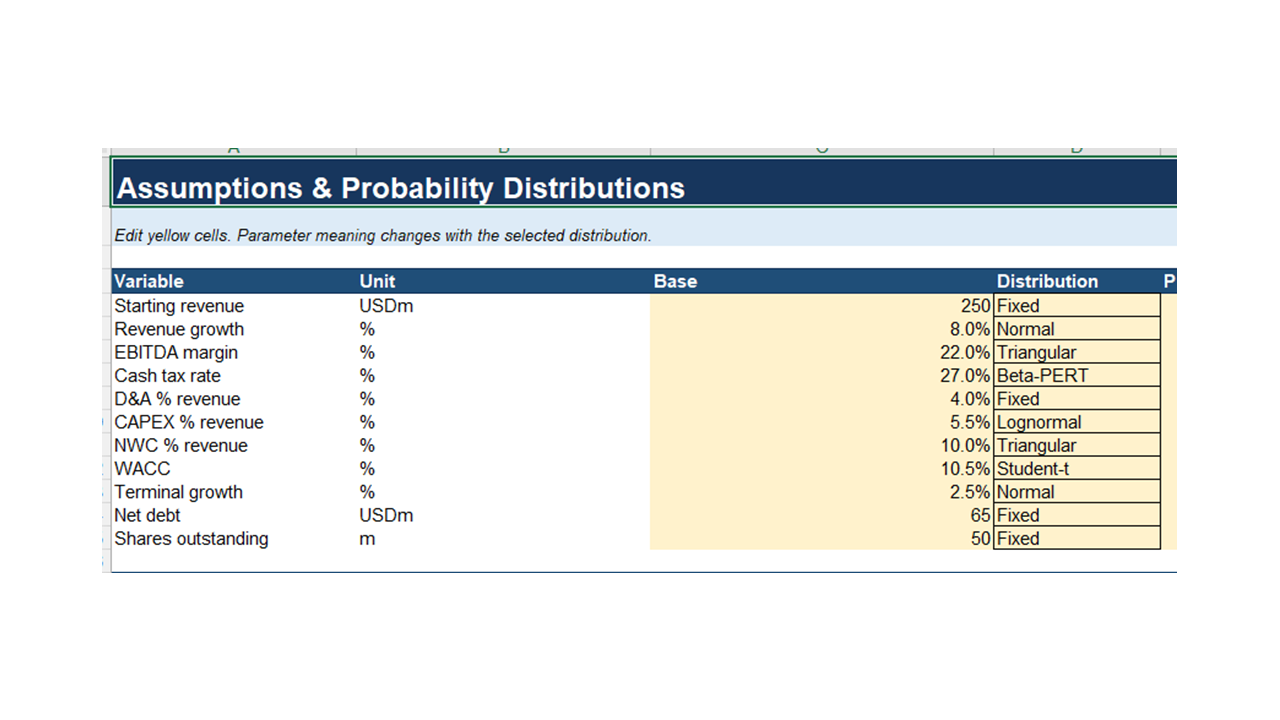
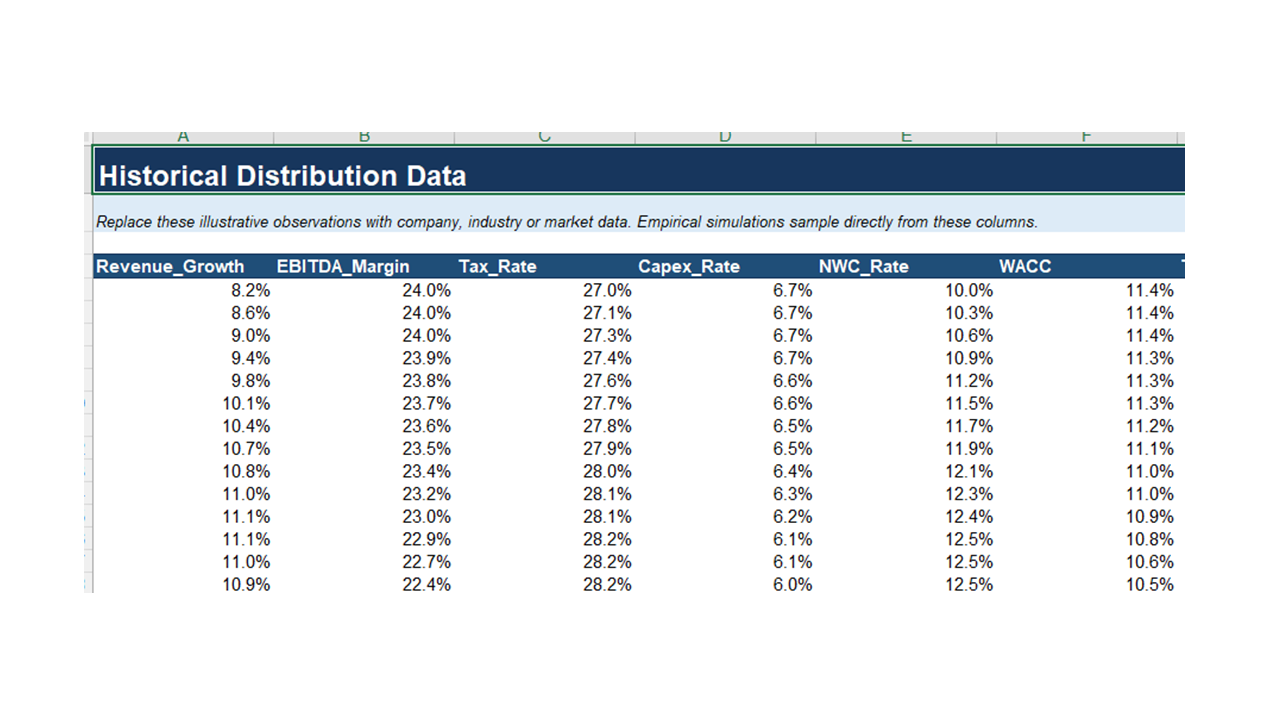
Model uncertainty using fixed, normal, triangular, lognormal, Beta-PERT, Student-t, Pareto, uniform, and historical distributions.
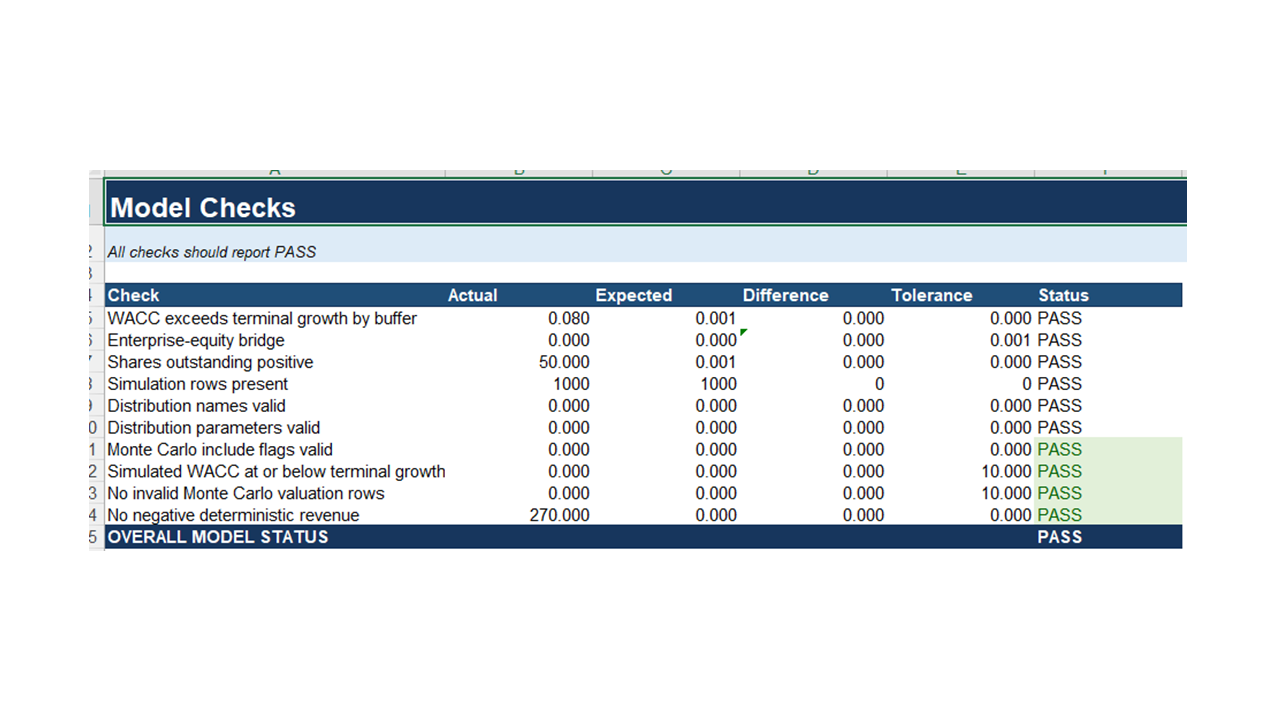
Identify invalid assumptions and calculation issues through automated model checks.
Support investment analysis, strategic planning, transaction evaluation, and valuation discussions.
Companies with reasonably forecastable revenue, margins, capital expenditure, taxes, and working-capital requirements.
Businesses where valuation inputs are uncertain and better represented by ranges or probability distributions.
Investment, acquisition, strategic-planning, and corporate-finance evaluations.
Companies with sufficient historical data or defensible expert assumptions.
Situations requiring enterprise value, equity value, and value-per-share estimates.
Valuations where WACC and terminal growth materially influence the result.
Scenario, downside-risk, and sensitivity analysis.
Early-stage decision-making where a valuation range is more useful than a single estimate.
Comparing management assumptions with conservative and optimistic outcomes.
Analysts who need a transparent, editable Excel model without specialist simulation software.
Pre-revenue or very early-stage businesses with no defensible operating assumptions.
Financial institutions, insurers, banks, and investment funds requiring sector-specific valuation methods.
Distressed or insolvent companies where liquidation, restructuring, or recovery analysis is more appropriate.
Businesses with highly irregular cash flows that cannot be represented adequately by a five-year forecast.
Companies best valued using asset-based, real-option, sum-of-the-parts, or comparable-company methods.
Situations requiring detailed debt schedules, complex tax structures, multiple currencies, or transaction-specific financing.
Projects with finite operating lives where a terminal value should not be used.
Regulated businesses requiring specialized regulatory asset and tariff modelling.
Valuations requiring monthly or quarterly forecasts rather than annual periods.
Formal fairness opinions, audit conclusions, tax valuations, or legal expert evidence without independent professional review.