Integrated Financial Statements 5-Year Forecast Model with Three Statements, Schedules, DCF Valuation, KPI Dashboard
Originally published: 13/05/2026 14:08
Publication number: ELQ-35212-1
View all versions & Certificate
certified

Integrated Financial Statements 5-Year Forecast Model with Three Statements, Schedules, DCF Valuation, KPI Dashboard

Professional 5-year integrated financial statements model with dashboards, schedules, valuation, feasibility analysis, KPIs, charts, and checks.

Description

๐Ÿš€ Integrated Financial Statements 5-Year Forecast Model

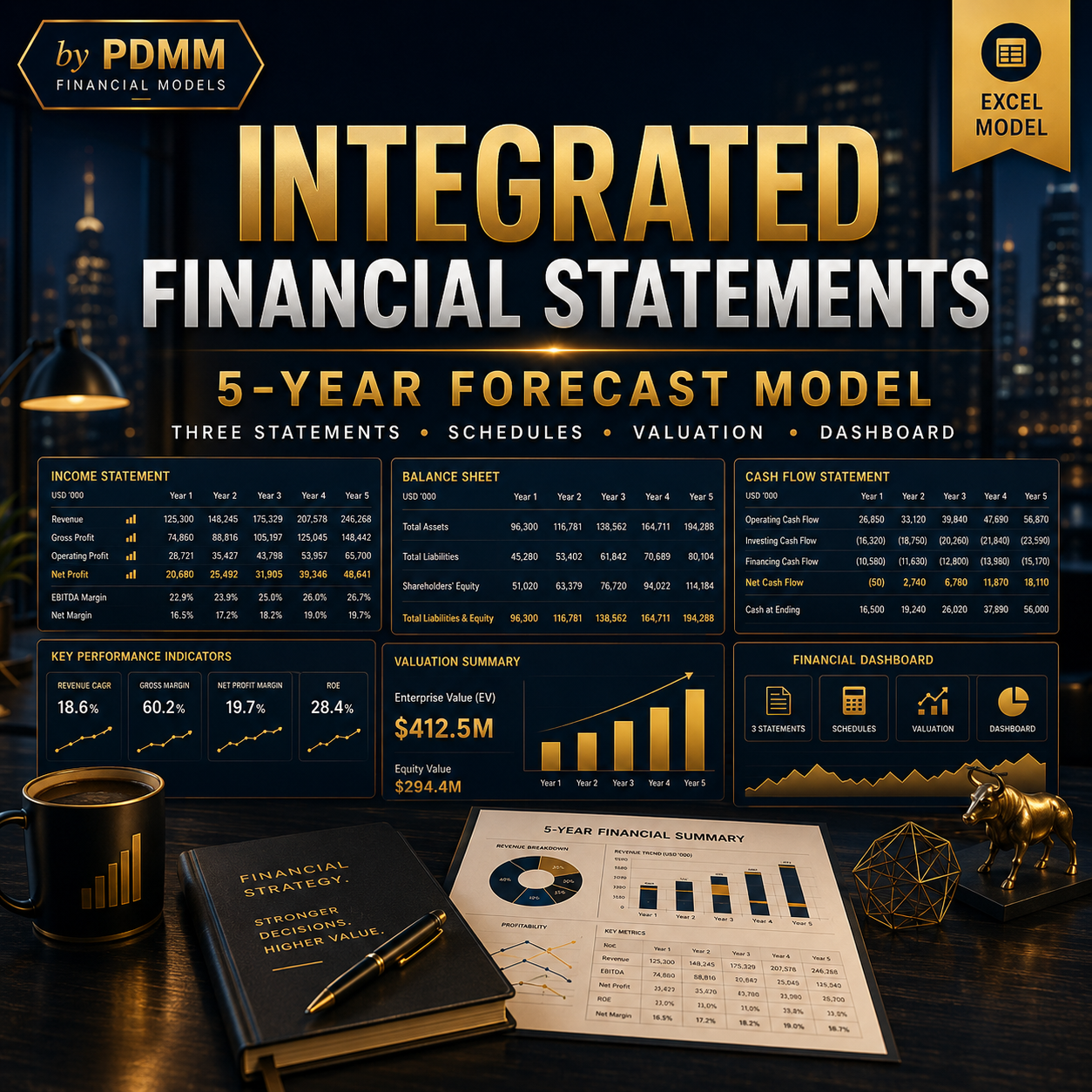
A complete, professional, and fully editable Excel financial model designed to help users prepare a 5-year forecast with integrated financial statements, supporting schedules, valuation, feasibility analysis, dashboards, KPIs, charts, and built-in checks.

This template is suitable for startups, SMEs, consultants, CFOs, finance teams, business owners, investors, analysts, and entrepreneurs who need a structured financial planning tool for decision-making, fundraising, budgeting, feasibility analysis, and business valuation.

The model is designed as a flexible all-industry template. Users can enter their own assumptions, update the sample data, and quickly generate professional financial outputs. It is especially useful for preparing financial projections, investor presentations, loan applications, internal planning, business plans, and valuation analysis.

๐Ÿ“Œ What This Model Is Used For

This financial model is used to prepare a complete 5-year forecast with integrated financial statements and supporting analysis. It helps users understand how business assumptions impact profitability, cash flow, balance sheet position, valuation, funding needs, and overall financial feasibility.

The model can be used for:

โœ… Business financial forecasting โœ… Startup and SME financial planning โœ… Investor-ready financial projections โœ… Feasibility analysis โœ… Budgeting and planning โœ… Loan and funding applications โœ… DCF valuation โœ… KPI and ratio analysis โœ… Scenario and sensitivity analysis โœ… Management reporting โœ… Business plan financials โœ… Internal finance dashboards

โญ Main Features Included

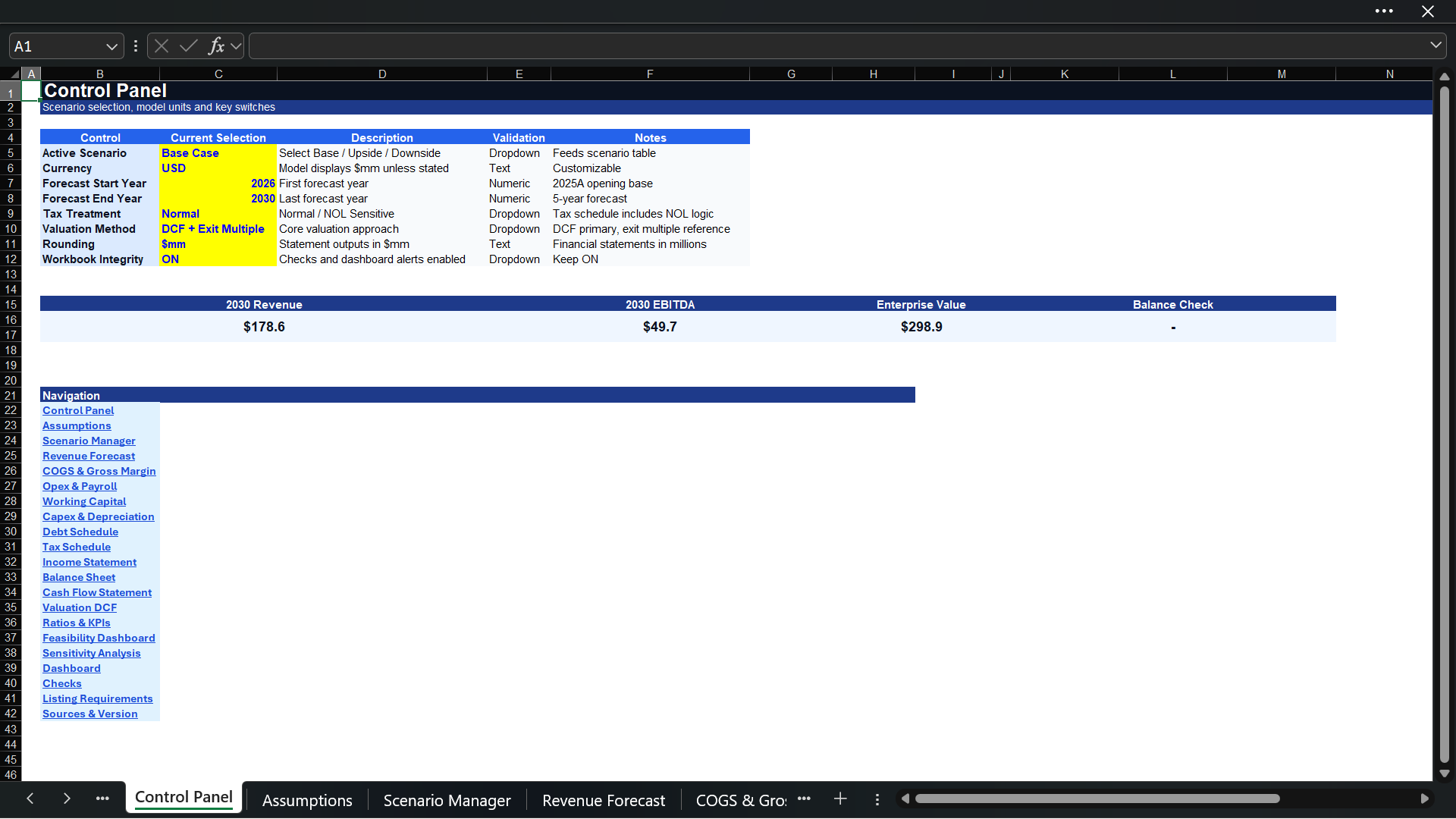
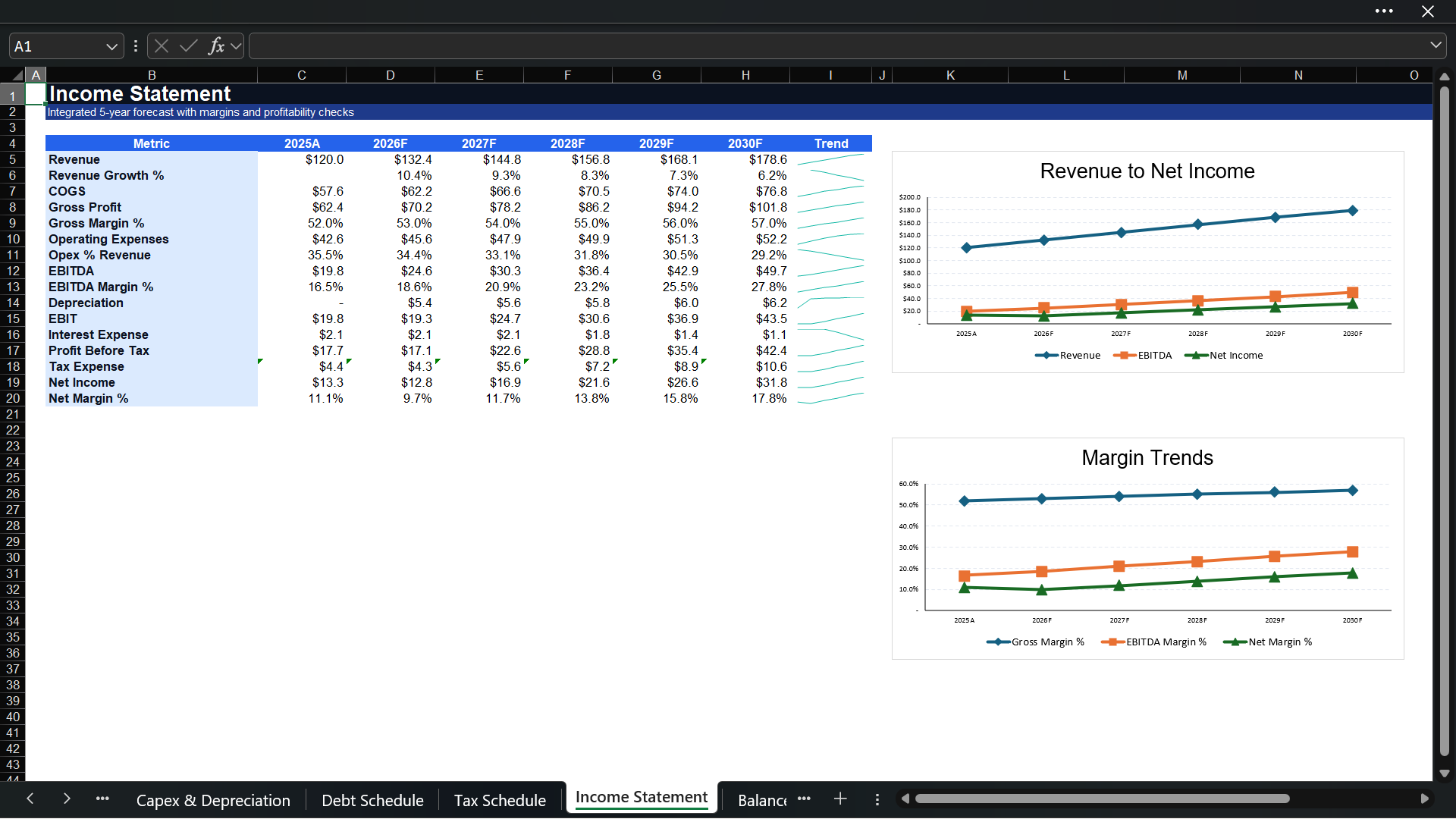
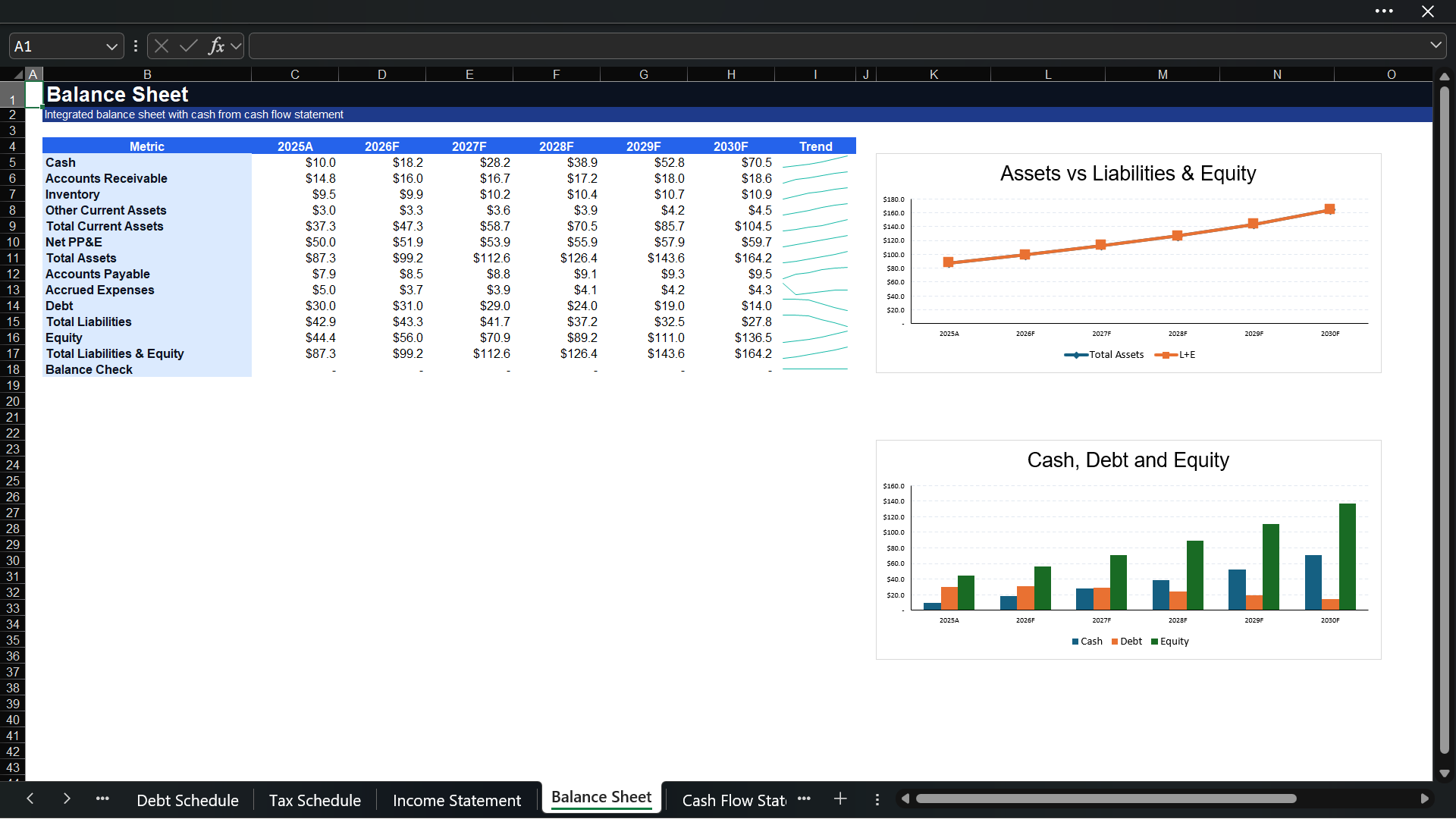
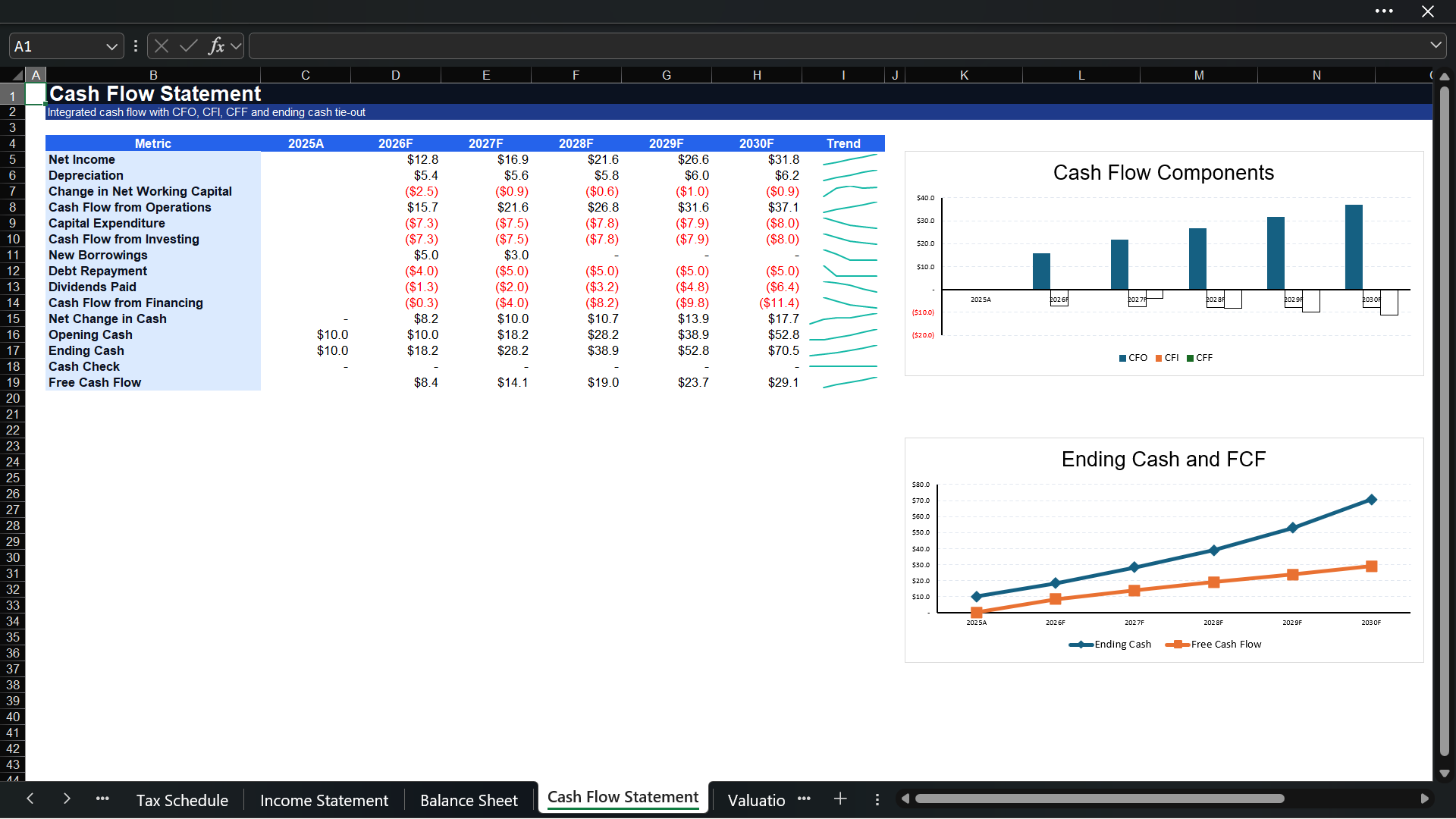
๐Ÿ“Š Integrated 3-Statement Model The model includes a fully linked Income Statement, Balance Sheet, and Cash Flow Statement. The statements are integrated so that changes in assumptions automatically flow through the financial outputs.

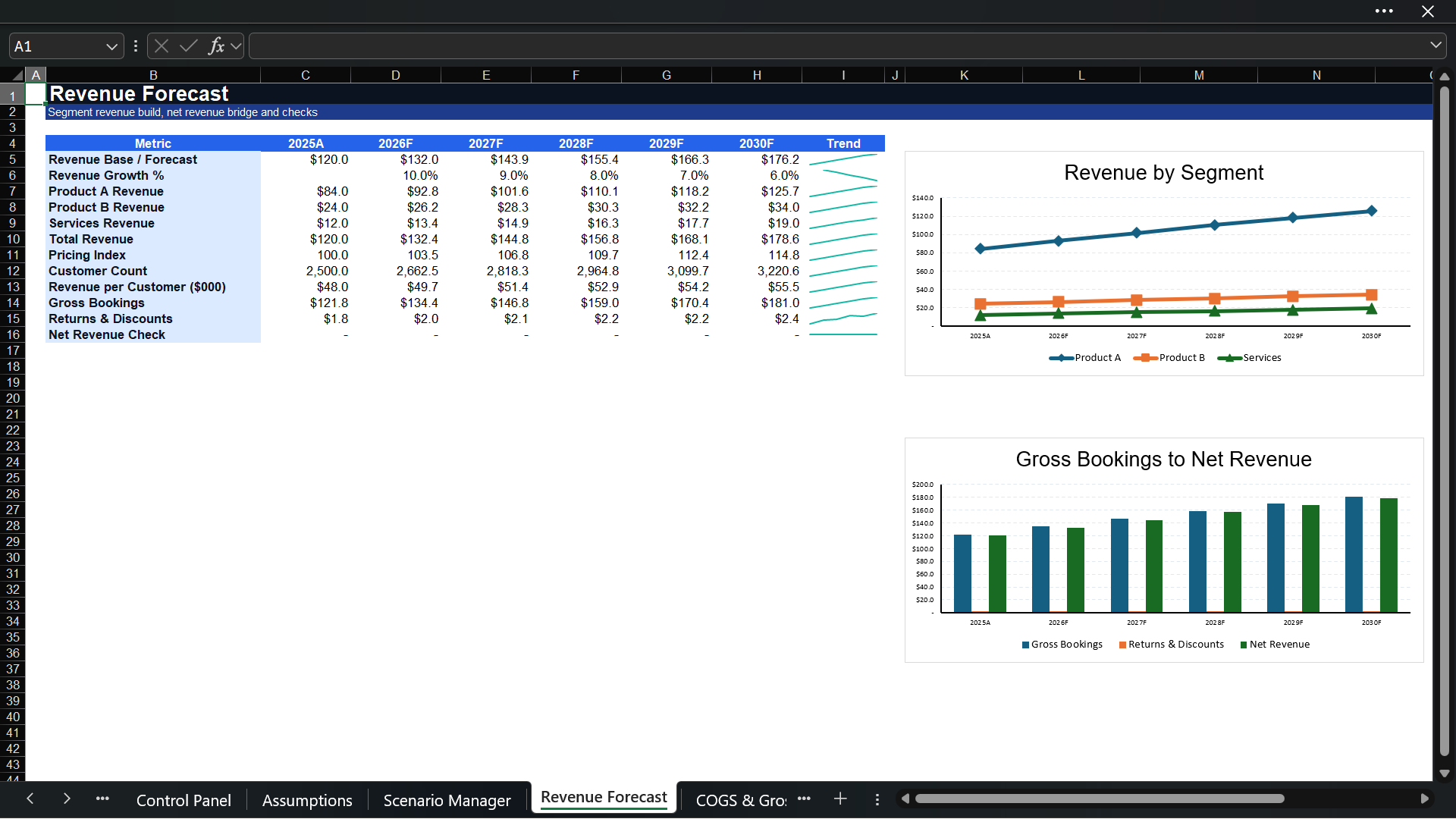
๐Ÿ“ˆ 5-Year Financial Forecast A structured 5-year forecast period allows users to project revenue, costs, expenses, EBITDA, net profit, cash flow, assets, liabilities, equity, debt, and working capital.

๐Ÿงฉ Supporting Schedules The model includes detailed schedules that support the financial statements, including:

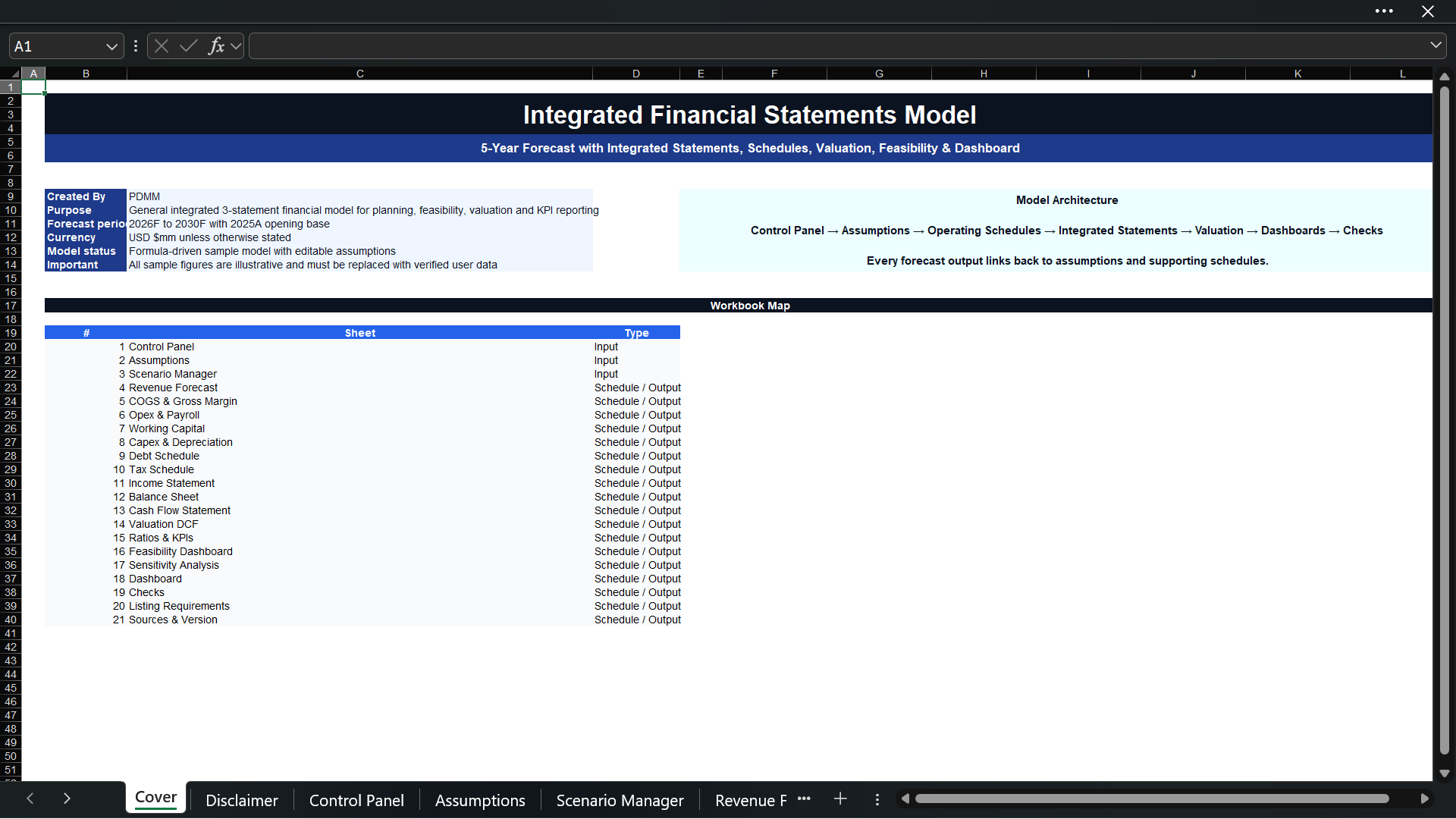
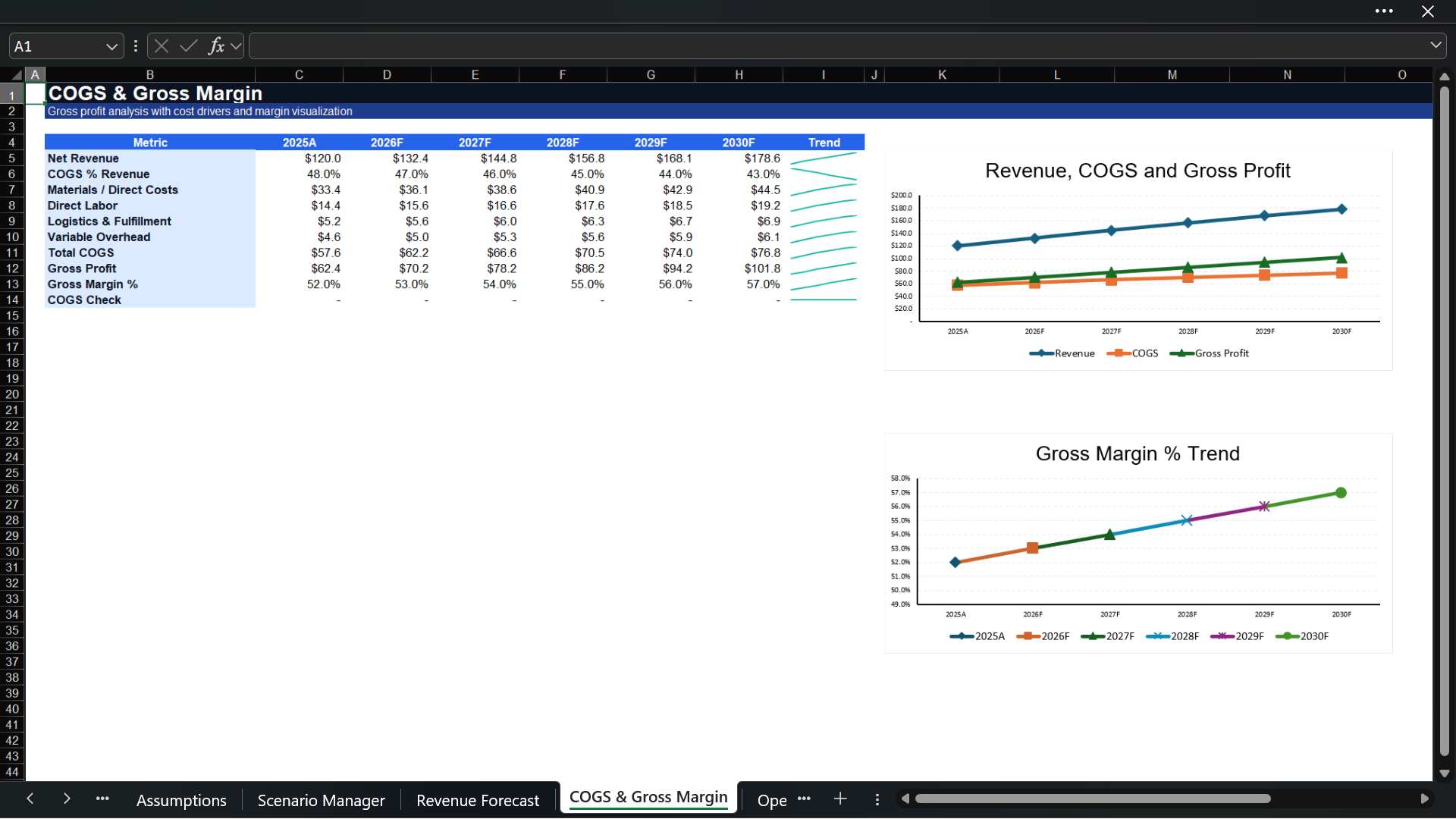
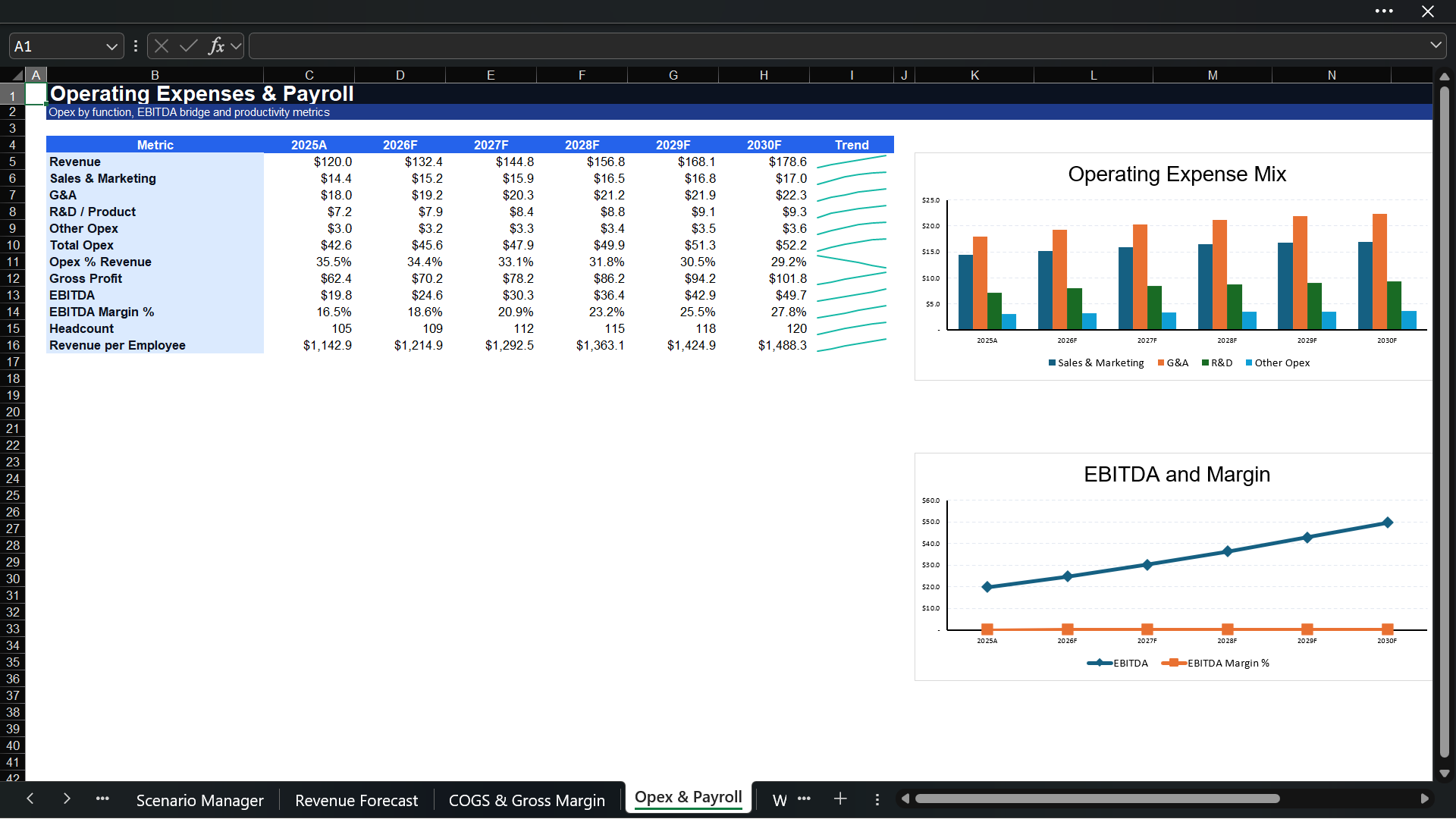
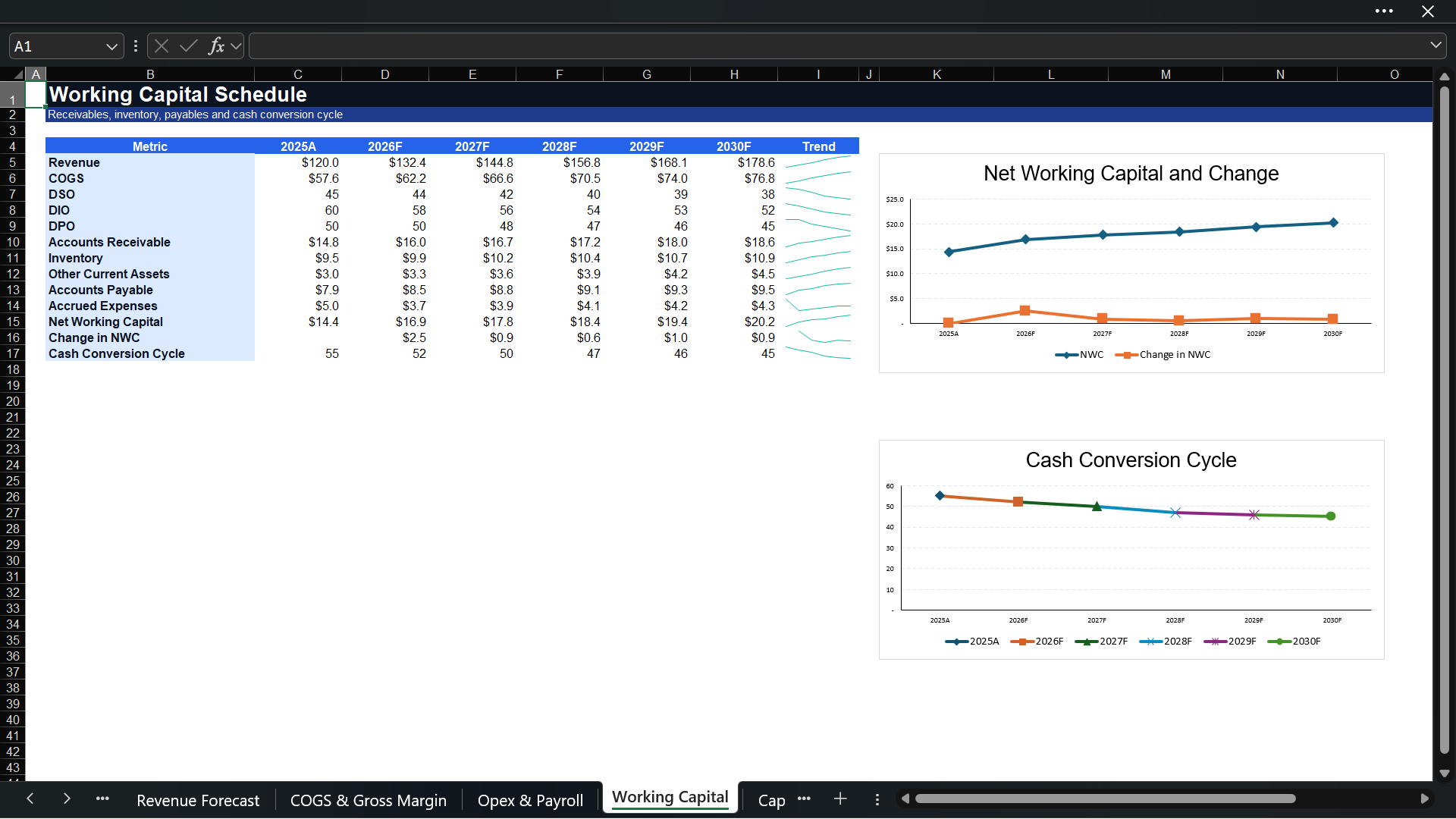
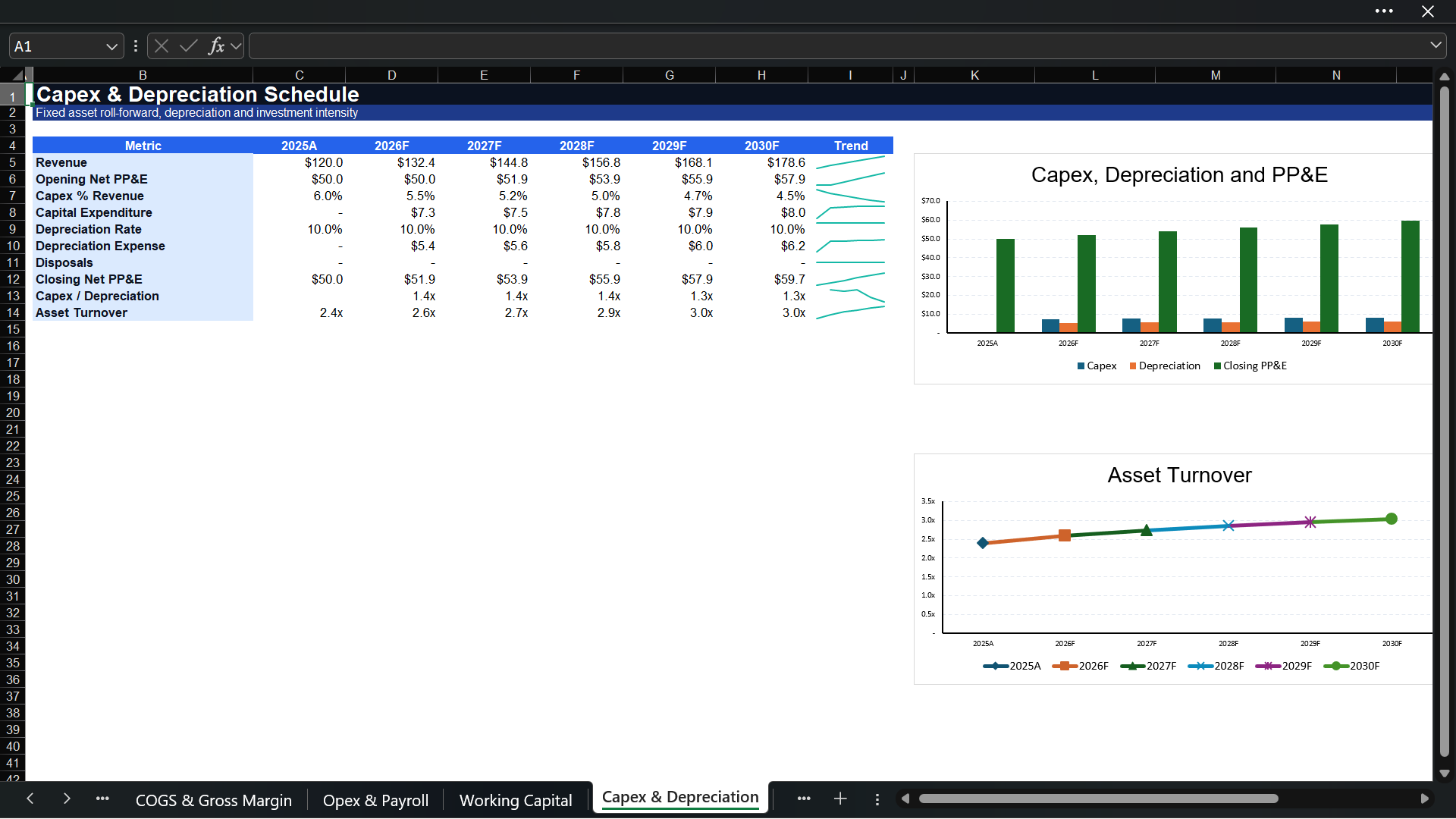
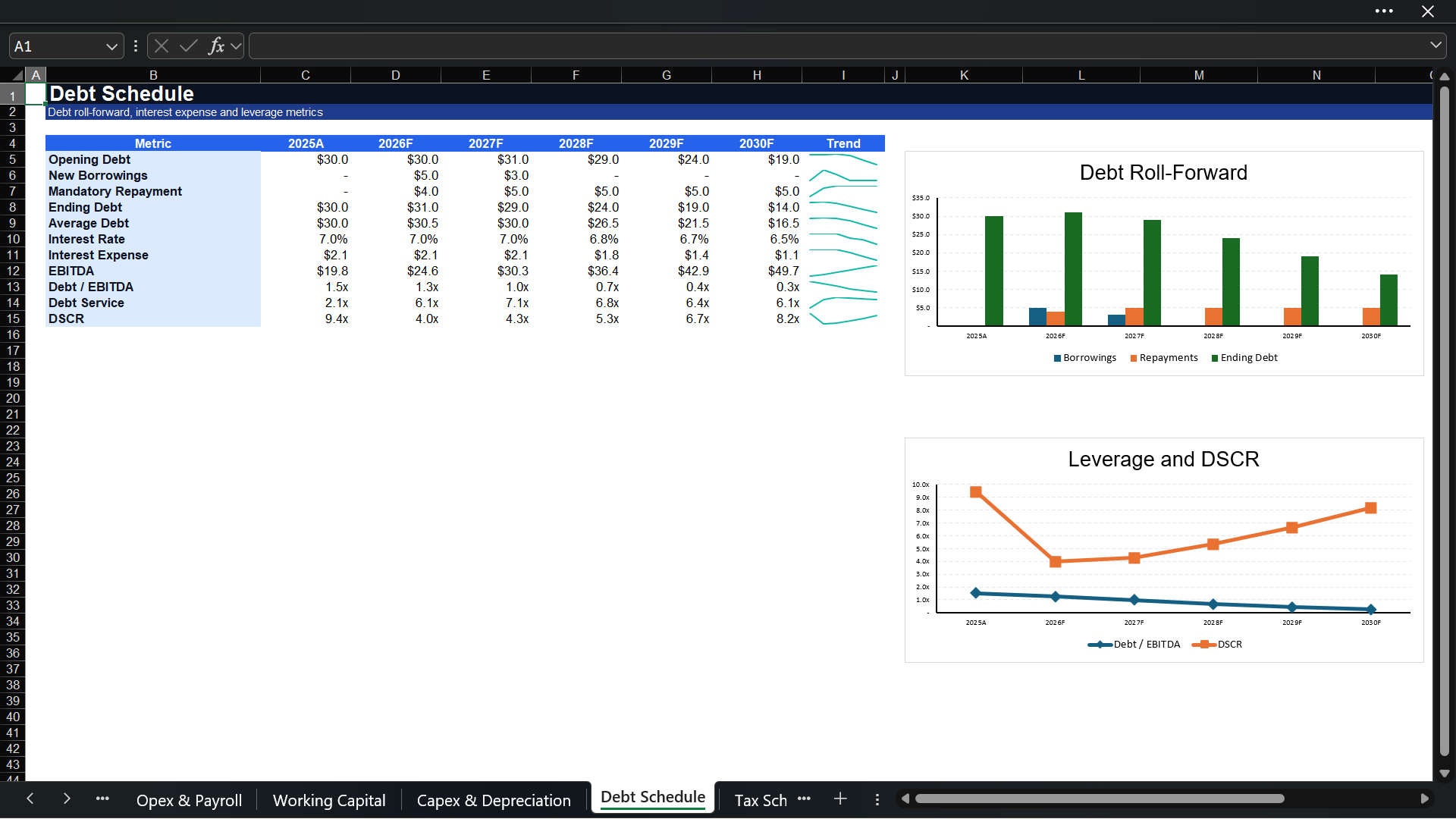
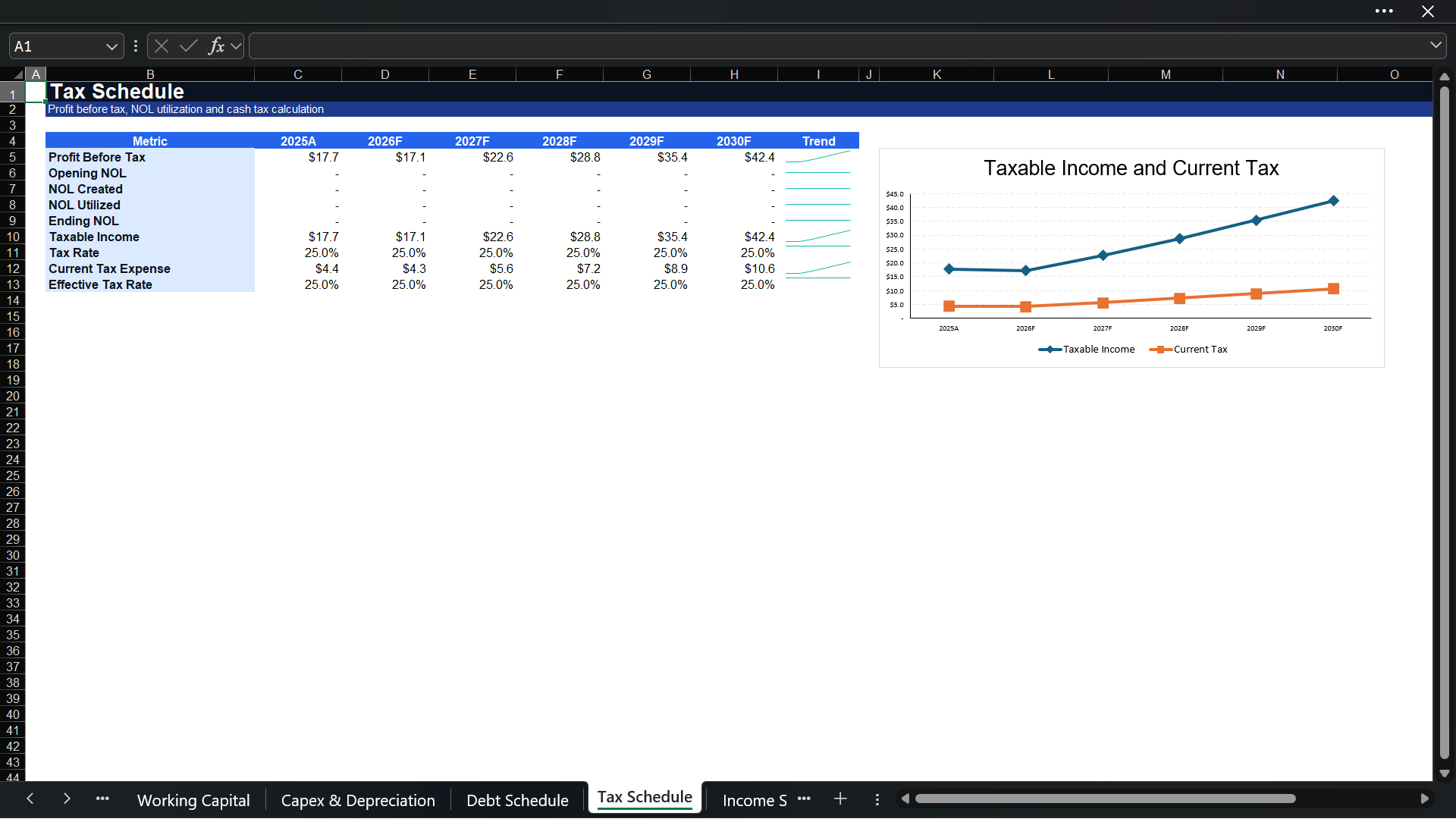
โ€ข Revenue Schedule โ€ข COGS Schedule โ€ข Operating Expense Schedule โ€ข Working Capital Schedule โ€ข CAPEX Schedule โ€ข Depreciation Schedule โ€ข Debt Schedule โ€ข Tax Schedule โ€ข Valuation Schedule โ€ข KPI Schedule โ€ข Scenario Analysis โ€ข Sensitivity Analysis

๐Ÿ“Š Dashboards, Charts & Visual Outputs

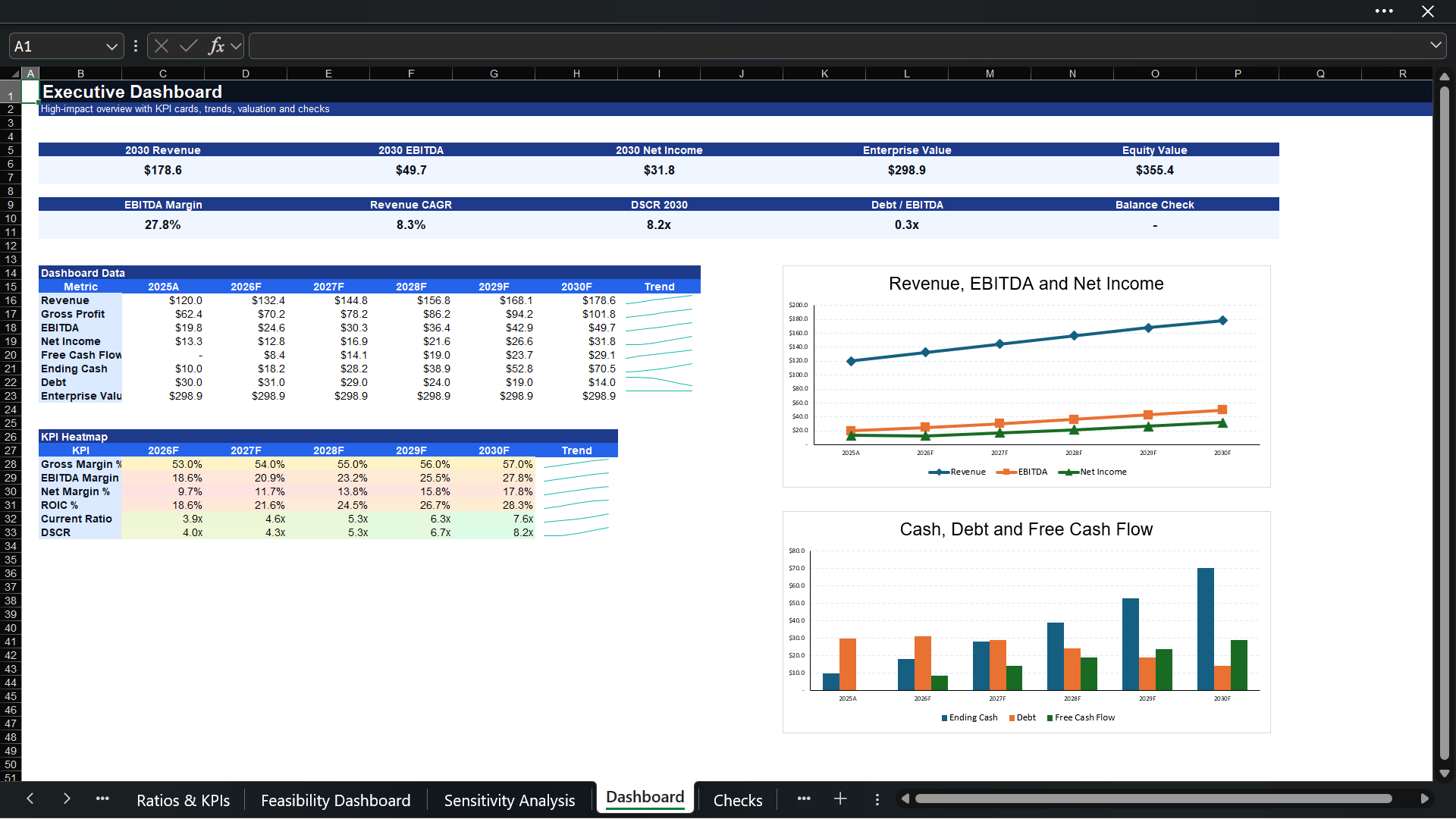
This model includes professional dashboards and visual analysis sections designed to make the model easier to understand and more presentation-ready.

Included dashboards and visuals:

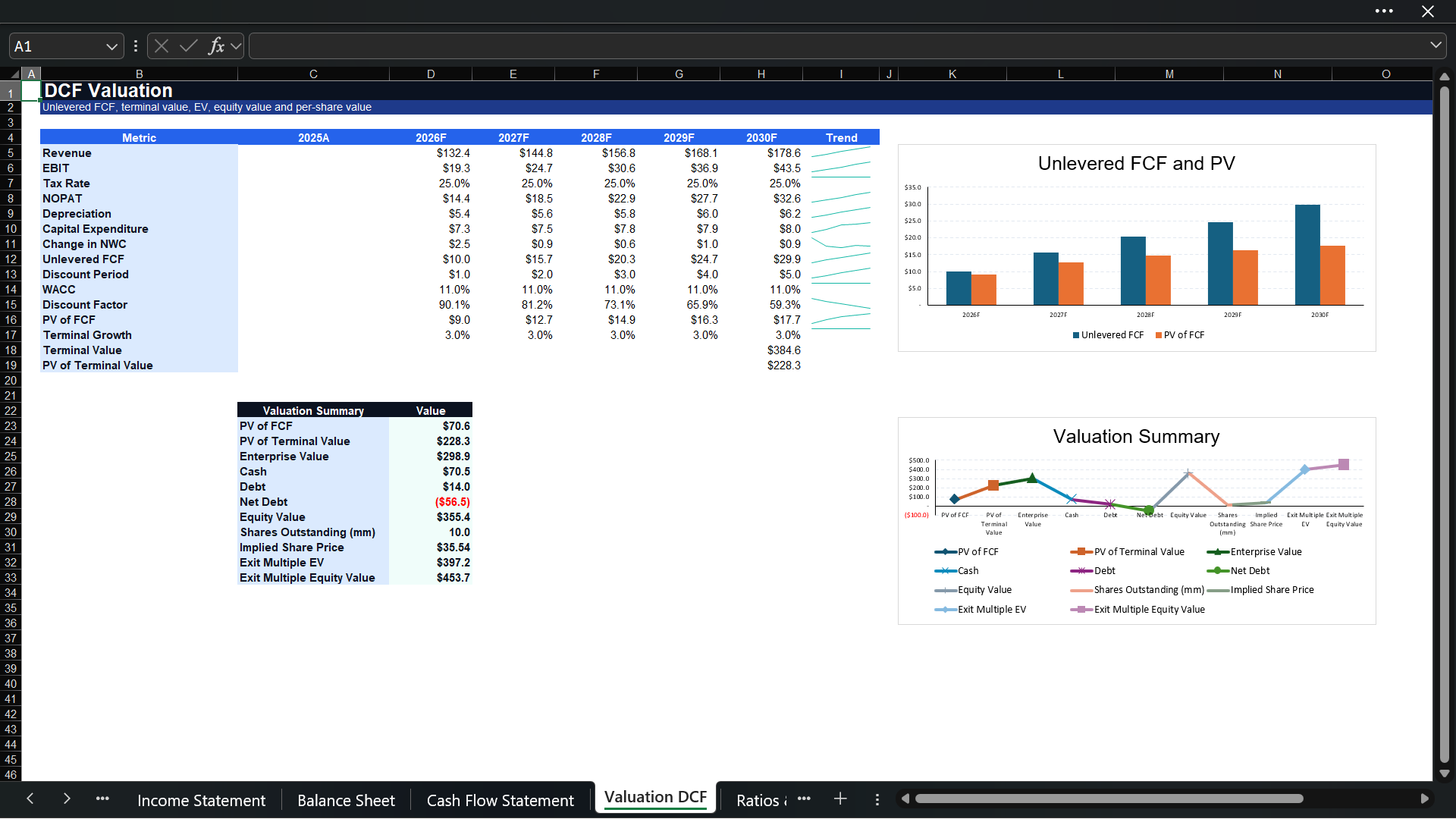
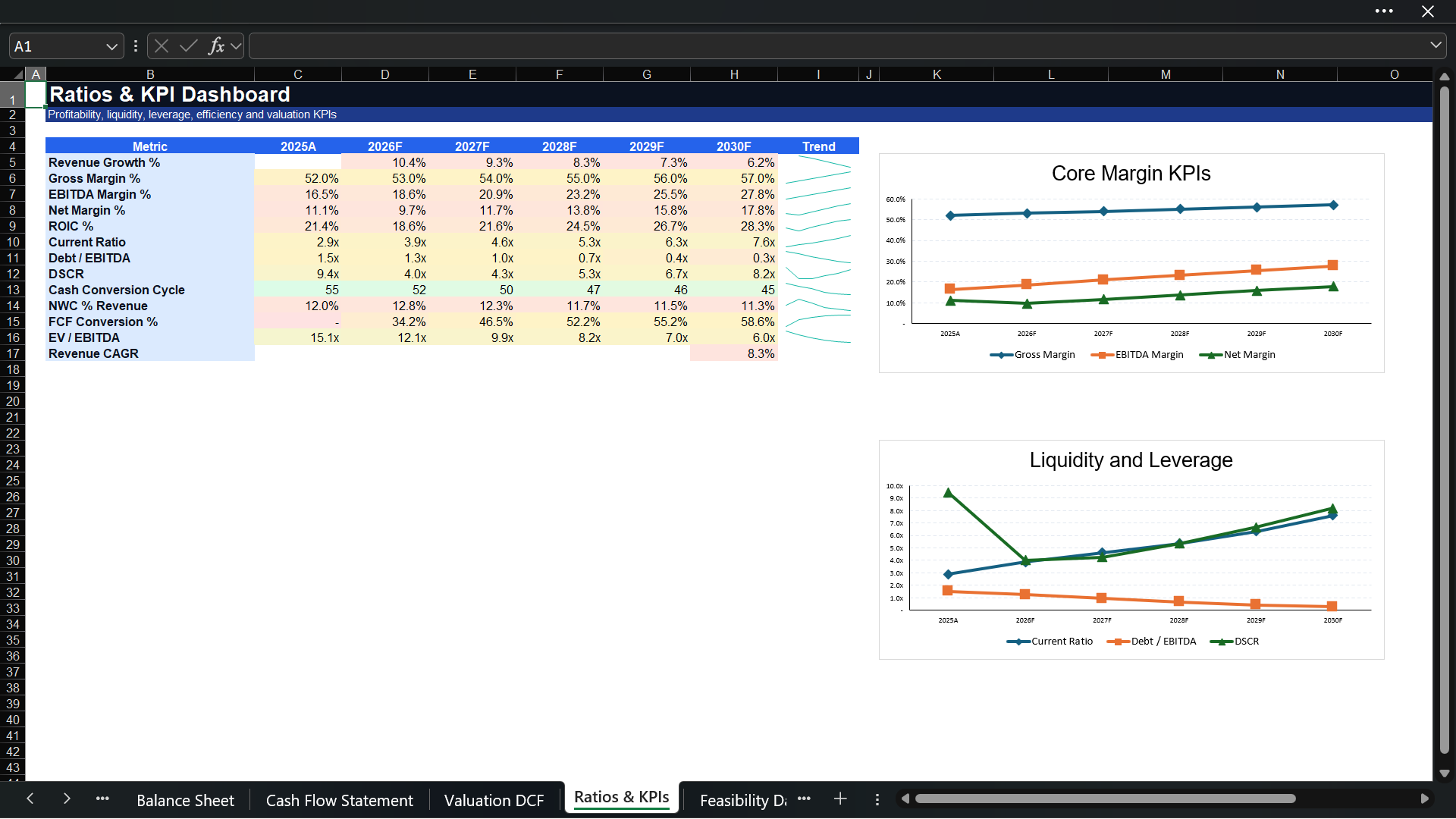
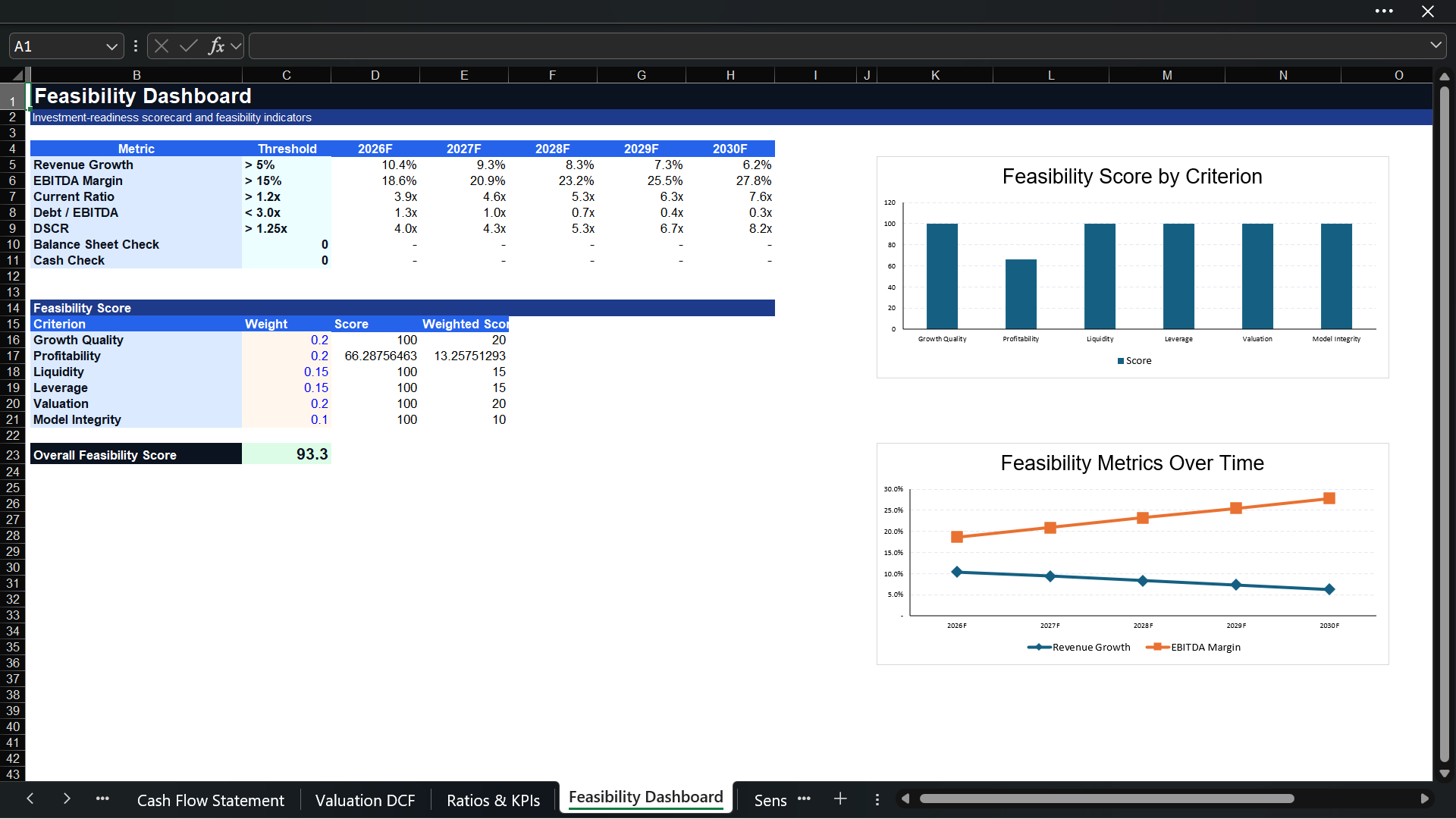
๐Ÿ“Œ Executive Dashboard ๐Ÿ“Œ KPI Dashboard ๐Ÿ“Œ Feasibility Dashboard ๐Ÿ“Œ Valuation Dashboard ๐Ÿ“Œ Revenue Trend Charts ๐Ÿ“Œ Profitability Charts ๐Ÿ“Œ Margin Analysis ๐Ÿ“Œ Cash Flow Charts ๐Ÿ“Œ Debt Analysis ๐Ÿ“Œ Working Capital Movement ๐Ÿ“Œ Scenario Comparison ๐Ÿ“Œ Sensitivity Table ๐Ÿ“Œ Sparkline Trend Analysis ๐Ÿ“Œ Key Financial Ratio Visuals

The dashboards are designed to help users quickly review business performance, identify trends, evaluate feasibility, and present financial outputs in a professional format.

๐Ÿ’ผ Key Outputs Generated

The model helps generate important financial outputs such as:

โ€ข Revenue Forecast โ€ข Gross Profit โ€ข EBITDA โ€ข EBIT โ€ข Net Profit โ€ข Operating Cash Flow โ€ข Free Cash Flow โ€ข Closing Cash Balance โ€ข Total Assets โ€ข Total Liabilities โ€ข Equity Position โ€ข Debt Balance โ€ข Working Capital Requirement โ€ข Break-even Indicators โ€ข NPV โ€ข IRR โ€ข WACC โ€ข Terminal Value โ€ข Enterprise Value โ€ข Equity Value โ€ข Payback Period โ€ข DSCR โ€ข Profit Margins โ€ข Return Metrics โ€ข Liquidity Ratios โ€ข Leverage Ratios

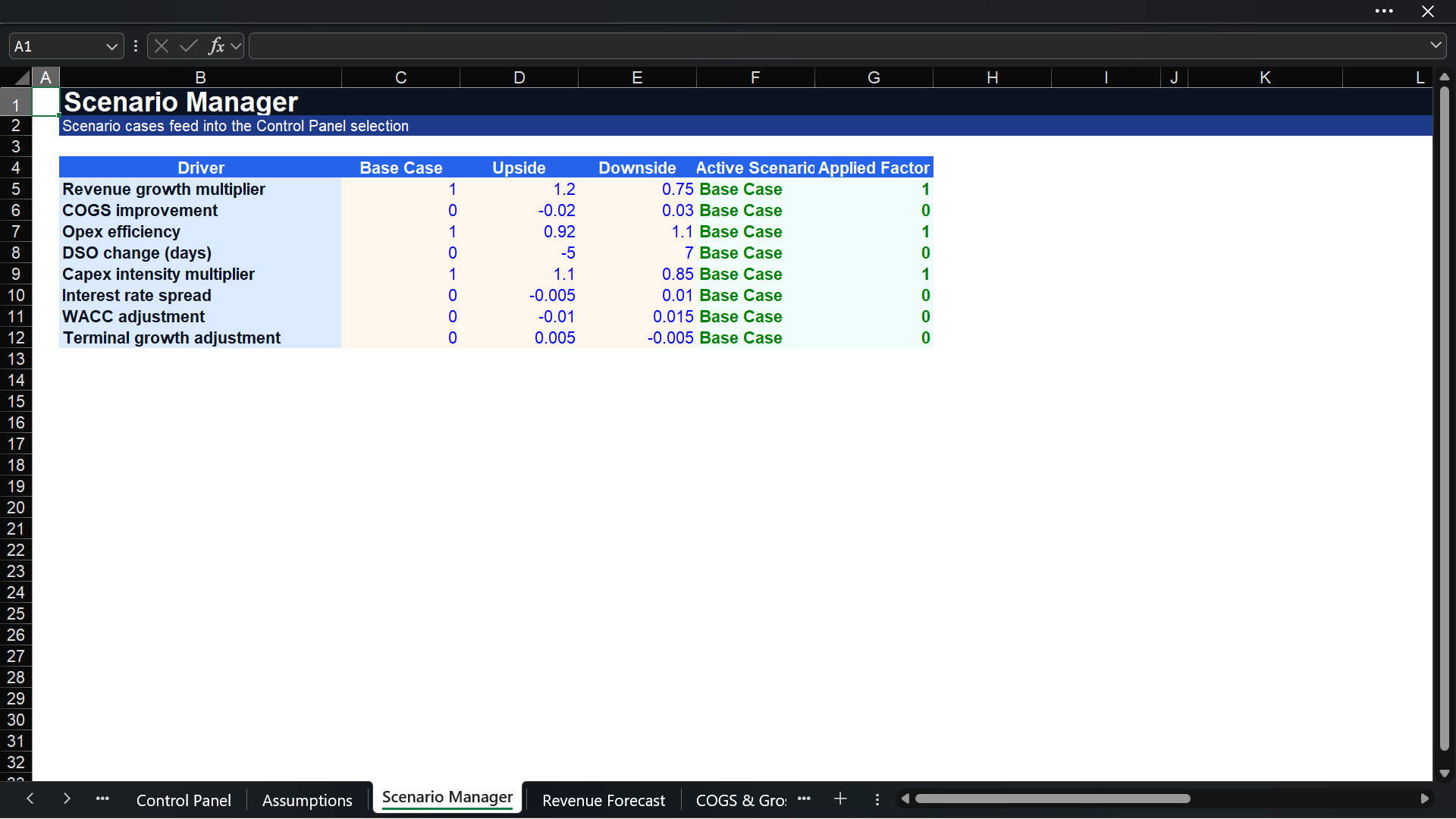
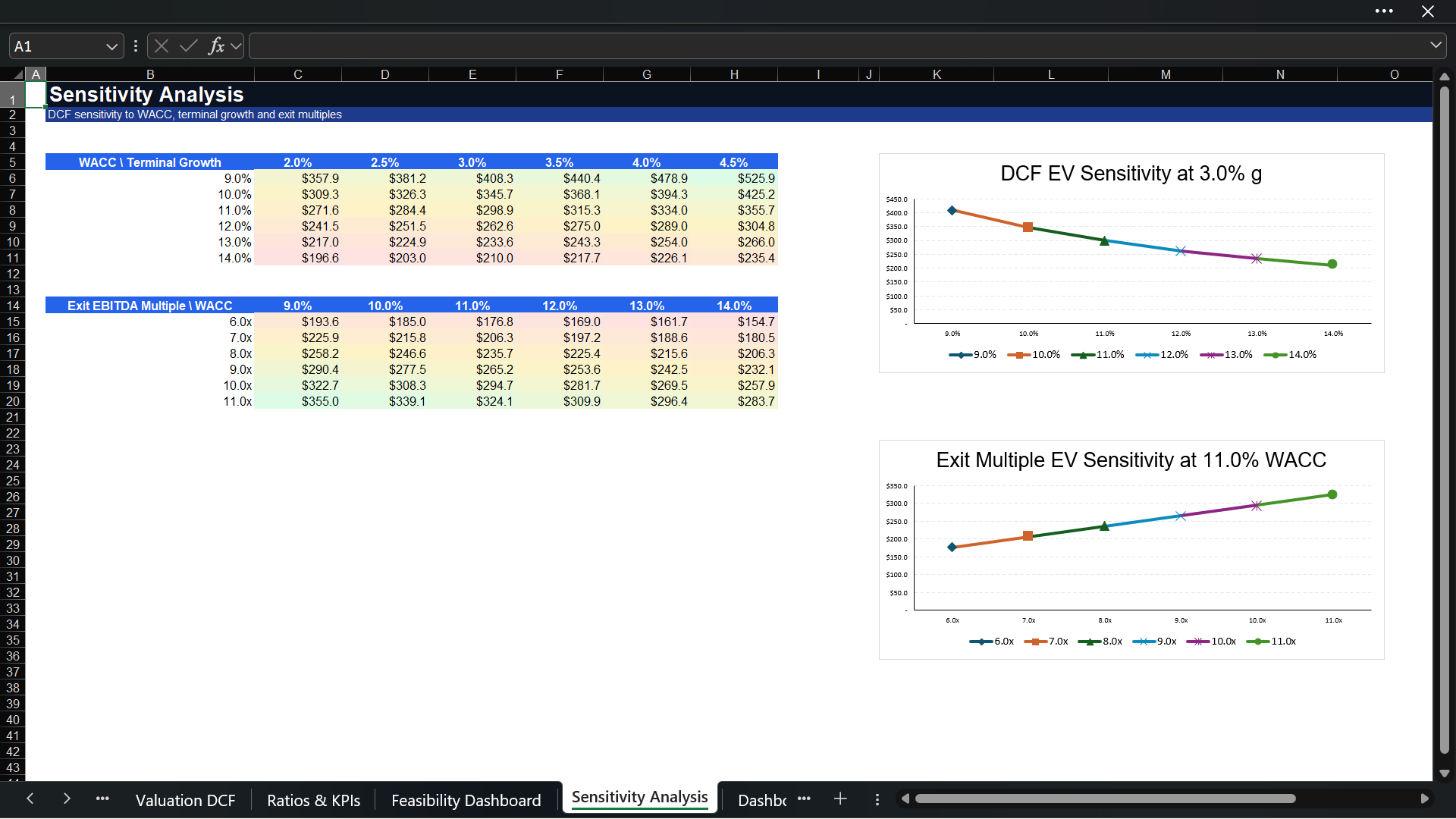
๐Ÿง  Scenario & Sensitivity Analysis

The model includes scenario and sensitivity functionality to help users test different assumptions and assess the impact on valuation and feasibility.

Users can analyze:

๐Ÿ”น Base Case ๐Ÿ”น Upside Case ๐Ÿ”น Downside Case ๐Ÿ”น Revenue Growth Sensitivity ๐Ÿ”น EBITDA Margin Sensitivity ๐Ÿ”น Discount Rate Sensitivity ๐Ÿ”น Terminal Growth Sensitivity ๐Ÿ”น Valuation Range ๐Ÿ”น Profitability Impact ๐Ÿ”น Cash Flow Impact

This makes the model useful for decision-making, risk assessment, investor discussions, and strategic planning.

โœ… Built-In Checks & Validation

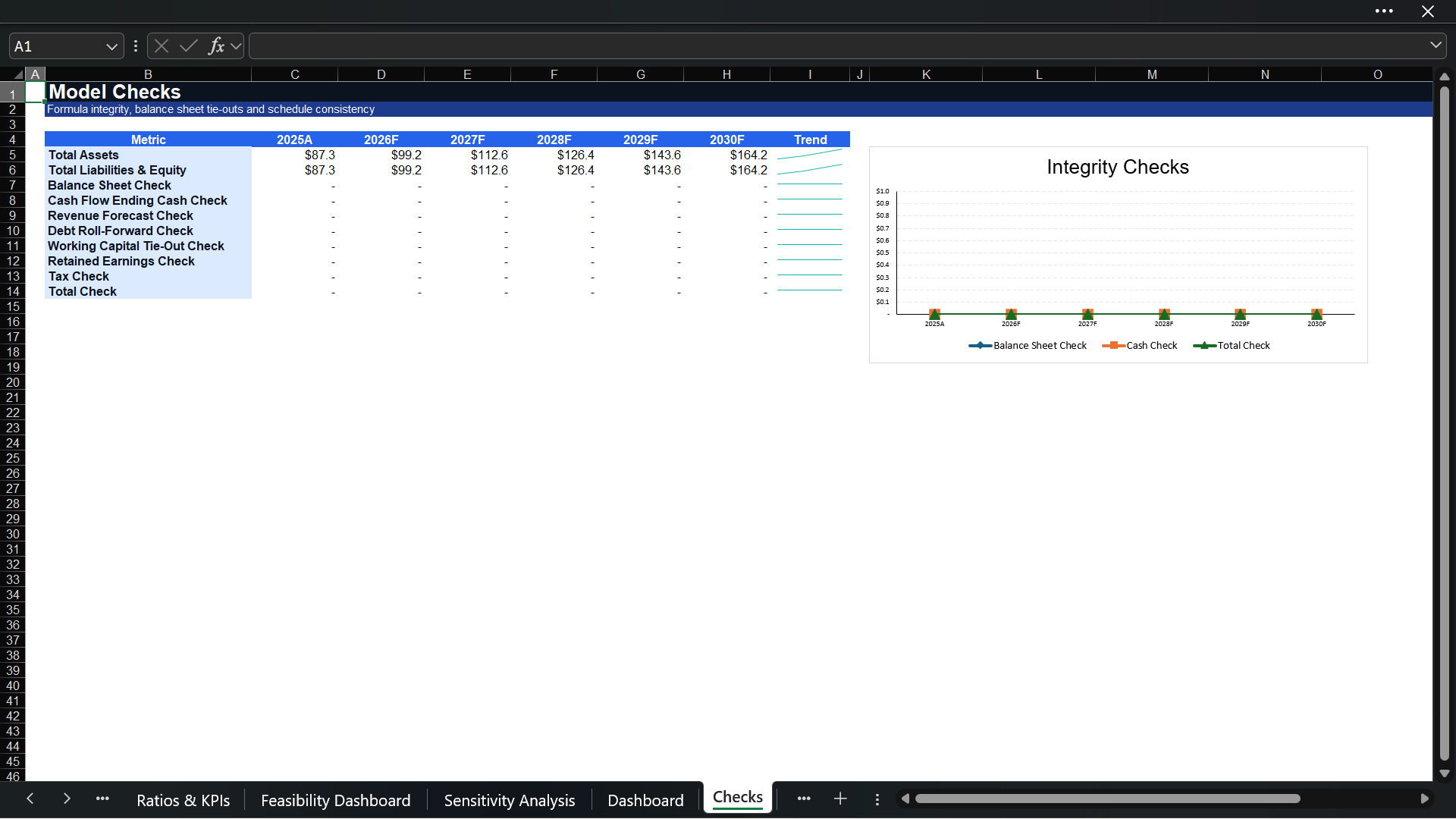
To improve reliability, the model includes validation checks and control checks. These checks help users identify whether the financial statements are balanced and whether the model logic is working correctly.

Included checks may cover:

โœ… Balance Sheet balancing check โœ… Cash flow reconciliation โœ… Debt schedule consistency โœ… Depreciation schedule check โœ… Working capital movement check โœ… Tax calculation review โœ… Opening and closing balance checks โœ… Error check indicators โœ… Formula consistency structure

If any issue or error is found, users are encouraged to contact the seller for support.

๐Ÿ› ๏ธ How to Use This Template

The model is designed to be user-friendly and easy to update.

Recommended workflow:

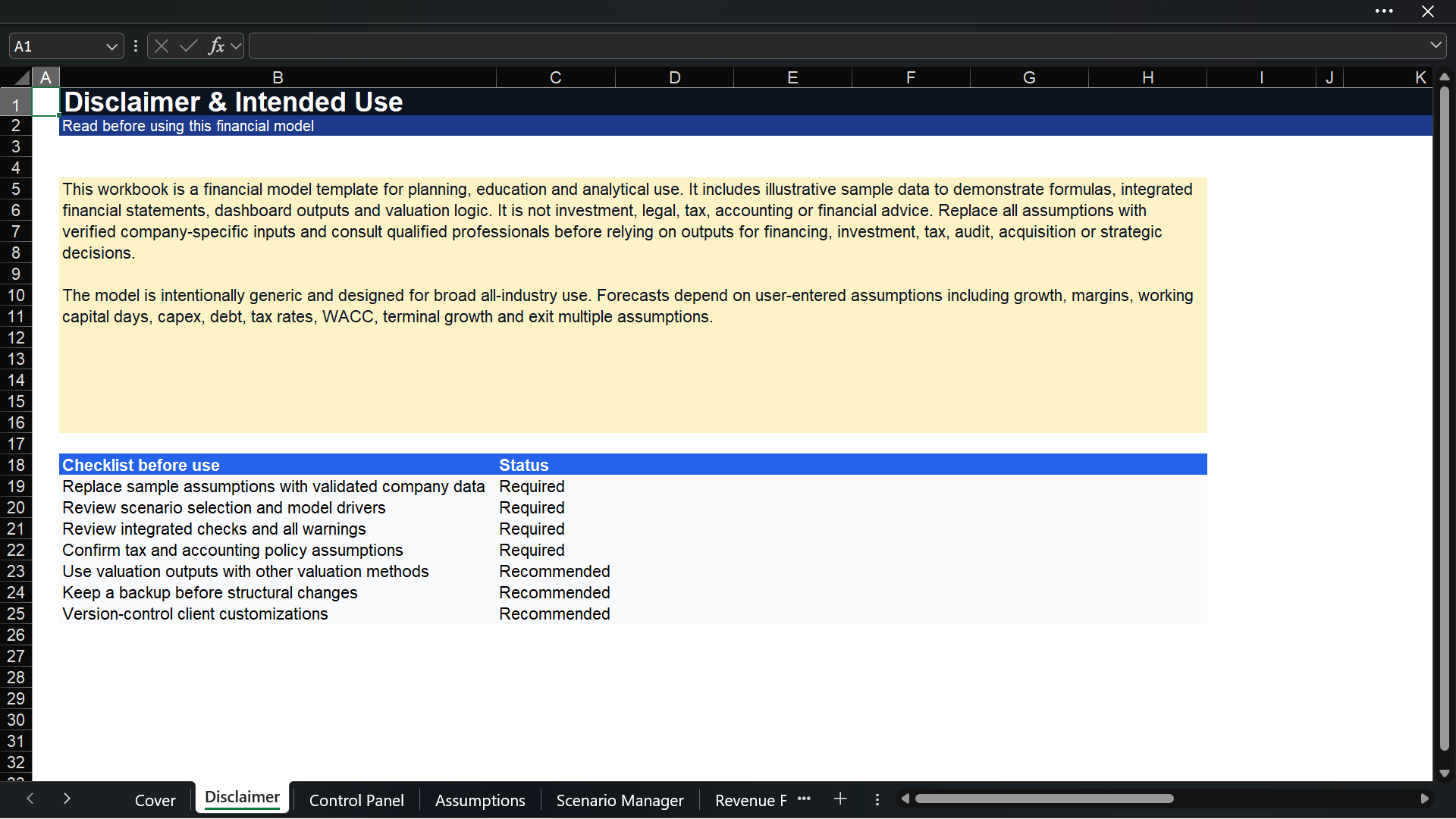
  1. Start from the Disclaimer / Instructions sheet.
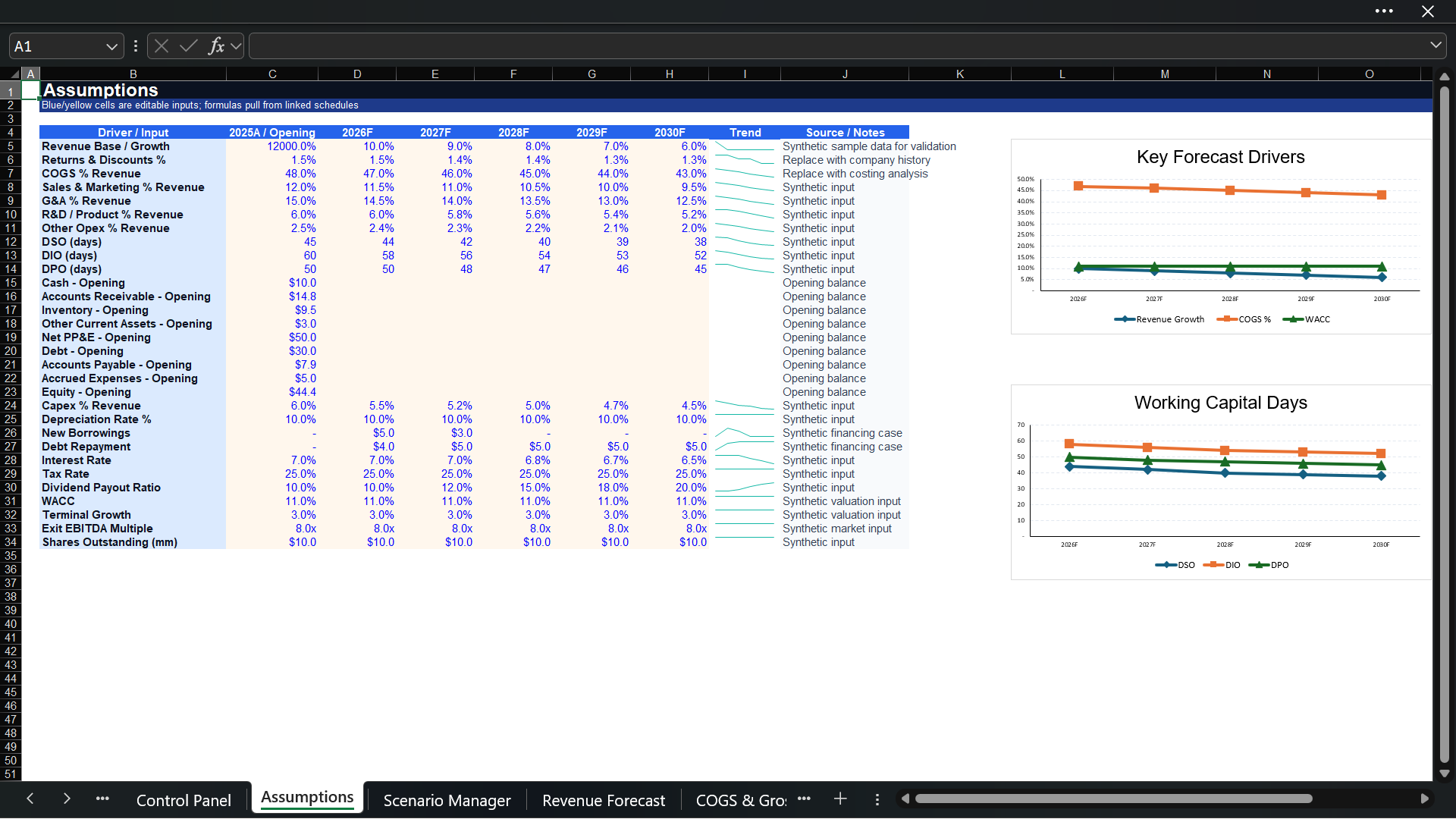
  2. Review the sample assumptions already included in the model.
  3. Replace sample inputs with your own business assumptions.
  4. Update revenue, cost, expense, CAPEX, working capital, debt, and tax assumptions.
  5. Review the integrated financial statements.
  6. Check dashboards, KPIs, charts, valuation, and feasibility outputs.
  7. Use scenario and sensitivity analysis to test different business cases.
  8. Export or present the final outputs for planning, reporting, or investor discussions.

The model includes sample data for demonstration purposes. Users should replace the sample inputs with their own business-specific assumptions before making financial decisions.

๐ŸŽฏ Why You Need This Financial Model

A professional integrated financial model is essential for understanding how a business is expected to perform financially over time. Instead of using separate disconnected spreadsheets, this template provides a structured and linked model where assumptions flow through to financial statements, valuation, feasibility outputs, and dashboards.

This model helps users answer important business questions such as:

โ€ข Is the business profitable? โ€ข How much cash does the business need? โ€ข What is the projected revenue and profit? โ€ข What are the key financial risks? โ€ข How much debt can the business support? โ€ข What is the estimated business value? โ€ข What happens under different scenarios? โ€ข What are the key KPIs investors and management should track? โ€ข Is the project financially feasible?

๐Ÿ‘ค Ideal For

This template is ideal for:

๐Ÿ‘จโ€๐Ÿ’ผ Business owners ๐Ÿ“Š Financial analysts ๐Ÿข CFOs and finance teams ๐Ÿš€ Startups ๐Ÿ’ผ Consultants ๐Ÿ“ˆ Investors ๐Ÿฆ Loan and funding applicants ๐Ÿ“‹ Business plan writers ๐ŸŽ“ Finance students ๐Ÿงพ Accountants ๐Ÿ“š Financial modeling professionals ๐Ÿง  Entrepreneurs ๐Ÿฌ SMEs and growing businesses

This Best Practice includes
1 Excel Template

Acquire business license for $20.00

Add to cart

Add to bookmarks

Discuss

Further information

The objective of this downloadable best practice is to provide users with a professional, structured, and easy-to-use Excel financial model for preparing a complete 5-year forecast with integrated financial statements, supporting schedules, valuation analysis, feasibility review, KPIs, dashboards, charts, and financial checks.

This template is designed to help users:
โœ… Build a professional 5-year financial forecast
โœ… Prepare integrated Income Statement, Balance Sheet, and Cash Flow Statement
โœ… Analyze business profitability, liquidity, cash flow, and financial position
โœ… Review key financial ratios and performance indicators
โœ… Evaluate valuation through DCF methodology
โœ… Test assumptions using scenario and sensitivity analysis
โœ… Present financial outputs in a clean and professional dashboard format
โœ… Support business planning, fundraising, budgeting, investor reporting, and management decision-making
โœ… Save time by using a ready-made financial model structure instead of building one from scratch
โœ… Improve financial planning accuracy through linked schedules and validation checks
The model also helps users understand how changes in revenue, costs, working capital, CAPEX, debt, and tax assumptions impact the overall financial statements and business valuation.

This downloadable best practice applies best when the user needs a professional, flexible, and editable Excel model for general business financial forecasting and analysis.
It is best suited for:
โœ… Startups preparing financial projections
โœ… SMEs creating business plans and budgets
โœ… Entrepreneurs evaluating business feasibility
โœ… CFOs and finance teams building internal planning models
โœ… Consultants preparing client financial models
โœ… Financial analysts performing valuation and scenario analysis
โœ… Investors reviewing projected financial performance
โœ… Businesses preparing loan applications or funding presentations
โœ… Users who need a 5-year integrated three-statement model
โœ… Companies that want dashboards, KPIs, charts, and financial summaries
โœ… Users who need a general all-industry model that can be customized
โœ… Business plan writers and advisors preparing investor-ready financial sections

This template works best when the user has basic business assumptions available, such as revenue expectations, cost structure, operating expenses, working capital assumptions, CAPEX plans, debt financing assumptions, and tax assumptions.
It is also ideal for users who want a clean financial model that combines forecasting, valuation, feasibility analysis, dashboards, charts, and professional reporting in one workbook.

This downloadable best practice may not apply ideally where a highly specialized, industry-specific, or regulatory-complex model is required without further customization.

It may not be ideal for:
โŒ Businesses requiring highly complex industry-specific logic without modification
โŒ Banks, insurance companies, or financial institutions requiring advanced regulatory capital modeling
โŒ Project finance models requiring complex debt sculpting, DSCR covenants, LLCR, PLCR, and lender-specific structures
โŒ Real estate developments requiring detailed unit-by-unit sales, lease-up, construction drawdown, and property-level assumptions
โŒ Mining, oil & gas, infrastructure, or renewable energy projects requiring technical production schedules
โŒ IFRS 9, IFRS 16, IFRS 17, or other accounting-standard-specific models requiring detailed compliance calculations
โŒ Businesses that need macros, VBA automation, or database-level integrations
โŒ Users expecting the model to produce guaranteed financial results or investment advice
โŒ Situations where professional legal, tax, accounting, or investment advice is required
โŒ Companies with very unique business models that require a fully custom-built model
This template is intended as a professional forecasting and planning tool. Users should review, adapt, and customize the assumptions based on their own business circumstances before using the outputs for decision-making, fundraising, or investment purposes.


0.0 / 5 (0 votes)

please wait...