Publication number: ELQ-33178-1
View all versions & Certificate

Tool Manufacturer Financial Model
A comprehensive editable, 5-year 3 statement MS Excel spreadsheet for tracking Tool Manufacturer finances.
 by AllFinancialModels
AllFinancialModels offer a curated selection of high-quality yet financial model templates designed to support a wide range of business needs.Follow
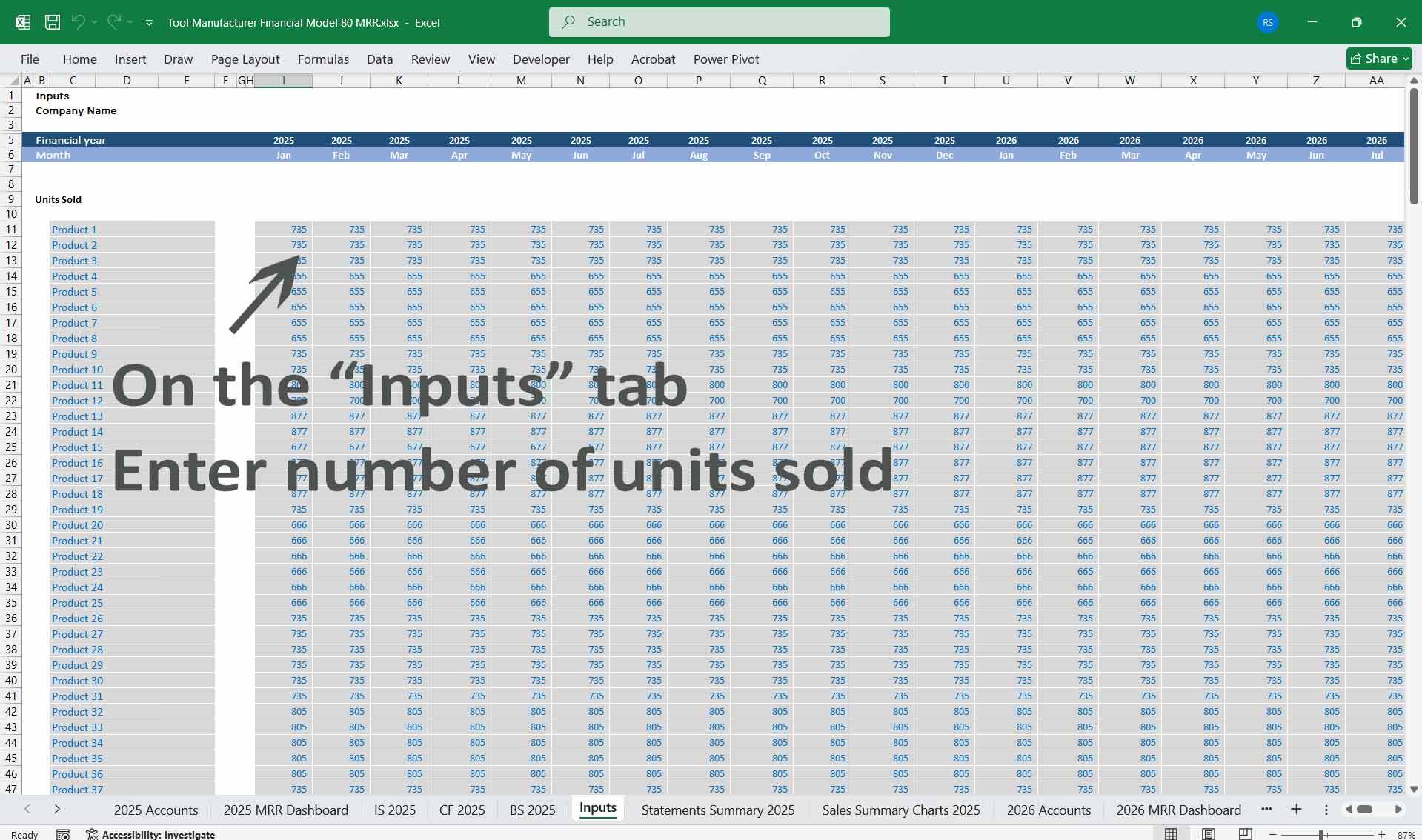
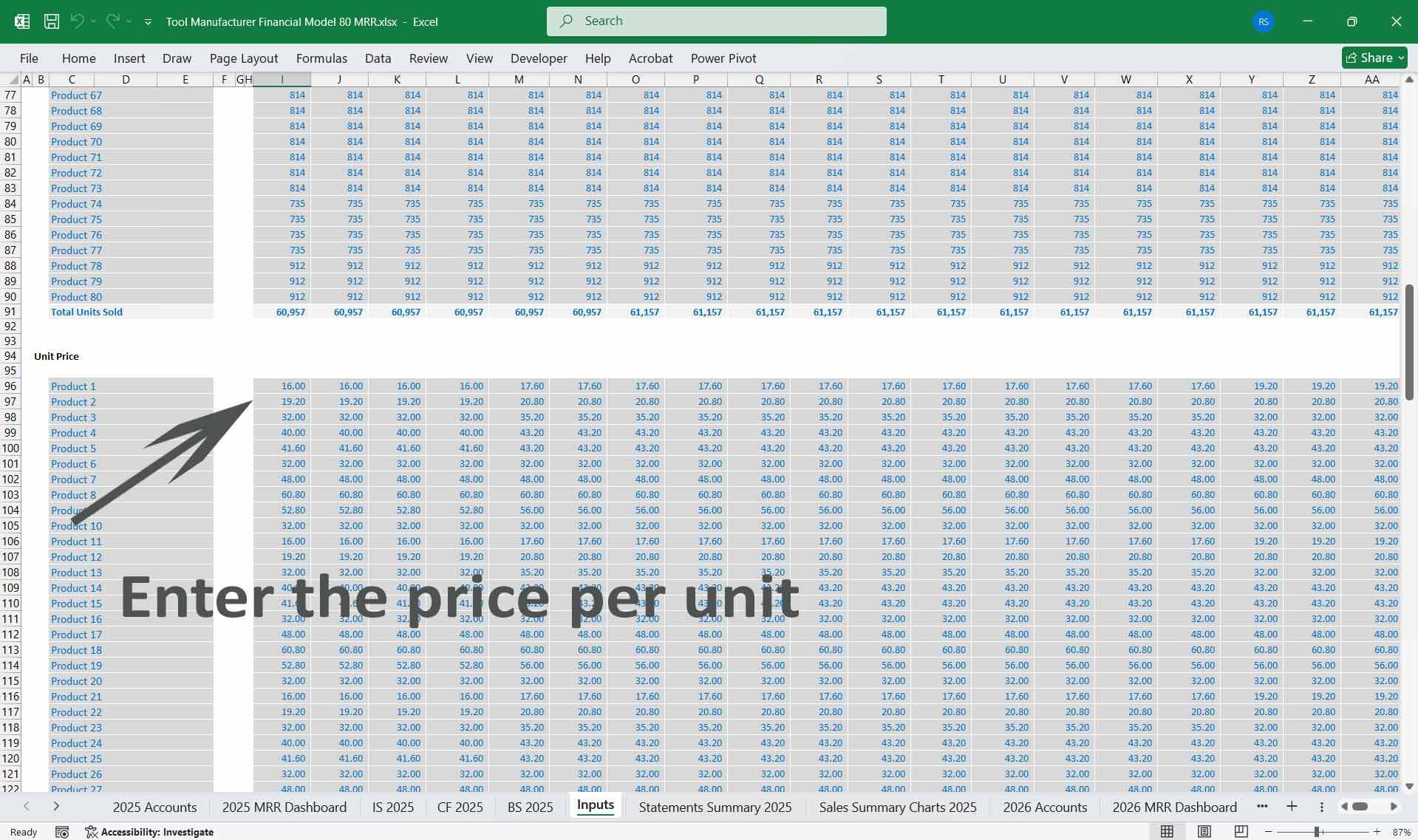
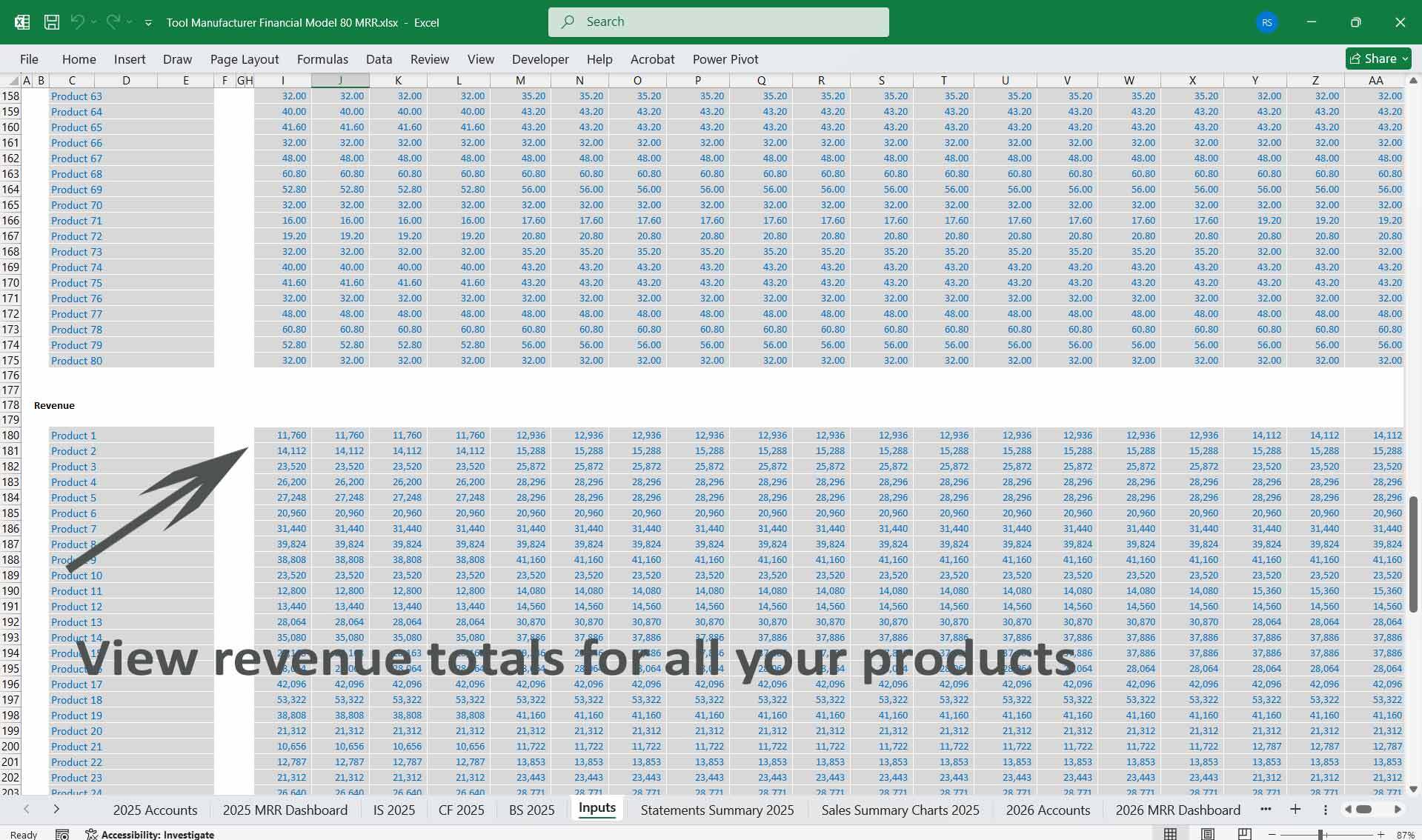
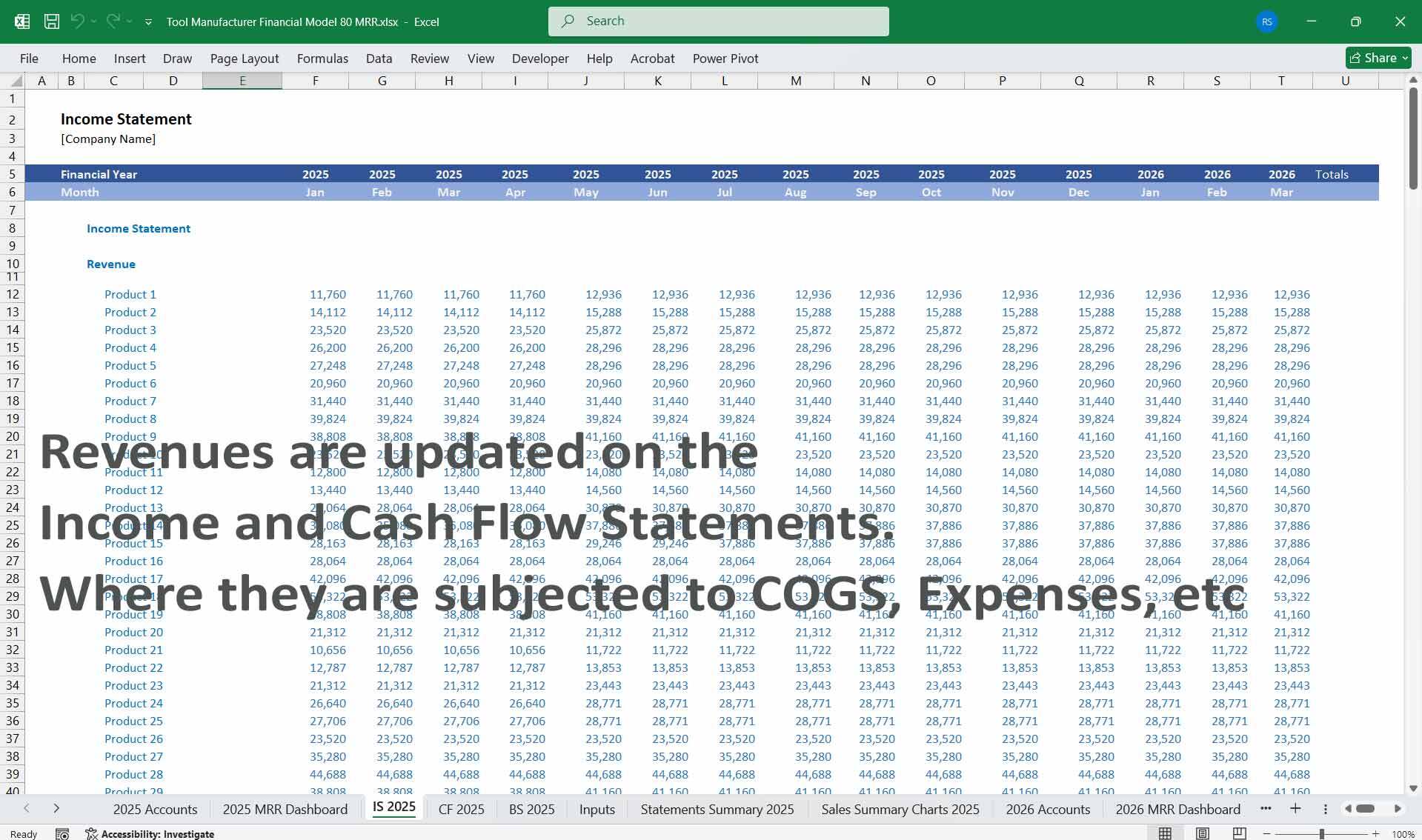
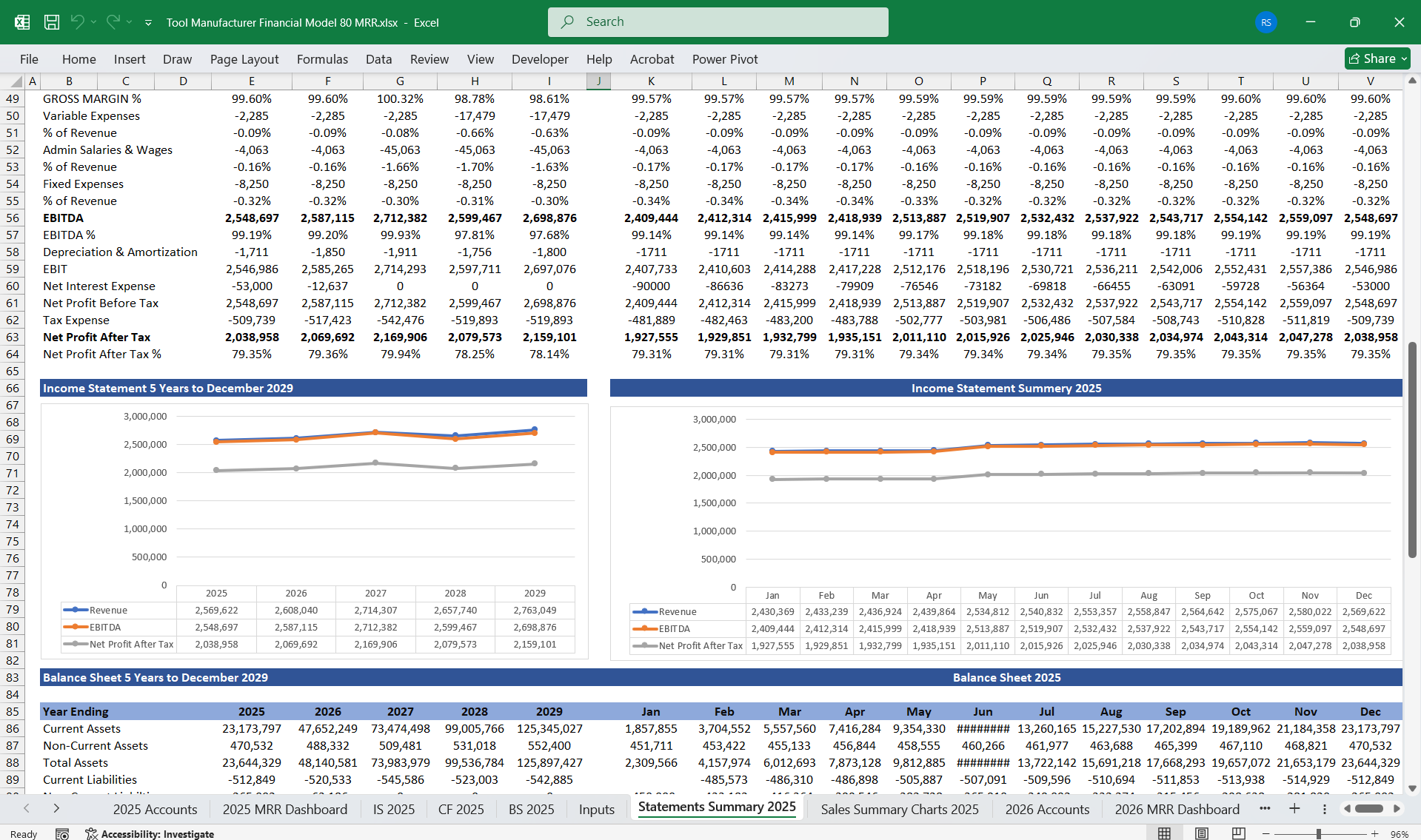
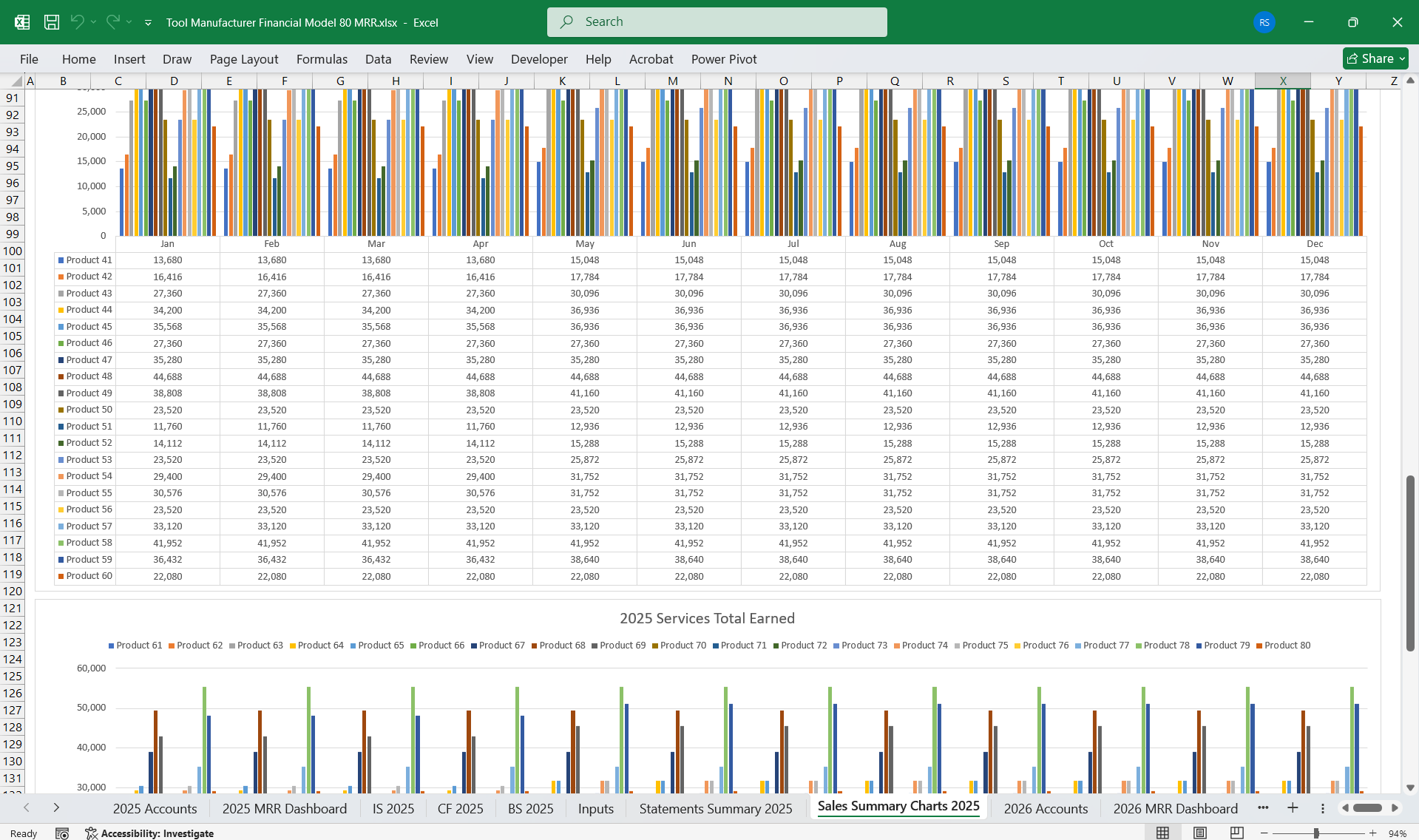
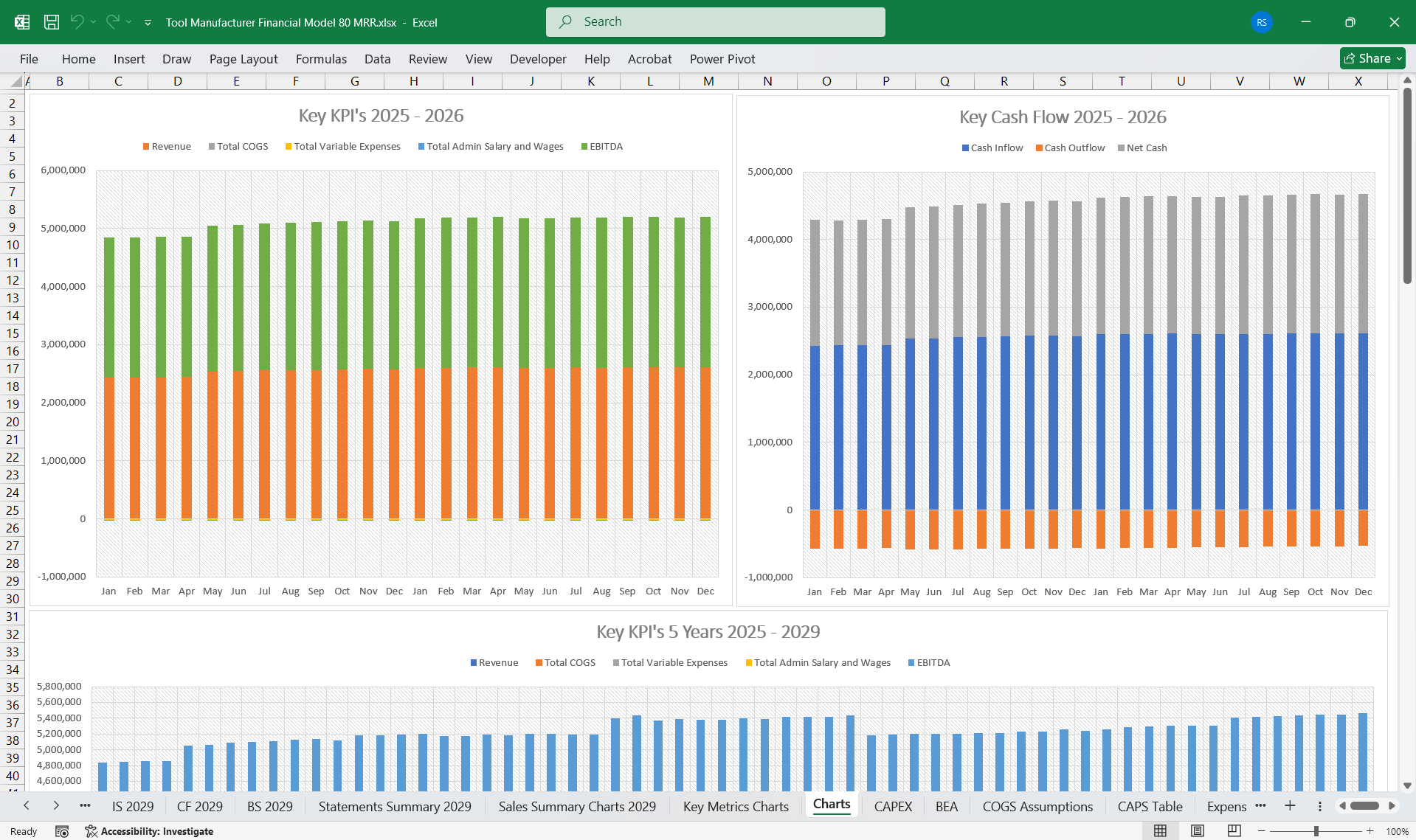
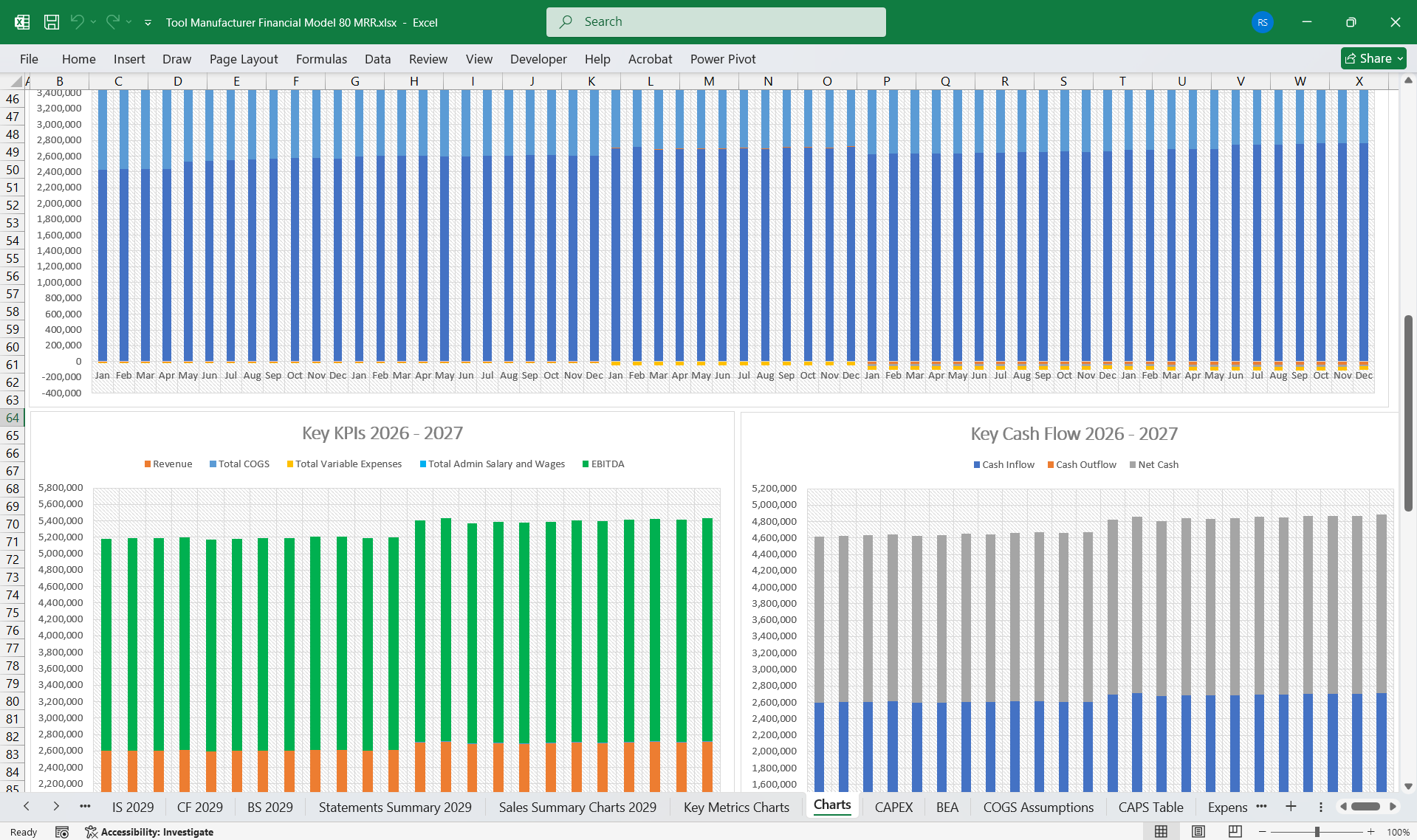
This detailed financial model is tailored for a Tool Manufacturer, creating precision-engineered parts for aerospace, automotive, healthcare, and electronics industries. The model encompasses the Income Statement, Cash Flow Statement, and Balance Sheet, with segmented projections for 40- and 80-product lines, along with a 6-Tier Subscription Model aimed at offering specialized services.
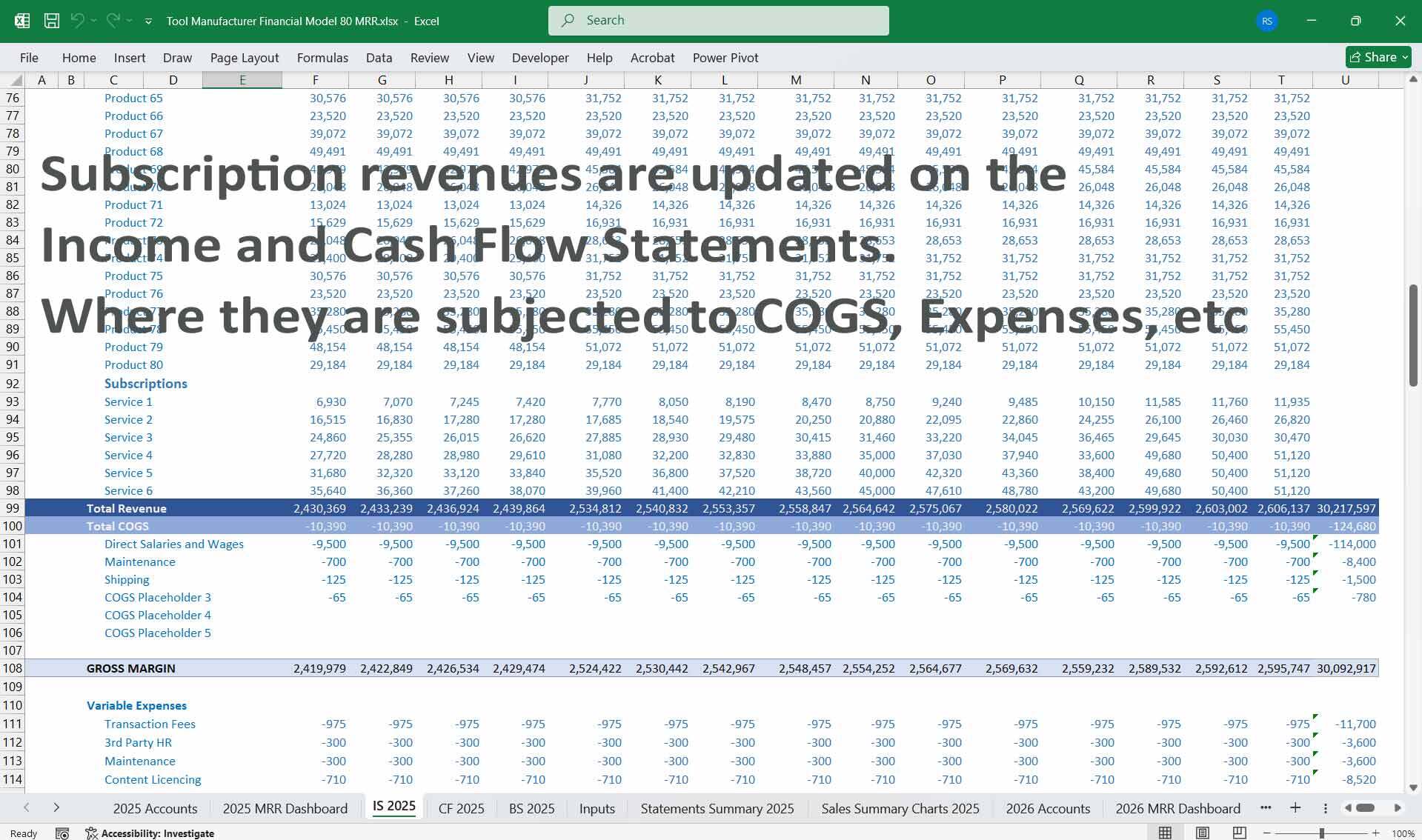
1. Income StatementRevenue Streams- Component Sales:
- Sales of CNC-manufactured parts, segmented into custom and standard product categories.
- Custom: High-margin niche products for bespoke client requirements.
- Standard: Regular production parts for repeat orders (e.g., gears, brackets).
- Sales of CNC-manufactured parts, segmented into custom and standard product categories.
- Recurring Services Revenue:
- Maintenance contracts, calibration of CNC machines, and part replacements.
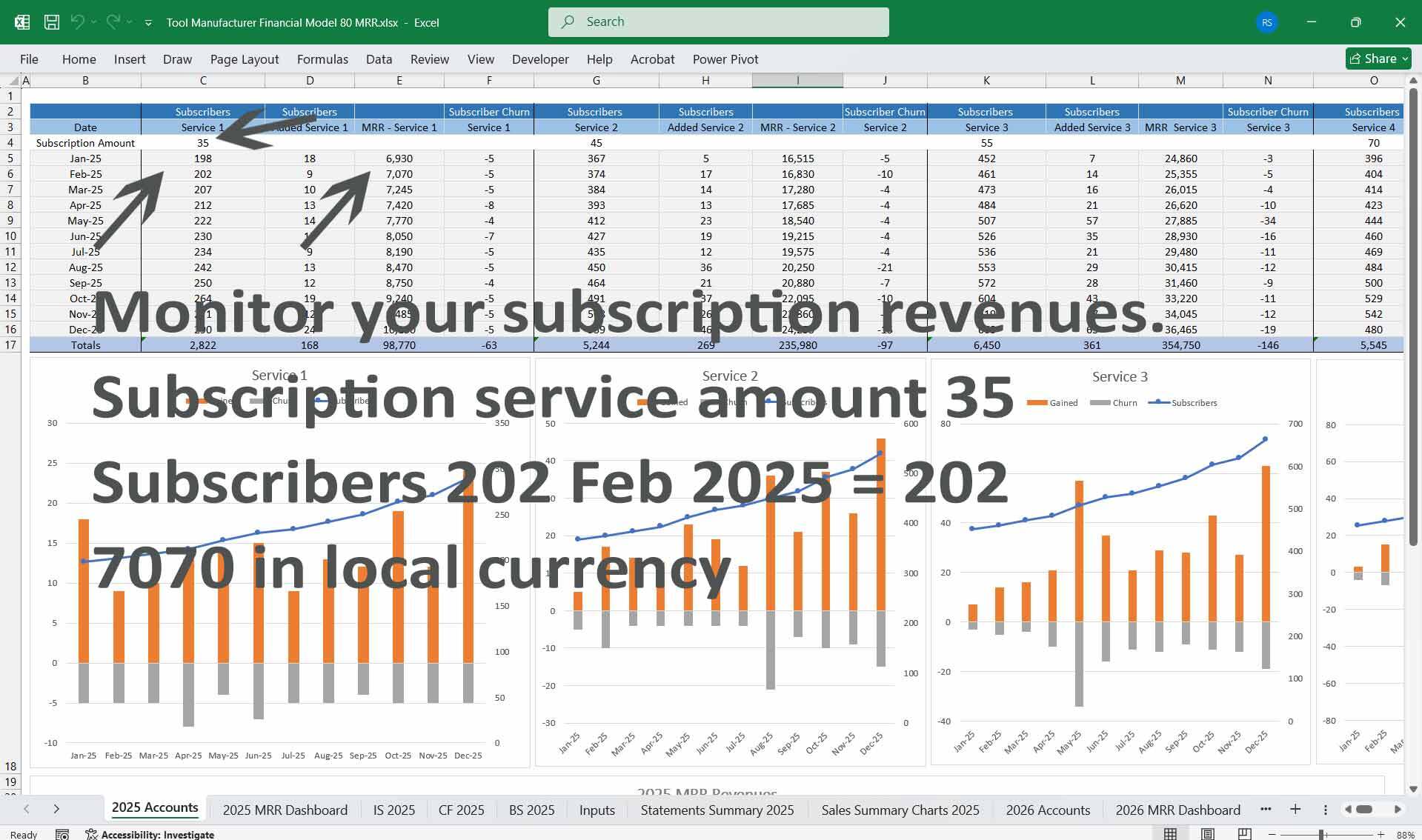
- Tiered subscription revenue for design optimization and supply chain integration.
- Tooling & Setup Fees:
- One-time charges for creating molds, dies, and jigs required for custom designs.
- After-Sales Support:
- Revenue from servicing CNC parts and selling add-ons.
- COGS:
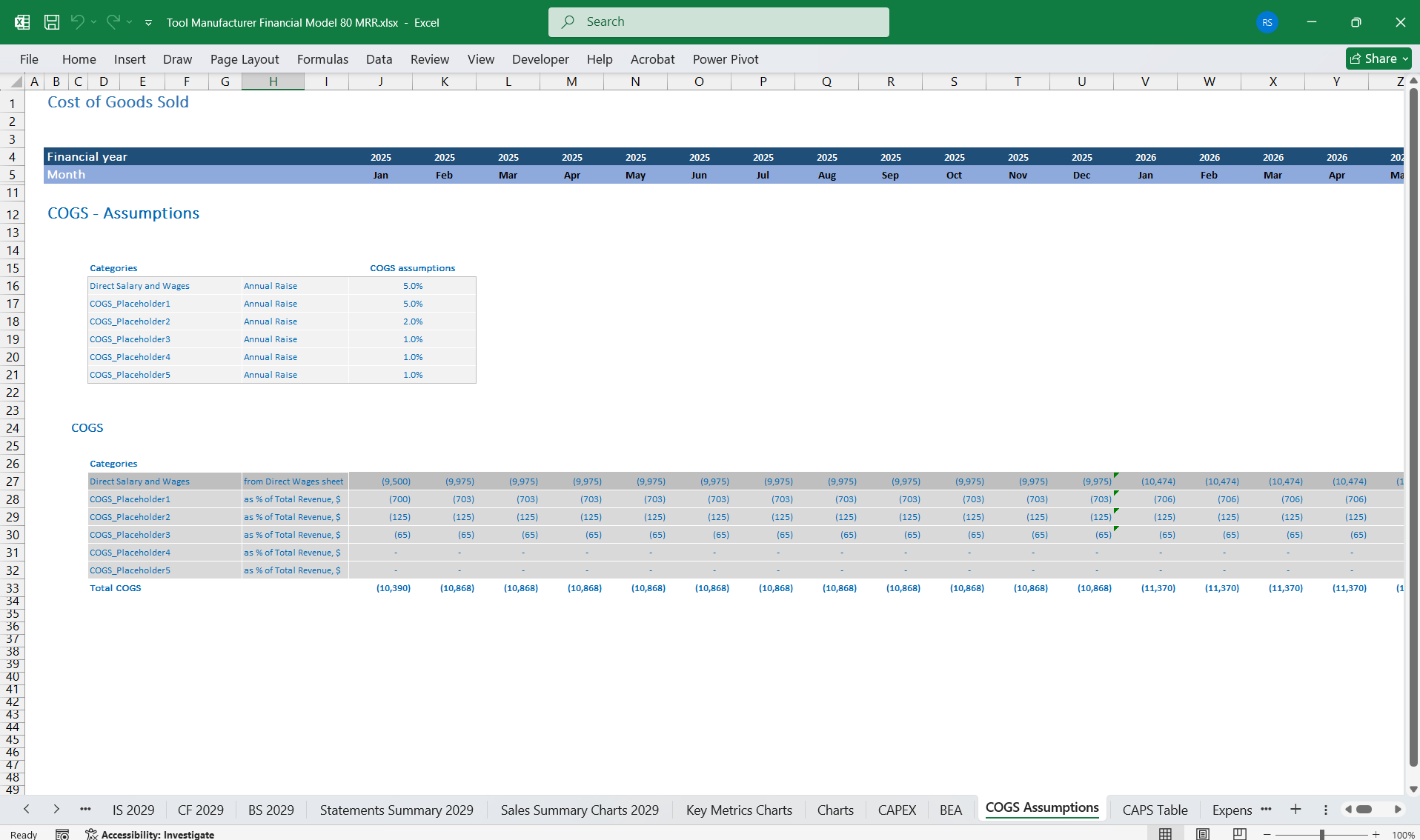
- Raw Materials: Metal alloys, plastics, composites used in manufacturing.
- Direct Labor: Skilled machinists and CNC operators.
- Overheads: Depreciation of CNC machines, utility costs, and maintenance.
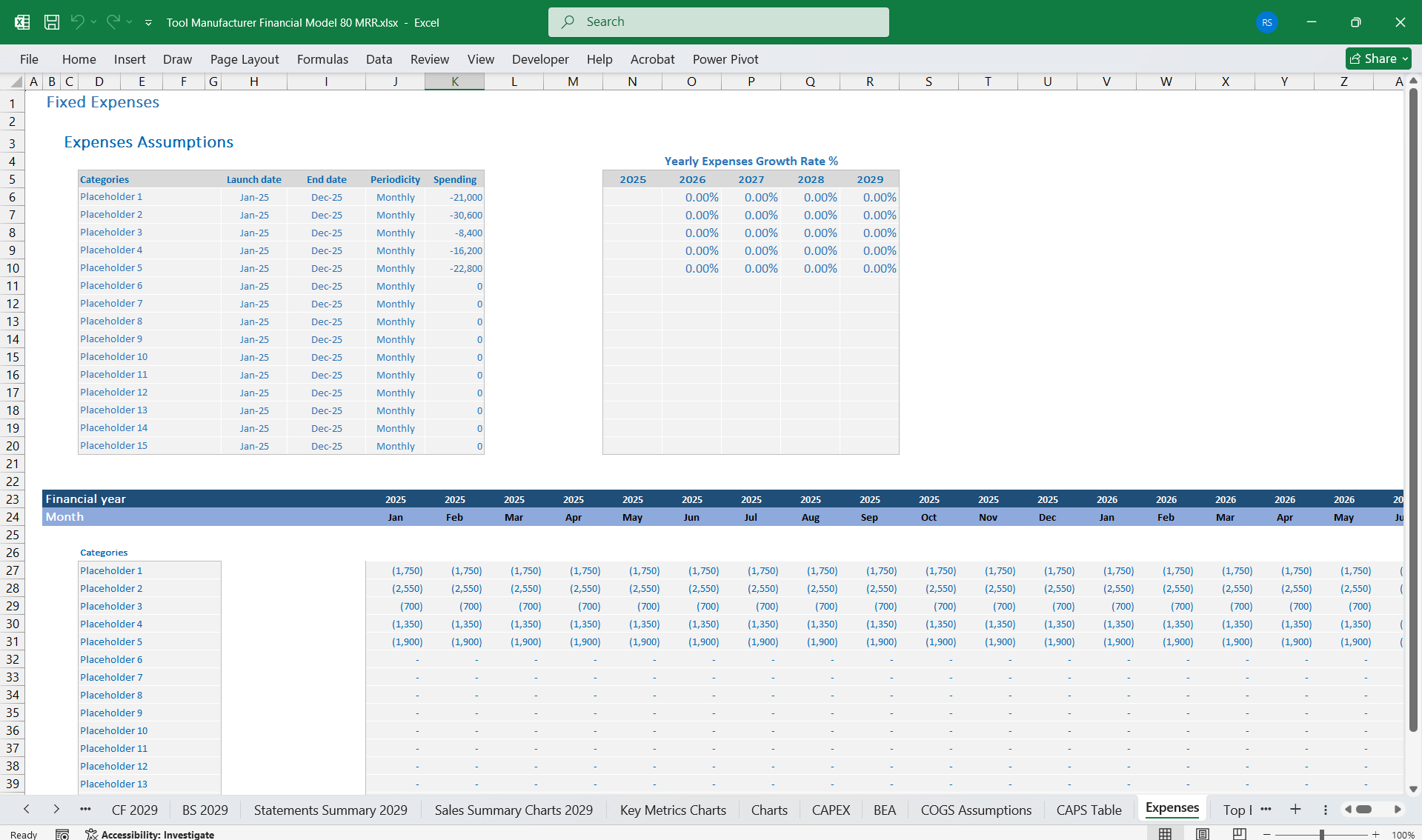
- Operating Expenses:
- R&D: Development of more efficient manufacturing techniques.
- Sales & Marketing: Promoting services to industries and maintaining client relationships.
- Administrative: Salaries, office expenses, and ERP software.
- Other Expenses:
- Regulatory and compliance costs for different industries (ISO certifications).
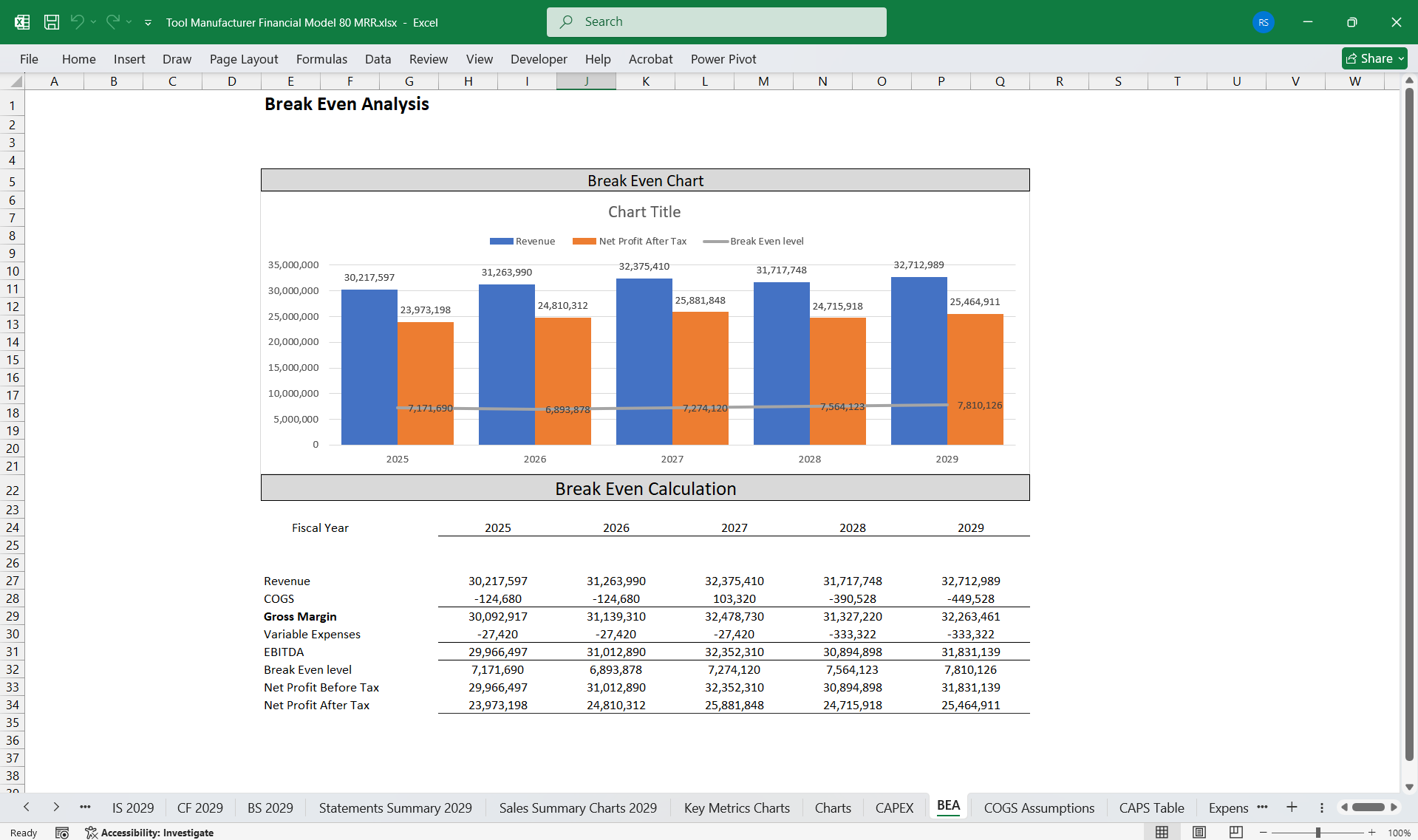
- Gross Profit: Revenue - COGS.
- EBITDA: Gross Profit - Operating Expenses.
- Net Income: EBITDA - Taxes - Interest.
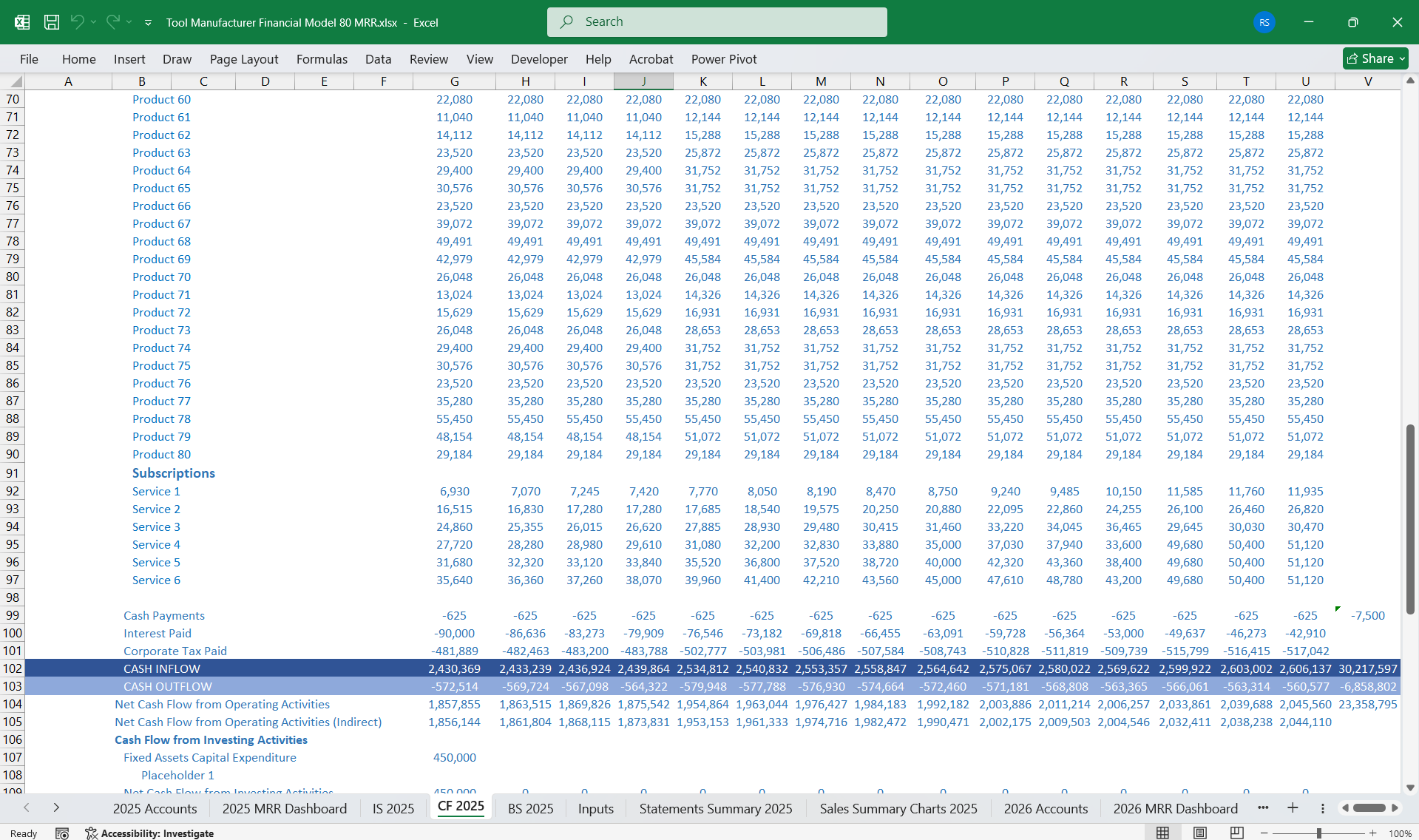
- Inflows:
- Payments received for CNC products and subscription services.
- Advance payments for tooling and custom jobs.
- Regular recurring revenue from Tier 6 subscriptions.
- Outflows:
- Raw material procurement and supplier payments.
- Wages for machinists, designers, and administrative staff.
- Overhead payments (utilities, CNC maintenance, and insurance).
- Inflows:
- Disposal of old machinery or surplus raw material inventory.
- Outflows:
- Purchases of new CNC machines for expanded product capacity.
- Development of proprietary CNC software for faster production.
- Inflows:
- Equity injections for capacity expansion.
- Debt financing for CNC line upgrades.
- Outflows:
- Loan repayments.
- Dividend payments.
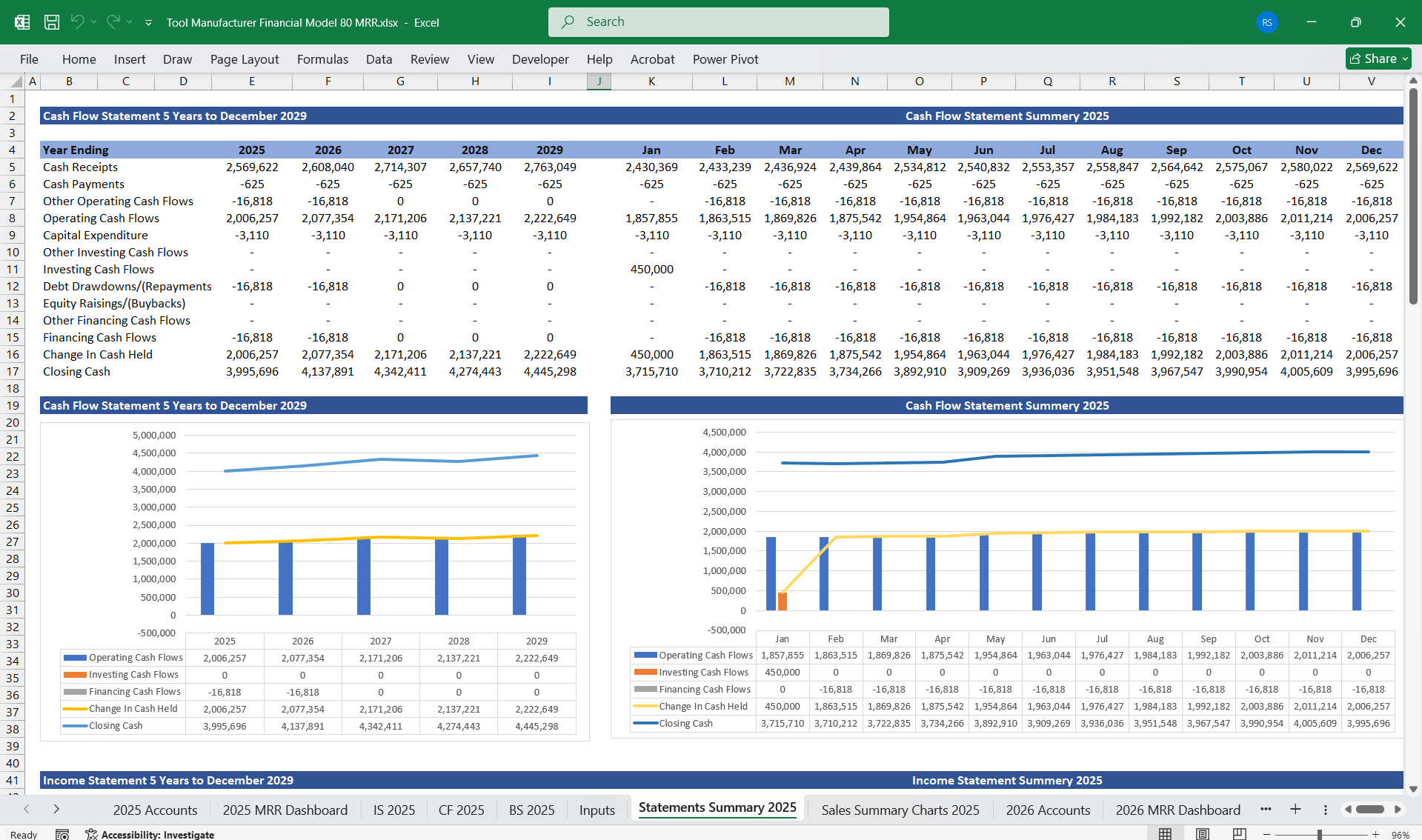
- Free Cash Flow (FCF): Operating Cash Flow - Capital Expenditures.
- Operating Cash Conversion: Measures the efficiency of turning revenue into usable cash.
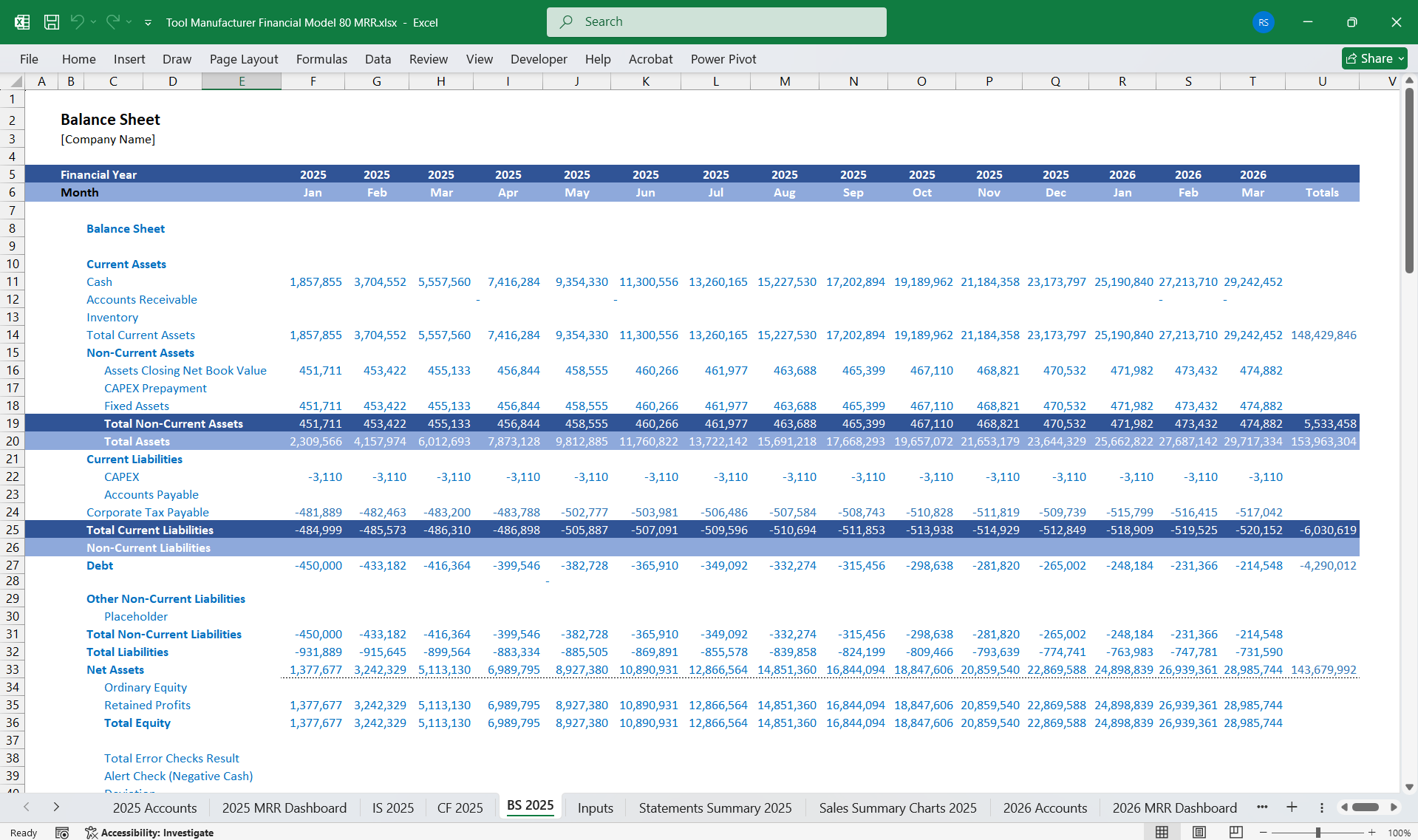
- Current Assets:
- Cash reserves for operational continuity.
- Accounts receivable from industrial clients.
- Inventory of raw materials, semi-finished goods, and finished products.
- Non-Current Assets:
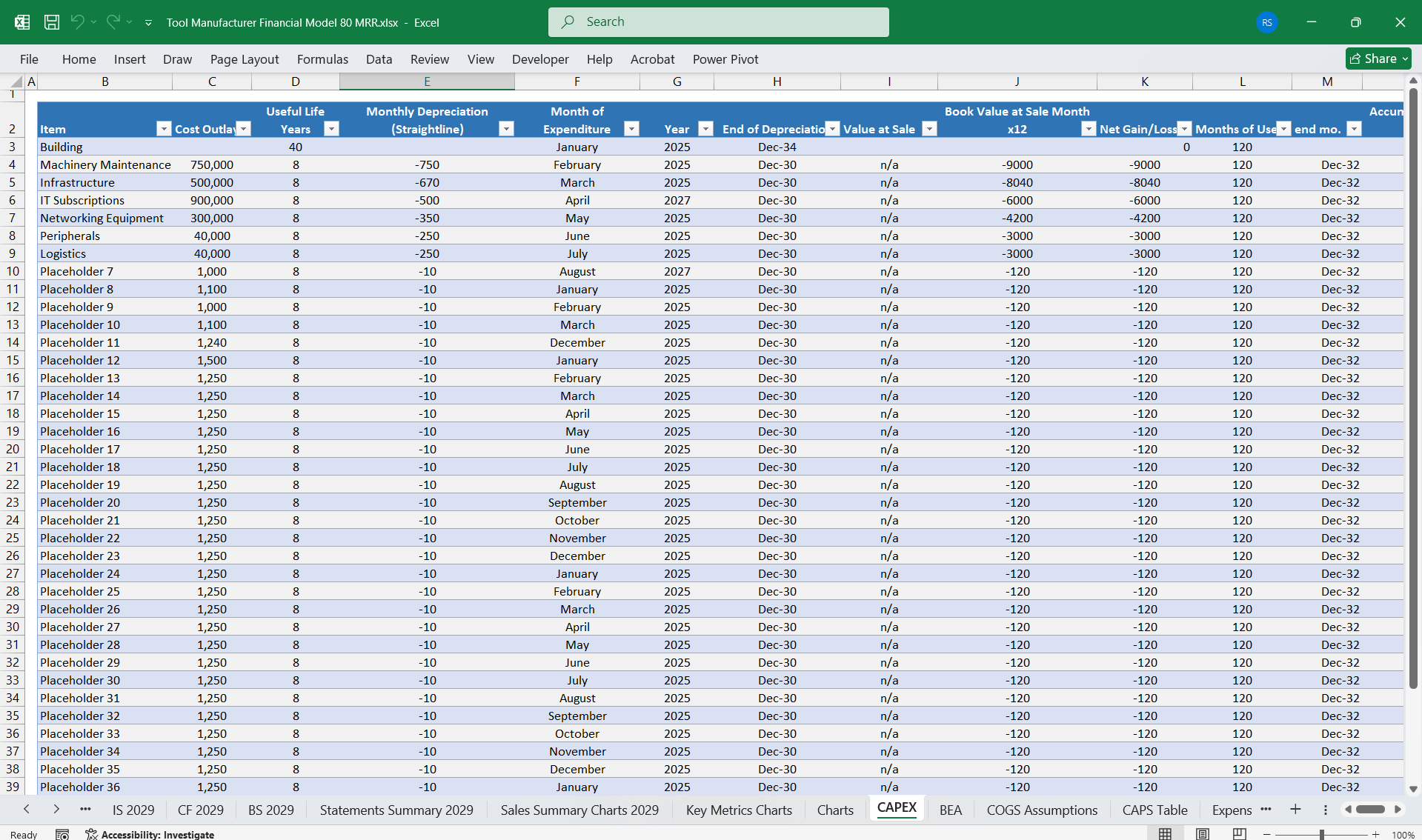
- CNC machines, molds, and tooling setups.
- Intangible assets like software licenses for CNC programming.
- Current Liabilities:
- Payables to suppliers.
- Accrued expenses for wages, utilities, and deferred subscriptions.
- Non-Current Liabilities:
- Long-term loans for expansion and machine upgrades.
- Retained earnings reinvested into growth.
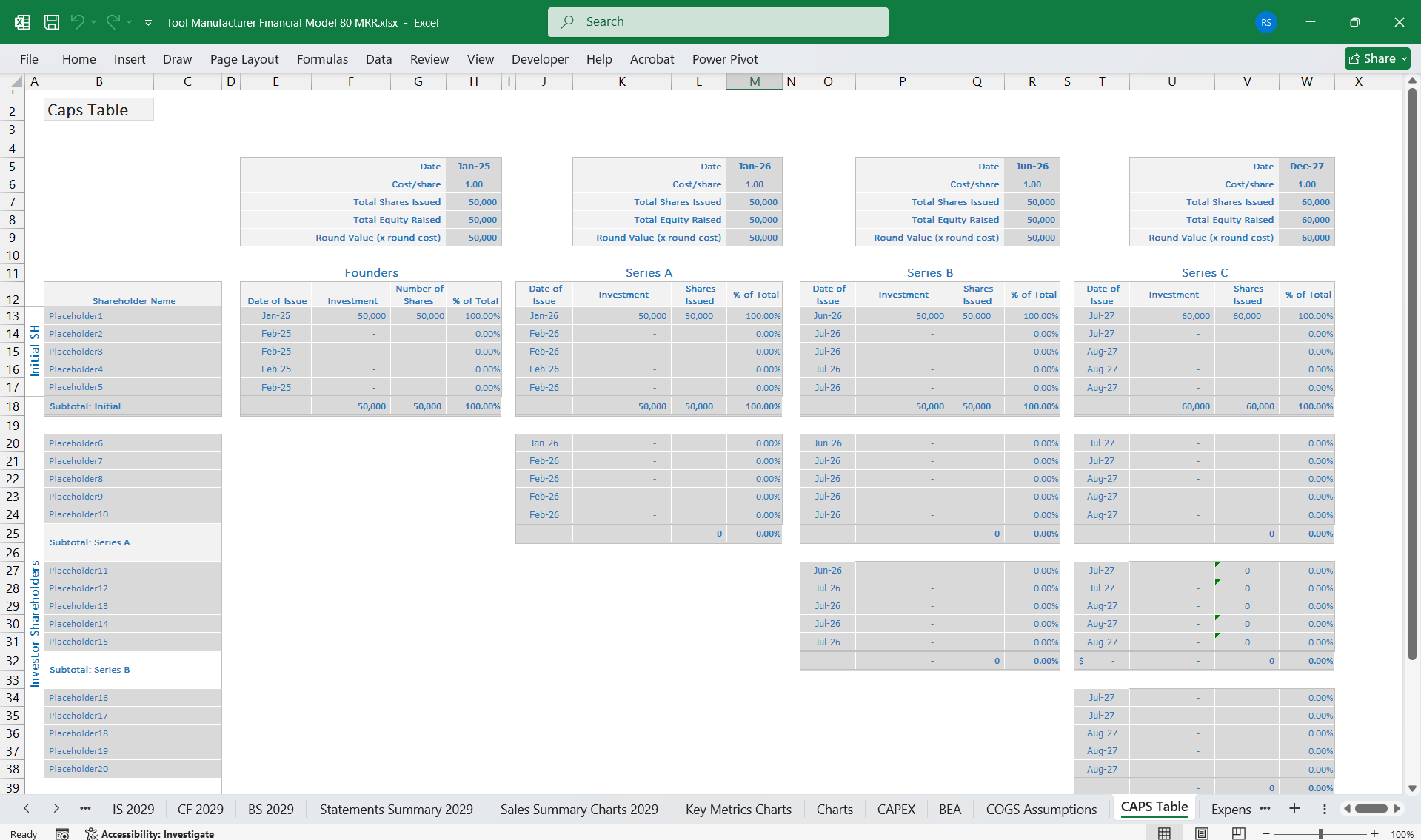
- Share capital raised for technology and product diversification.
Focus on more diverse industries and offering specialized, high-value components.
- Revenue Generation:
- Broad industry appeal, including aerospace and healthcare, requiring precision and innovation.
- High-margin products, e.g., surgical instruments, and aerospace-grade parts.
- Cost Structure:
- Increased R&D and quality control costs to meet regulatory standards.
- Higher inventory management complexity and logistical expenses.
- Target Audience:
- Large-scale industrial manufacturers, export markets, and niche sectors.
- Margins:
- Gross Margin: ~45-55%.
- Net Margin: ~15-20% from economies of scale and premium pricing.
A recurring revenue model offering services and analytics to clients.
- Tier 1 (Basic):
- Access to CNC performance metrics.
- CAD file repository for downloaded templates.
- Tier 2 (Standard):
- Includes Basic features.
- Periodic machine calibration and setup reports.
- Tier 3 (Professional):
- Includes Standard features.
- Advanced production efficiency reports and tooling suggestions.
- Tier 4 (Premium):
- Real-time production monitoring tools for client-specific jobs.
- Custom reports for regulatory compliance tracking.
- Tier 5 (Enterprise):
- Includes Premium features.
- Supply chain integration and bulk discounts on custom designs.
- Tier 6 (Custom):
- Fully bespoke services: Dedicated account manager, R&D collaboration, and machine performance optimization.
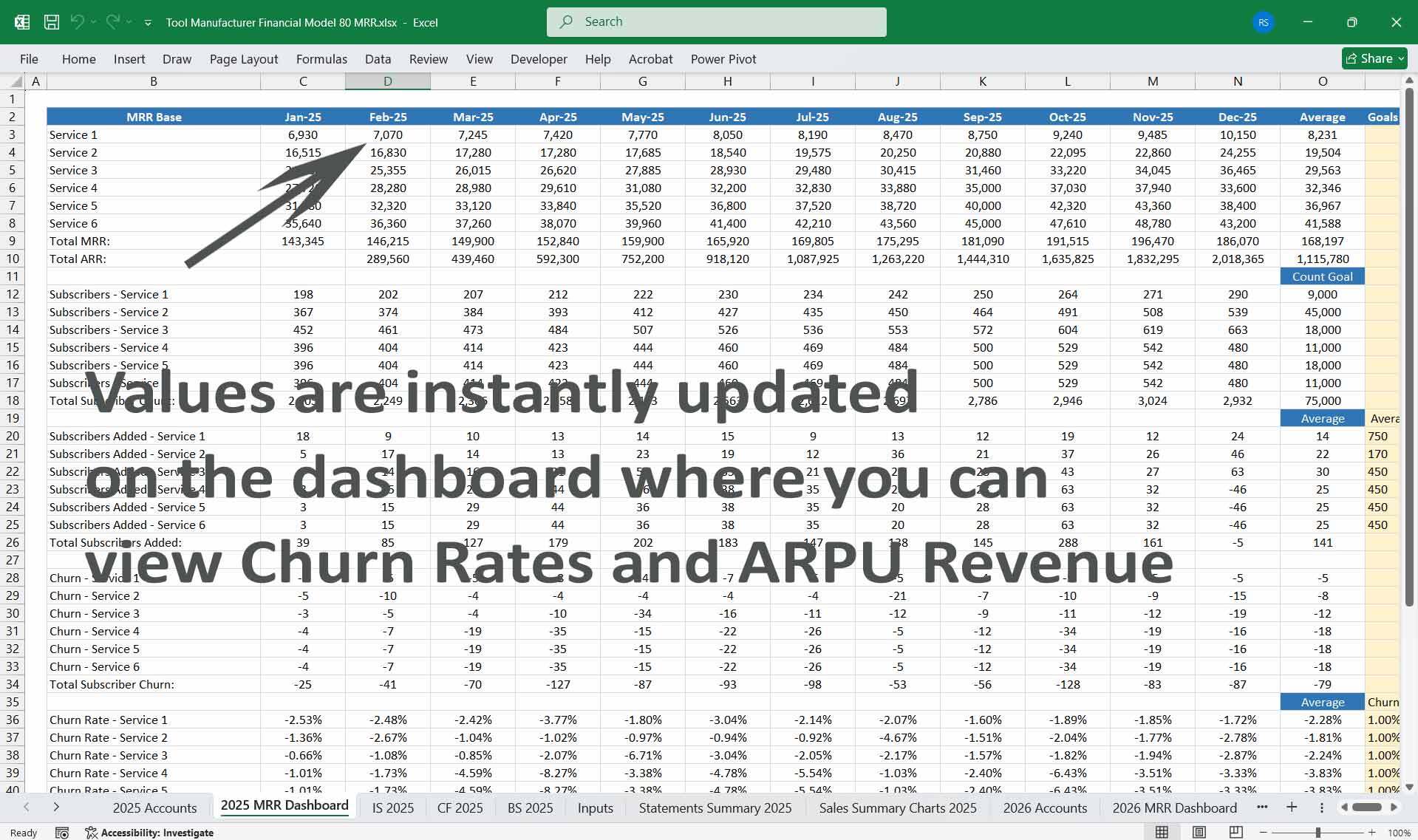
- MRR = Monthly Revenue from Subscriptions.
- ARR = MRR × 12.
- LTV = Average Revenue per User × Customer Lifespan.
- Churn rate analysis by tier.
- Product Metrics:
- Revenue per product line (40- vs. 80-line comparison).
- Average cost-per-unit analysis.
- Subscription Metrics:
- Revenue growth by tier adoption rate.
- Average subscription upgrade frequency.
- Profitability Metrics:
- Contribution margin by subscription tier.
- CNC setup utilization: Jobs completed vs. capacity.
- Operational Metrics:
- On-time delivery rate for CNC parts.
- Inventory turnover ratios.
This financial model provides a detailed roadmap to manage and scale a CNC Components Manufacturer's operations, focusing on multiple revenue sources, tailored subscriptions, and efficiency. Let me know if you’d like to customize this model further or add dynamic projections!
This Best Practice includes
1 Excel Financial Model
Further information
Provides thorough oversight, tracking, and reporting of Tool Manufacturer finances, including updates on budget utilisation and projections.