Battery Recycling Economic Model
Originally published: 20/11/2025 09:21
Publication number: ELQ-86256-1
View all versions & Certificate
certified

Battery Recycling Economic Model

Plug in key assumptions to see what is economically feasible for a new battery recycling plant.

Description
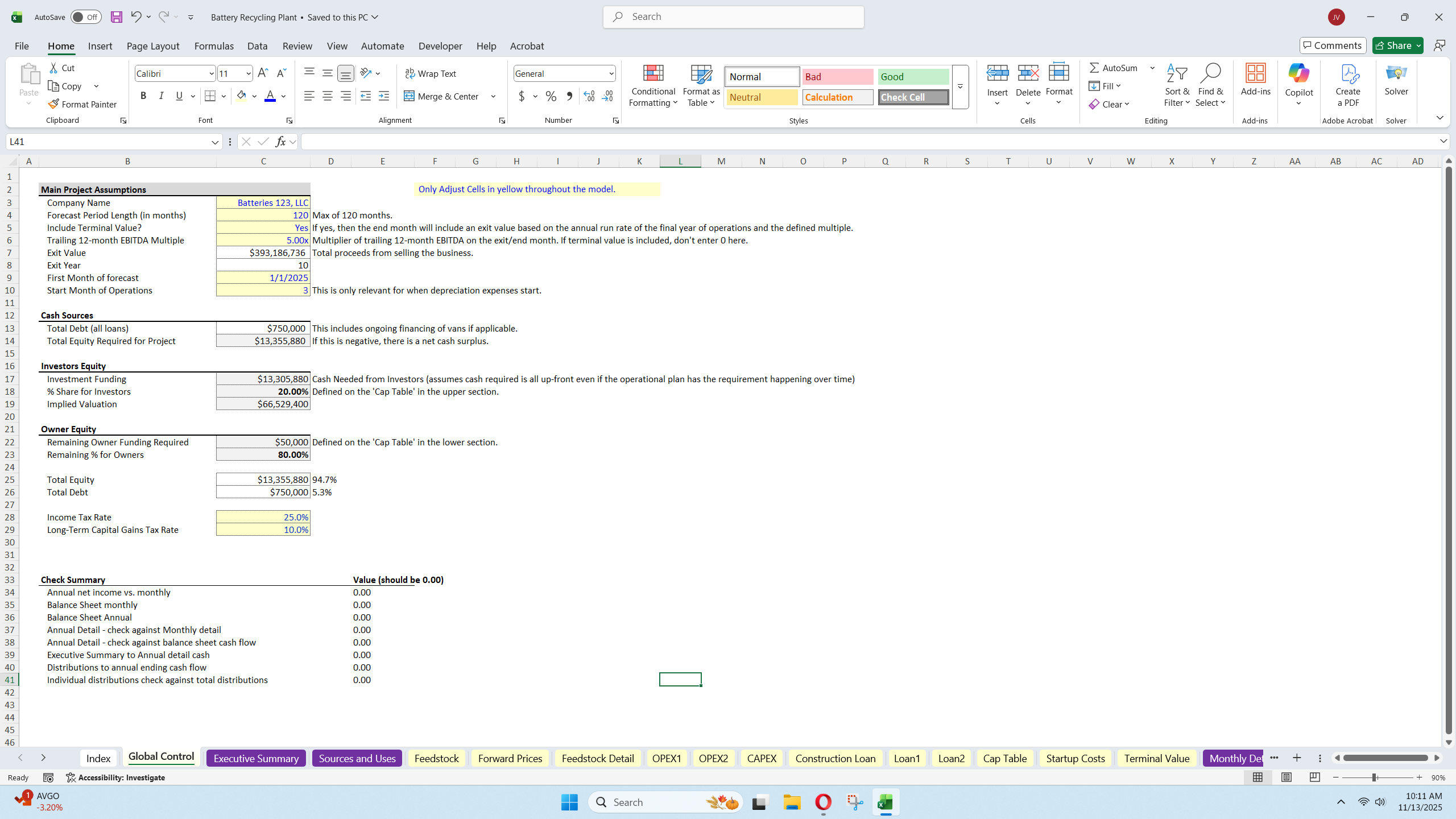
1) Integrated Financial Architecture & Decision Outputs
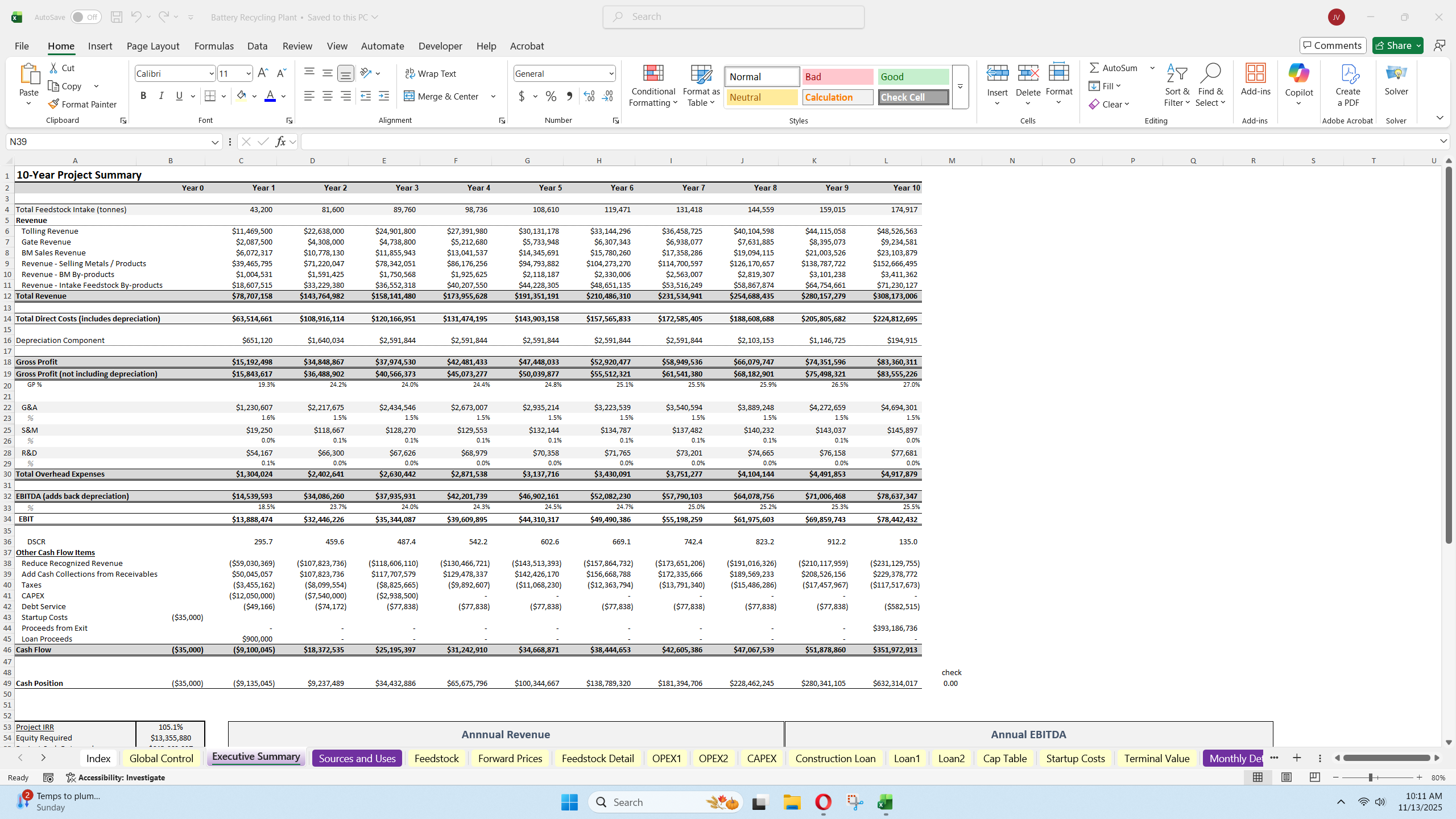
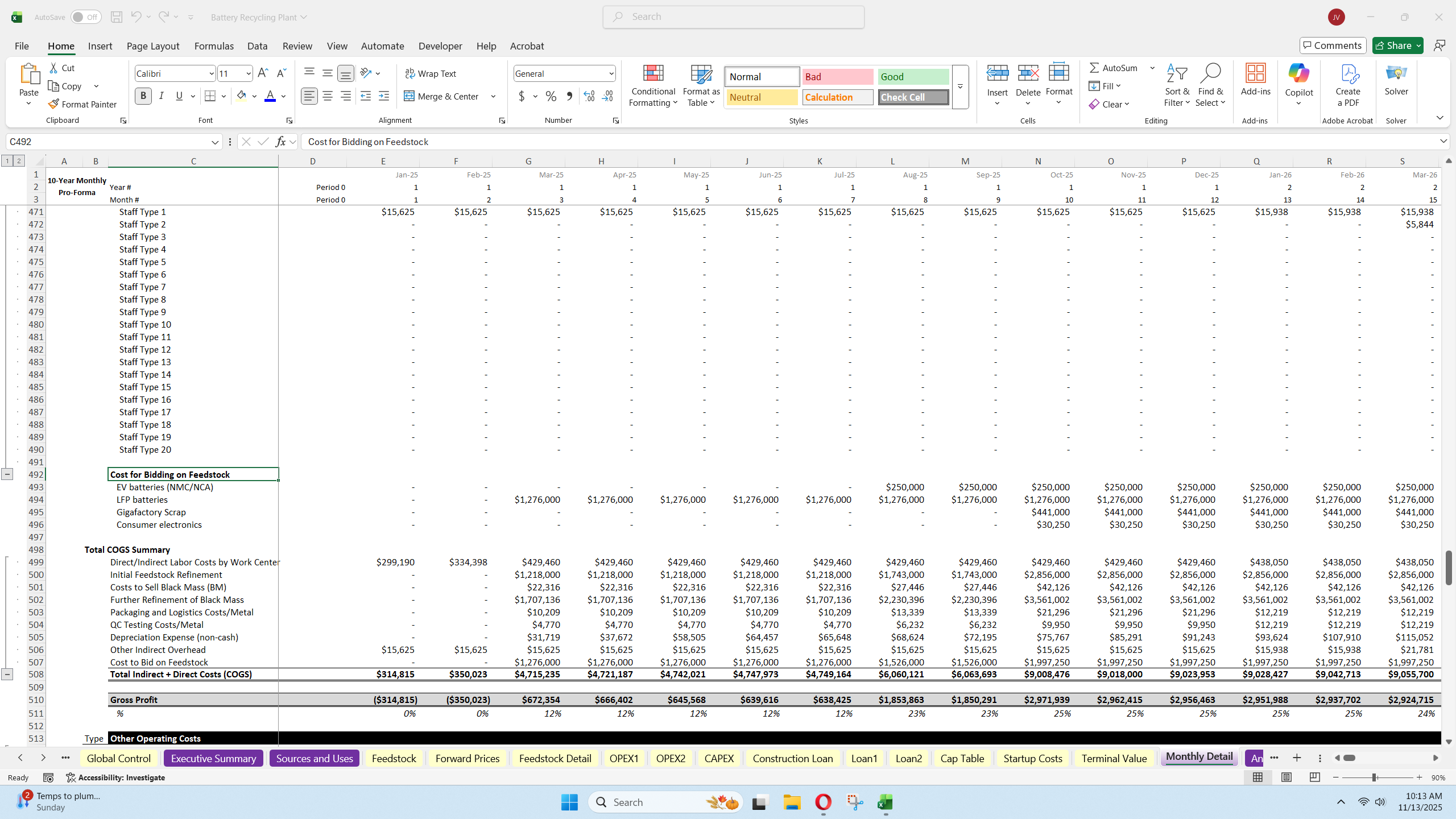
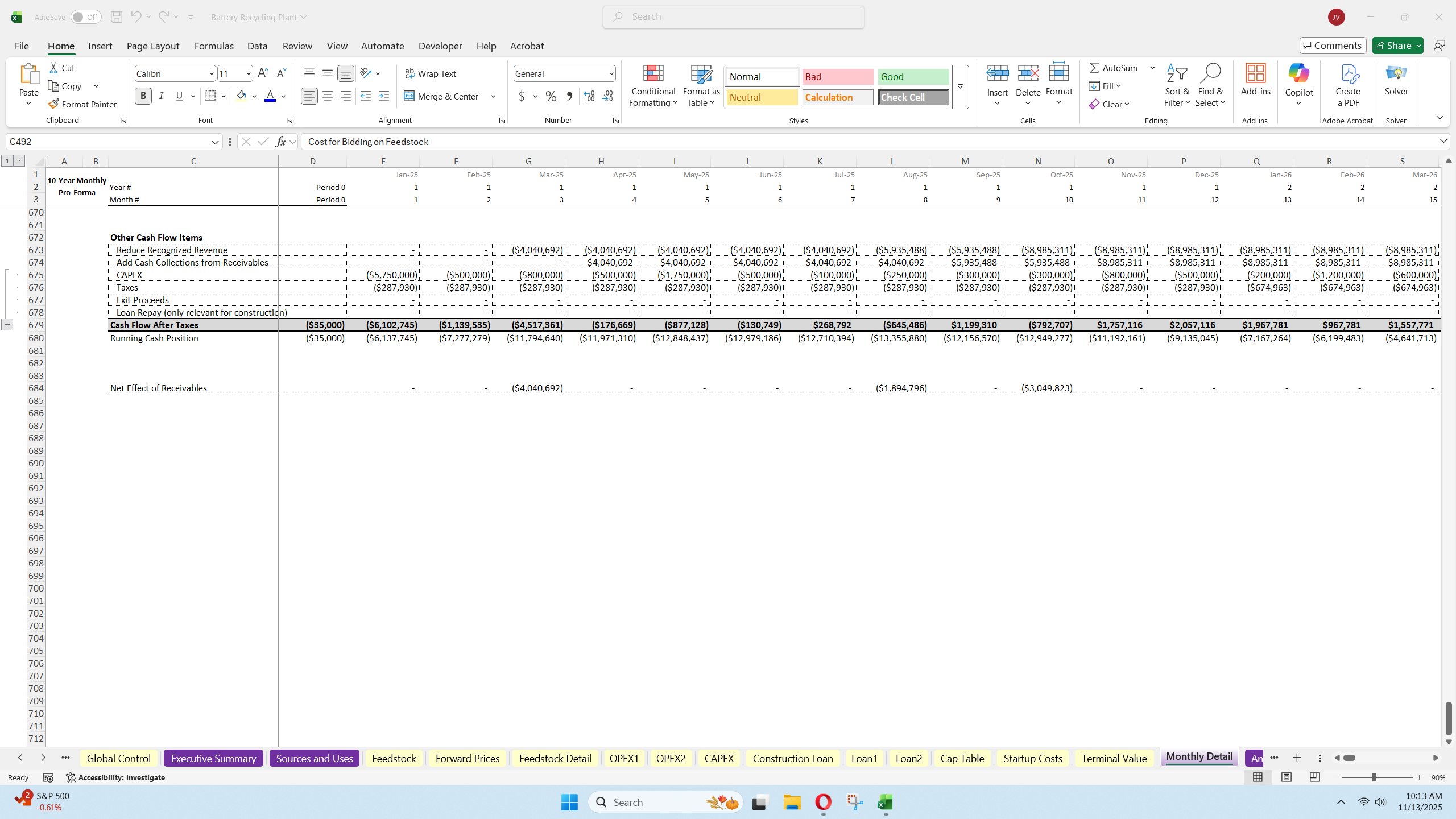
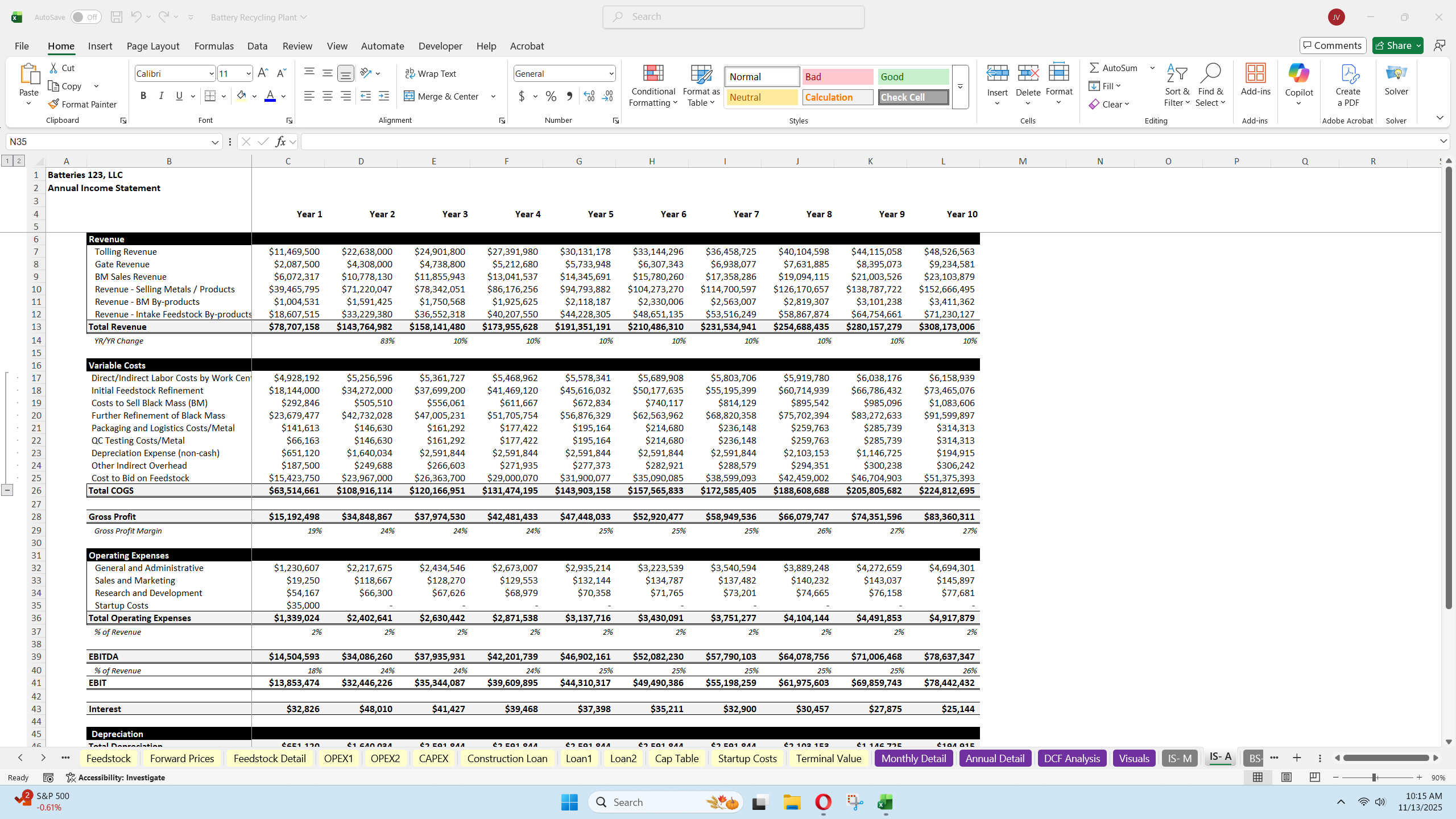
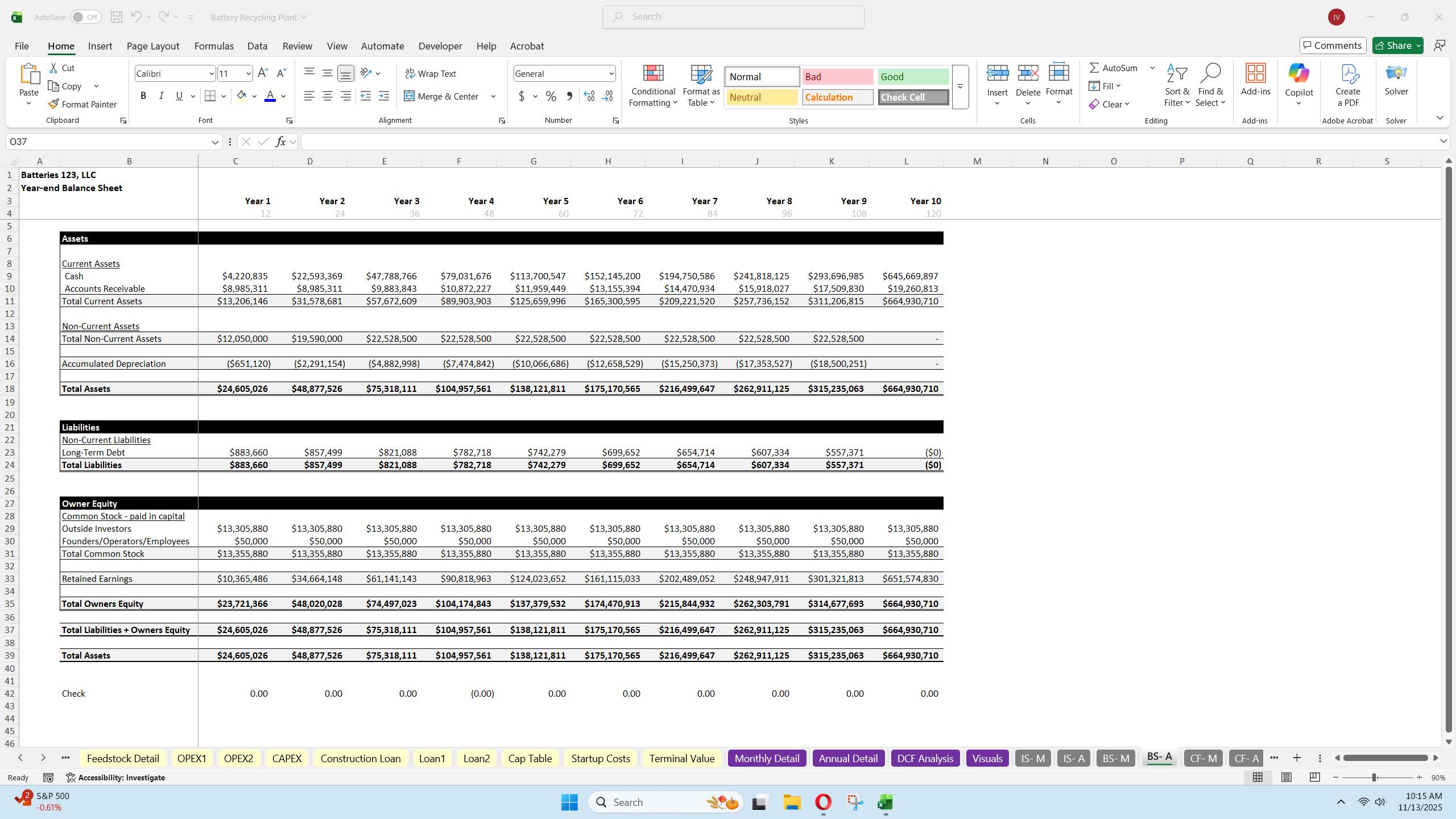
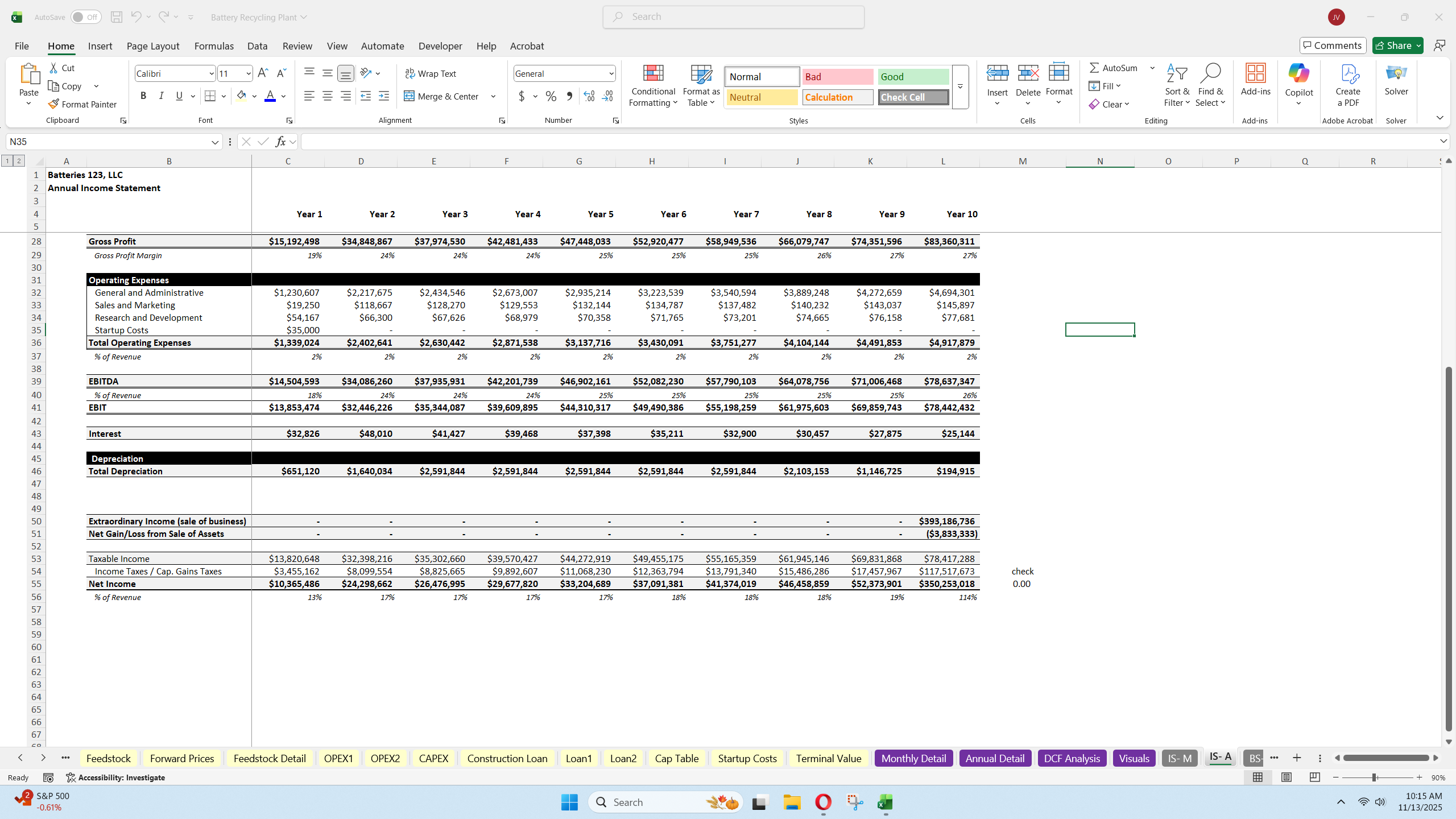
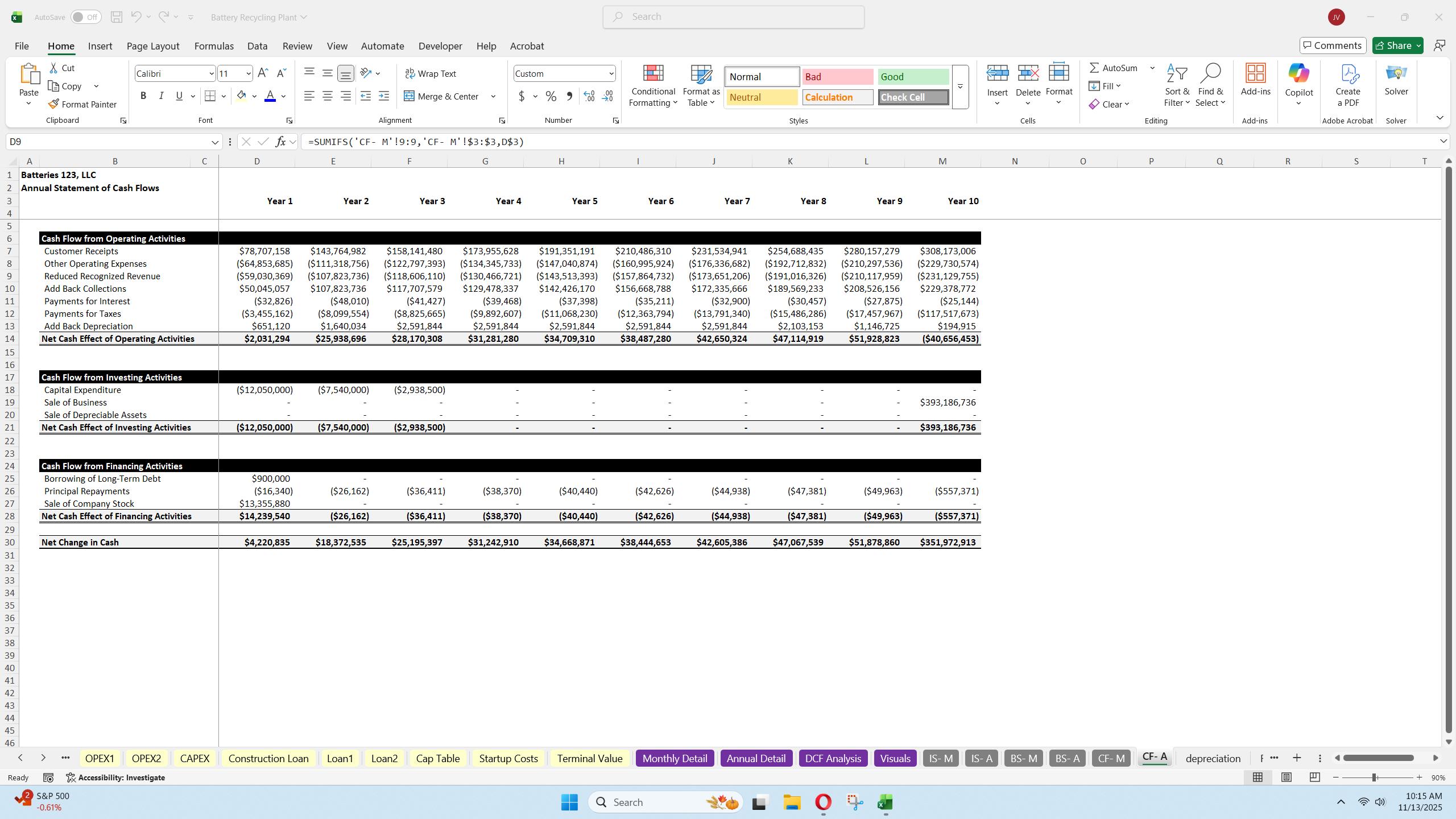
  • 10‑year horizon with a fully integrated 3‑statement model (IS/BS/CF).

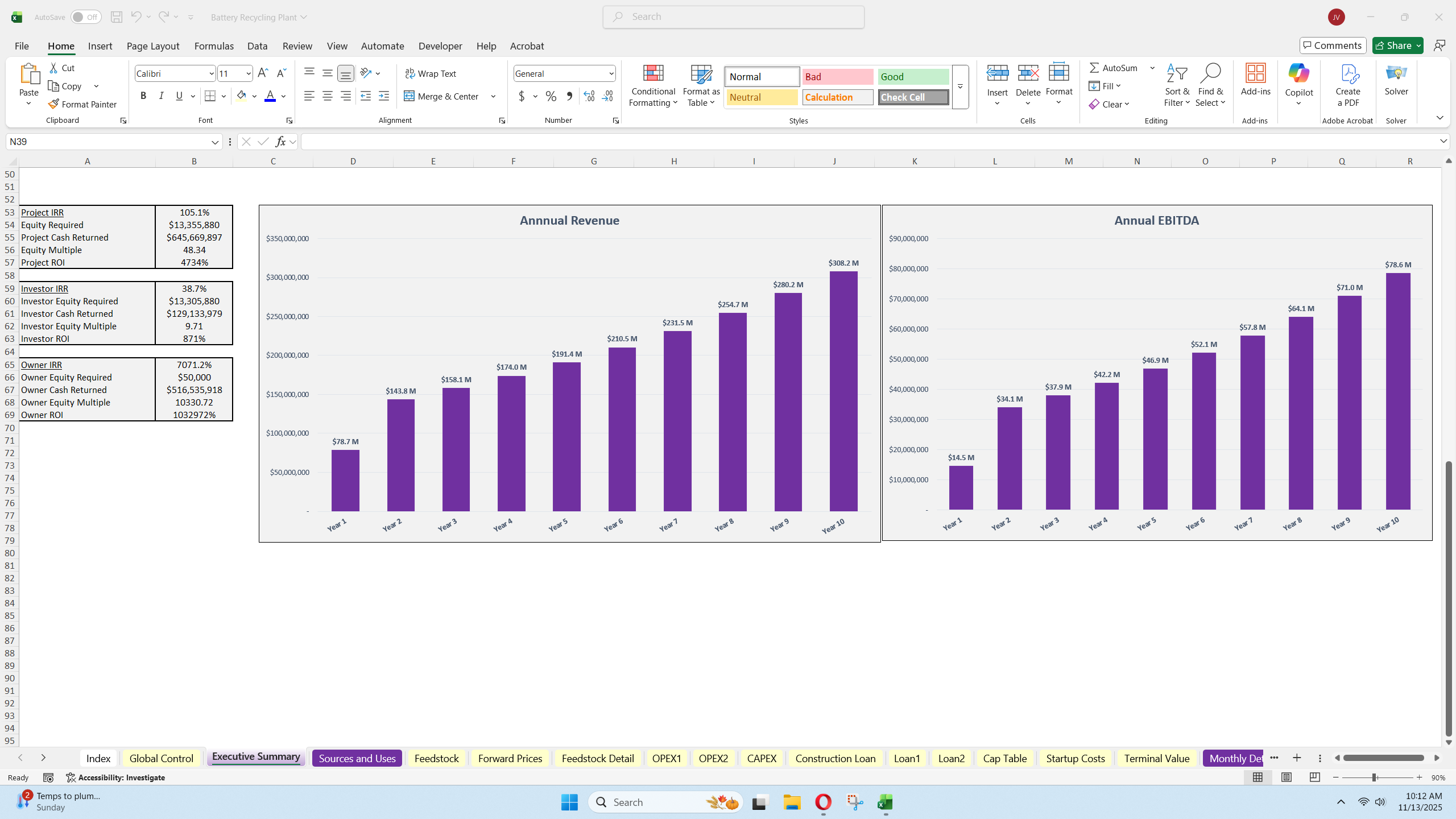
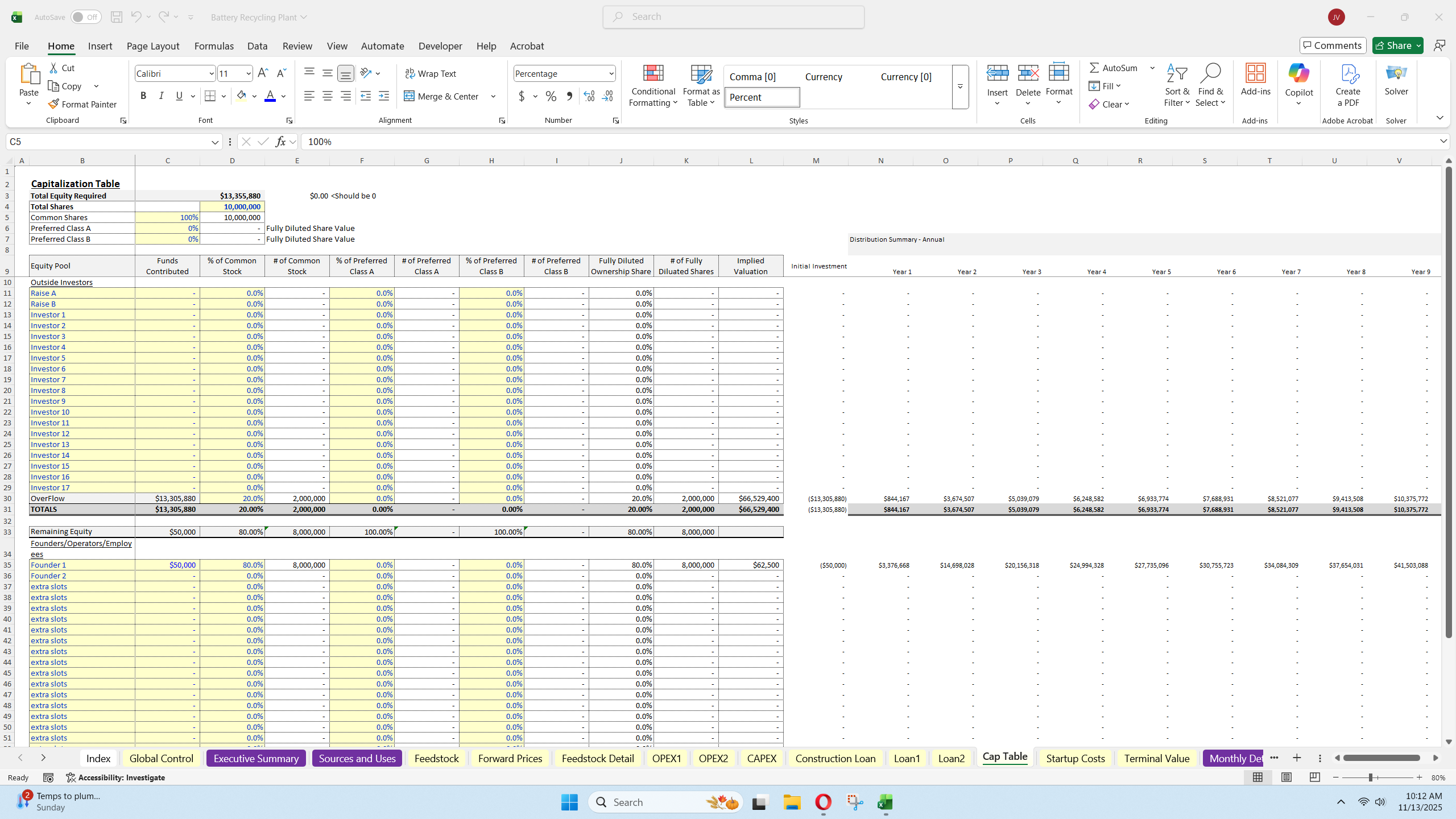
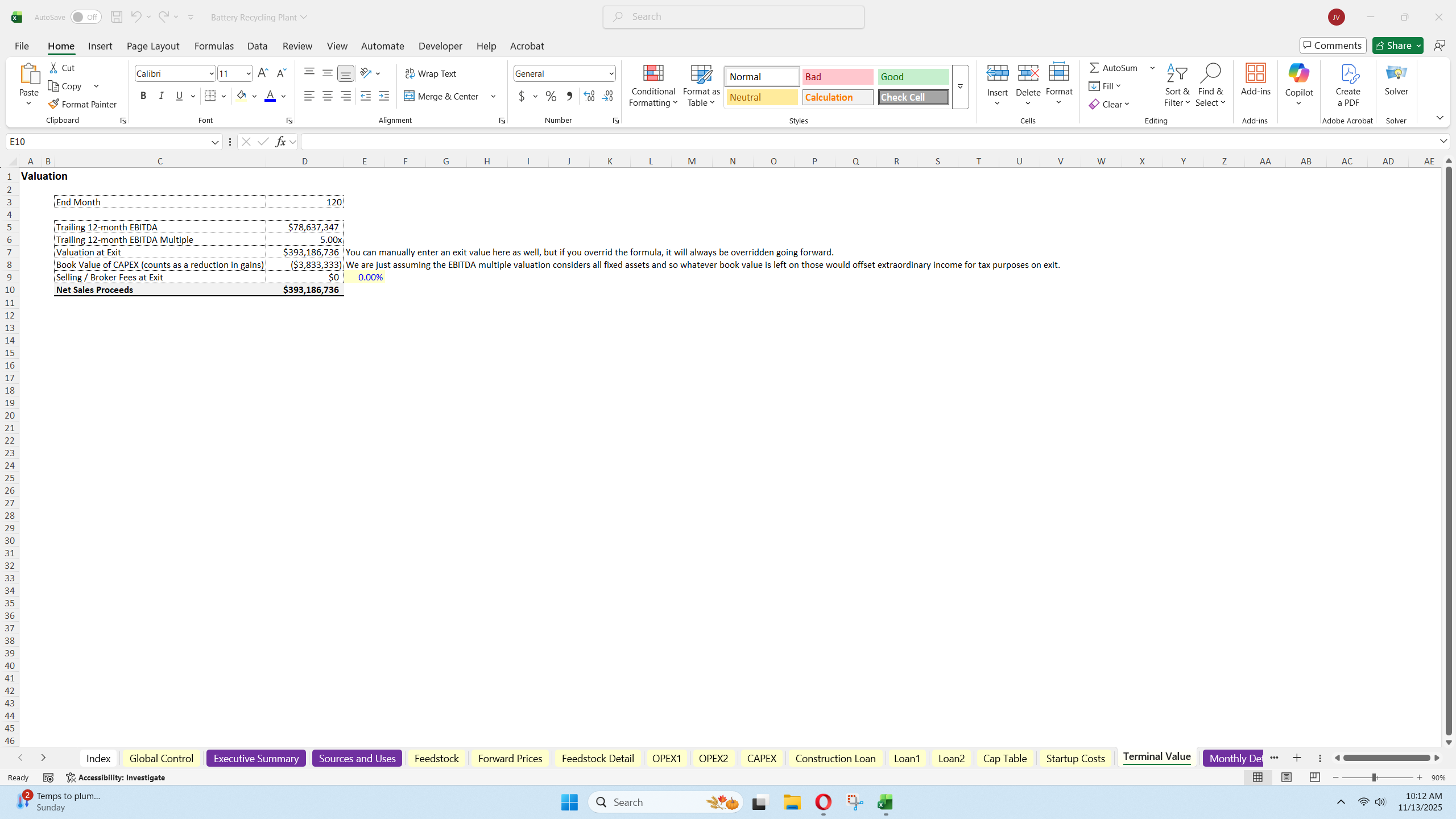
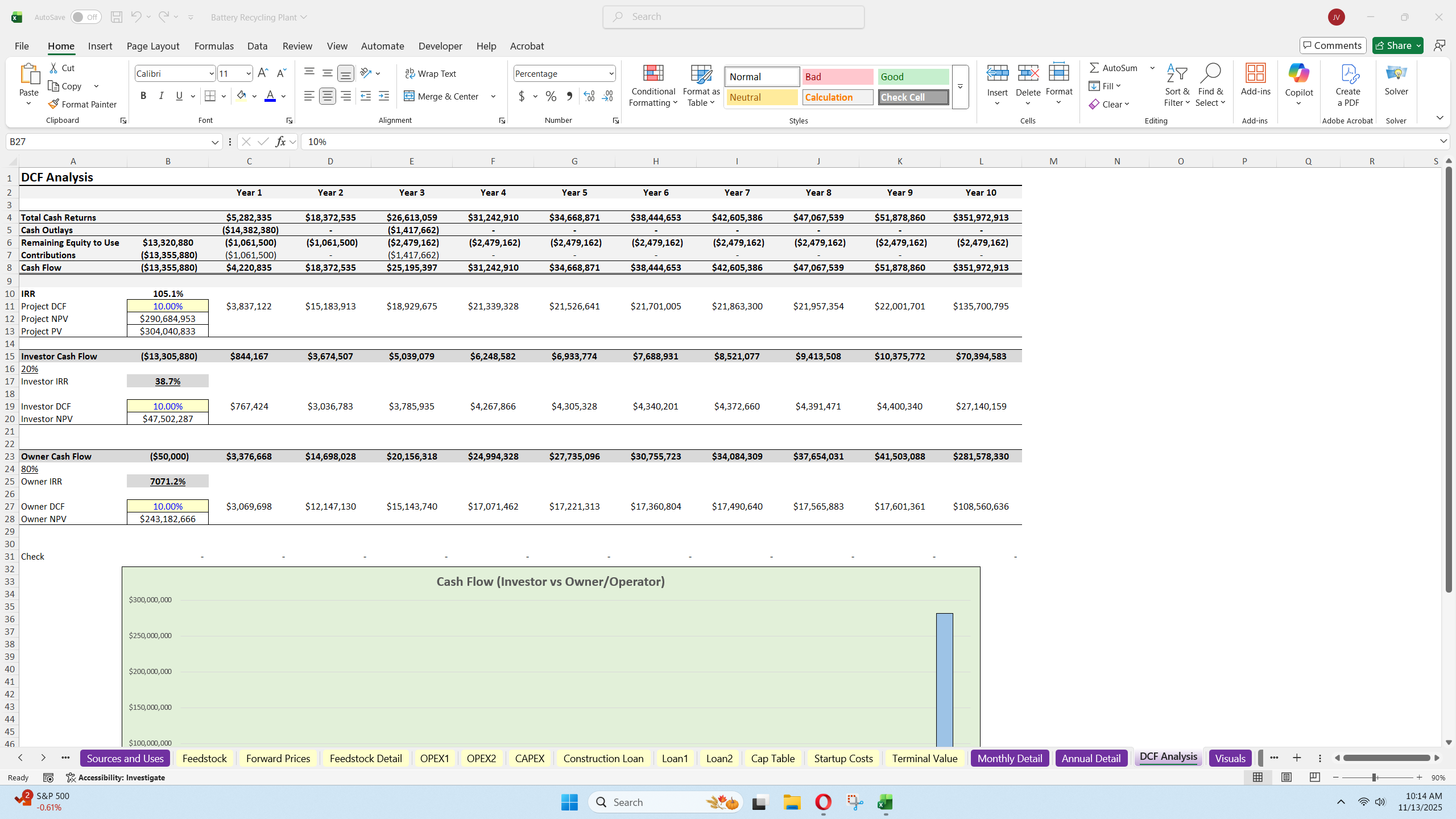
  • Valuation & returns: DCF, IRR, ROI, equity multiple, and minimum cash required.

  • Dual lenses for operator and investor views, aligned to real decisions.

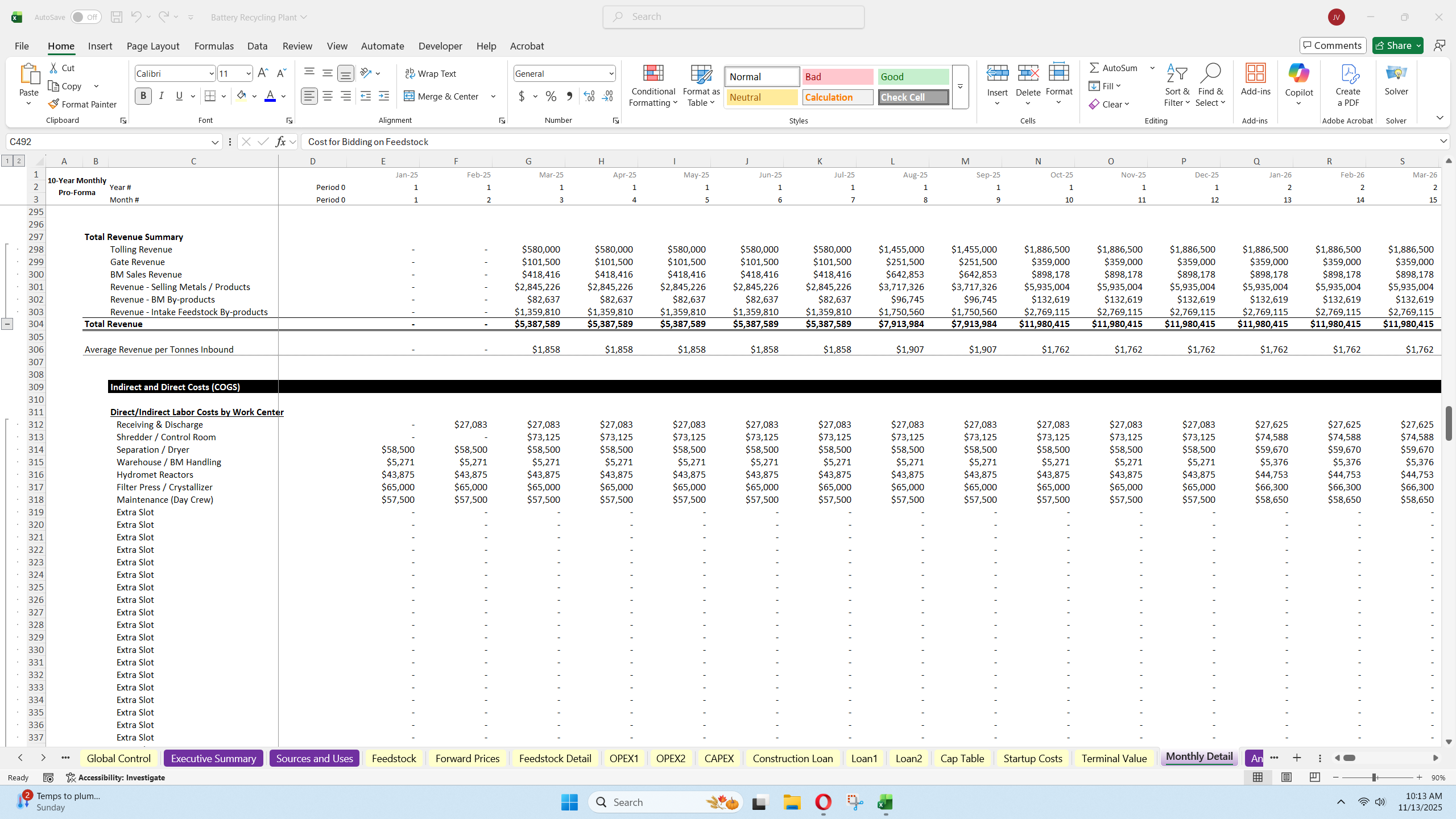
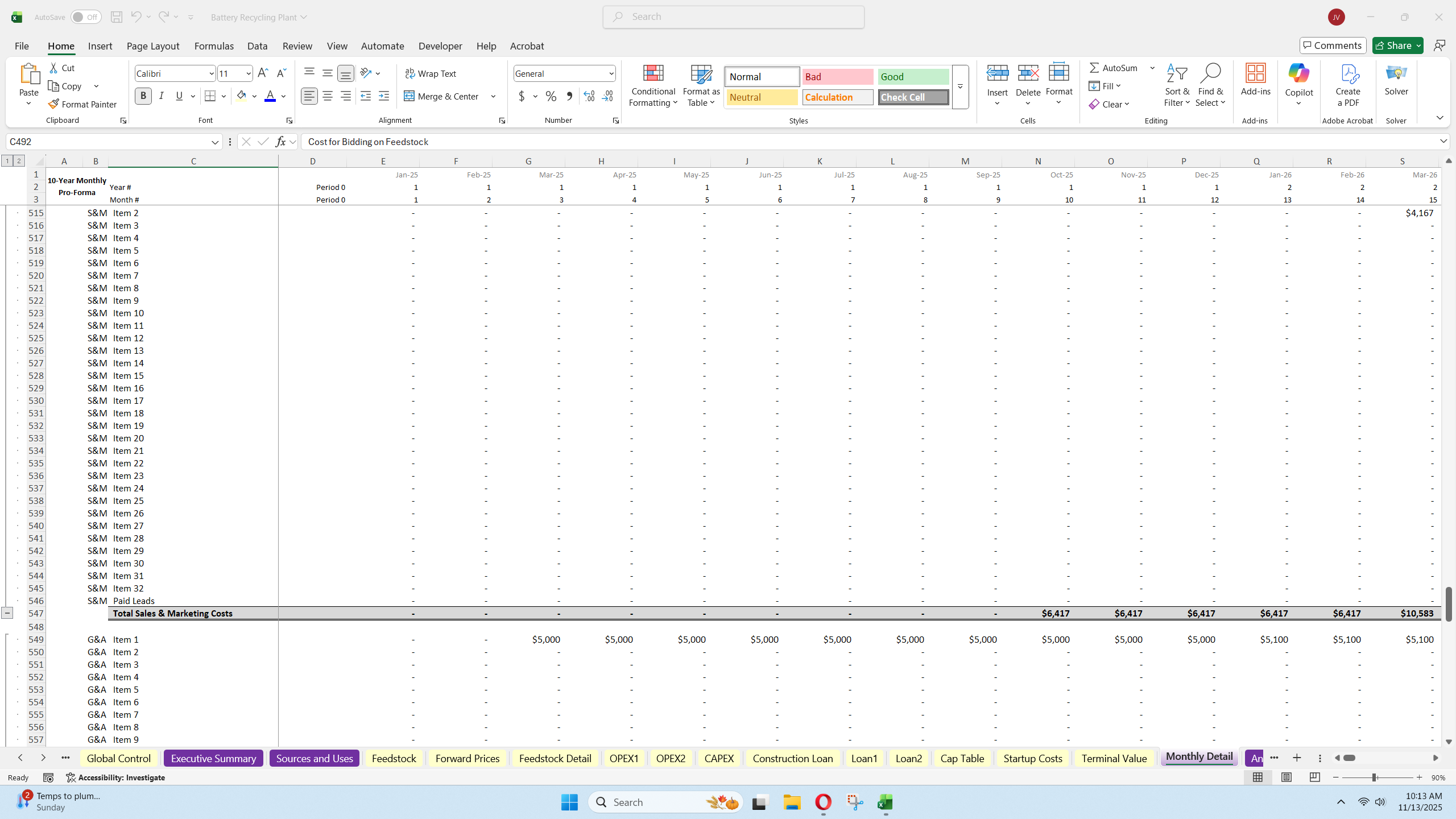
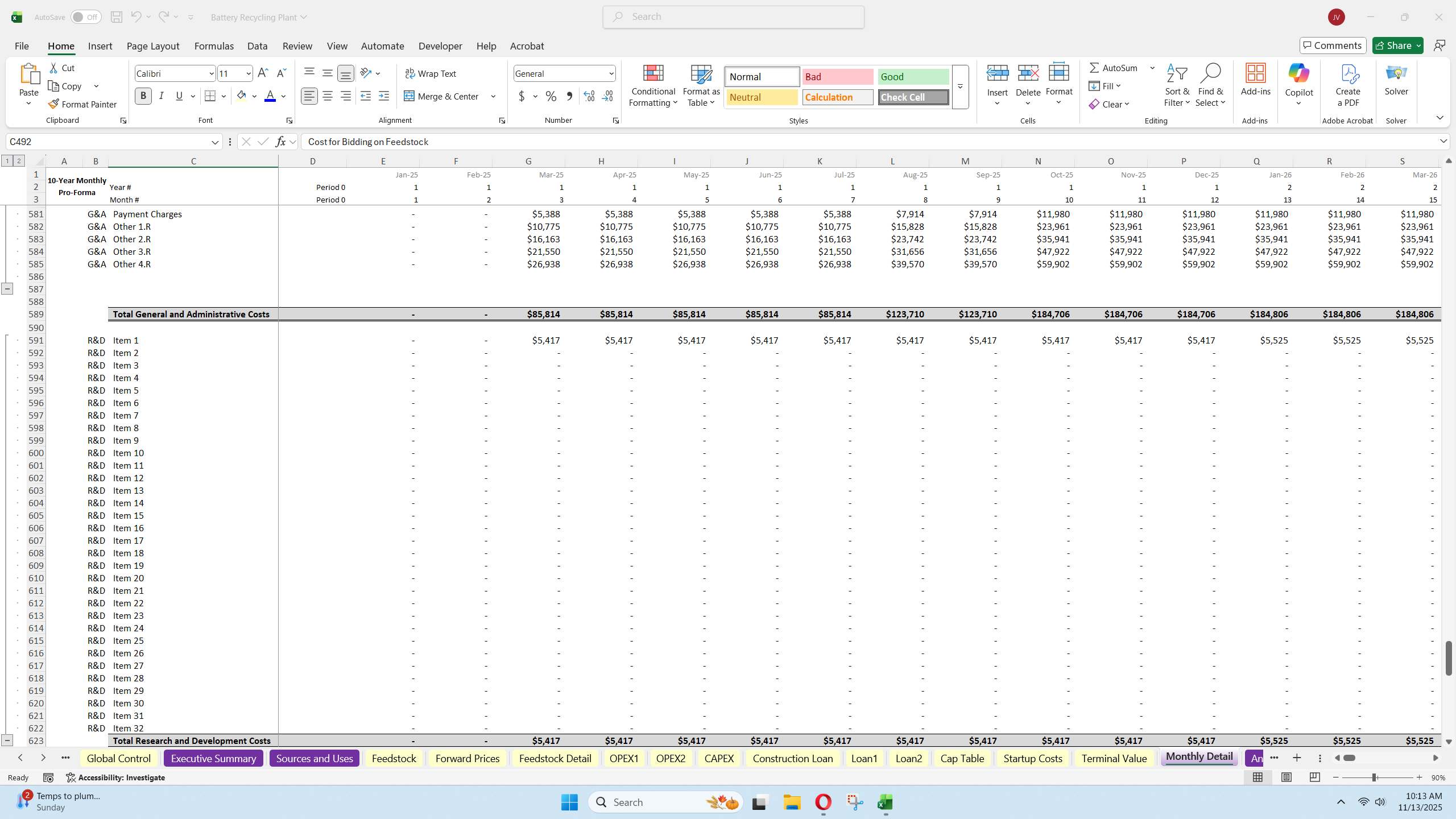
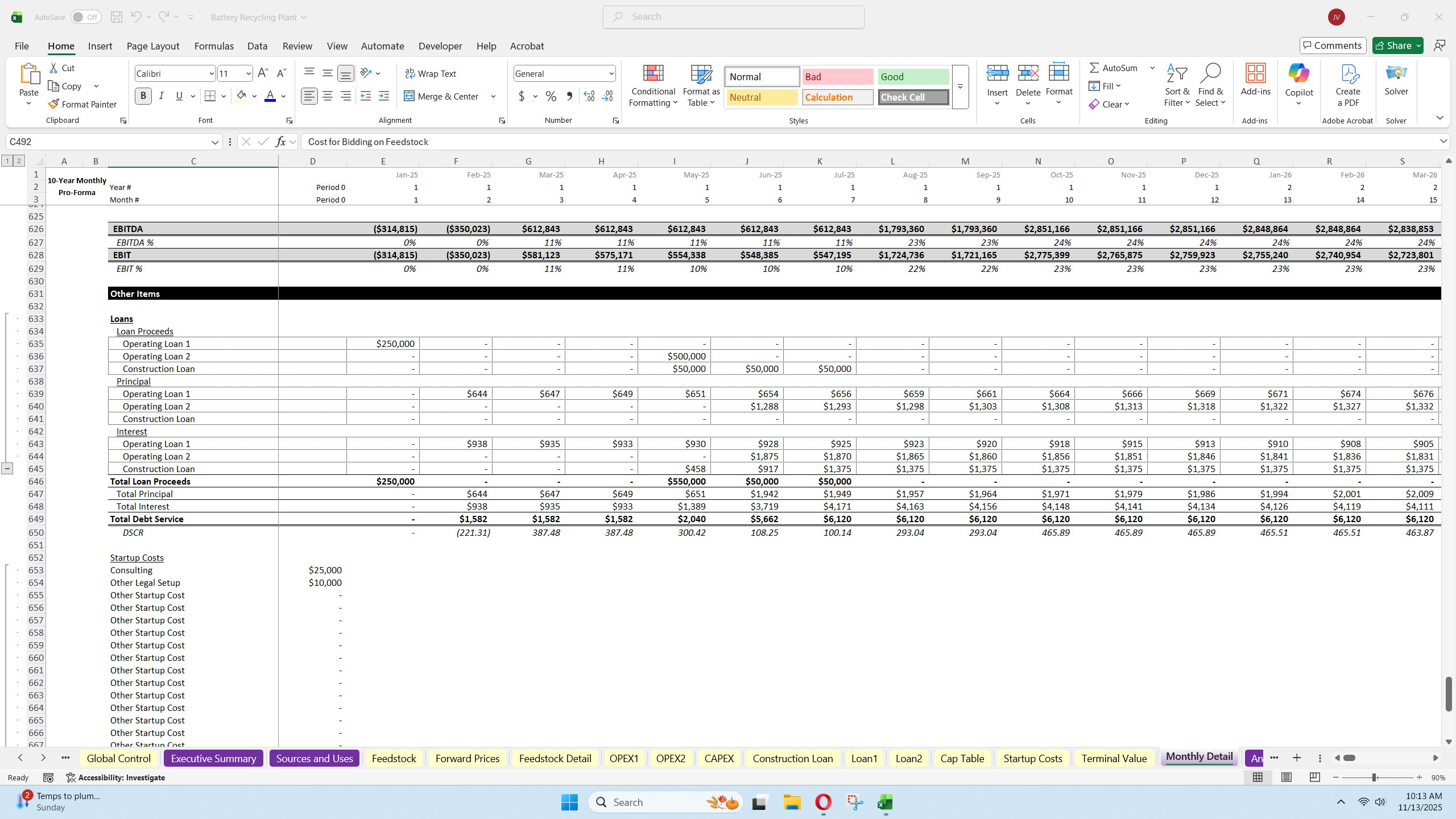
  • Monthly and annual pro formas plus an Executive Summary that rolls from KPIs to cash flow.

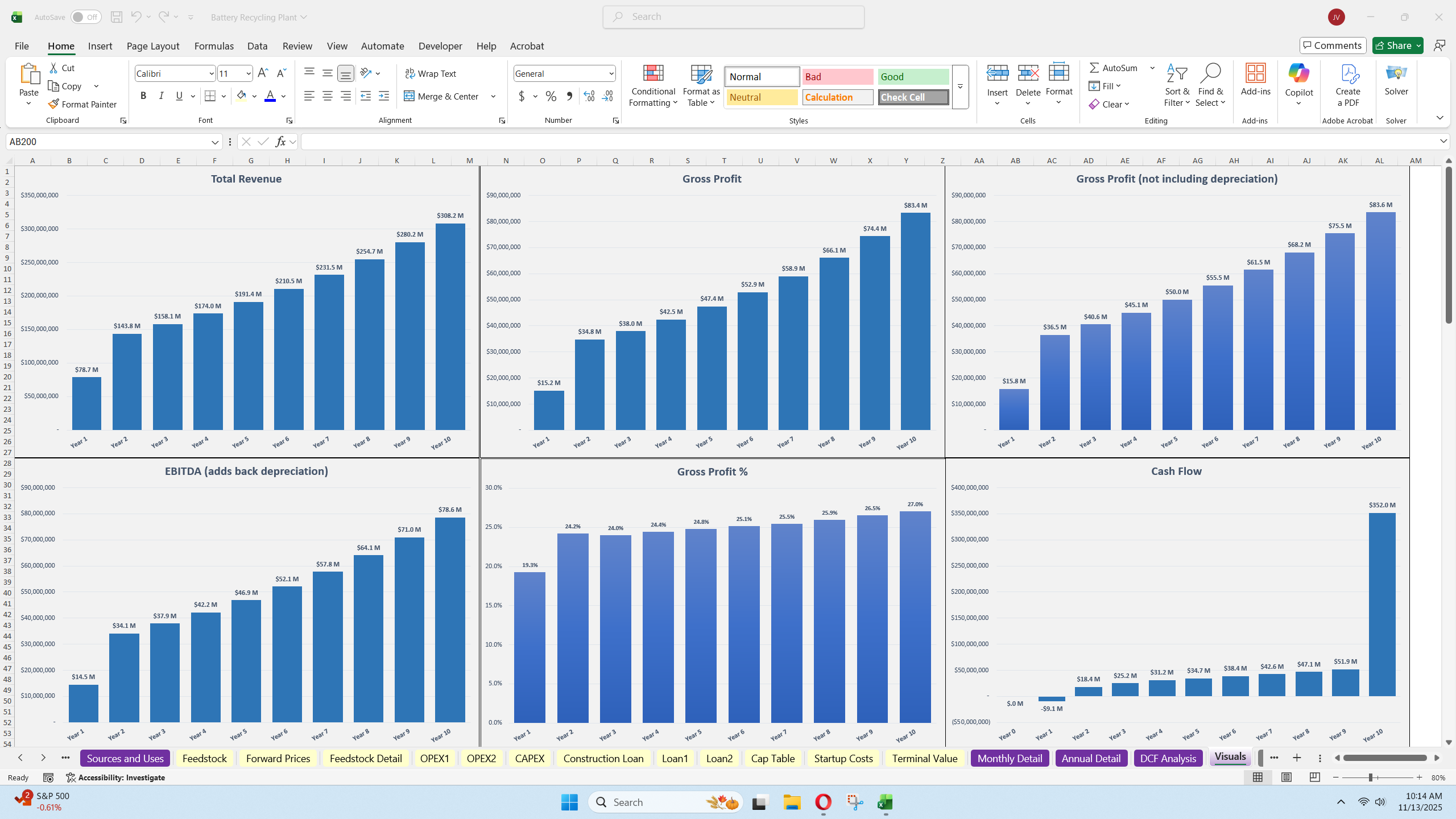
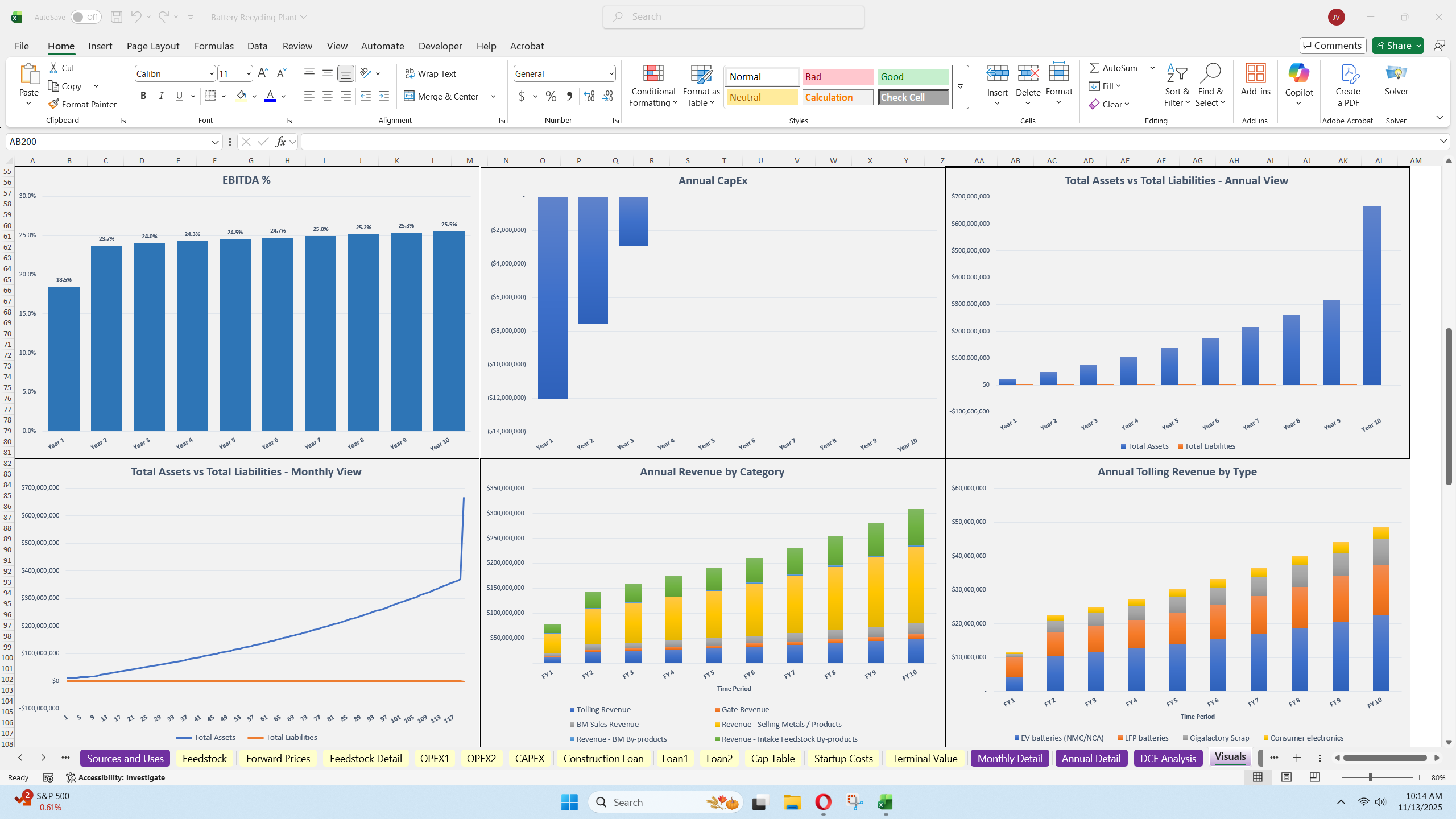
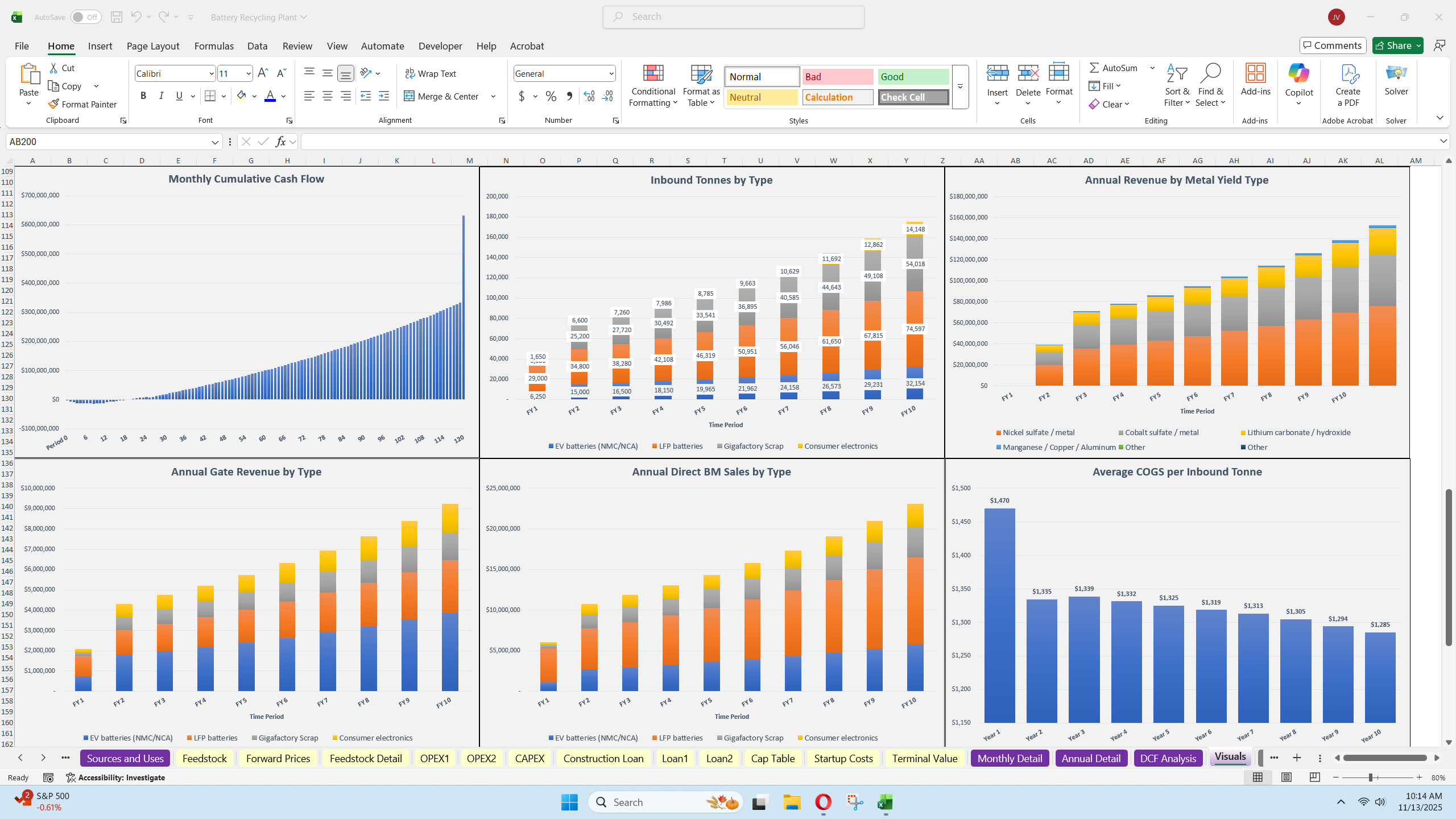
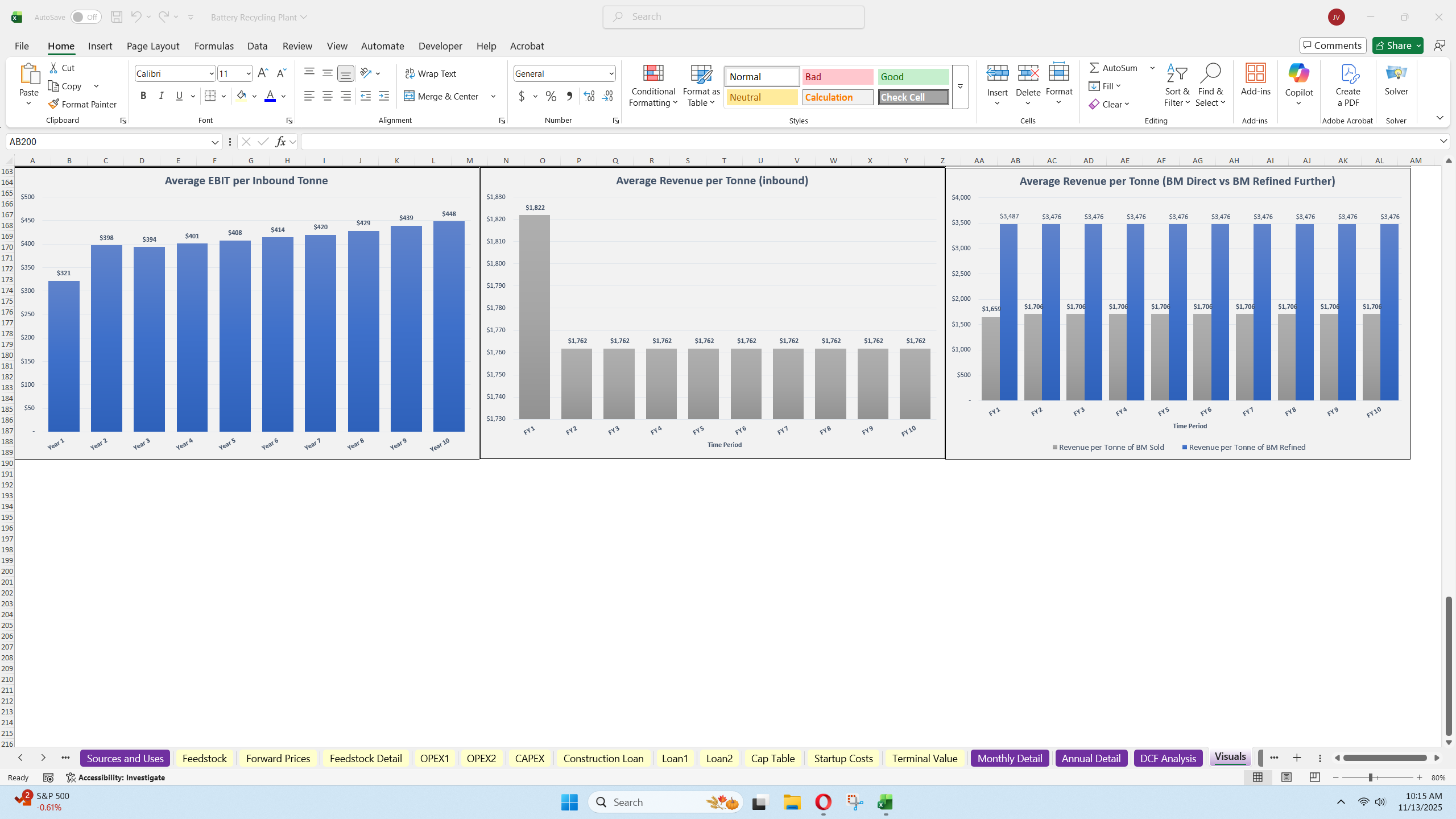
  • 21 charts & graphs covering revenue mix, cost stack, per‑tonne economics, and cash runway.

  • Fully editable and unlocked so every assumption and linkage is transparent.

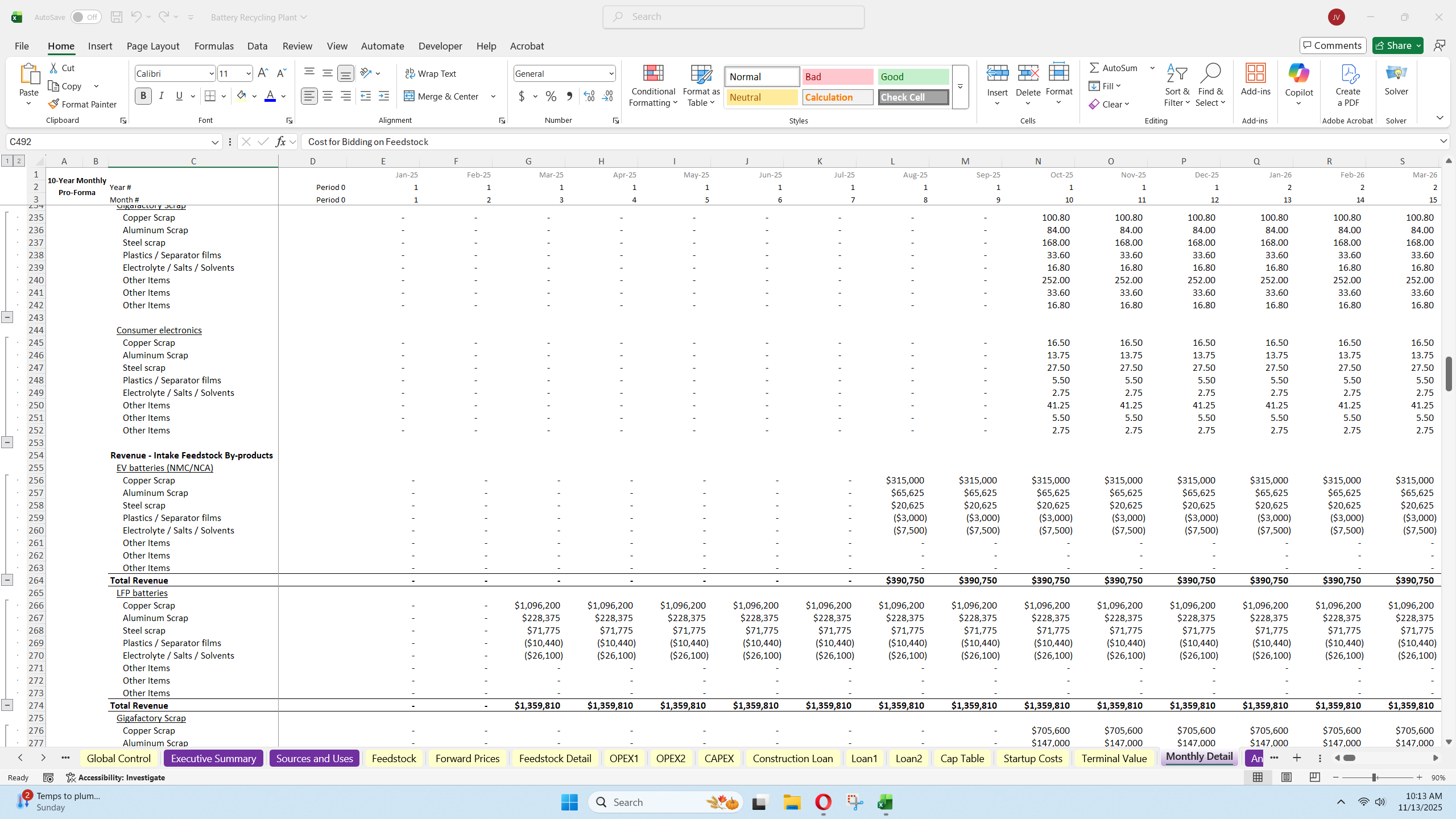
2) Revenue, Products & Collections (AR)
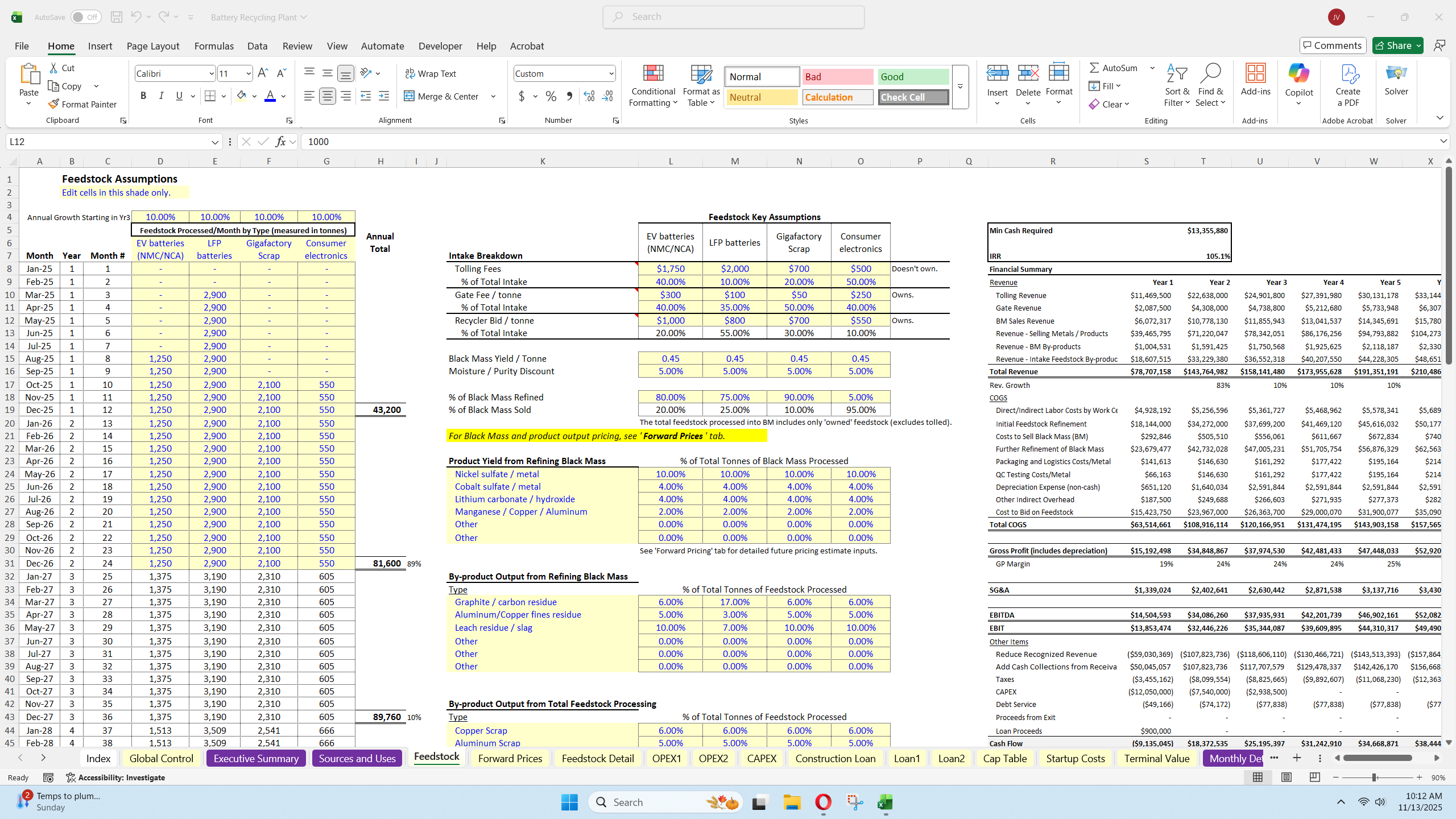
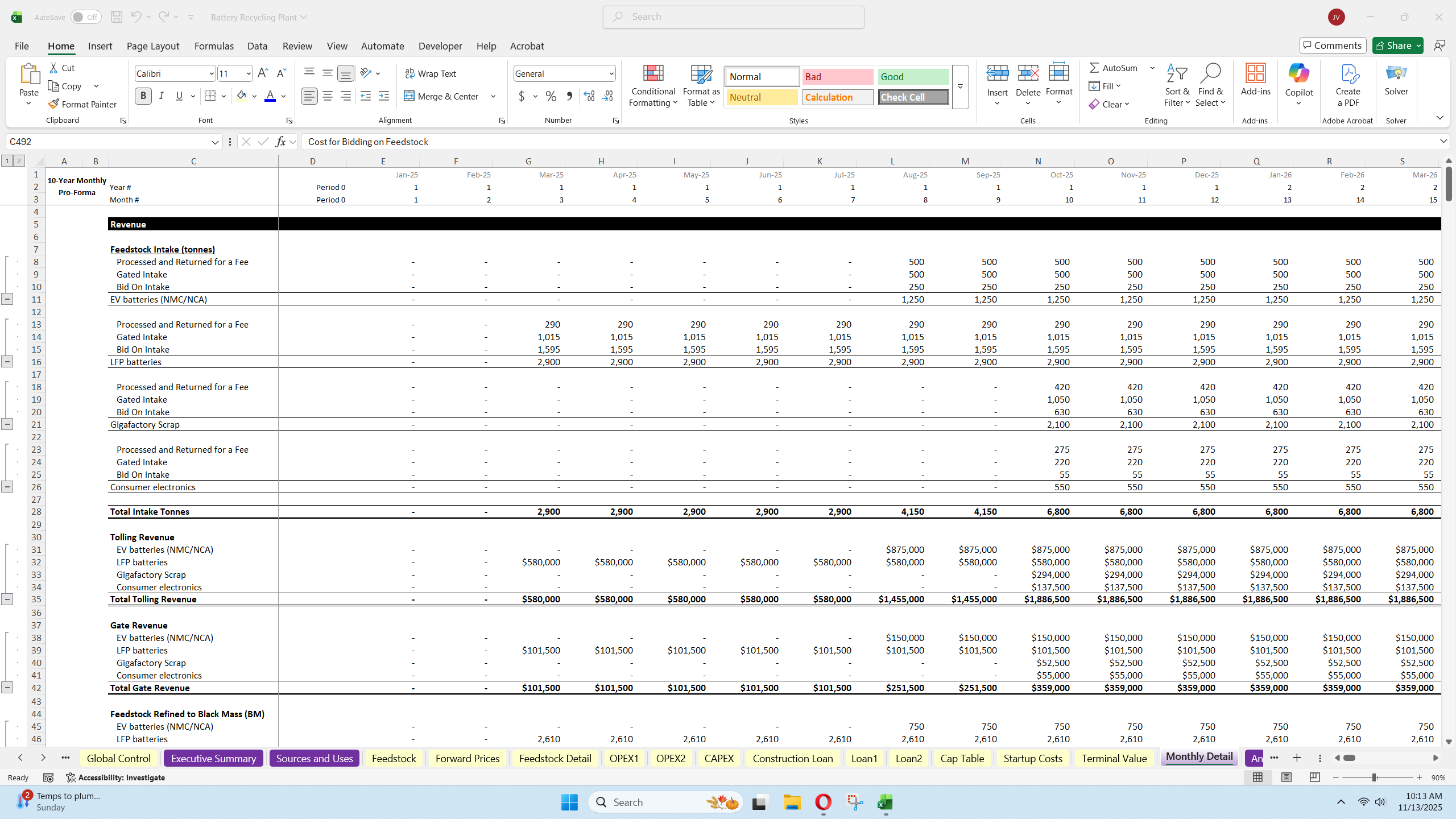
  • Configure up to four feedstock intake channels with inbound tonnes per month.

  • Model three acquisition types: tolled, gated, and recycler bidding.

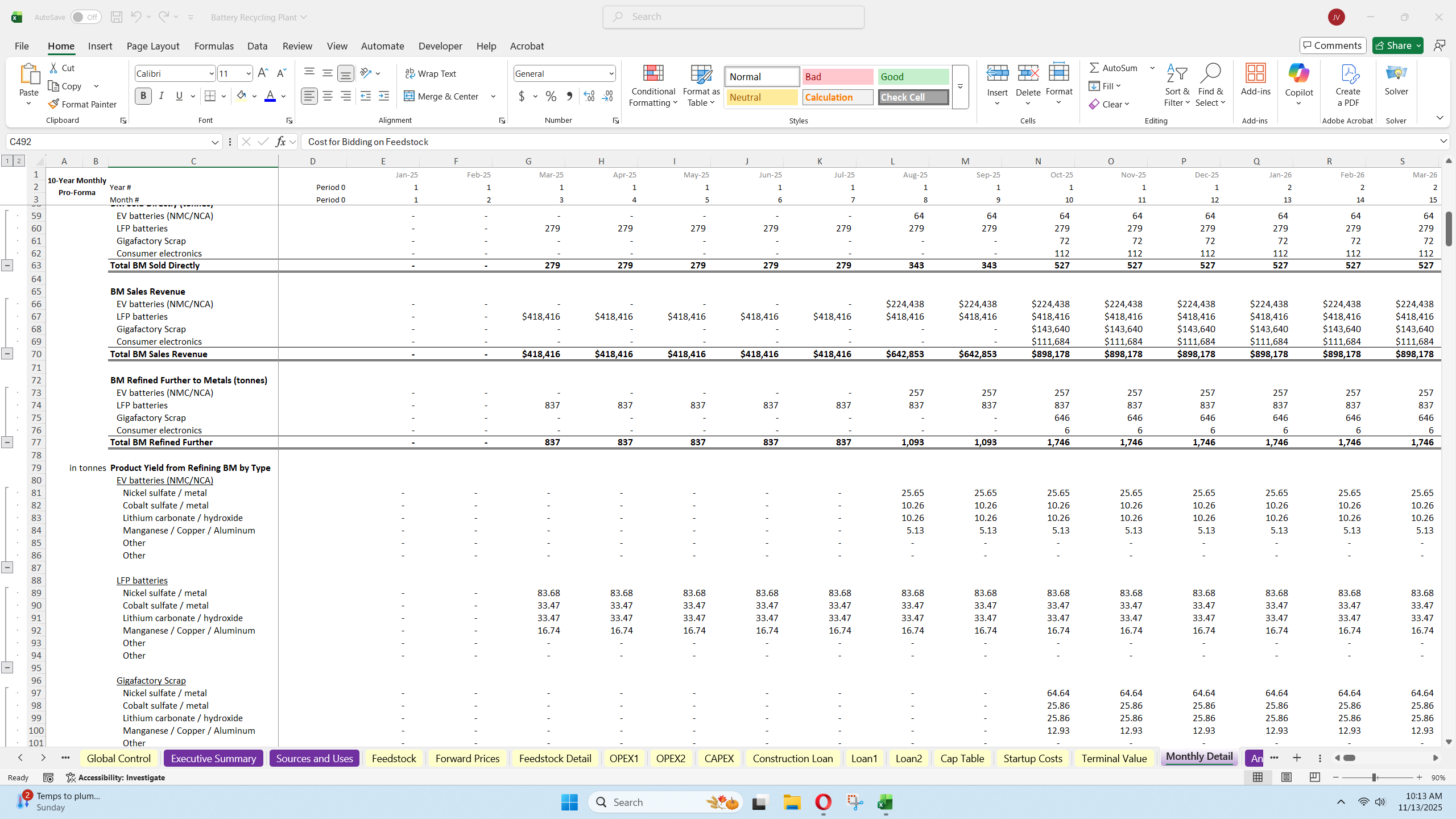
  • Choose pathway: BM‑only or refine further into metals.

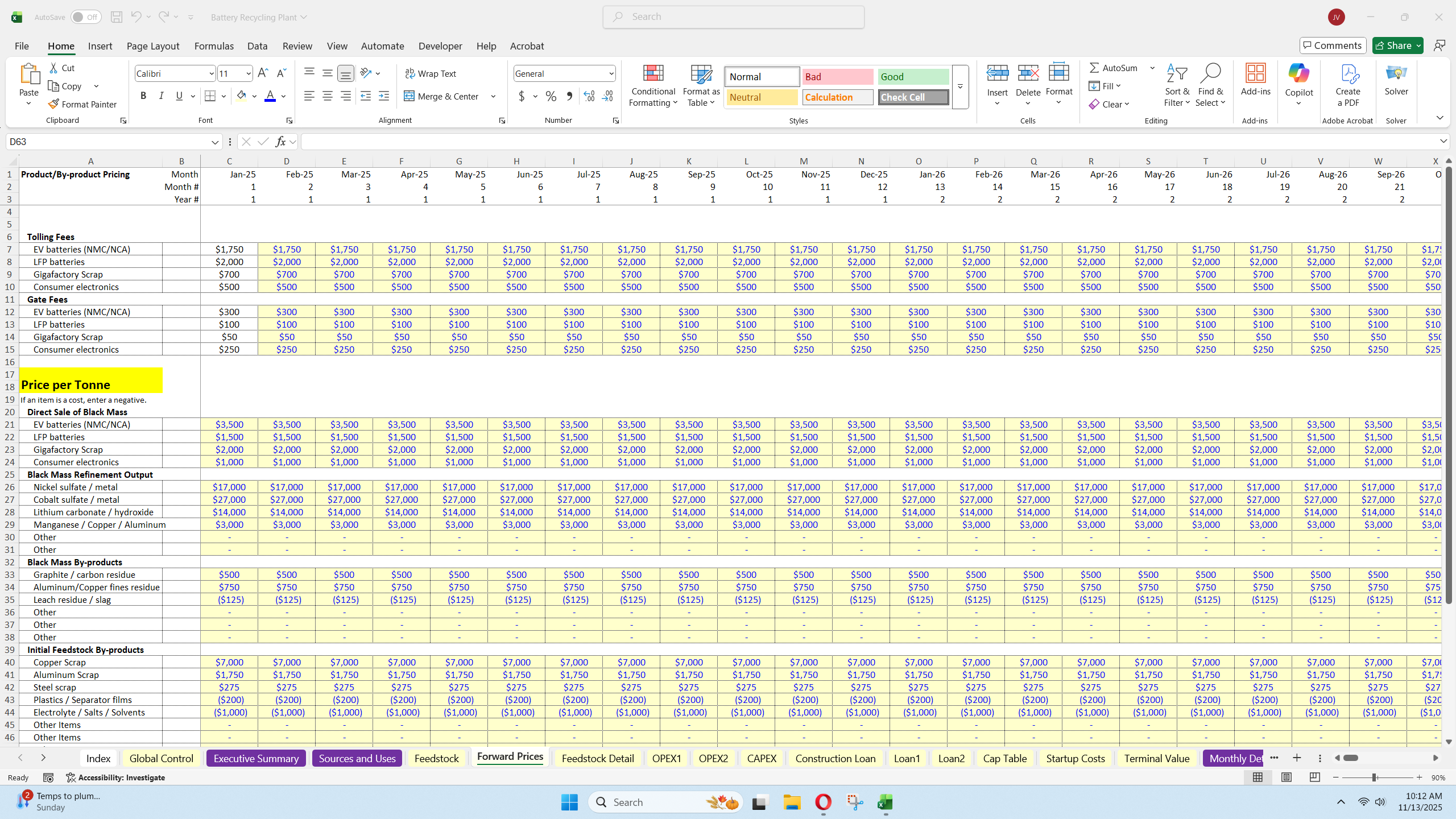
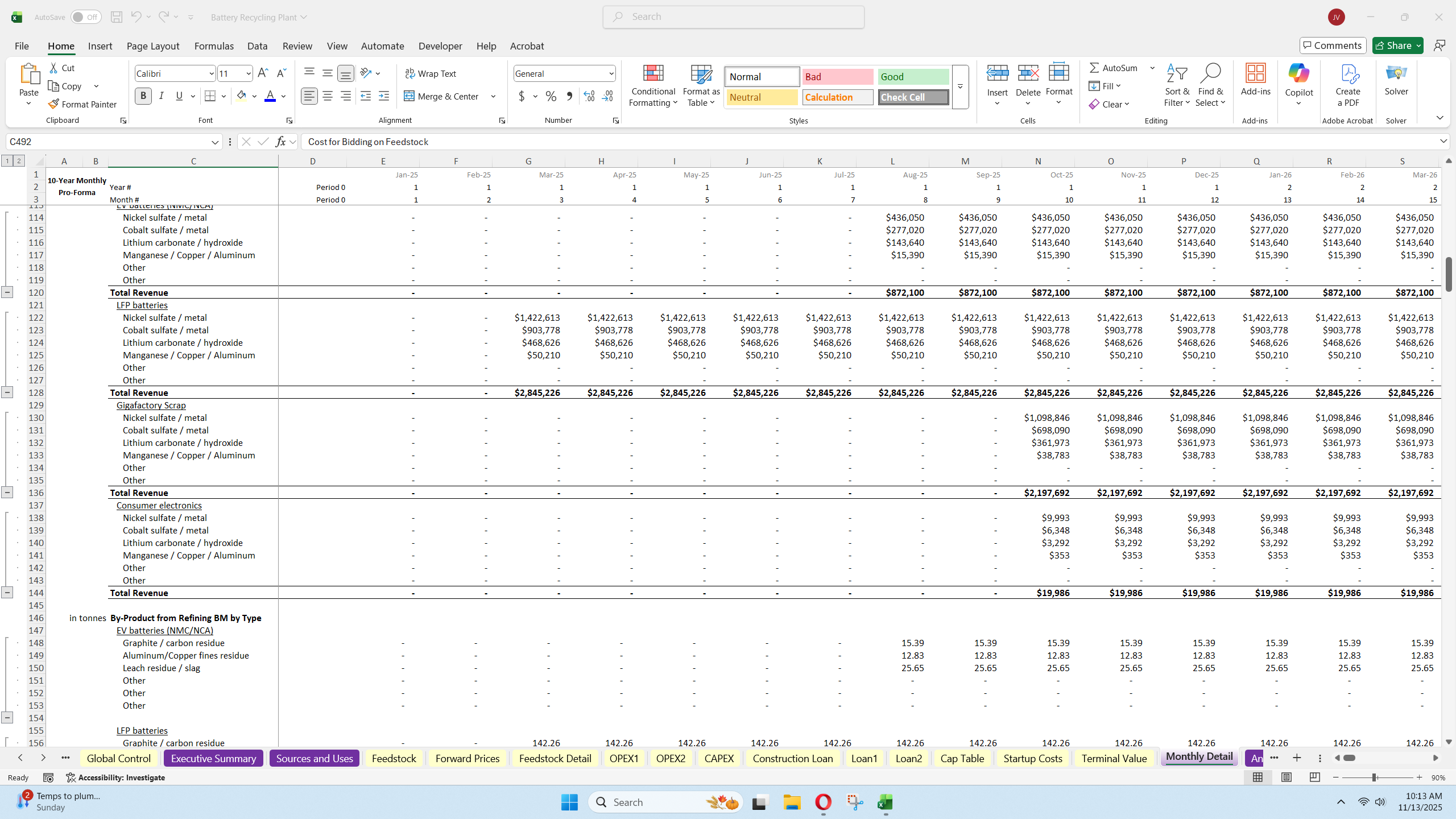
  • Set forward pricing per tonne for all products/by‑products; adjust over time to reflect market dynamics.

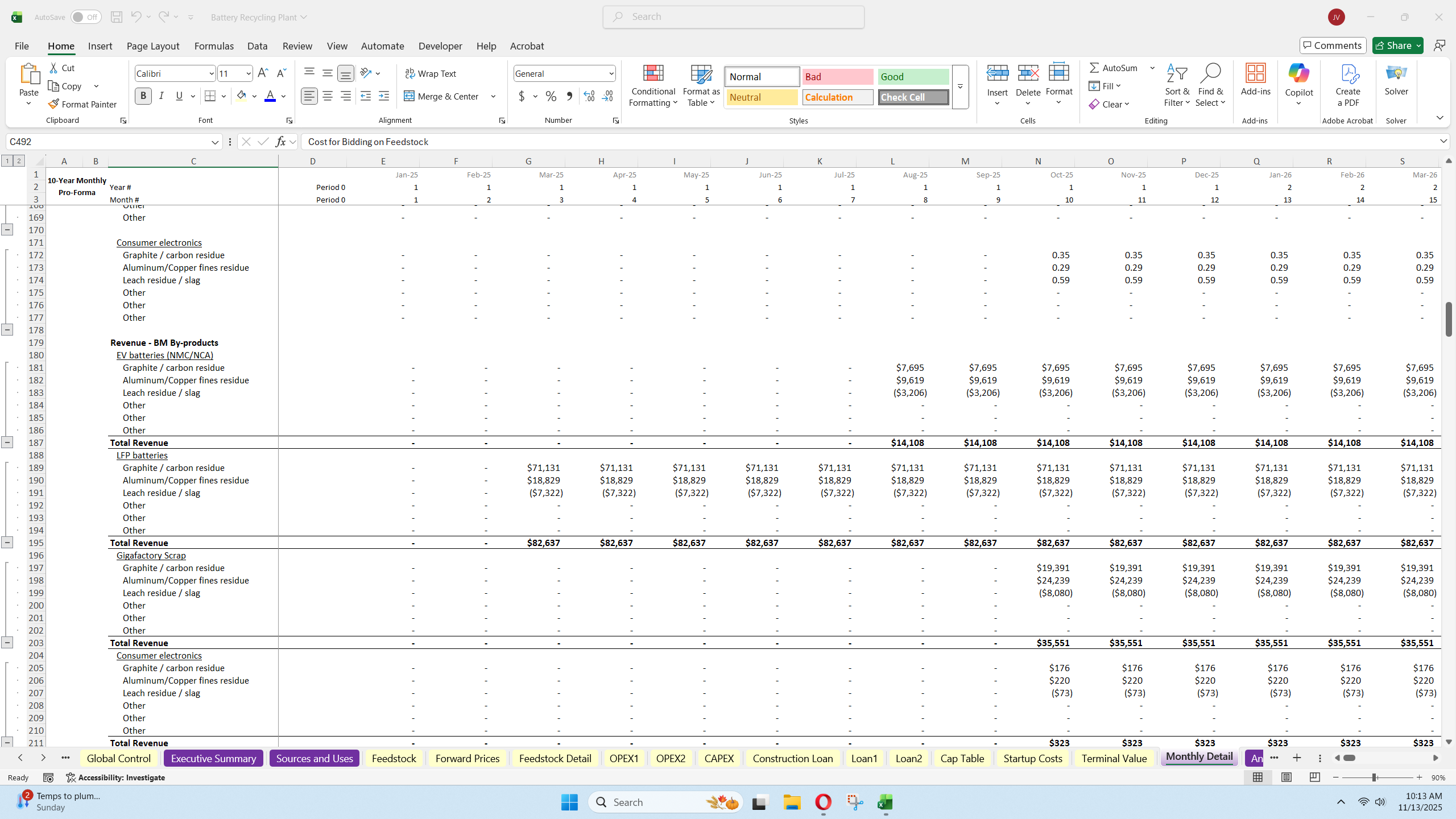
  • Define BM yields and value per tonne by category for realistic revenue capture.

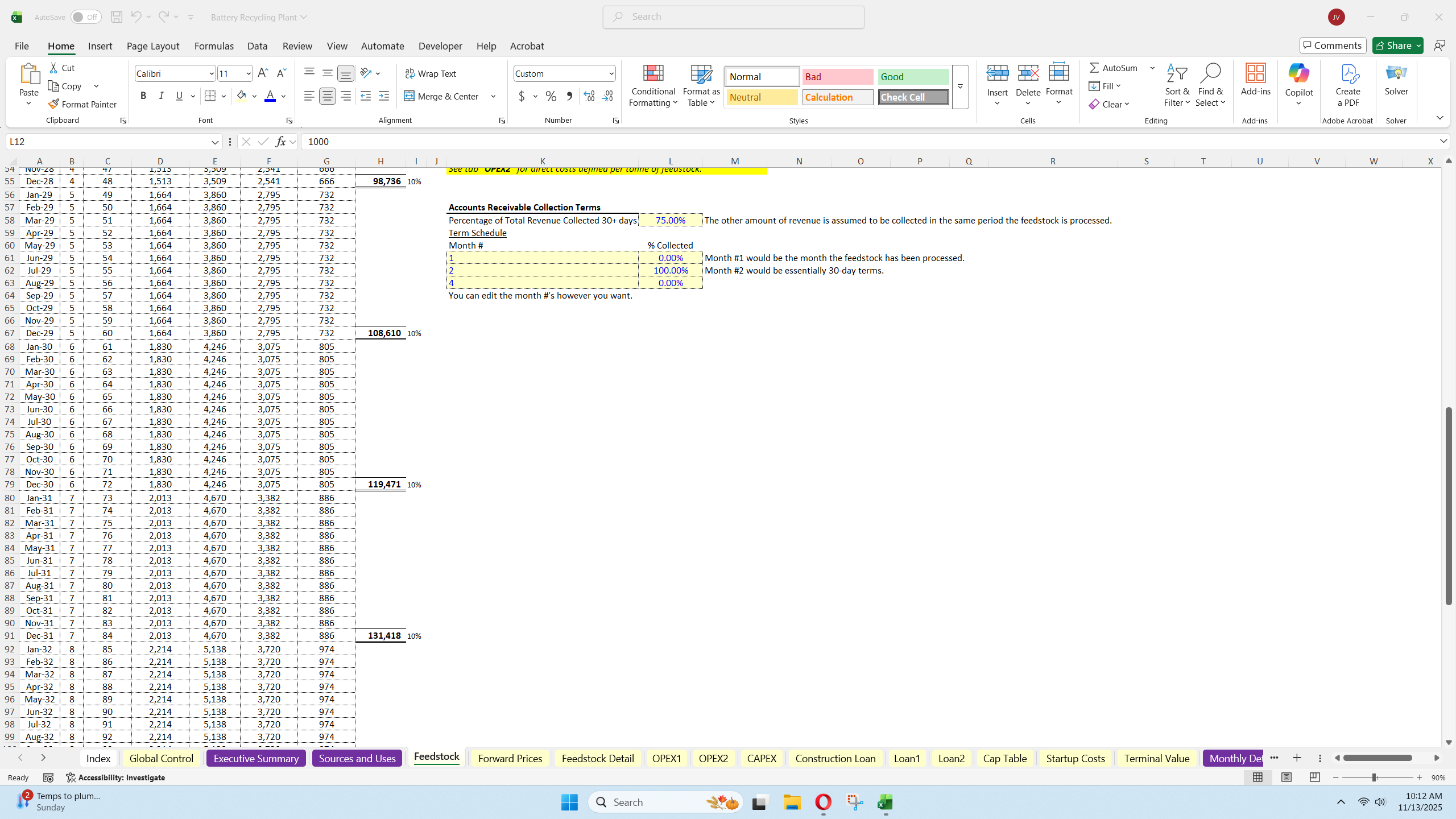
  • Accounts Receivable (AR) configuration: set % collected at sale and distribute remaining receipts across up to three subsequent months, flowing into AR balances, cash receipts, and liquidity planning.

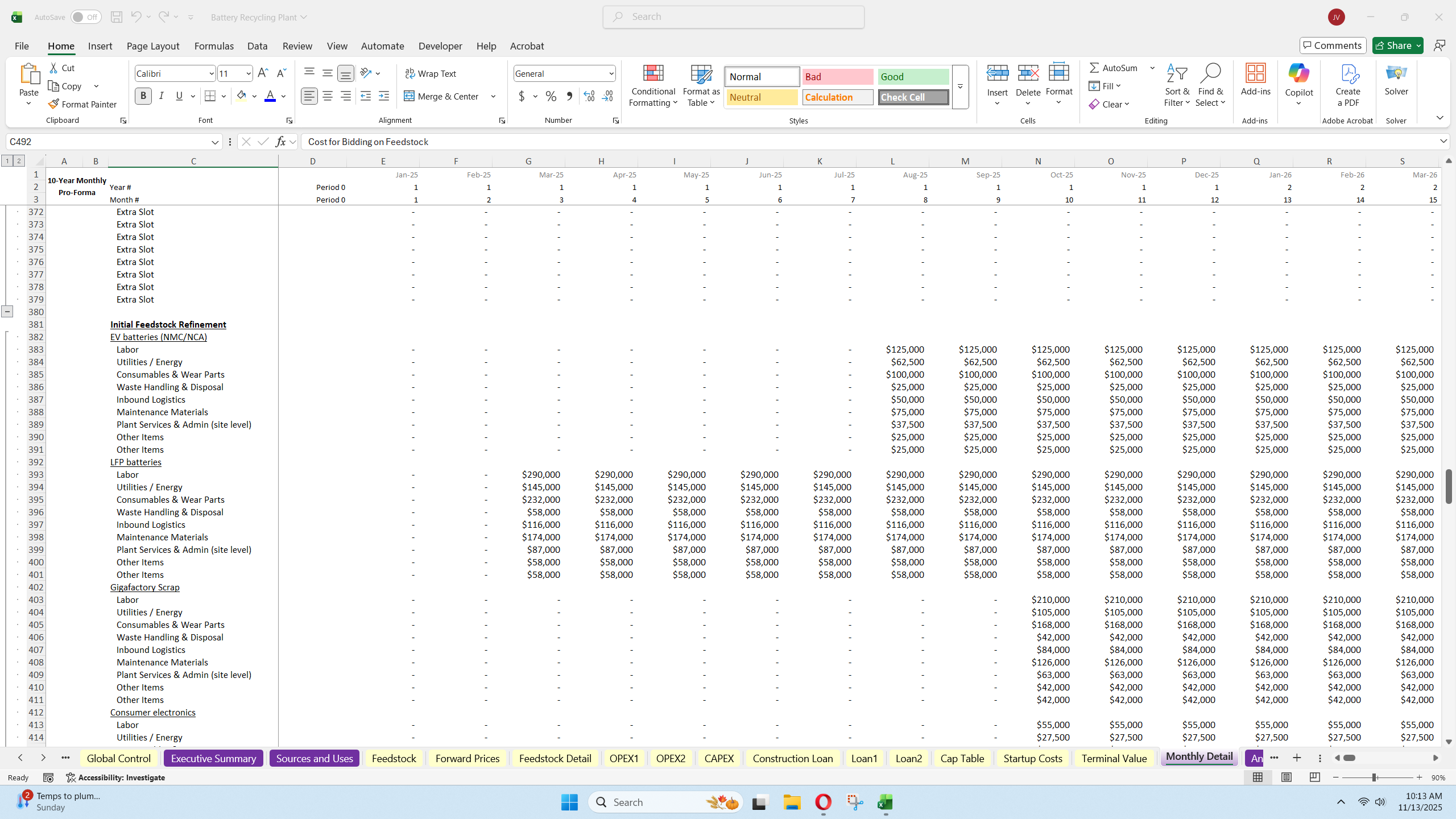
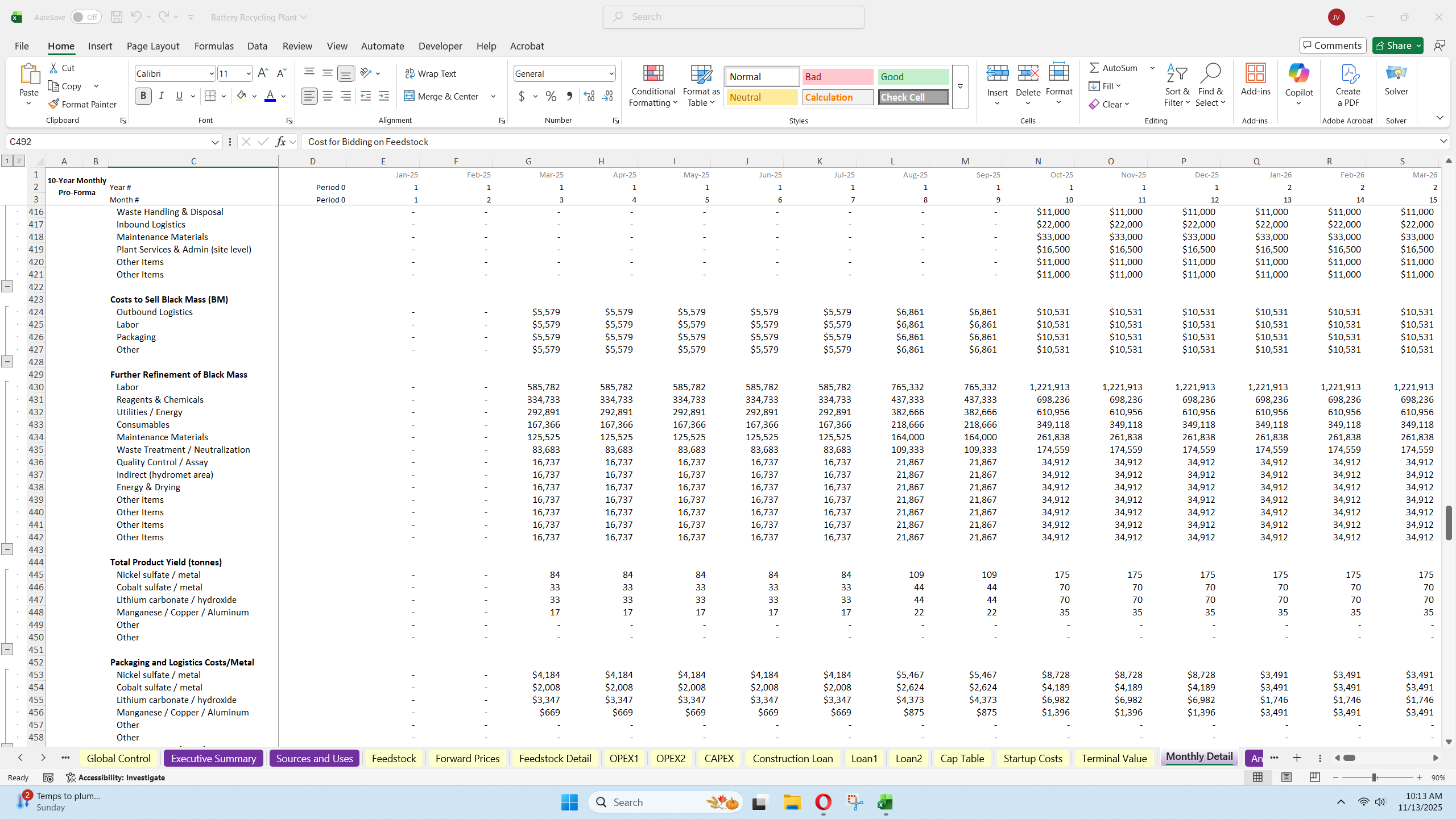
3) Costs, Capex & Financing
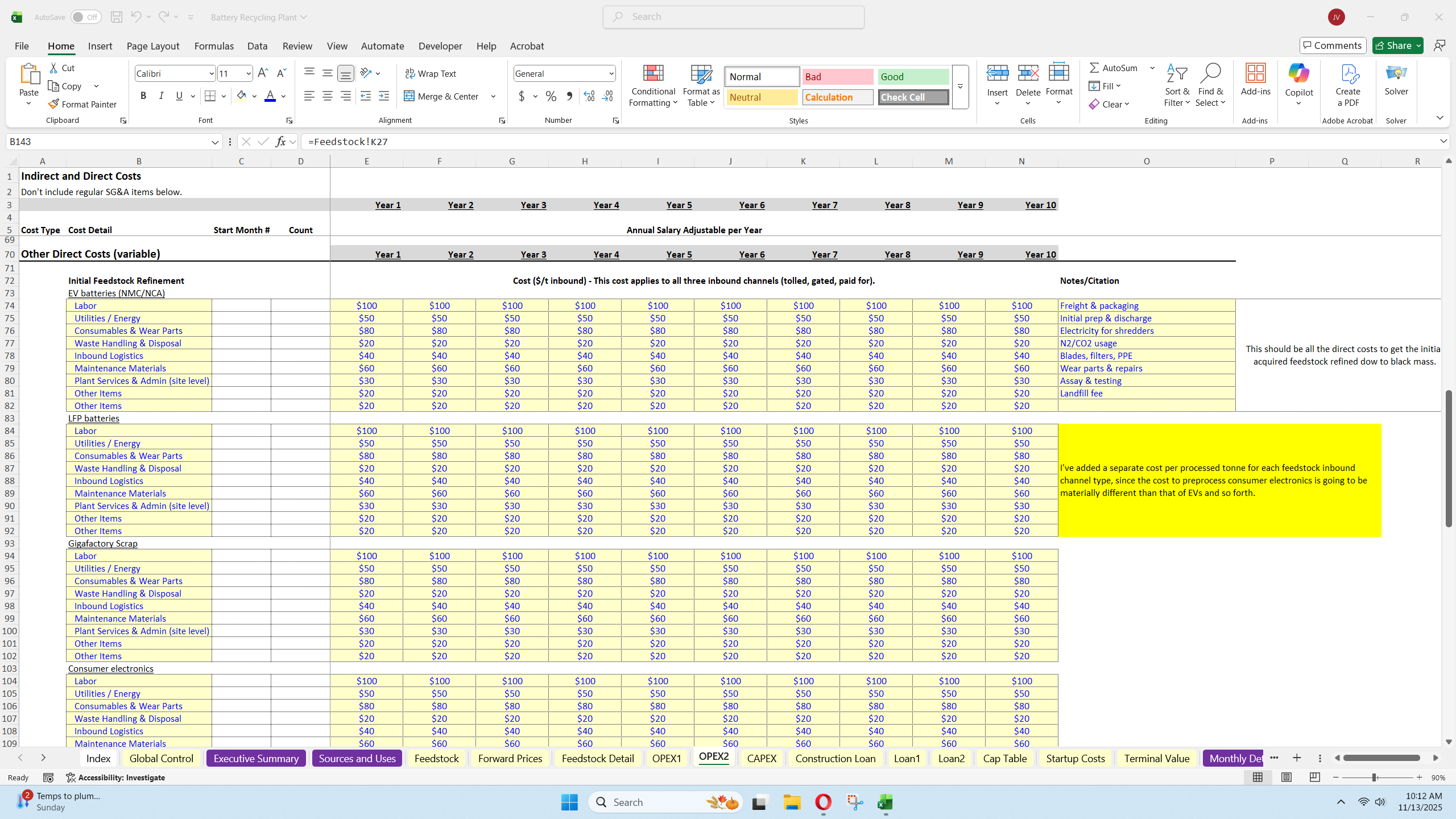
  • Indirect fixed costs (lighting, non‑direct utilities, supervisors) separated from variable/throughput costs.

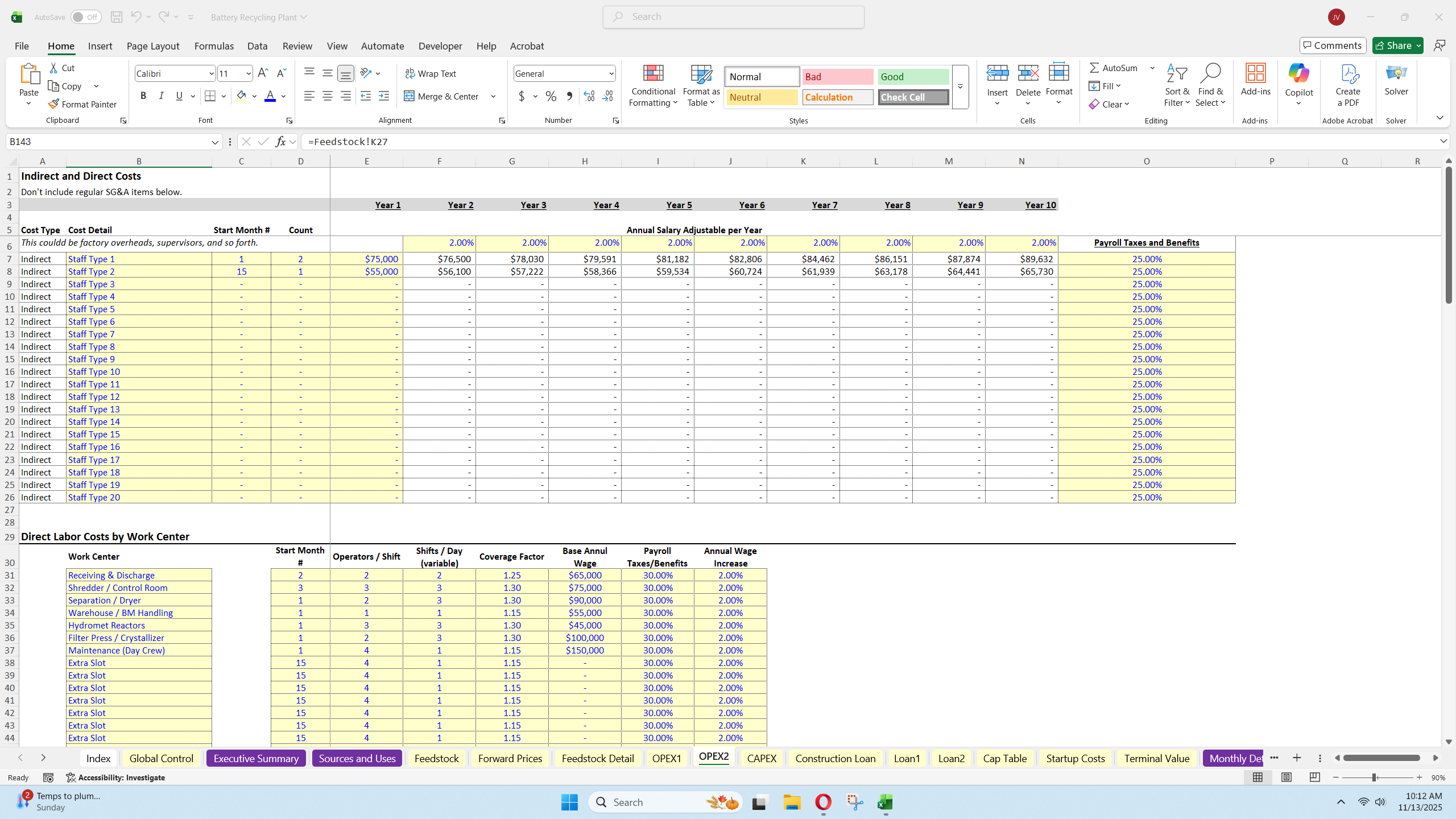
  • Direct labor by work center (shifts, headcount, salaries) for precise staffing economics.

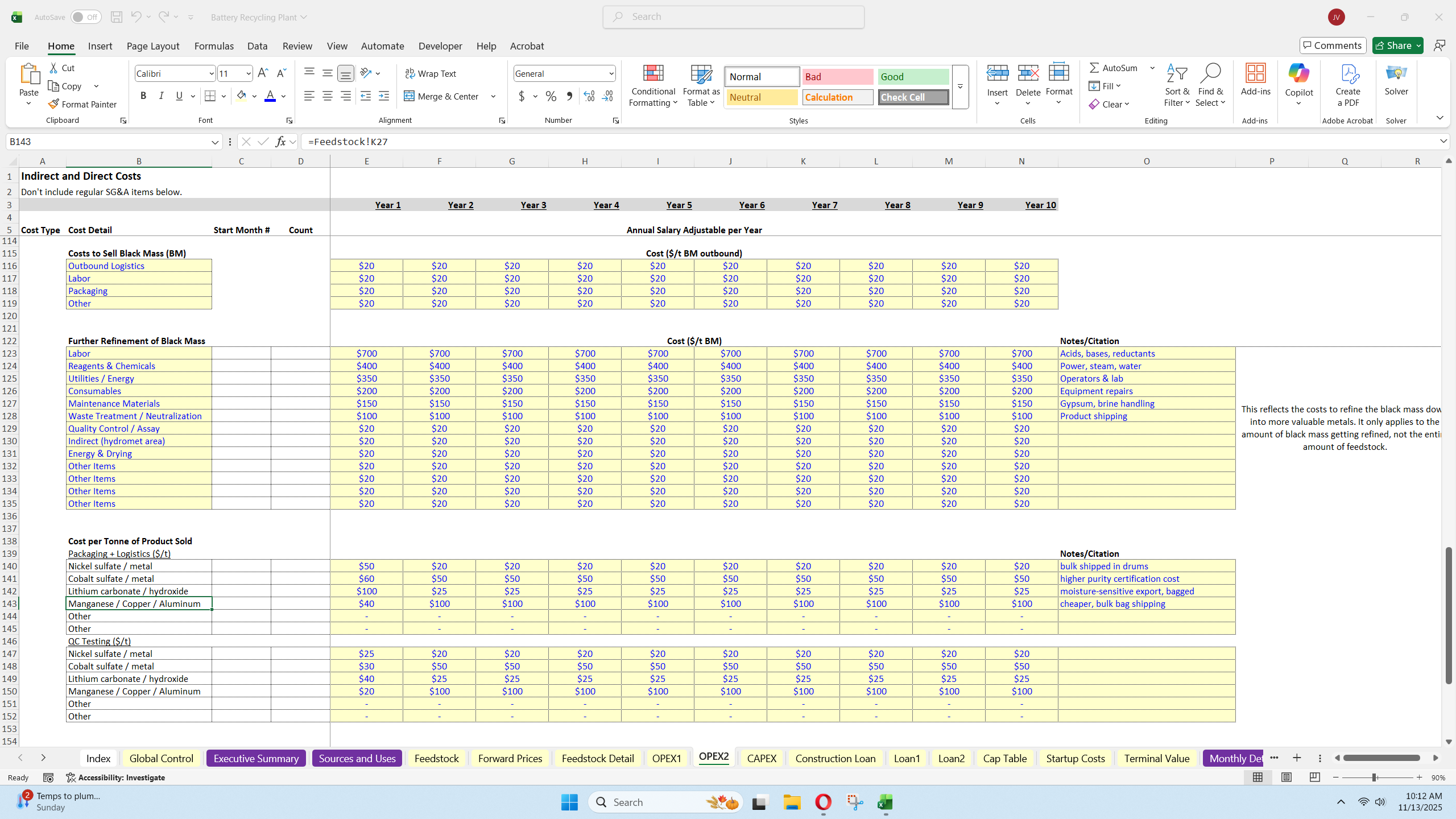
  • Feedstock costs per tonne overall and by inbound channel; BM refining costs per tonne; selling costs for BM and refined outputs.

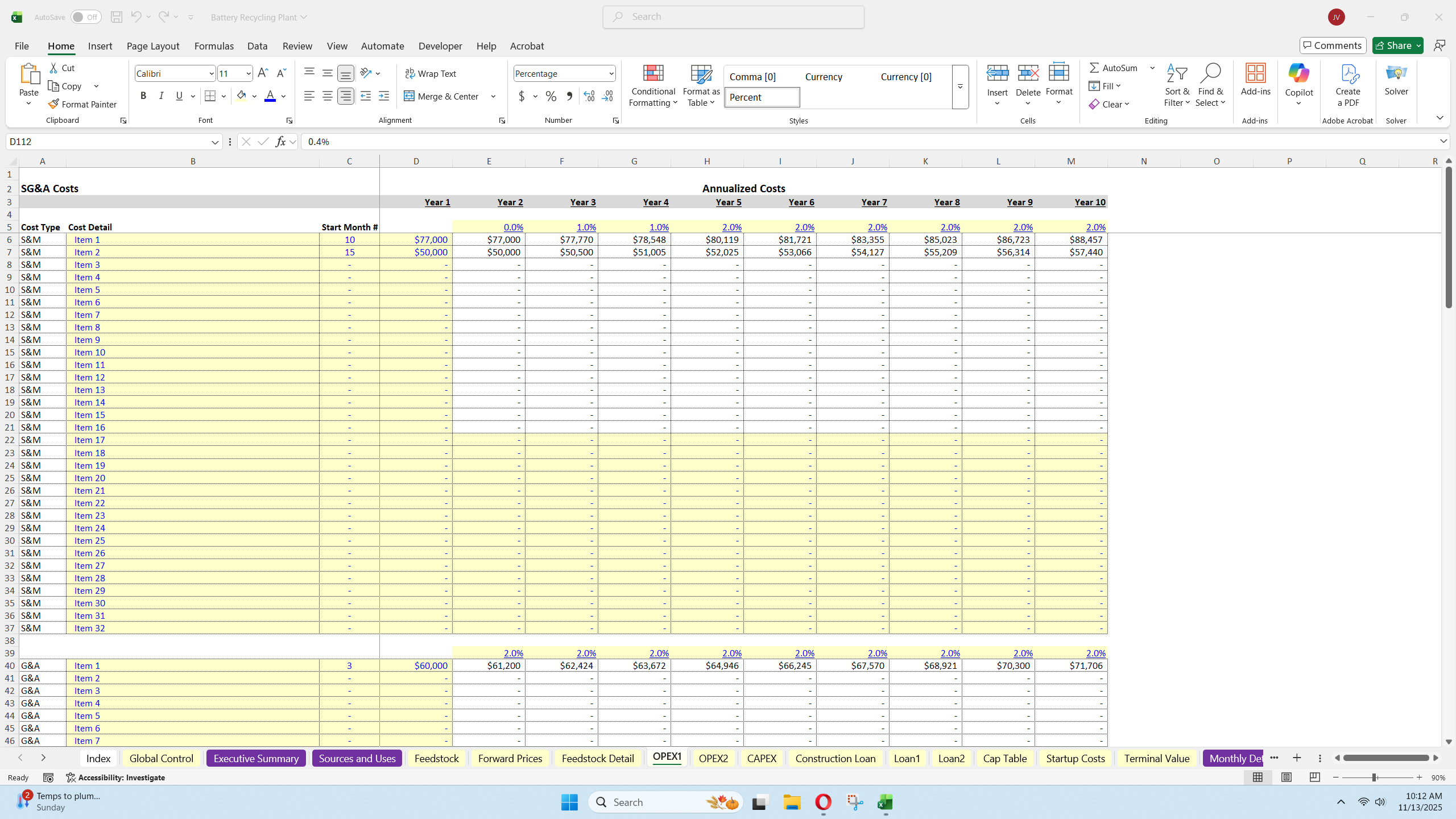
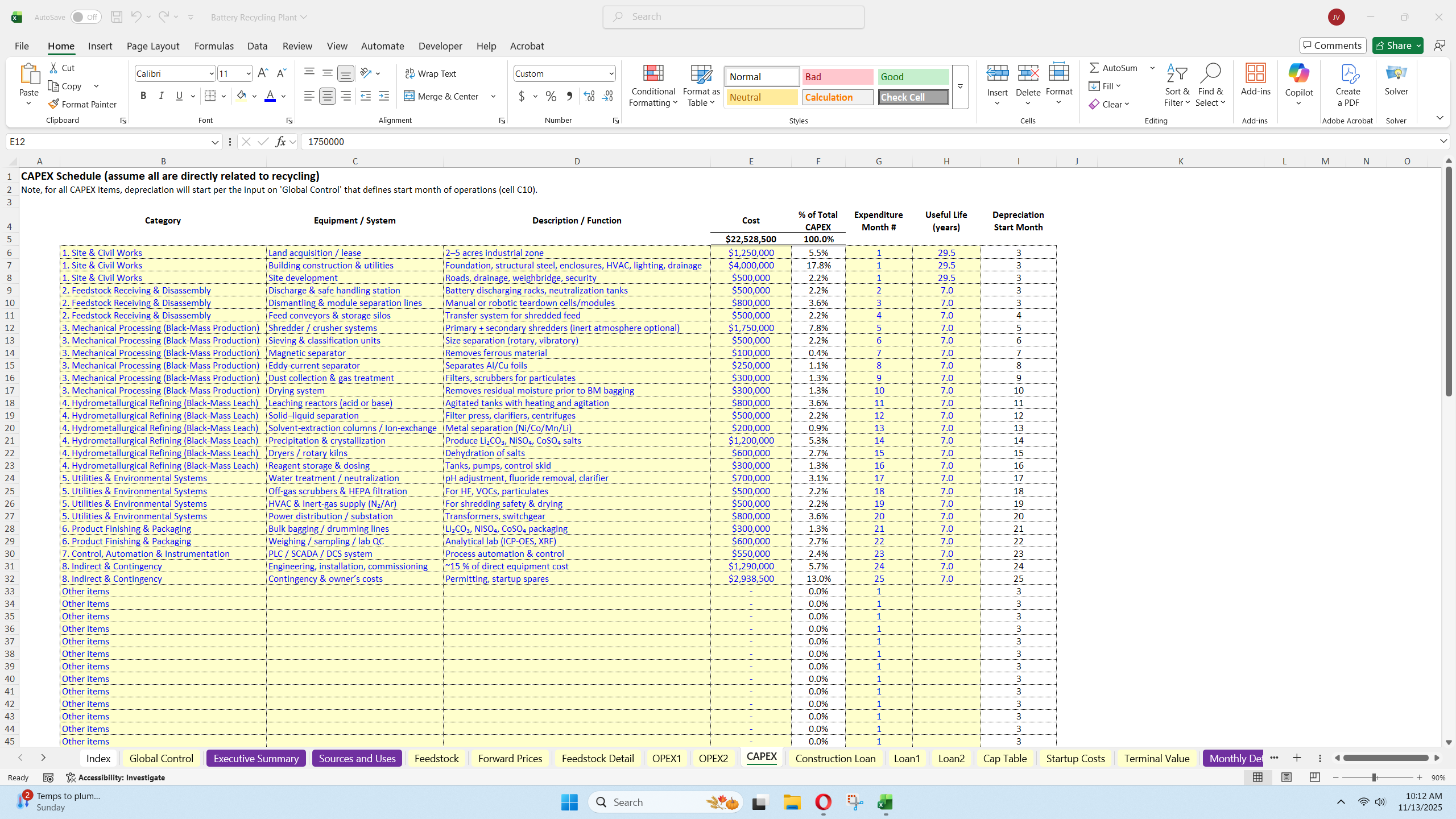
  • Construction & equipment schedule with depreciation and dedicated SG&A sections.

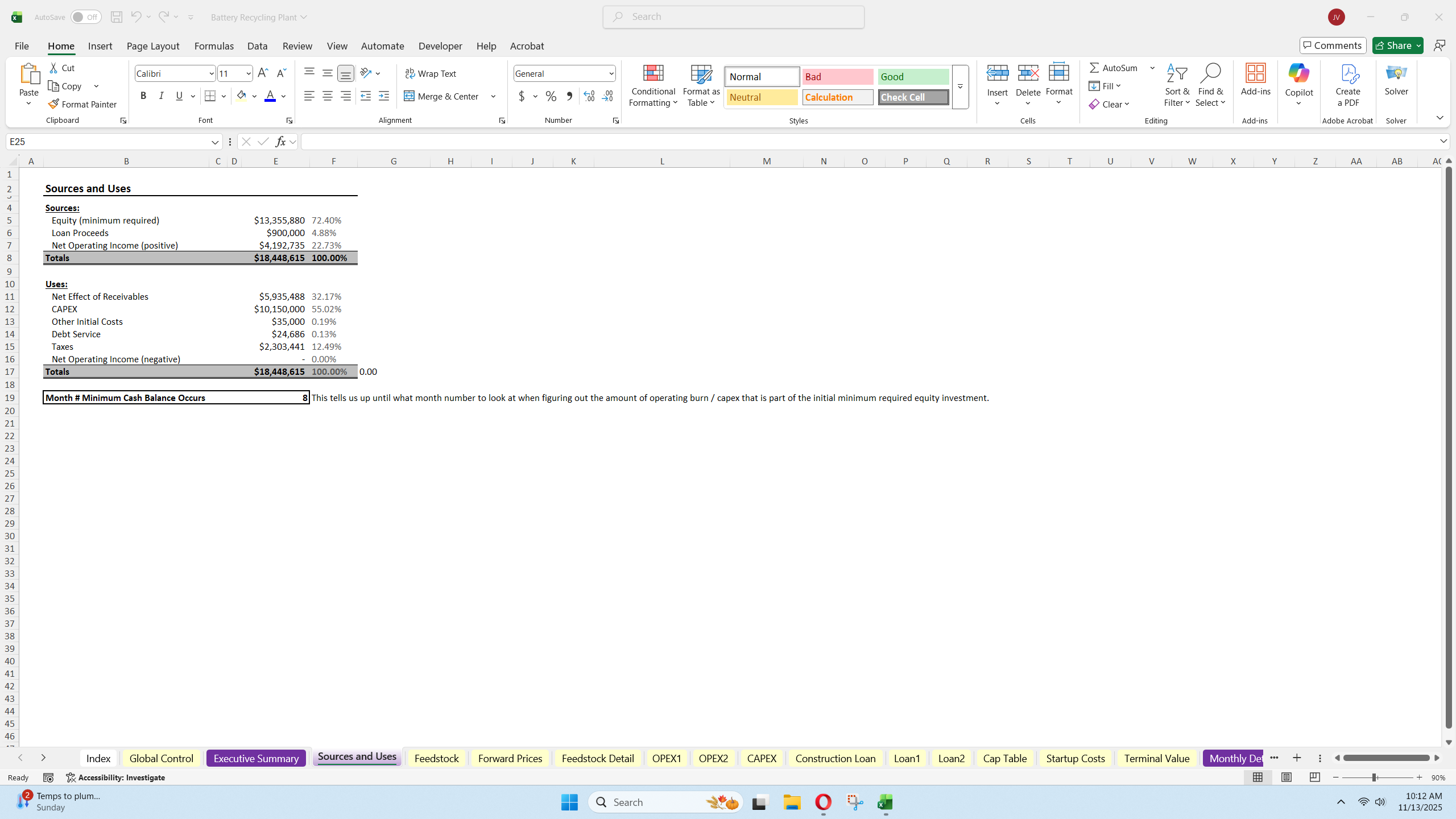
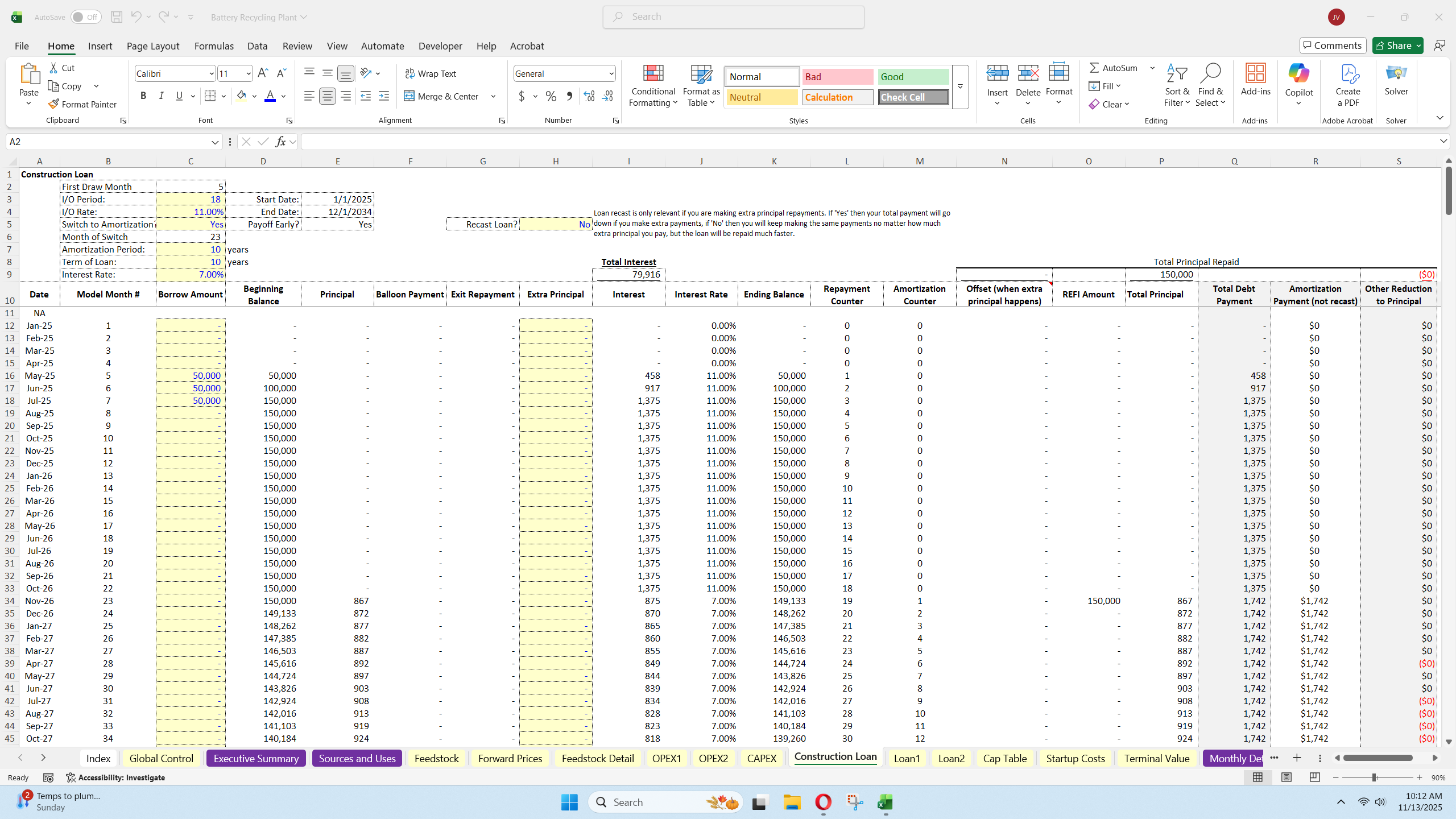
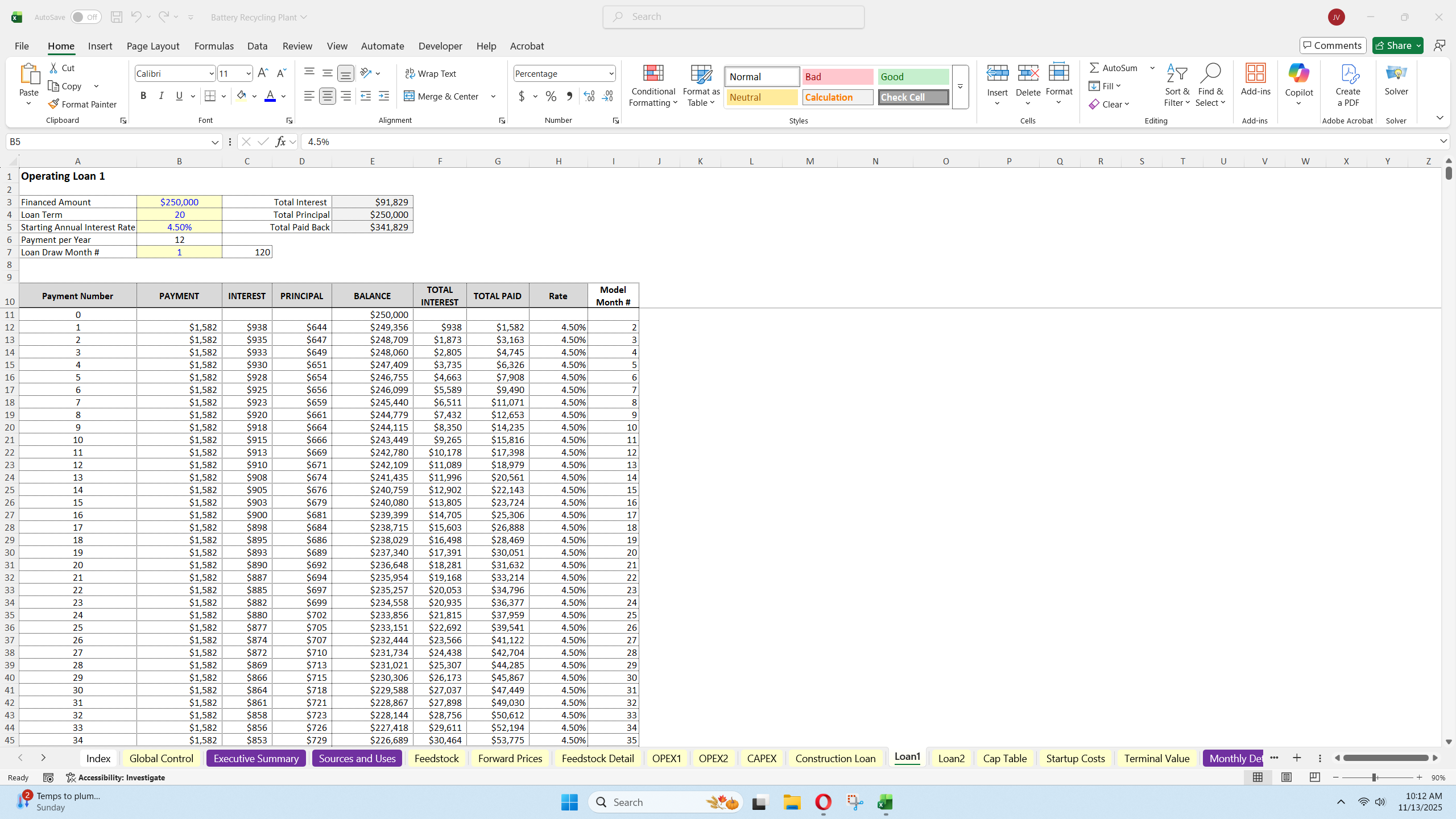
  • Financing modules: construction loan plus two operating loans, with Sources & Uses and working‑capital impacts tied to AR and collections timing.

  • Automated outputs and visuals for average revenue, cost, and profit per tonne to benchmark channels and pathways.

This Best Practice includes
1 Excel model, 1 overview video

Acquire business license for $70.00

Add to cart

Add to bookmarks

Discuss

Further information

Run scenarios and strategy tests for the operations of a battery recycling plant.

Up to four feedstock sources and three acquisition channels.


0.0 / 5 (0 votes)

please wait...