13-Week Direct Cash Flow Forecast with Working Capital Bridge & Revolver (Excel)
Originally published: 12/09/2026 19:14
Publication number: ELQ-41125-1
View all versions & Certificate
certified

13-Week Direct Cash Flow Forecast with Working Capital Bridge & Revolver (Excel)

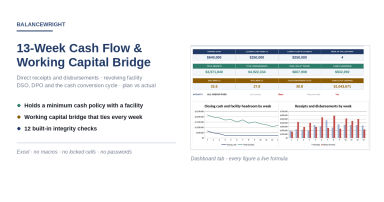
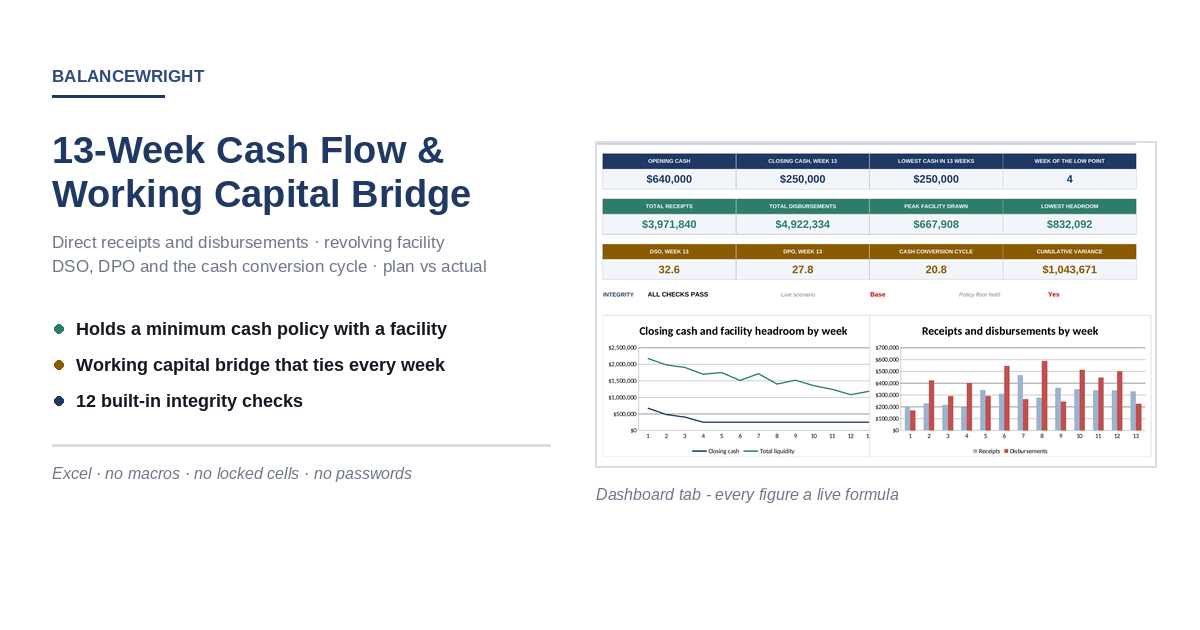
The 13-week forecast lenders ask for first: receipts from your receivables book, a revolver defending minimum cash, and a working capital bridge.

Description
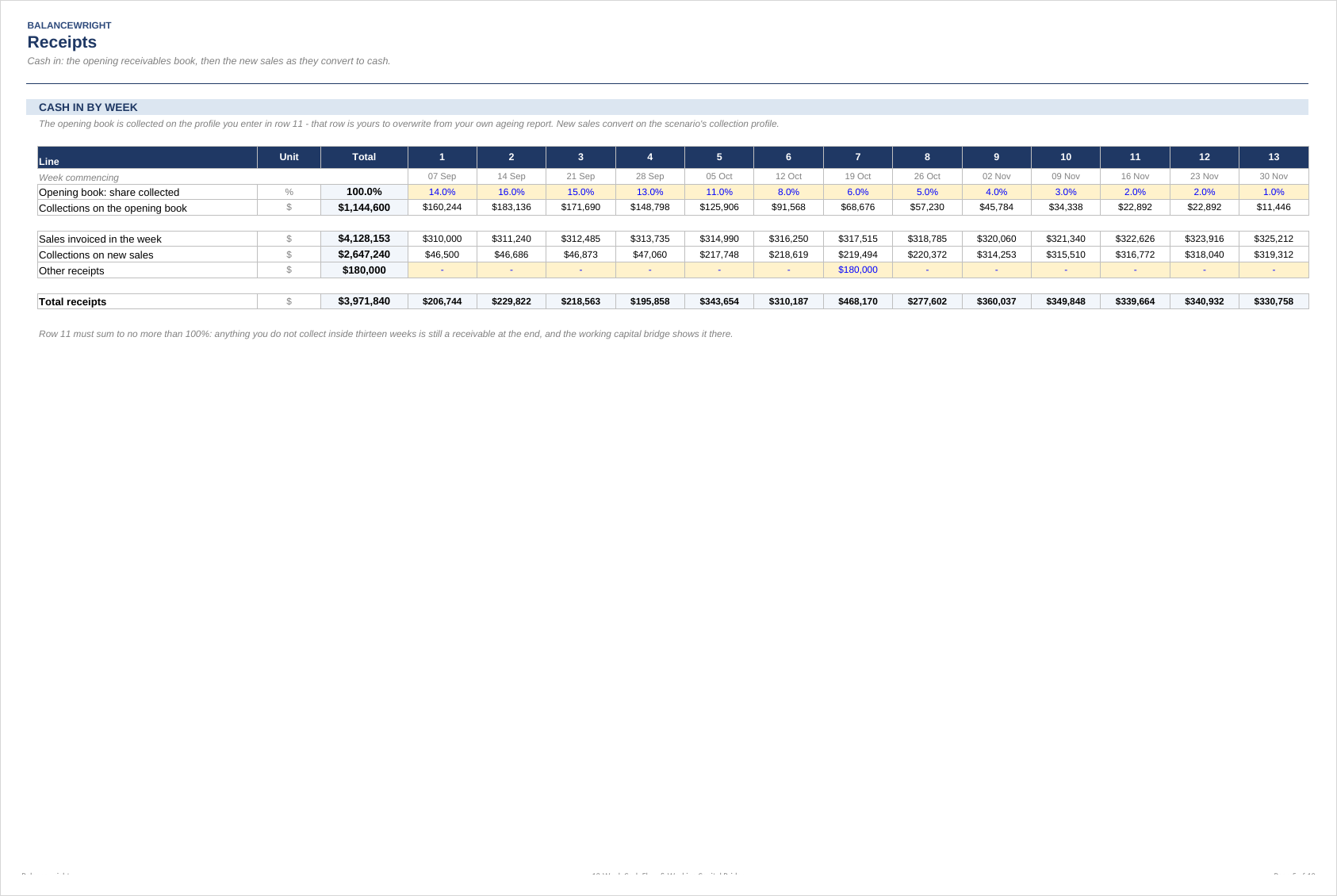
The thirteen-week direct cash forecast is the instrument a treasurer, a lender and a turnaround adviser all ask for first, because it is the only forecast short enough to be checkable and long enough to be useful.

THE FACILITY, WITHOUT A CIRCULAR REFERENCE
A thirteen-week model that ignores the revolver answers the wrong question. The question is not whether cash goes negative; it is whether you breach your policy floor, how much of the facility that consumes, and how much headroom is left when the quarter's tax payment lands.
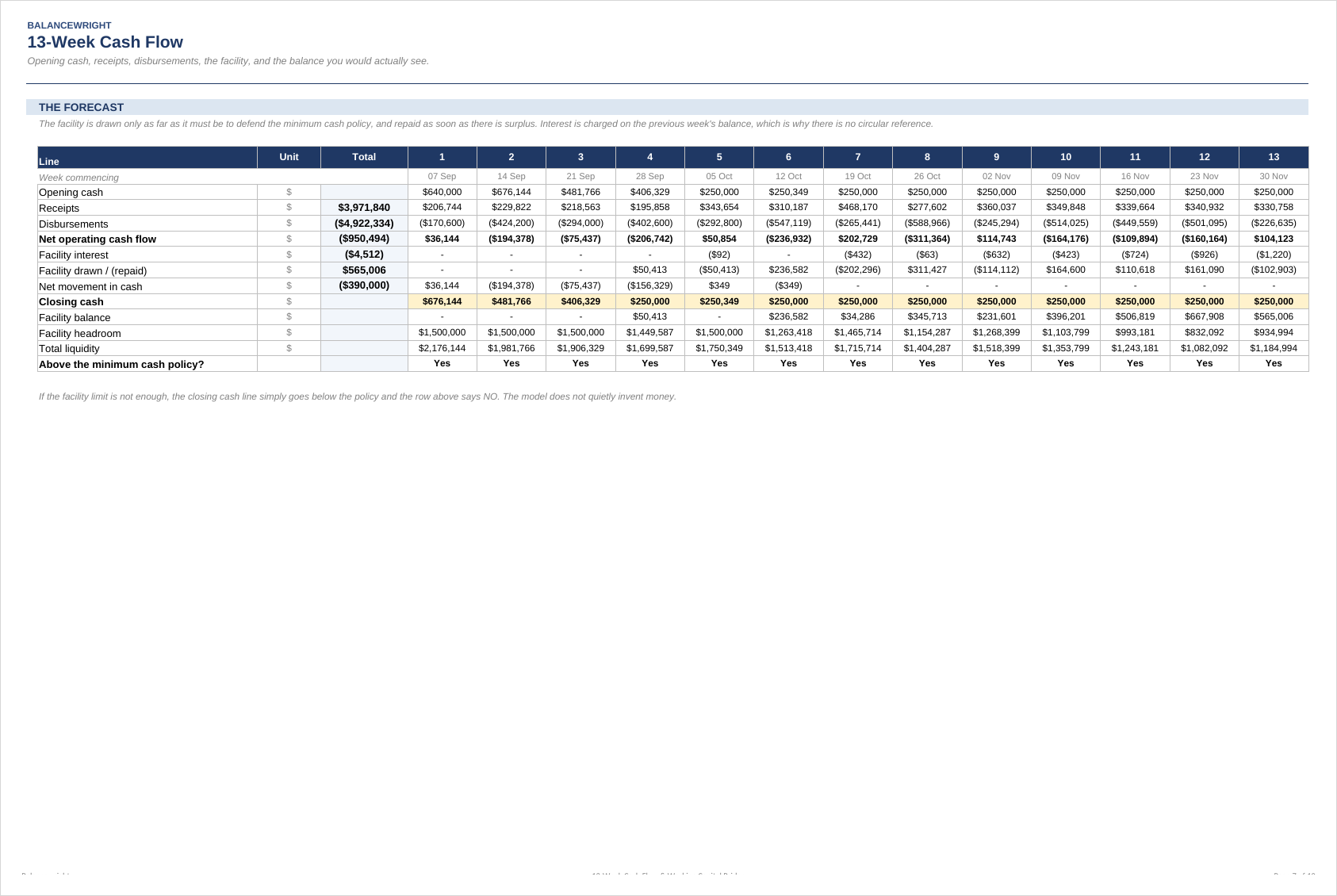
This model draws on the facility only as far as it must to hold the minimum cash policy, and repays as soon as there is surplus. Interest is charged on the previous week's drawn balance rather than the current one - a deliberate choice, because charging on the current balance makes the model circular and forces the reader to enable iterative calculation. On a weekly facility the difference is a few hundred dollars; the difference in auditability is total.
If the facility is not large enough, the model does not quietly invent money. The closing cash line goes below the policy, the row underneath says NO, and the dashboard says the floor was not held.

THE WORKING CAPITAL BRIDGE
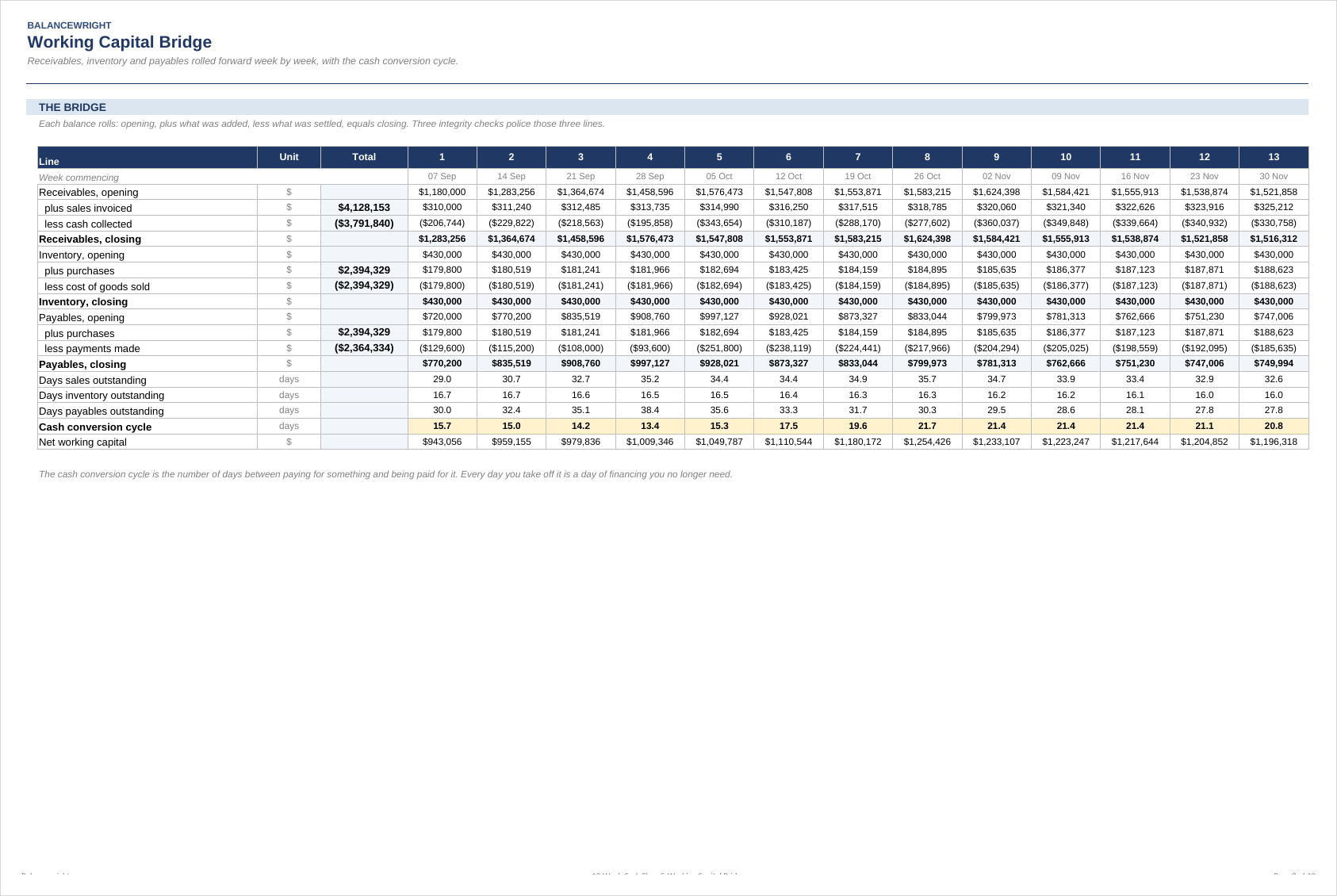
Most thirteen-week templates stop at the cash line. That tells you what happens but not why, and it gives you nothing to manage. This model rolls the three working capital balances forward every week - receivables plus sales less collections, inventory plus purchases less cost of goods, payables plus purchases less payments - and three integrity checks confirm each one ties on every column.
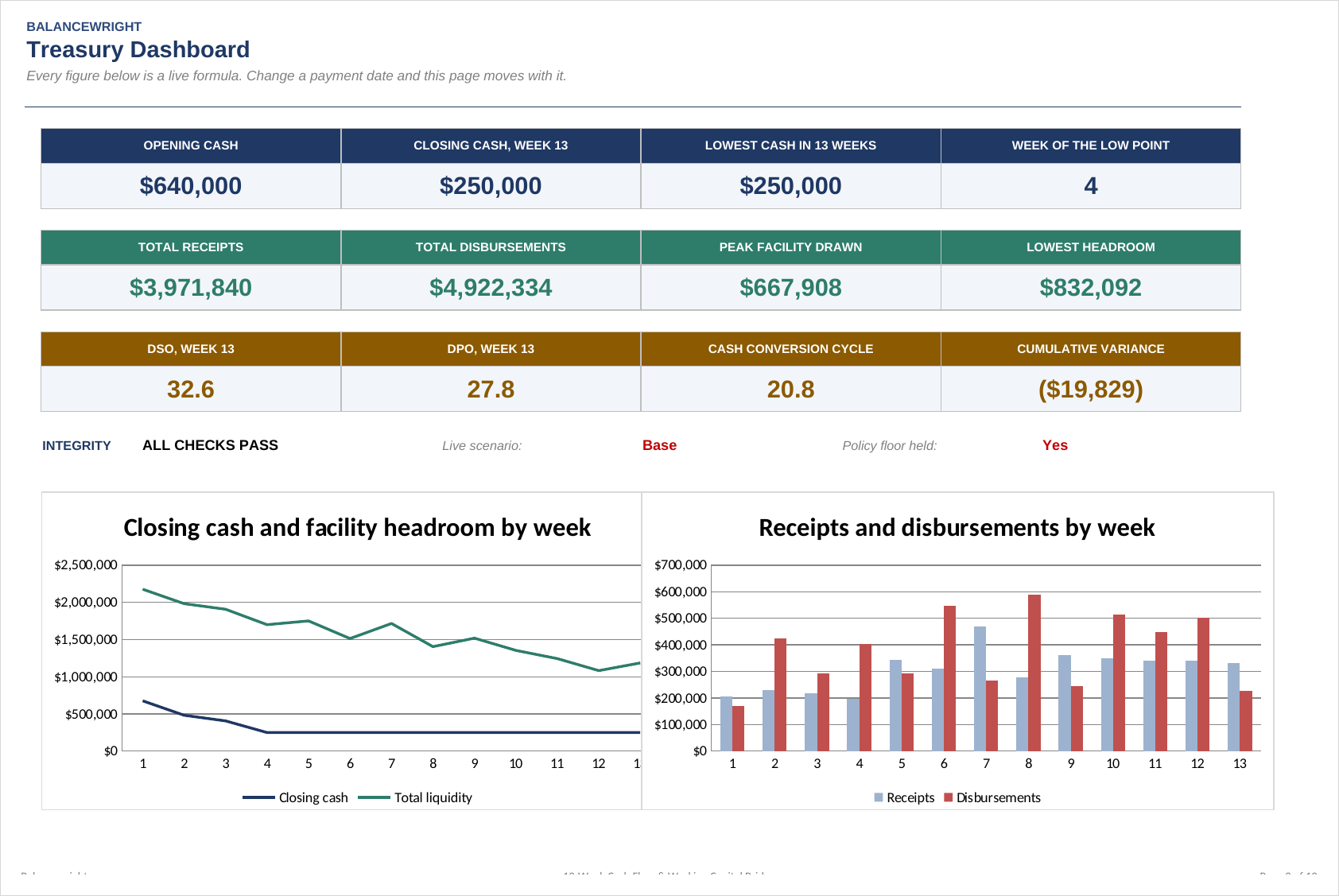
From those balances it computes days sales outstanding, days inventory outstanding, days payables outstanding and the cash conversion cycle. Every day taken off the cycle is a day of financing you no longer need. In the worked example the cycle drifts from sixteen days to twenty-one across the quarter, which is the real story behind the facility drawdown and is invisible on the cash line alone.

IT SCORES ITSELF
Enter actual receipts and disbursements as each week closes and the variance tab tells you how good the forecast was, weekly and cumulatively. A thirteen-week forecast is mostly a test of timing, and a forecast nobody scores is a forecast nobody improves.
The worked example: 640k of cash, a 1.18m receivables book, a 1.5m facility and a 250k minimum cash policy which the facility defends from week four onwards.
Twelve integrity checks must all read PASS. No macros, no locked cells, no passwords, and no iterative calculation to switch on.
This workbook models the arithmetic of your own forecast. It is not financial advice.

This Best Practice includes
1 Excel workbook (9 tabs, 729 live formulas) and 1 five-page PDF guide.

Acquire business license for $49.00

Add to cart

Add to bookmarks

Discuss

Further information

Know whether the business can pay its bills between now and the end of the quarter, how much of the facility that consumes, and why the cash moved rather than just that it did.

Cash is tight; a lender or investor has asked for a thirteen-week; you are in or near a restructuring; you want to score your own forecasting accuracy as the weeks close.

You need a long-range plan, foreign currency, invoice factoring, supplier financing, or VAT and sales tax timing modelled explicitly. Thirteen weeks is a horizon, not a business plan.


0.0 / 5 (0 votes)

please wait...