Company Valuation Model — DCF + Comparable Company Multiples (Bilingual - Español - English)
Originally published: 31/08/2026 11:16
Publication number: ELQ-43817-1
View all versions & Certificate
certified

Company Valuation Model — DCF + Comparable Company Multiples (Bilingual - Español - English)

Integrated DCF + Comparable Company Valuation Model with WACC, sensitivity analysis, precedent transactions, and valuation summary. Includes English and Spanish

Description

A fully integrated Excel valuation model designed to estimate company value using Discounted Cash Flow (DCF) analysis and Comparable Company Multiples, with supporting WACC, financial projections, sensitivity analysis, and valuation summary.

The model provides a structured framework for performing a comprehensive company valuation from operating assumptions through Enterprise Value, Equity Value, and implied value per share. It combines intrinsic valuation through DCF with relative valuation using comparable companies, allowing users to cross-check valuation results across multiple methodologies.

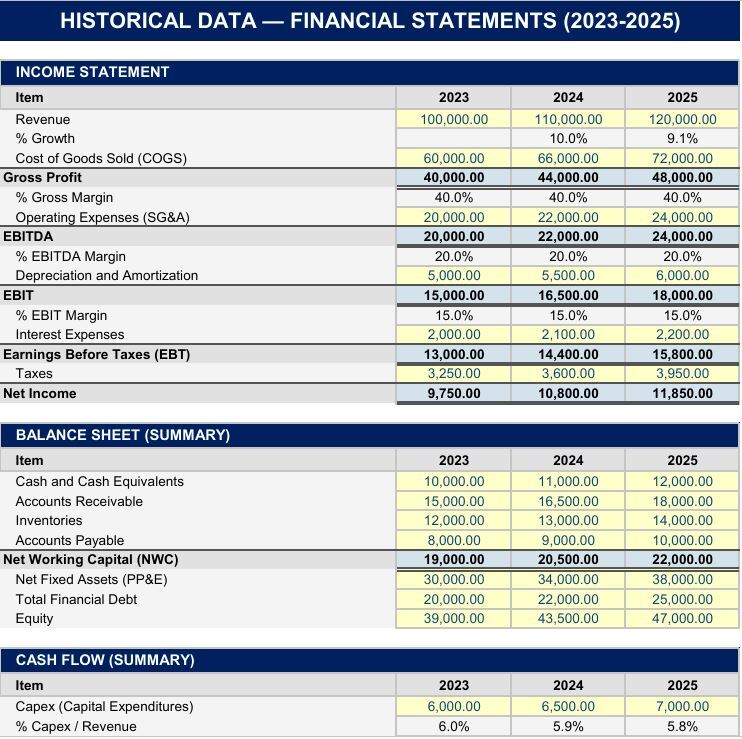
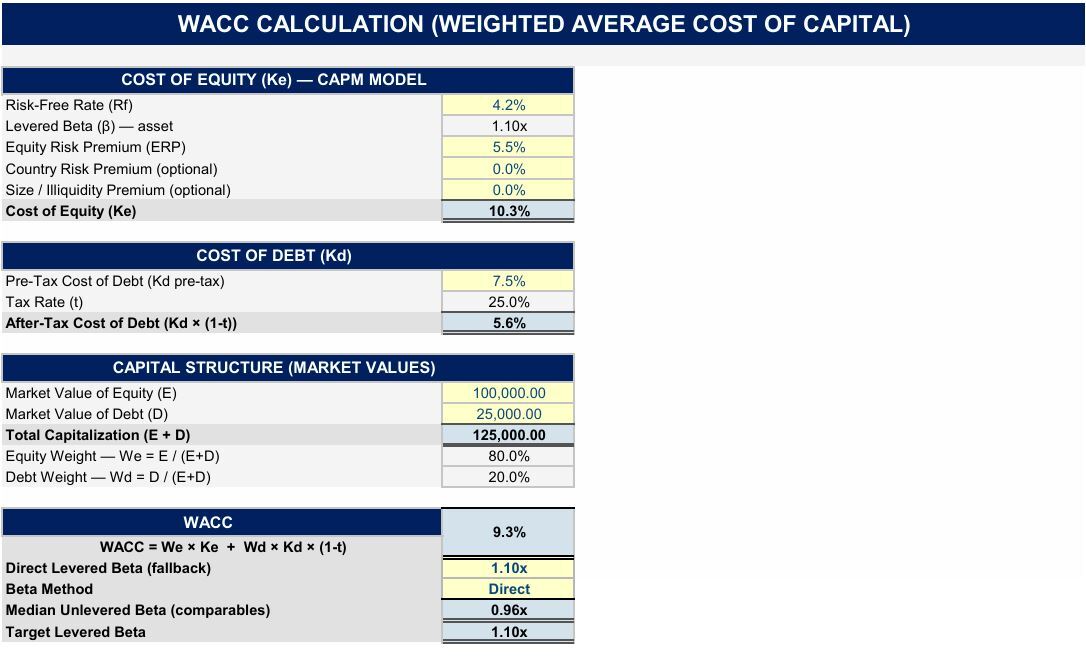
The model includes CAPM-based WACC calculation, cost of equity, cost of debt, capital structure, direct or comparable-based beta, historical financial data, projected operating assumptions, working capital drivers, CapEx, taxes, and terminal value assumptions.

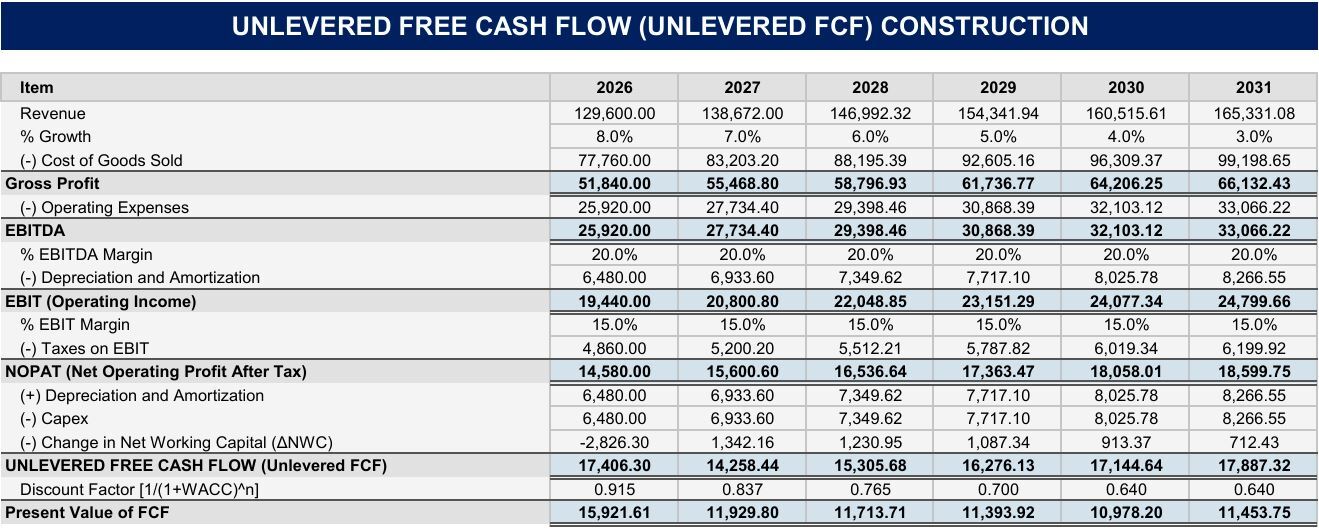
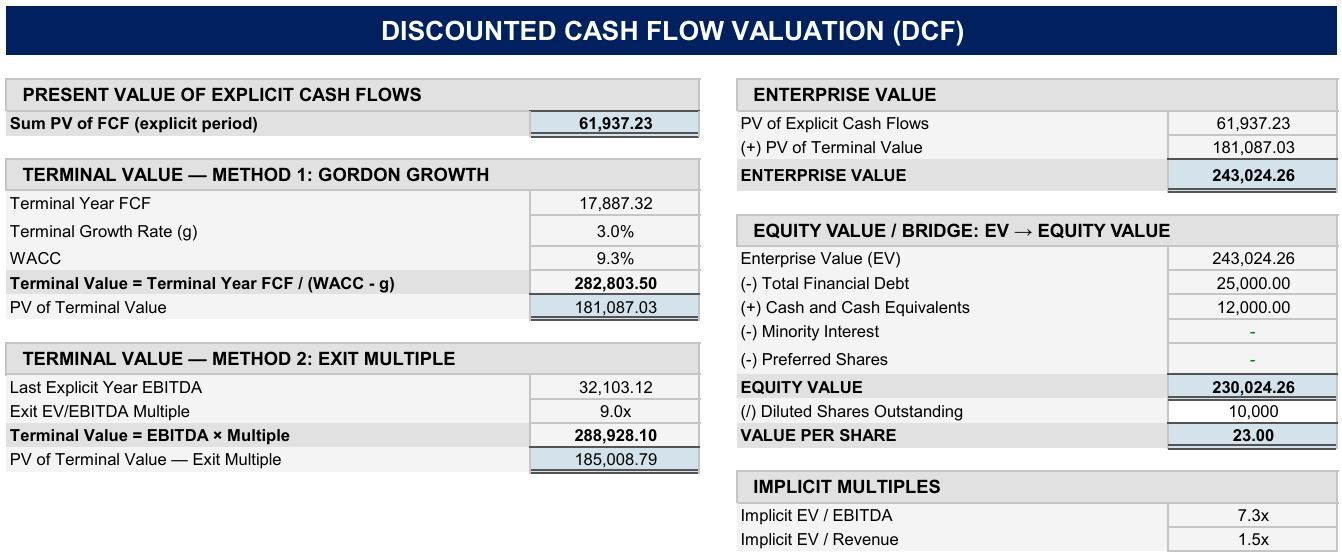
The DCF section builds Unlevered Free Cash Flow from Revenue through EBITDA, EBIT, NOPAT, D&A, CapEx, and changes in Net Working Capital. It calculates present values of projected FCF, terminal value, Enterprise Value, Equity Value, and value per share using both Gordon Growth and Exit EV/EBITDA Multiple approaches.

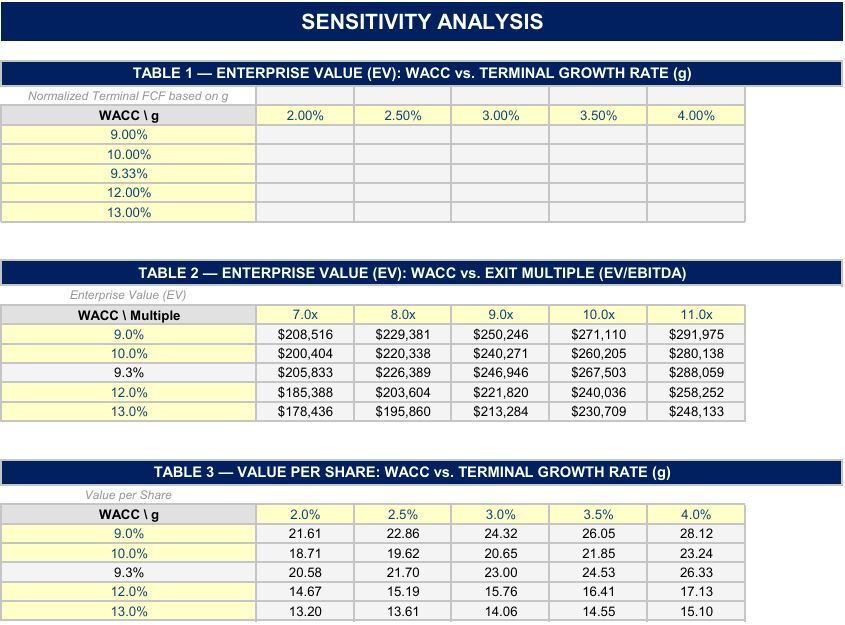
The model also includes three sensitivity analysis tables covering WACC versus terminal growth, WACC versus exit multiple, and WACC versus terminal growth for value per share.

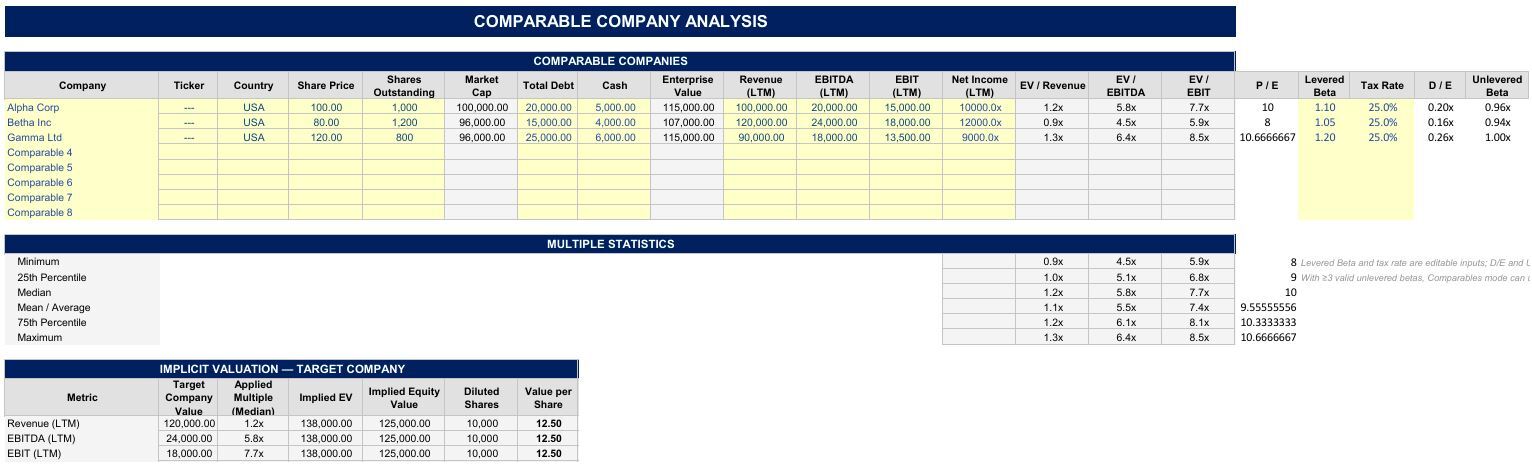
The Comparable Company Multiples section allows users to enter selected peer companies and automatically calculates Market Capitalization, Enterprise Value, EV/Revenue, EV/EBITDA, EV/EBIT, P/E, D/E, and unlevered beta. Statistical analysis includes minimum, 25th percentile, median, mean, 75th percentile, and maximum values, with median multiples applied to the target company.

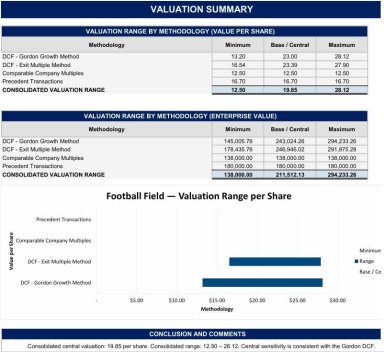
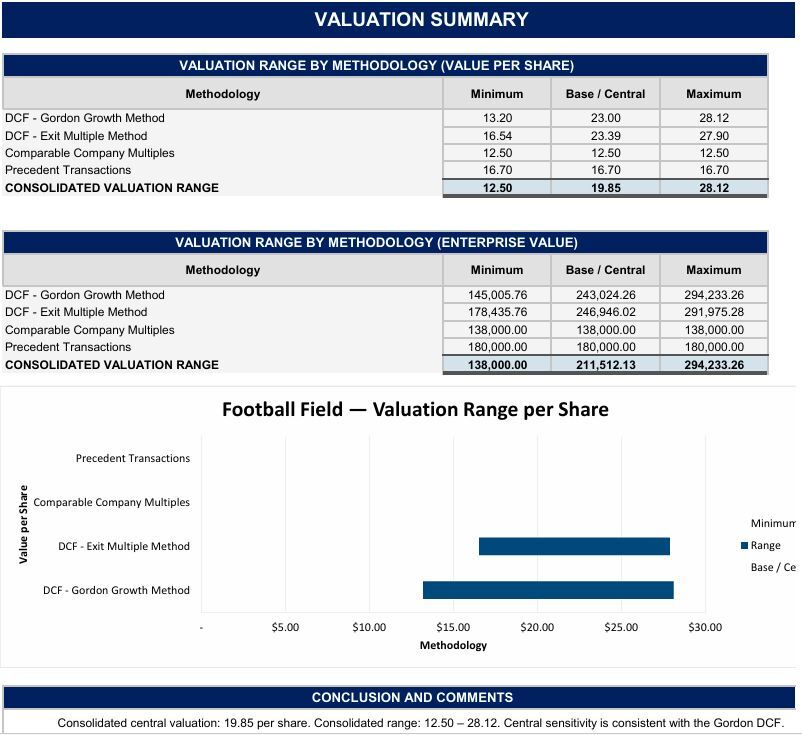
A Precedent Transactions section is also included for transaction-based cross-checking, while the Valuation Summary consolidates the valuation ranges from DCF, comparable companies, and precedent transactions.

The workbook includes built-in integrity checks covering WACC, terminal growth, diluted shares, beta methodology, terminal assumptions, sensitivity consistency, transaction/comparable data sufficiency, and projection chronology.

The DEMO data is illustrative and should be replaced with real, verifiable financial and market information before performing an actual valuation.

Ideal for: financial analysts, investment professionals, corporate finance teams, business owners, entrepreneurs, students, and users who need a structured Excel framework for company valuation and financial analysis.

Contents:

  • Excel Financial Valuation Model — English & Spanish

  • DEMO

  • User Manual

  • .ODS Copy

This Best Practice includes
2 Excel Financial Valuation Models (English - Spanish), User manual (both versions), Demo, .ods copy (Libre Office)

Acquire business license for $59.00

Add to cart

Add to bookmarks

Discuss

Further information

The objective of this downloadable best practice is to provide a structured and integrated framework for company valuation using DCF and Comparable Company Multiples. It enables users to estimate Enterprise Value, Equity Value, and implied value per share, while analyzing WACC, projected Free Cash Flow, terminal value, valuation sensitivities, comparable companies, and precedent transactions to support financial analysis, investment decisions, and strategic valuation discussions.

This downloadable practice is best suited for company valuation, financial analysis, investment analysis, corporate finance, and strategic decision-making where reliable estimates of company value are required.

This downloadable practice is not ideally suited for highly specialized valuations requiring detailed industry-specific assumptions, complex transaction structures, or extensive bespoke financial modeling beyond the model’s standard methodologies.


0.0 / 5 (0 votes)

please wait...