Originally published: 05/10/2026 08:37
Publication number: ELQ-63888-1
View all versions & Certificate
Publication number: ELQ-63888-1
View all versions & Certificate

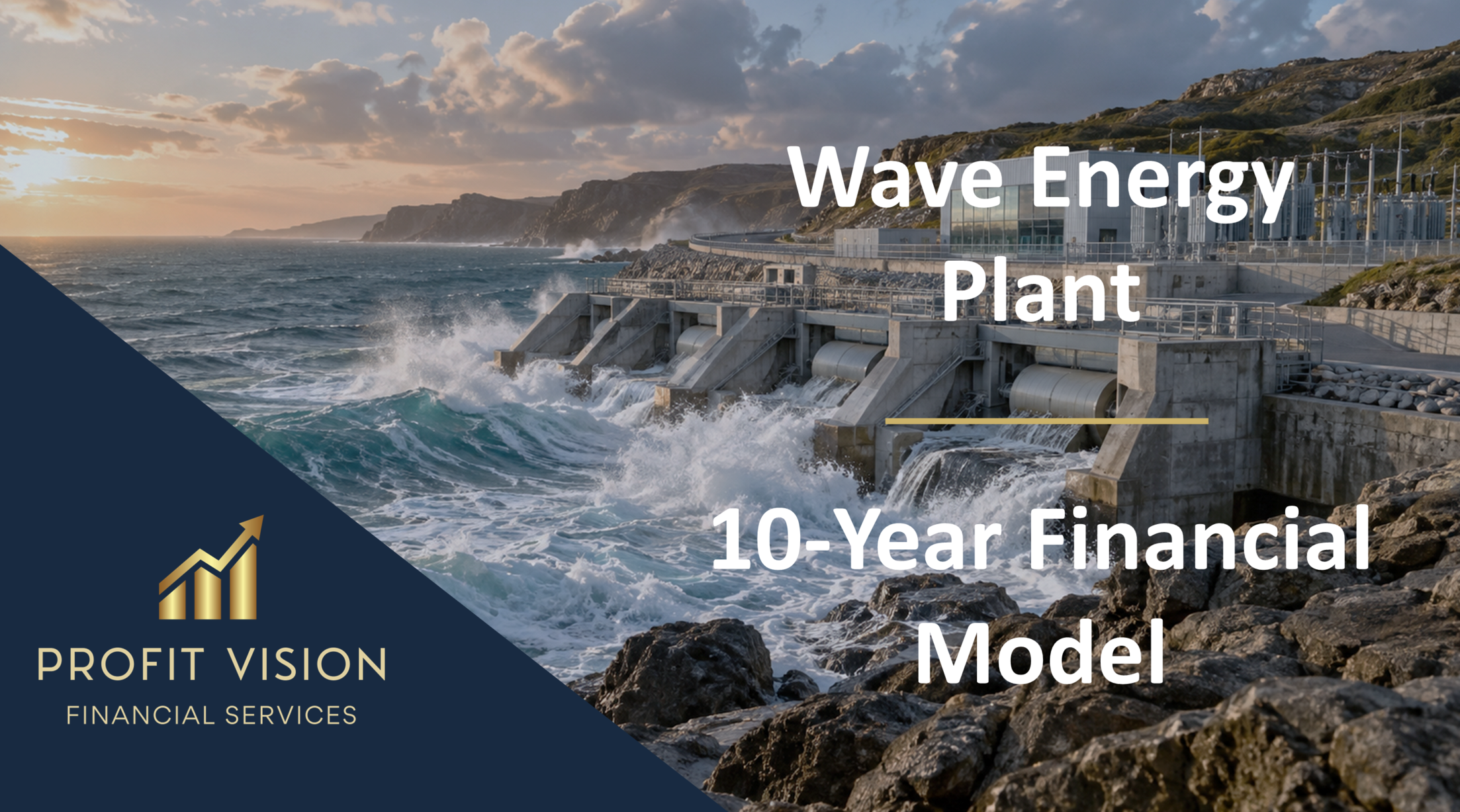
Wave Energy Plant – 10 Year Financial Model
10-year financial model for a Wave Energy plant providing forecasts, valuation, and profitability insights to assess project viability and investment returns.
energy facilitywave plantelectricity productioninfrastructurepower plantfinancial modelstartupproject financerenewable energycash flow analysis
Description
A wave energy plant is a renewable energy facility that converts the natural motion of ocean waves into electricity using specialized offshore or nearshore devices such as floating buoys, oscillating water columns, or submerged converters. The project typically includes wave resource assessment, marine engineering, device installation, subsea cabling, grid connection, and ongoing operations and maintenance in a challenging ocean environment. Revenue is driven by installed capacity, wave conditions, power generation efficiency, electricity pricing, offtake agreements, and government incentives, with success depending on technology reliability, site selection, permitting, and long-term maintenance performance.
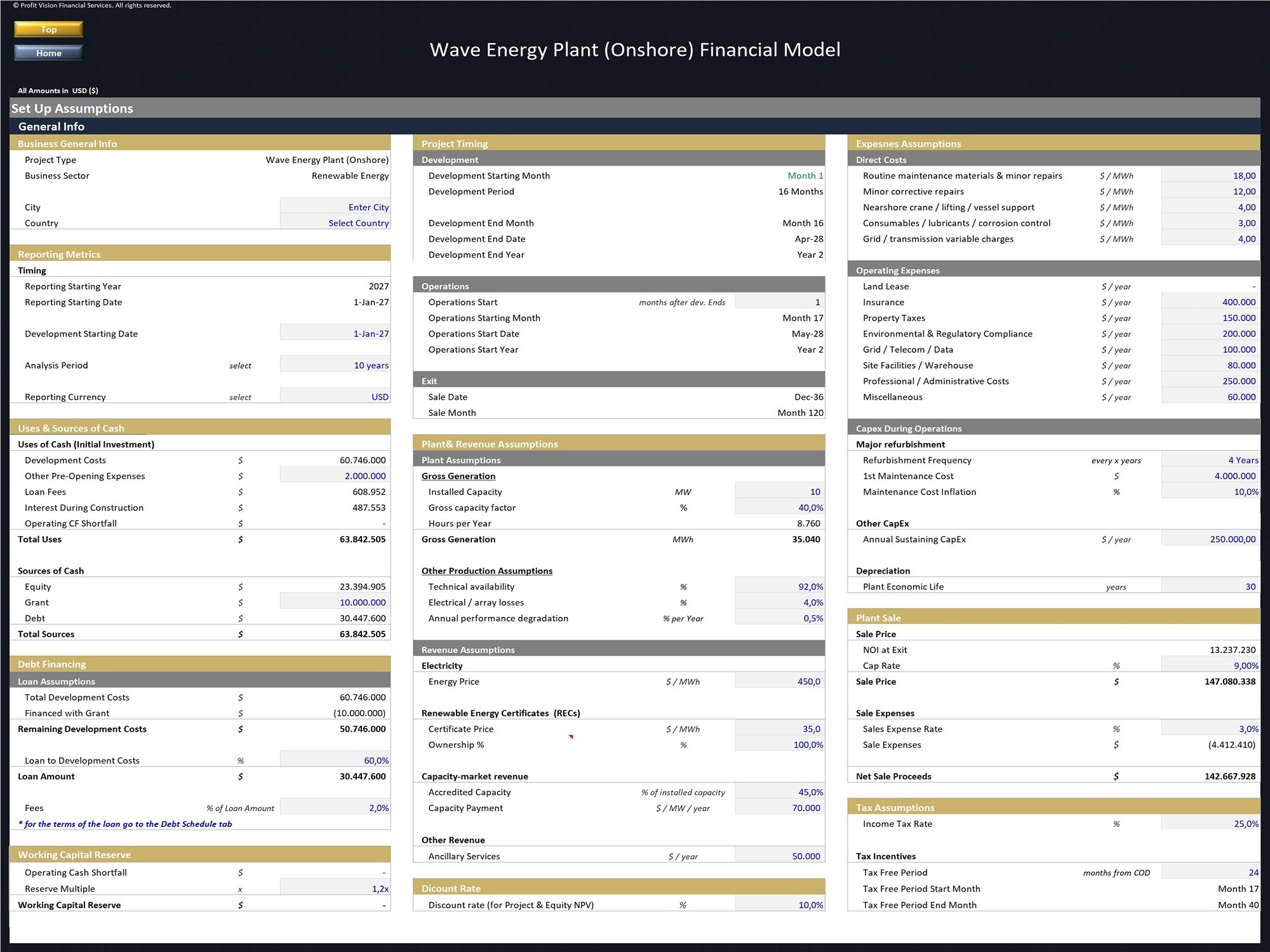
This 10-year Wave Energy Plant financial model is designed to assess project feasibility, operating performance, and long-term investment returns for a renewable ocean energy development. The model forecasts installed capacity, energy generation, capacity factor, availability, power pricing, grid connection costs, operations and maintenance, insurance, development costs, financing, and debt service. It also captures key project drivers such as construction phasing, technology performance, downtime, degradation, and production losses. It supports project development, fundraising, lender discussions, and strategic decision-making for wave energy infrastructure investments.
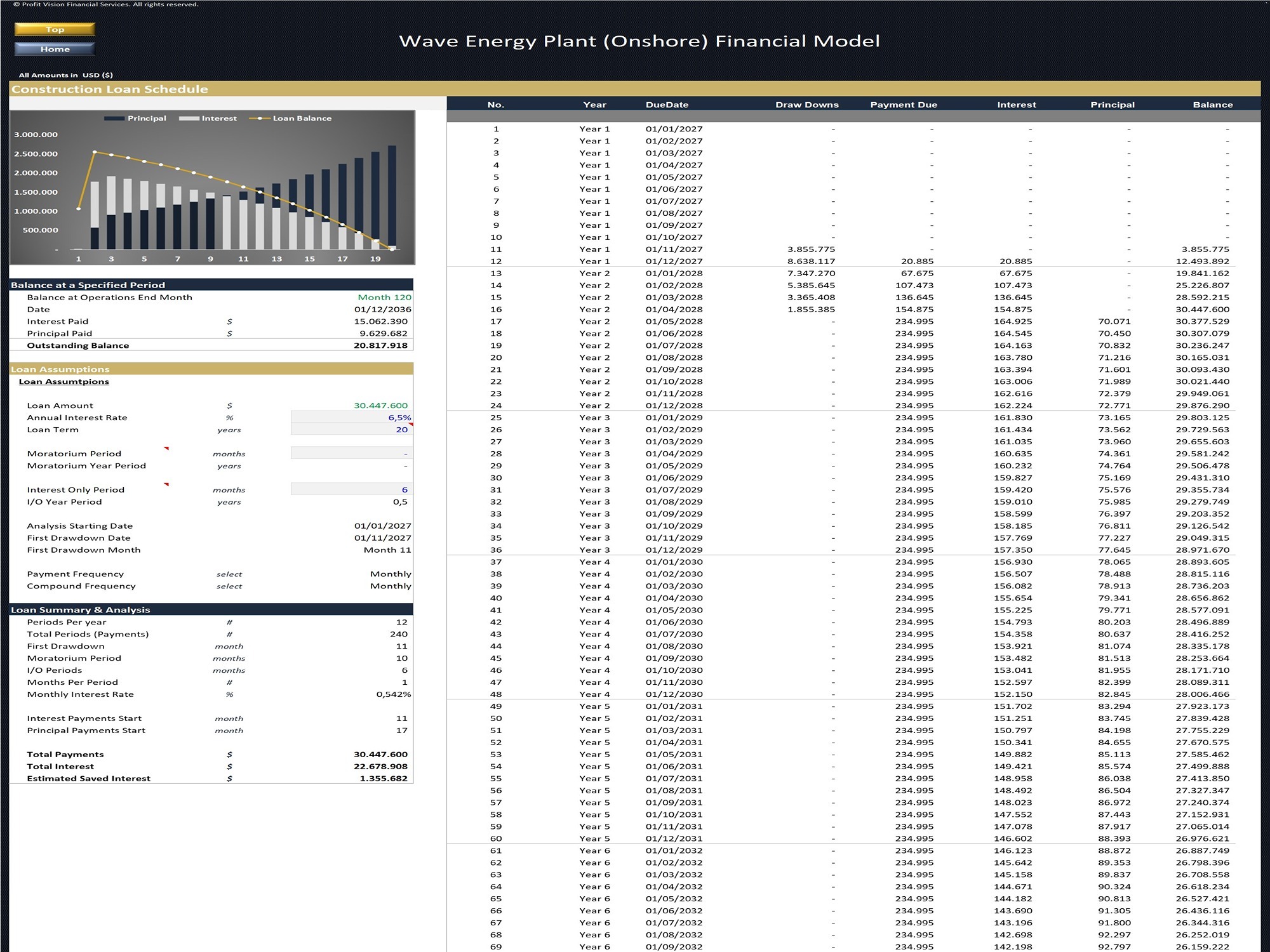
The model includes assumptions and calculations of Startup Costs, Plant Technical Assumptions (Gross Generation, Technical Availability, Electrical/array losses, Utilization rates, Performance Degradation), Revenue (Electricity sales, Renewable Energy Certificates, Capacity-market), Cost of Sales, Payroll, Operating Expenses, CapEx during Operations & Depreciation, Financing through Debt, Equity & Government Grant and Exit Valuation assumptions in case of a potential sale of the business.
The model follows Financial Modeling Best Practices principles and is fully customizable.
Detailed instructions for the functionality of the model are included in the Excel file.
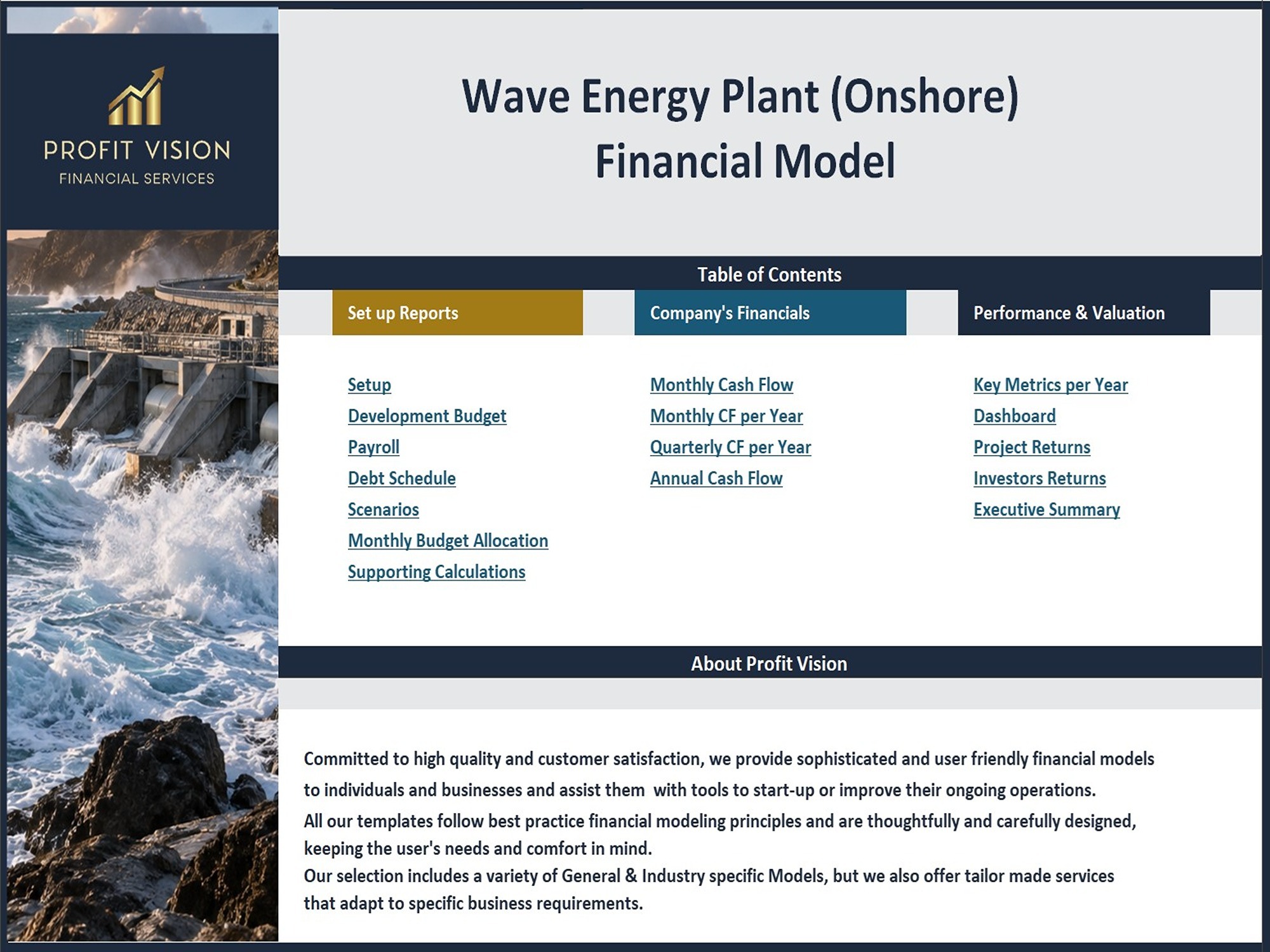
Model Inputs and Setup Reports:
• Plant Technical & Performance Assumptions
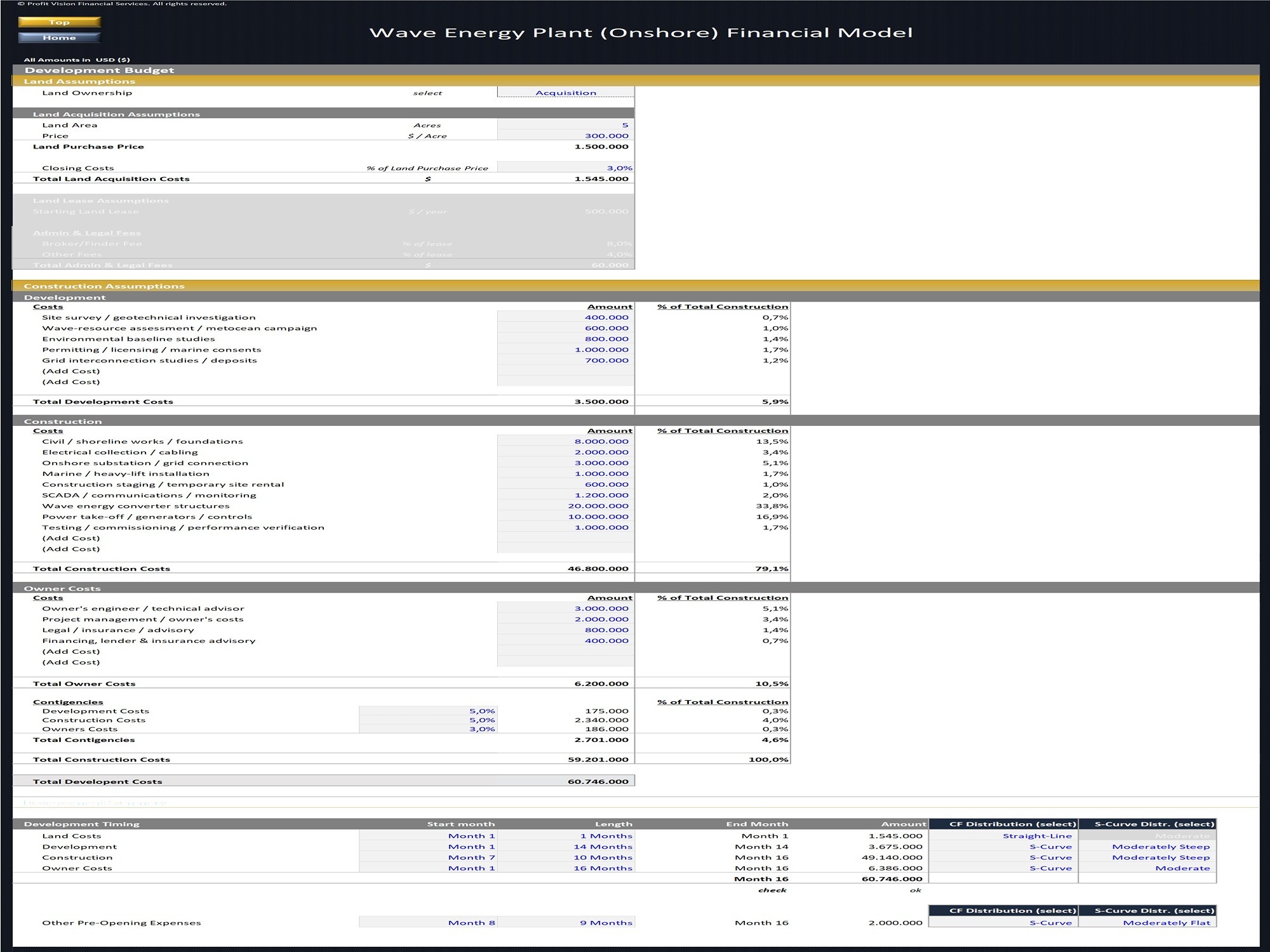
• Development Budget including Land Costs, Development, Construction and Owner Costs, and Development timing assumptions
• Revenue from Electricity Sales, Renewable Energy Certificates, and Capacity-market
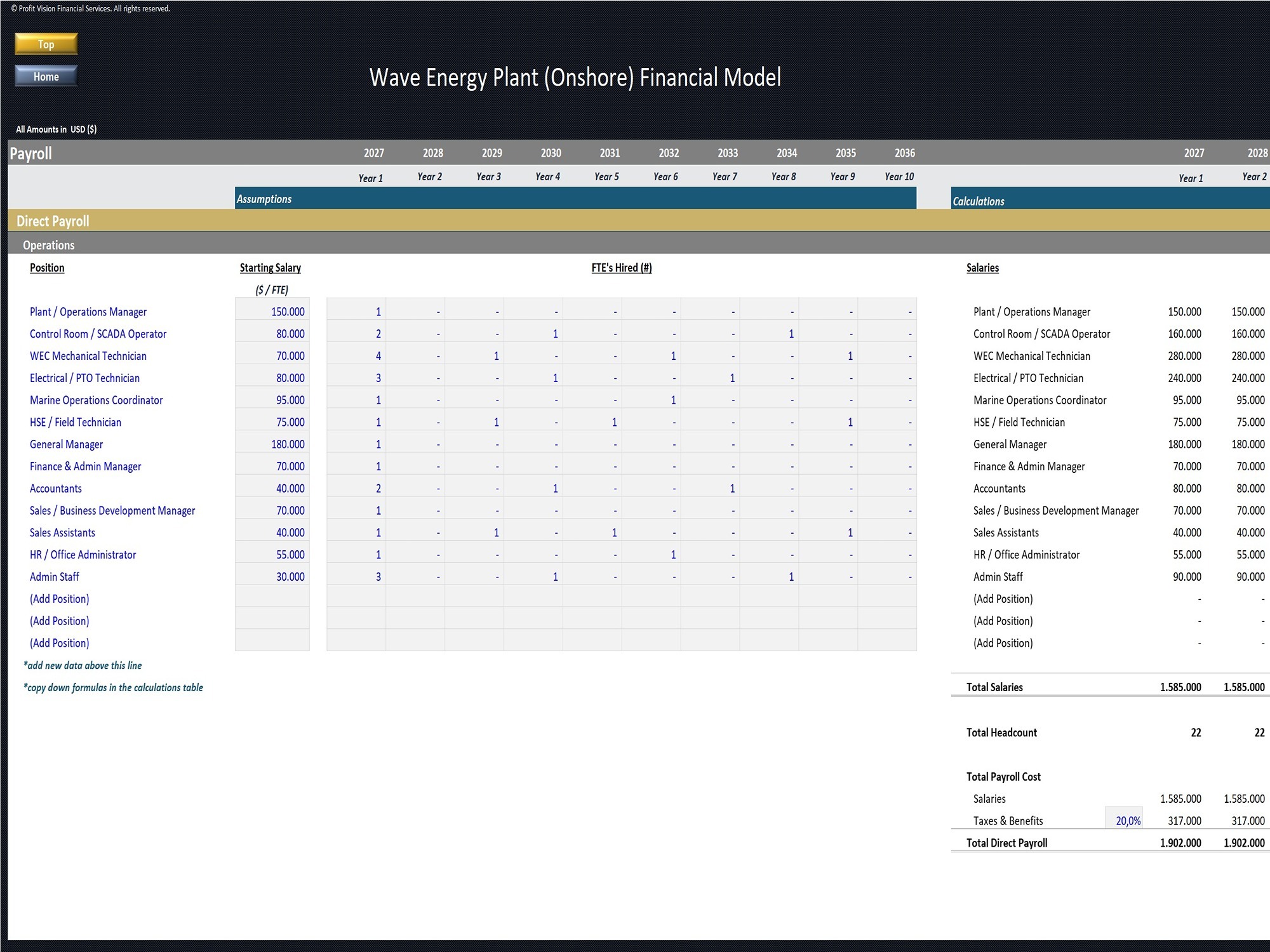
• Payroll, OpEx & CapEx during operations Assumptions
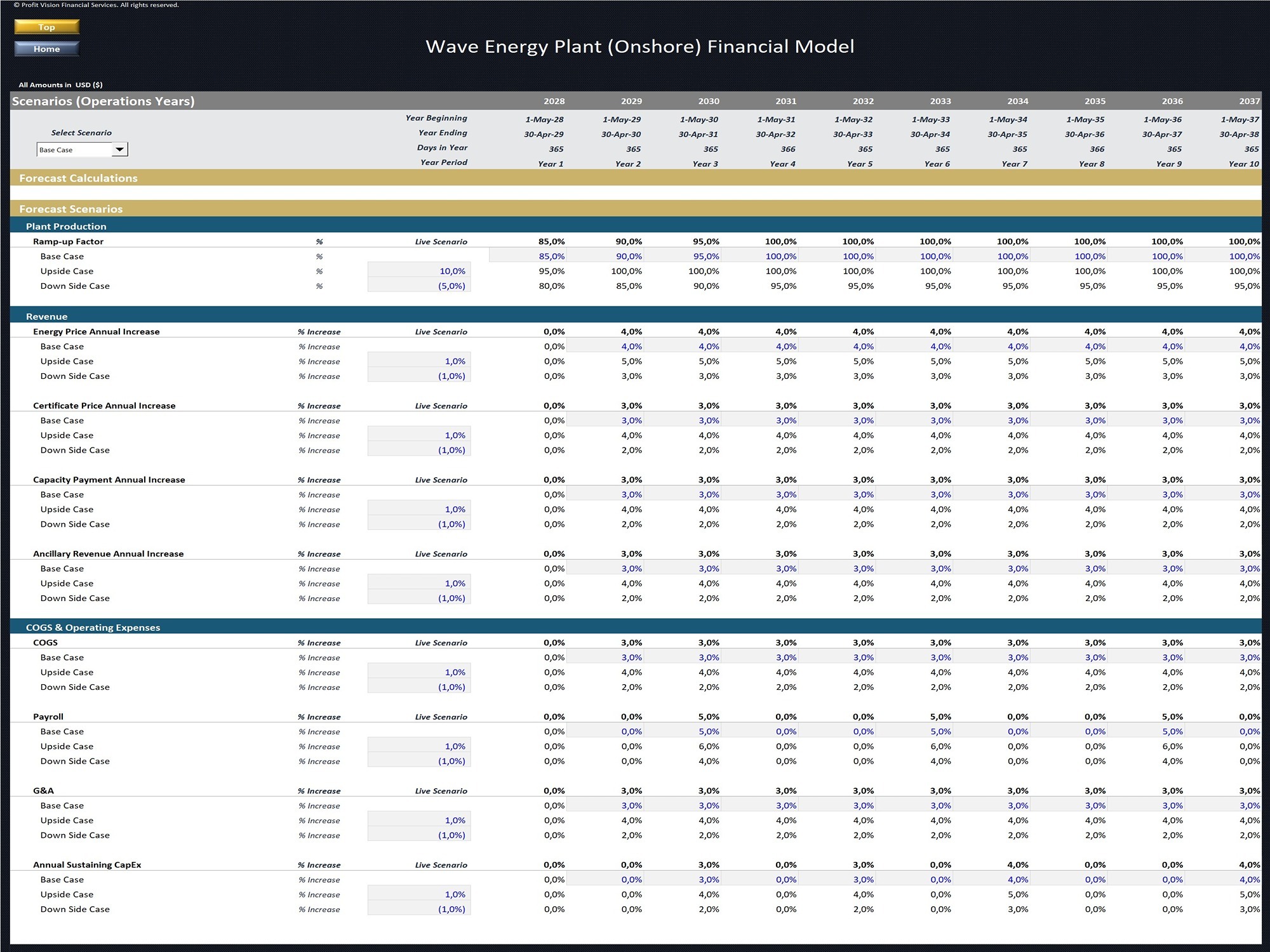
• Forecast Scenarios
• Financing & Capital Structure – Uses & Sources of Cash analysis (Financing through Debt, Equity & Government Grant)
• Valuation & Exit Assumptions (Exit Multiple, Discount Rate)
Output Reports:
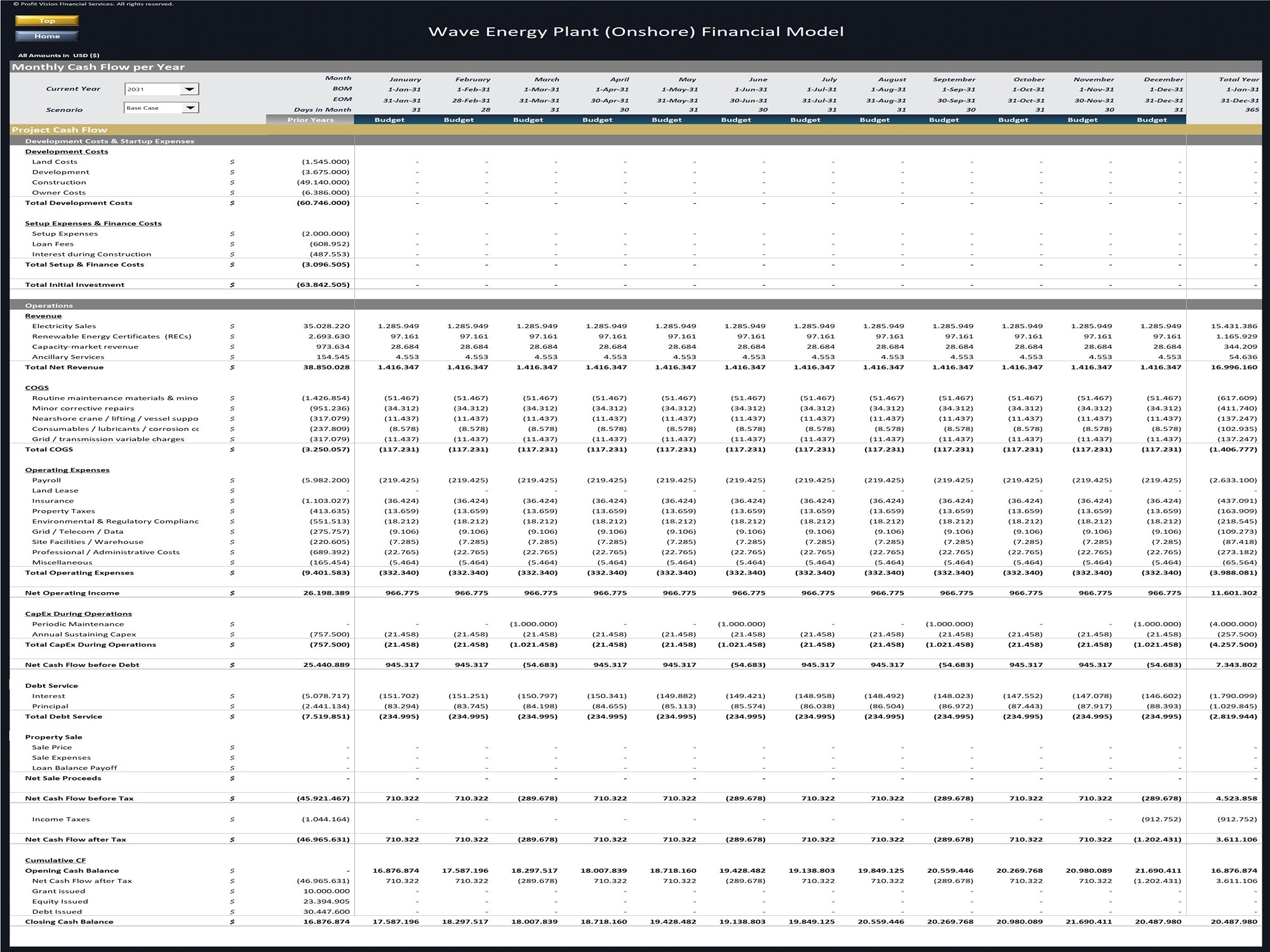
• Monthly Cash Flow & Monthly CF summary per Year
• Quarterly CF summary per Year
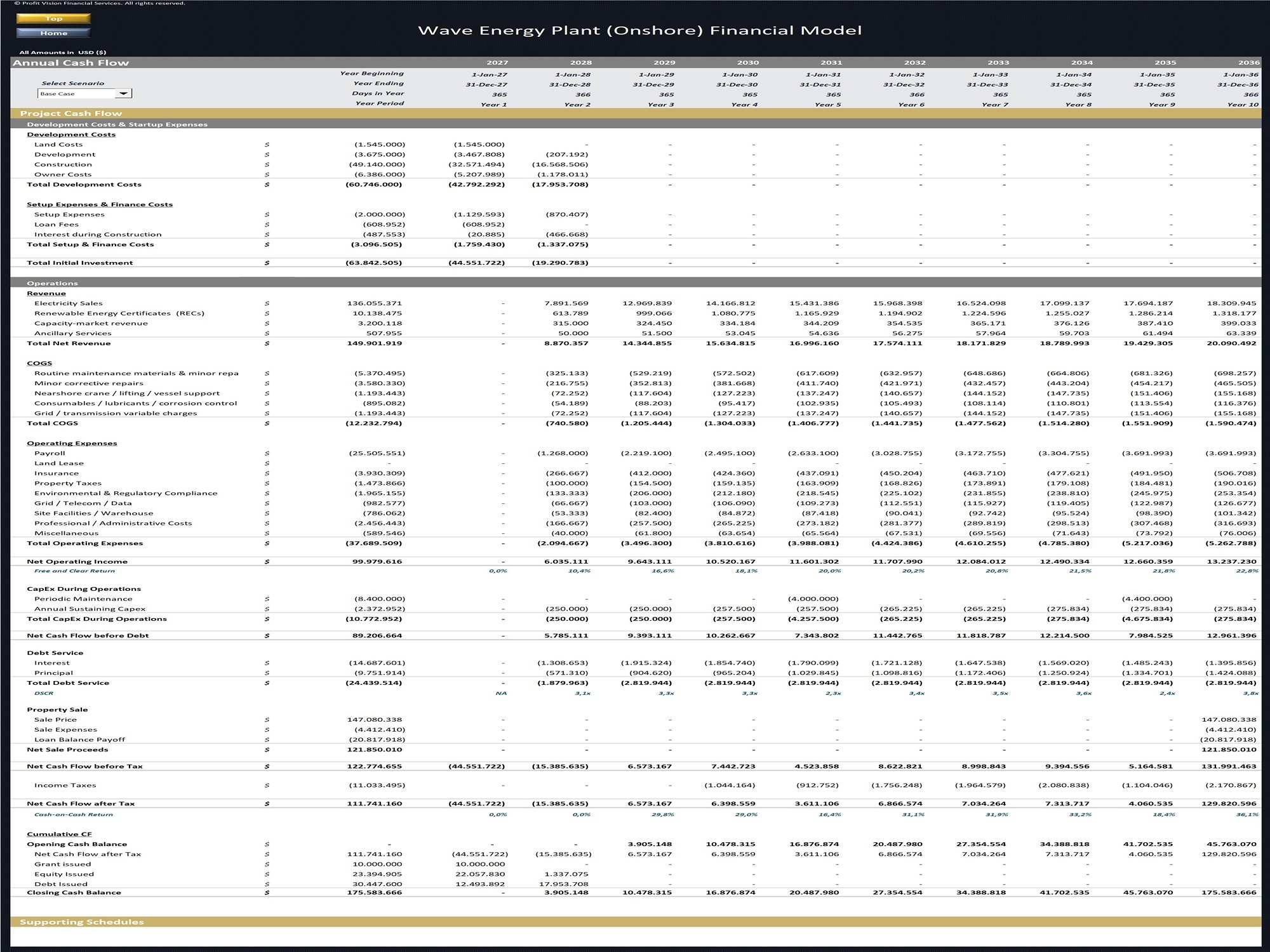
• Annual Cash Flow
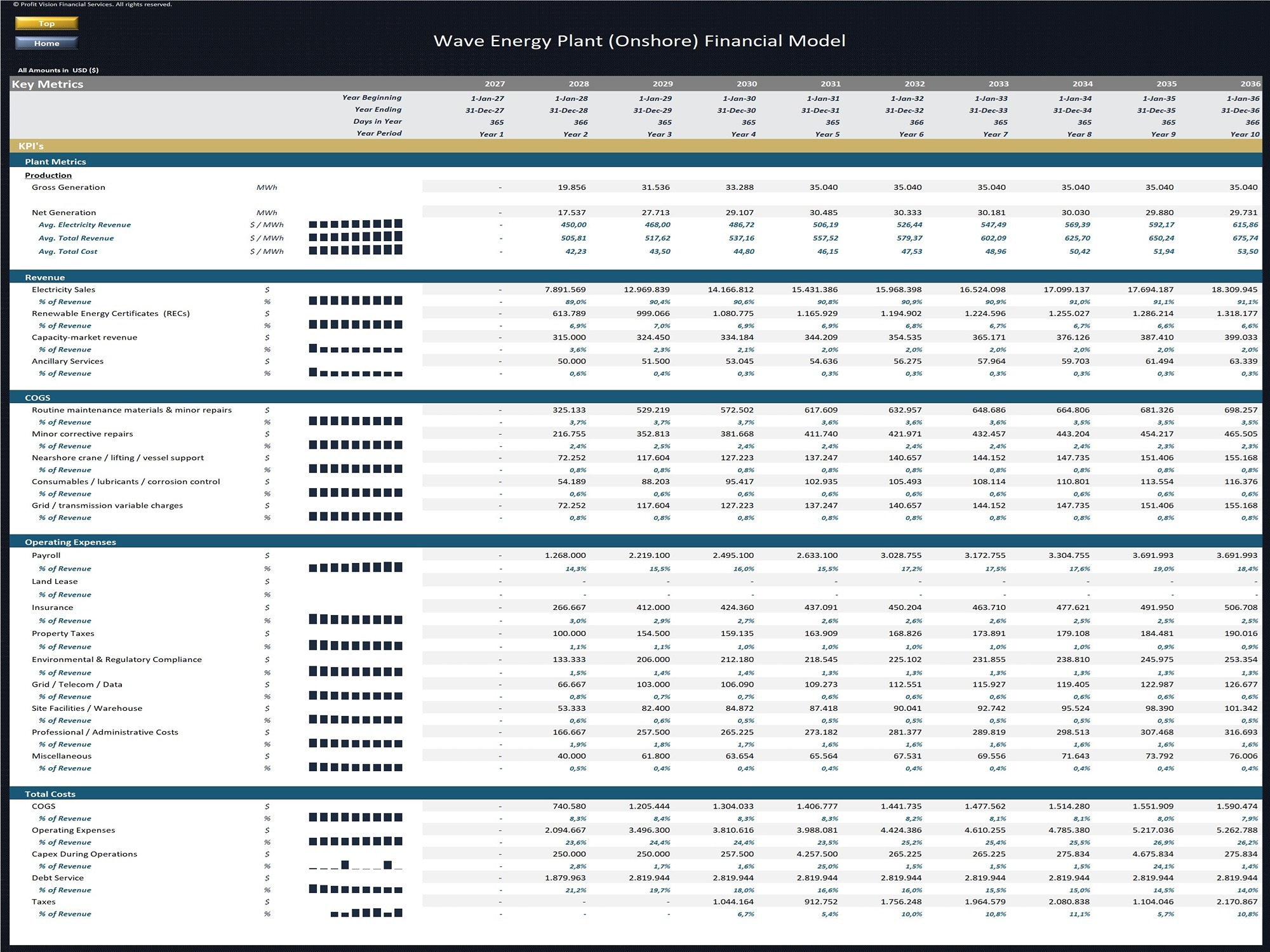
• Key Performance Indicators
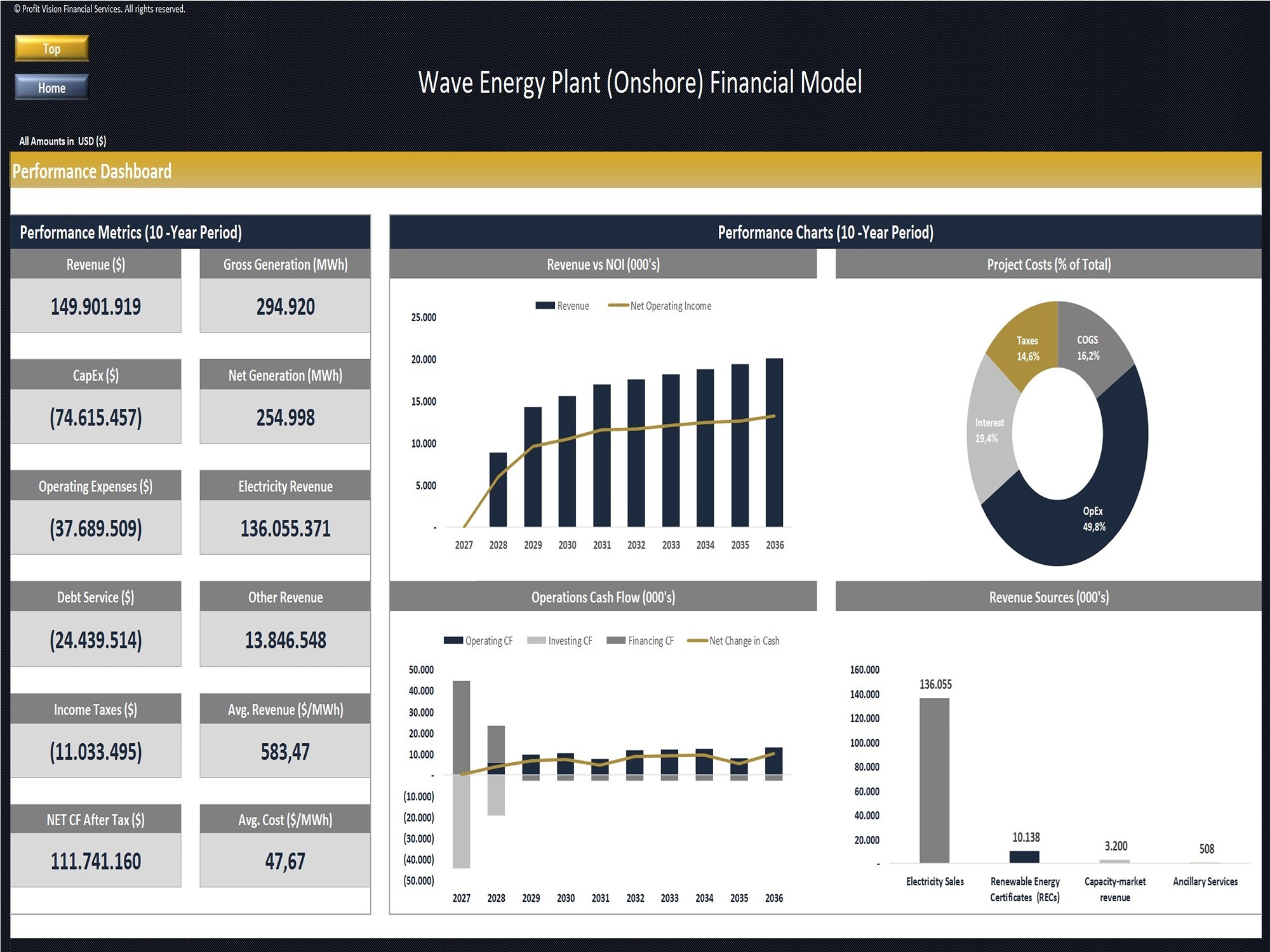
• Performance Dashboard
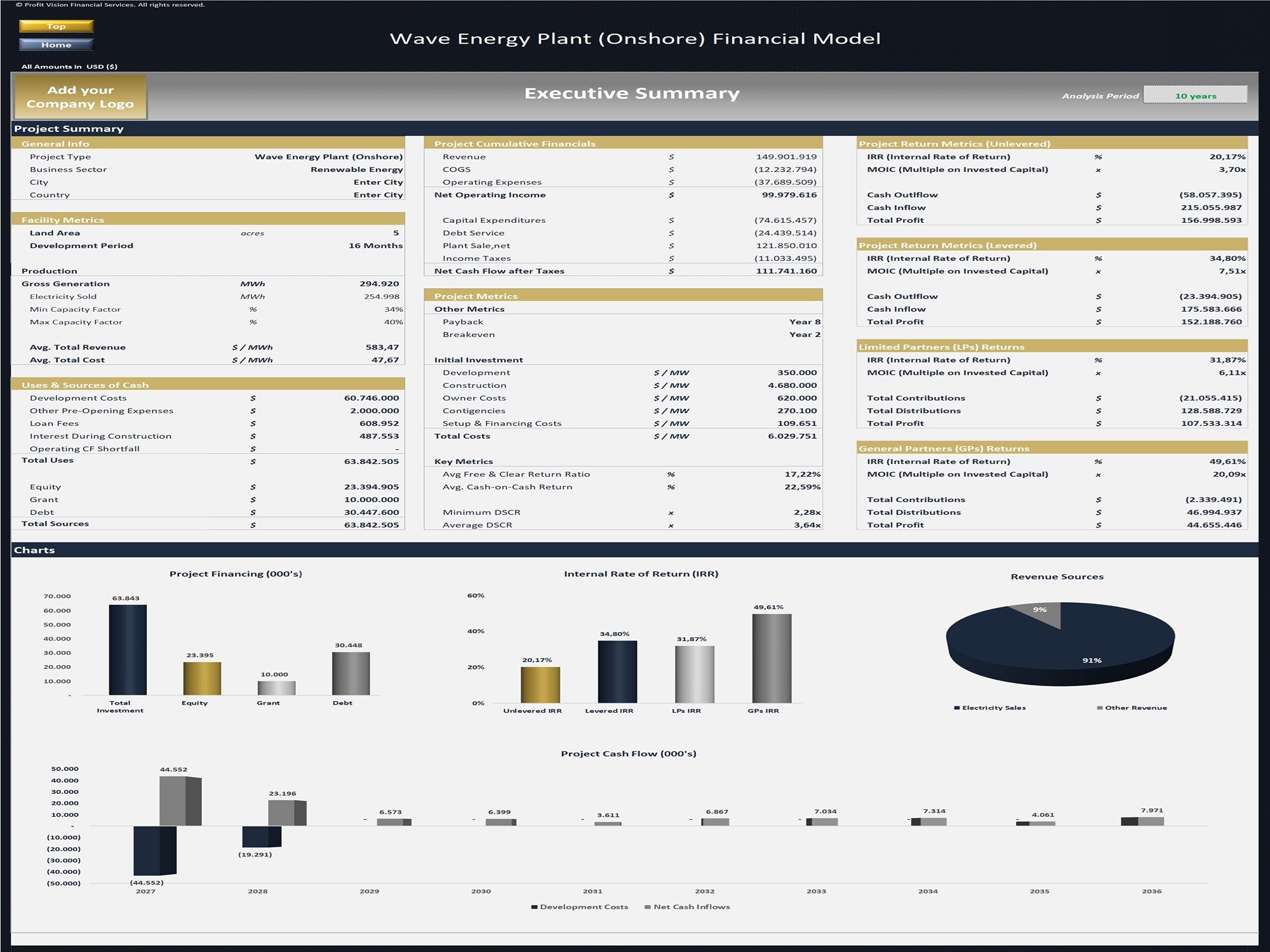
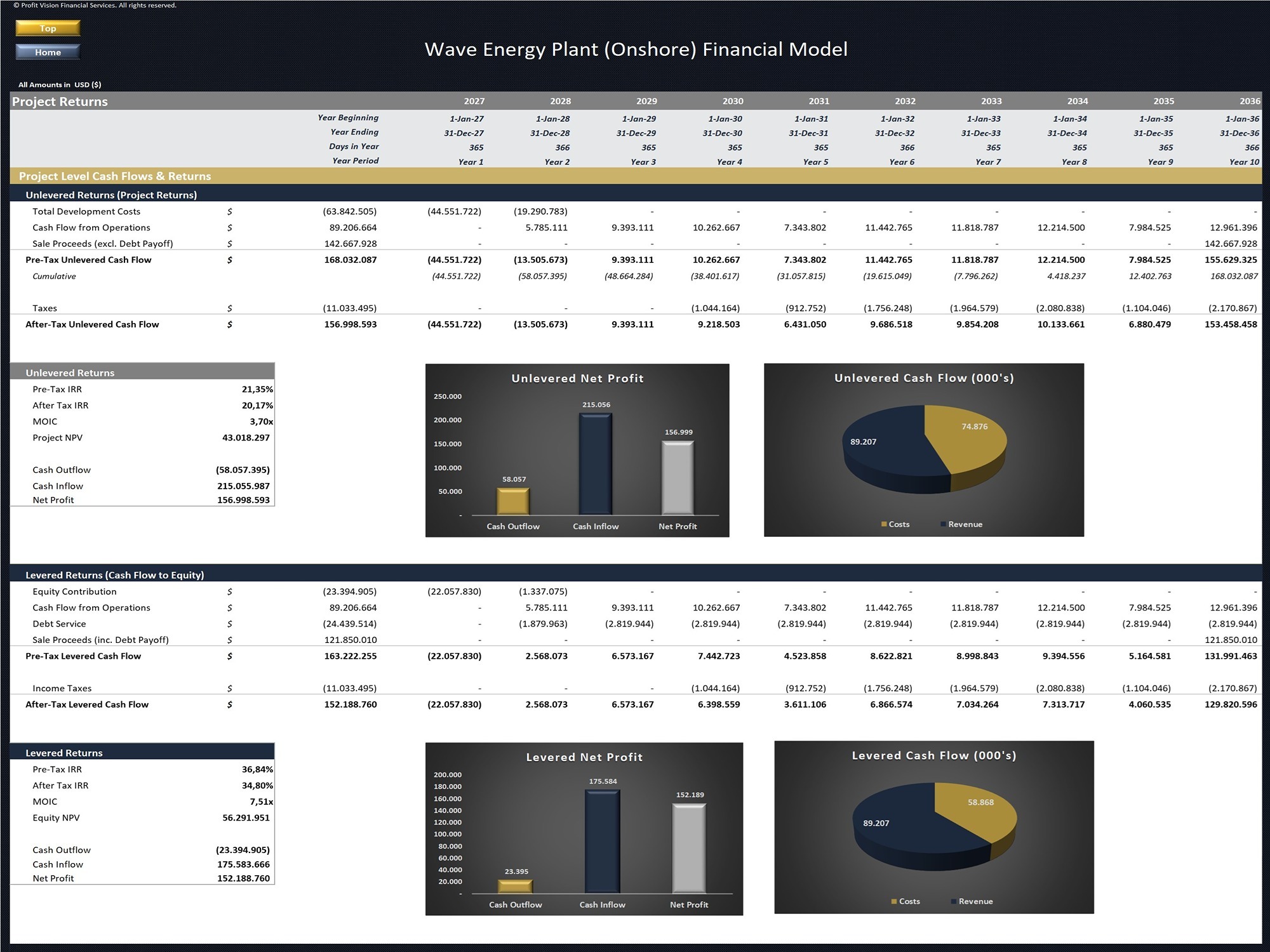
• Unlevered & Levered Project Return Metrics (IRR, MOIC, Payback, NPV)
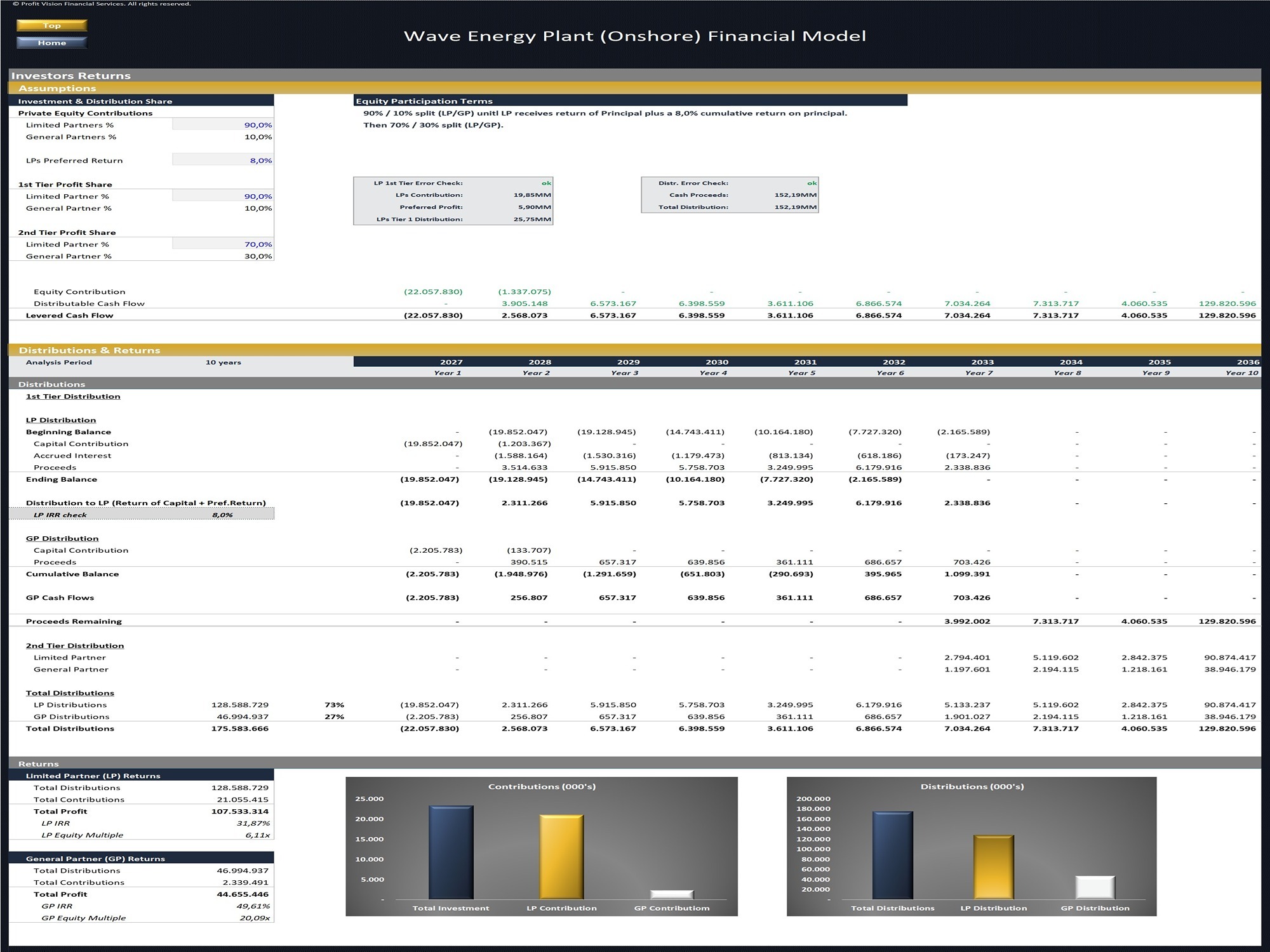
• Investors Distribution Waterfall Model
• Professional Executive Summary
Help & Support
Committed to high quality and customer satisfaction, all our templates follow best practice financial modeling principles and are thoughtfully and carefully designed, keeping the user’s needs and comfort in mind.
No matter if you have no experience or you are well versed in finance, accounting, and the use of Microsoft Excel, our professional financial models are the right tools to boost your business operations!
If you however experience any difficulty while using this template and you are not able to find the appropriate guidance in the provided instructions, please feel free to contact us for assistance.
If you need a template customized for your business requirements, please e-mail us and provide a brief explanation of your specific needs.
A wave energy plant is a renewable energy facility that converts the natural motion of ocean waves into electricity using specialized offshore or nearshore devices such as floating buoys, oscillating water columns, or submerged converters. The project typically includes wave resource assessment, marine engineering, device installation, subsea cabling, grid connection, and ongoing operations and maintenance in a challenging ocean environment. Revenue is driven by installed capacity, wave conditions, power generation efficiency, electricity pricing, offtake agreements, and government incentives, with success depending on technology reliability, site selection, permitting, and long-term maintenance performance.
This 10-year Wave Energy Plant financial model is designed to assess project feasibility, operating performance, and long-term investment returns for a renewable ocean energy development. The model forecasts installed capacity, energy generation, capacity factor, availability, power pricing, grid connection costs, operations and maintenance, insurance, development costs, financing, and debt service. It also captures key project drivers such as construction phasing, technology performance, downtime, degradation, and production losses. It supports project development, fundraising, lender discussions, and strategic decision-making for wave energy infrastructure investments.
The model includes assumptions and calculations of Startup Costs, Plant Technical Assumptions (Gross Generation, Technical Availability, Electrical/array losses, Utilization rates, Performance Degradation), Revenue (Electricity sales, Renewable Energy Certificates, Capacity-market), Cost of Sales, Payroll, Operating Expenses, CapEx during Operations & Depreciation, Financing through Debt, Equity & Government Grant and Exit Valuation assumptions in case of a potential sale of the business.
The model follows Financial Modeling Best Practices principles and is fully customizable.
Detailed instructions for the functionality of the model are included in the Excel file.
Model Inputs and Setup Reports:
• Plant Technical & Performance Assumptions
• Development Budget including Land Costs, Development, Construction and Owner Costs, and Development timing assumptions
• Revenue from Electricity Sales, Renewable Energy Certificates, and Capacity-market
• Payroll, OpEx & CapEx during operations Assumptions
• Forecast Scenarios
• Financing & Capital Structure – Uses & Sources of Cash analysis (Financing through Debt, Equity & Government Grant)
• Valuation & Exit Assumptions (Exit Multiple, Discount Rate)
Output Reports:
• Monthly Cash Flow & Monthly CF summary per Year
• Quarterly CF summary per Year
• Annual Cash Flow
• Key Performance Indicators
• Performance Dashboard
• Unlevered & Levered Project Return Metrics (IRR, MOIC, Payback, NPV)
• Investors Distribution Waterfall Model
• Professional Executive Summary
Help & Support
Committed to high quality and customer satisfaction, all our templates follow best practice financial modeling principles and are thoughtfully and carefully designed, keeping the user’s needs and comfort in mind.
No matter if you have no experience or you are well versed in finance, accounting, and the use of Microsoft Excel, our professional financial models are the right tools to boost your business operations!
If you however experience any difficulty while using this template and you are not able to find the appropriate guidance in the provided instructions, please feel free to contact us for assistance.
If you need a template customized for your business requirements, please e-mail us and provide a brief explanation of your specific needs.
This Best Practice includes
Excel Financial Model
Further information
Supports project development, fundraising, and strategic decision-making for Wave Plant infrastructure investments.