A Practical Due Diligence Framework Before Your Business Commits to Open Source
Originally published: 15/04/2026 12:24
Publication number: ELQ-42688-1
View all versions & Certificate
certified

A Practical Due Diligence Framework Before Your Business Commits to Open Source

Enterprise-grade OSS due diligence toolkit. Features a 10-point weighted scoring matrix and AI research prompts to secure your technical software supply chain.

Description
Strategic Open-Source (OSS) Due Diligence & Risk Framework

Adopting open-source software is a strategic business commitment, not just a technical choice. Without a formal vetting process, organizations risk inheriting massive technical debt, security vulnerabilities, and "shadow IT" liabilities.

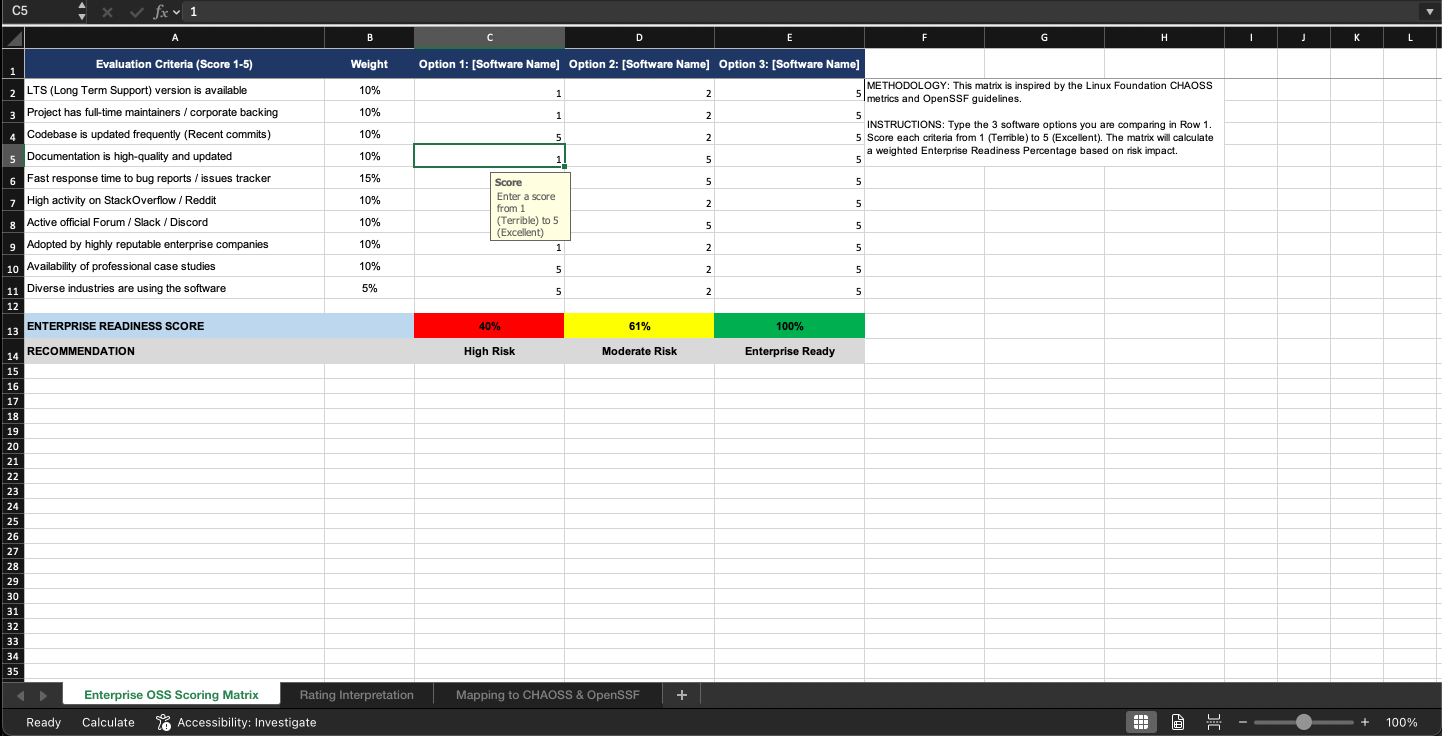
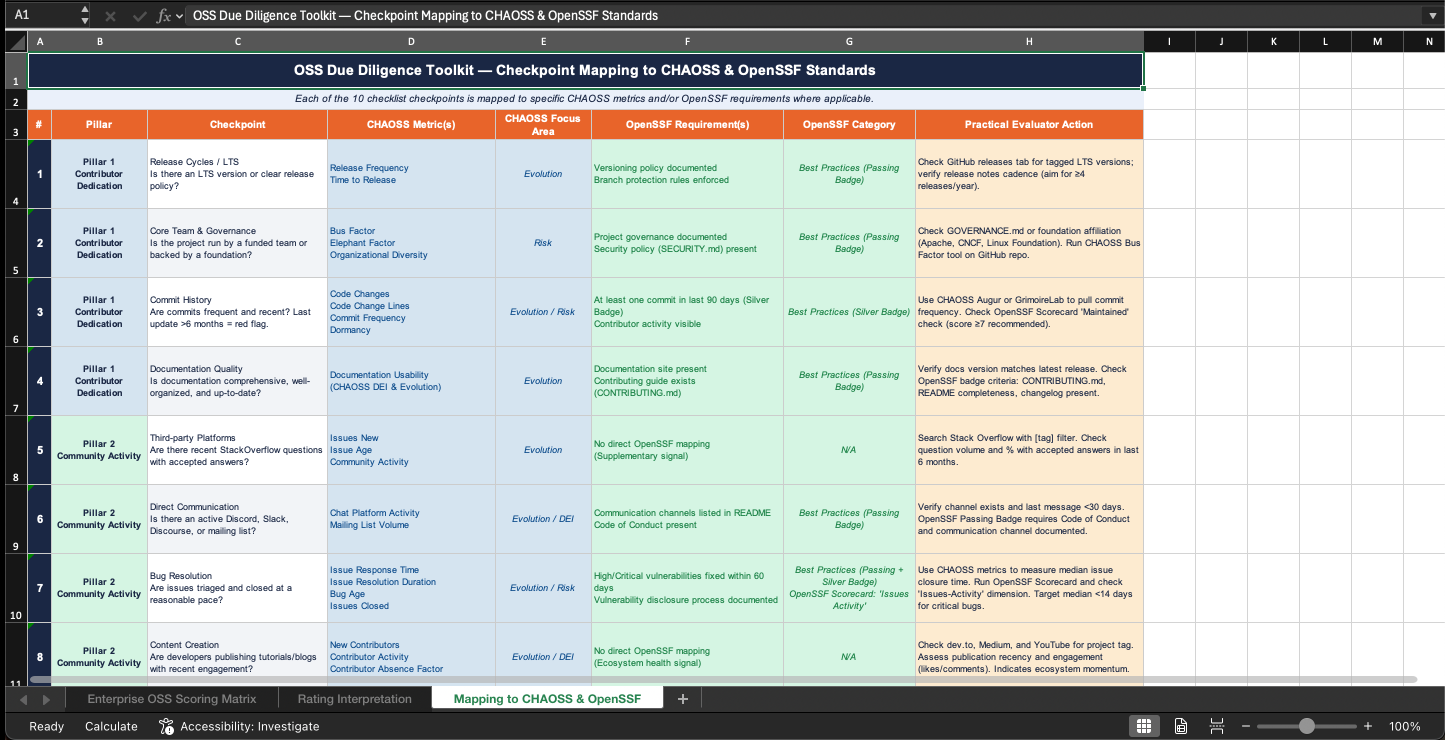
This Enterprise-Grade Due Diligence Toolkit provides a systematic, data-driven methodology to evaluate OSS sustainability before it enters your tech stack. Mapped to CHAOSS metrics and OpenSSF standards, the framework moves beyond surface-level metrics like "GitHub Stars" to analyze the true health of a project’s governance, community, and security posture.


What is included in this professional package:

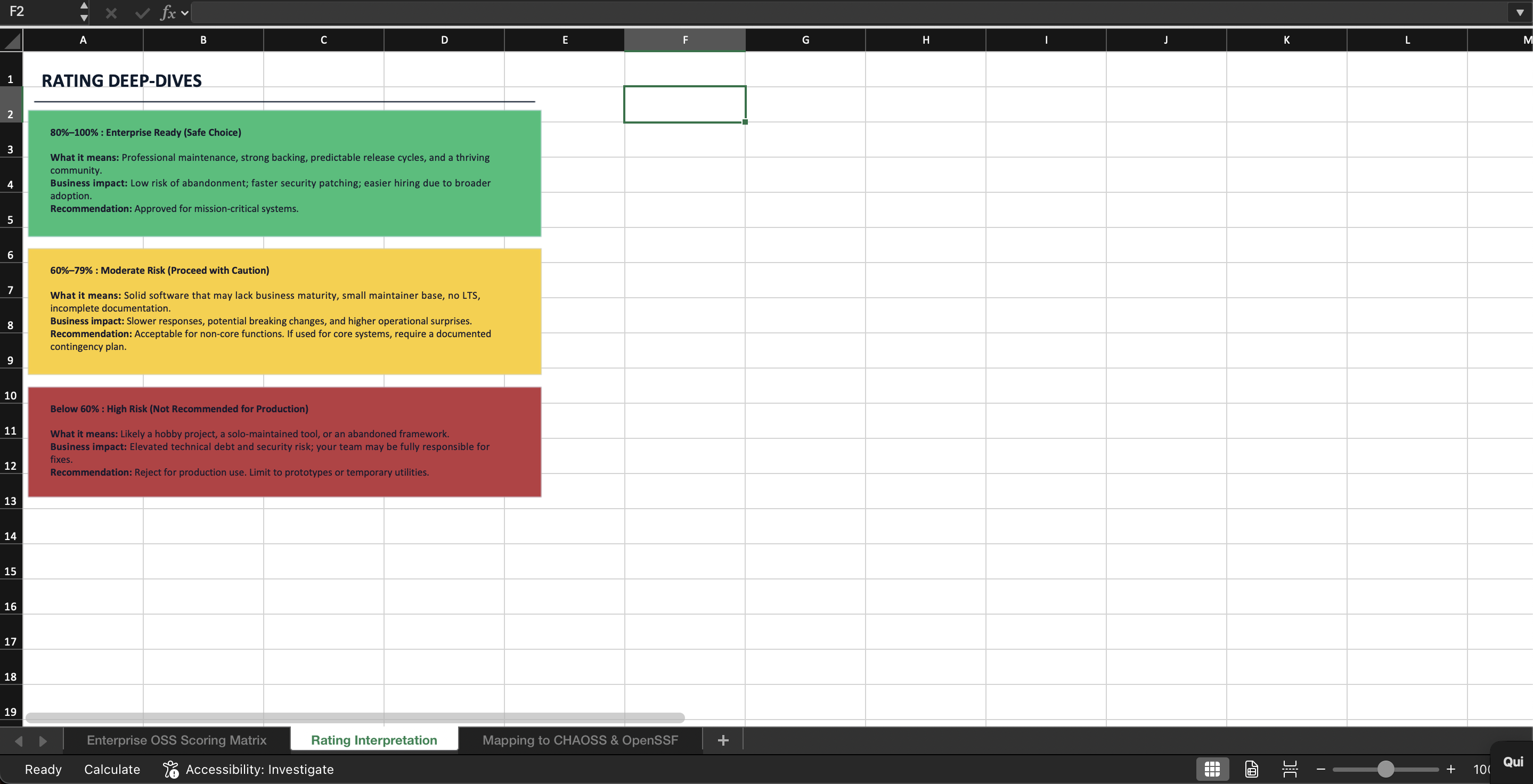
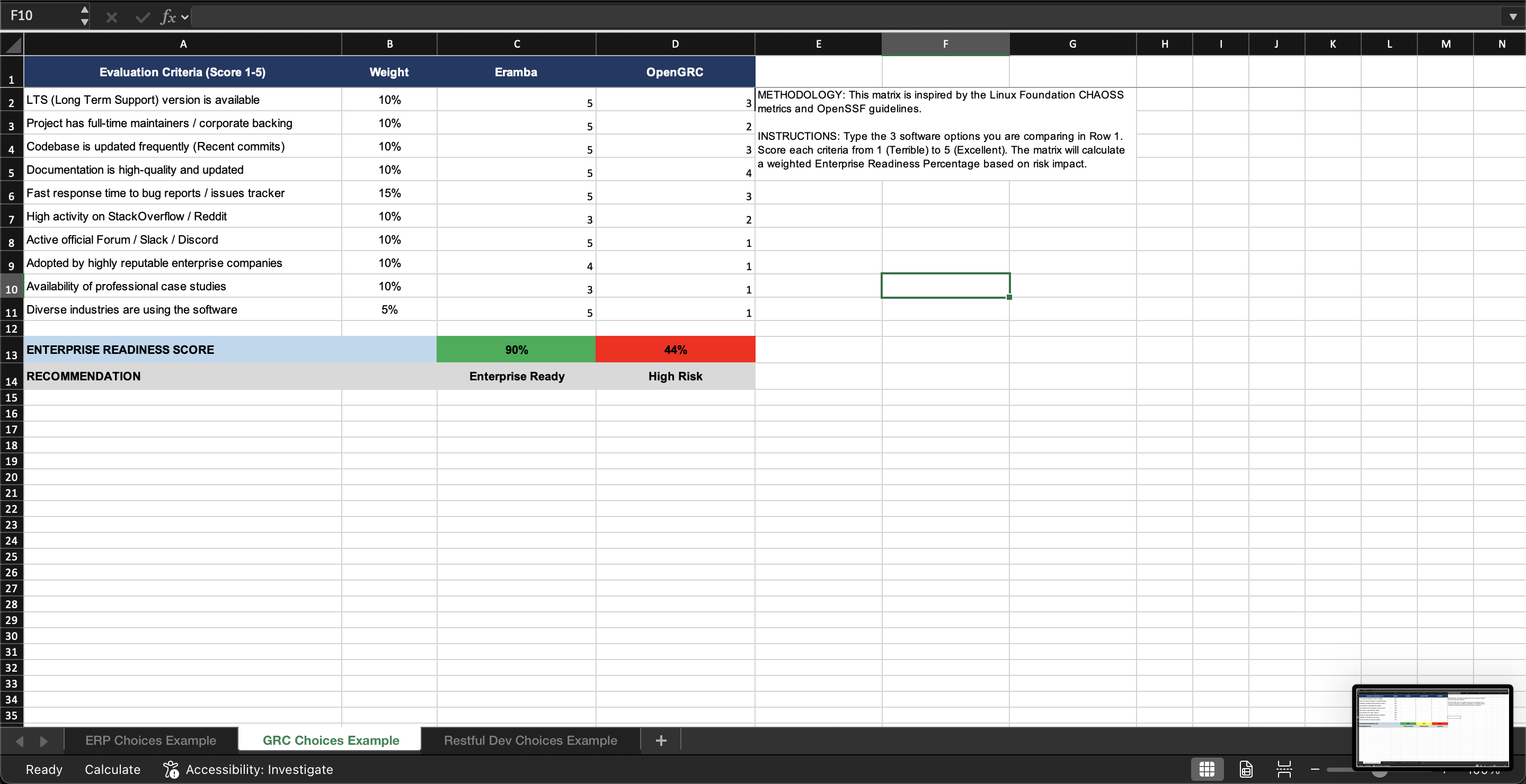
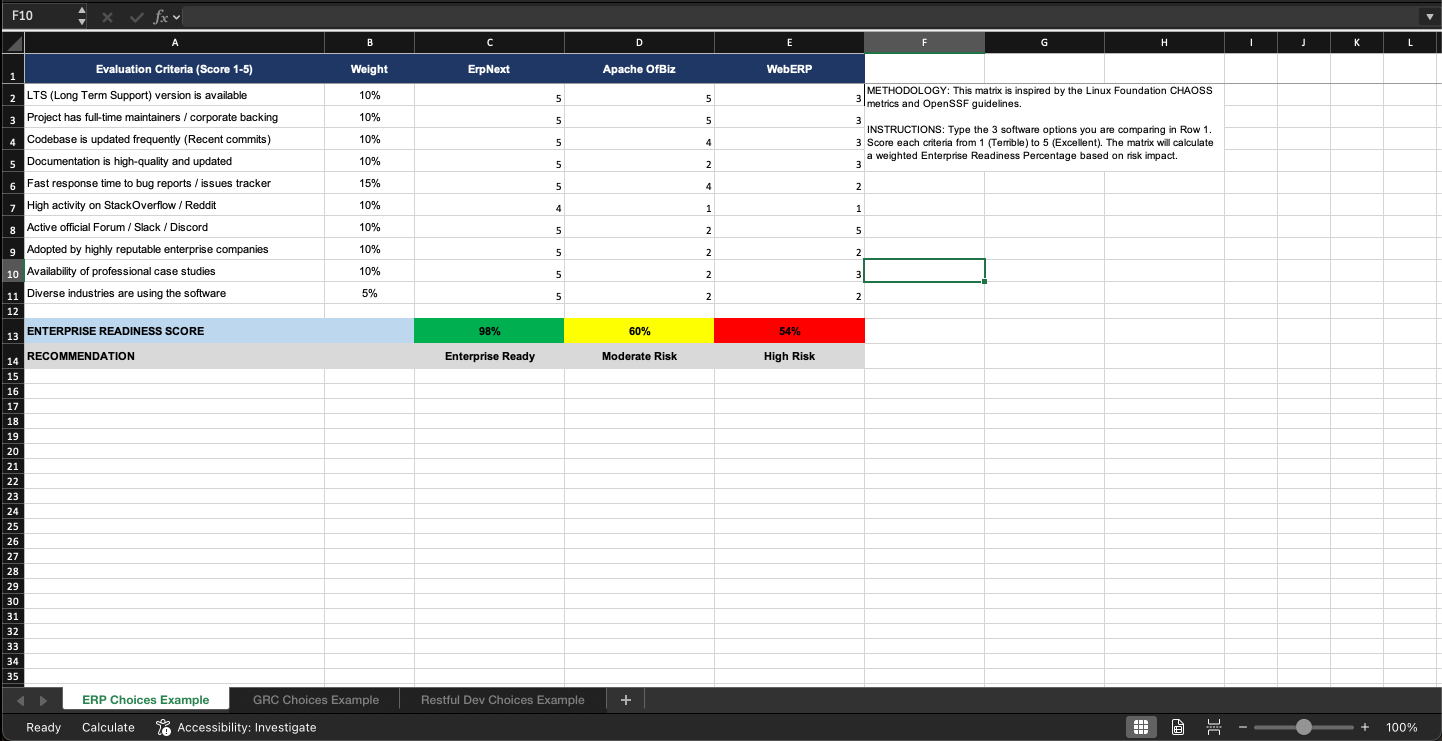
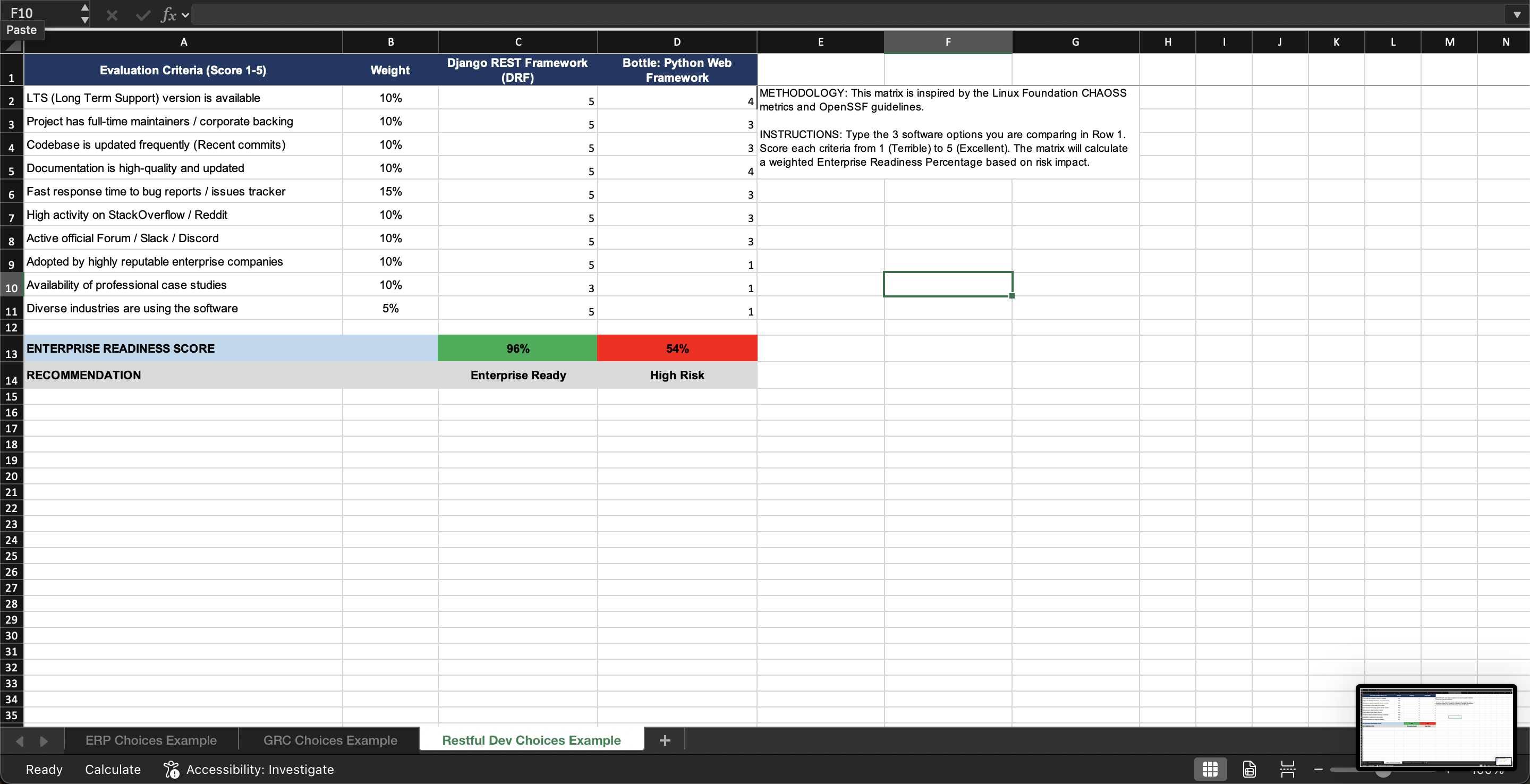
  • The Enterprise Scoring Matrix (Excel): A weighted evaluation engine that converts 10 critical criteria into a definitive "Enterprise Readiness Score" (Green/Yellow/Red).

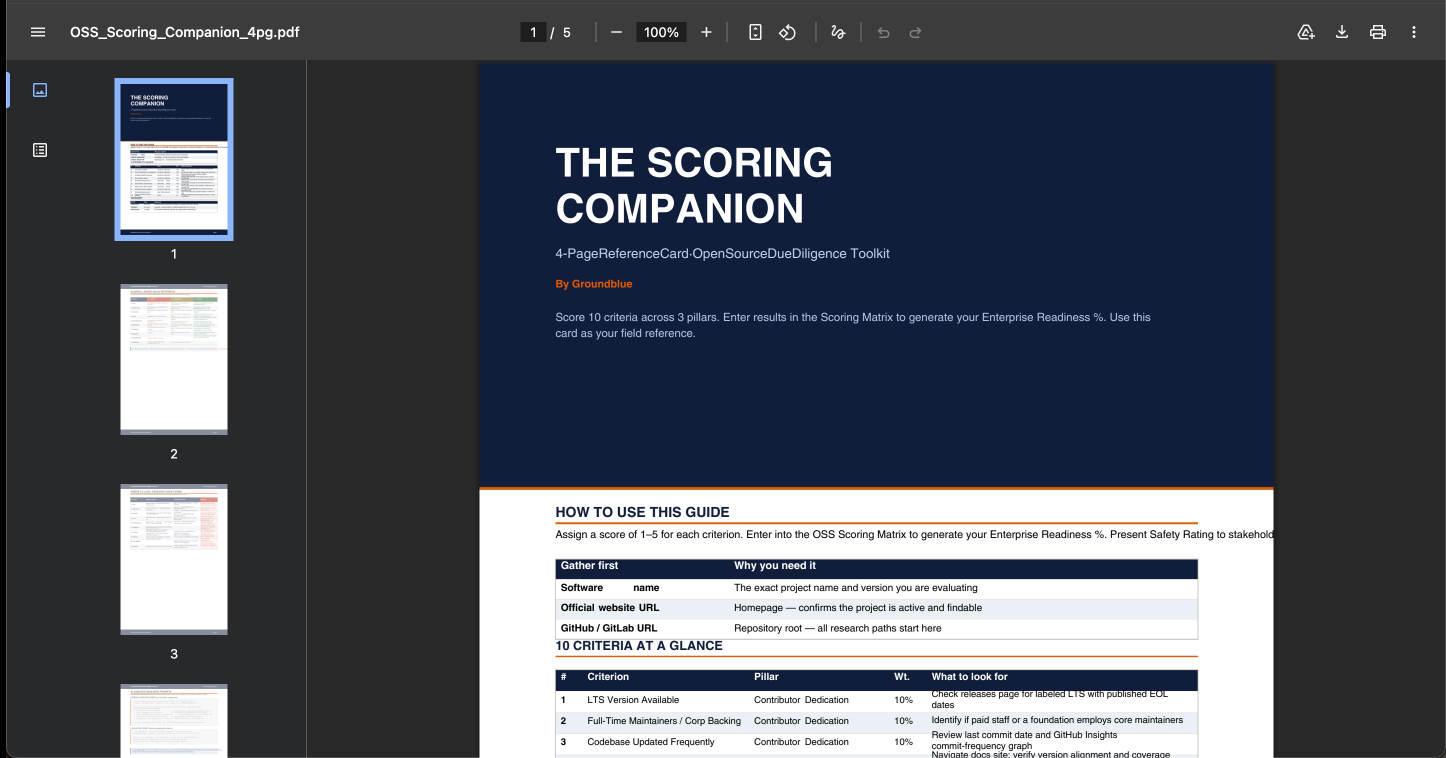
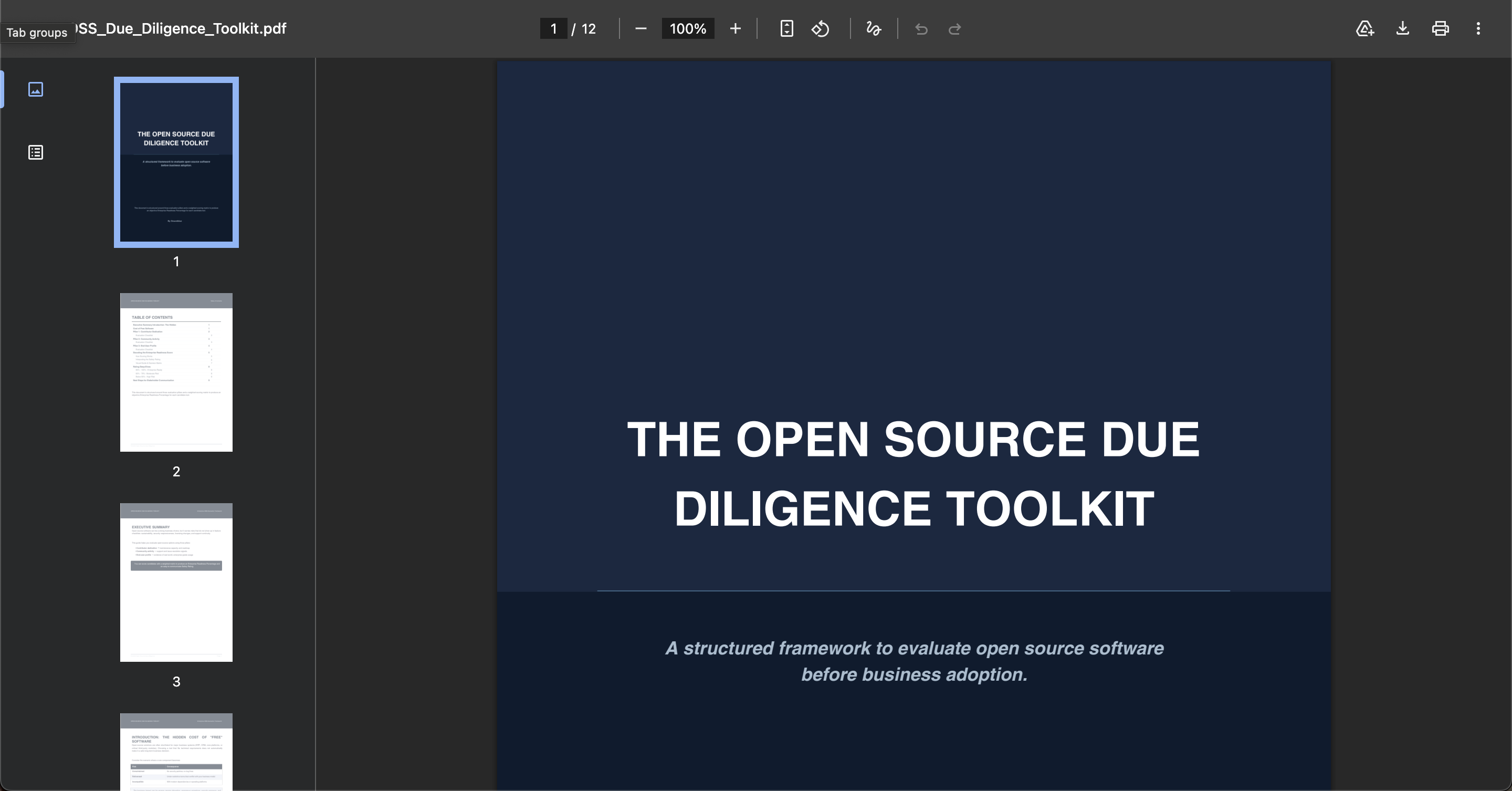
  • The Scoring Companion (PDF): A 4-page reference guide detailing exactly how to score projects objectively.

  • AI-Assisted Research Prompts: A library of pre-engineered prompts to accelerate your audit from hours to minutes using LLMs.

  • Real-World Benchmarks: Comparative examples across ERP, GRC, and Dev-Framework categories.


Perfect for CTOs, CISOs, and IT Governance leads who need to justify software choices to stakeholders with evidence-based safety ratings. Secure your software supply chain today.

This Best Practice includes
2 PDF, 2 Excel Spreadsheet

Acquire business license for $19.00

Add to cart

Add to bookmarks

Discuss

Further information

Standardize Evaluation: Eliminate "gut-feel" software selection by using a weighted, 10-point evidence-based scoring system.

Mitigate Supply Chain Risk: Identify solo-maintained or volatile projects before they become critical dependencies.

Streamline Communication: Generate a clear Green/Yellow/Red "Safety Rating" to explain technical risks to non-technical stakeholders.

Reduce Research Overhead: Use pre-configured AI prompts to automate the gathering of community and sustainability data.

Enterprise Procurement: When evaluating new open-source components for mission-critical stacks (ERP, GRC, Infrastructure).

Architecture Reviews: During "Buy vs. Build vs. OSS" analysis where long-term sustainability is a primary concern.

Cybersecurity Audits: When performing a baseline risk assessment of an existing open-source inventory.

Regulatory Compliance: For teams preparing for DORA, NIS2, or other supply-chain security regulations.

Experimental Prototyping: For low-stakes, short-term "sandboxed" code where long-term maintenance is irrelevant.

Deep Code Auditing: This framework assesses Governance and Sustainability; it does not replace a manual line-by-line security code review or penetration test.

Internal Proprietary Software: Not designed for evaluating software developed and maintained entirely in-house.


0.0 / 5 (0 votes)

please wait...