Procurement Operating Model and Governance Toolkit — TOM Canvas, Ownership Map, RACI, Delegation Matrix
Originally published: 31/08/2026 11:37
Publication number: ELQ-60845-1
View all versions & Certificate
certified

Procurement Operating Model and Governance Toolkit — TOM Canvas, Ownership Map, RACI, Delegation Matrix

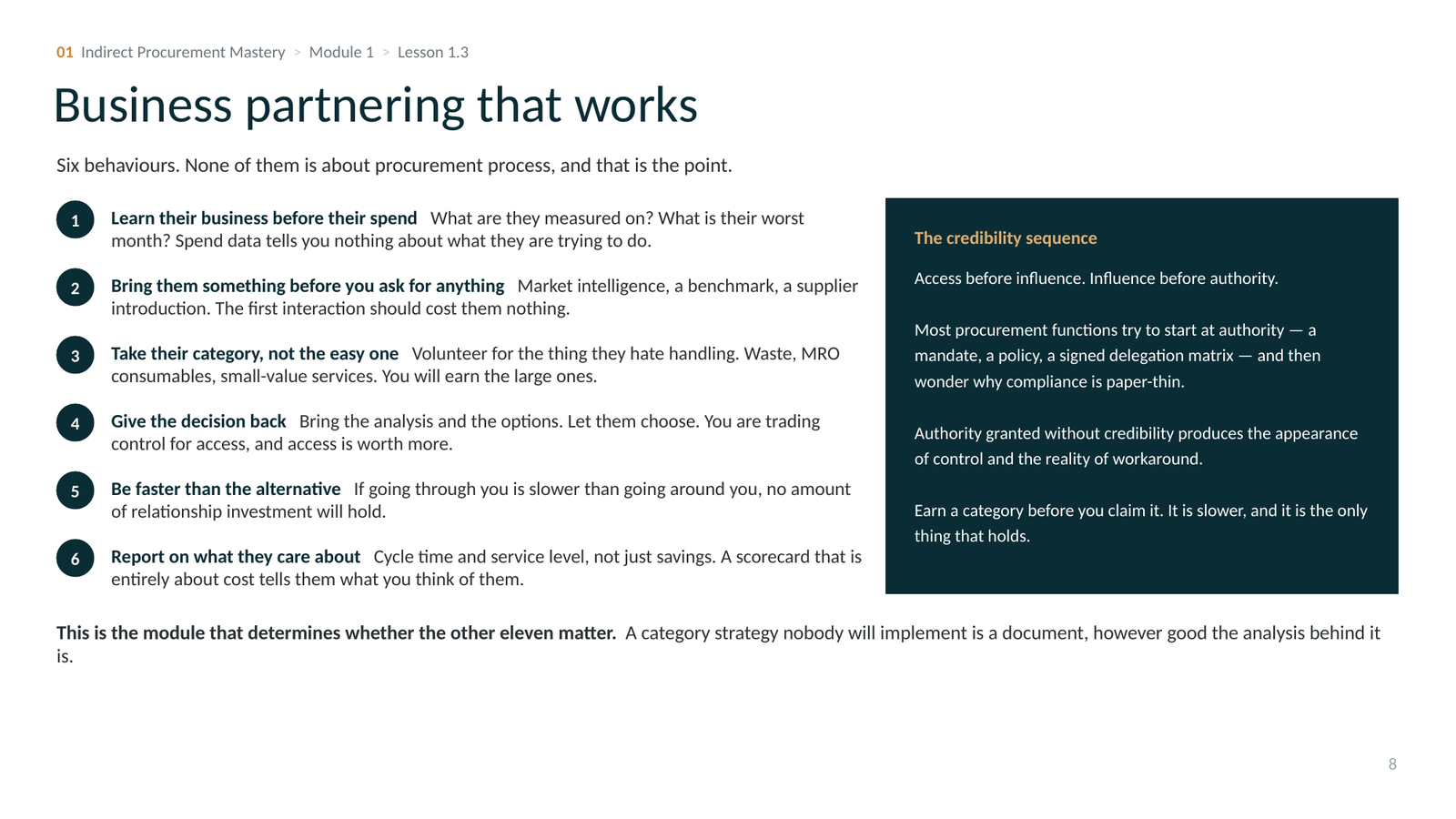
Most compliance problems are authority problems wearing a disguise.

Description
How the procurement function is organised, who is allowed to commit what, and who owns which category. These four instruments decide whether anything else in procurement works.

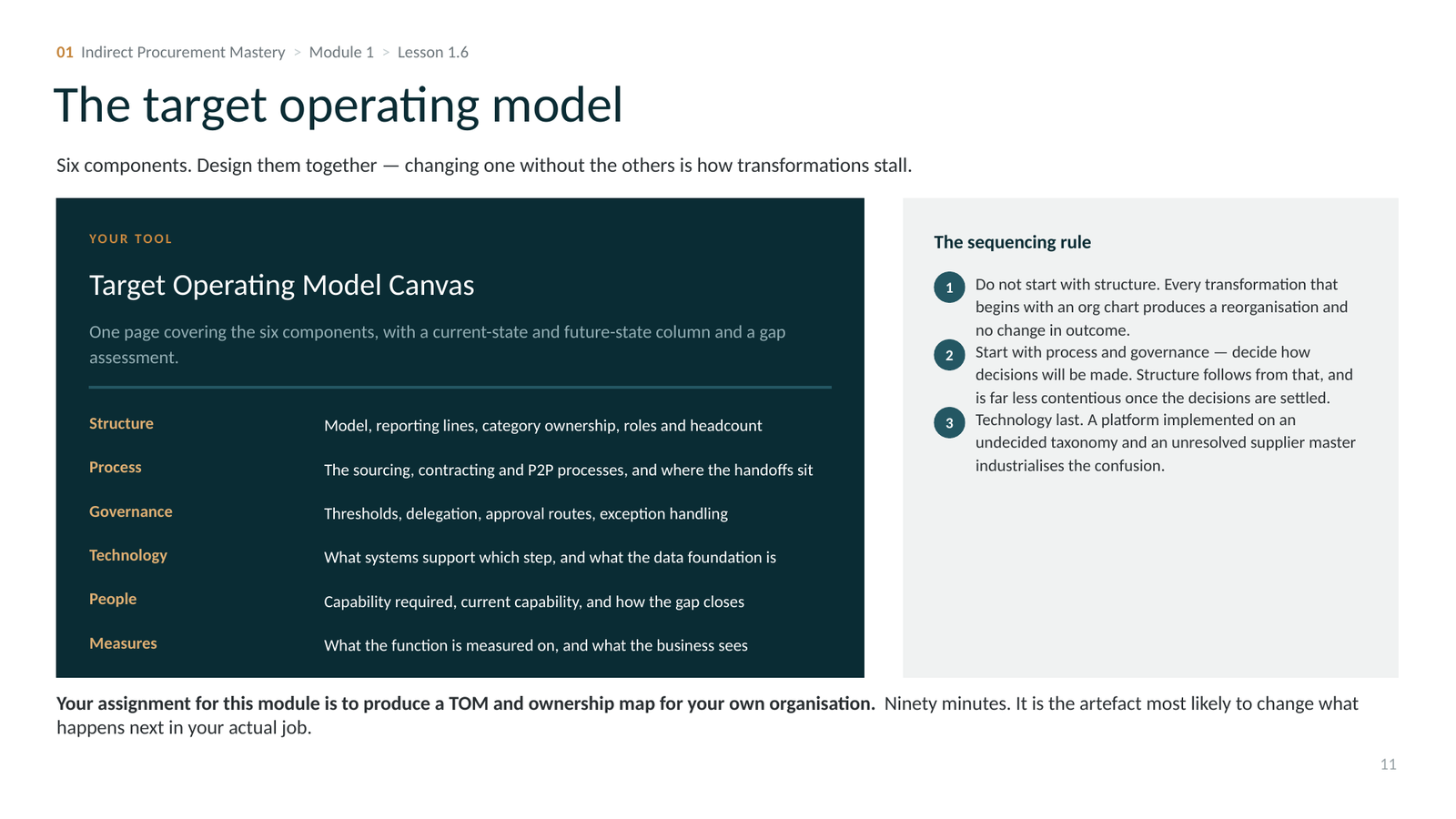
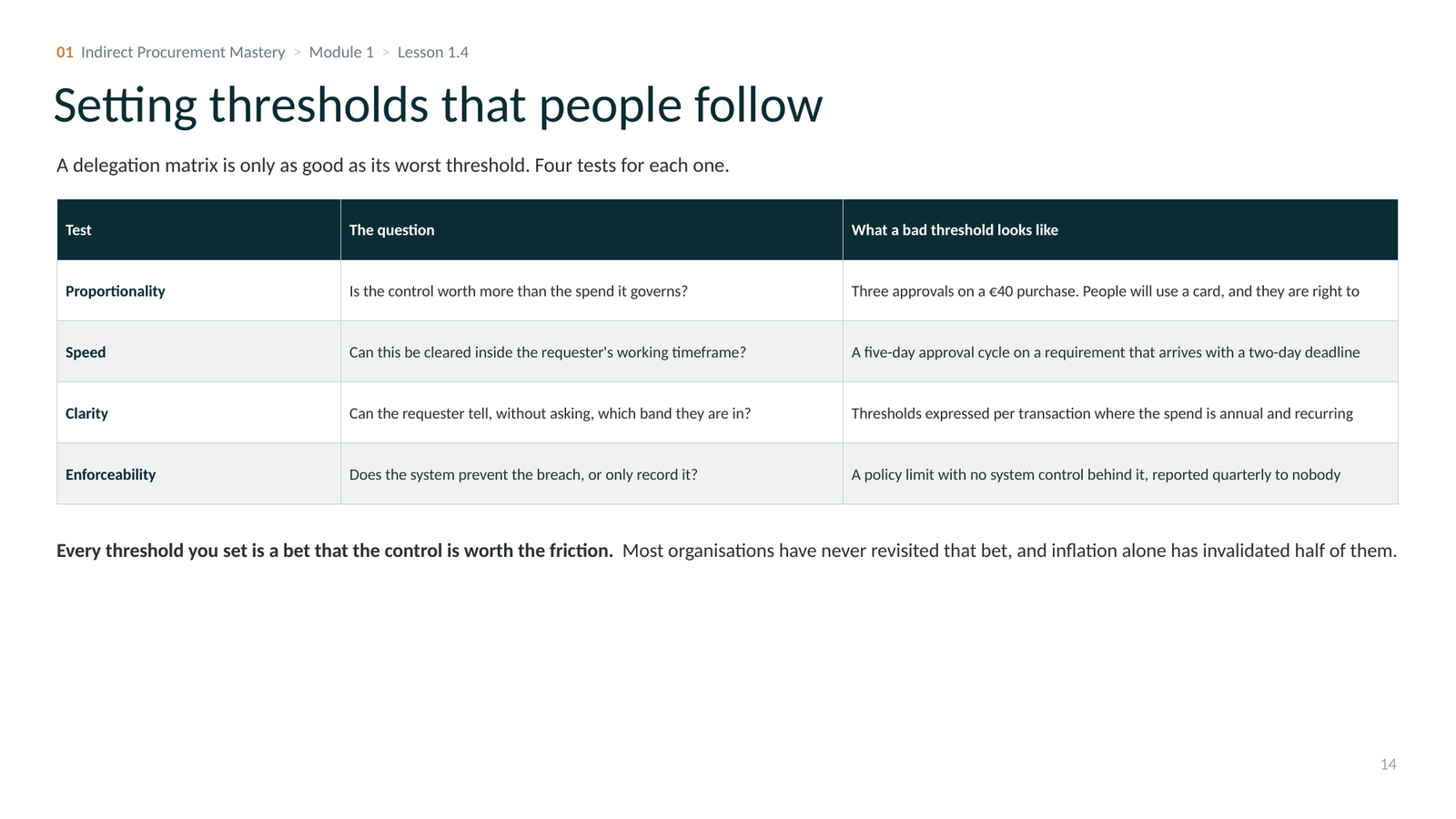
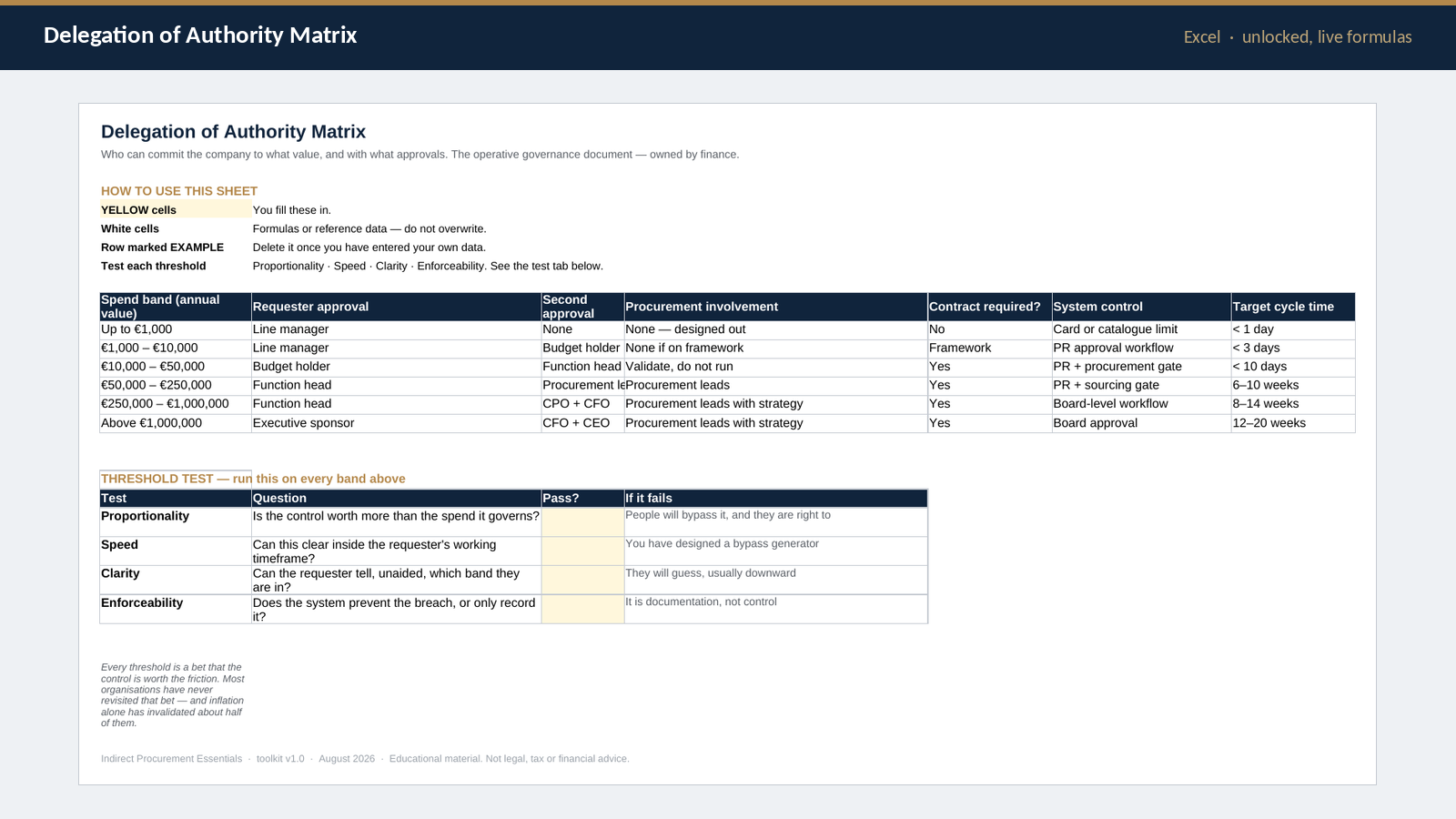
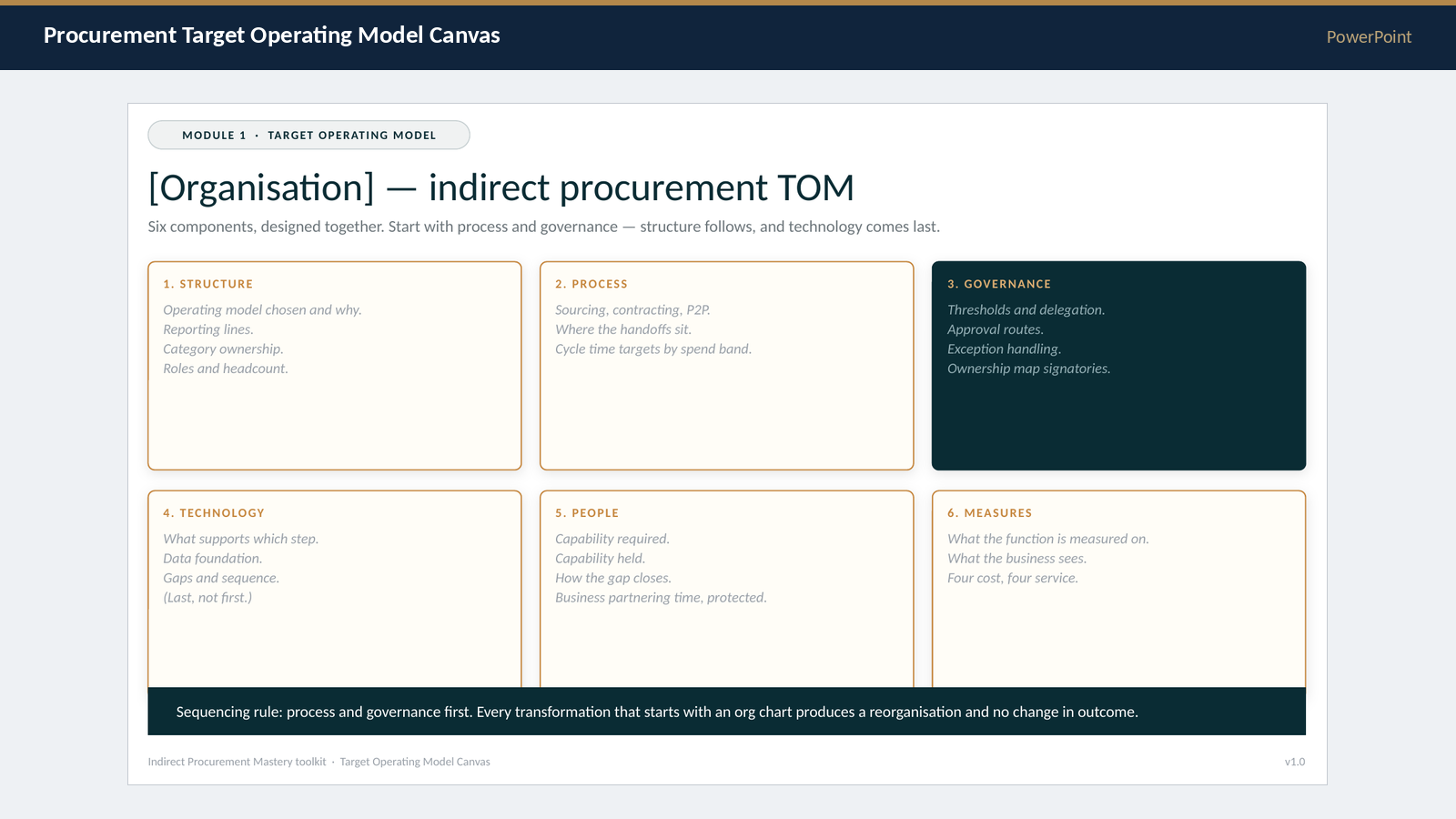
Most organisations combine them into one long document that nobody finishes reading. This toolkit separates them deliberately. The policy states principles and mandatory behaviours in two pages. The delegation matrix states who can commit what value. The ownership map states who leads which category and who countersigns it. The operating model canvas holds the six components together so that changing one does not silently break another.

The stakeholder influence map is included because no operating model change survives without it. A structure that is technically correct and politically unsupported gets reorganised within eighteen months.

The guide compares four operating models with the trade-offs made explicit, so that you choose one the organisation can actually absorb rather than the one that looks best on a slide.

Who it is for: procurement leaders designing or redesigning a function, newly appointed heads of procurement in their first ninety days, and consultants running an operating model review.

The four models compared are centralised, decentralised, centre-led and category-led. None is presented as the correct answer. The guide sets out what each one demands of the organisation, and what breaks when that demand is not met.

What it is not: it is not a change management programme, and it contains no job architecture, salary bands or systems selection. If your function already has a signed policy, a working delegation matrix and clear category ownership, you are past the problem this solves.

This Best Practice includes
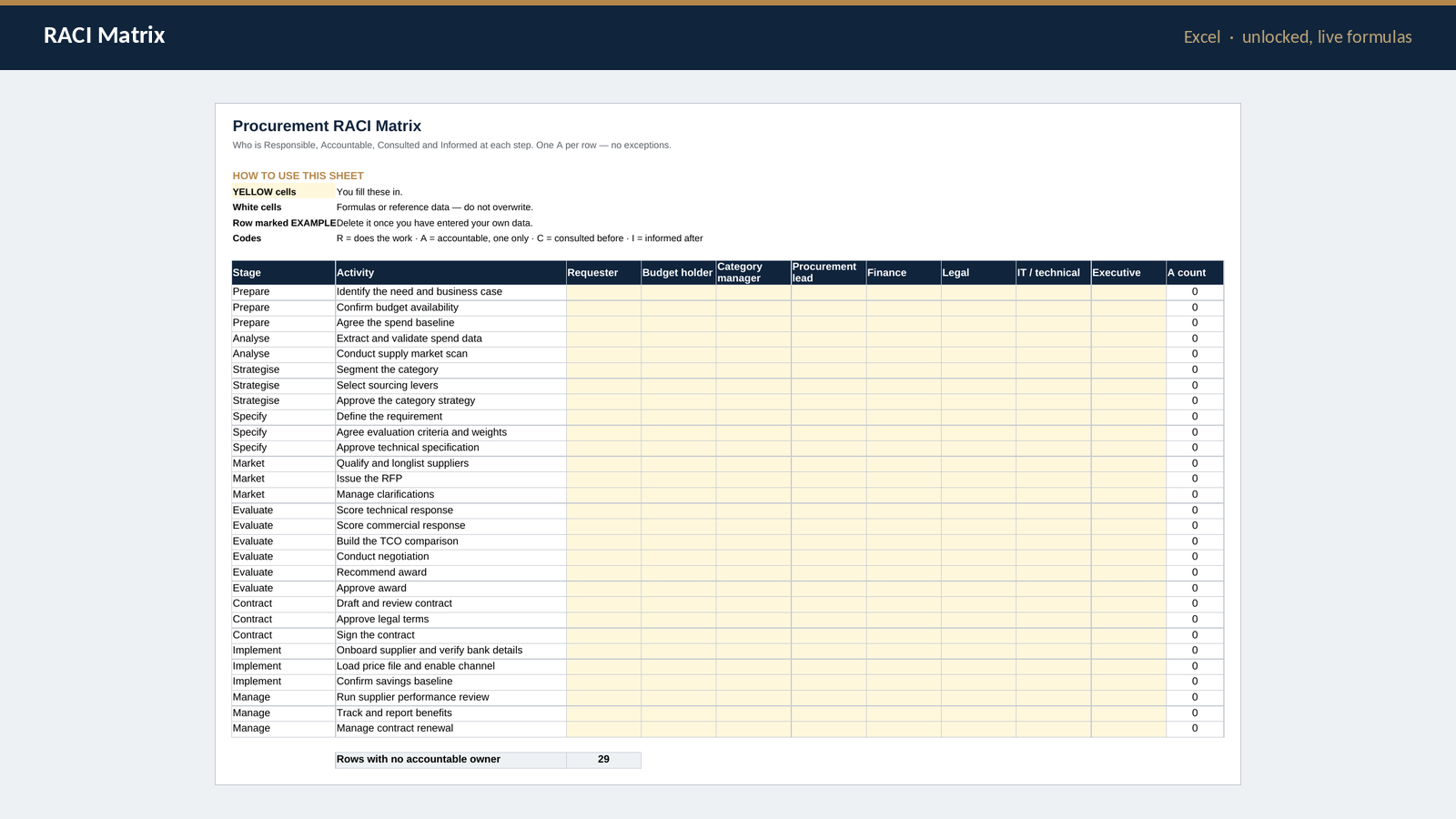
1 PowerPoint guide (15 slides), 4 Excel matrices, 1 Word policy template, 1 PowerPoint TOM canvas.

Acquire business license for $49.00

Add to cart

Add to bookmarks

Discuss

Further information

• Compare four operating models and select one the organisation can absorb.
• Separate policy, delegation, ownership and buying guidance into four instruments that each do one job.
• Set approval thresholds and decision rights explicitly.
• Map stakeholder influence before attempting any change to how people buy.

• You are designing, defending or restructuring a procurement function.
• Decisions in your organisation keep being remade by different people.
• You have a policy nobody follows and suspect the problem is not the policy.

• Your operating model is stable and the issue is category execution rather than governance.
• You need a job architecture or compensation framework; neither is included.
• You want an organisation chart template; this is about decision rights, not boxes.


0.0 / 5 (0 votes)

please wait...