Dry-Cleaning Financial Model
Originally published: 23/03/2026 08:40
Publication number: ELQ-66474-1
View all versions & Certificate
certified

Dry-Cleaning Financial Model

A complete and professional financial model of a dry-cleaning business startup

Description
🔴 This is a full-scope, professional and yet user-friendly financial model of a startup dry-cleaning business. I have developed this model with those beginning entrepreneurs in mind who are not familiar with sophisticated financial concepts but need an industry-grade investment banking quality financial model for their startups 🔴


Model highlights:

✅ The model provides a comprehensive and granular picture of your prospective business and addresses all information requirements of you as an owner, your partners as co-investors and banks as external financing institutions
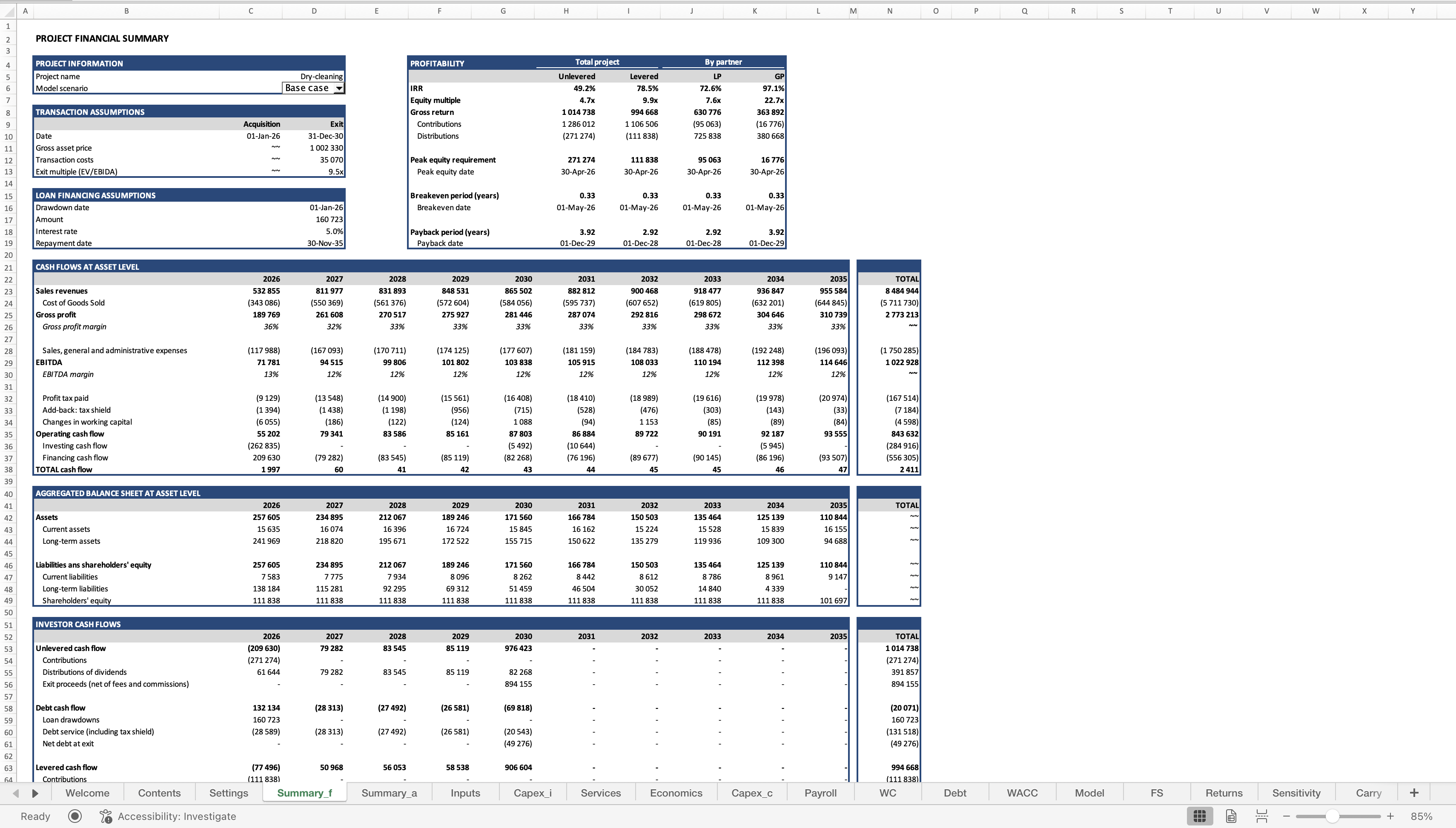
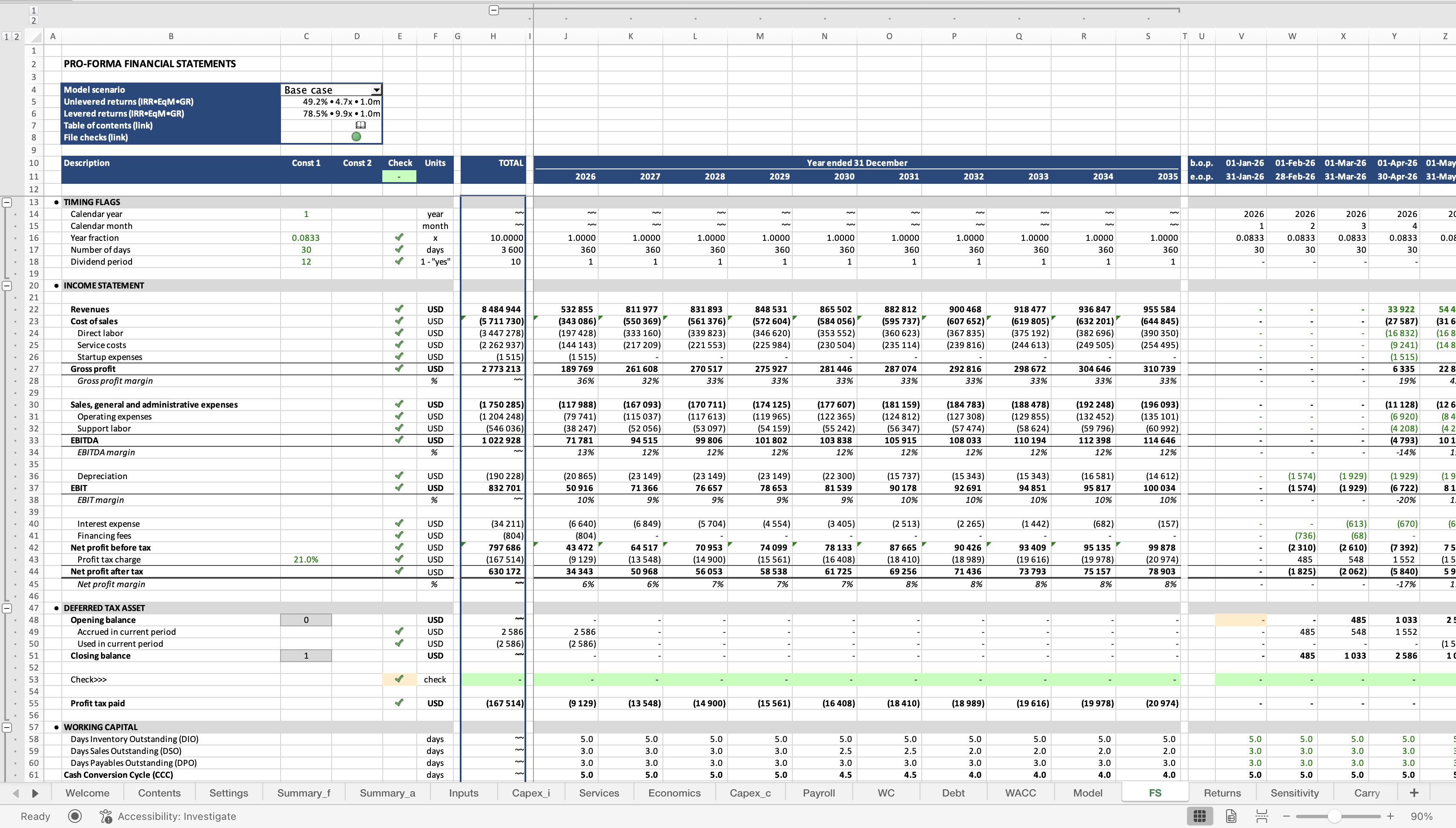
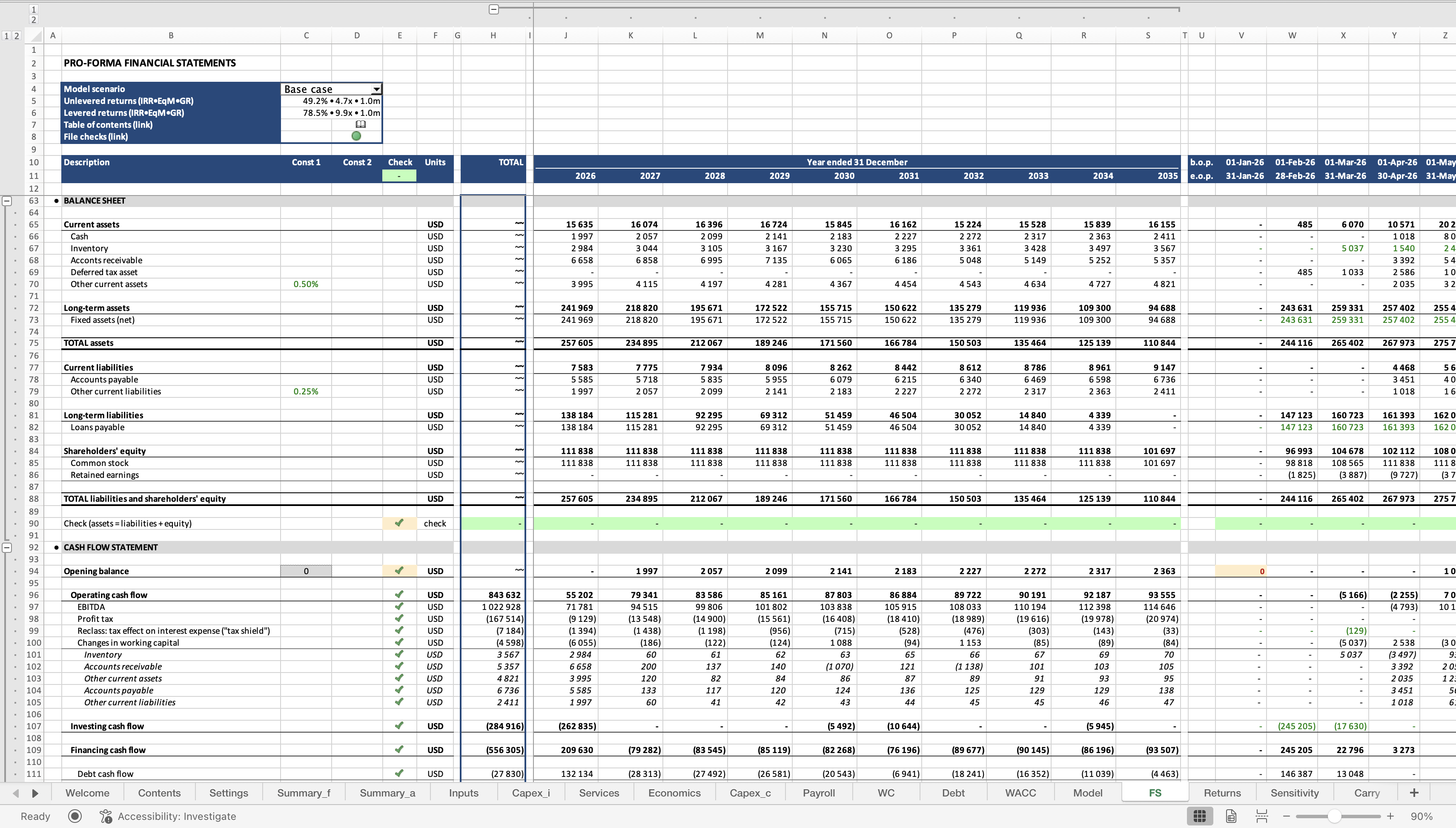
✅ The model generates the three standard financial statements: income statement, cash flow statement and balance sheet
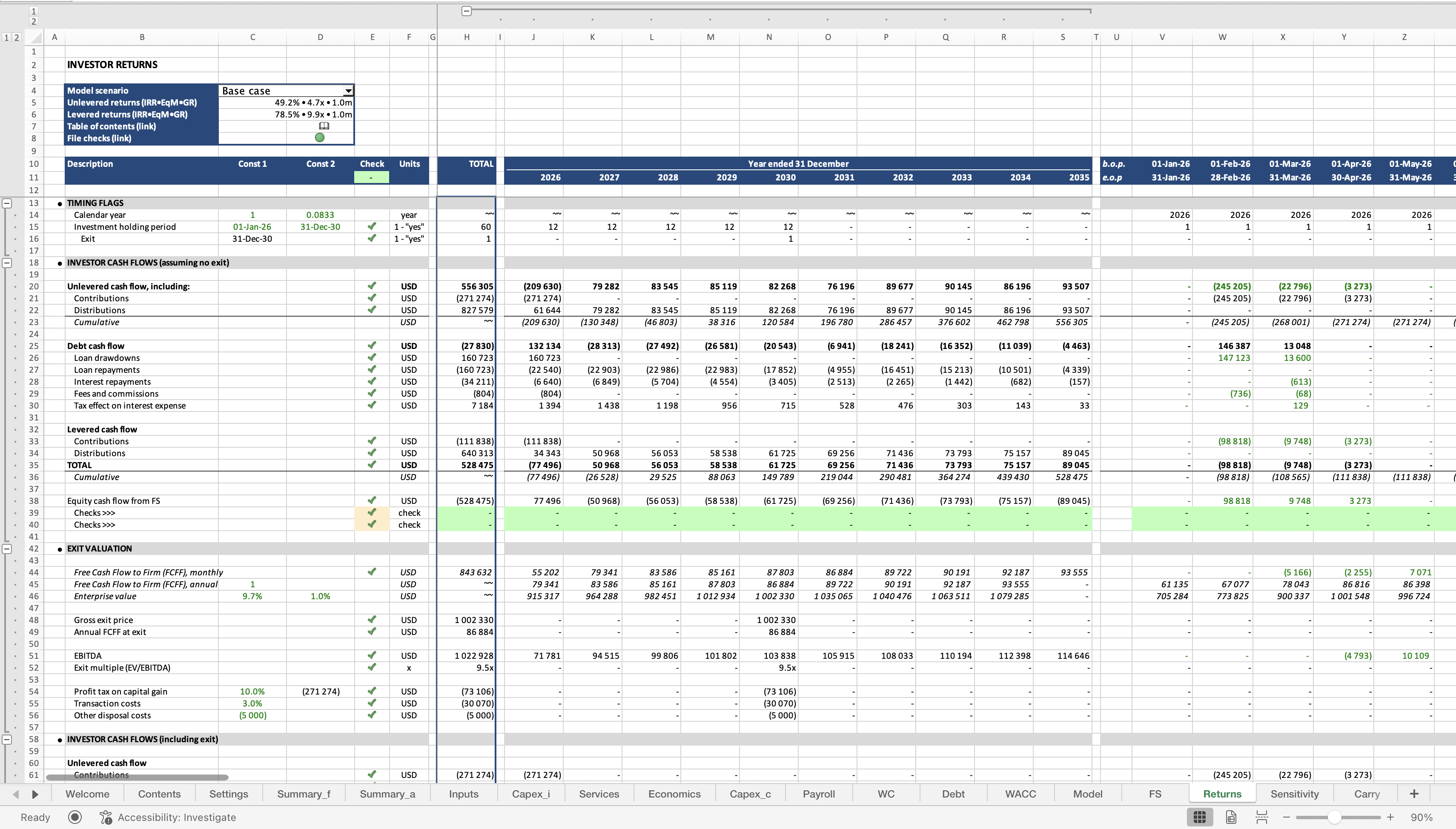
✅ It also includes detailed return analysis calculating IRR, equity multiple, peak equity exposure, breakeven and payback periods, return on invested capital
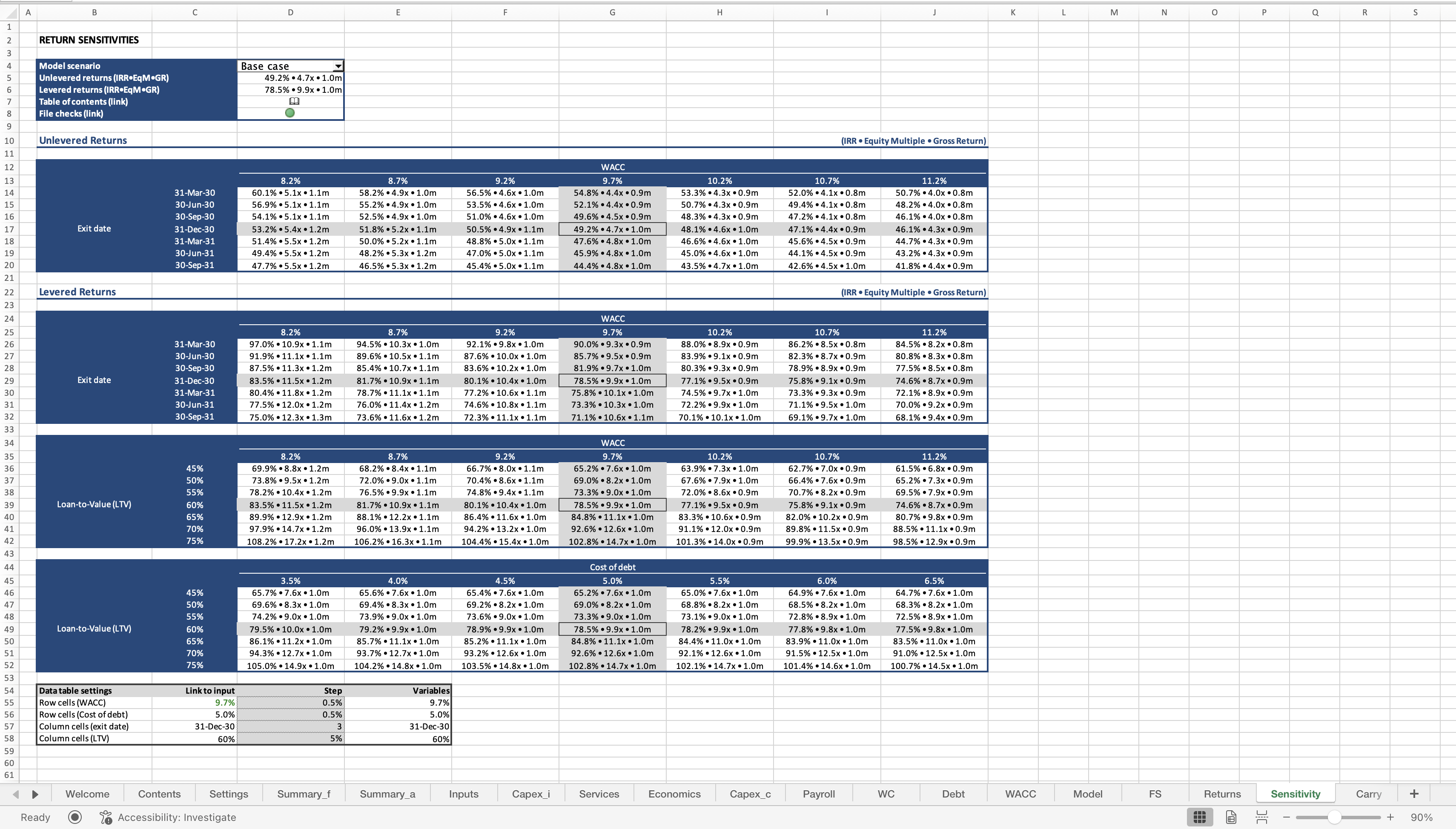
✅ Sensitivity analysis in this model allows to calculate key return parameters at various holding period, amount and cost of debt, exit multiple assumptions
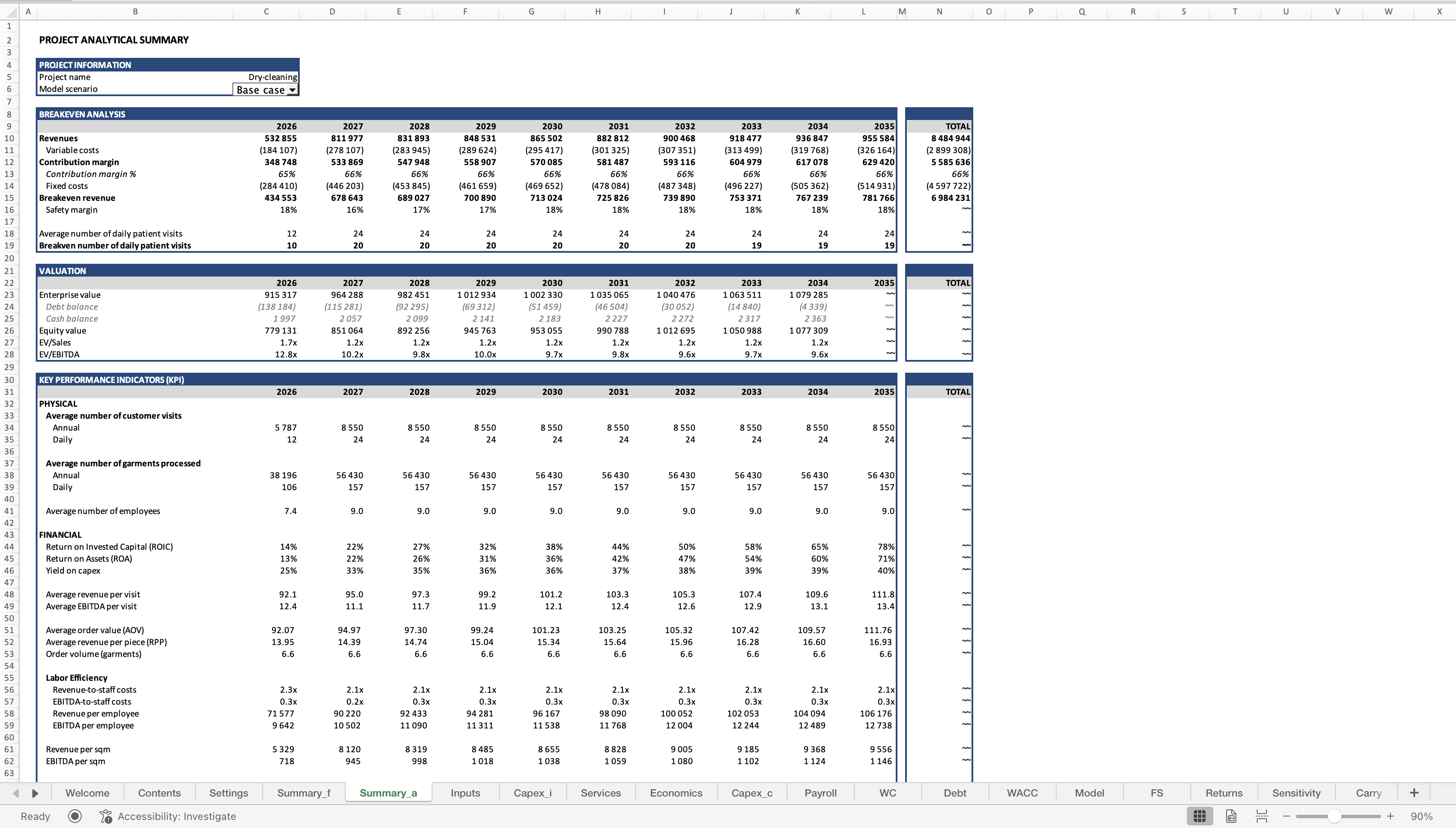
✅ In addition, it performs KPI analysis specific for a dry-cleaning business: average number of customer visits, number of garments processed per day and per year, average revenue per piece and others
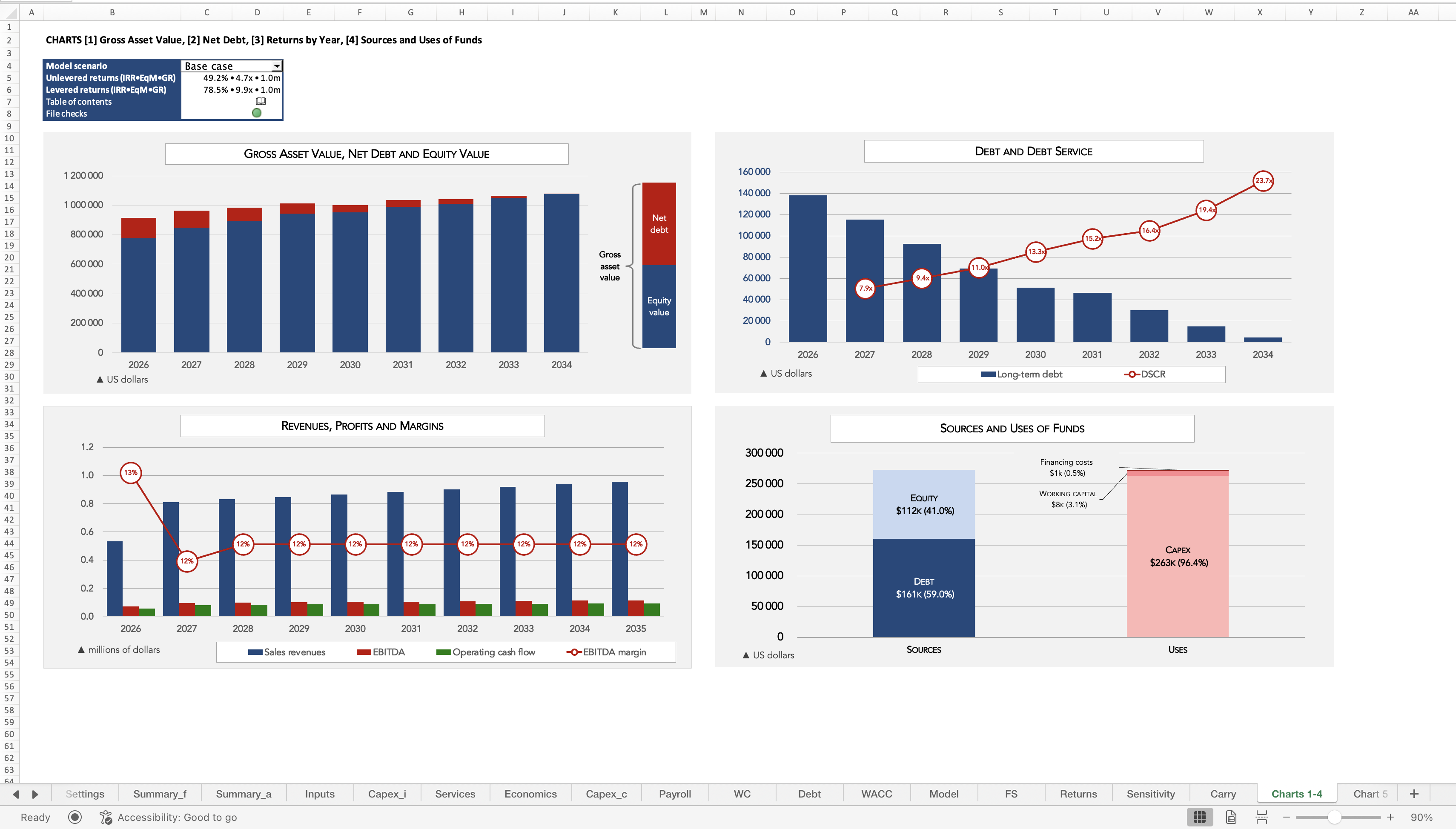
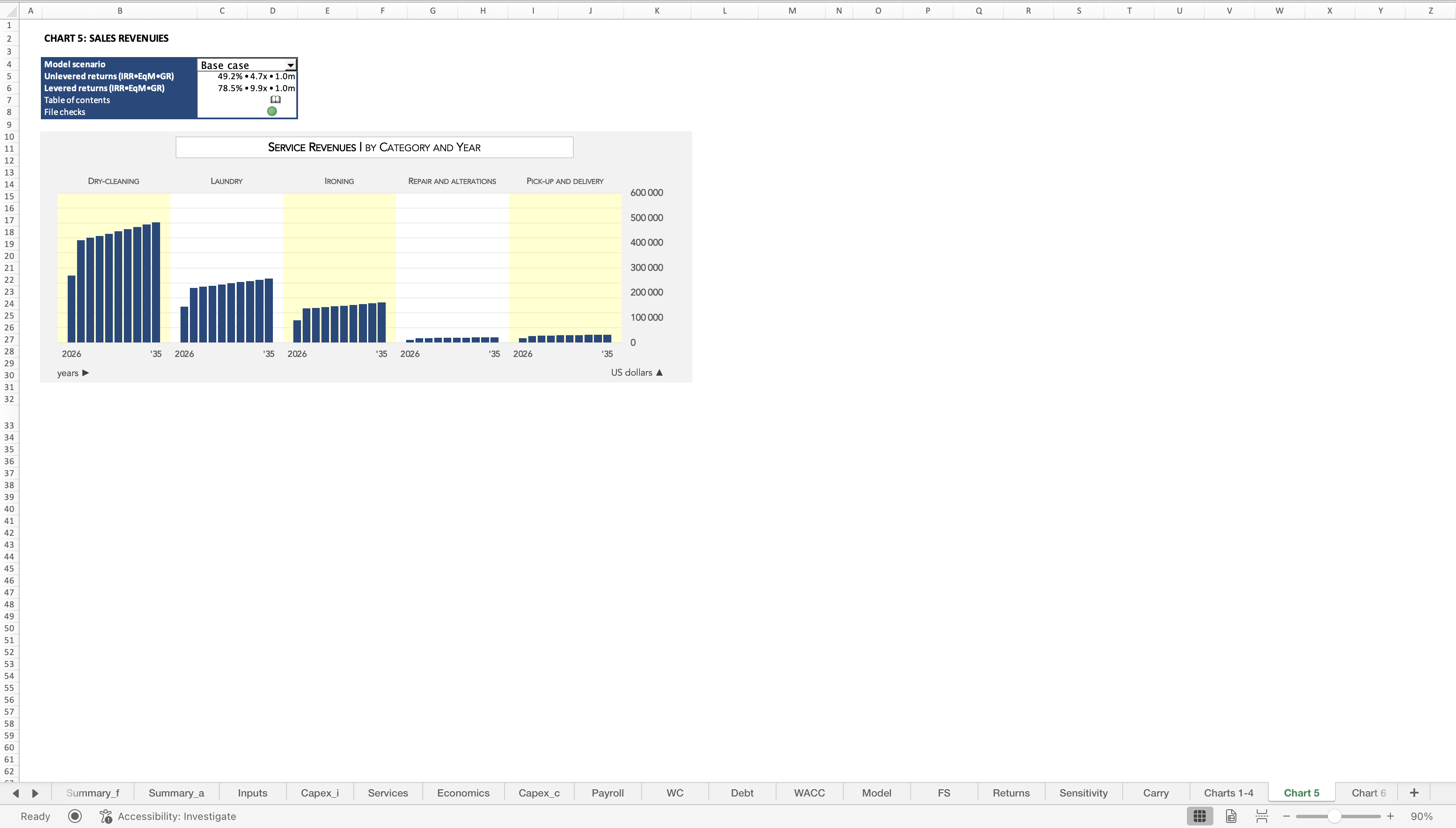
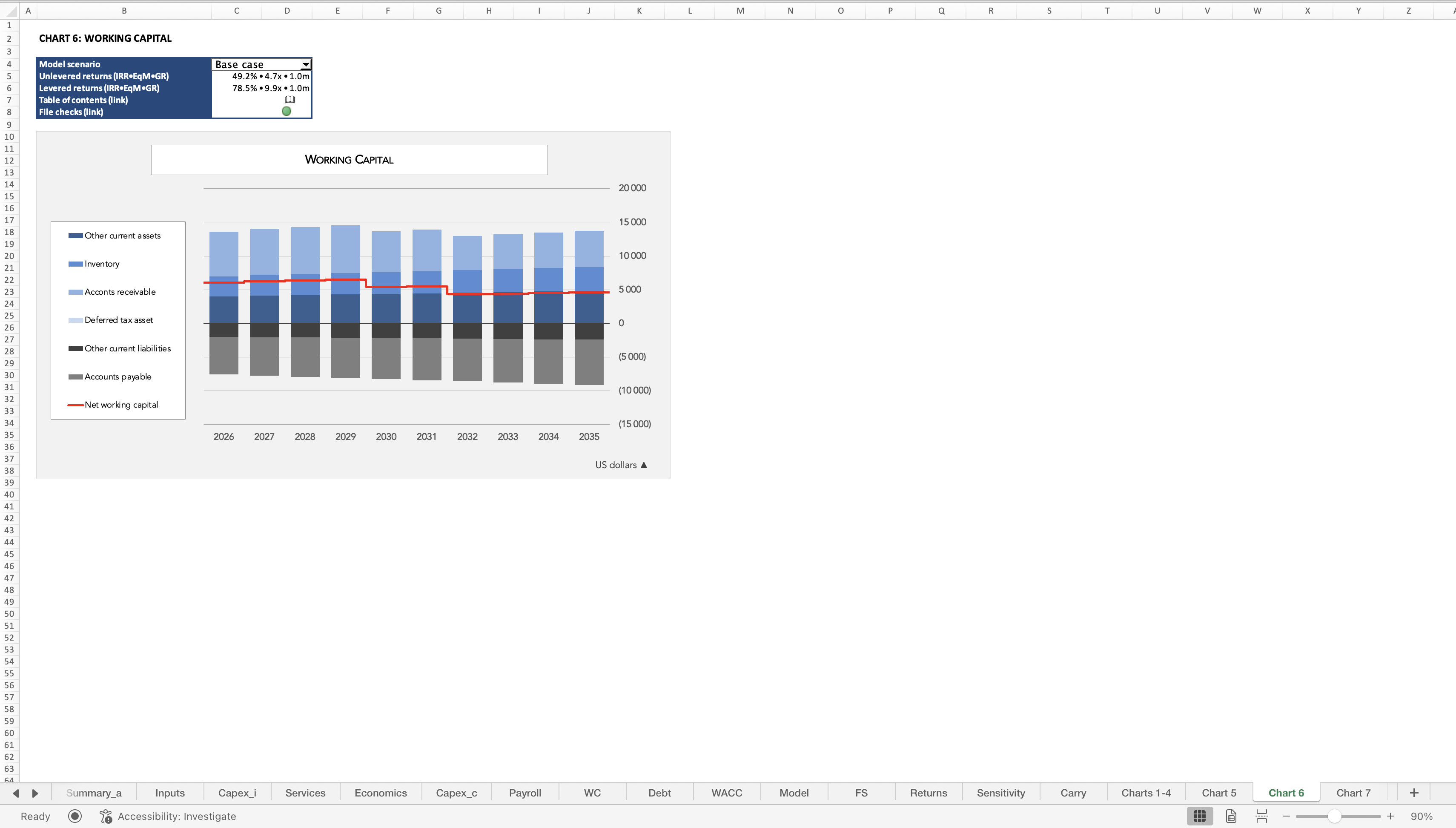
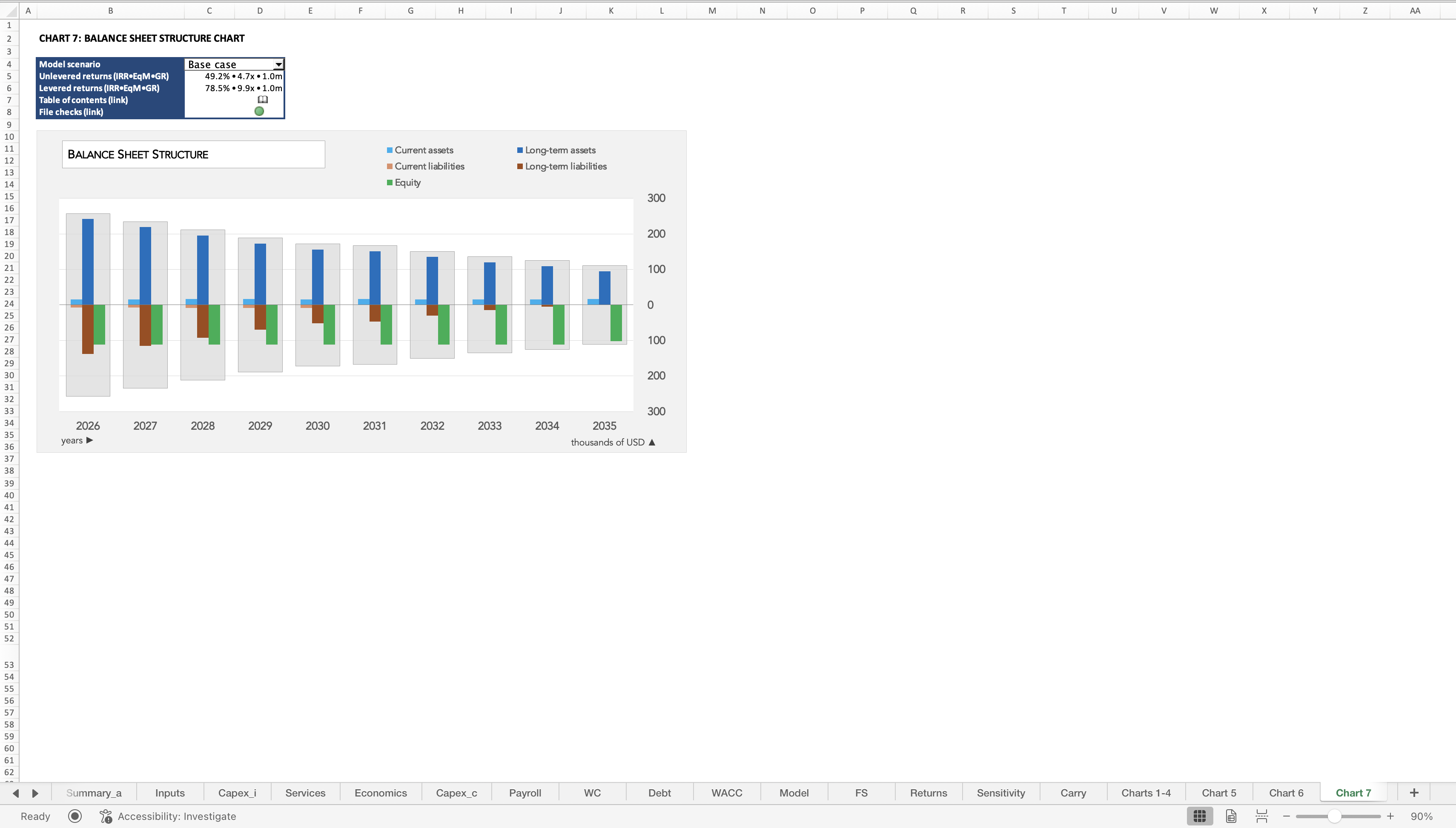
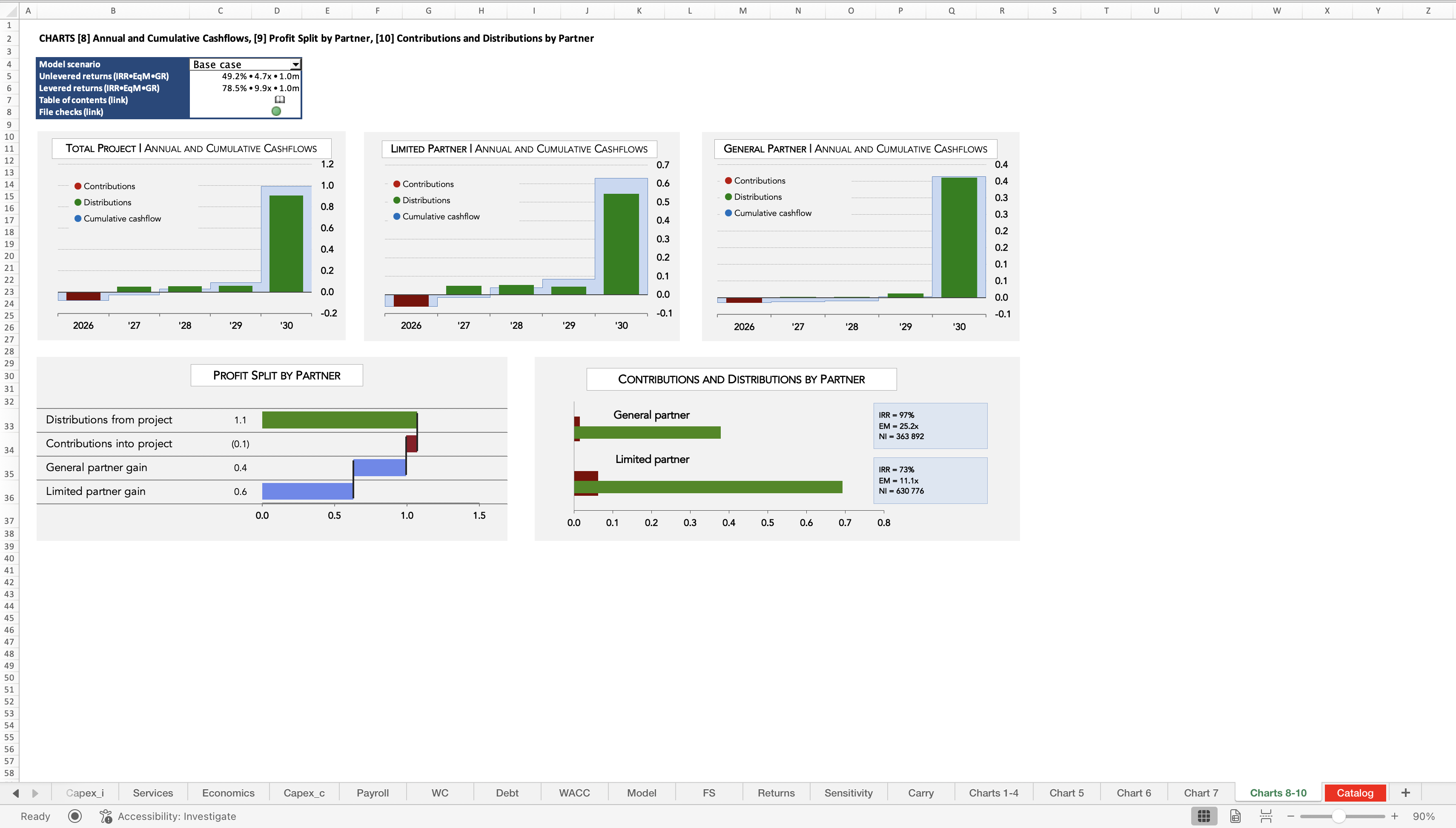
✅ The model covers a period of 10 years (can be extended if needed) and is illustrated by professionally designed magazine-quality charts 📊
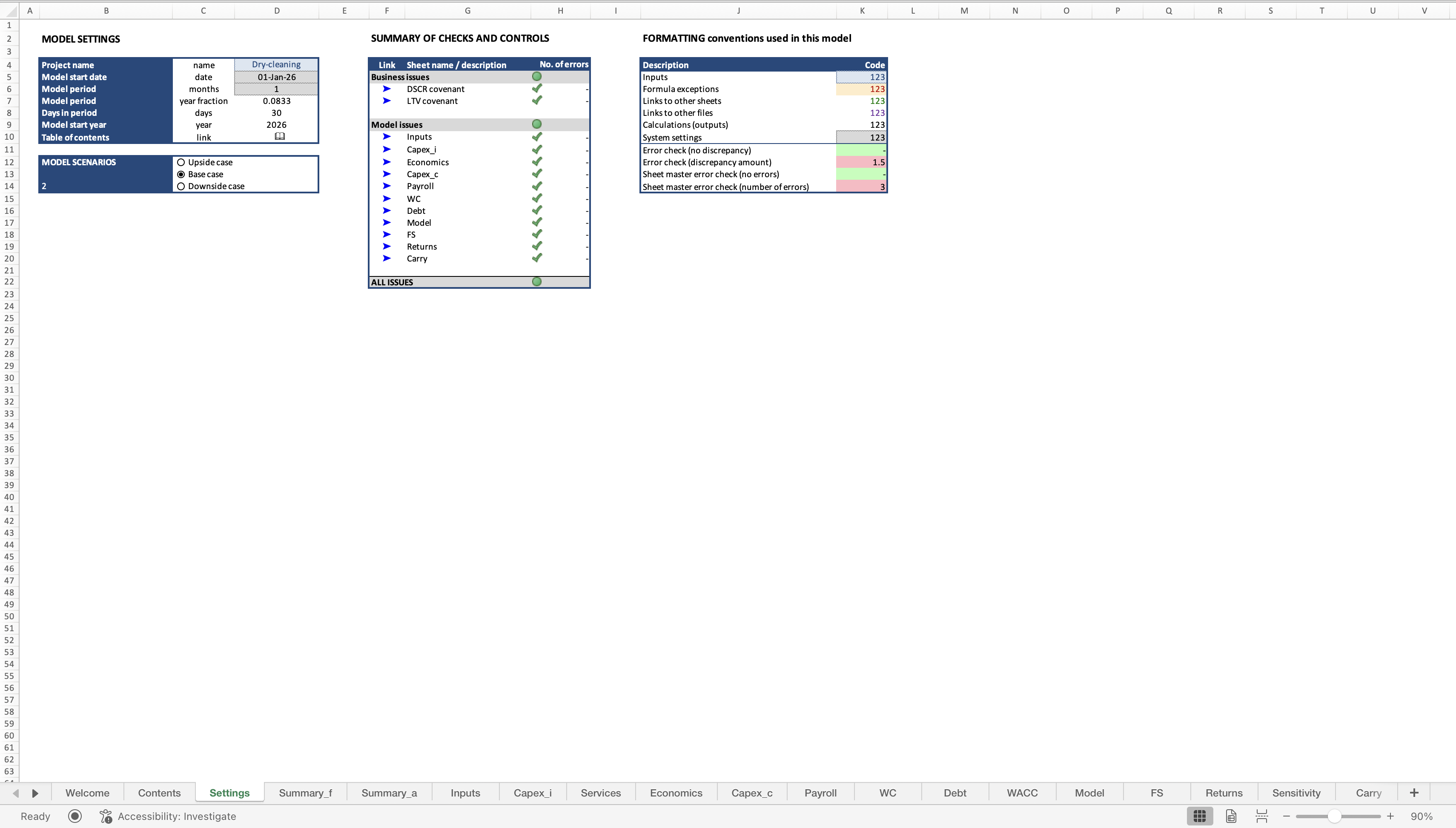
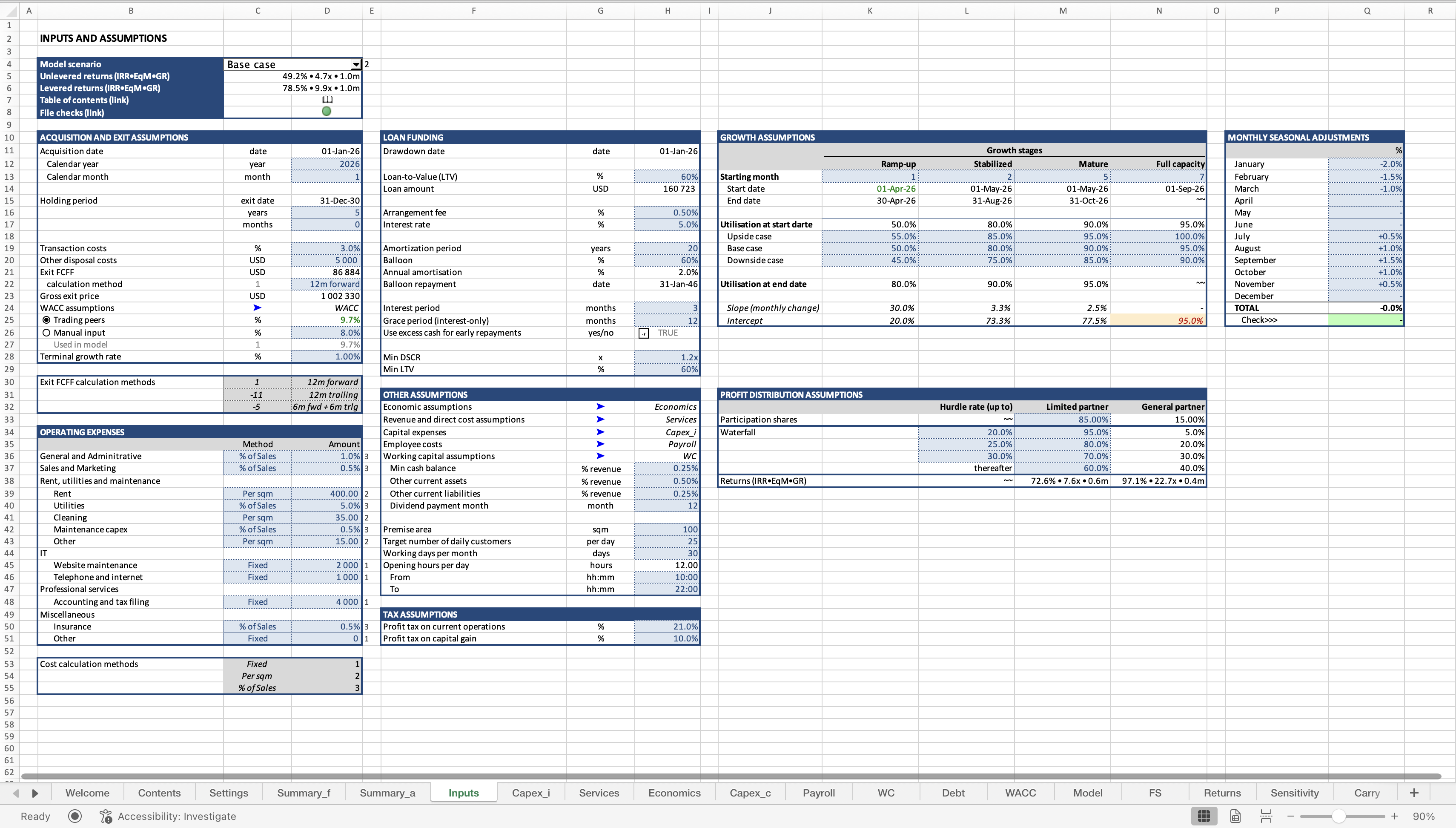
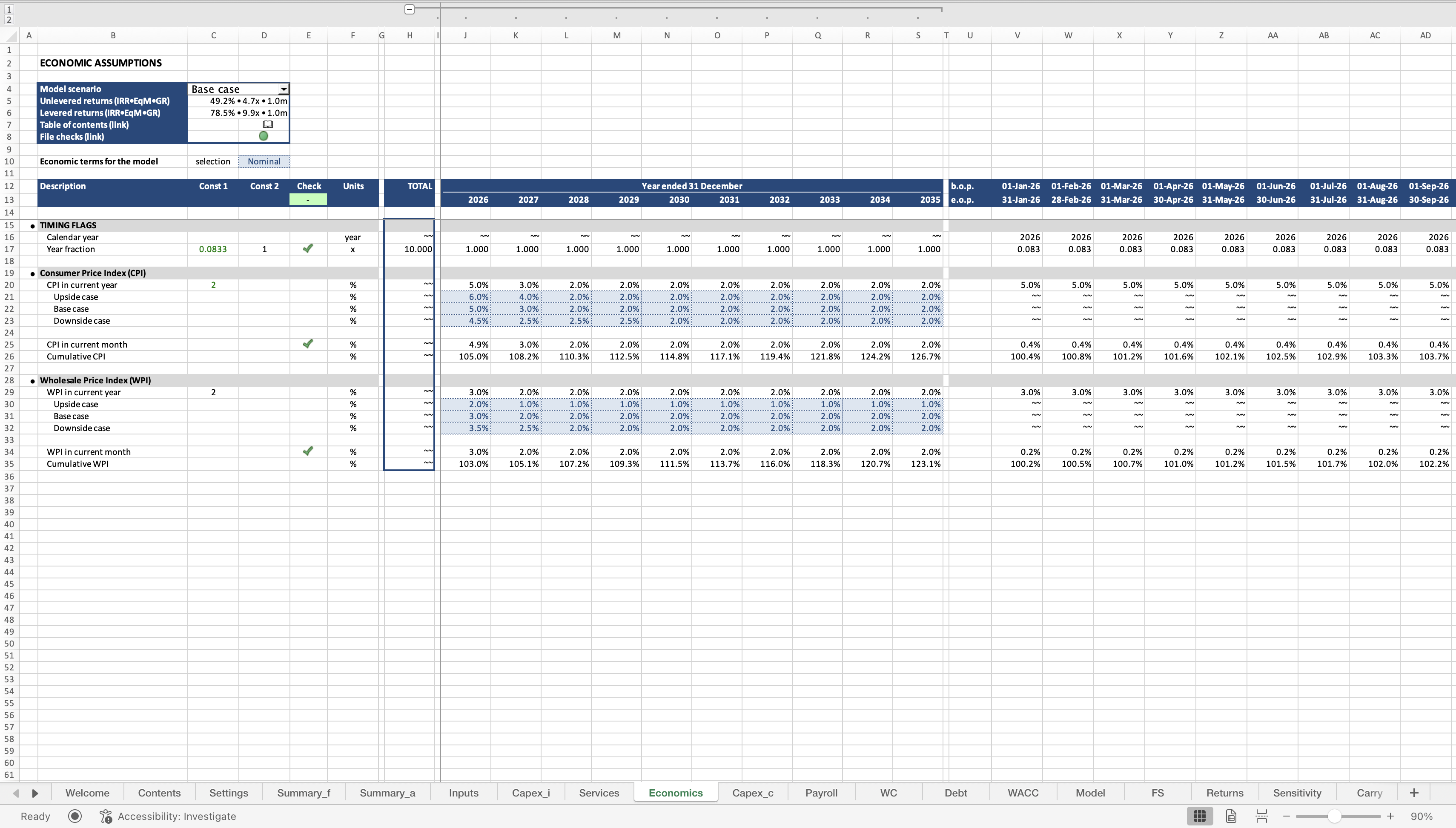
✅ Finally, the model covers three scenarios (base case, upside case and downside case) for which you can set different commercial and economic assumptions and immediately examine the effect. A special premise of this model is that scenarios can be switched back and forth from any sheet, which makes this model especially convenient


Model structure:

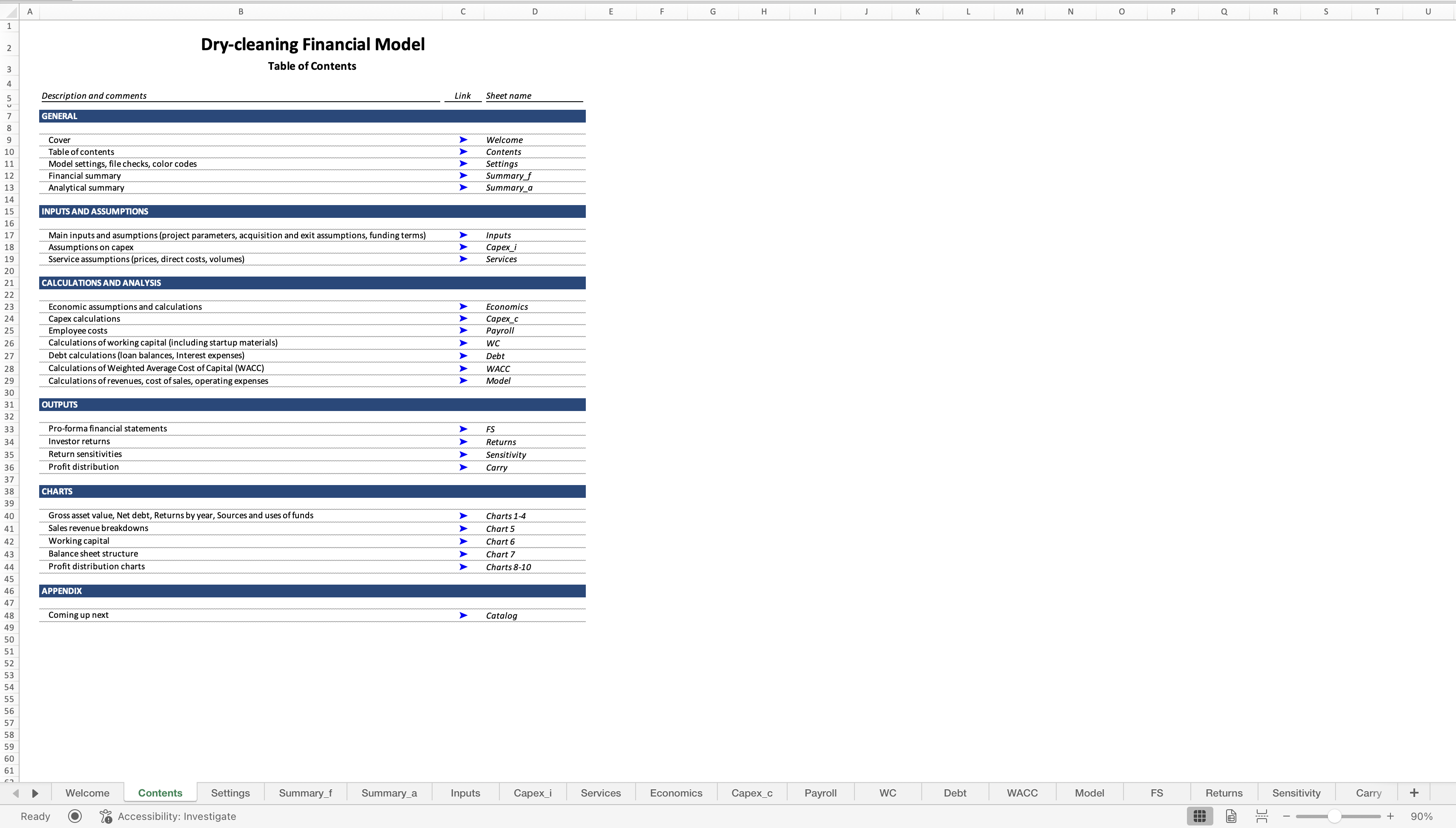
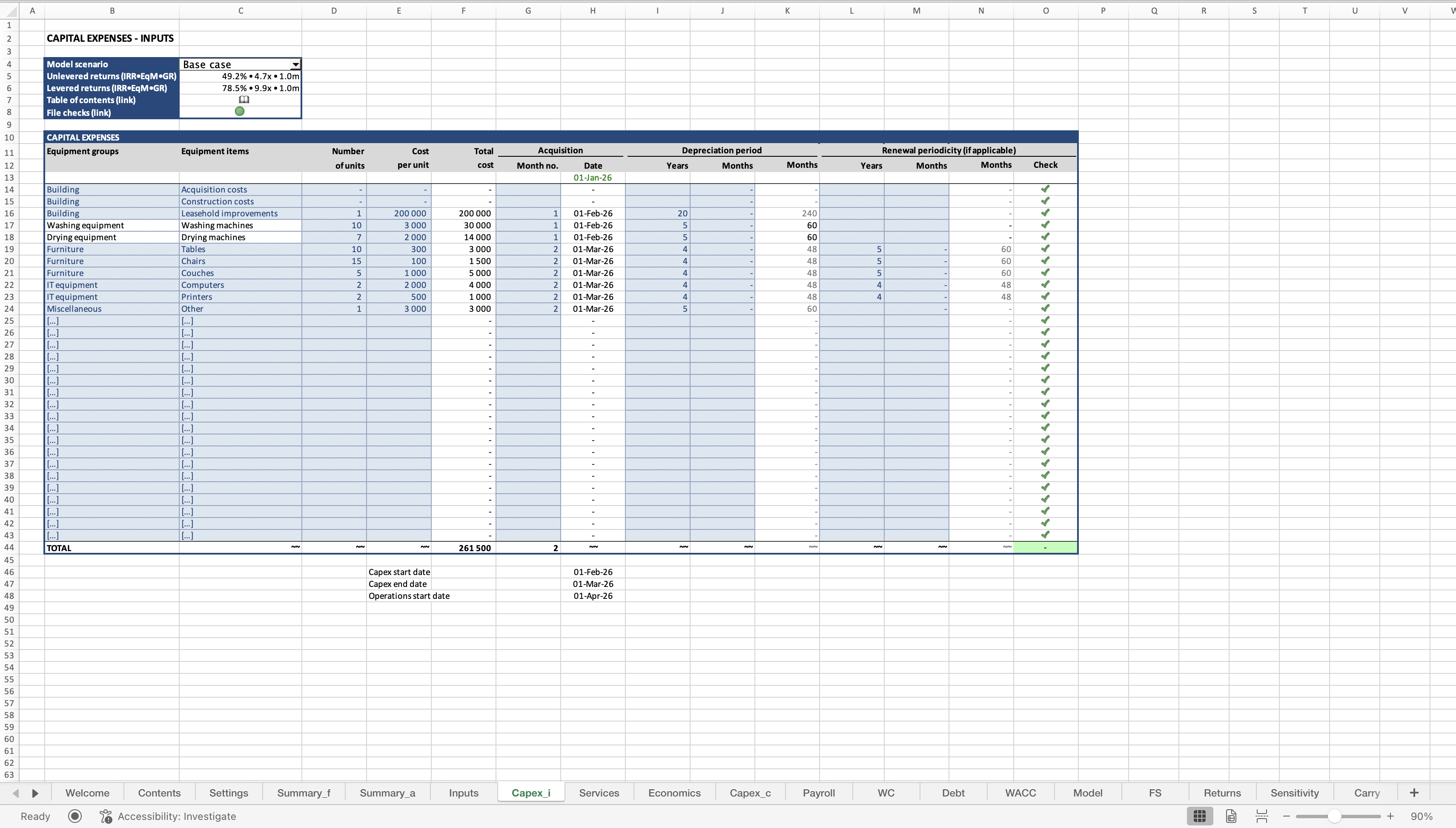
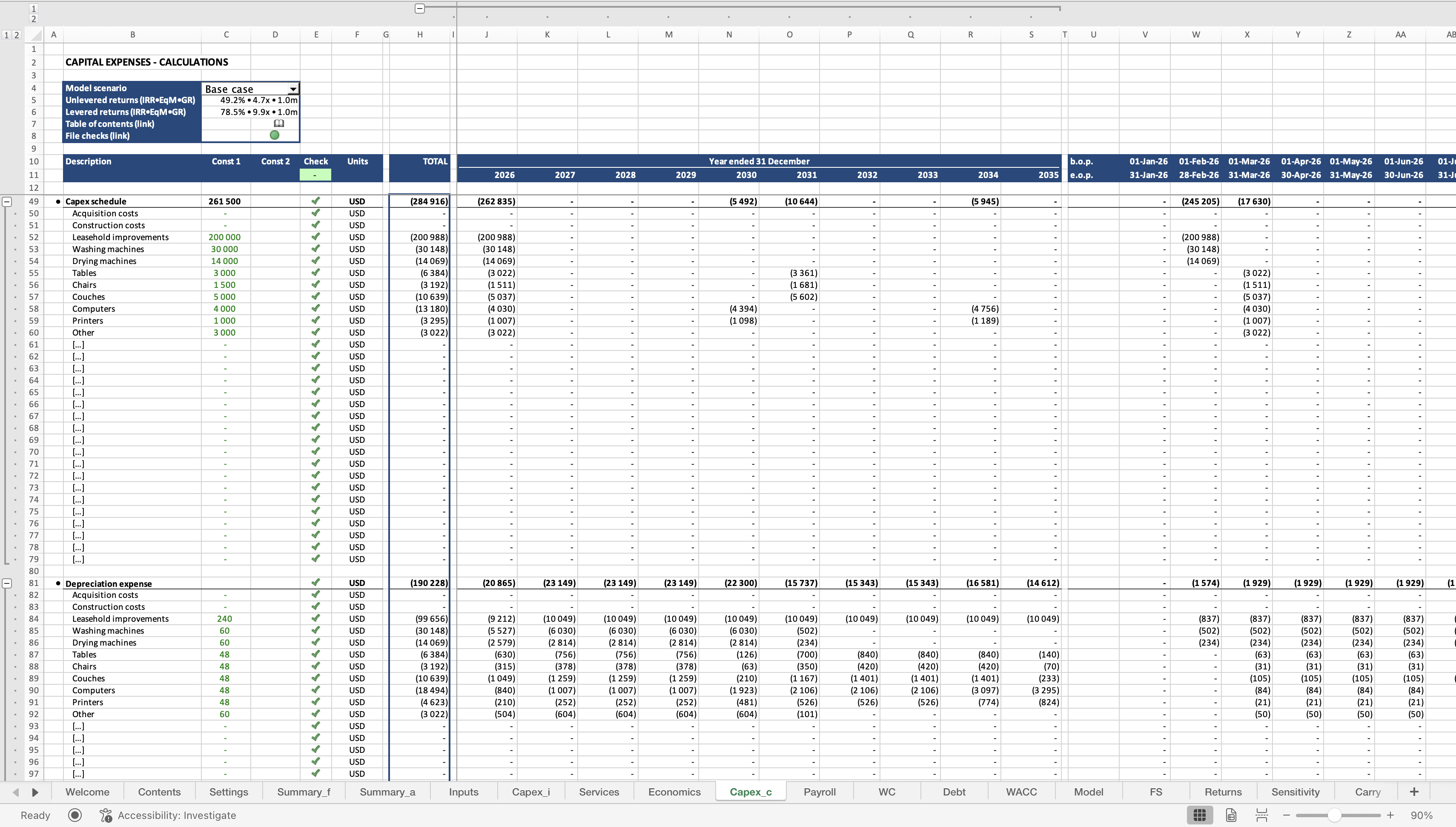
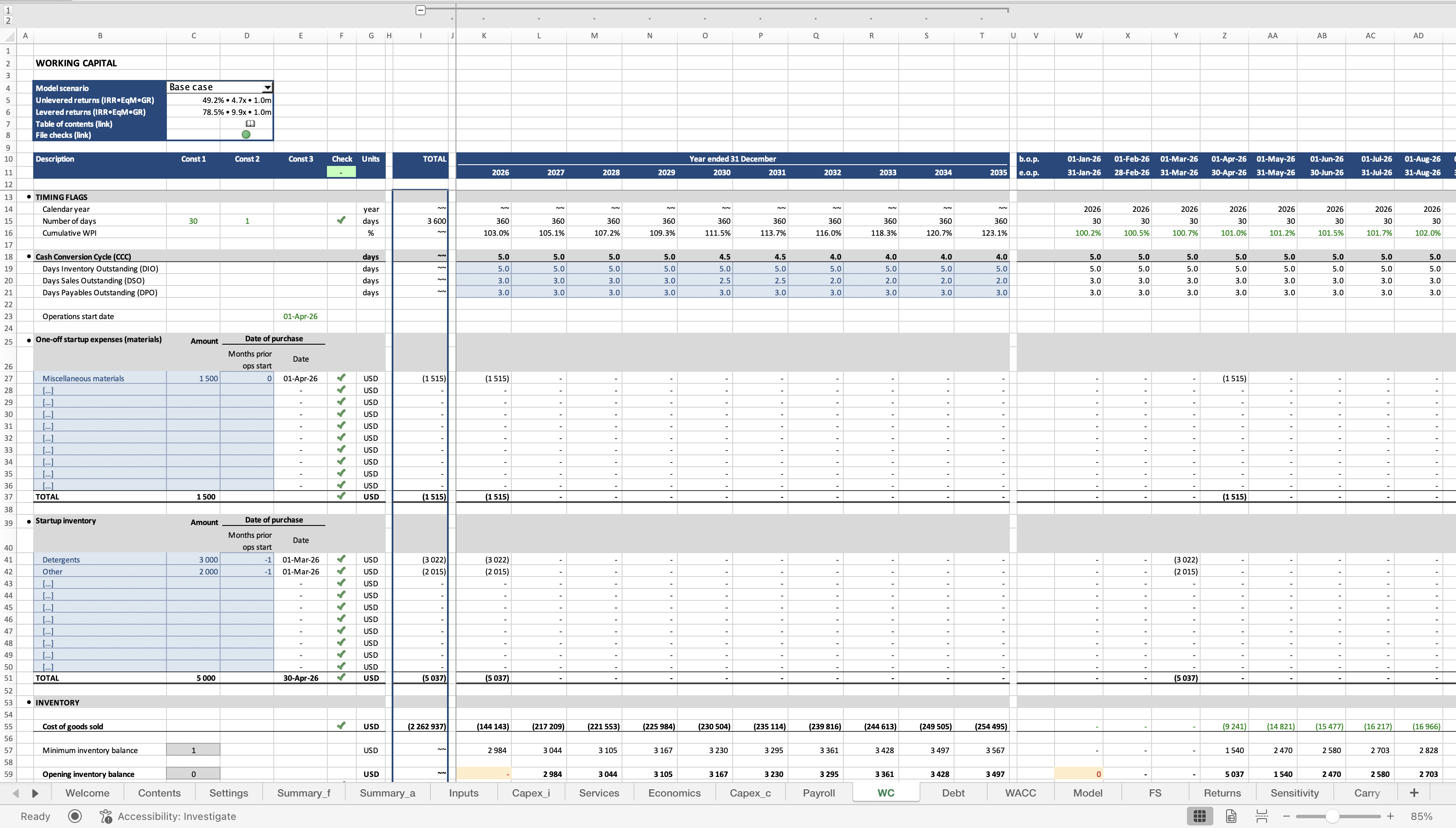
1️⃣ Any new business starts with capital investments and construction. The model has a very flexible capex section which covers up to 30 specific dry-cleaning business capex items (more can be added) each having its own cost, acquisition date and useful life period. For certain capex items you can indicate renewal intervals and the model will handle them automatically. The model also handles non-capital startup expenses and inventory stock.
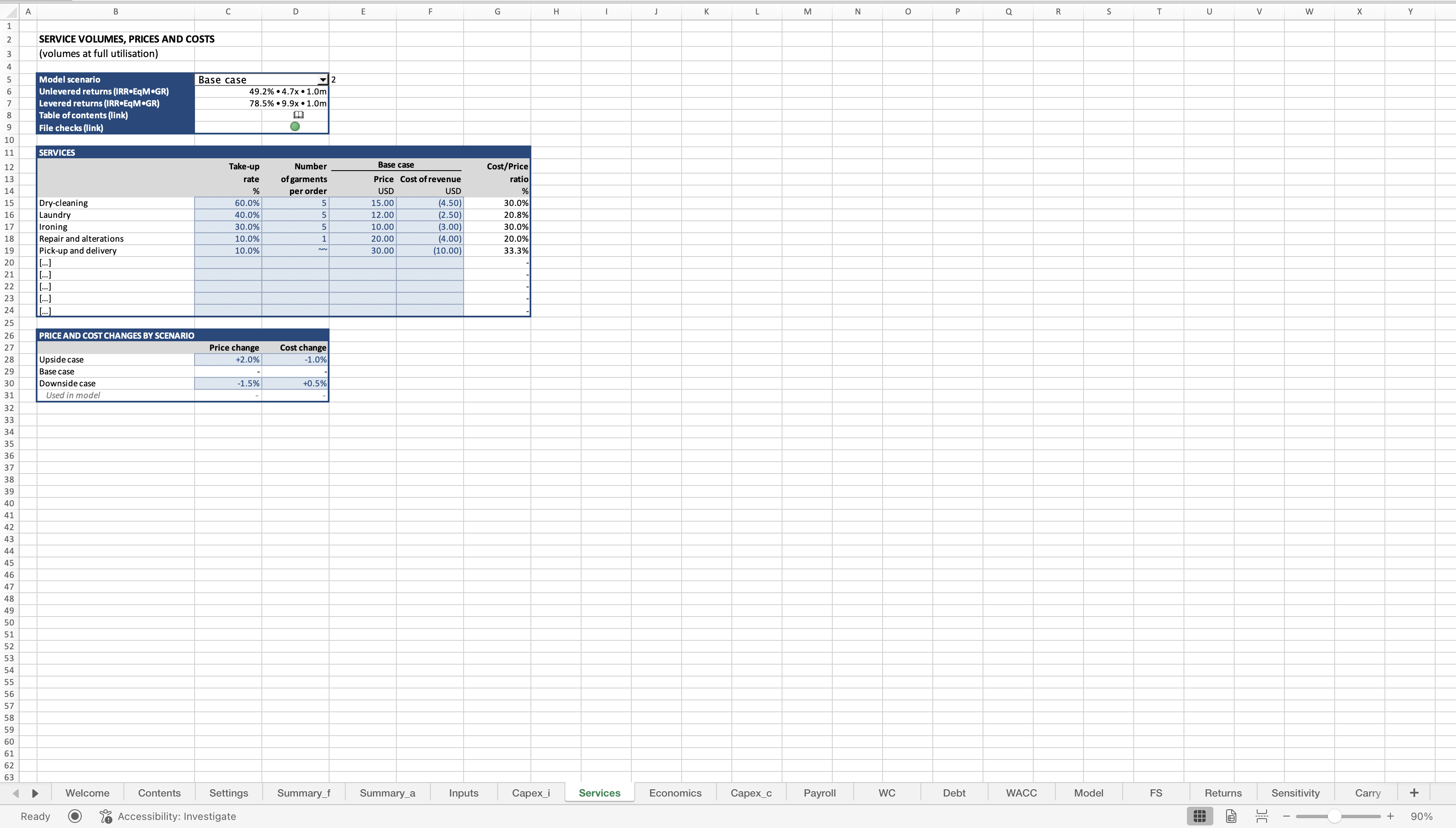
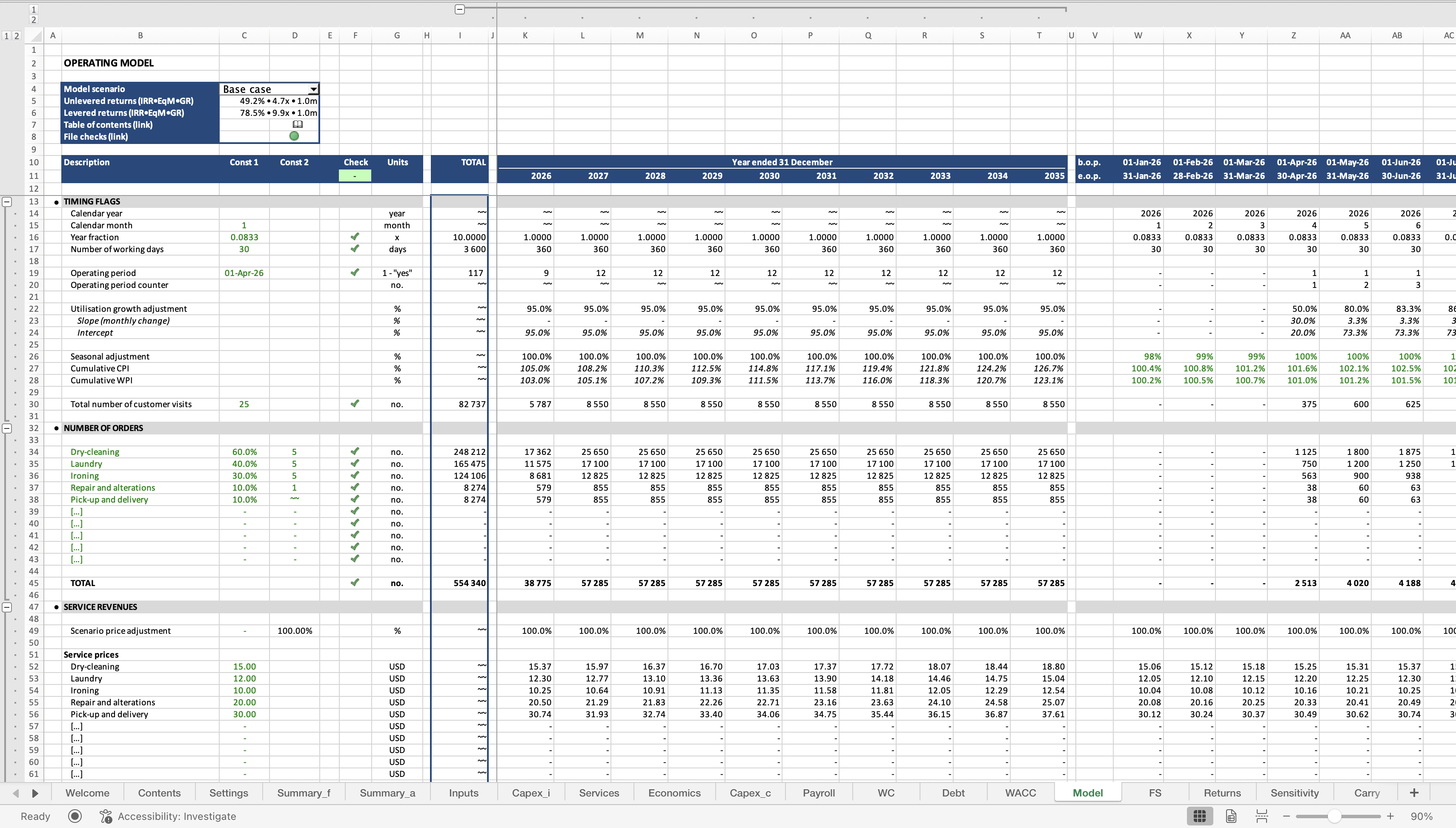
2️⃣ Once the capex program is completed and necessary equipment and materials are purchased, your dry-cleaning business starts generating profits. The model uses a number of drivers to make a granular analysis of revenues and profits: prices and costs by category and type of treatment, ramp-up plans, monthly seasonality and other assumptions.
Apart from service revenues, the model calculates retail revenues and profits from sale of various cleaning products.
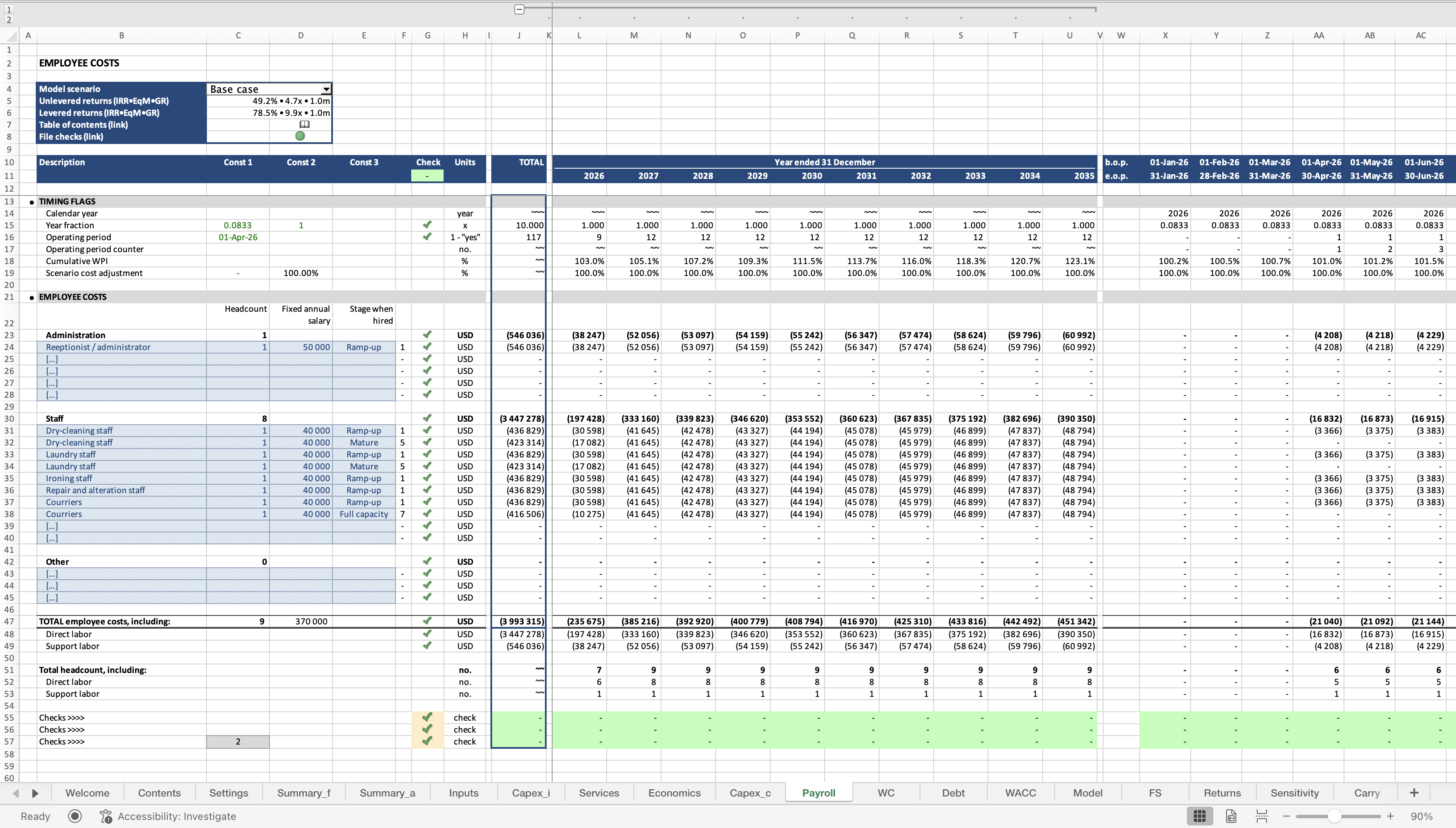
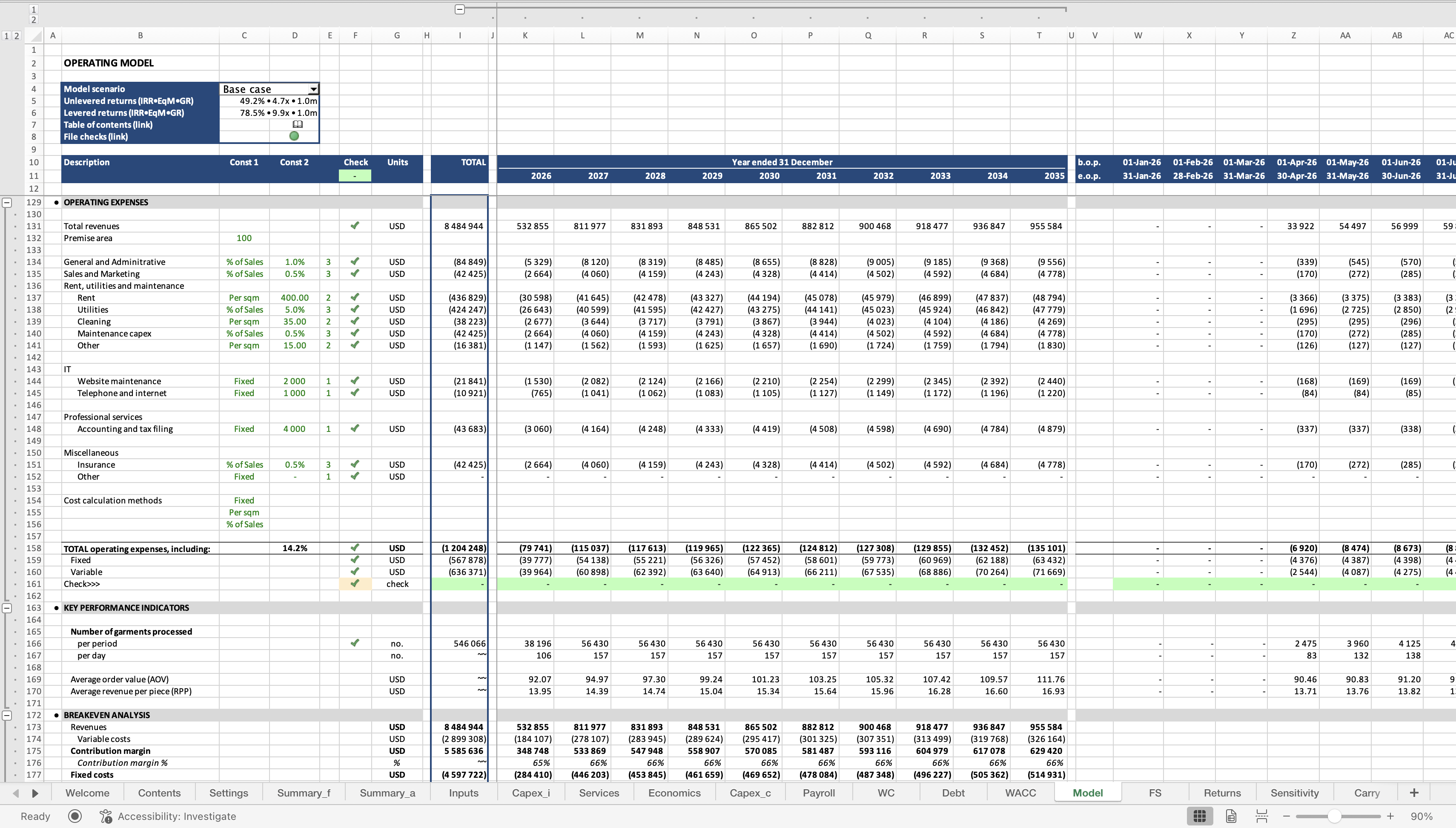
3️⃣ The model forecasts direct costs of services as well as general operating and overhead expenses. For every expense line you can set the calculation basis (fixed amount, amount per square meter of premise area or percentage of revenue).
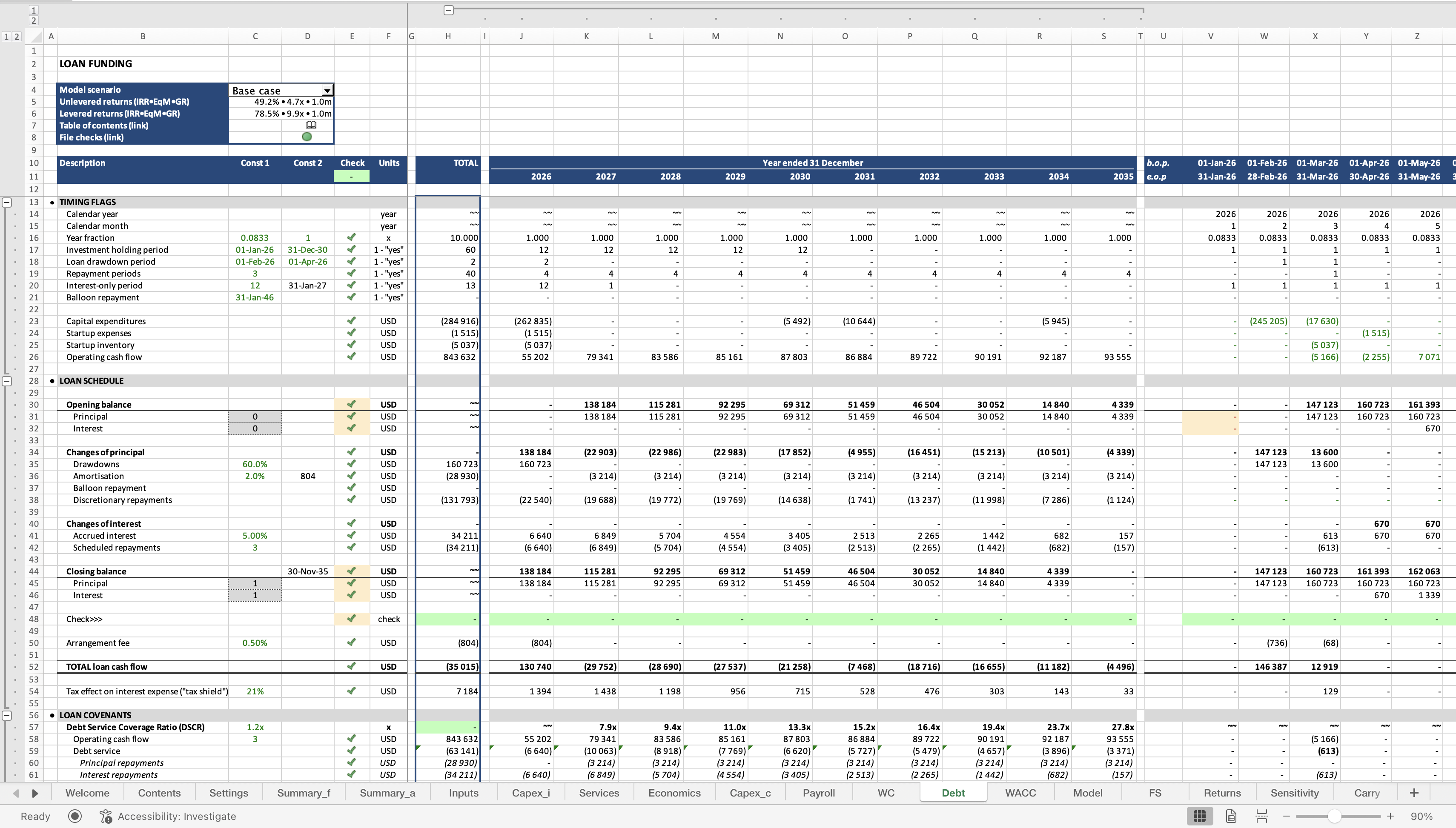
4️⃣ Many startups are partly financed by debt. Drawing debt at right terms provides financial leverage and increases investor returns substantially. In this model you can choose the LTV ratio, interest rate and other loan conditions.
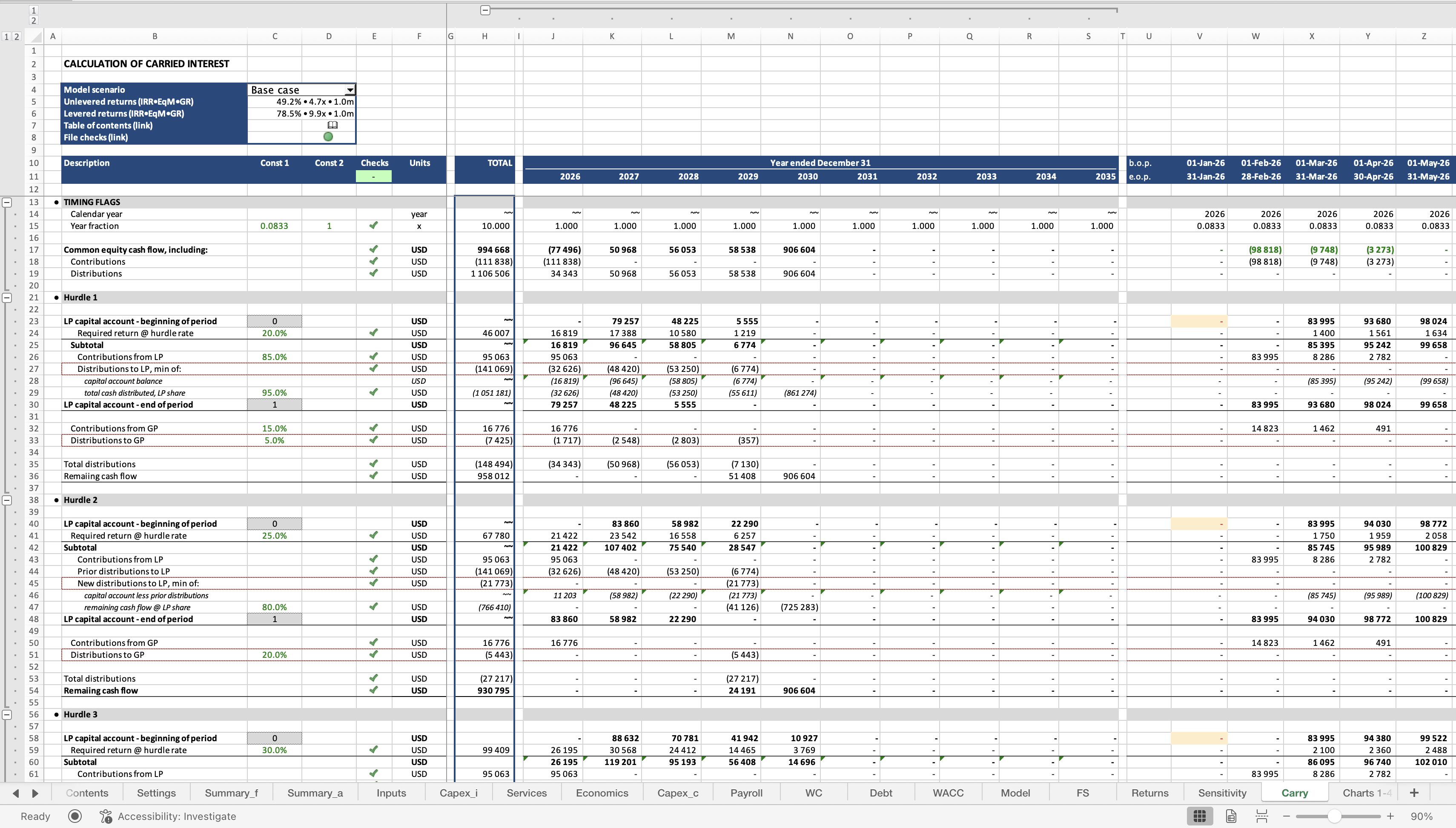
5️⃣ Profits are distributed at regular intervals as you specify in the model (3, 6, 12 etc. months). In case the project is done by two partners one of which being a Limited Partner (LP) and another one a general partner (GP), when it comes to distributing dividends or exit proceeds the model uses a 4-hurdle carried interest waterfall to calculate the distributions between the partners.
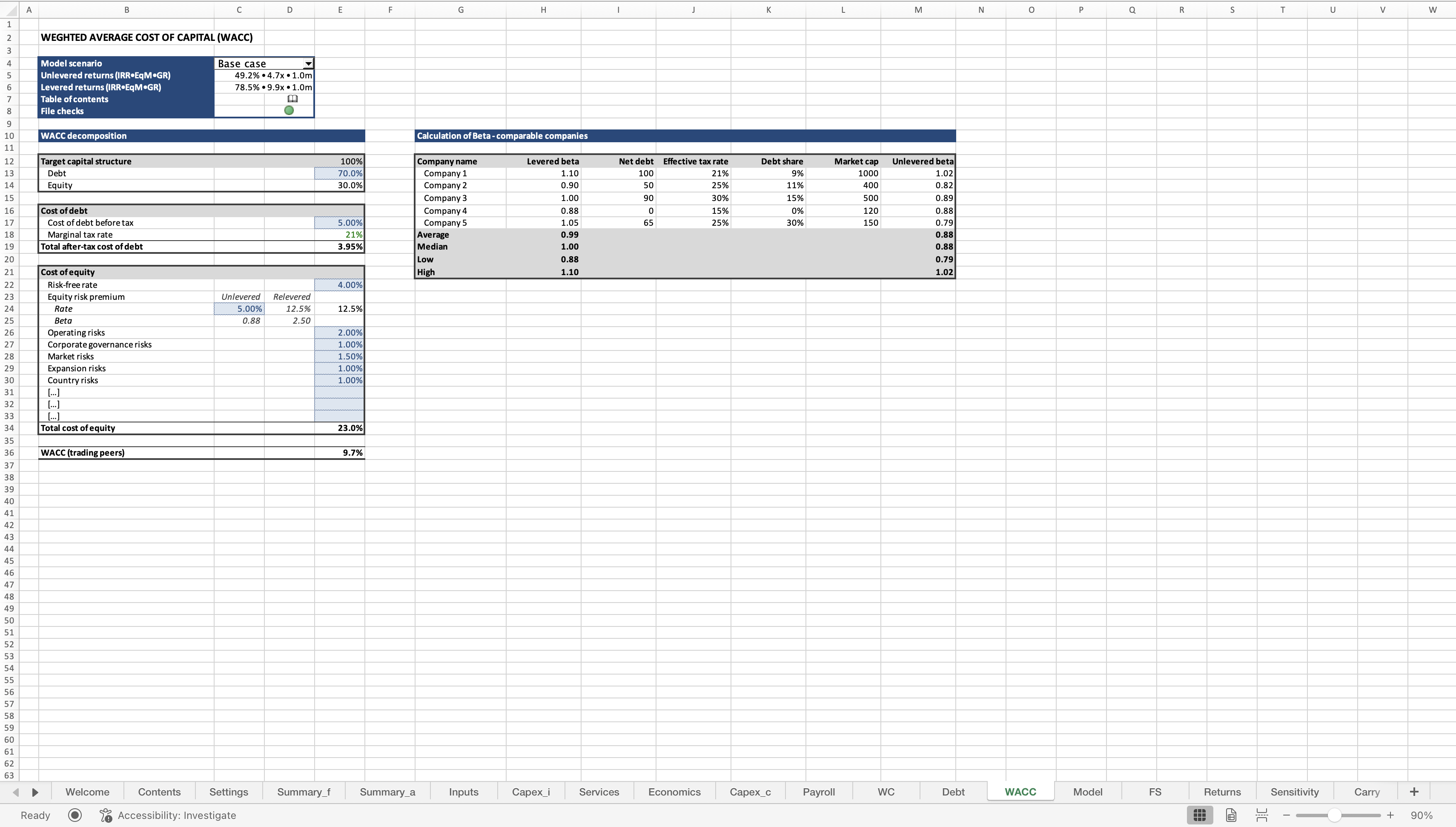
6️⃣ For proper valuation and profitability assessment we need to calculate exit proceeds (or terminal value), even if the shareholders are not planning to exit at that point in time. Exit valuation is done using the Gordon’s model; WACC assumptions are derived from Capital Asset Pricing Model (CAPM) which uses comparable peer company analysis and your risk premium assumptions.
7️⃣ The final stage of the analysis is the distribution of profits which can be done at regular intervals as you specify in the model (3, 6, 12 etc. months). In case the project is done by two partners one of which being a Limited Partner (LP) and another one a general partner (GP), when it comes to distributing dividends or exit proceeds the model uses a 4-hurdle carried interest waterfall to calculate the distributions between the partners.


🔷 Teamed up together, these calculations and schedules are used to build the financial statements (income statement, cash flow statement and balance sheet), calculate returns and perform KPI analysis for your dry-cleaning business startup project 🔷

This Best Practice includes
1 Excel file, 1 pdf guide

Acquire business license for $99.00

Add to cart

Add to bookmarks

Discuss

Further information

This financial model is professionally designed to cover all aspects of starting a dry-cleaning business and to address all questions of prospective investors and creditors

Use this model to develop projections and return analysis of a startup dry-cleaning business

Every business case is unique and so the model might require fine-tuning. Contact me if you need help adjusting the model to your particular project or if you need a model developed completely from scratch


0.0 / 5 (0 votes)

please wait...