Financial Due Diligence Databook Template — Quality of Earnings, Working Capital and Net Debt
Originally published: 21/09/2026 11:04
Publication number: ELQ-45503-1
View all versions & Certificate
certified

Financial Due Diligence Databook Template — Quality of Earnings, Working Capital and Net Debt

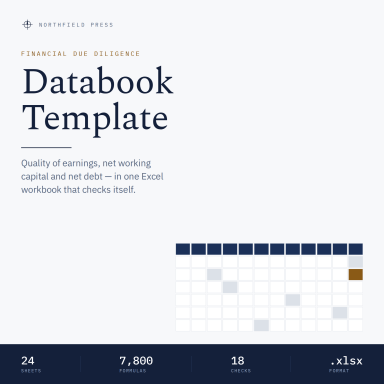
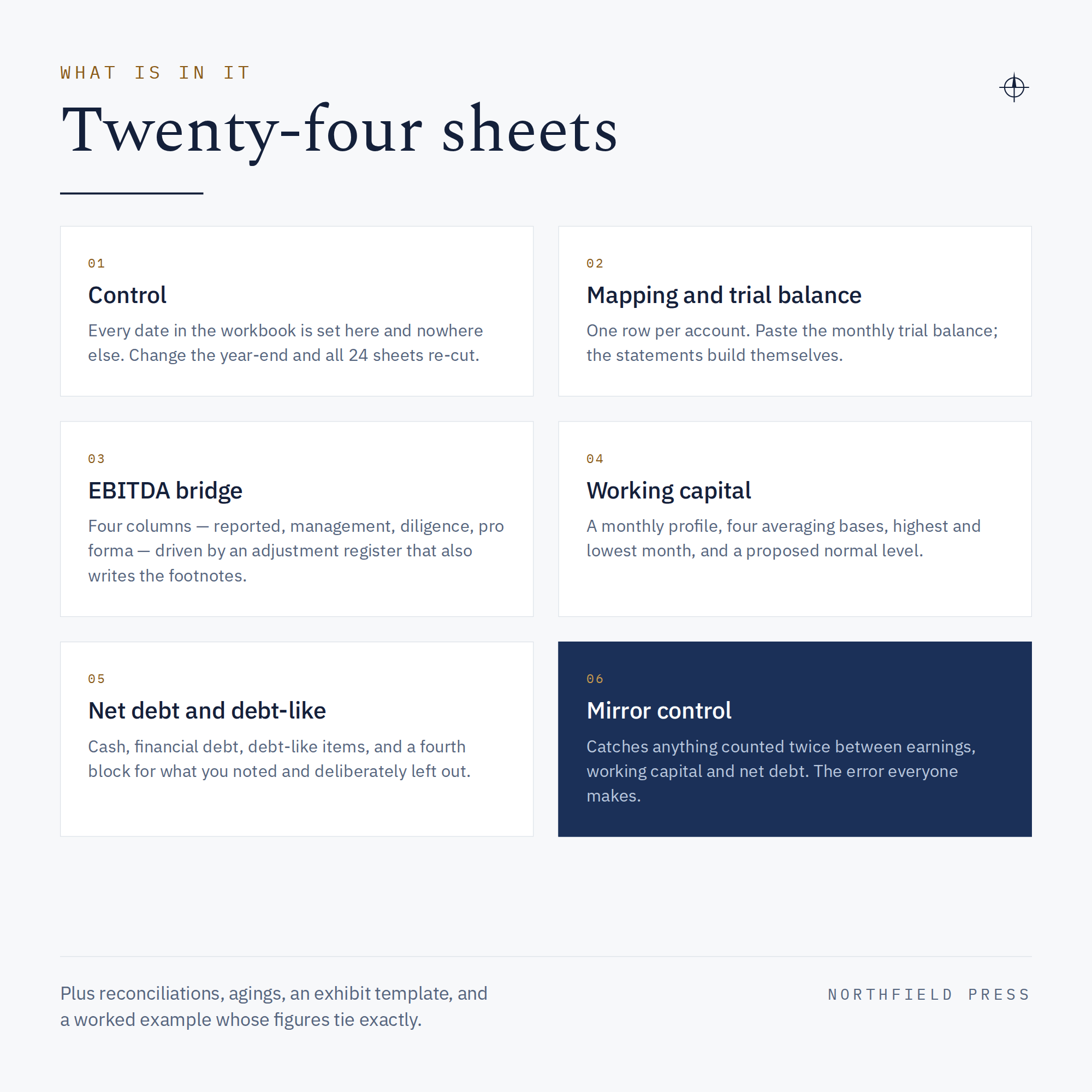
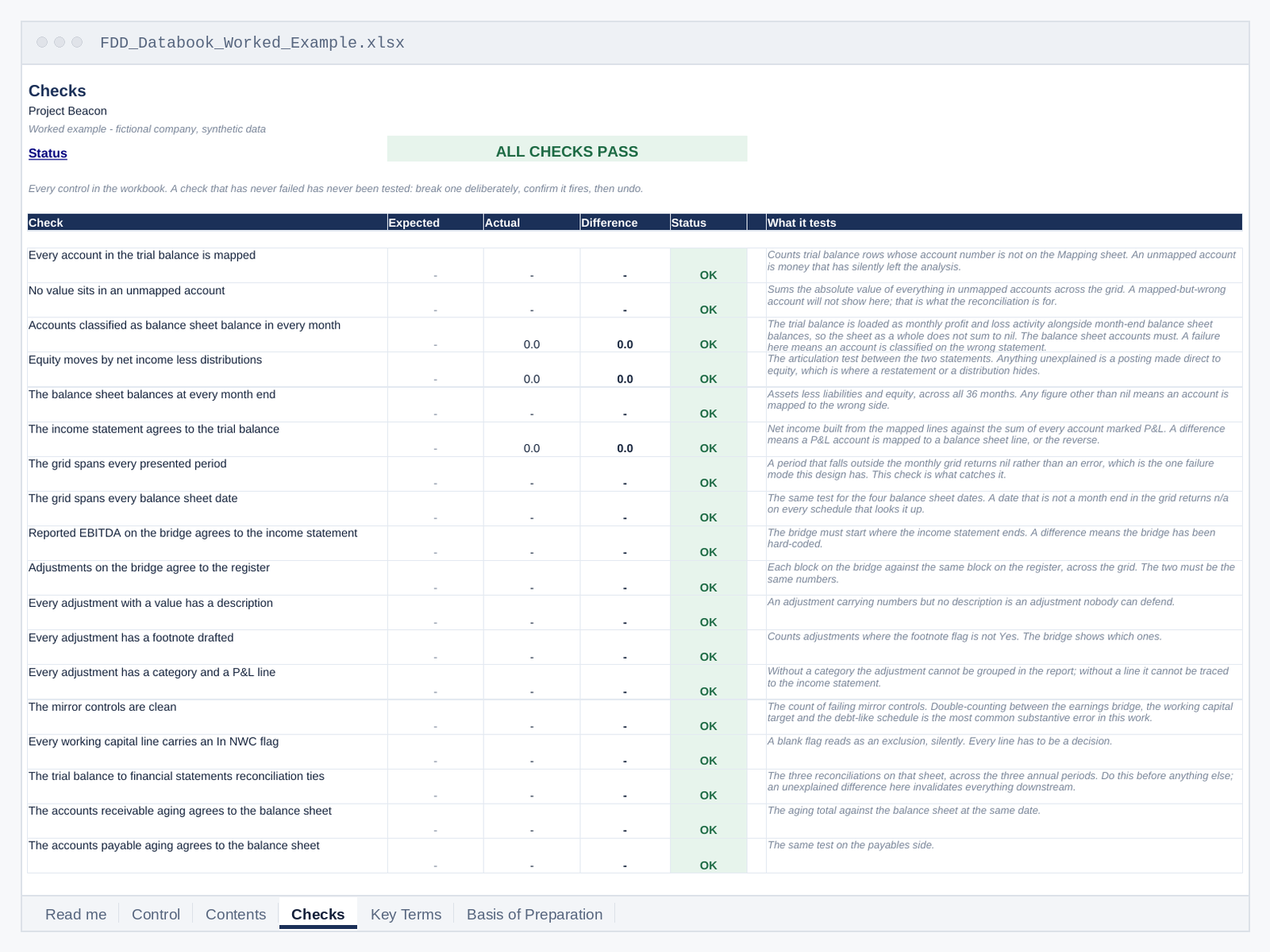
A working shell for a QoE, net working capital and net debt analysis. 24 sheets, around 7,800 formulas, and 18 controls that either pass or fail.

Description
A working shell for a quality of earnings, net working capital and net debt analysis. Twenty-four sheets, around 7,800 formulas, and eighteen controls that either pass or fail.

ONE IDEA RUNS THROUGH IT
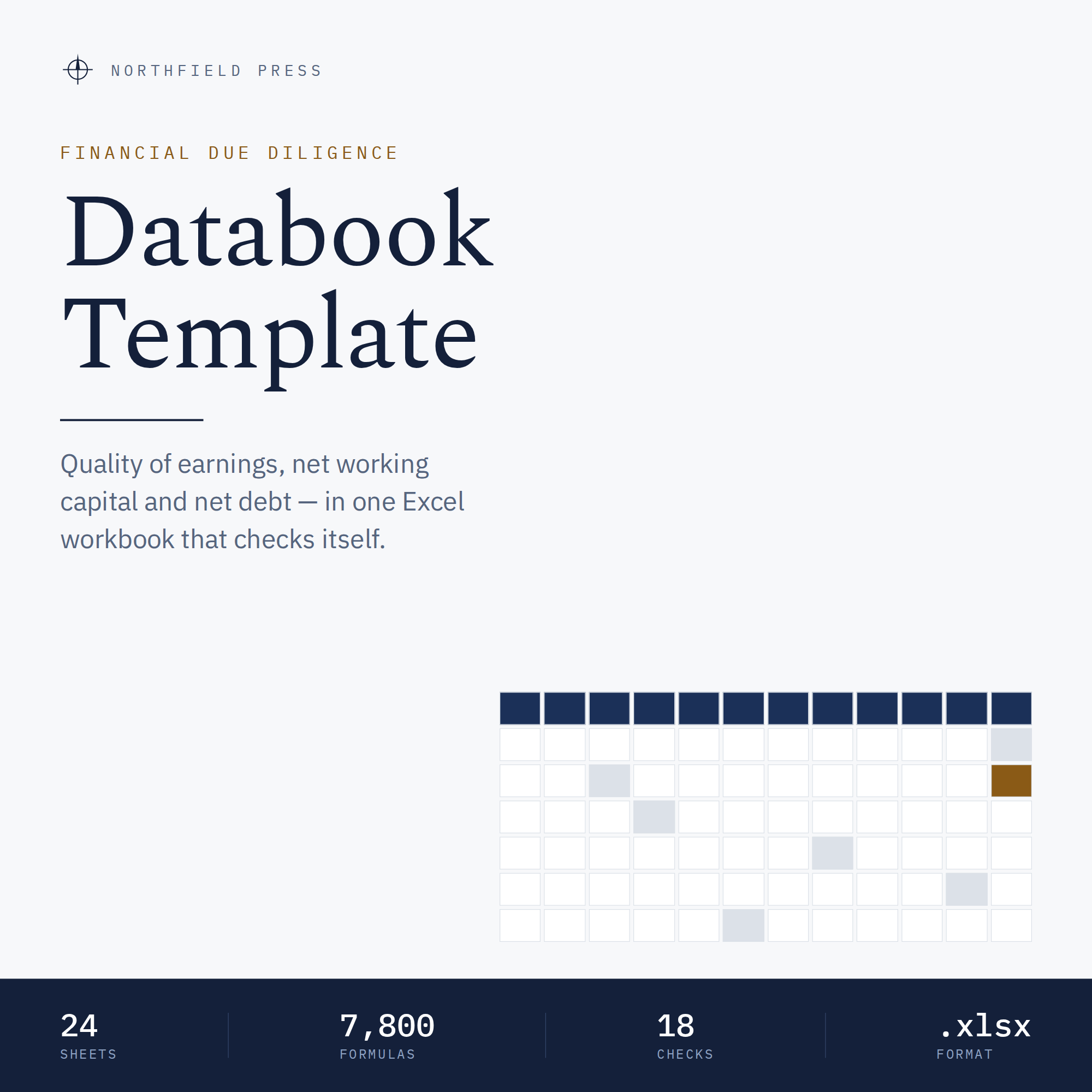
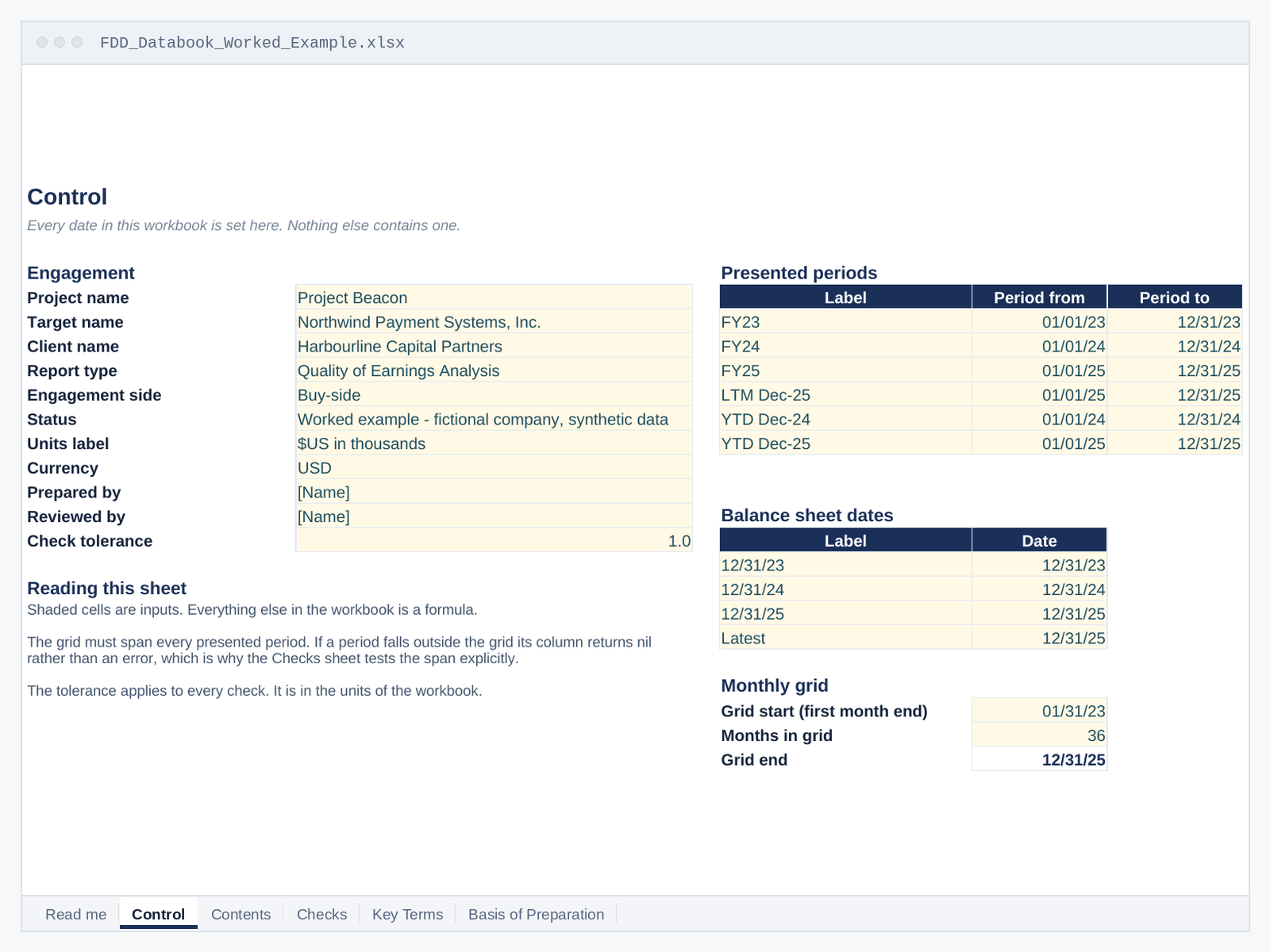
Every date is set on the Control sheet and nowhere else. Each analysis sheet carries a monthly grid that the presented columns aggregate with SUMIFS on the month-end dates, so changing a year end or moving the LTM window re-cuts the entire workbook. Nothing has to be repointed by hand, which is where databooks normally break.

WHAT IS IN IT
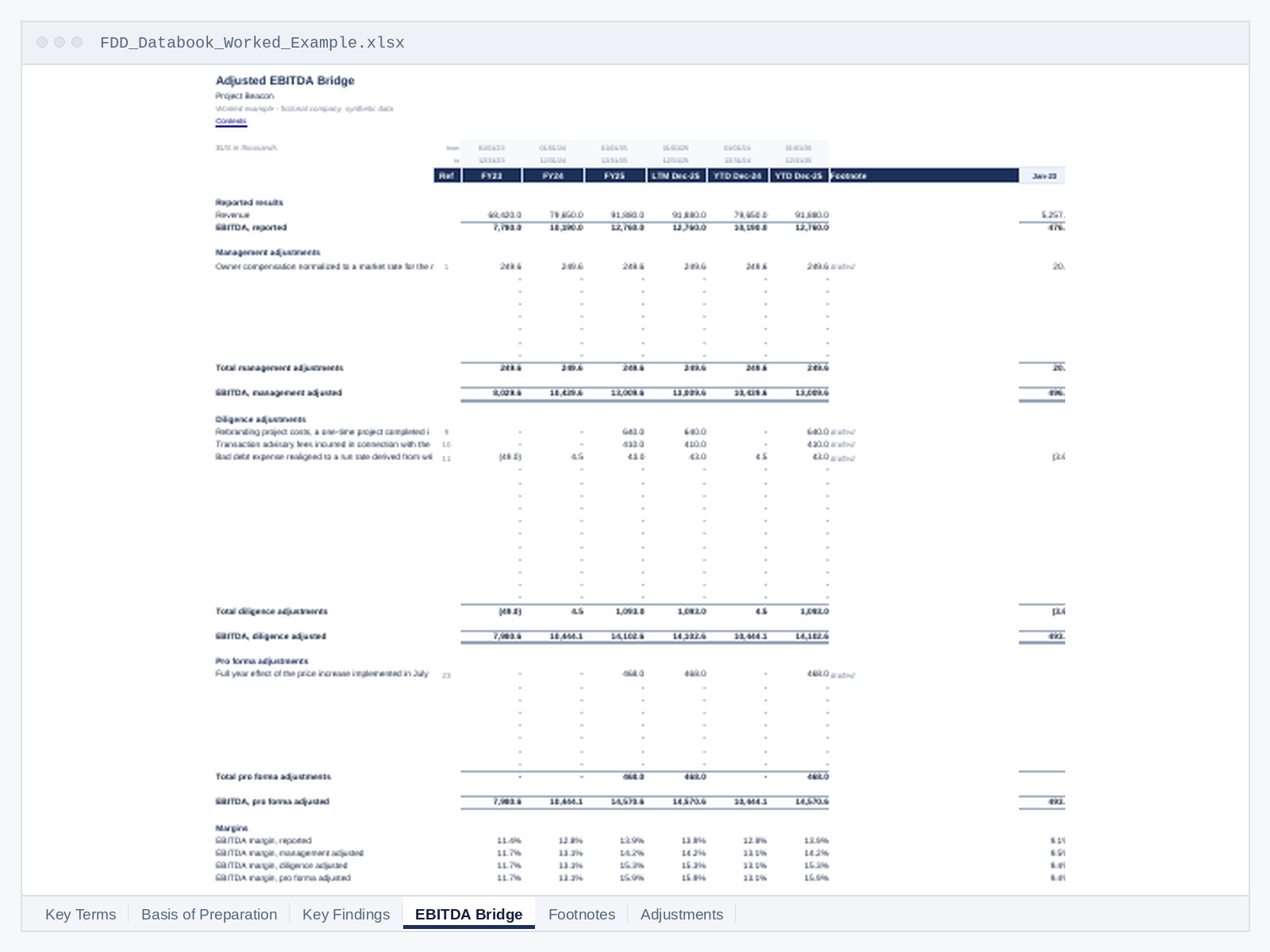
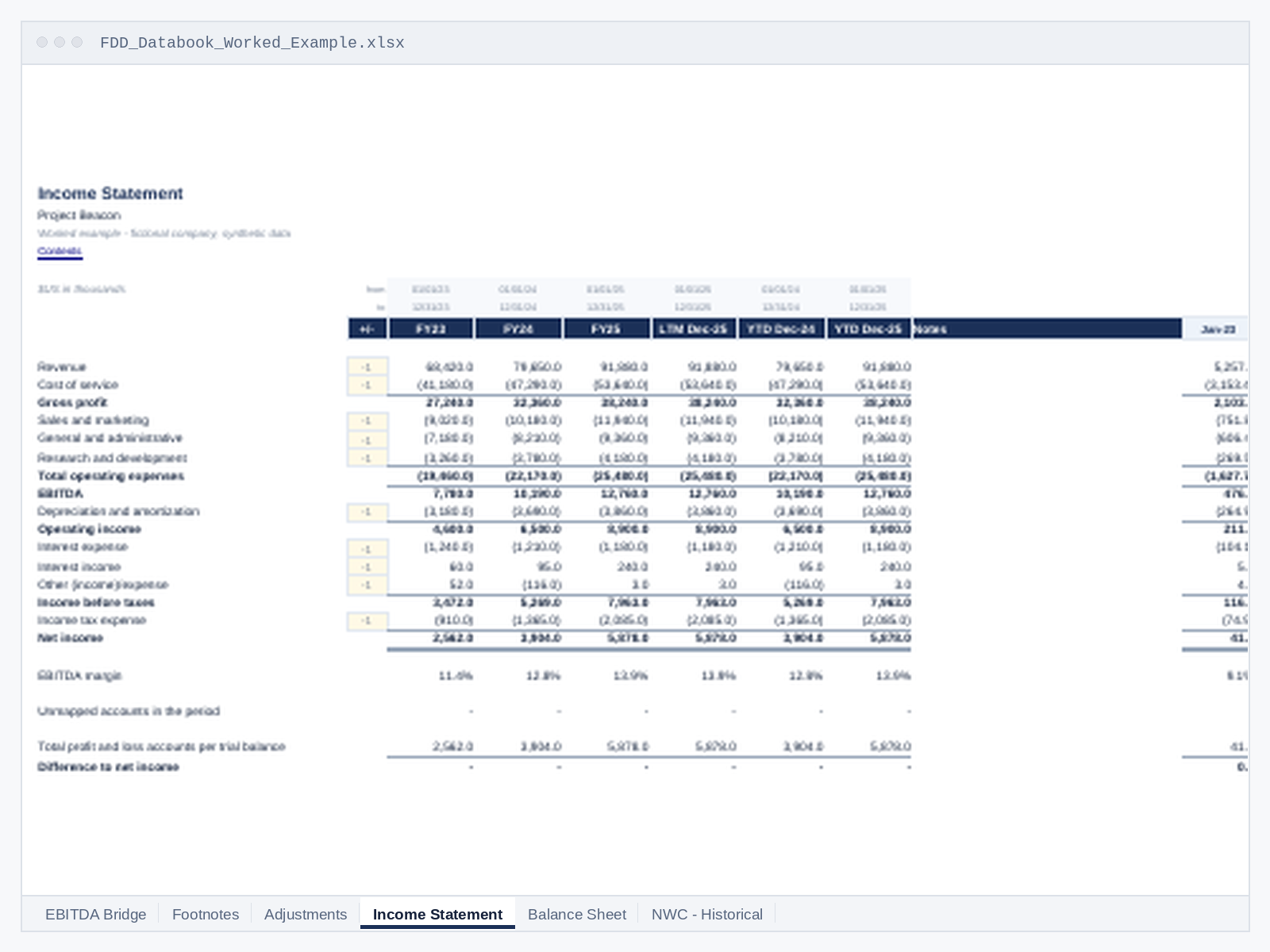
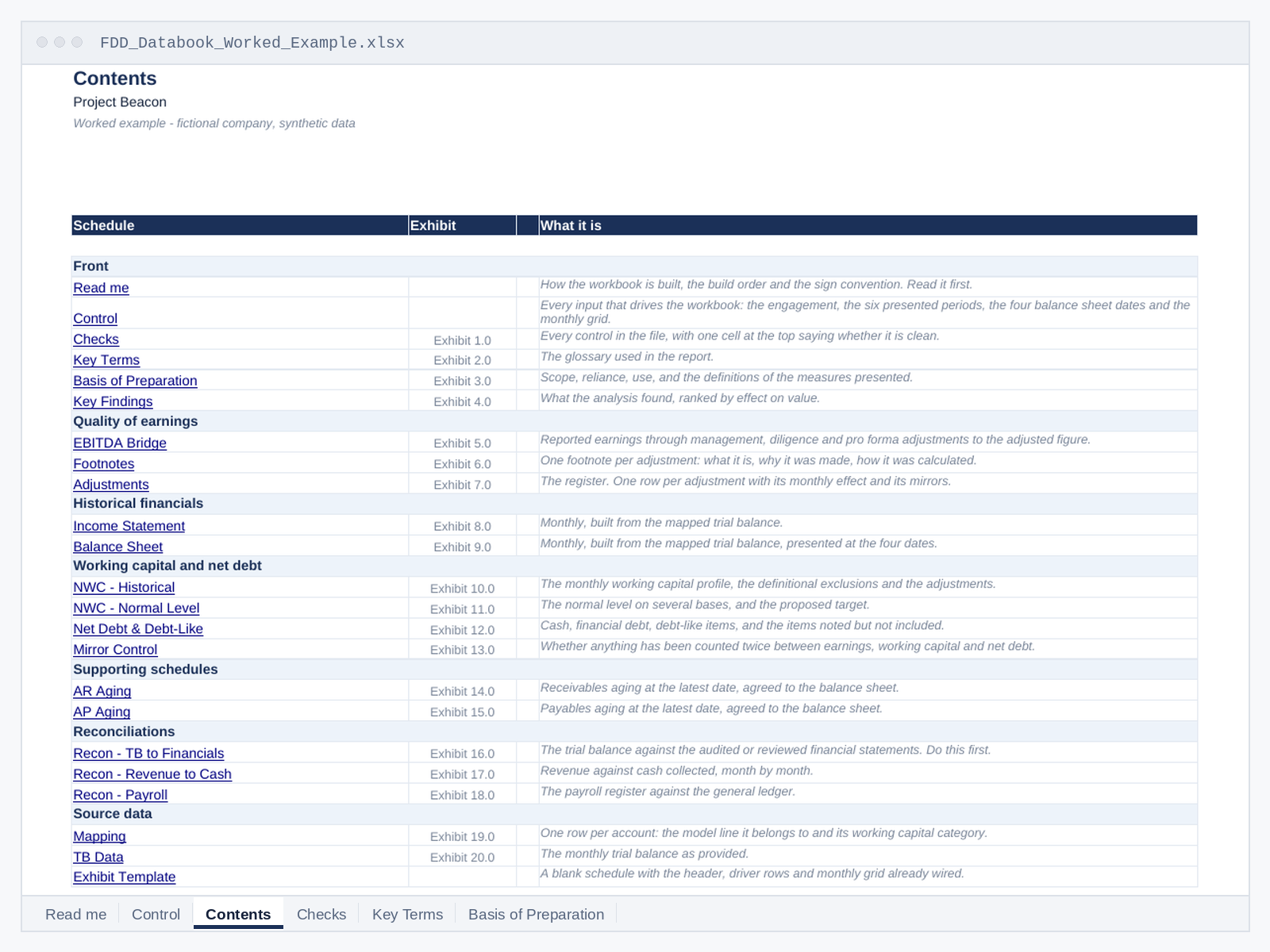
  • EBITDA bridge from reported through management, diligence and pro forma adjustments
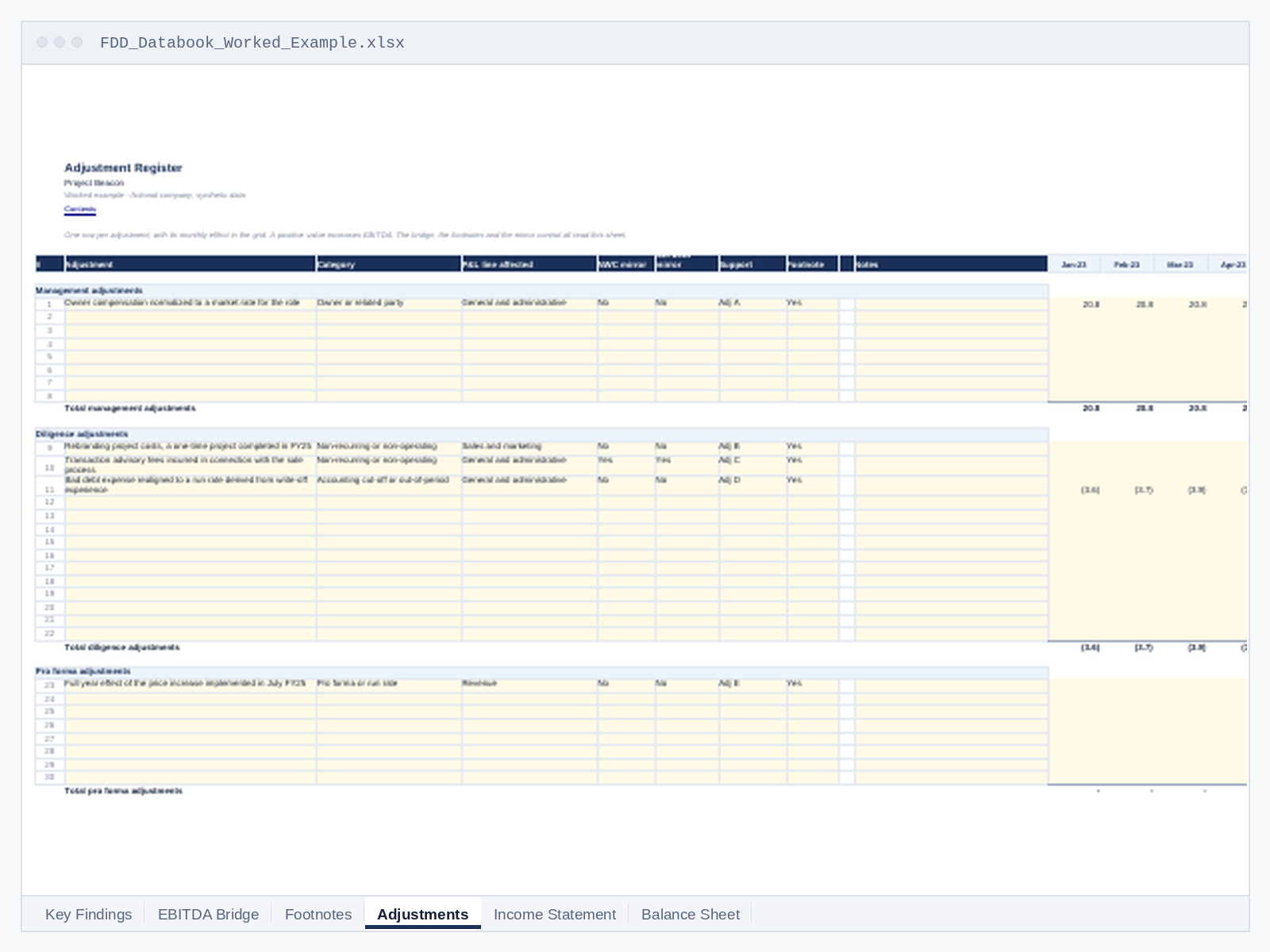
  • An adjustment register that drives the bridge, the footnotes and the controls
  • Monthly income statement and balance sheet, built from a mapping sheet
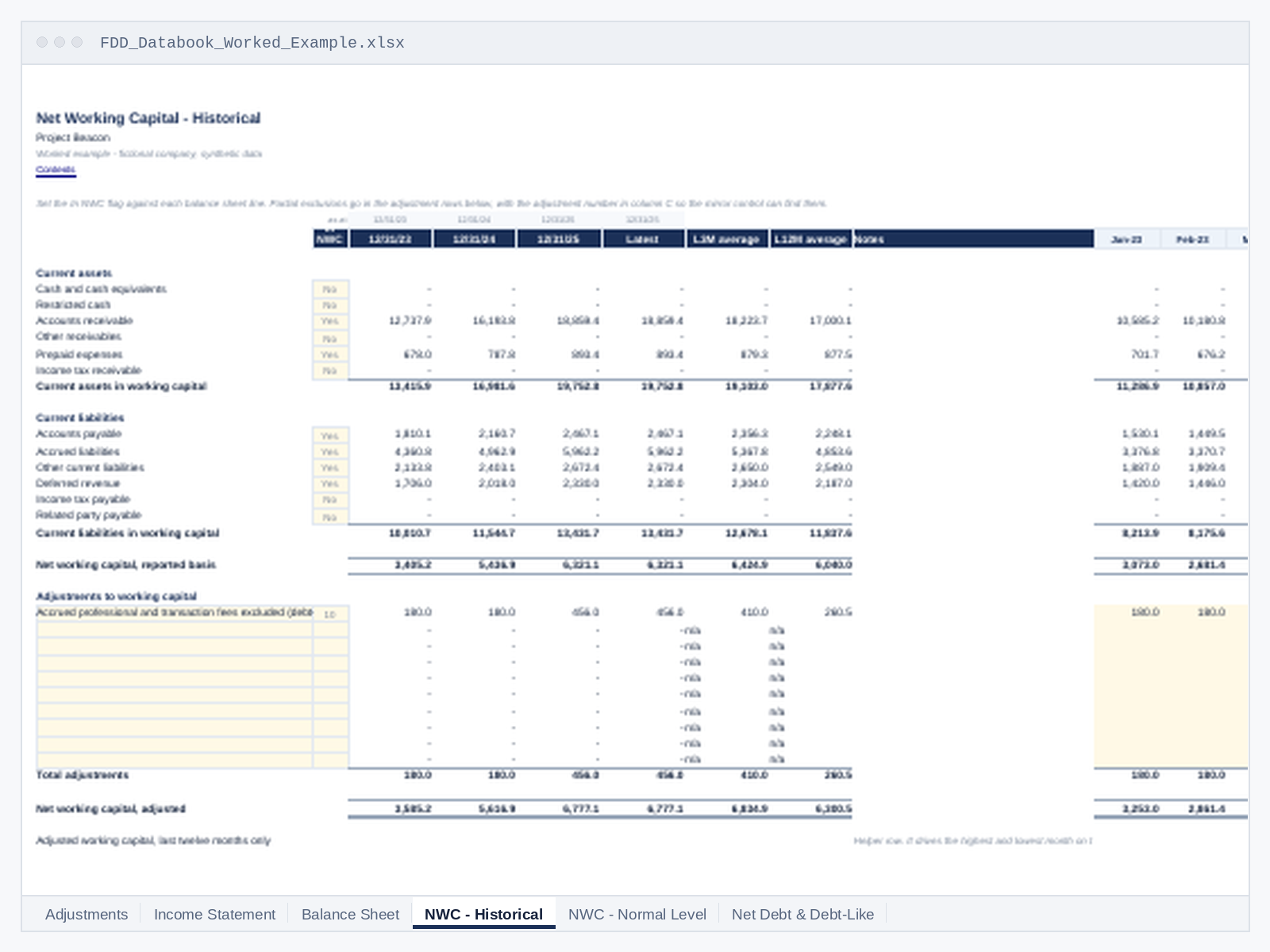
  • Working capital profile, four averaging bases and a proposed normal level
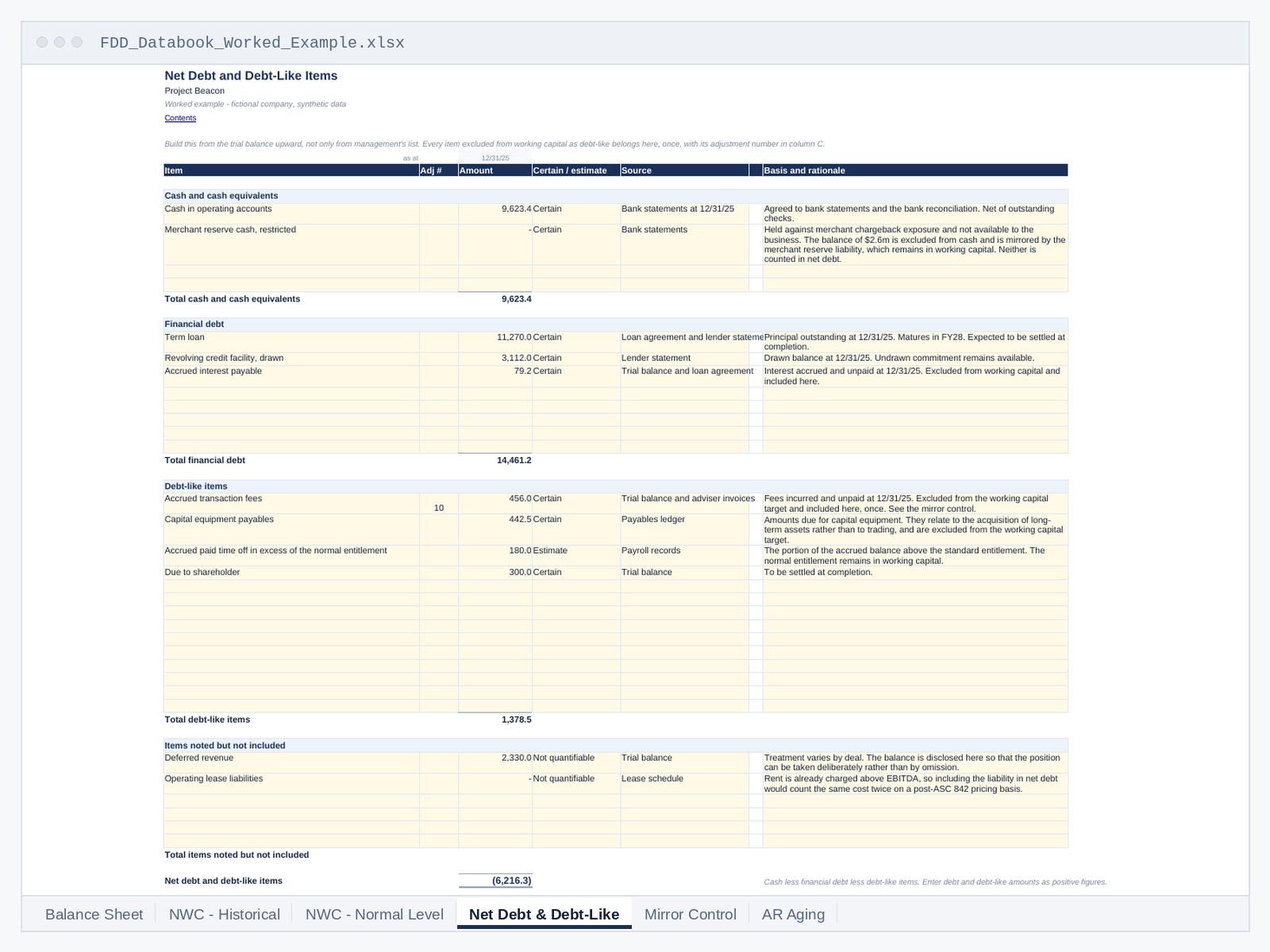
  • Net debt and debt-like schedule, with a fourth block for items noted but deliberately excluded
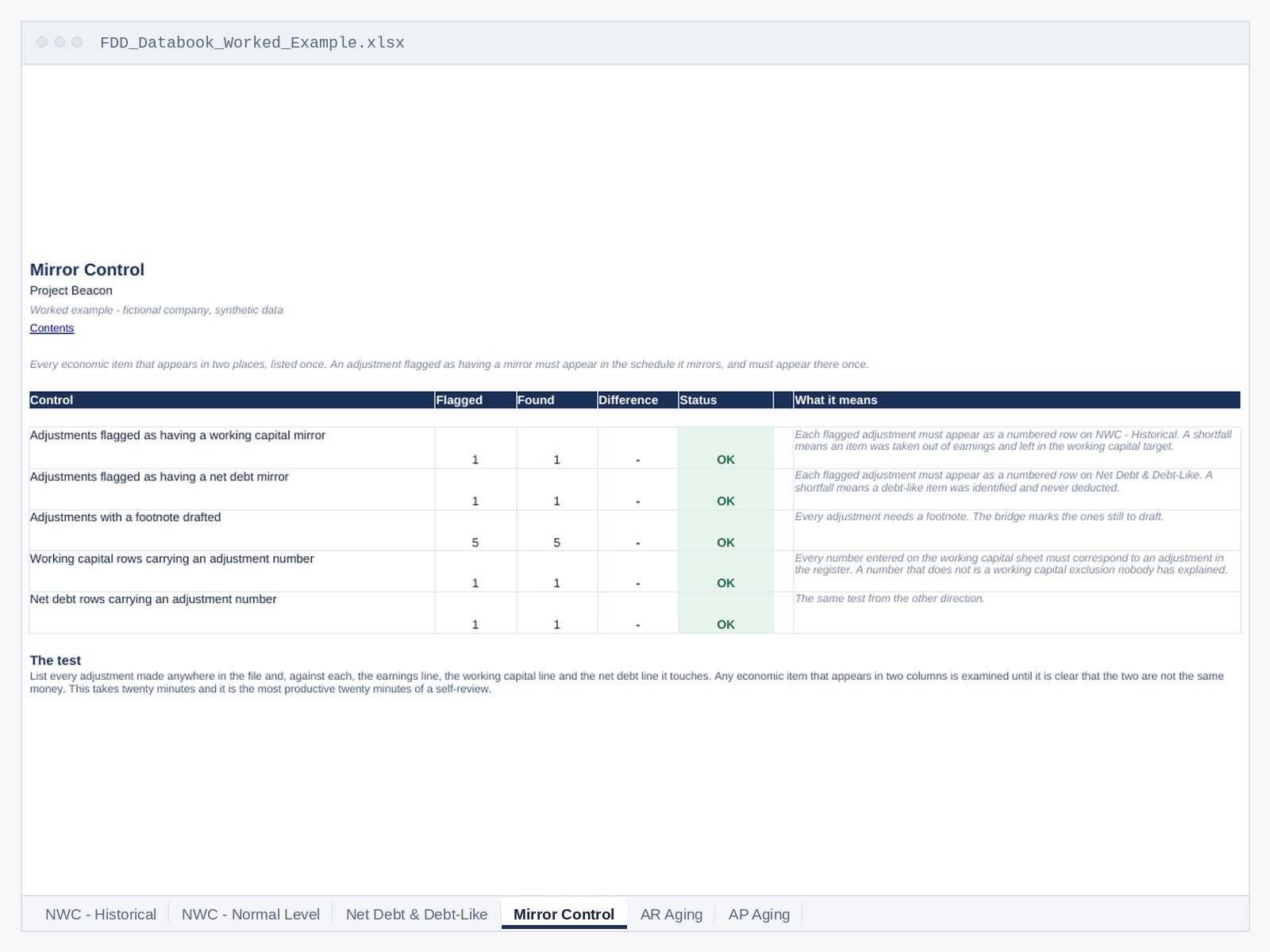
  • A mirror control that catches double-counting between earnings, working capital and net debt
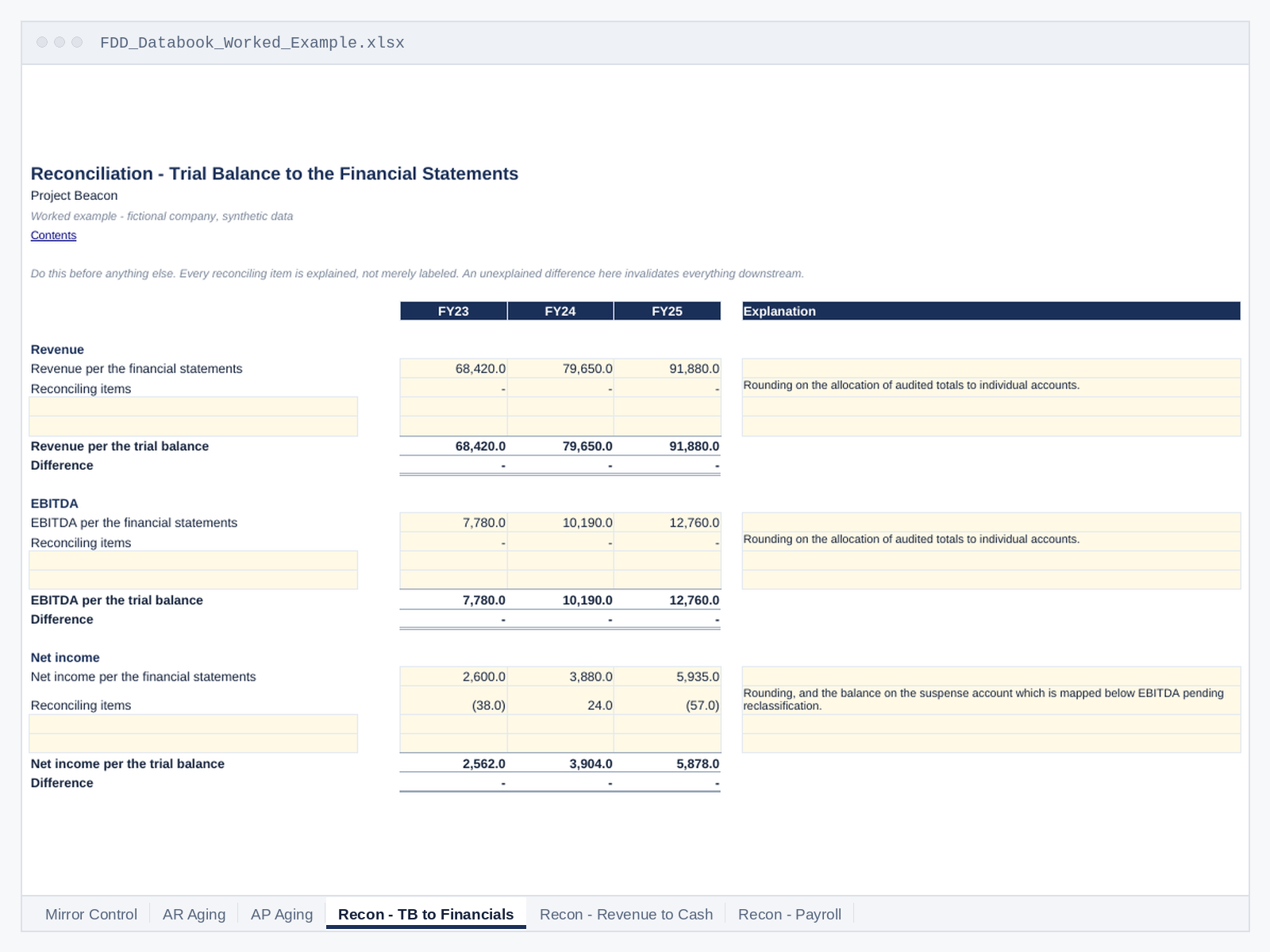
  • Receivables and payables agings, and three reconciliations including trial balance to financial statements
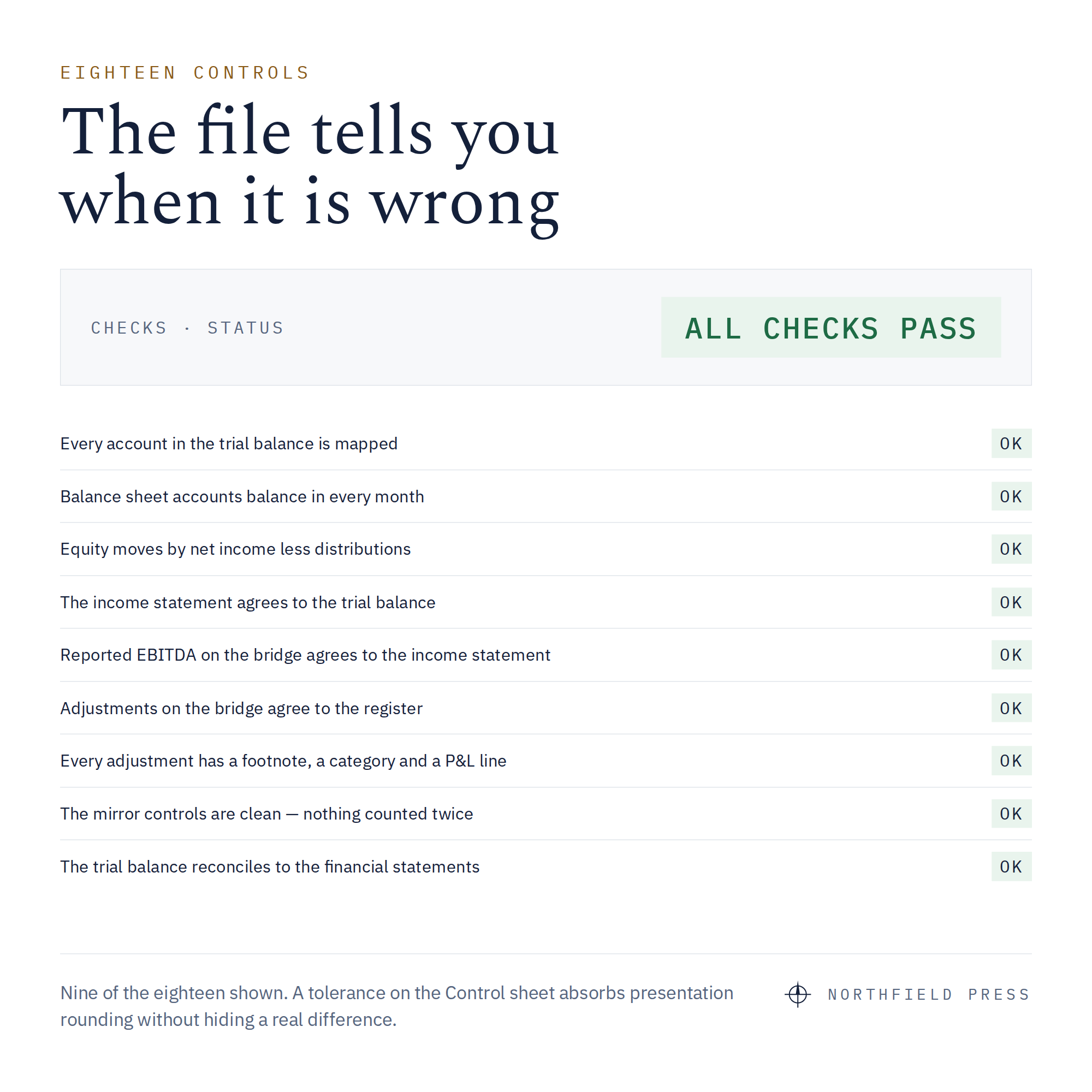
  • An exhibit template already wired, for schedules you add yourself

THREE FILES
The empty template. A worked example populated with a fictional company whose figures tie exactly, so you can confirm the mechanics before loading real data. And a seven-page guide covering the build order, the sign convention and what each control tests.

FORMAT
.xlsx, no macros. Built in Excel and written to stay compatible with Google Sheets and LibreOffice.
It contains no assumptions and makes no judgments. The analysis is what you put into it.
All original material and generic professional practice. No firm names, no client data, nothing proprietary. Yours to use on as many engagements as you like.
From NorthfieldPress.

This Best Practice includes
1 Excel template, 1 worked example workbook, 1 Word guide and PDF

Acquire business license for $89.00

Add to cart

Add to bookmarks

Discuss

Further information

Produce the schedules a financial due diligence report is built from — a quality of earnings bridge, a normalized working capital assessment, and a net debt and debt-like schedule — starting from a monthly trial balance, with eighteen controls that tell you when the file is wrong.

You are running or reviewing a buy-side or sell-side financial due diligence engagement and have, or can obtain, a monthly trial balance at account level. Also useful for a corporate development team building the same schedules in-house, and for training an analyst on how a databook is supposed to hang together.

You need a valuation, an LBO or a forecast — this produces none of those. It will also not help if the only financial information available is annual audited statements, because every schedule is driven from a monthly grid.


0.0 / 5 (0 votes)

please wait...