Cost Reduction Programme Toolkit — 40 Levers with Reversal Risk, Sizing Model, Six-Gate Initiative Tracker
Originally published: 31/08/2026 11:37
Publication number: ELQ-39137-1
View all versions & Certificate
certified

Cost Reduction Programme Toolkit — 40 Levers with Reversal Risk, Sizing Model, Six-Gate Initiative Tracker

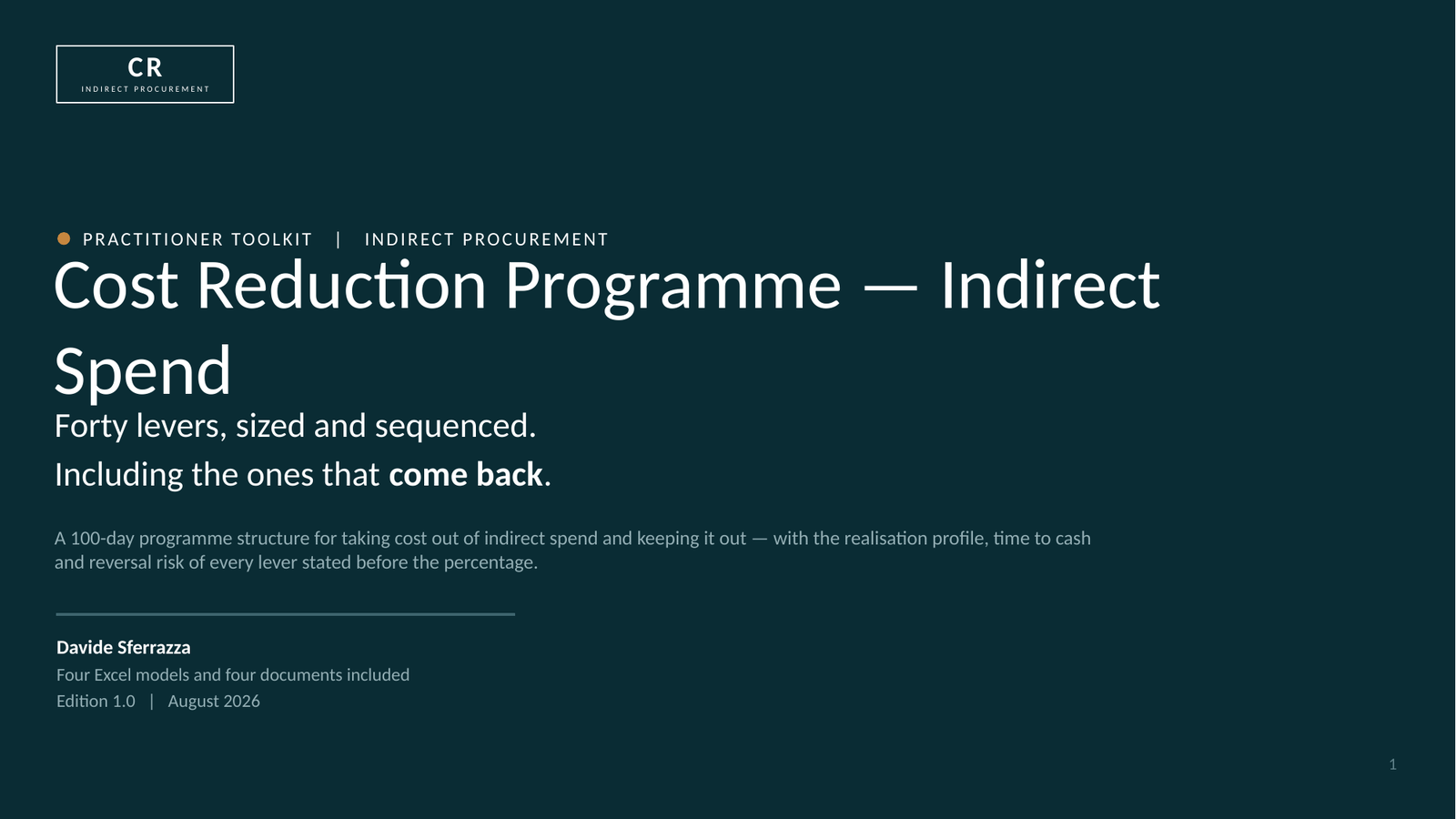
Take cost out of indirect spend and keep it out. Including what comes back.

Description
Most cost reduction programmes deliver the number and lose it within eighteen months. The reduction was real; the control that held it was not.

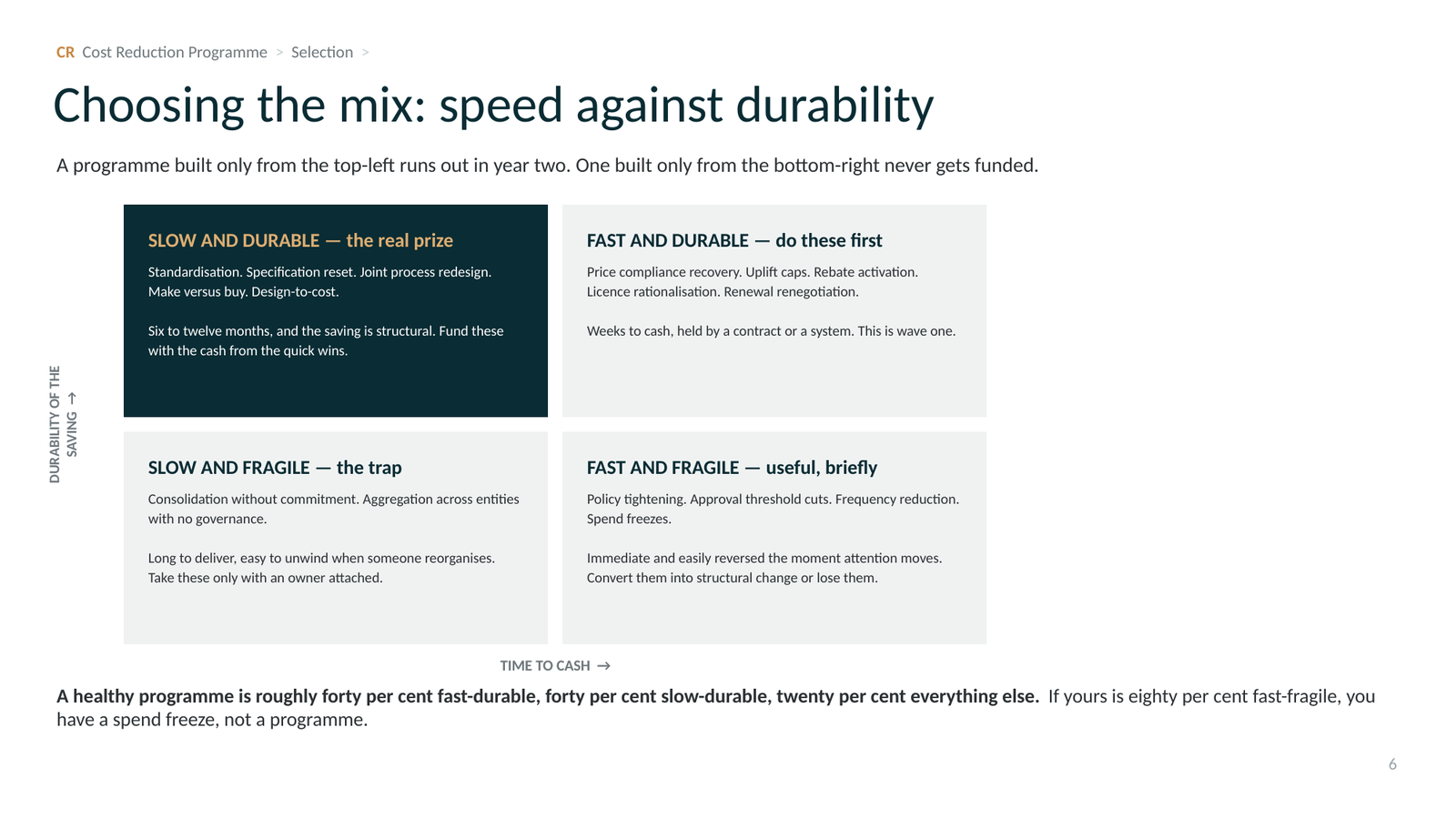
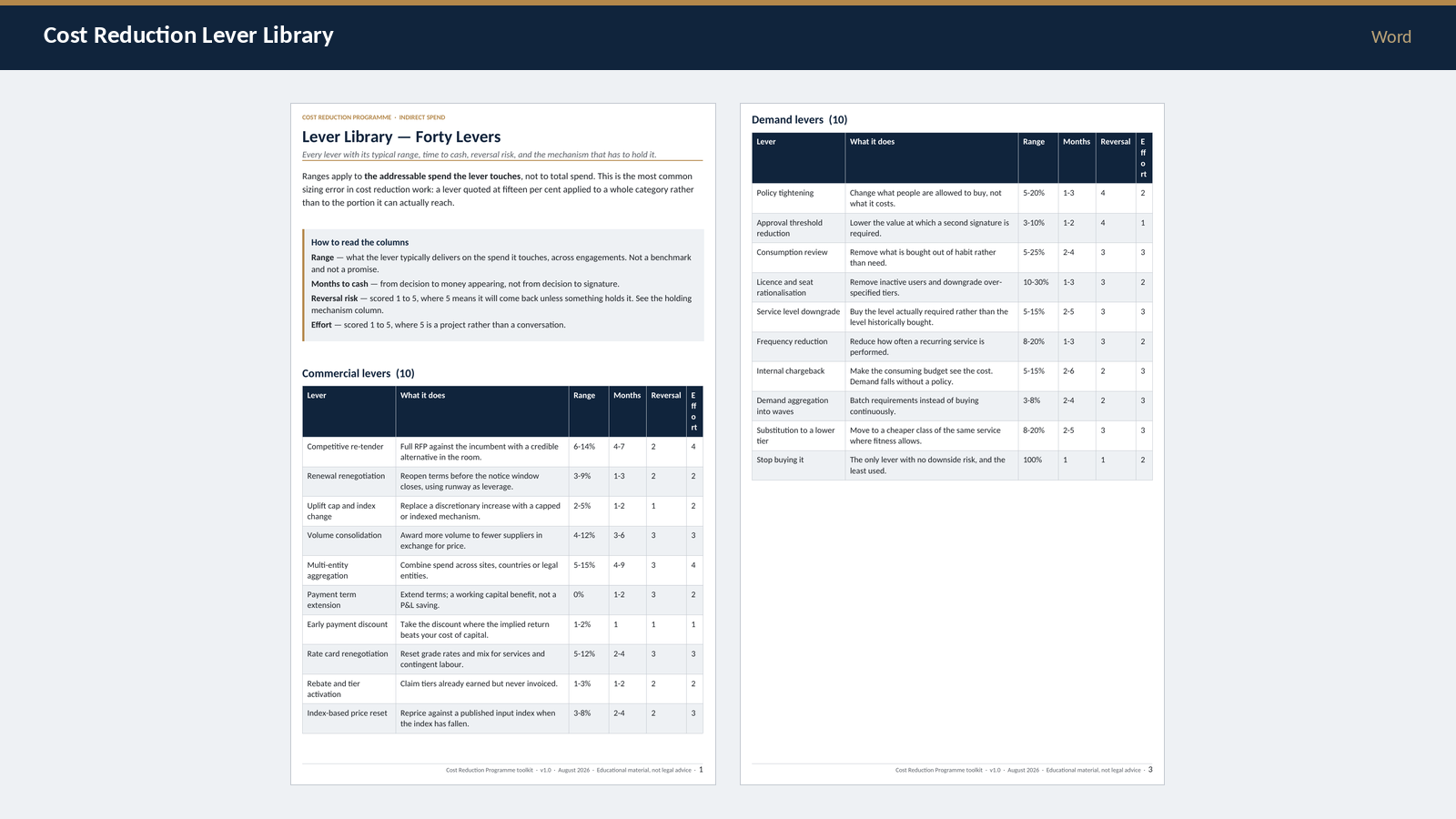
This toolkit is built around that distinction. Every one of the forty levers is stated with its typical range, its time to cash, its reversal risk and the mechanism that has to hold it — contract, system or behaviour. If you cannot name what holds a saving, it is reported at low confidence or not at all.

The programme runs as four overlapping waves across roughly a hundred days, front-loaded on cash. Wave one recovers and stops. Its function is not its size but its speed: a validated number inside thirty days is what buys the political room to attempt demand reduction later.

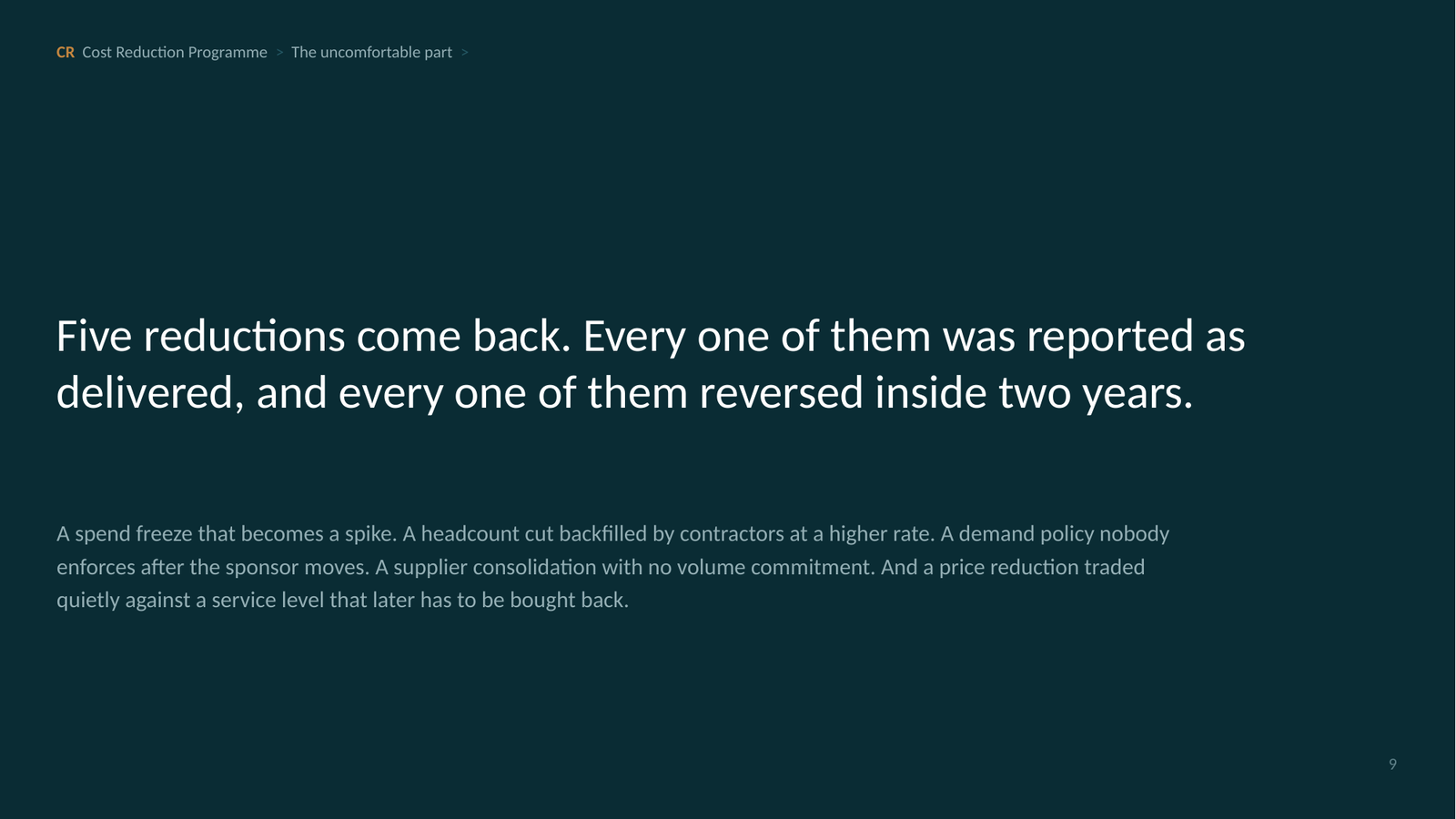
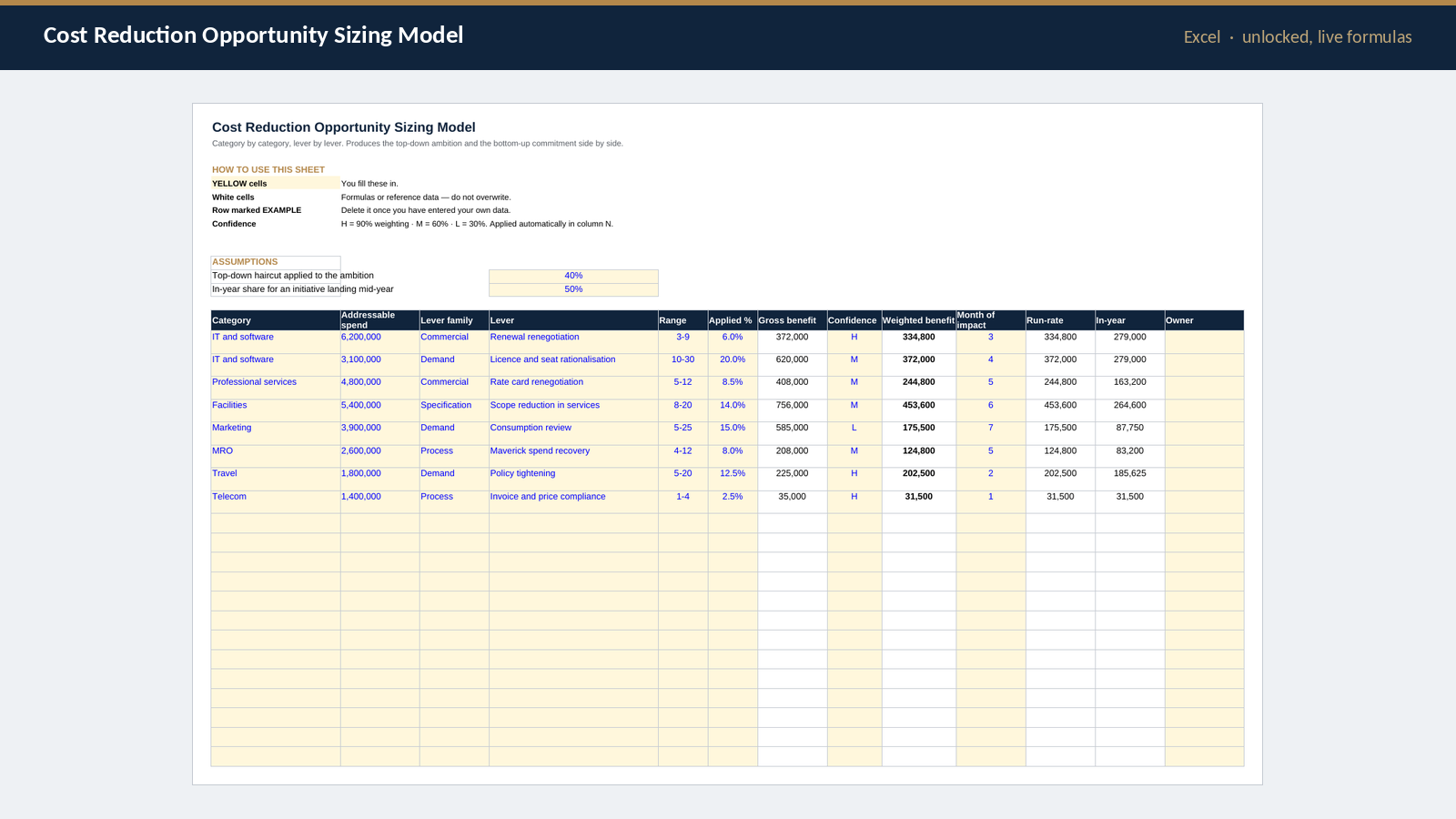
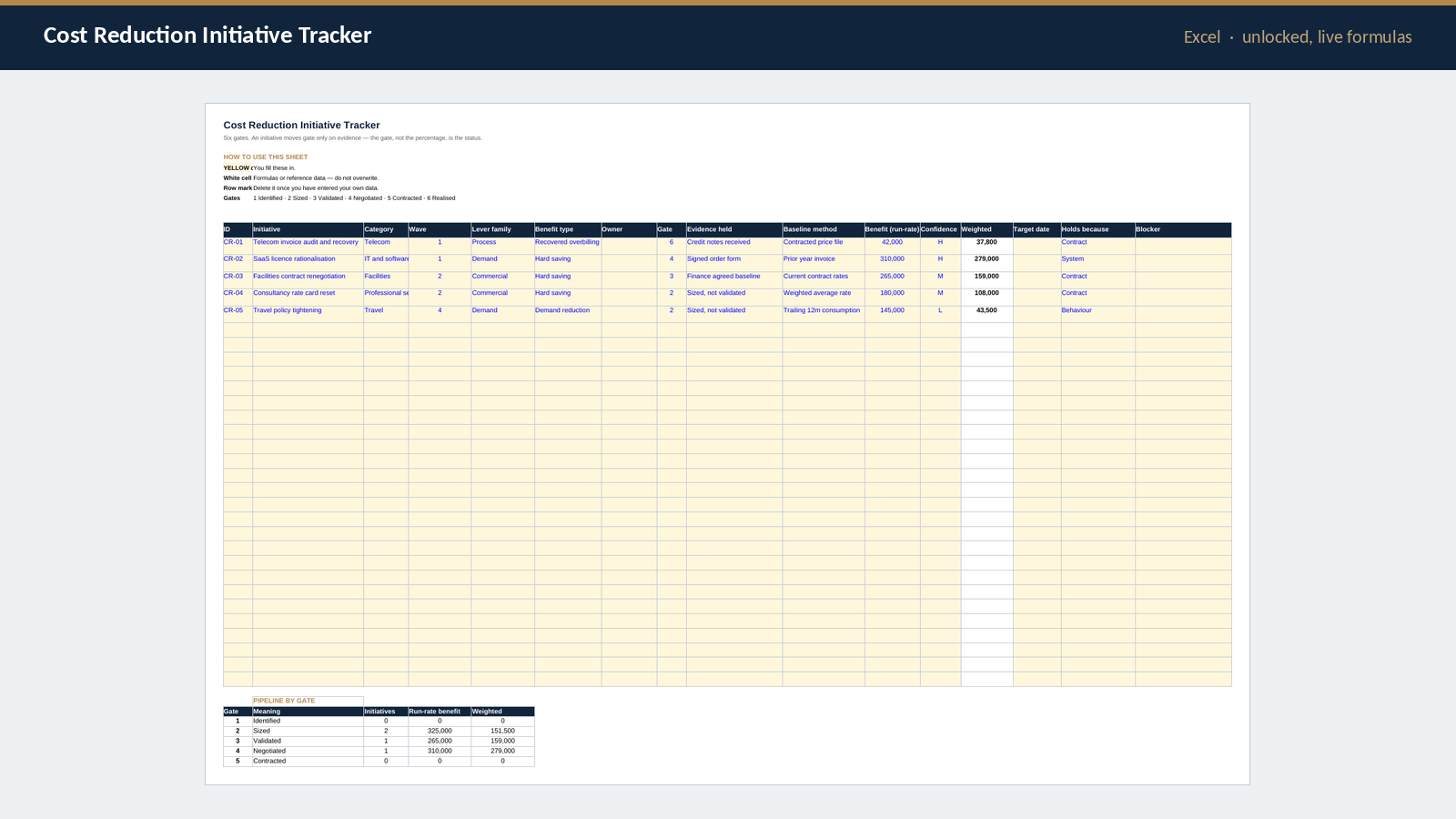
The sizing model produces the top-down ambition and the bottom-up commitment side by side so you can see the gap. The tracker runs six evidence gates. And one document covers what almost no cost reduction material discusses: the five reductions that reverse, why, how to see them coming, and the control that prevents each.

Who it is for: procurement leads given a cost reduction target with a deadline attached, programme managers running a savings programme, finance partners validating what it produces, and consultants who need a defensible structure in week one.

What it is not: it is not a restructuring or headcount reduction method, and it does not touch direct material cost. It stays inside indirect spend, where the levers are demand, specification, process and contract. It also does not promise a percentage. The ranges attached to each lever are typical outcomes, labelled as such, and not a commitment made on your behalf.

This Best Practice includes
1 PowerPoint guide (17 slides), 4 Excel models, 4 Word documents incl. 40-lever library. Unlocked.

Acquire business license for $89.00

Add to cart

Add to bookmarks

Discuss

Further information

• Size the prize top-down for the mandate and bottom-up for the commitment.
• Select levers on time to cash and reversal risk, not on headline percentage.
• Move initiatives through six evidence gates rather than reporting percentage complete.
• Name the mechanism that holds every saving before it is claimed.

• You have been asked for a cost number with a deadline attached.
• You run or support a savings programme and want it to hold at 24 months.
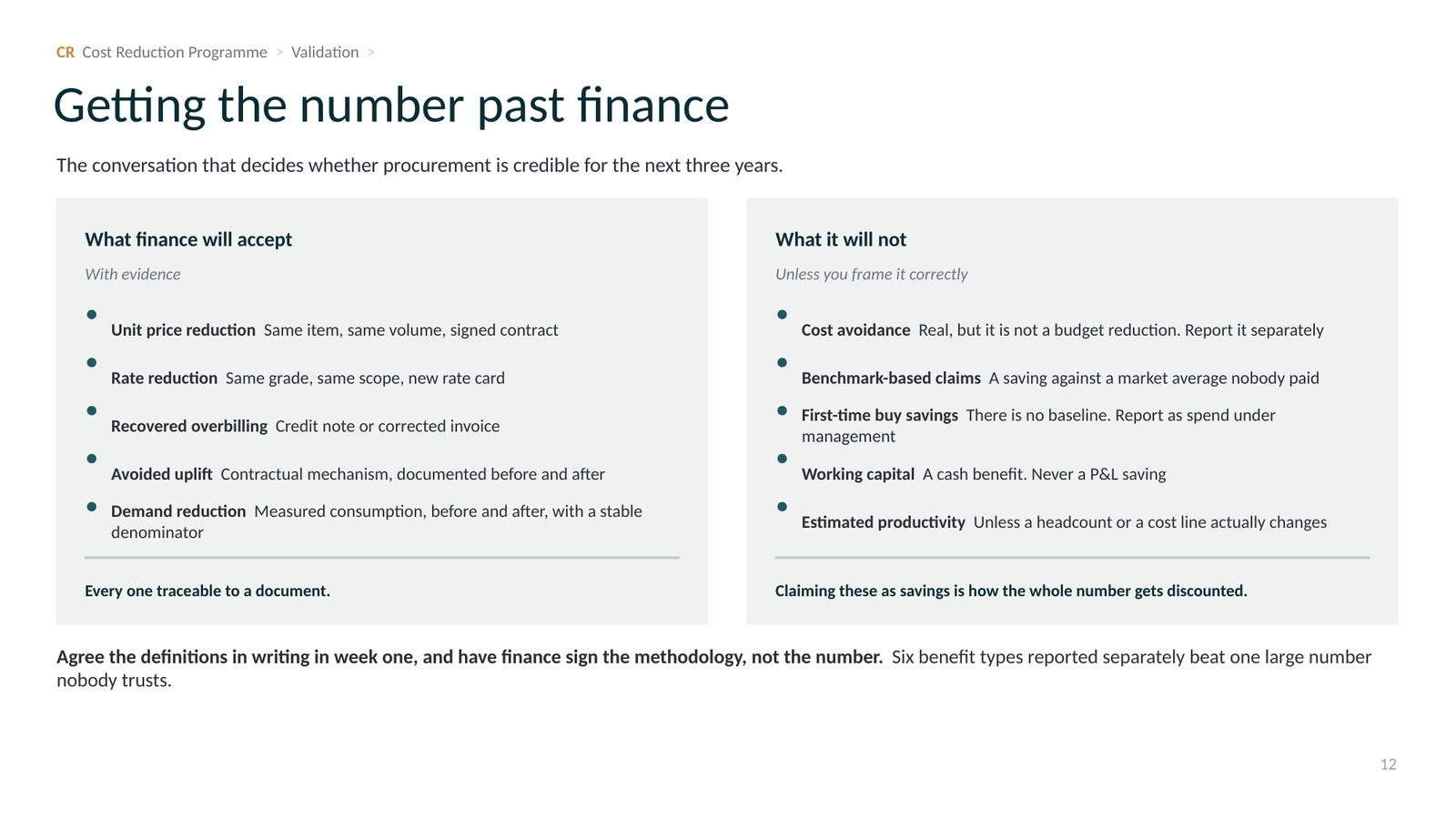
• You need to agree benefit definitions with a finance function.

• You want benchmark savings percentages guaranteed by category; ranges are indicative and labelled as such.
• Your spend is predominantly direct material with bill-of-material cost structures.
• You need a headcount reduction or restructuring methodology; this is third-party spend.


0.0 / 5 (0 votes)

please wait...