EBITDA Adjustment Language Library — 123 Model Report Paragraphs with the Evidence Each Needs
Originally published: 21/09/2026 11:04
Publication number: ELQ-97407-1
View all versions & Certificate
certified

EBITDA Adjustment Language Library — 123 Model Report Paragraphs with the Evidence Each Needs

EBITDA Adjustment Language Library

Description
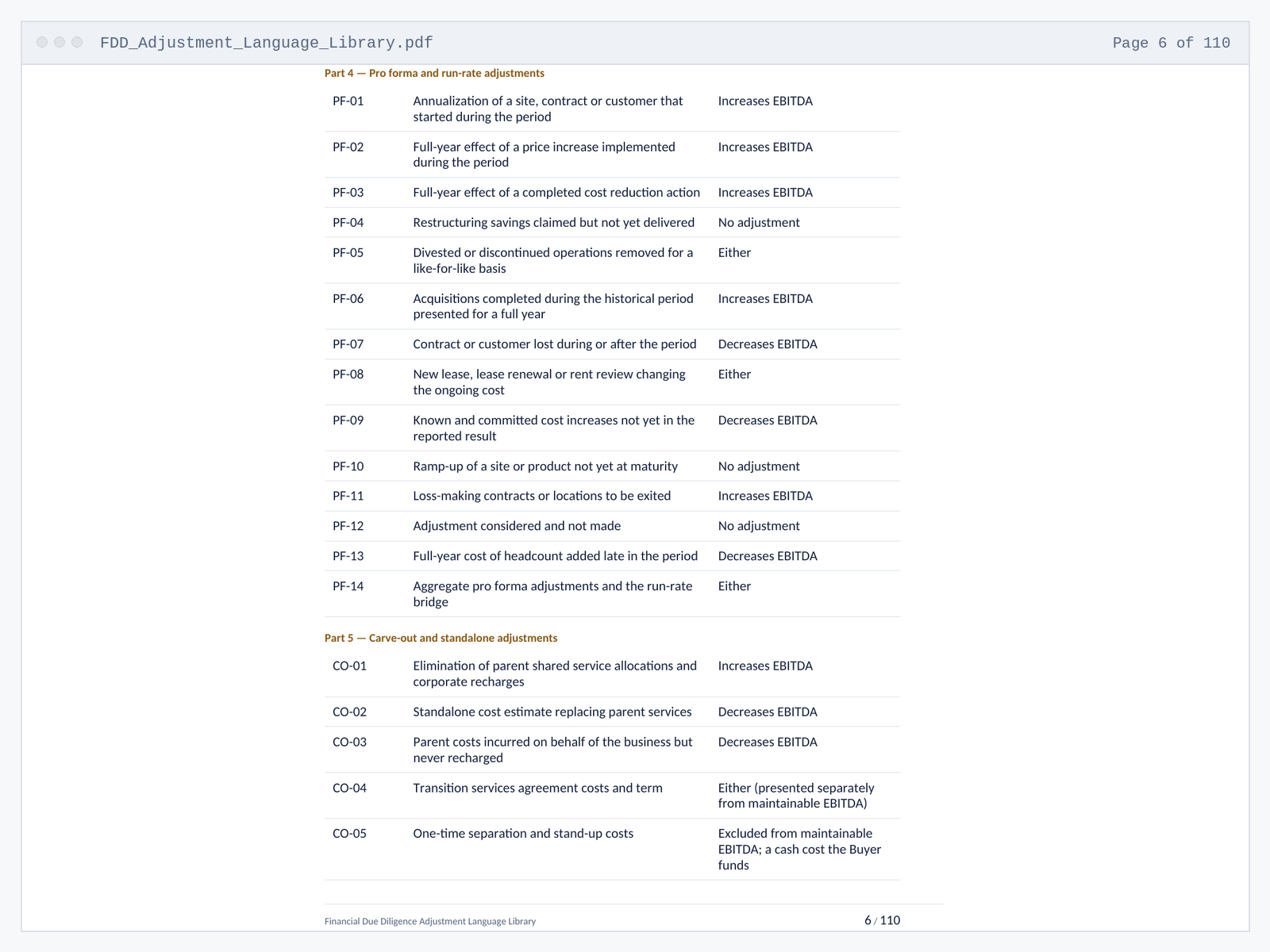
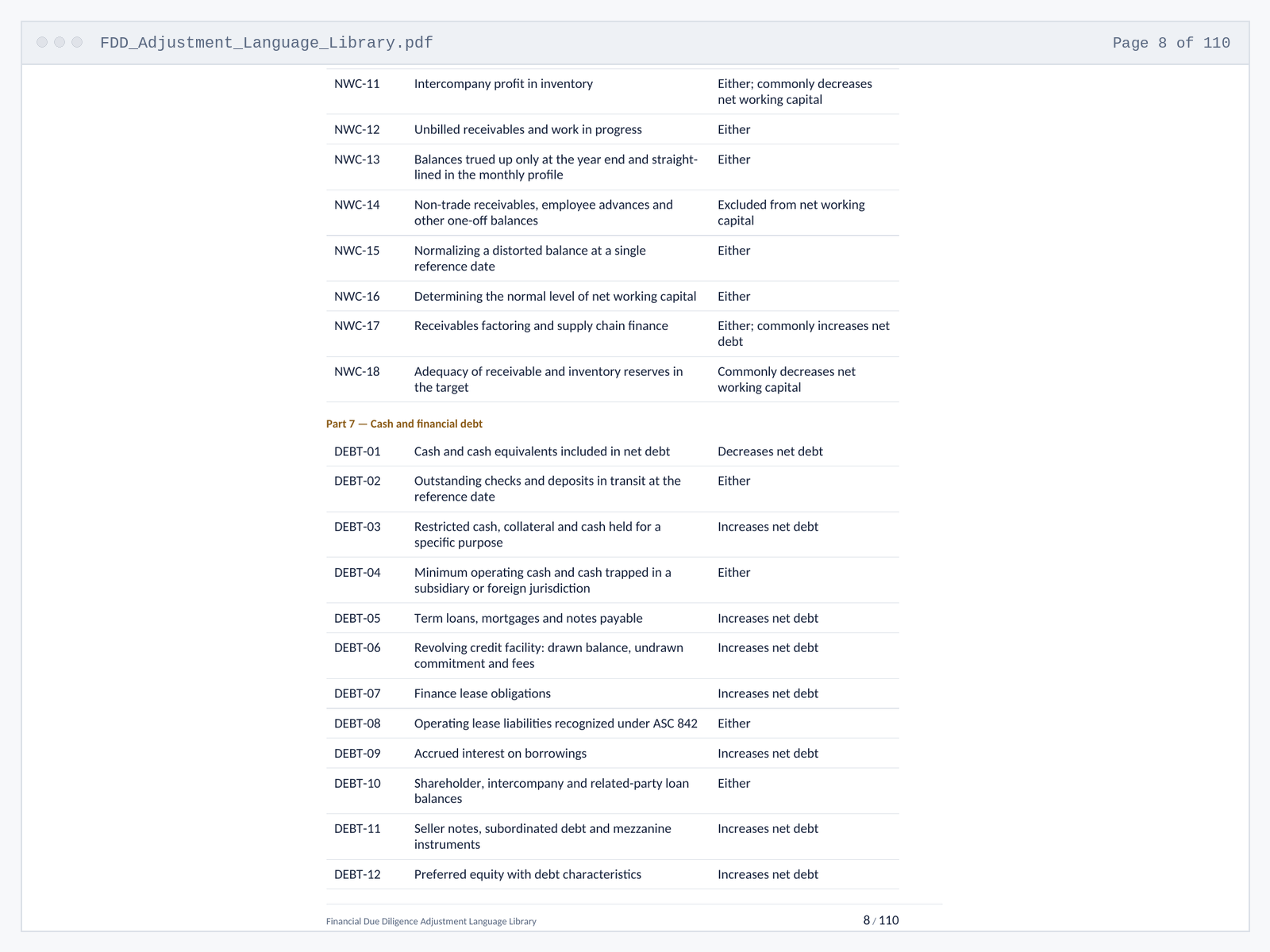
123 adjustments, each with a paragraph of model report language ready to paste and tailor. 110 pages.

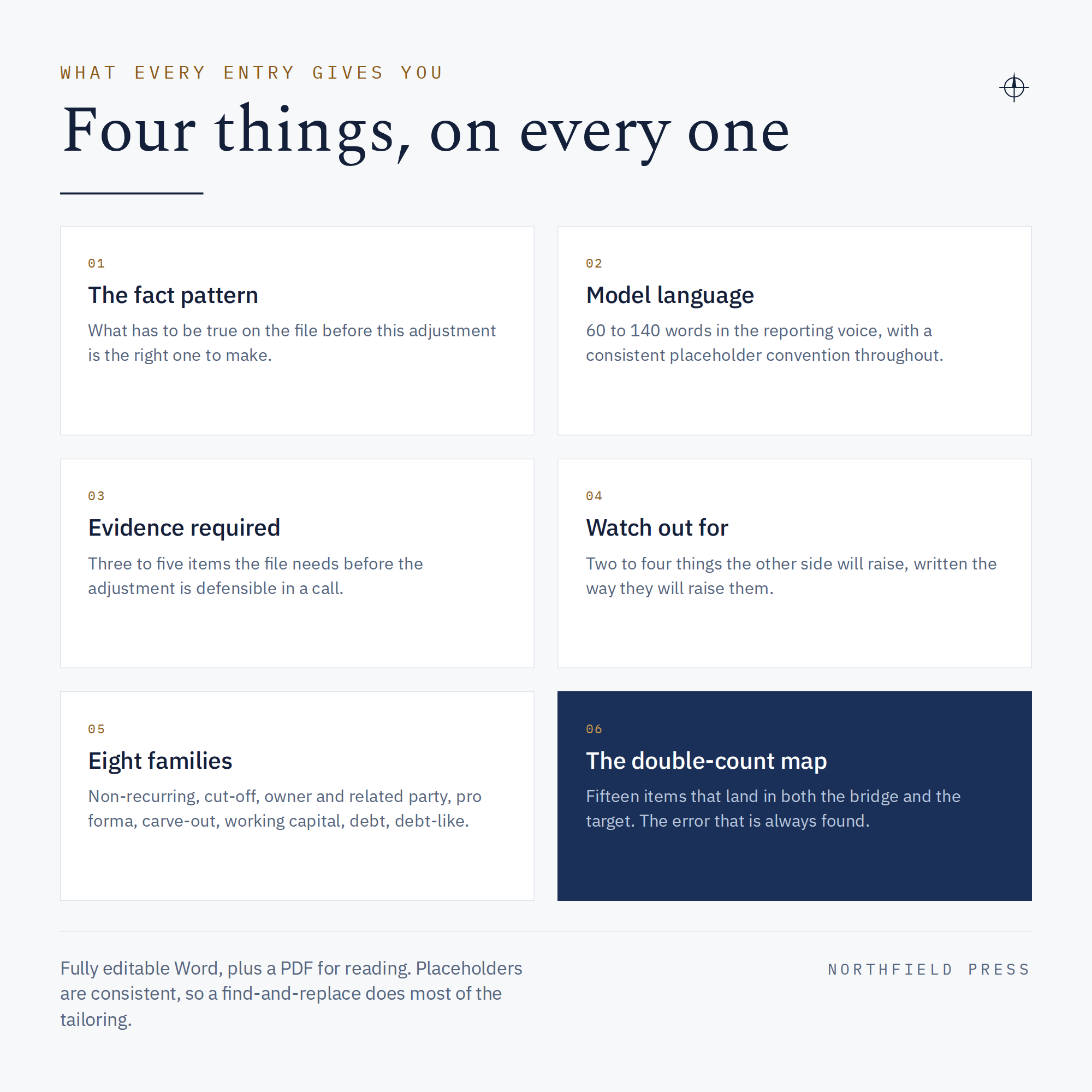
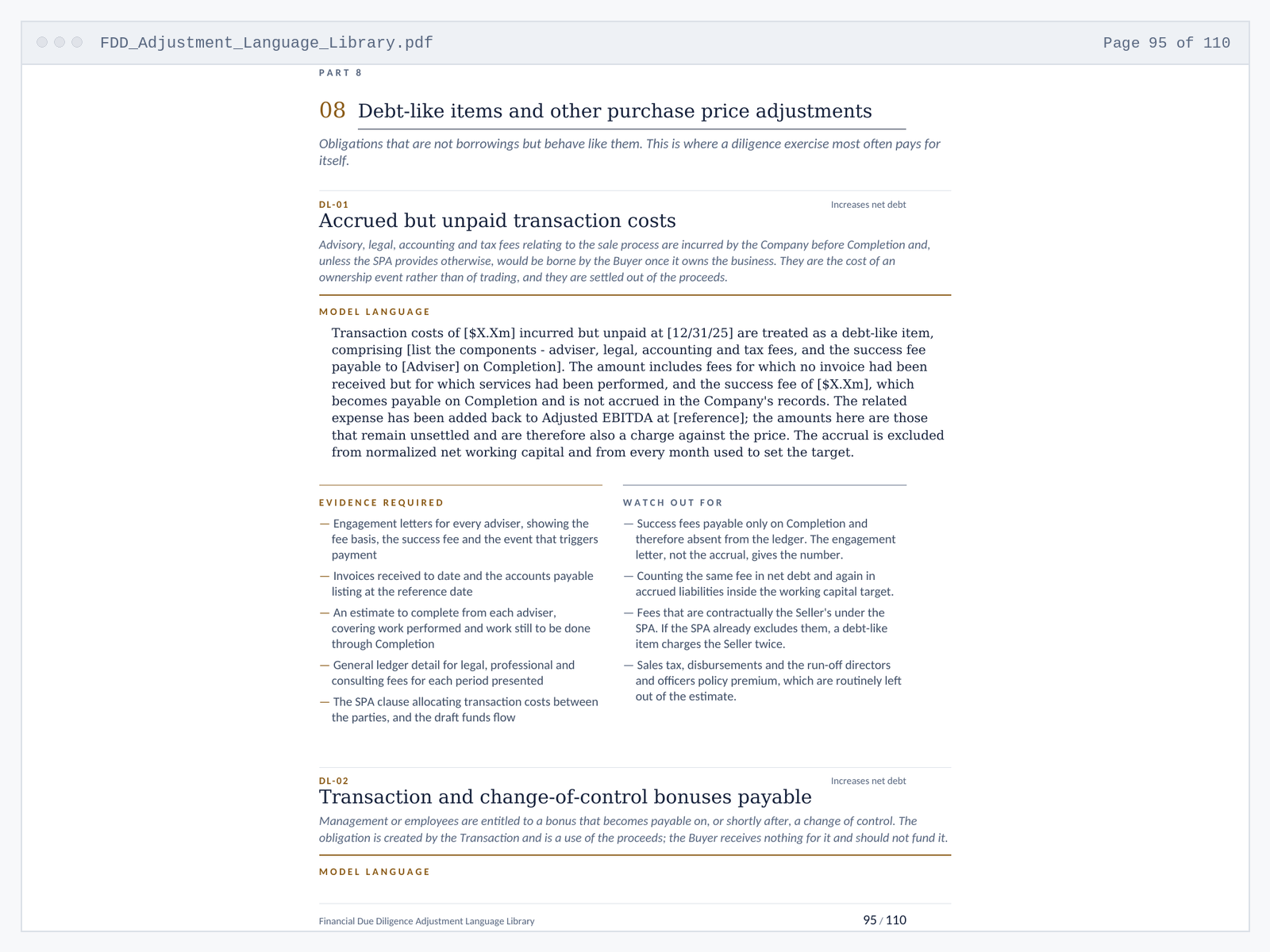
EVERY ENTRY GIVES YOU FOUR THINGS
  • The fact pattern that triggers the adjustment
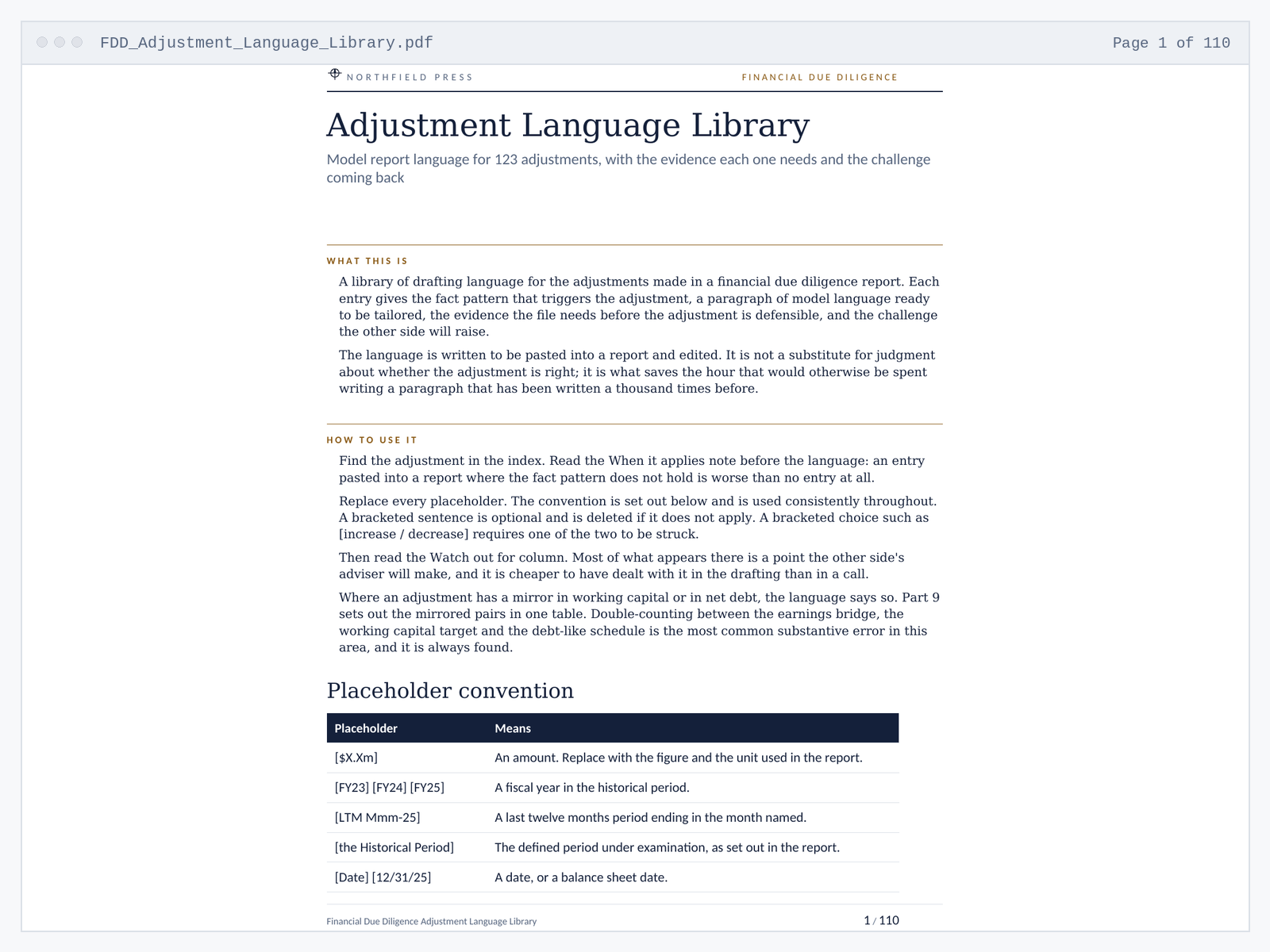
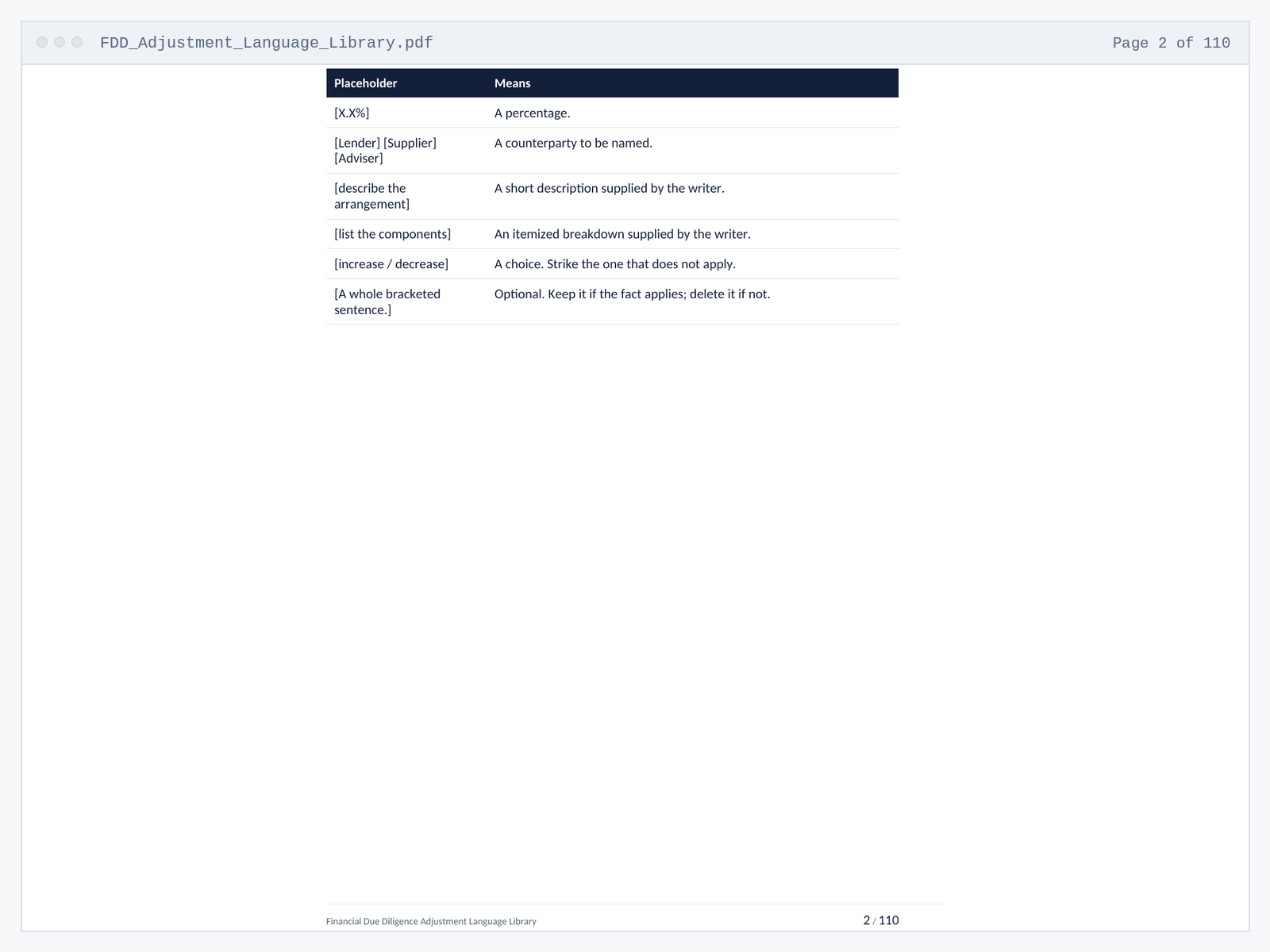
  • 60 to 140 words of drafting written in the reporting voice, with a consistent placeholder convention
  • Three to five items of evidence the file needs before the adjustment is defensible
  • Two to four things the other side will challenge

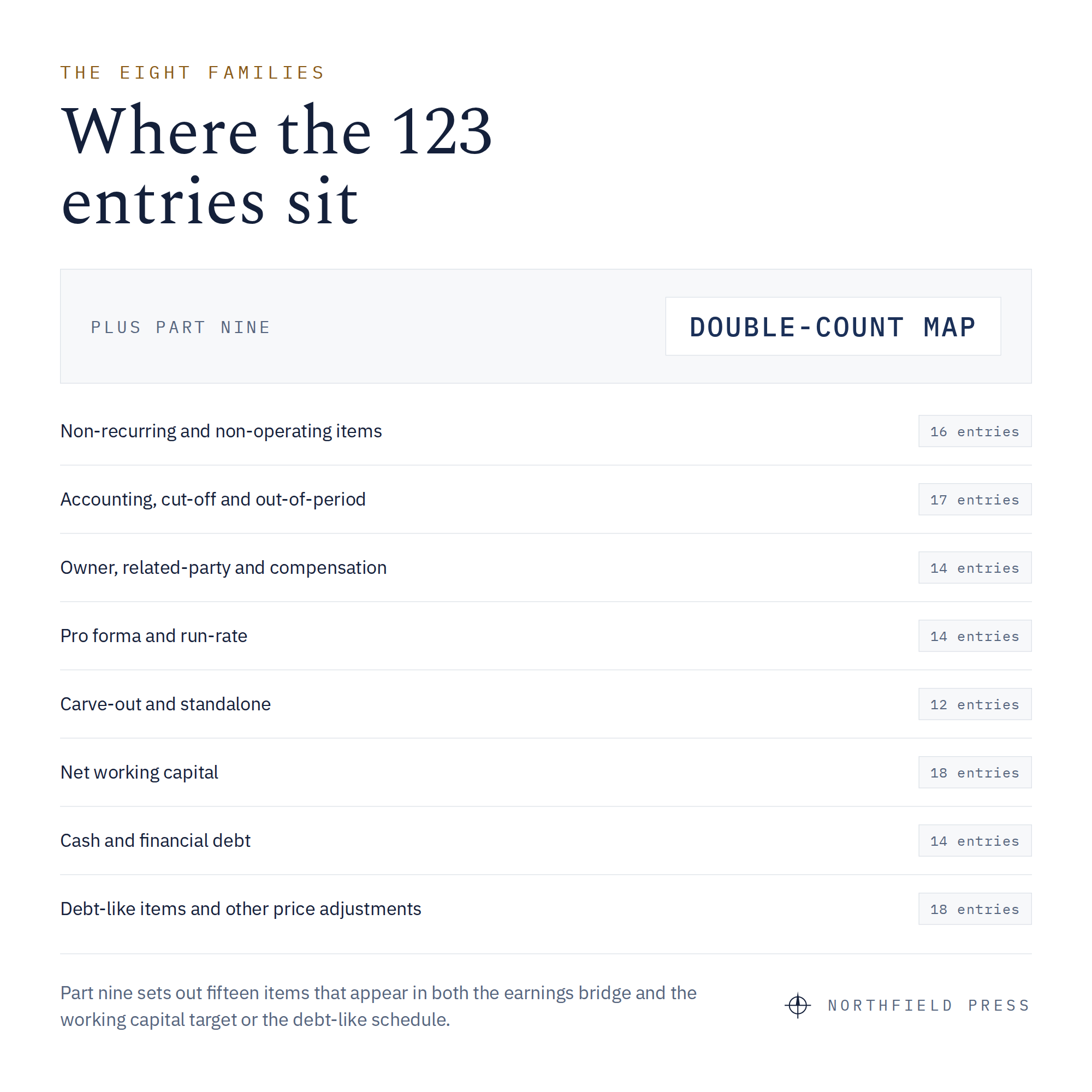
EIGHT FAMILIES
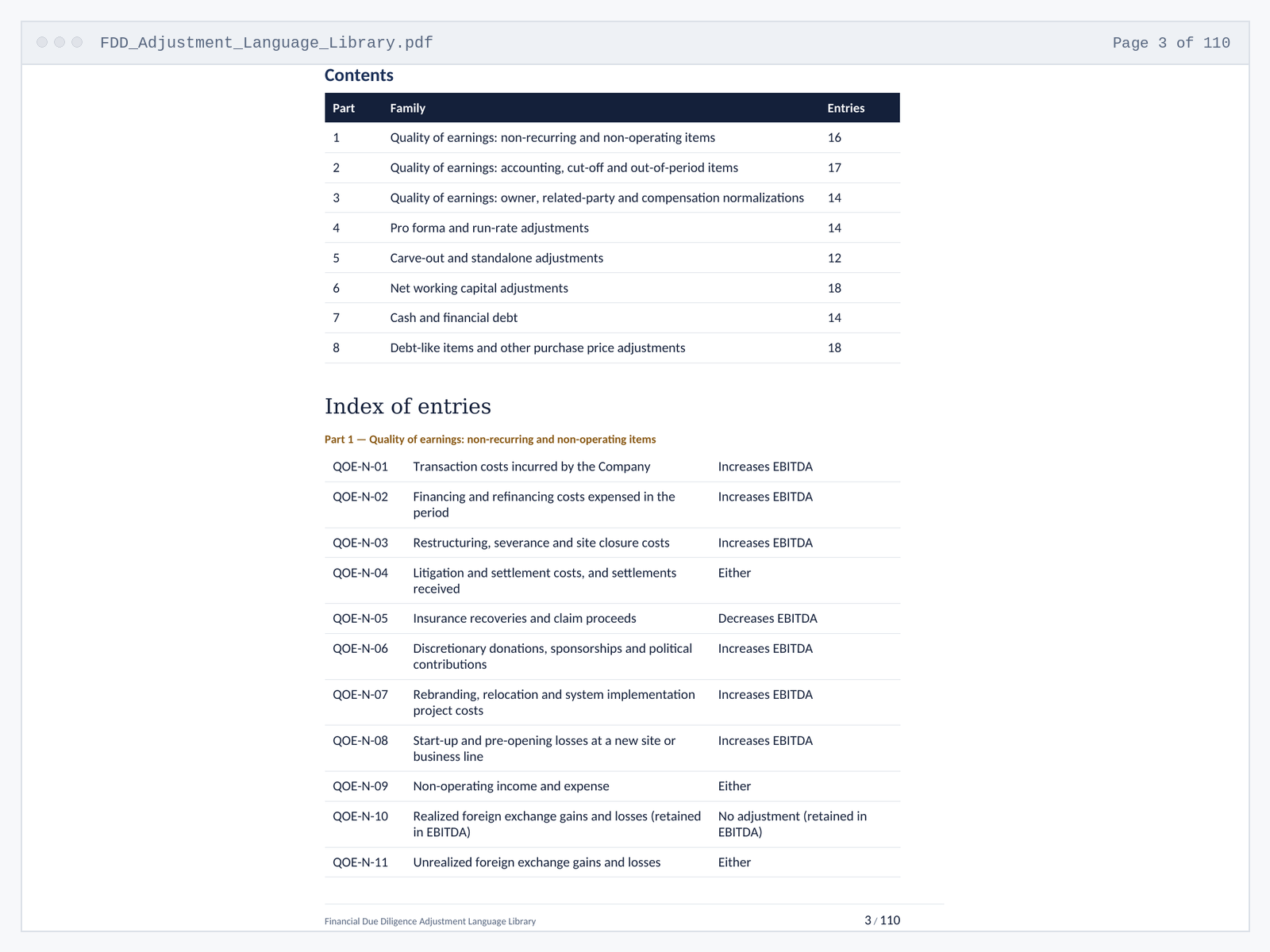
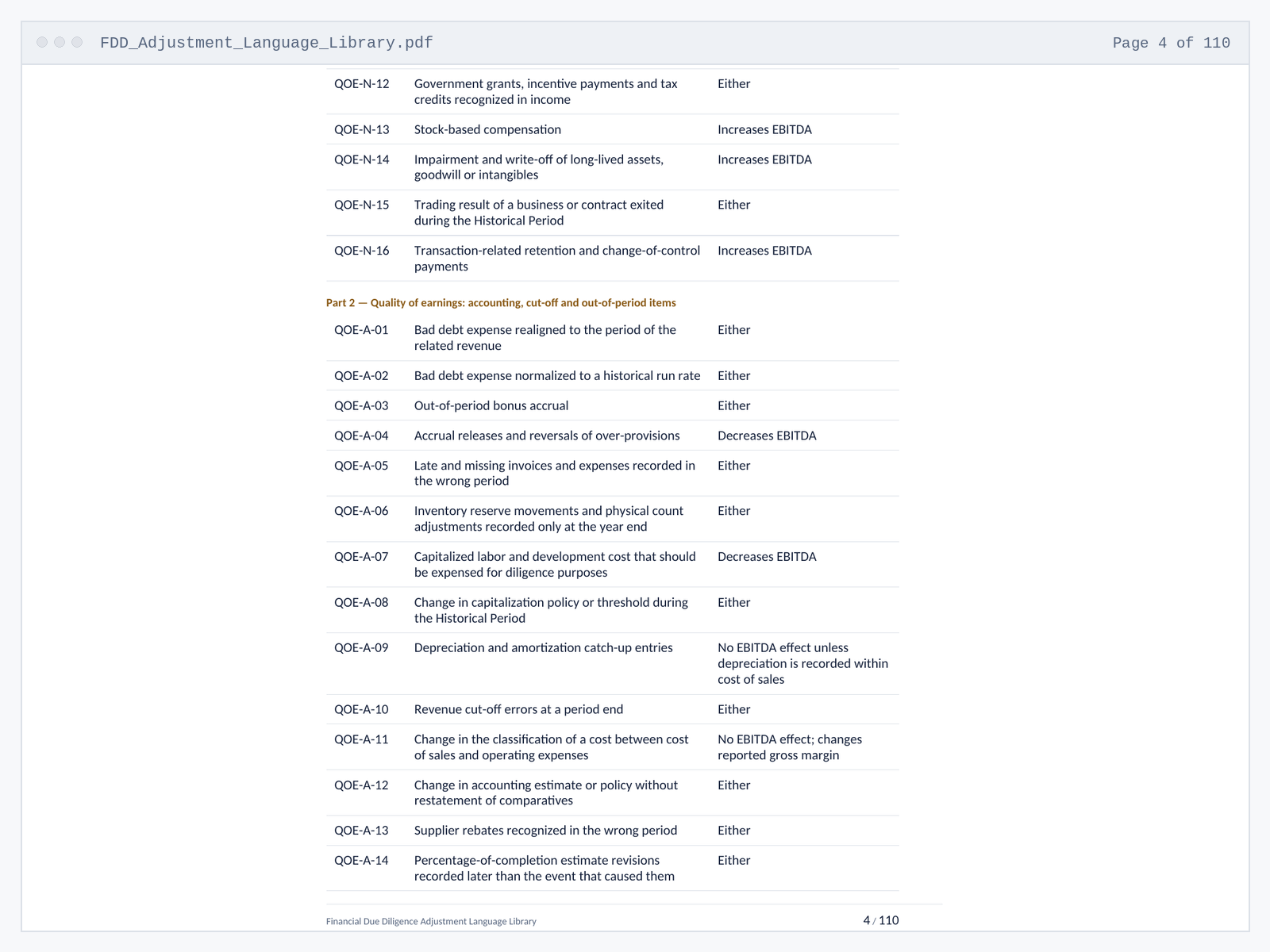
Non-recurring and non-operating items, accounting cut-off and out-of-period, owner and related-party normalizations, pro forma and run-rate, carve-out and standalone, net working capital, cash and financial debt, and debt-like items.

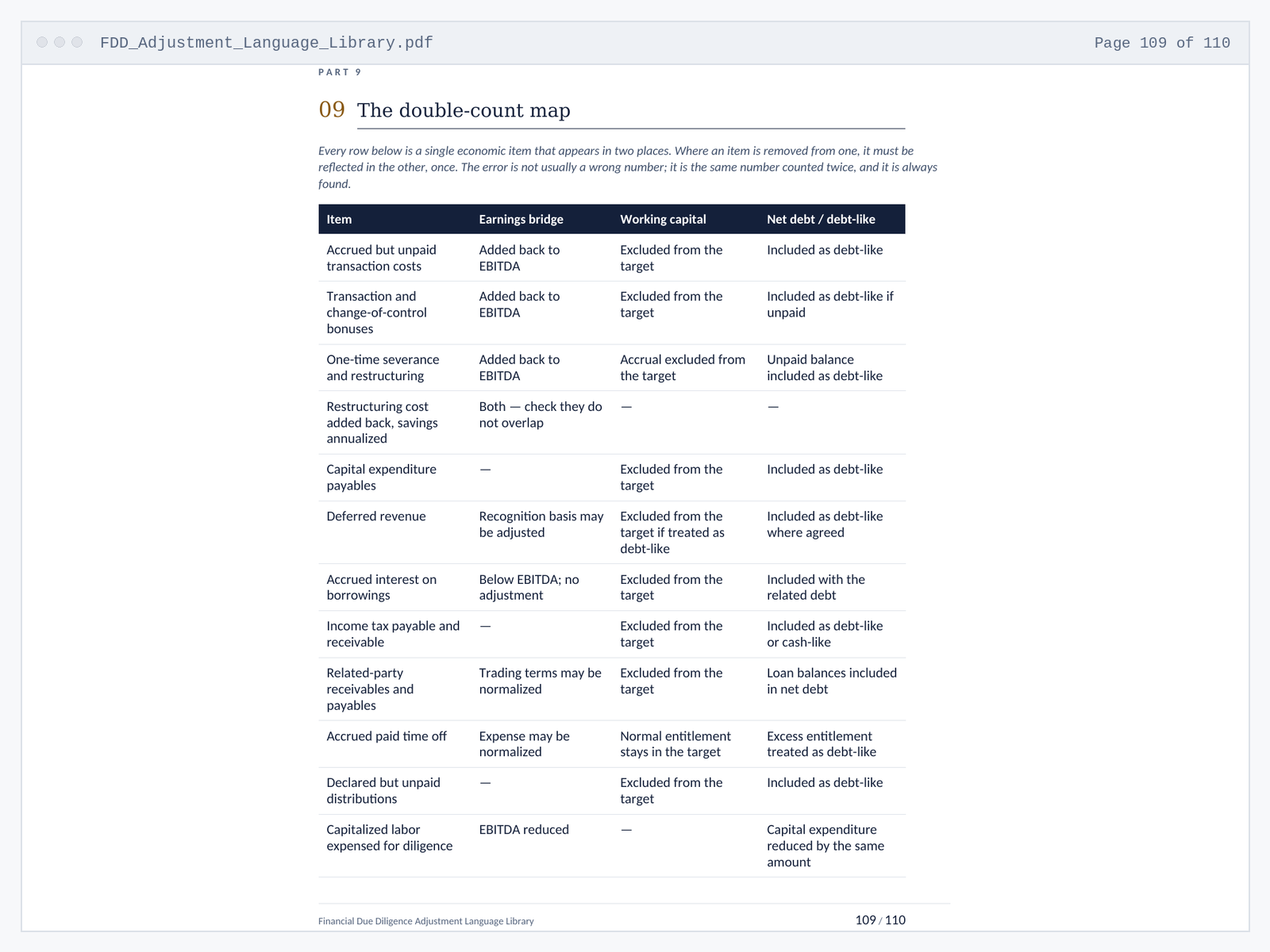
PART NINE IS THE DOUBLE-COUNT MAP
Fifteen economic items that appear in both the earnings bridge and the working capital target or the debt-like schedule, set out in one table. Double-counting between the three is the most common substantive error in this work, and it is always found.

FORMAT
.docx and PDF. Fully editable.
All original material and generic professional practice. No firm names, no client data, nothing proprietary. Yours to use on as many engagements as you like.
From NorthfieldPress.

This Best Practice includes
1 Word document of 110 pages, plus PDF

Acquire business license for $39.00

Add to cart

Add to bookmarks

Discuss

Further information

Write the adjustment sections of a due diligence report faster and more defensibly, with the evidence each adjustment needs and the challenge the other side will raise already set out.

You are drafting or reviewing the quality of earnings, working capital or net debt sections of a financial due diligence report.

You are looking for a decision on whether an adjustment is right. This gives you the language and the evidence standard; the judgment is still yours.


0.0 / 5 (0 votes)

please wait...