Procurement KPI Library and Dashboard — 60 Measures with Definition, Source, Target and How Each Is Gamed
Originally published: 31/08/2026 11:38
Publication number: ELQ-35385-1
View all versions & Certificate
certified

Procurement KPI Library and Dashboard — 60 Measures with Definition, Source, Target and How Each Is Gamed

Sixty measures, each with an honest account of how it gets manipulated.

Description
A KPI without a measurement method is not a measure. It is an argument, scheduled for the next review meeting.

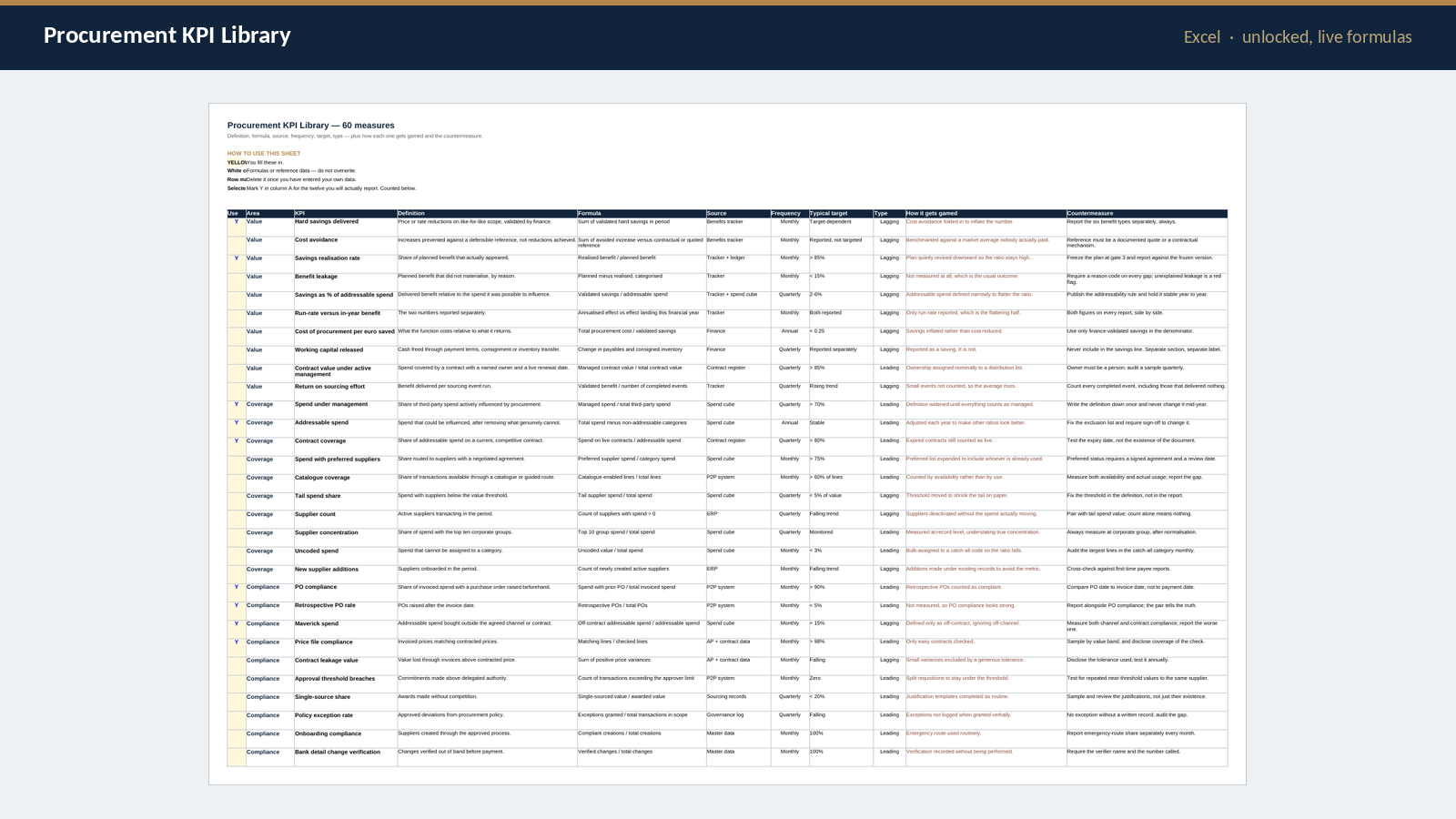
Sixty procurement measures across value, coverage, compliance, process, supplier risk, sustainability and people. Each carries the exact definition, the formula, the source system, the frequency, a typical target, whether it leads or lags — and two columns that no other KPI material includes: how the number gets gamed, and the countermeasure.

None of the gaming requires anyone to state a falsehood. Spend under management with the definition quietly widened. PO compliance with retrospective orders counted as compliant. Price file compliance checked only on the easy contracts. Naming these in your own documentation earns trust rather than inviting doubt.

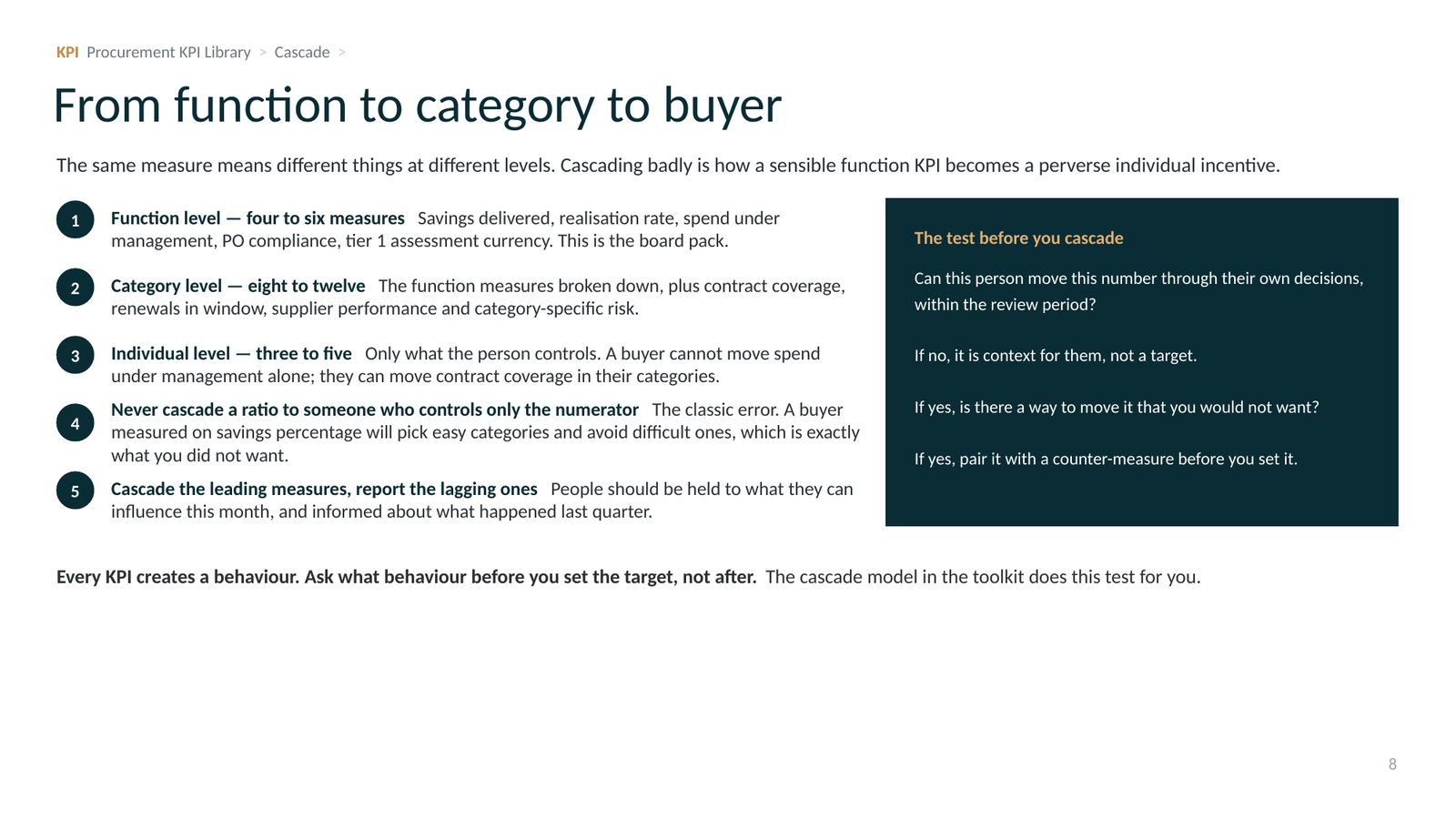
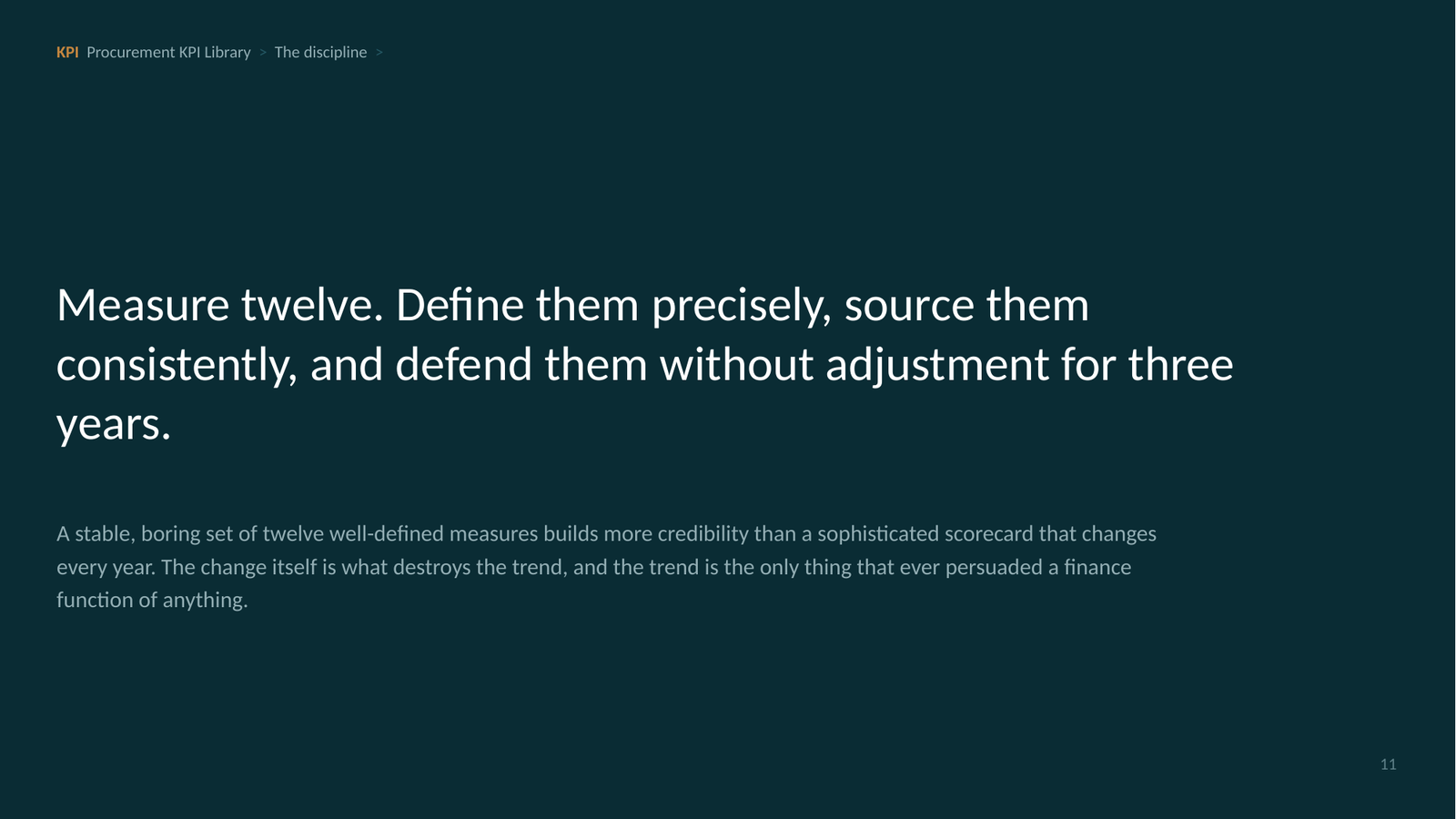
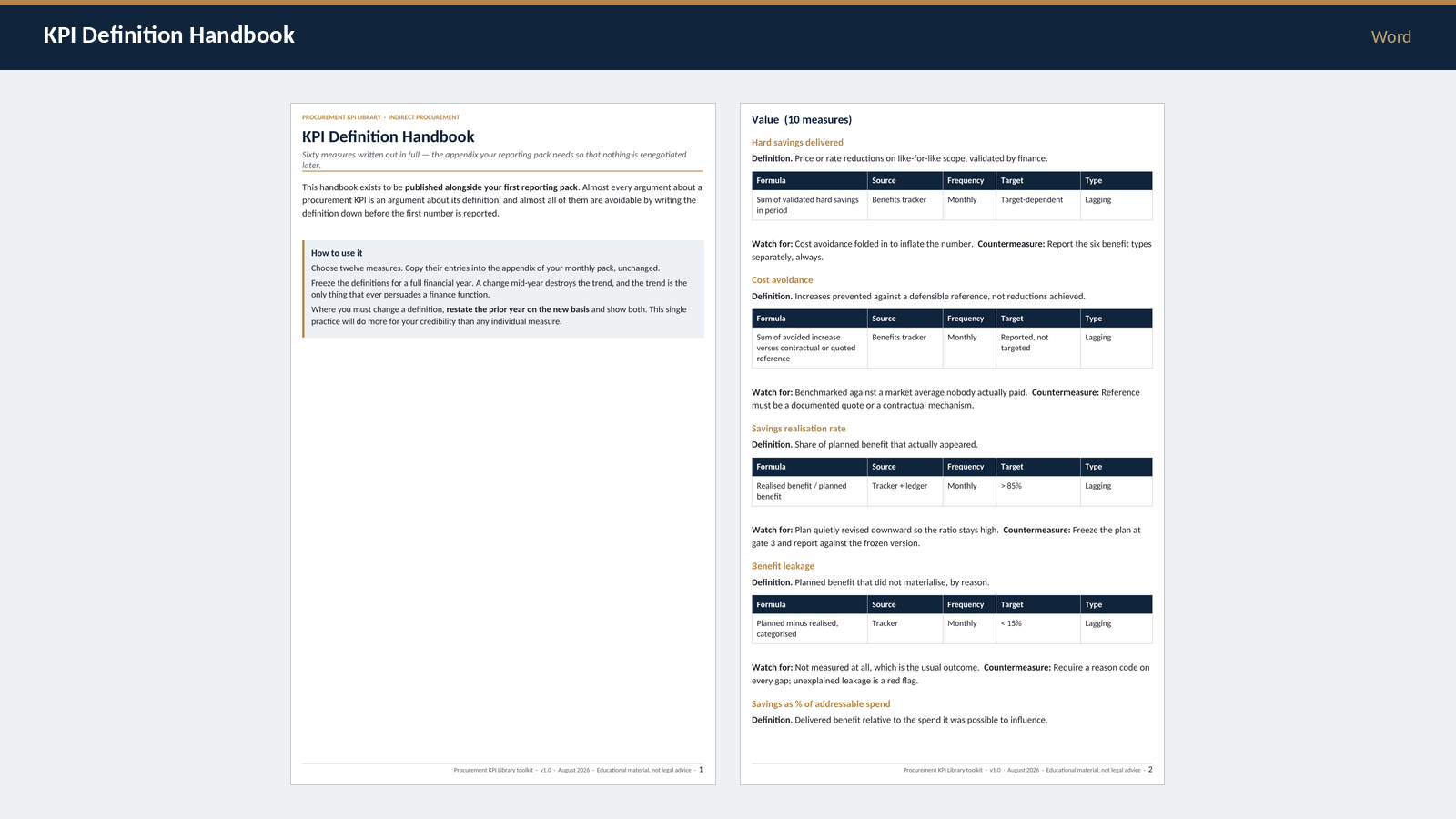
The nineteen-page definition handbook is designed to be published as the appendix to your first reporting pack, which is what prevents every later argument. The readiness assessment usually reveals that a third of the measures you want cannot yet be sourced honestly, and the cascade model stops a sensible function KPI becoming a perverse individual target.

Who it is for: heads of procurement building or rebuilding a reporting pack, category managers being measured and wanting to understand on what, finance business partners who validate procurement numbers, and consultants designing a performance framework for a client.

What it is not: it is not a benchmark database. The targets are typical positions for a mid-sized organisation with a functioning procurement team, offered as a starting point for the conversation and labelled that way throughout. The correct target is your own measured baseline plus a movement you can defend, and the target setting guide explains why any other approach fails.

This Best Practice includes
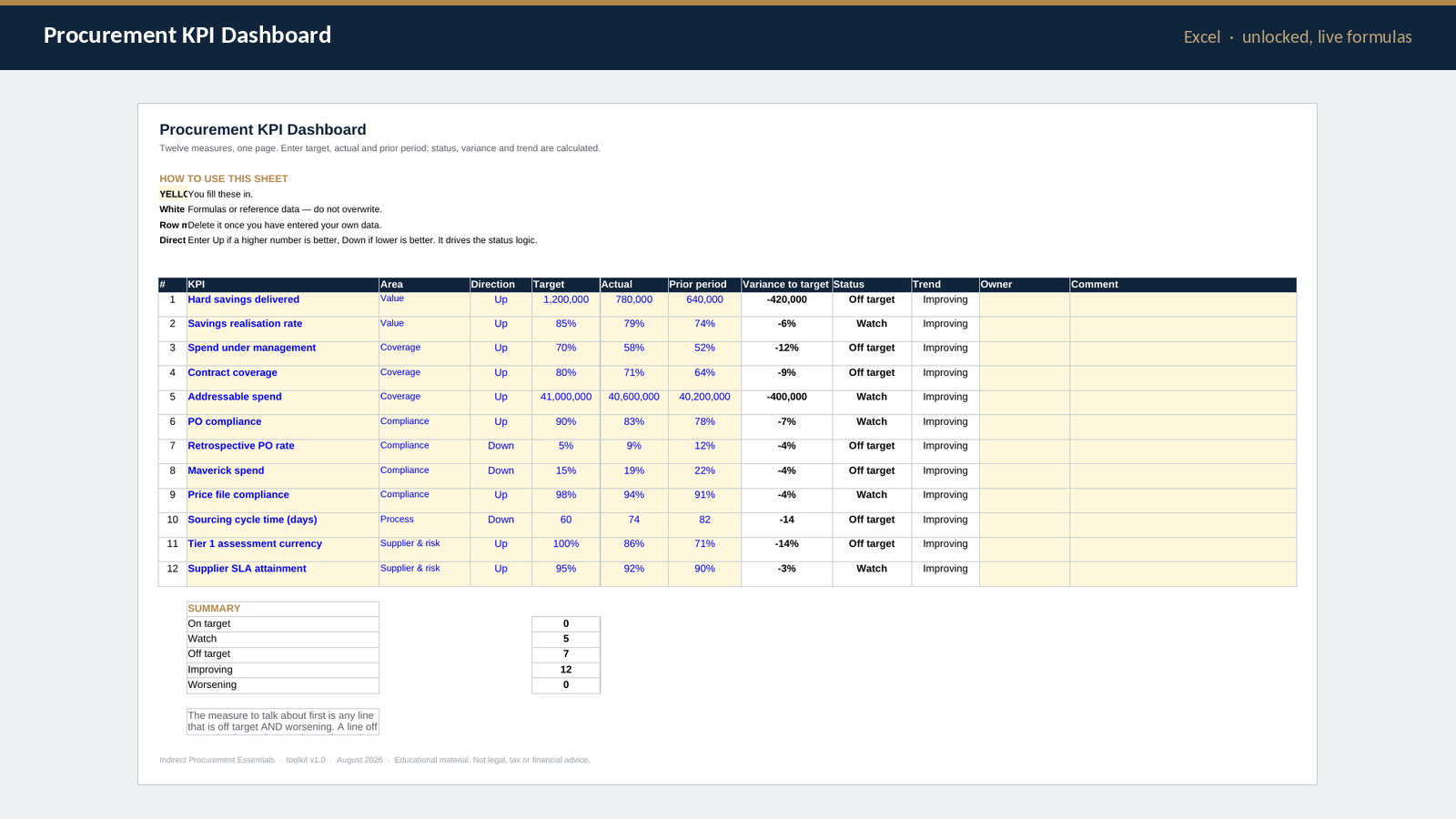
1 PowerPoint guide (15 slides), 4 Excel tools incl. 60-measure library, 4 Word documents. Unlocked.

Acquire business license for $79.00

Add to cart

Add to bookmarks

Discuss

Further information

• Publish precise definitions so measures are not renegotiated mid-year.
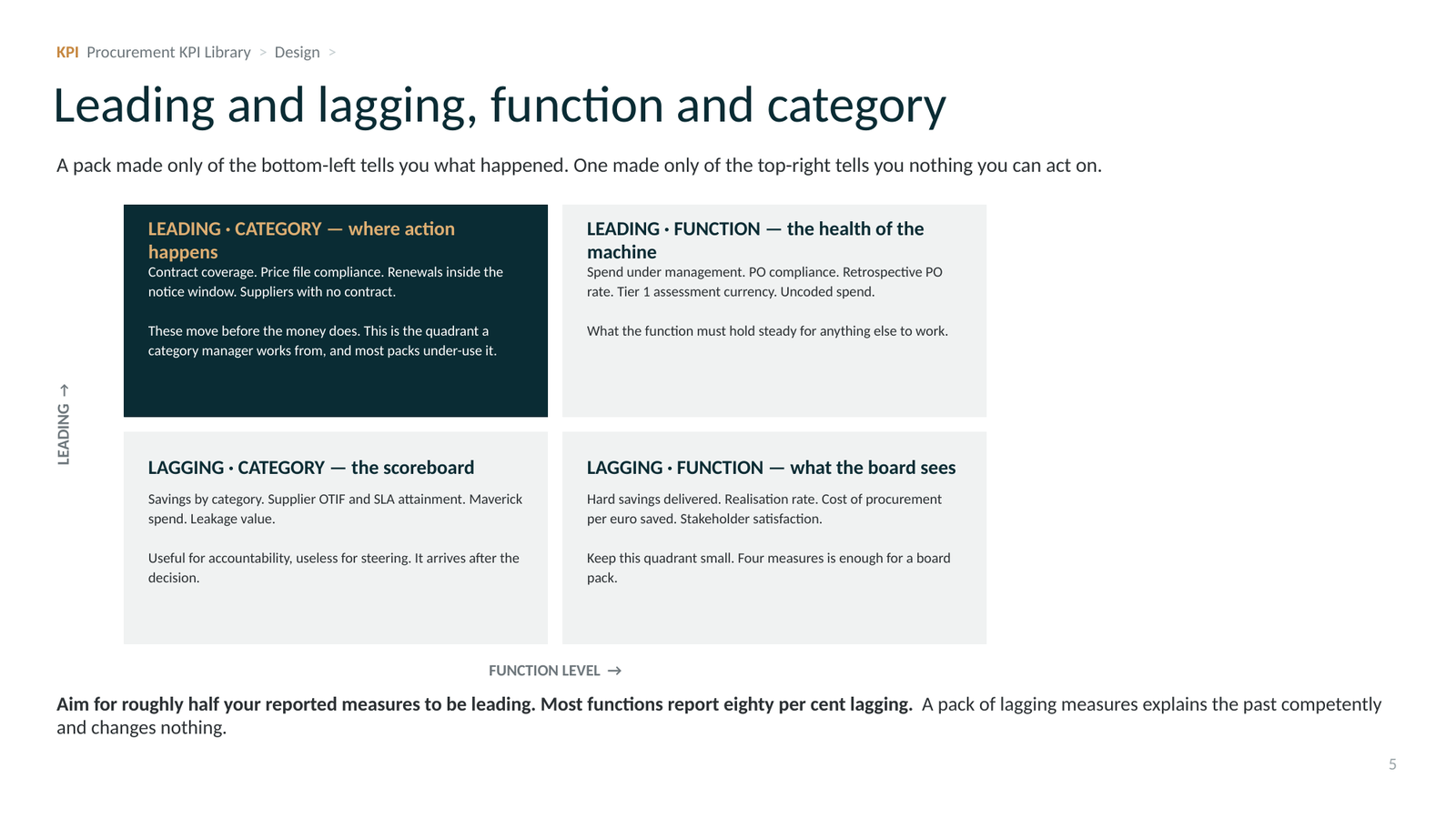
• Report twelve balanced measures rather than sixty, with roughly half leading.
• Establish which measures you can honestly source before choosing any.
• Cascade to individuals without creating perverse incentives.

• You are building or rebuilding a procurement reporting pack.
• Your current measures are disputed or quietly ignored.
• You need to agree definitions with finance and hold them stable.

• You need external benchmark data; targets are typical positions, not benchmarks.
• You want a BI dashboard connected to source systems; these are workbook models.
• Your reporting is already stable, defined and trusted.


0.0 / 5 (0 votes)

please wait...