Buy versus Lease Financial Model
Originally published: 19/06/2025 07:56
Publication number: ELQ-40296-1
View all versions & Certificate
certified

Buy versus Lease Financial Model

A complete and professional financial model to compare buying against leasing scenarios

Description
This is a comprehensive and professional yet user-friendly financial model aimed at making a right decision on buying versus leasing of production and consumer-use assets. I have developed this model with those beginning entrepreneurs in mind who are not familiar with sophisticated financial concepts but need an industry grade investment banking quality financial model for their analysis.
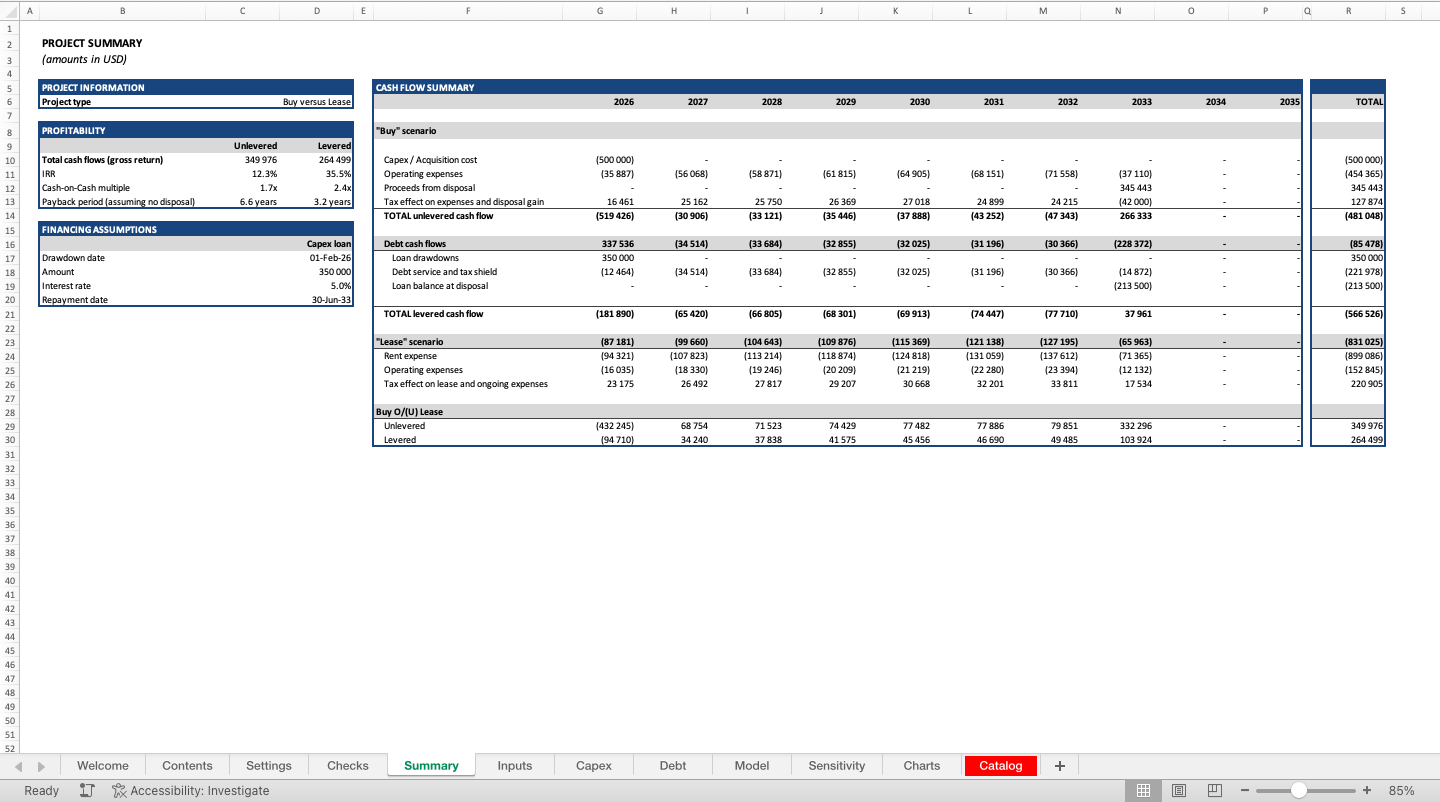
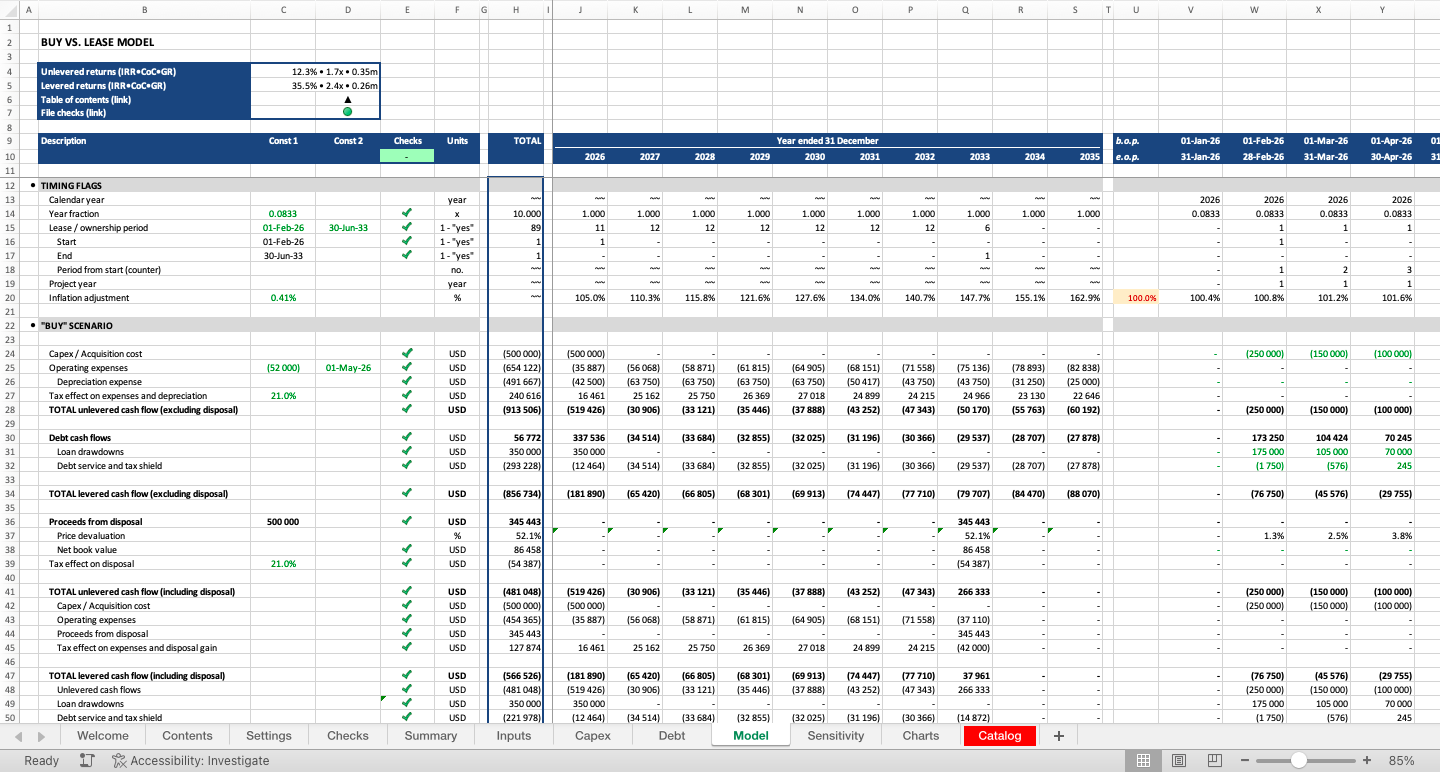
The model calculates and compares the cash flow for buying and leasing strategies.
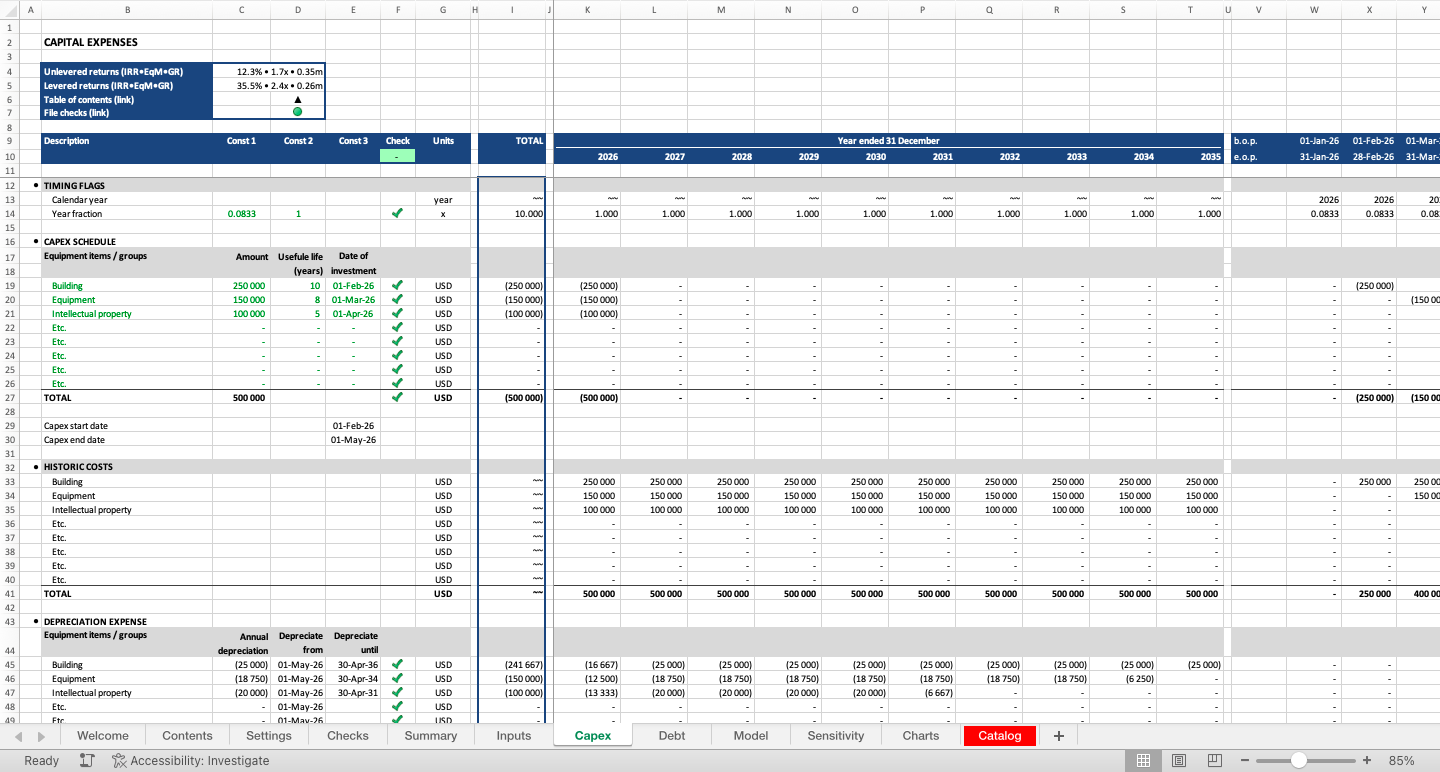
Buying an asset can take a form of a simple acquisition (in case the needed asset is available on the market) or a construction of an asset in line with user’s requirements. The construction can include several phases of a capex program.
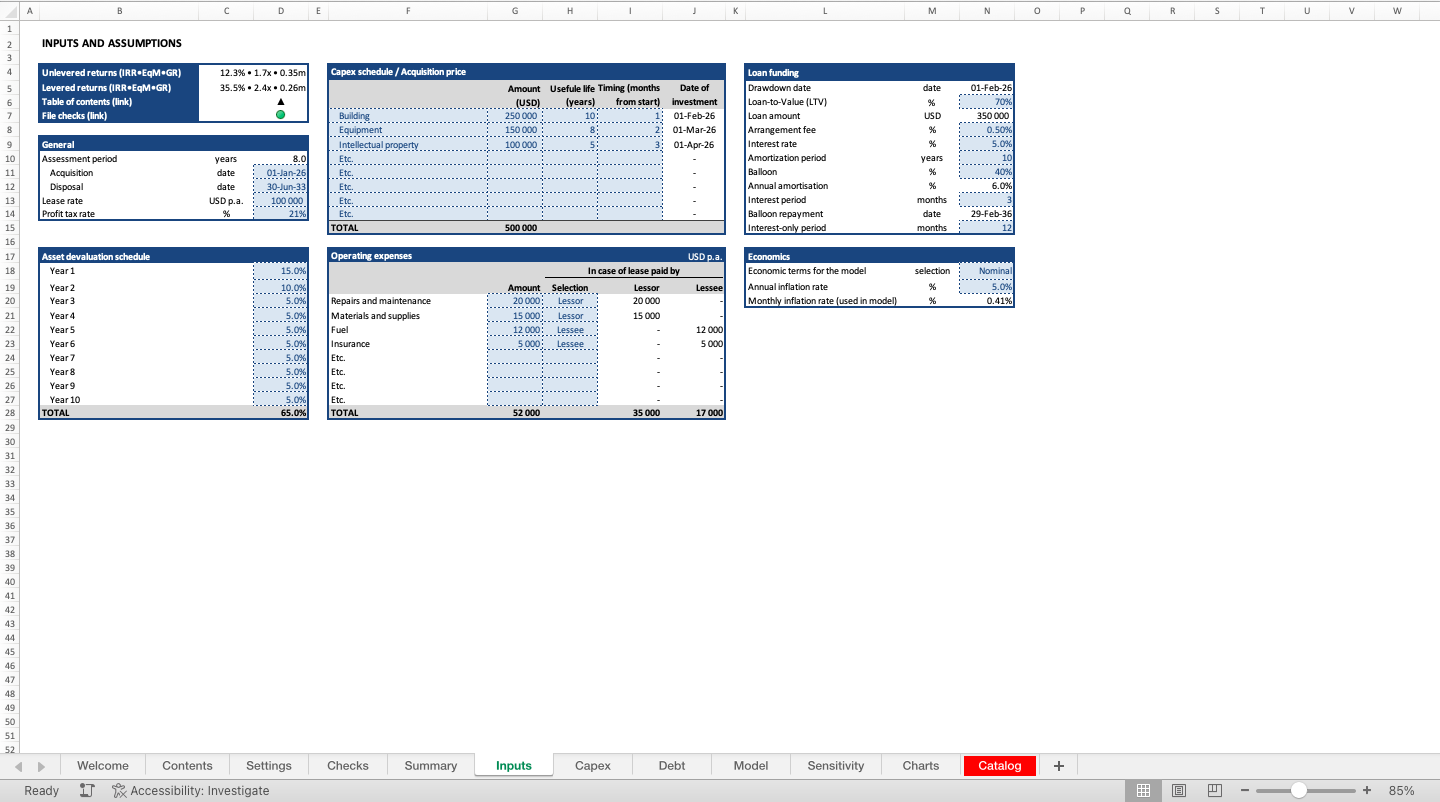
Once the asset is purchased or constructed, we start using it and incurring operating expenses related to that asset. These can be repairs and maintenance, materials and supplies, fuel, insurance and many else. If we by an asset, all those expenses are on us; if we lease it, it is subject to an agreement between lessor and lessee on who pays which expenses.
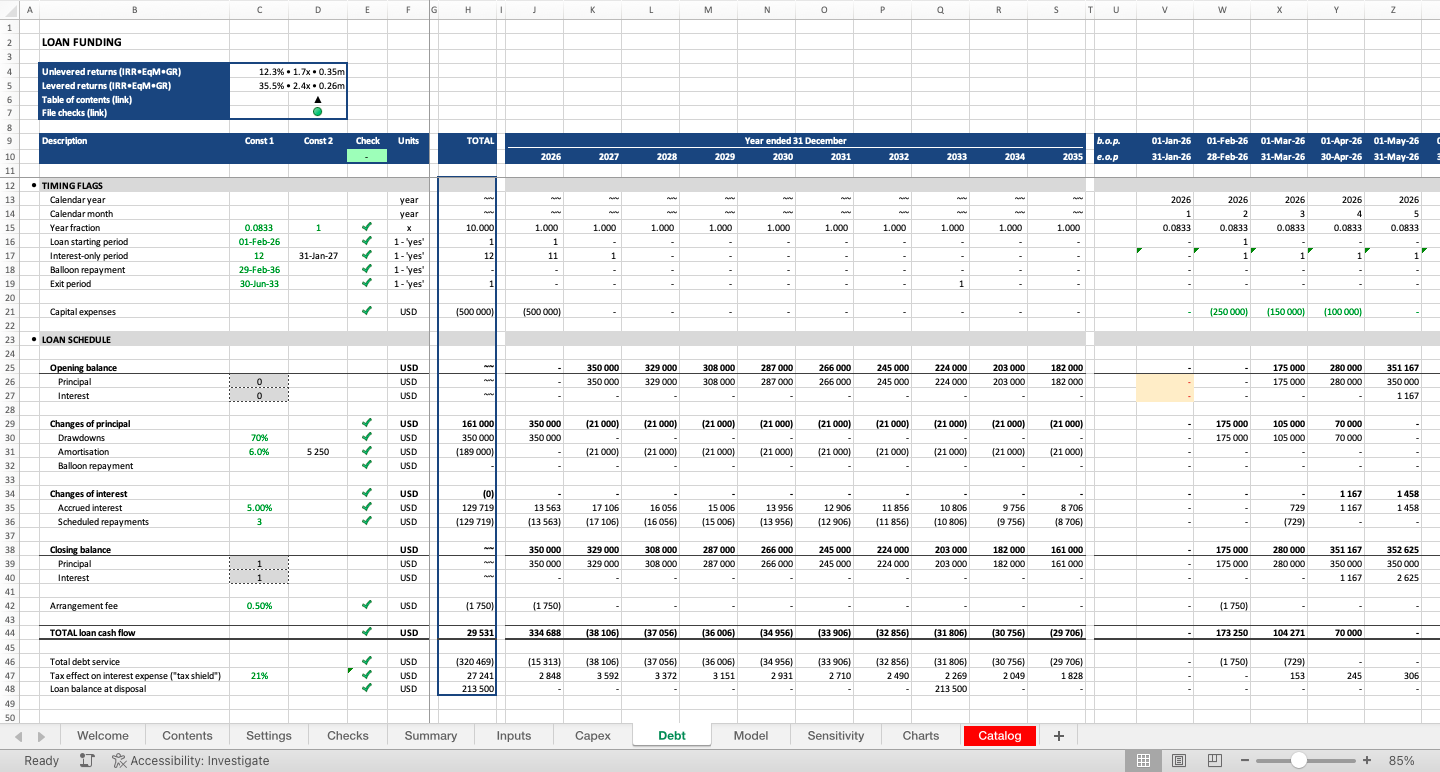
Acquisition can be partly financed by debt. Drawing debt at right terms provides leverage and increases returns significantly. In this model you can assume the debt is used to finance the acquisition and choose the LTV ratio and other loan conditions.
Operating expenses, depreciation and interest expenses create a tax shield, which means they reduce the owner’s taxable profit, entailing smaller amounts of profit tax.
The final stage of the analysis is calculating exit proceed (or terminal value). This is needed for proper valuation and profitability assessment, even if the asset owners are not planning to dispose it at that point of time.
Lease scenario assumes rental payments, payments of expenses as agreed with the owner of the asset and a tax shield on lease payments and operating expenses.
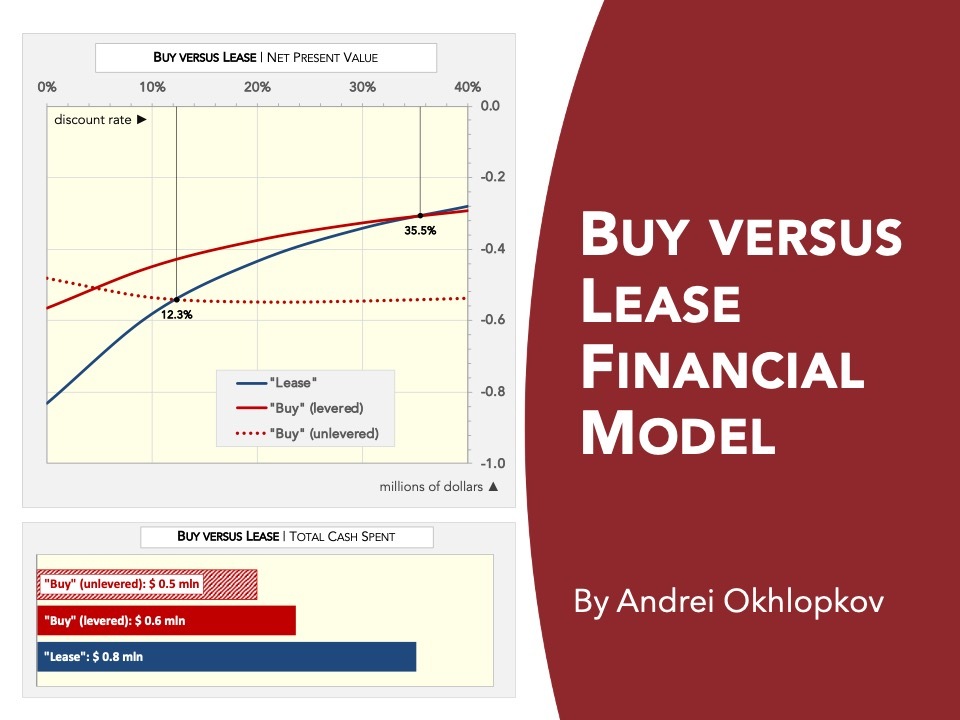
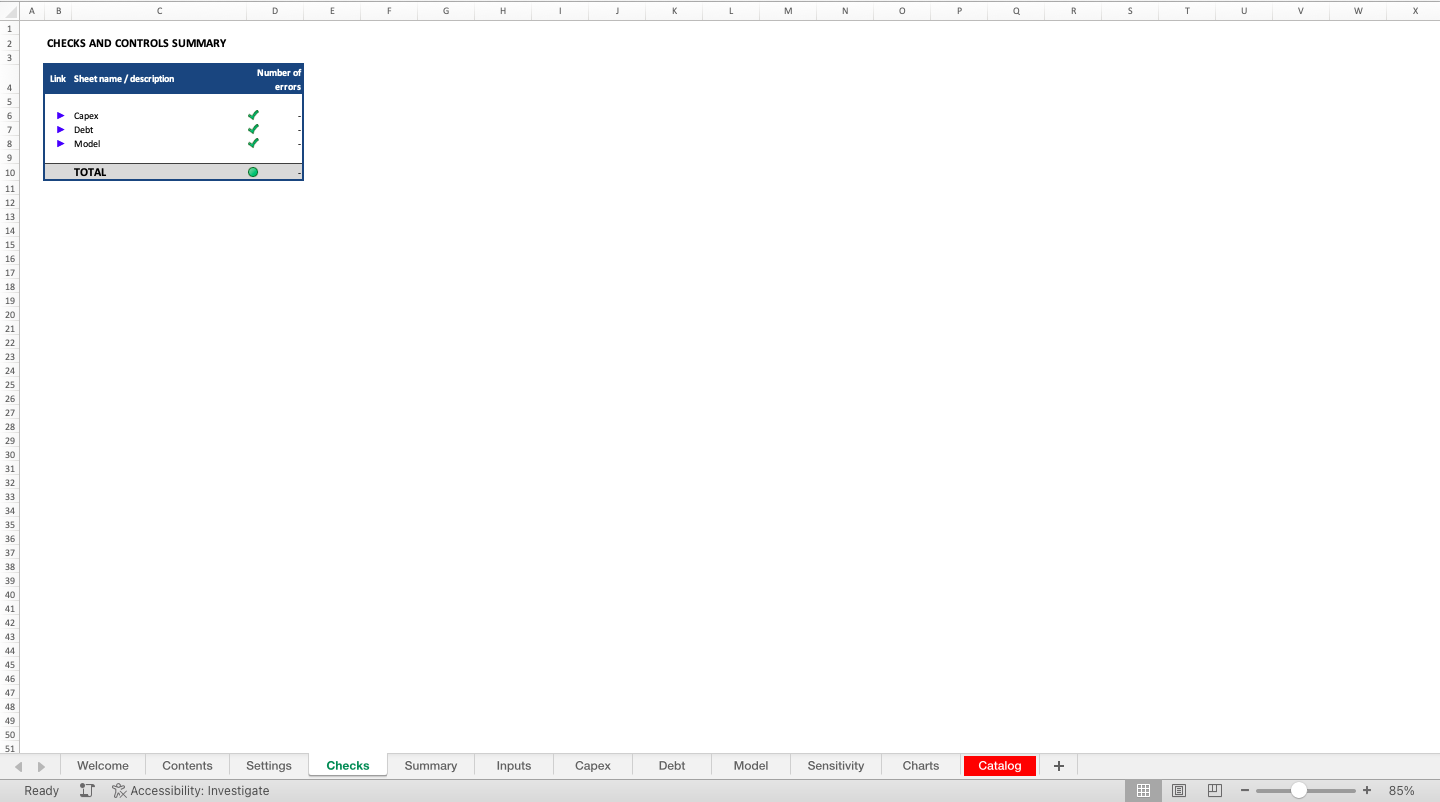
Teamed up together in the model, these assumptions and schedules are used to calculate which option is more beneficial, calculate the pay-back period, internal rate of return (IRR), cash-on-cash (CoC) multiple, break-even points of buying (levered and unlevered) versus leasing scenarios and other KPIs.
You can run the model with and without economic assumptions (inflation).
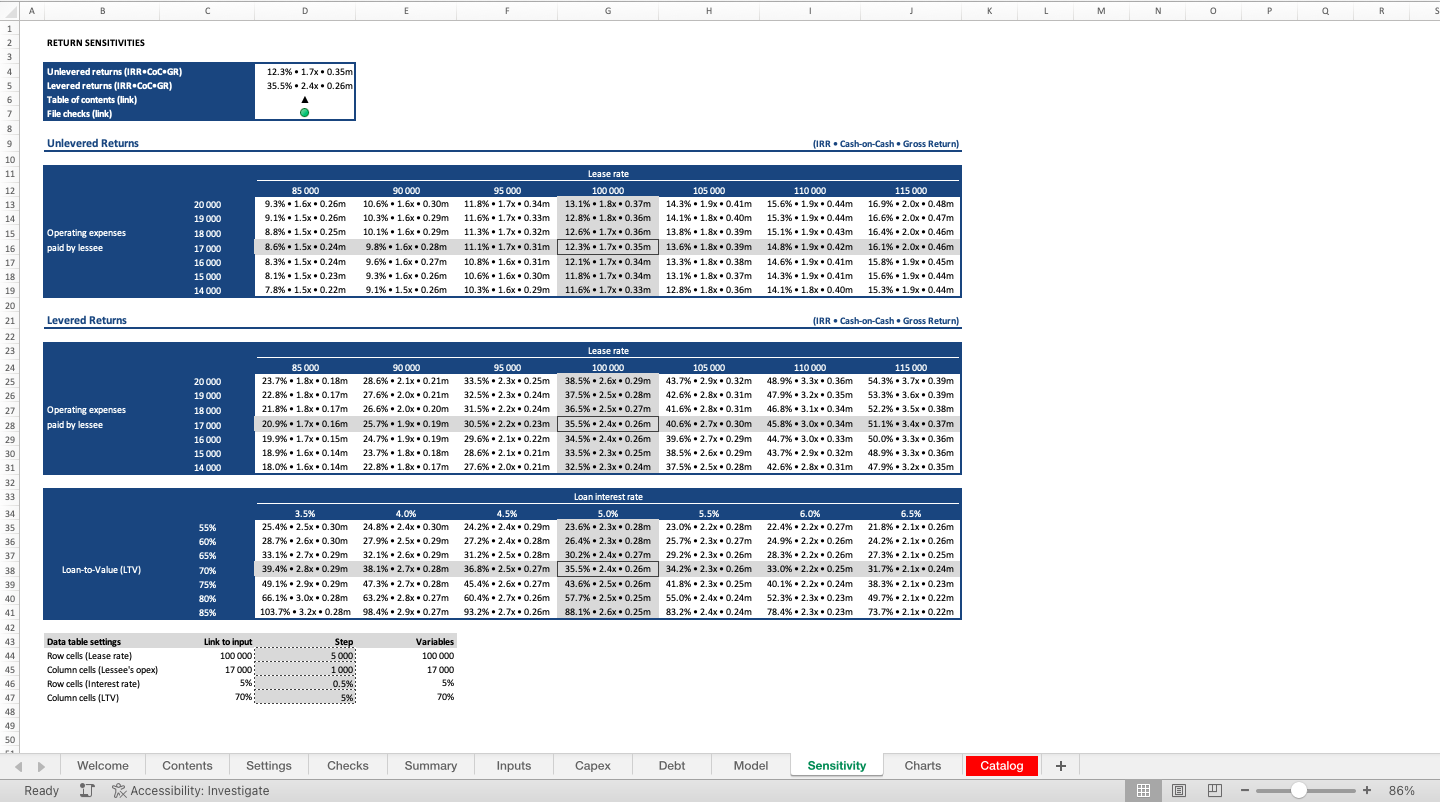
The model also calculates the sensitivity of output parameters to changes in lease rates, operating expenses paid by the lessee, loan-to-value ratio and interest rate on debt.
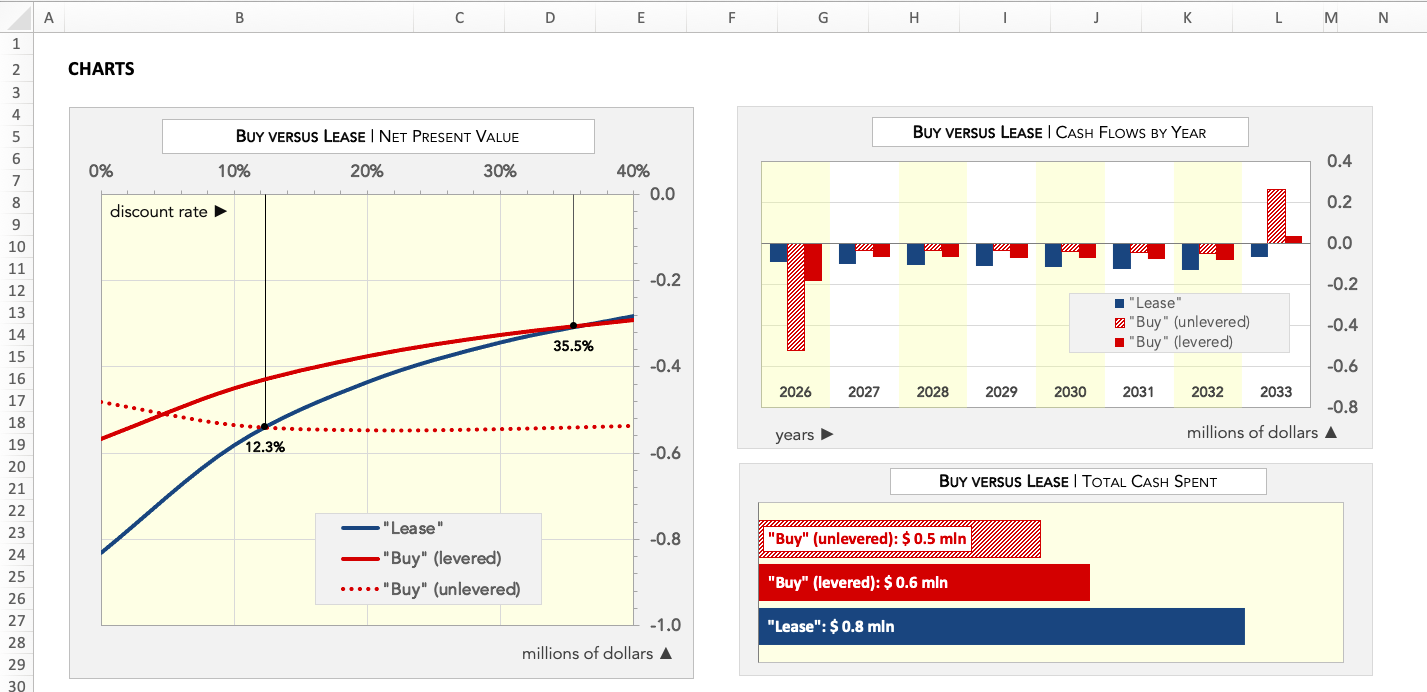
The model is illustrated by professionally designed magazine-quality charts.

This Best Practice includes
1 Excel file, 1 pdf guide

Acquire business license for $59.00

Add to cart

Add to bookmarks

Discuss

Further information

To develop financial projections and return analysis for buying versus leasing scenario comparison

Use this model if you are deciding on whether to buy or lease a production or consumer-use asset

Every business case is unique and so the model might require fine-tuning. Contact me if you need help adjusting the model to your particular project or if you need a model developed completely from scratch


0.0 / 5 (0 votes)

please wait...