Category Management Toolkit for Indirect Spend — Playbook, Strategy Pack, 40 Sourcing Levers, Benefit Phasing
Originally published: 31/08/2026 08:25
Publication number: ELQ-27854-1
View all versions & Certificate
certified

Category Management Toolkit for Indirect Spend — Playbook, Strategy Pack, 40 Sourcing Levers, Benefit Phasing

End-to-end category management for indirect spend: analyse, decide, phase the benefit.

Description
A complete category management system for indirect spend, not a set of blank templates.

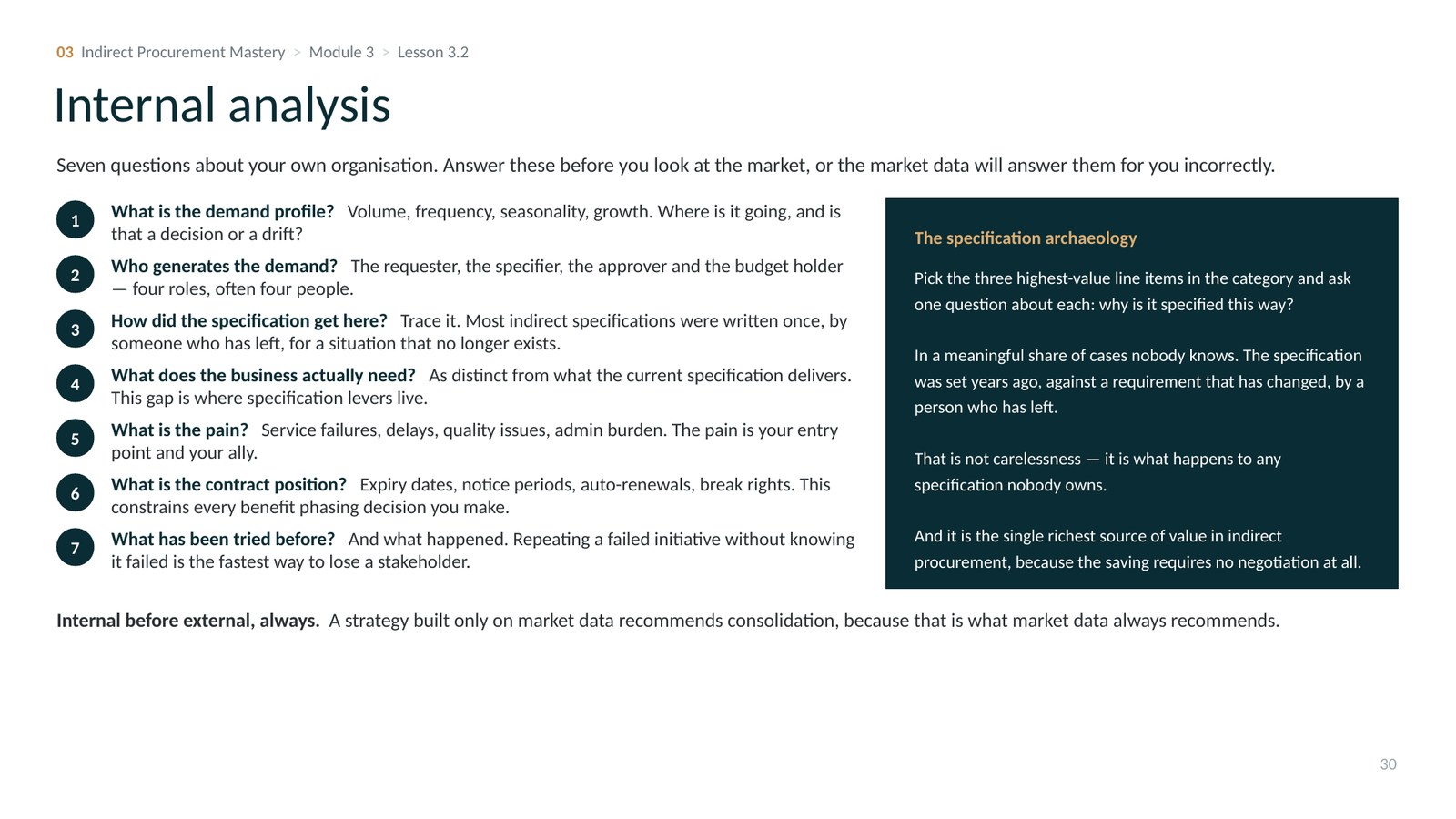
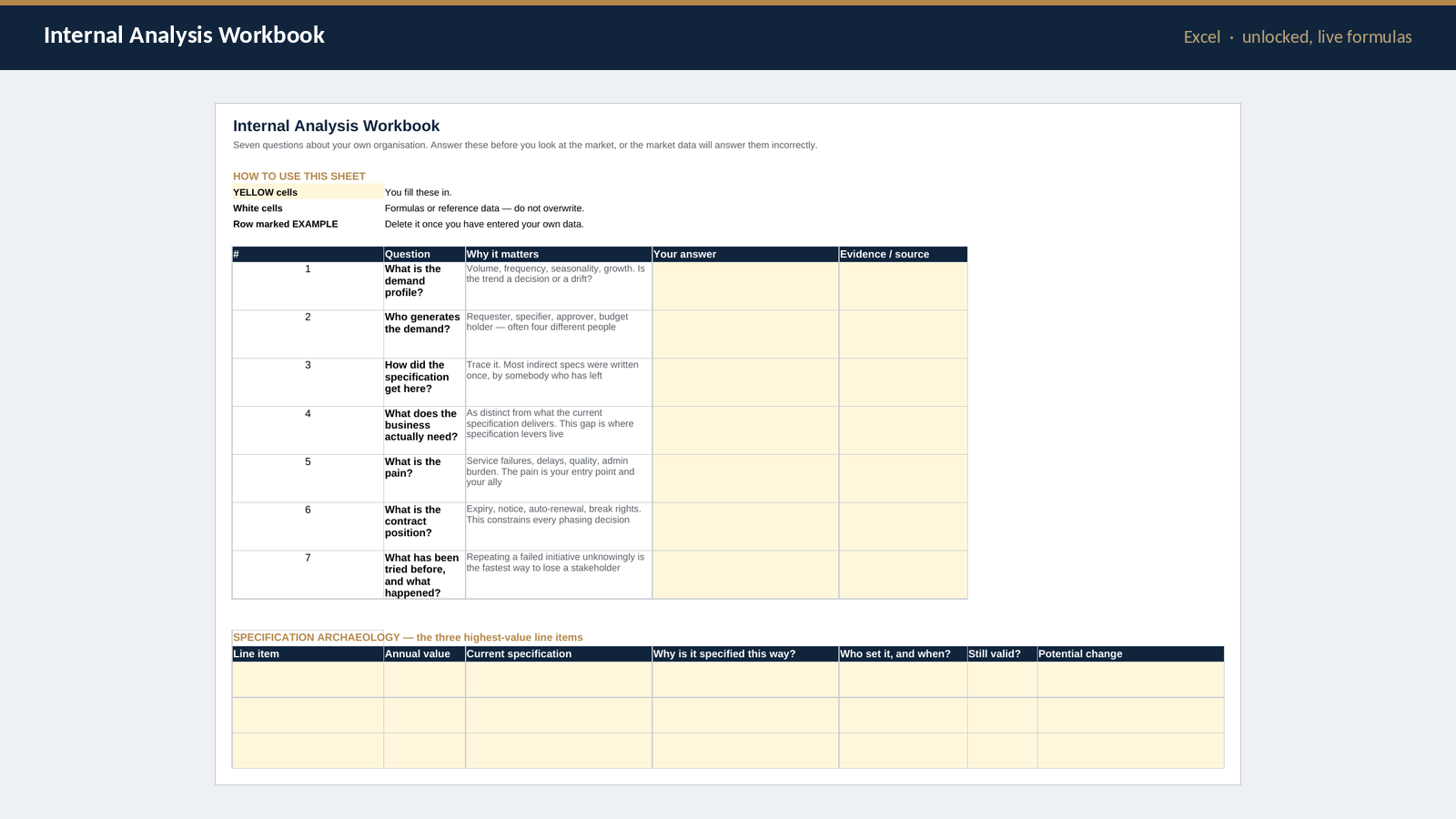
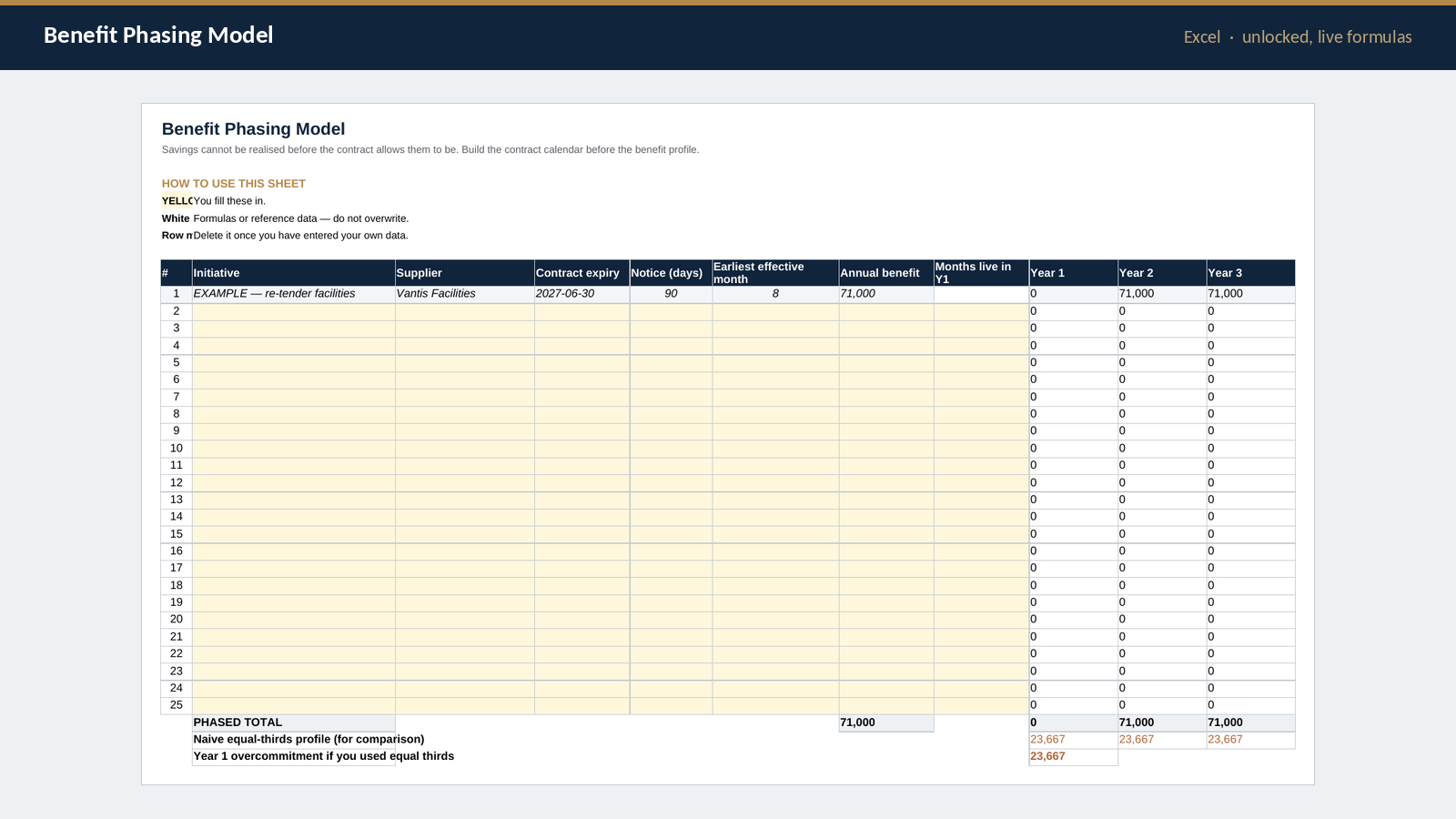
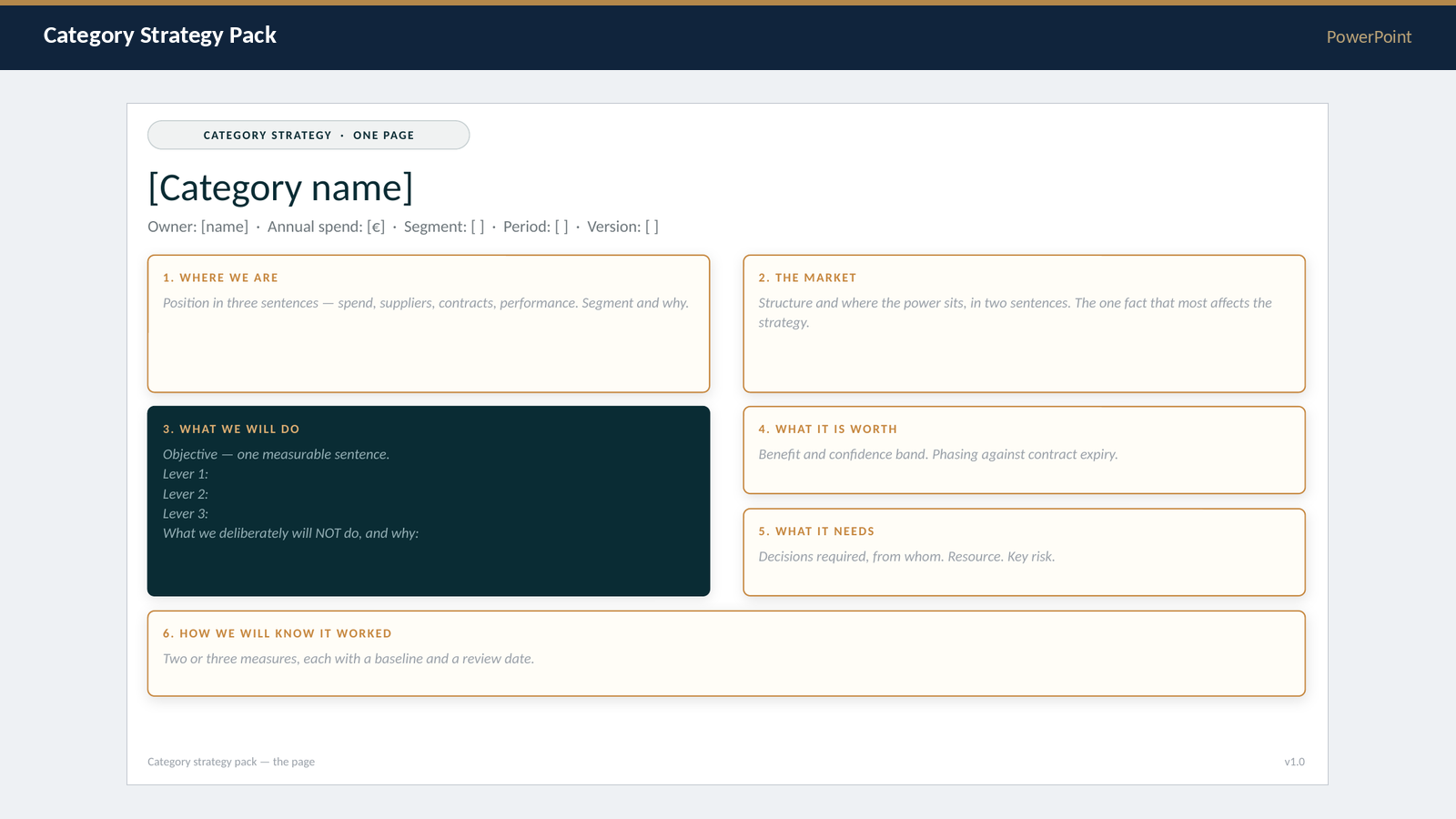
The internal analysis workbook is structured around the four levers that actually move indirect cost — demand, specification, process and contract — rather than around price alone. The forty-lever toolbox lets you select what to do about the category once you have positioned it. The strategy pack is built so a steering committee can decide rather than discuss, and the benefit phasing model answers the question every CFO asks: which financial year does this land in?

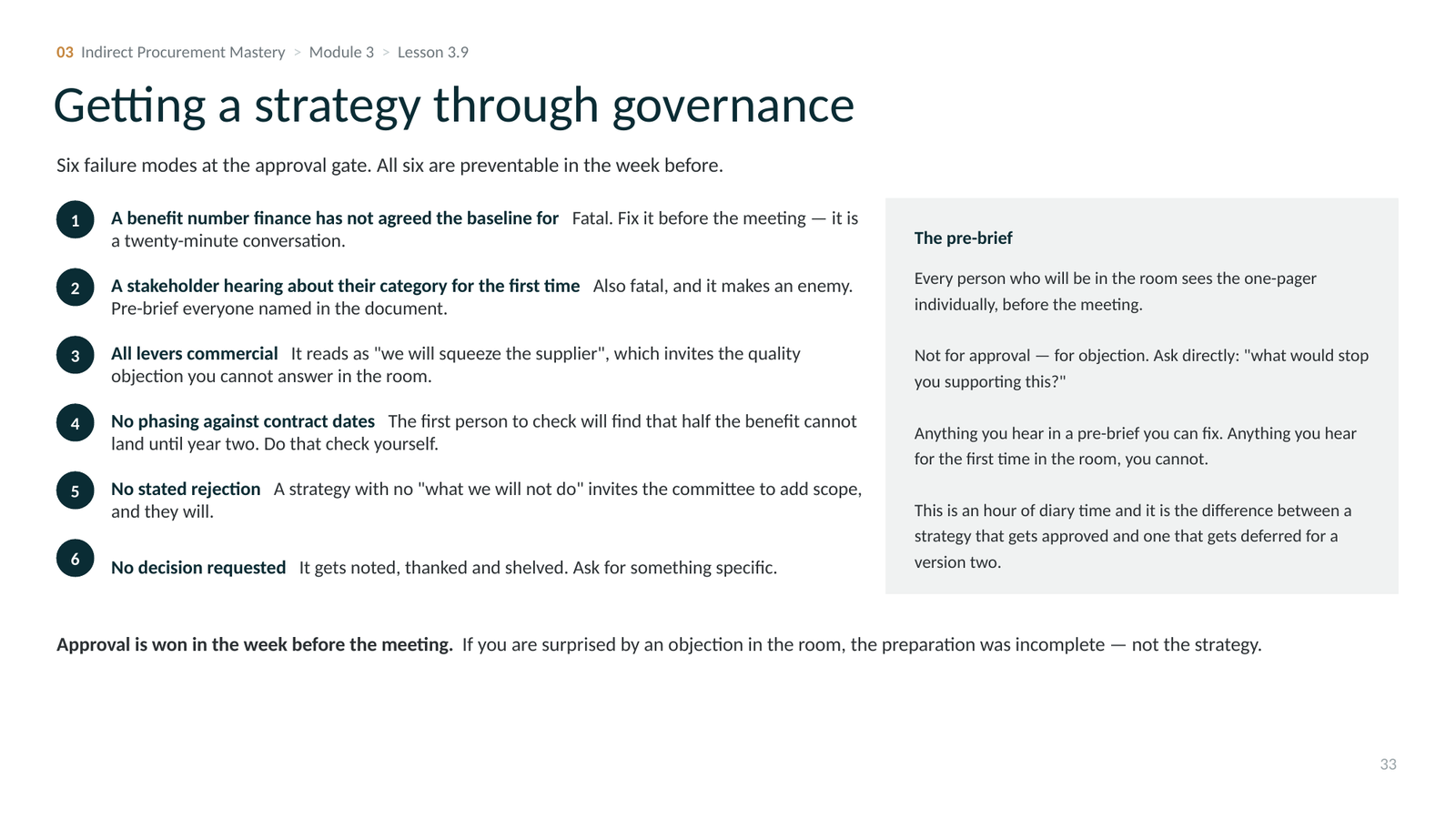
The playbook takes you through the full lifecycle stage by stage, stating the decision required at each gate and the evidence needed to pass it. Most category strategies fail not in the analysis but at approval, because the pack presents findings instead of a recommendation with a phased number attached.
Every spreadsheet ships unlocked with live formulas, one worked example row and a blank working area. Blue text on a pale yellow fill is an input; black is a formula; green is a cross-sheet reference. Nothing is password-protected.

Who it is for: category managers who own one or more indirect categories, procurement leads building a repeatable method rather than running one-off tenders, and consultants who need a defensible structure for a client engagement. It assumes you can obtain spend data at supplier and category level, even imperfect data, and that some governance forum exists that will approve or reject a category strategy.

What it is not: there are no market price benchmarks in this pack and none are invented. Establishing the price level in your own categories is your work; what this gives you is the structure that makes the number arguable in front of people who will challenge it.

This Best Practice includes
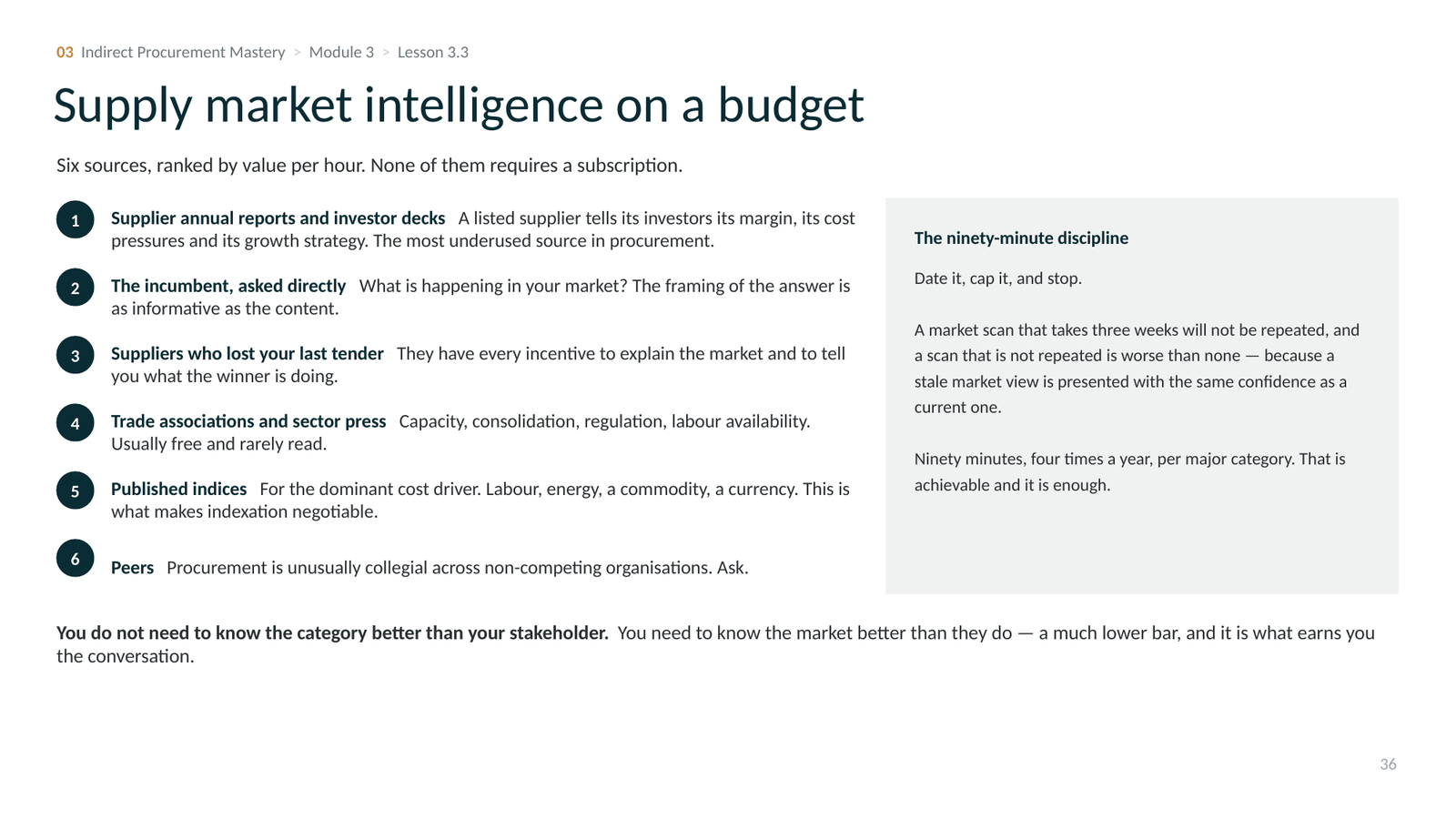
1 PowerPoint guide (13 slides), 2 Excel models, 2 Word playbooks, 2 PowerPoint canvases. All unlocked

Acquire business license for $89.00

Add to cart

Add to bookmarks

Discuss

Further information

• Position a category using a portfolio model corrected for indirect spend, where consequence of failure and lead time matter more than unit price.
• Analyse the category across demand, specification, process and contract, not price alone.
• Select from forty sourcing levers rather than defaulting to a tender.
• Produce a strategy pack that gets approved, with the benefit phased by month and year.

• You own one or more indirect categories and need to produce a defensible strategy.
• You have spend data at supplier and category level, even if imperfect.
• There is a governance forum that will approve or reject a category strategy.

• You have no spend visibility yet — start with a spend analysis toolkit first.
• You need direct material or bill-of-material category work; this is built for indirect.
• You are looking for market price benchmarks; none are included and none are invented.


0.0 / 5 (0 votes)

please wait...