M&A Acquisition Synergies Slide Template
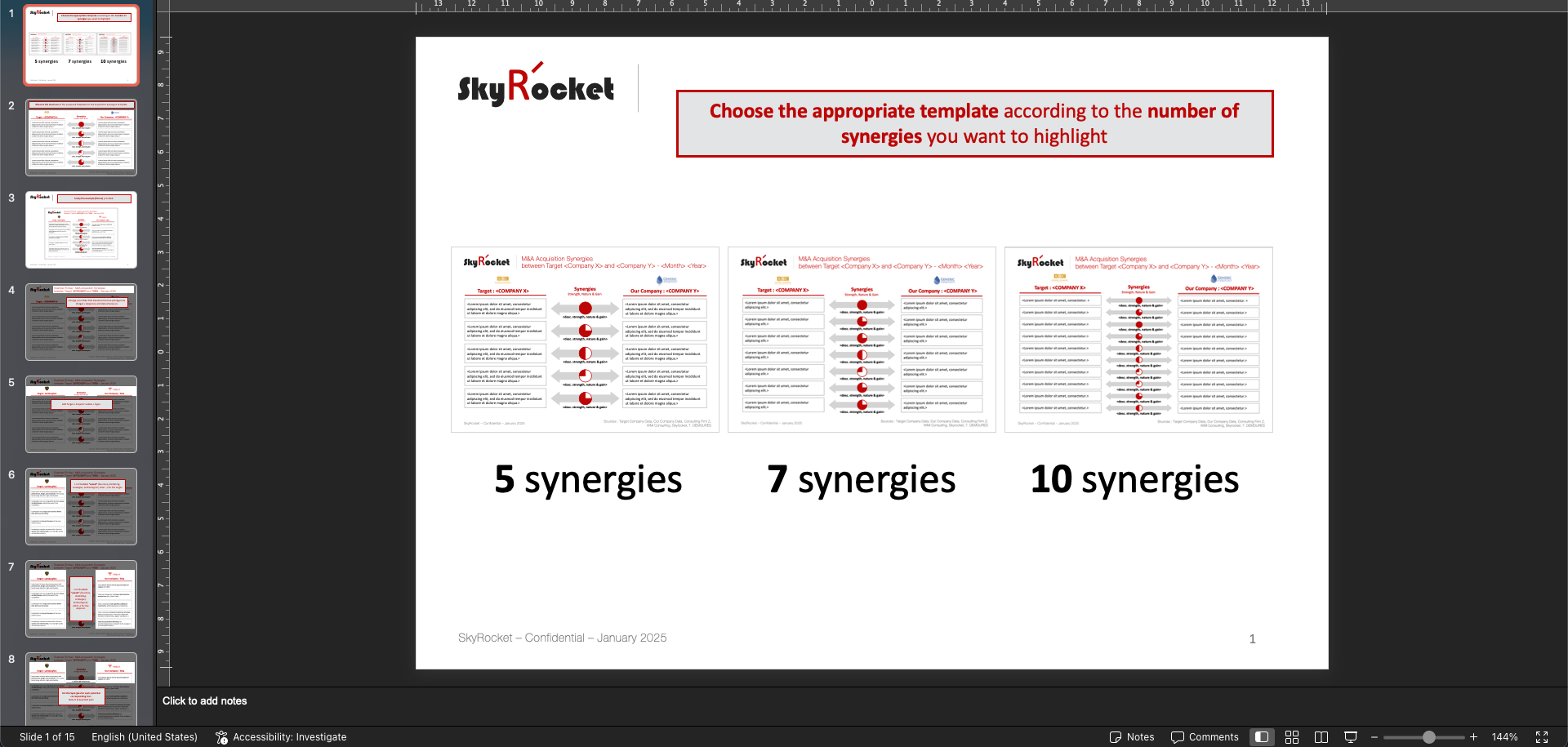
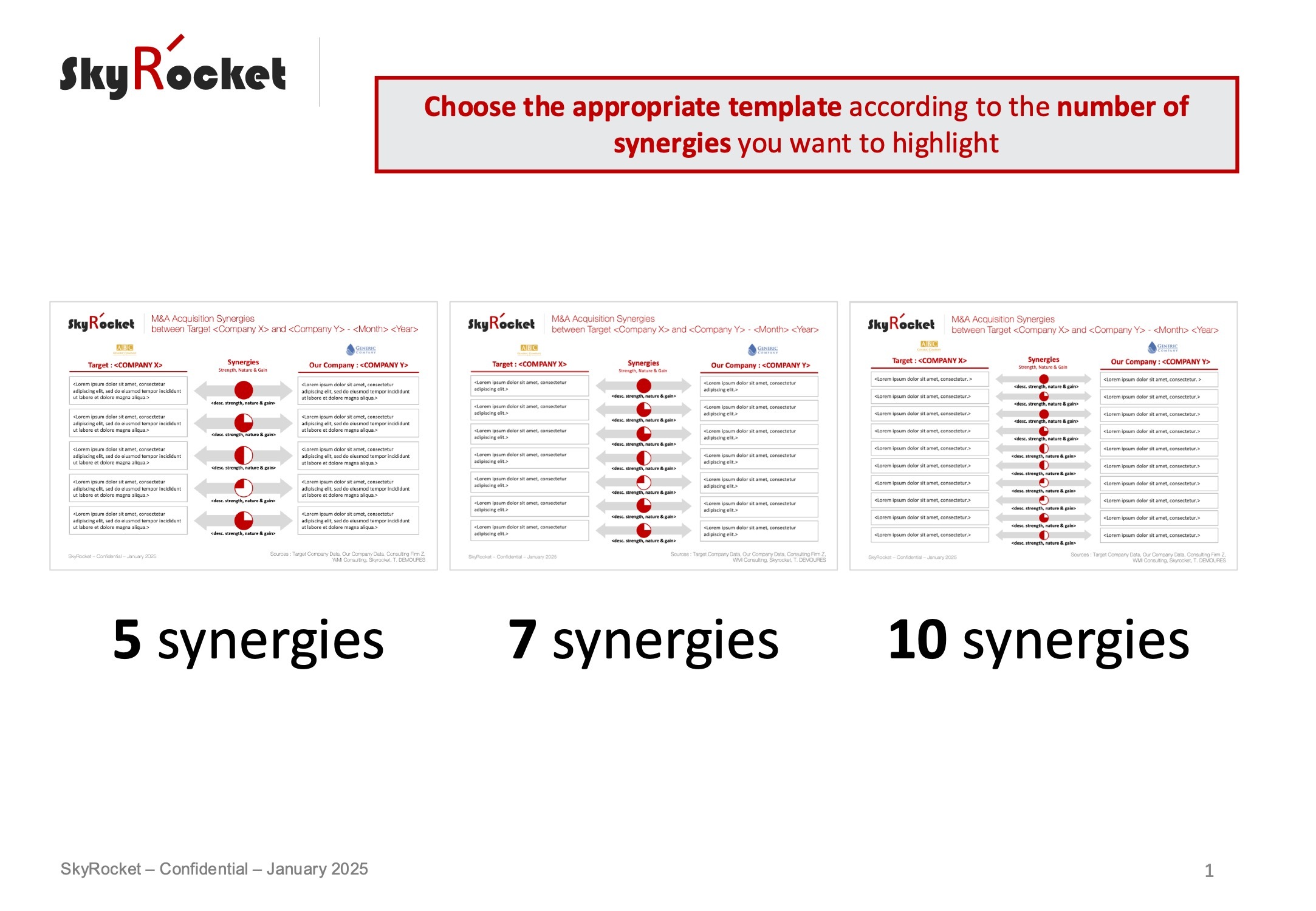
An M&A Acquisition Synergies Template to use in a Mergers & Acquisitions operation, for analysts & strategy consultants in a CDD (Commercial Due Diligence).


Original Best Practice: Acquisition Synergies by WMI Consulting
Description
Typically conducted by specialized consulting firms or investment bank, Commercial Due Diligence (CDD) is a critical process conducted during mergers and acquisitions (M&A) or investments to assess the commercial attractiveness of a target company. The primary goal of CDD is to validate the business plan, evaluate market conditions, and confirm the revenue and profit forecasts of the target company. This process helps investors and acquirers make informed decisions by providing a comprehensive understanding of the target's market position, competitive landscape, customer base, and growth prospects.
In a CDD, consultants on the deal are generally asked to estimate the potential synergies between the acquirer and the target company on multiple levels : Strategic, Financial, Marketing, Operational, Technological, Commercial...
Here is a list of typical synergies (non-exhaustive) :
📤 💰 1. Cost Synergies: These are the most common and involve reducing expenses by eliminating duplications, such as:
- Overhead Cost Reduction: Combining headquarters, administrative staff, and other support functions.
- Operational Efficiencies: Streamlining operations, sharing resources, and best practices.
- Purchasing Power: Increased bargaining power with suppliers due to larger combined volume.
📥 💰 2. Revenue Synergies: These involve increasing the top line of the combined entity by:
- Cross-Selling: Offering each company's products or services to the other's customer base.
- New Market Penetration: Expanding into new geographical markets or customer segments.
- Product/Service Innovation: Combining R&D efforts to develop new products or services.
⚙️ 💵 3. Financial Synergies: These relate to improved financial performance and may include:
- Improved Capital Structure: Optimizing the debt-to-equity ratio.
- Tax Benefits: Utilizing tax losses or credits of one company to offset profits of the other.
- Better Access to Finance: Improved credit rating or access to capital markets.
🤓 4. Managerial Synergies: These involve improvements in management and decision-making processes, such as:
- Shared Expertise: Leveraging the strengths and knowledge of managers from both companies.
- Improved Governance: Enhancing corporate governance and oversight.
💪 5.Market Power Synergies: These refer to the increased influence the combined entity may have in the market, including:
- Pricing Power: The ability to influence prices in the market.
- Barriers to Entry: Making it more difficult for competitors to enter the market.
📚 6. Talent and Knowledge Synergies: These involve the combination of human capital and intellectual property, such as:
- Skills and Expertise: Combining the talents and knowledge of employees from both companies.
- Patents and Technology: Sharing and leveraging intellectual property and proprietary technologies.
- - -
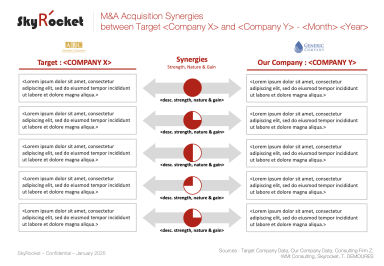
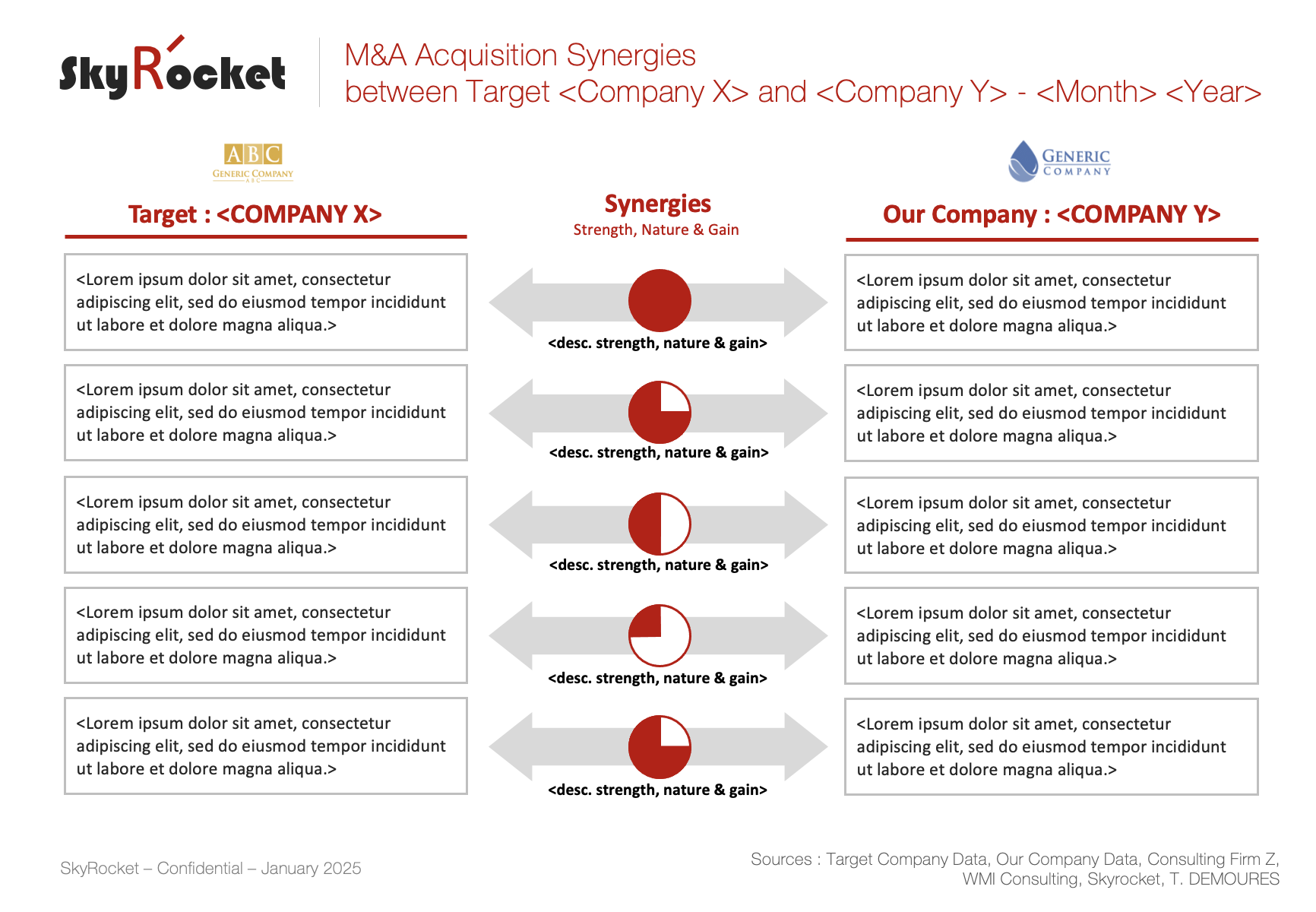
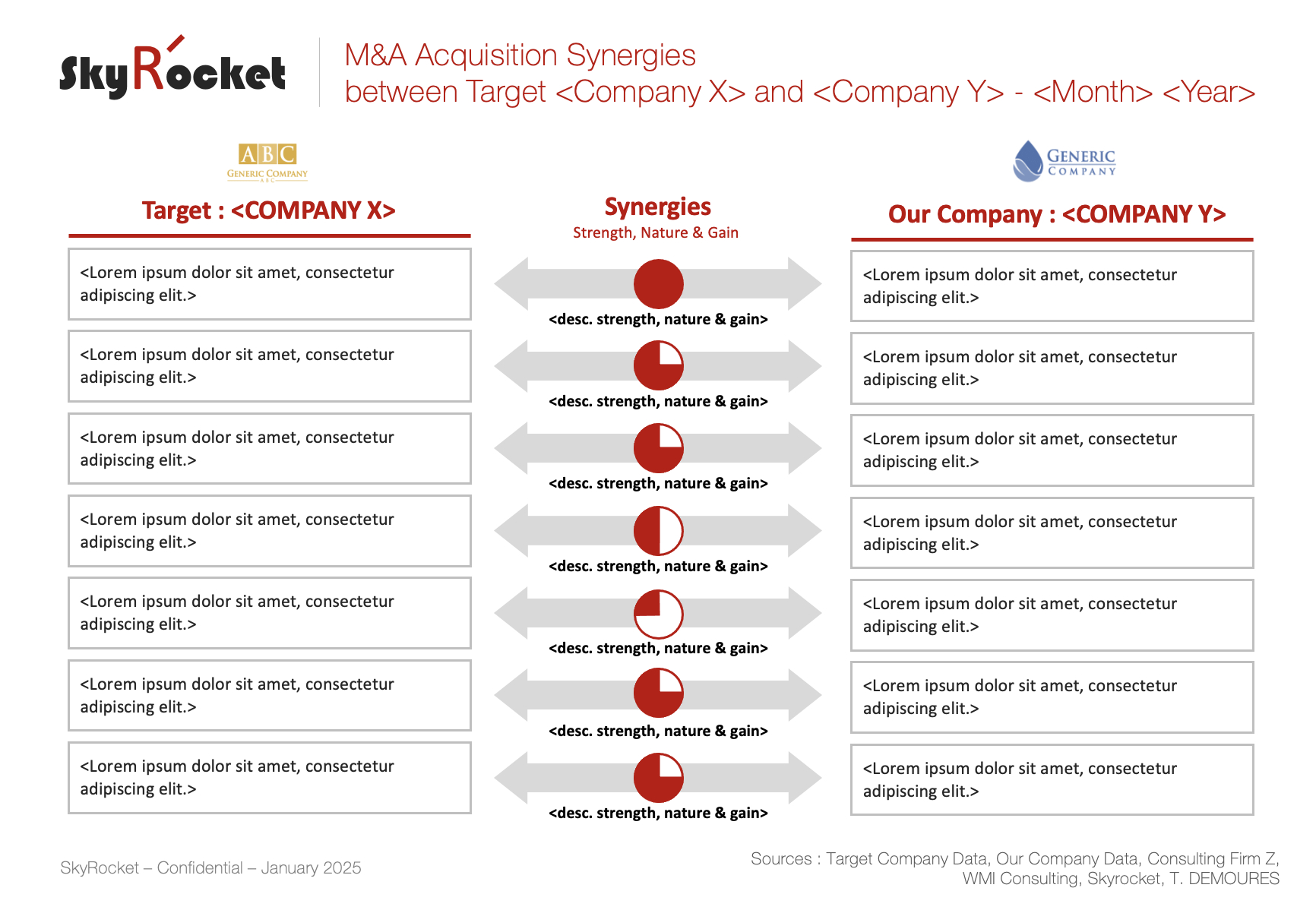
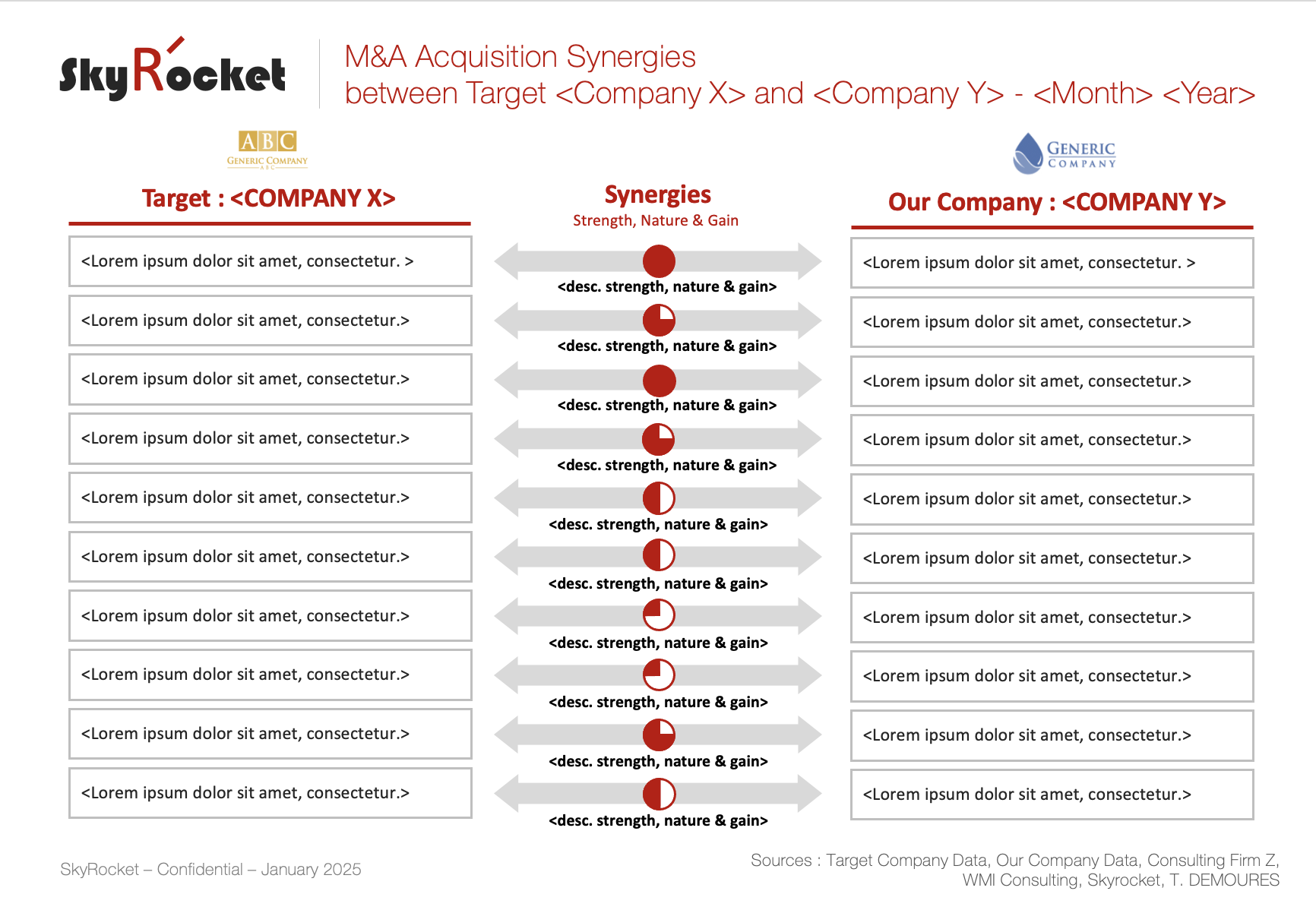
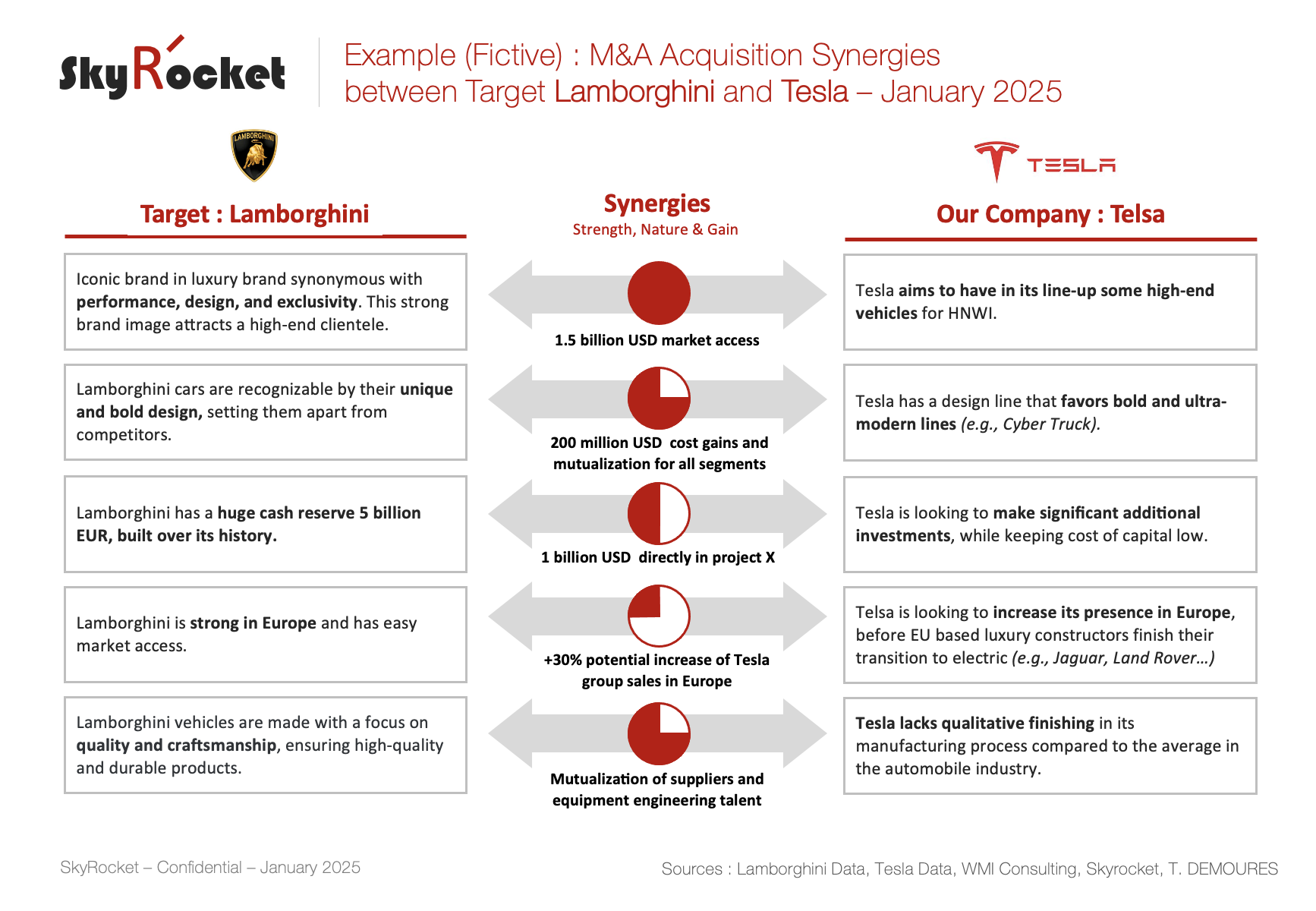
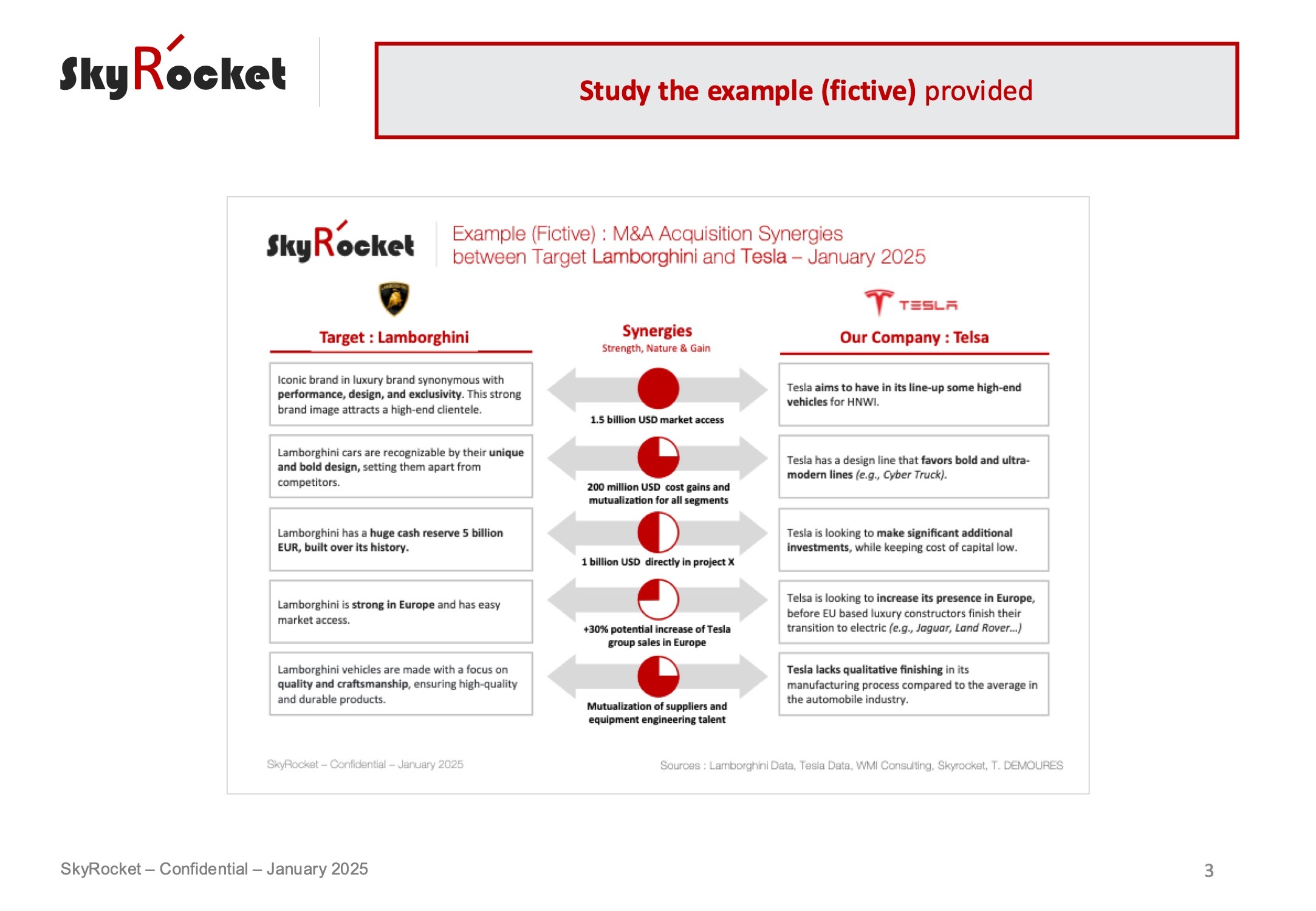
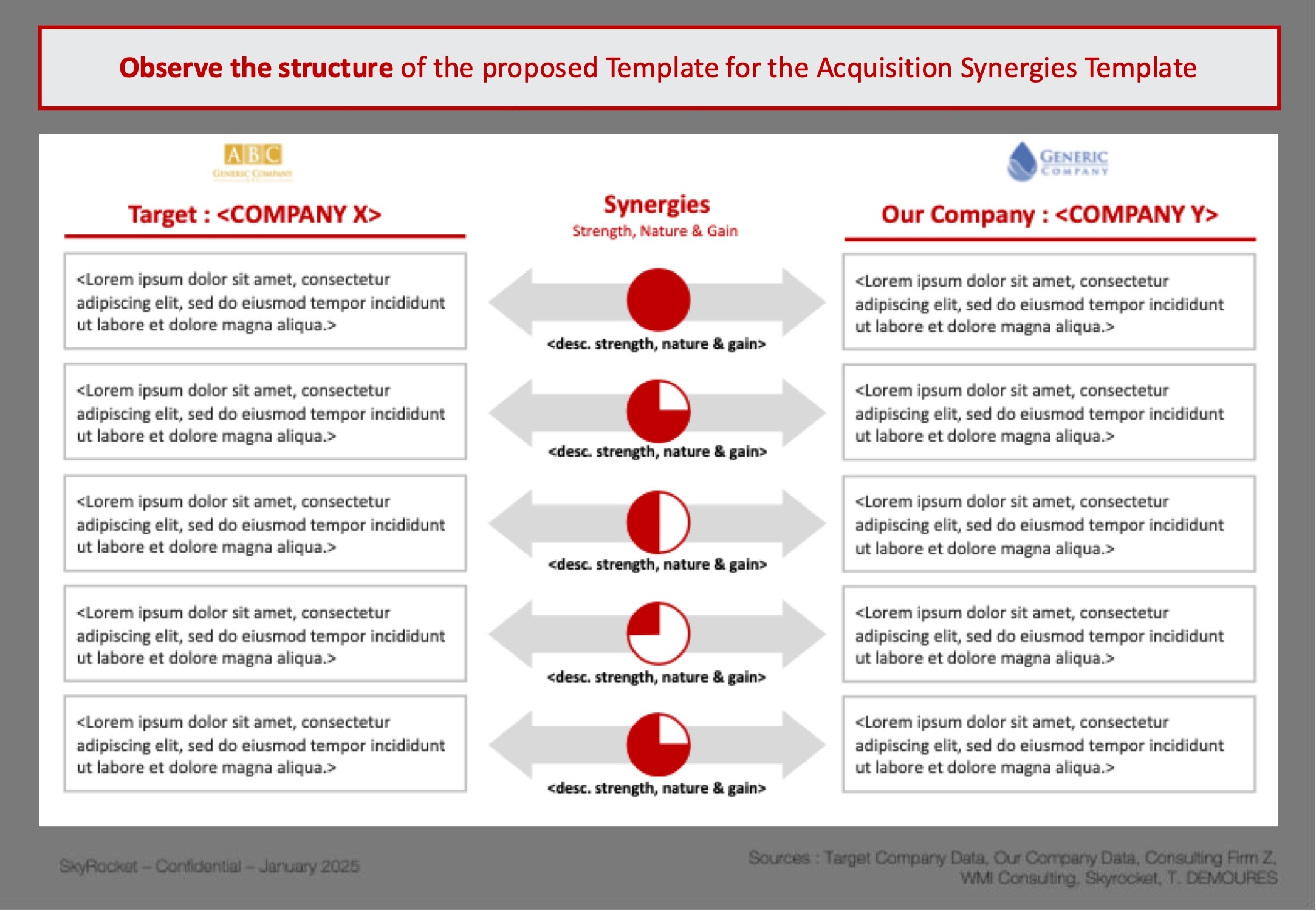
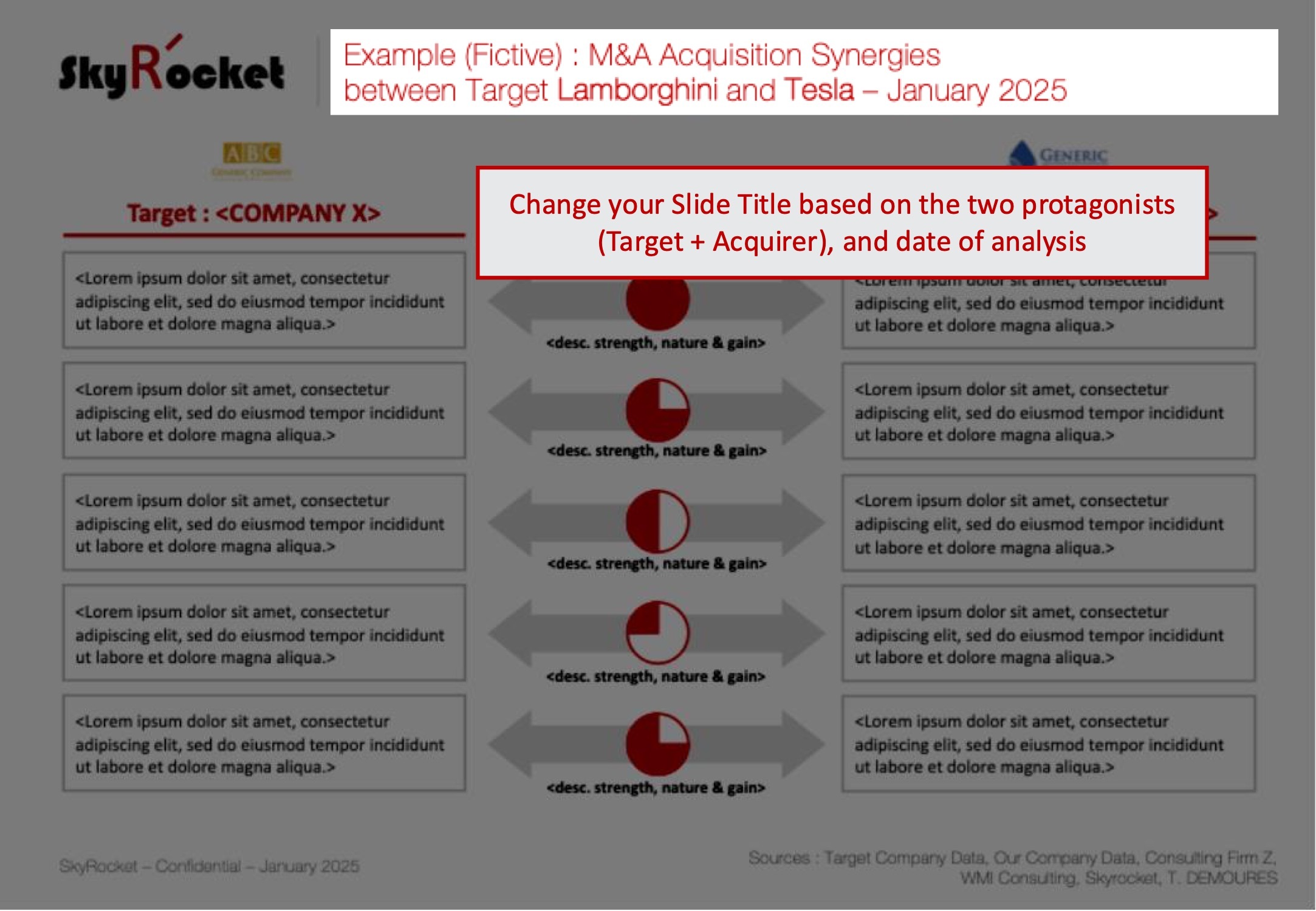
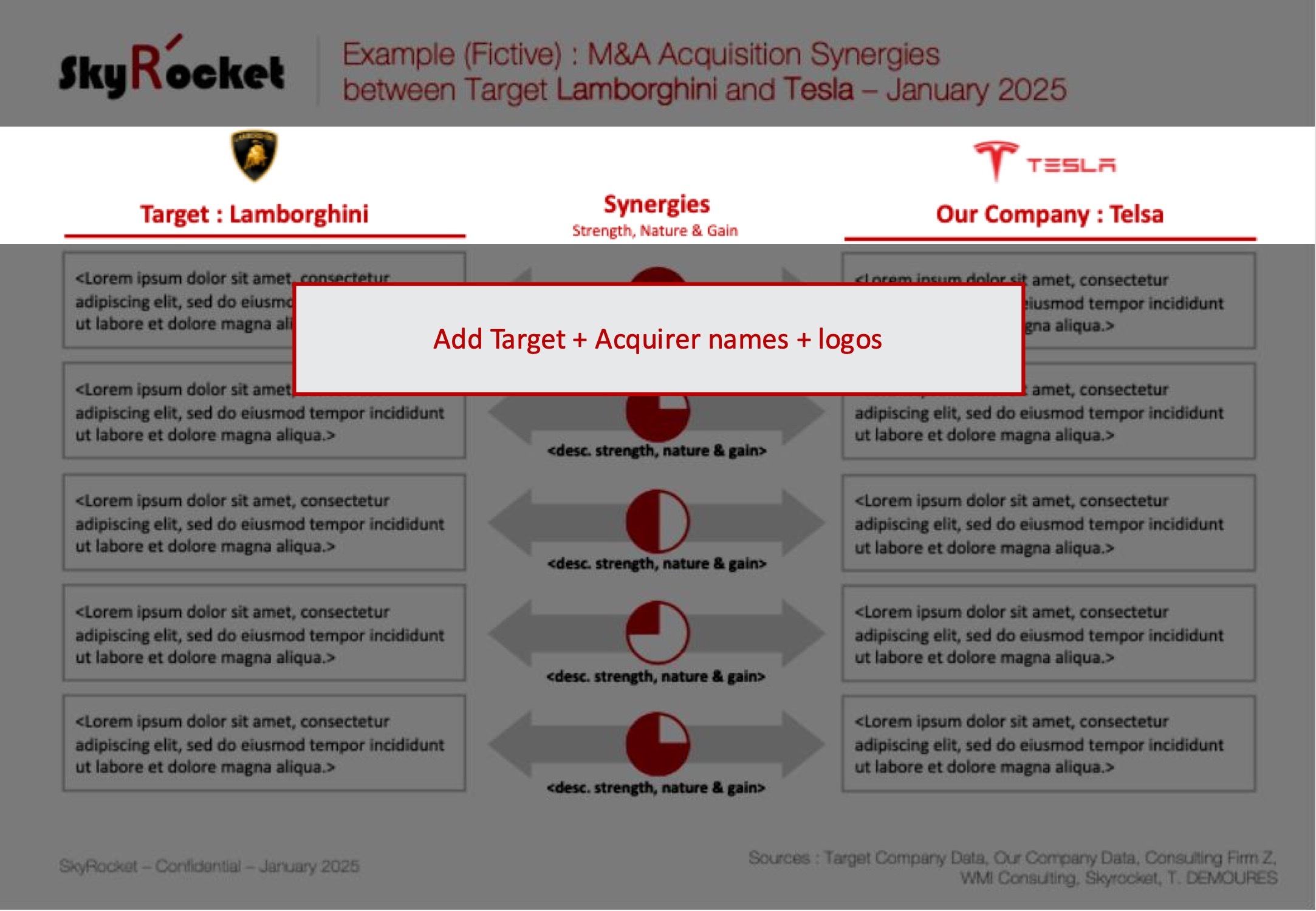
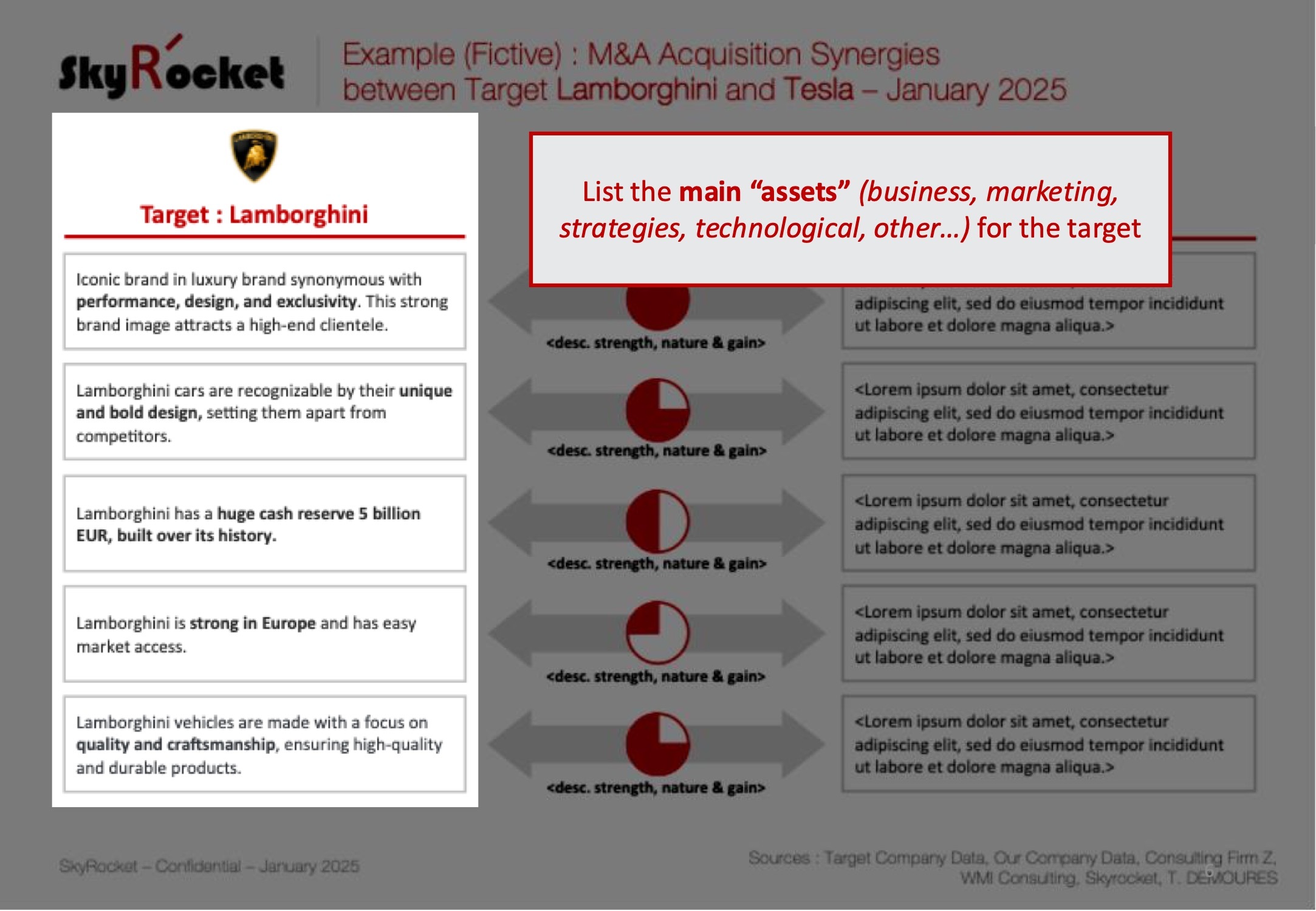
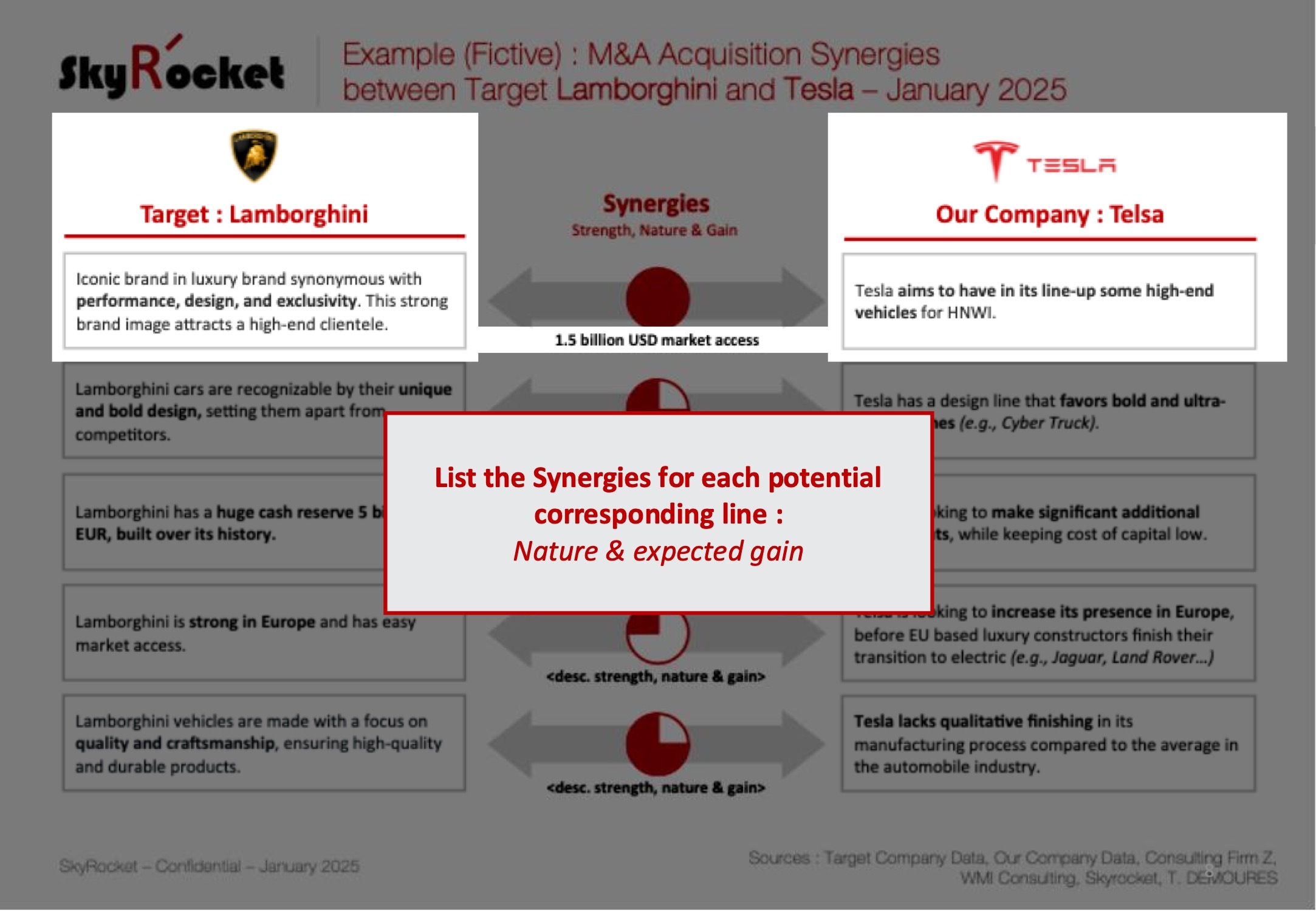
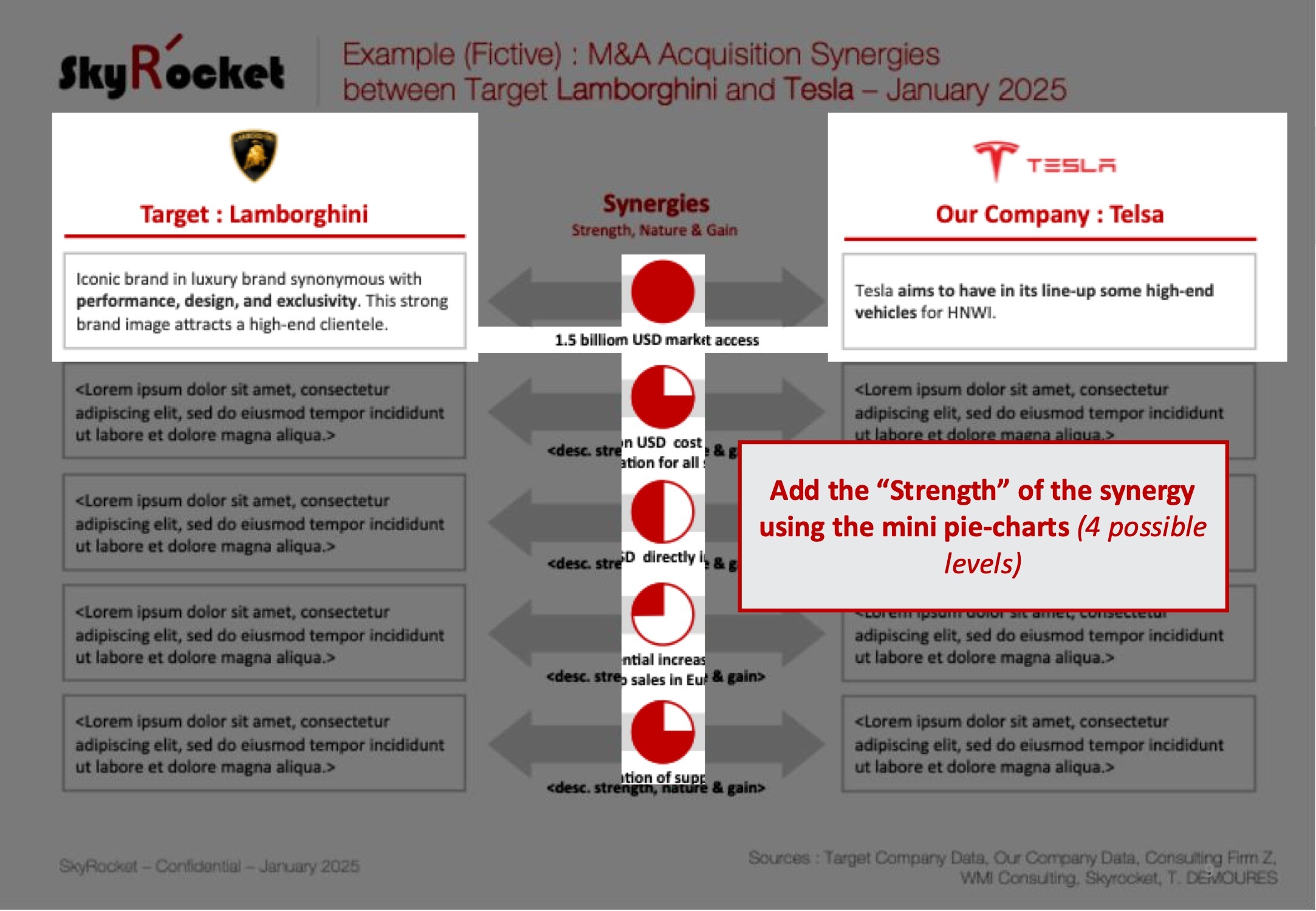
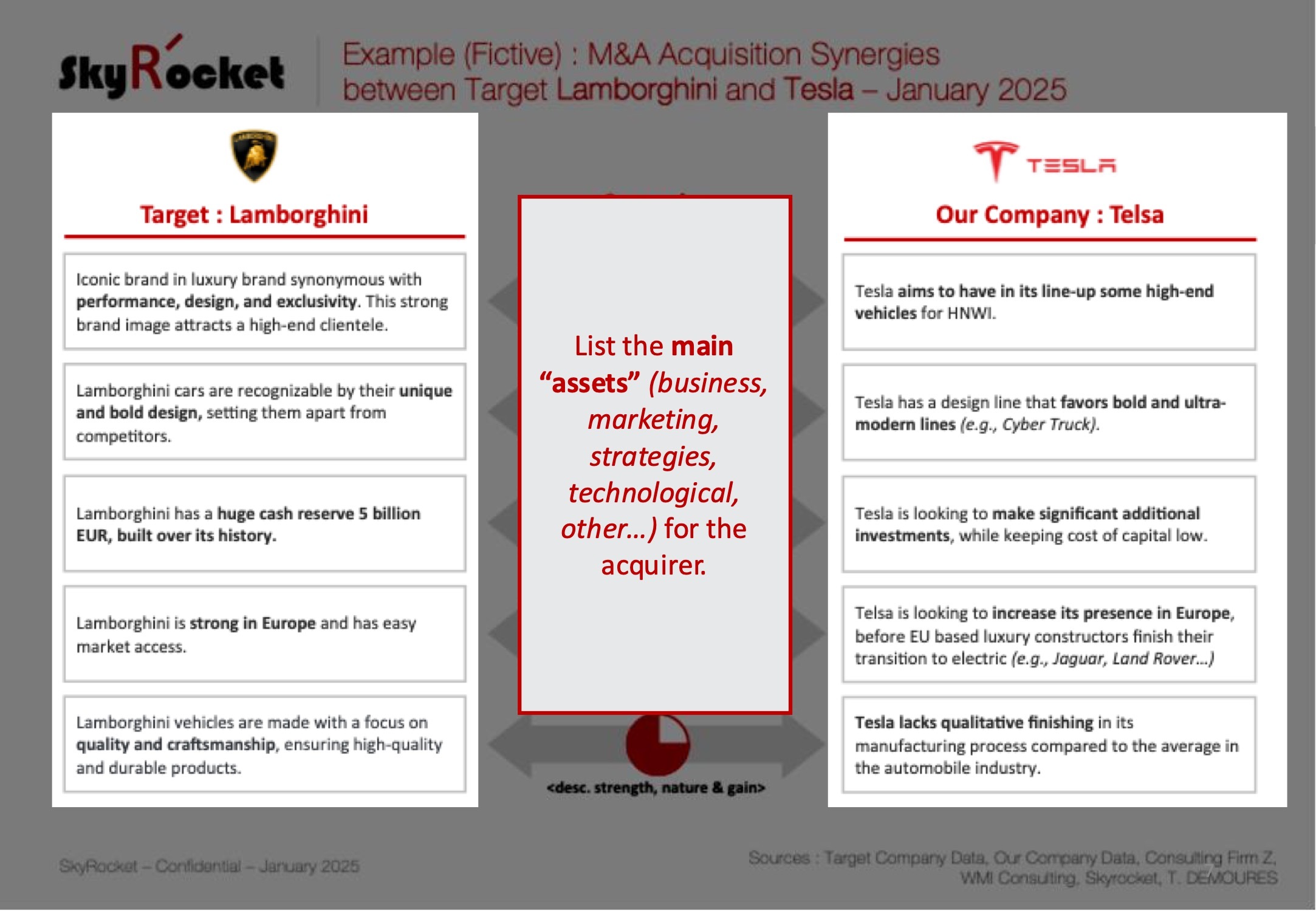
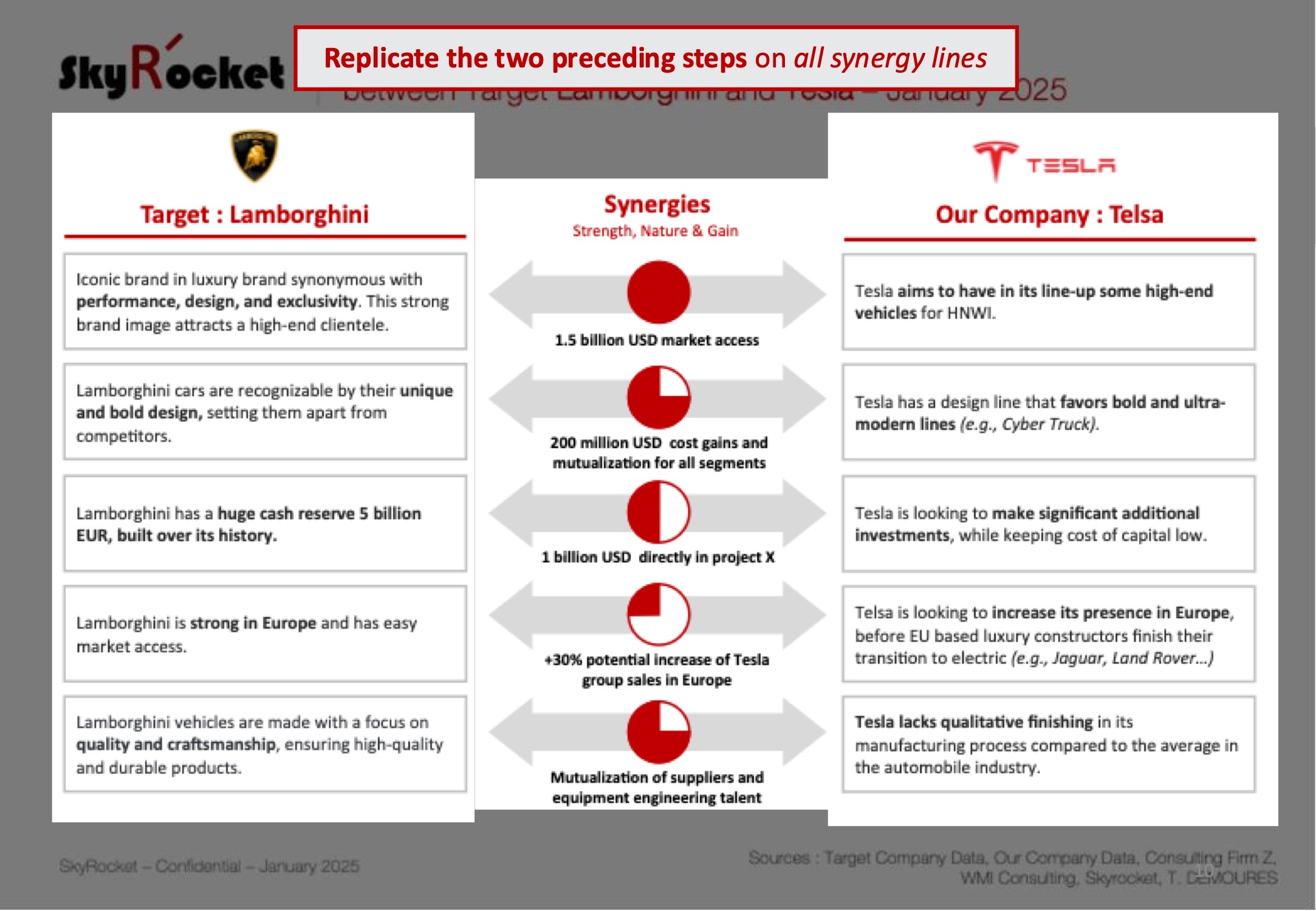
One way to present these synergies is using the structure proposed in this template, and originally published by WMI Consulting (Entrepreneurial Consulting Firm) in the 2000s.
The structure of the slide is quite simple :
- 1 column with the main assets of the TARGET company
- 1 colunm with the corresponding assets of the ACQUIRER
- and in between an explicit mention of the SYNERGIES for each "line", with a quantification of the strength.
- - -
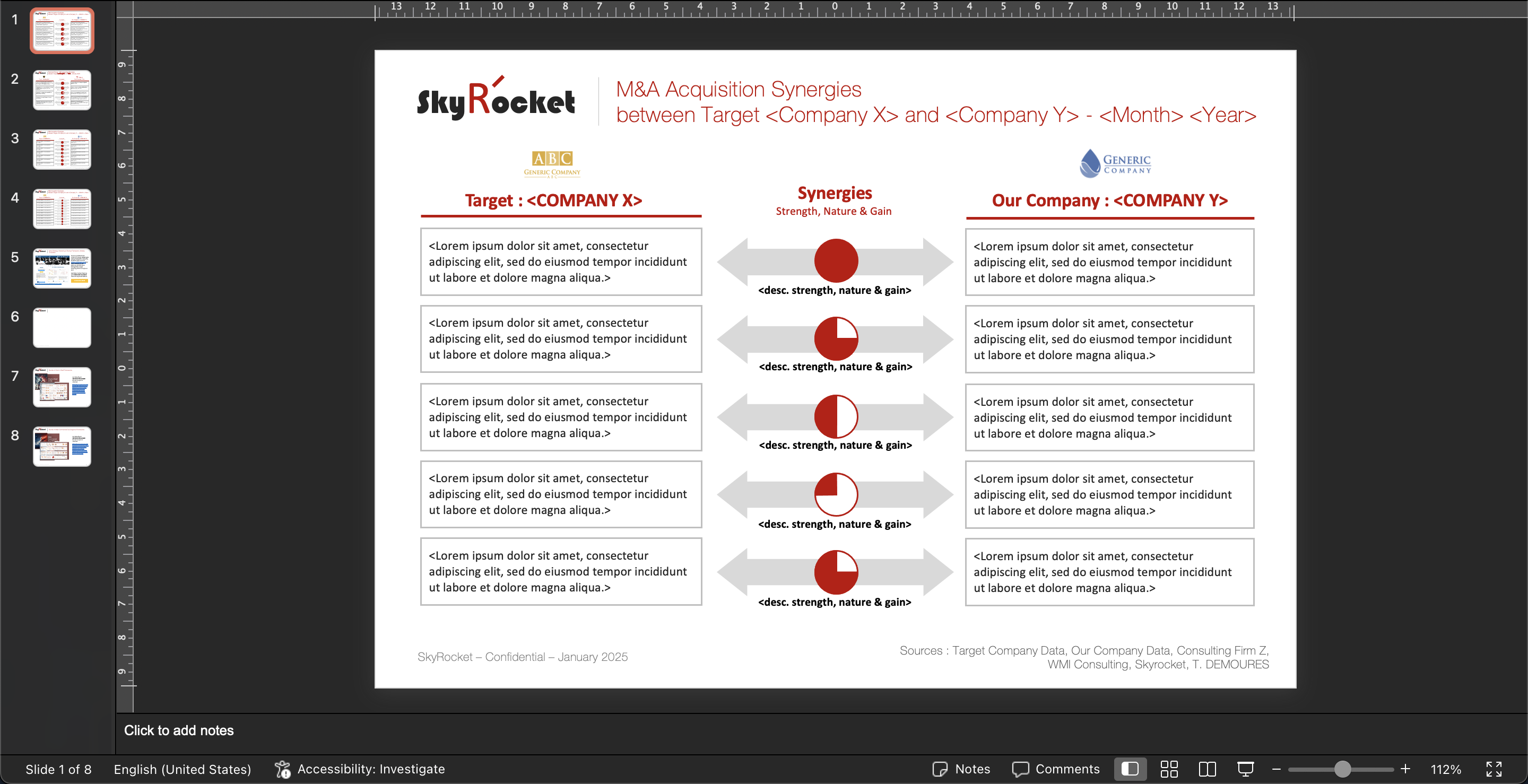
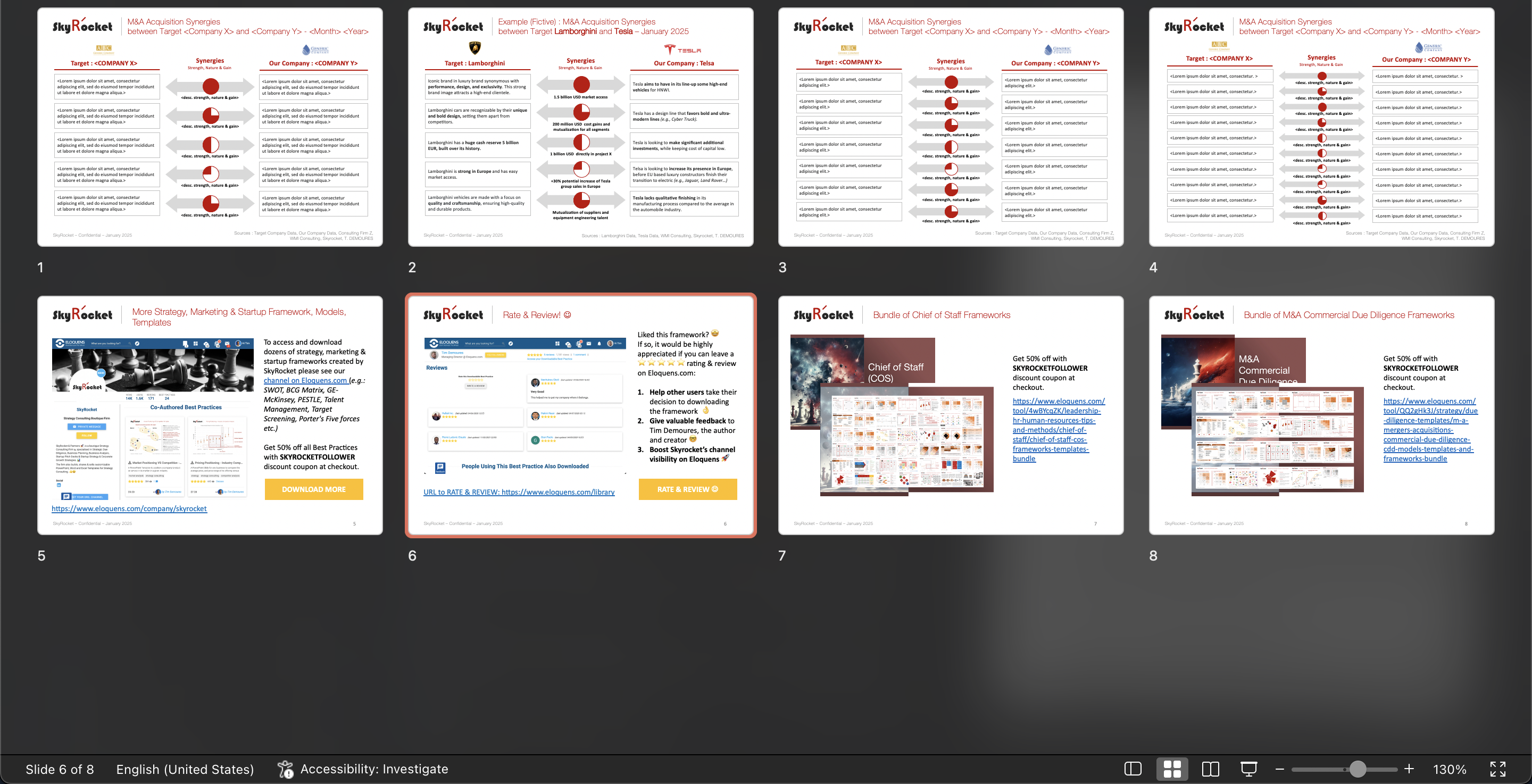
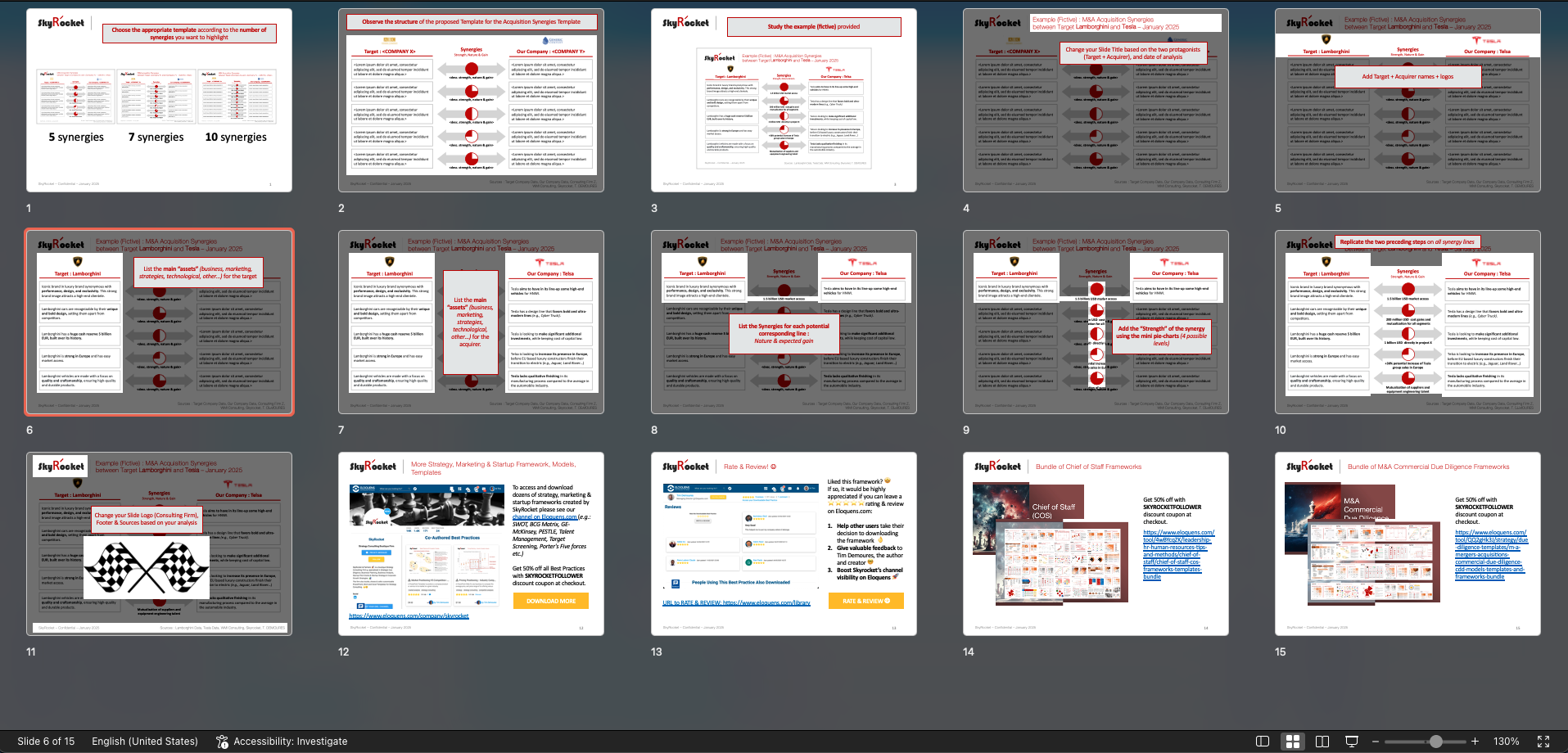
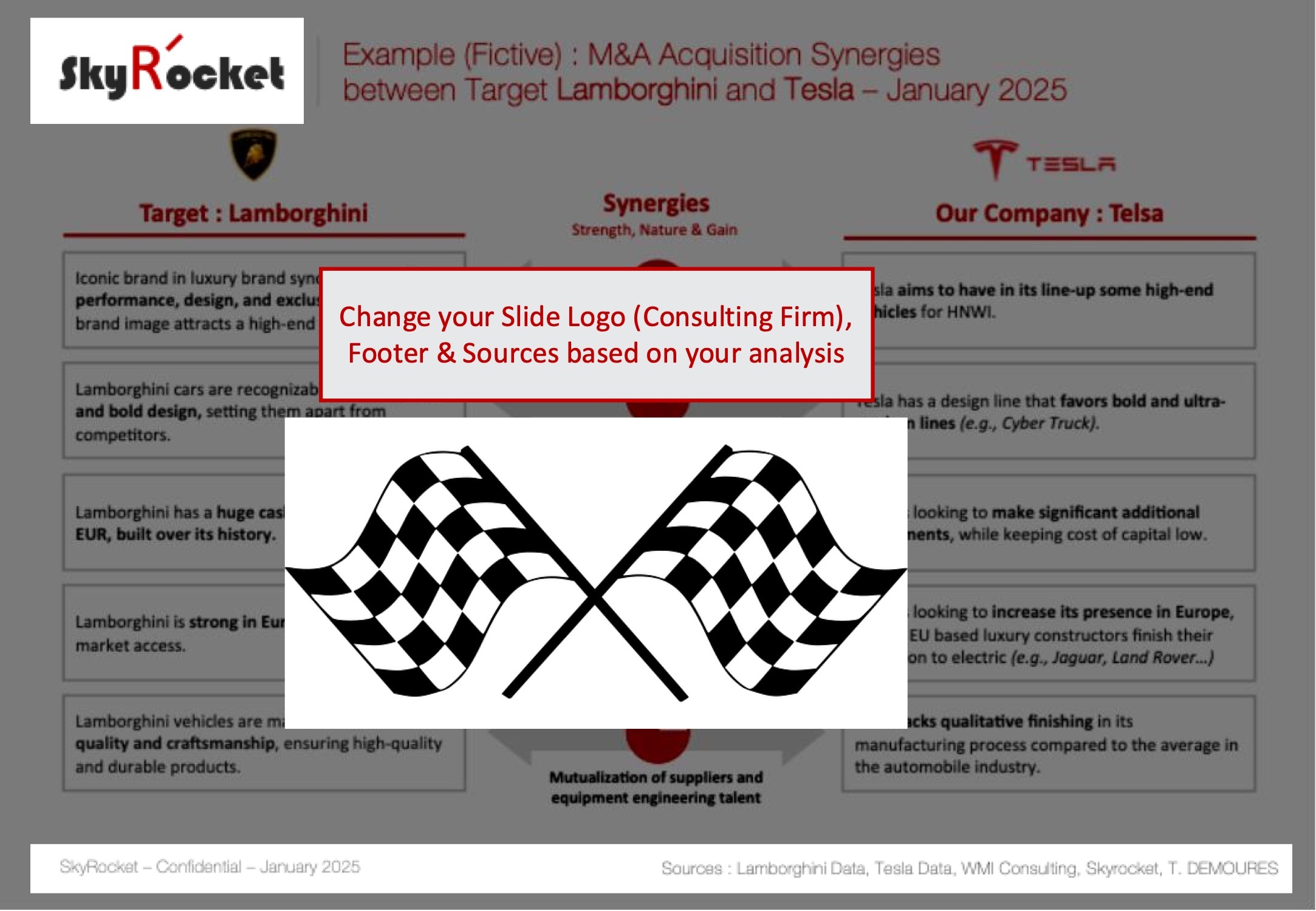
The file is 1 editable Microsoft PowerPoint Template Slide, with an online or offline 11 step-by-step methodology, with pedagogical illustrations for each step.
Should you have any questions on using this top tier M&A (Mergers & Acquisitions) CDD (Commercial Due Diligience) Acquisition Synergies slide, you're welcome to reach out to me via Private Message.
Good luck!
- Tim
⭐️ Bundle of 20+ Commercial Due-Diligence (CDD) Model Templates (including this one)
⭐️ Bundle of 60+ Chief of Staff (COS) Frameworks (including this one)
Typically conducted by specialized consulting firms or investment bank, Commercial Due Diligence (CDD) is a critical process conducted during mergers and acquisitions (M&A) or investments to assess the commercial attractiveness of a target company. The primary goal of CDD is to validate the business plan, evaluate market conditions, and confirm the revenue and profit forecasts of the target company. This process helps investors and acquirers make informed decisions by providing a comprehensive understanding of the target's market position, competitive landscape, customer base, and growth prospects.
In a CDD, consultants on the deal are generally asked to estimate the potential synergies between the acquirer and the target company on multiple levels : Strategic, Financial, Marketing, Operational, Technological, Commercial...
Here is a list of typical synergies (non-exhaustive) :
📤 💰 1. Cost Synergies: These are the most common and involve reducing expenses by eliminating duplications, such as:
- Overhead Cost Reduction: Combining headquarters, administrative staff, and other support functions.
- Operational Efficiencies: Streamlining operations, sharing resources, and best practices.
- Purchasing Power: Increased bargaining power with suppliers due to larger combined volume.
📥 💰 2. Revenue Synergies: These involve increasing the top line of the combined entity by:
- Cross-Selling: Offering each company's products or services to the other's customer base.
- New Market Penetration: Expanding into new geographical markets or customer segments.
- Product/Service Innovation: Combining R&D efforts to develop new products or services.
⚙️ 💵 3. Financial Synergies: These relate to improved financial performance and may include:
- Improved Capital Structure: Optimizing the debt-to-equity ratio.
- Tax Benefits: Utilizing tax losses or credits of one company to offset profits of the other.
- Better Access to Finance: Improved credit rating or access to capital markets.
🤓 4. Managerial Synergies: These involve improvements in management and decision-making processes, such as:
- Shared Expertise: Leveraging the strengths and knowledge of managers from both companies.
- Improved Governance: Enhancing corporate governance and oversight.
💪 5.Market Power Synergies: These refer to the increased influence the combined entity may have in the market, including:
- Pricing Power: The ability to influence prices in the market.
- Barriers to Entry: Making it more difficult for competitors to enter the market.
📚 6. Talent and Knowledge Synergies: These involve the combination of human capital and intellectual property, such as:
- Skills and Expertise: Combining the talents and knowledge of employees from both companies.
- Patents and Technology: Sharing and leveraging intellectual property and proprietary technologies.
- - -
One way to present these synergies is using the structure proposed in this template, and originally published by WMI Consulting (Entrepreneurial Consulting Firm) in the 2000s.
The structure of the slide is quite simple :
- 1 column with the main assets of the TARGET company
- 1 colunm with the corresponding assets of the ACQUIRER
- and in between an explicit mention of the SYNERGIES for each "line", with a quantification of the strength.
- - -
The file is 1 editable Microsoft PowerPoint Template Slide, with an online or offline 11 step-by-step methodology, with pedagogical illustrations for each step.
Should you have any questions on using this top tier M&A (Mergers & Acquisitions) CDD (Commercial Due Diligience) Acquisition Synergies slide, you're welcome to reach out to me via Private Message.
Good luck!
- Tim
⭐️ Bundle of 20+ Commercial Due-Diligence (CDD) Model Templates (including this one)
⭐️ Bundle of 60+ Chief of Staff (COS) Frameworks (including this one)
This Best Practice includes
1 PowerPoint Slide Template (with 1 example) + 1 Online 11 Step-By-Step Methodology