Advanced Procurement Negotiation Toolkit — Cost Breakdown, Pricing Mechanisms, Multi-Issue Trade Matrix
Originally published: 31/08/2026 11:37
Publication number: ELQ-85067-1
View all versions & Certificate
certified

Advanced Procurement Negotiation Toolkit — Cost Breakdown, Pricing Mechanisms, Multi-Issue Trade Matrix

Negotiate on cost rather than on discount, and design the deal rather than the conversation.

Description
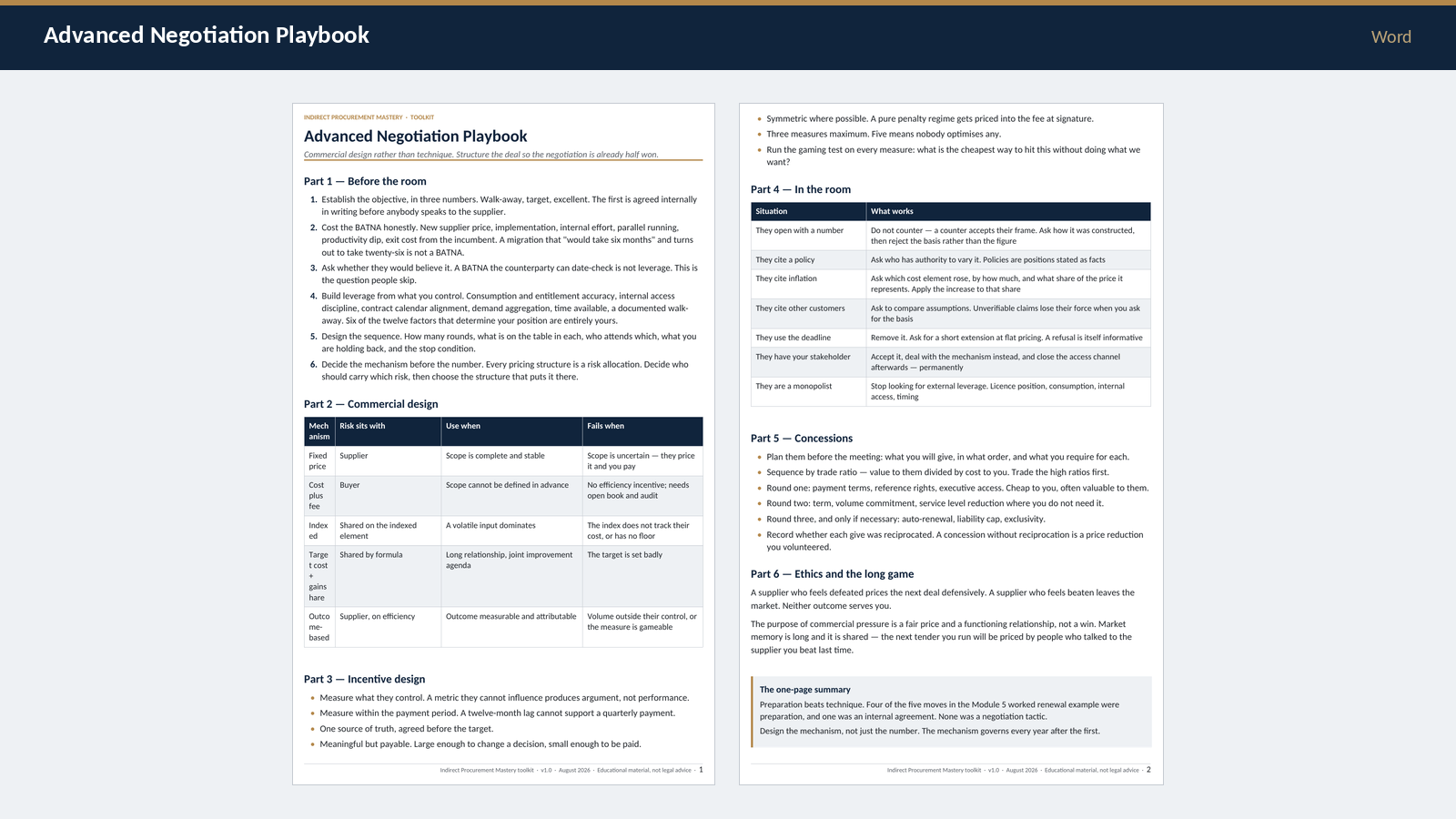
Negotiation as commercial design rather than as tactics. Most negotiation material teaches behaviour; this toolkit assumes you can already hold the conversation and concentrates on the part that decides the outcome — the structure of the deal.
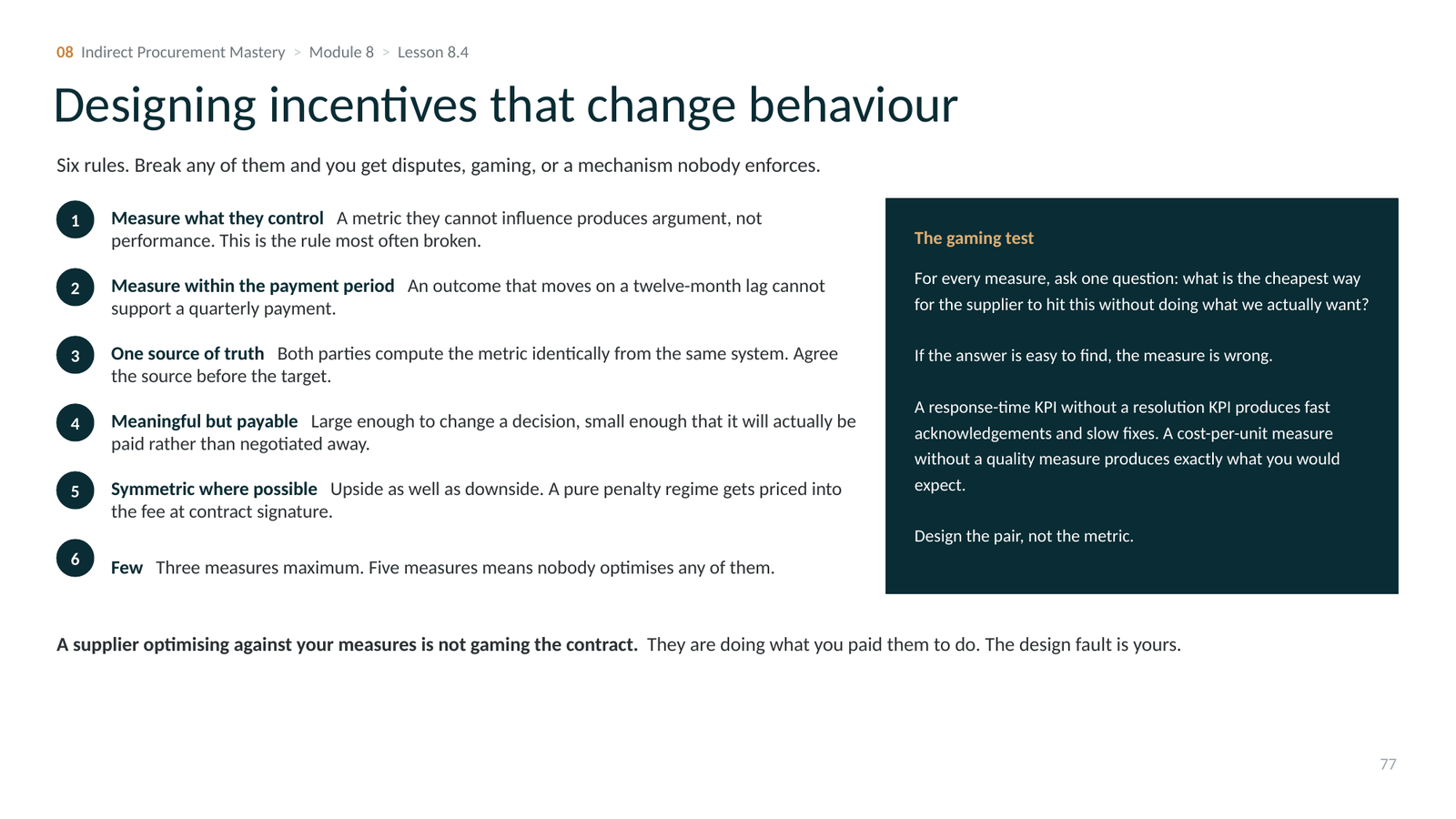
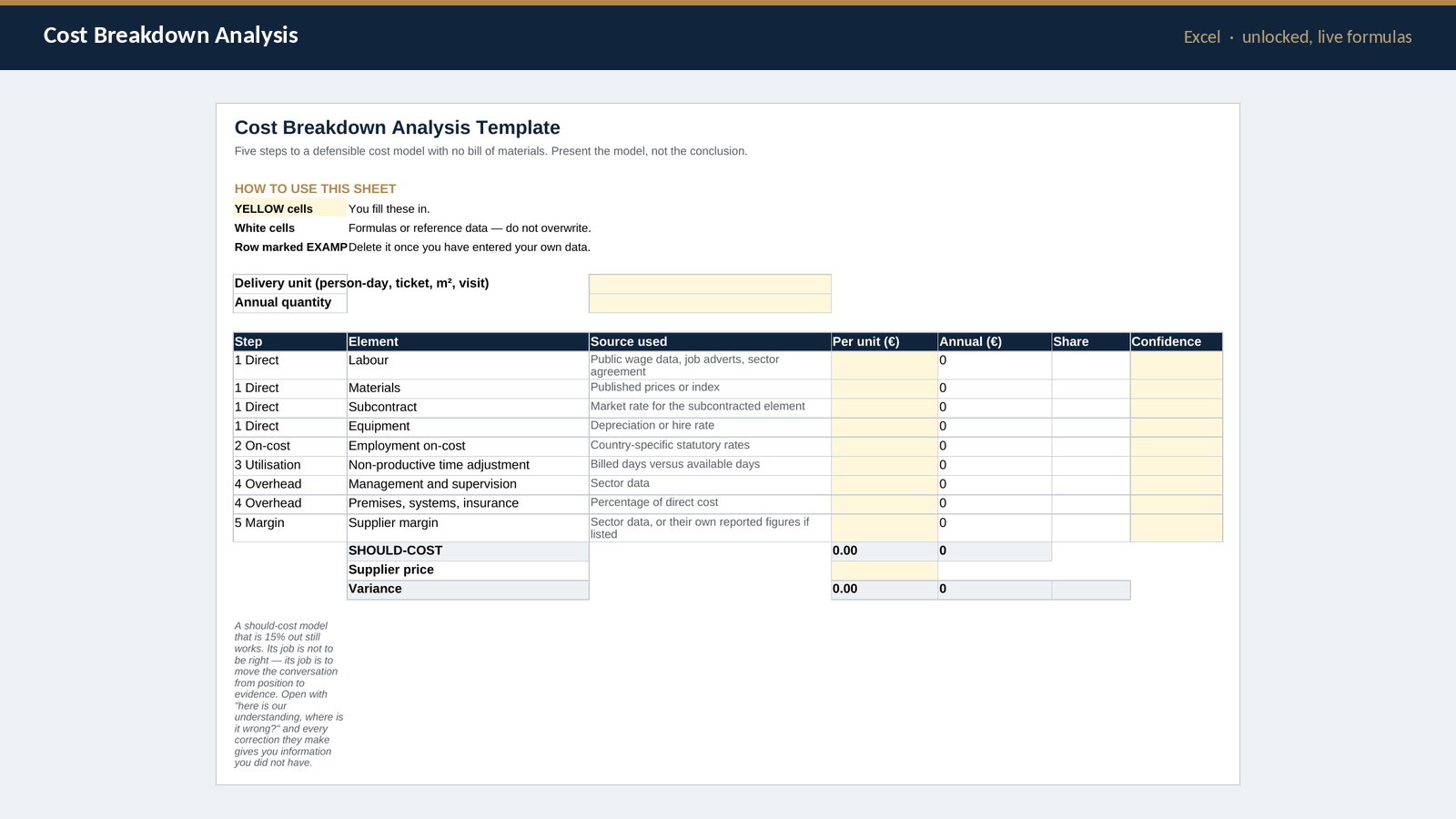
Cost breakdown analysis lets you negotiate on what the price is made of rather than on the size of the discount. The pricing mechanism selector chooses between fixed, indexed, cost-plus, capped and gainshare based on the characteristics of the category rather than on habit. The incentive designer builds bonus and gainshare structures that change behaviour instead of transferring margin.
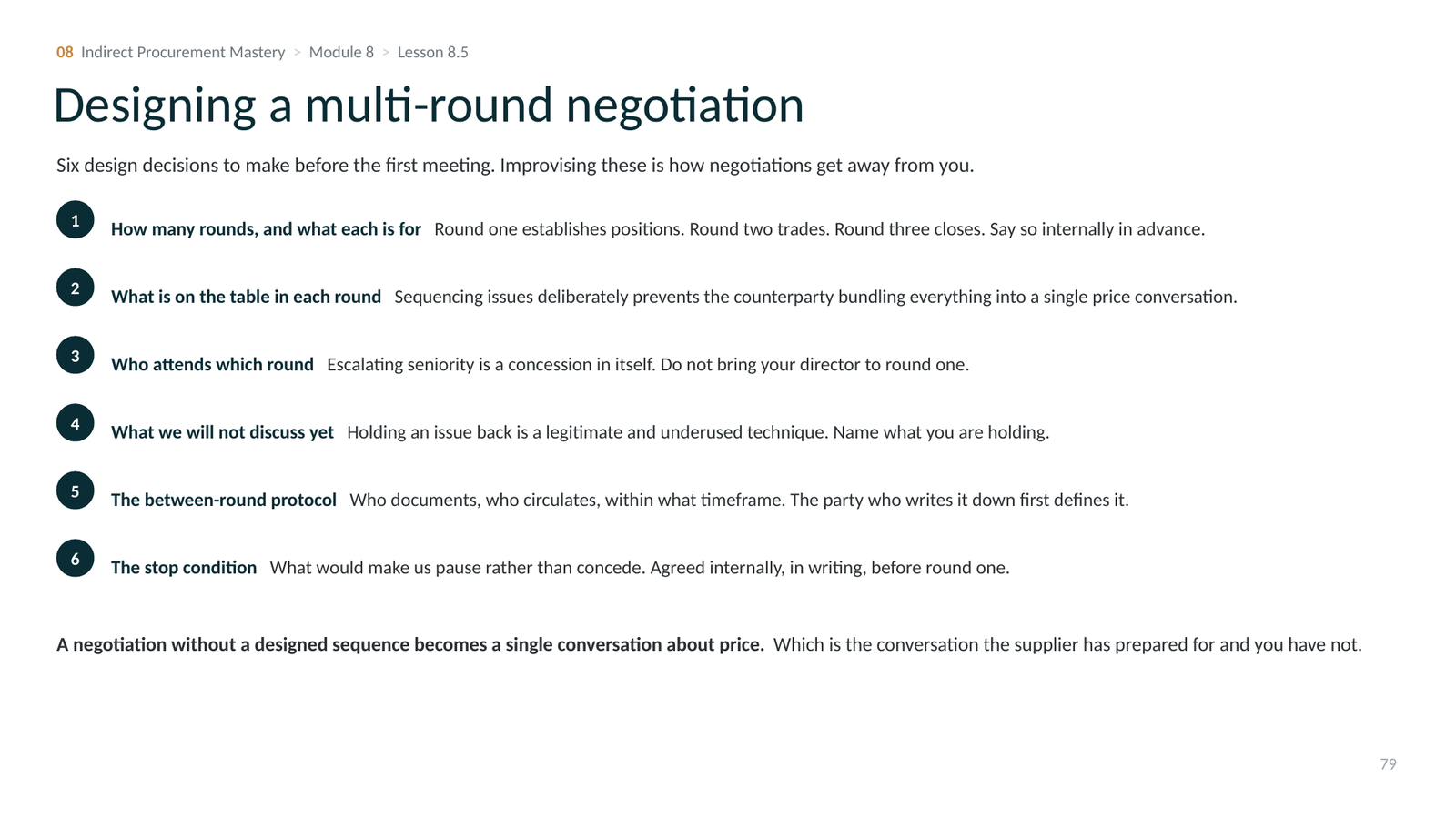
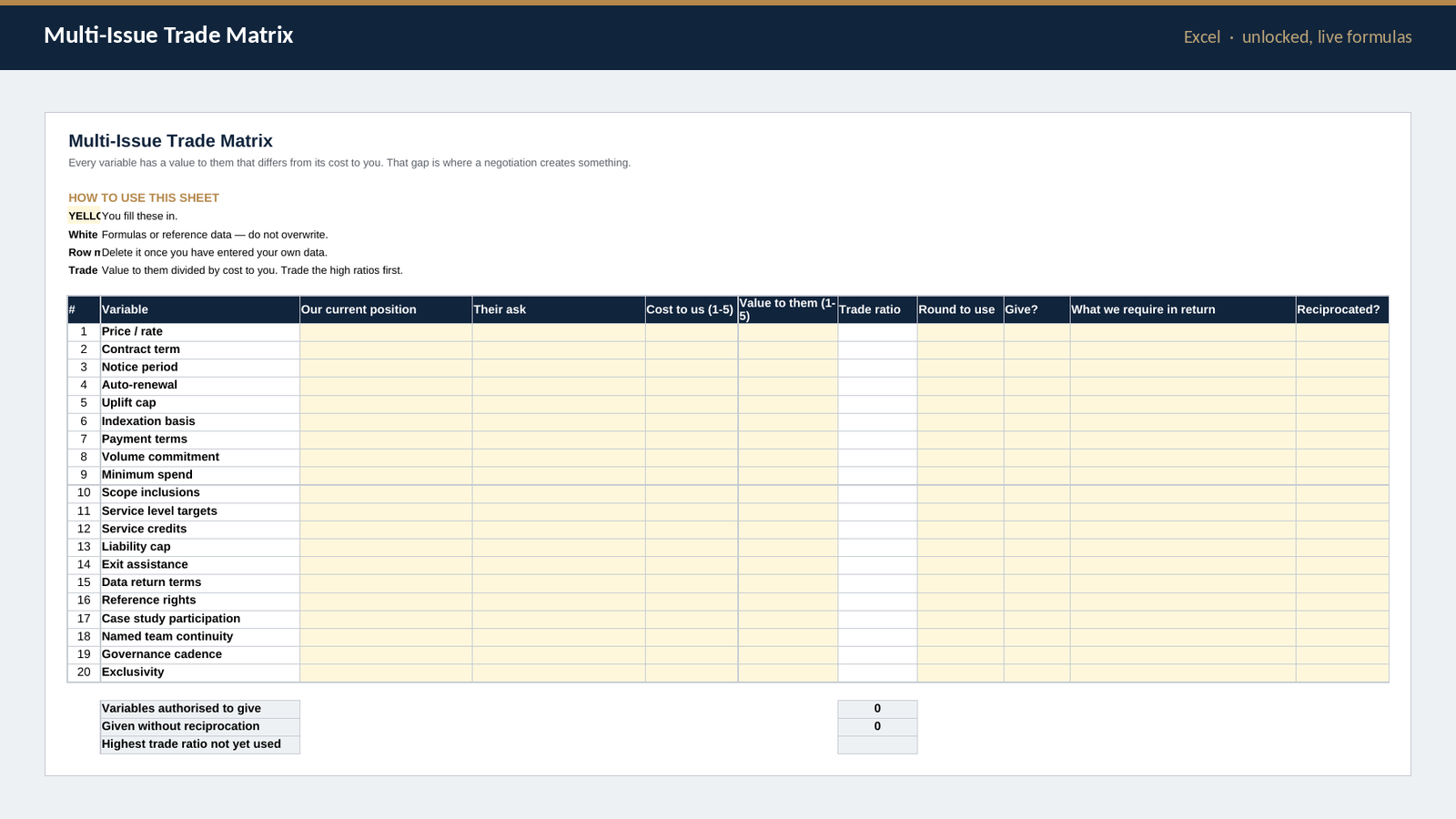
The multi-issue trade matrix plans what you concede, in what order, and what you receive for each concession — which is the difference between a negotiation and a sequence of unilateral movements.

The playbook covers preparation, sequencing and the case that most material avoids: negotiating with a supplier who has more power than you. The debrief template is used within 48 hours and is how a team actually improves.
Who it is for: experienced buyers and category managers who already negotiate regularly, procurement leads coaching a team, and anyone preparing for a renewal where the supplier holds the stronger position.

What it is not: it is not an introduction to negotiation and it does not teach behavioural technique, rapport or reading the room. Those are covered well elsewhere and are not what decides an indirect negotiation. It also contains no price benchmarks: the cost breakdown tool shows you how to build a should-cost view from what you can observe, which is more durable than any published index.

This Best Practice includes
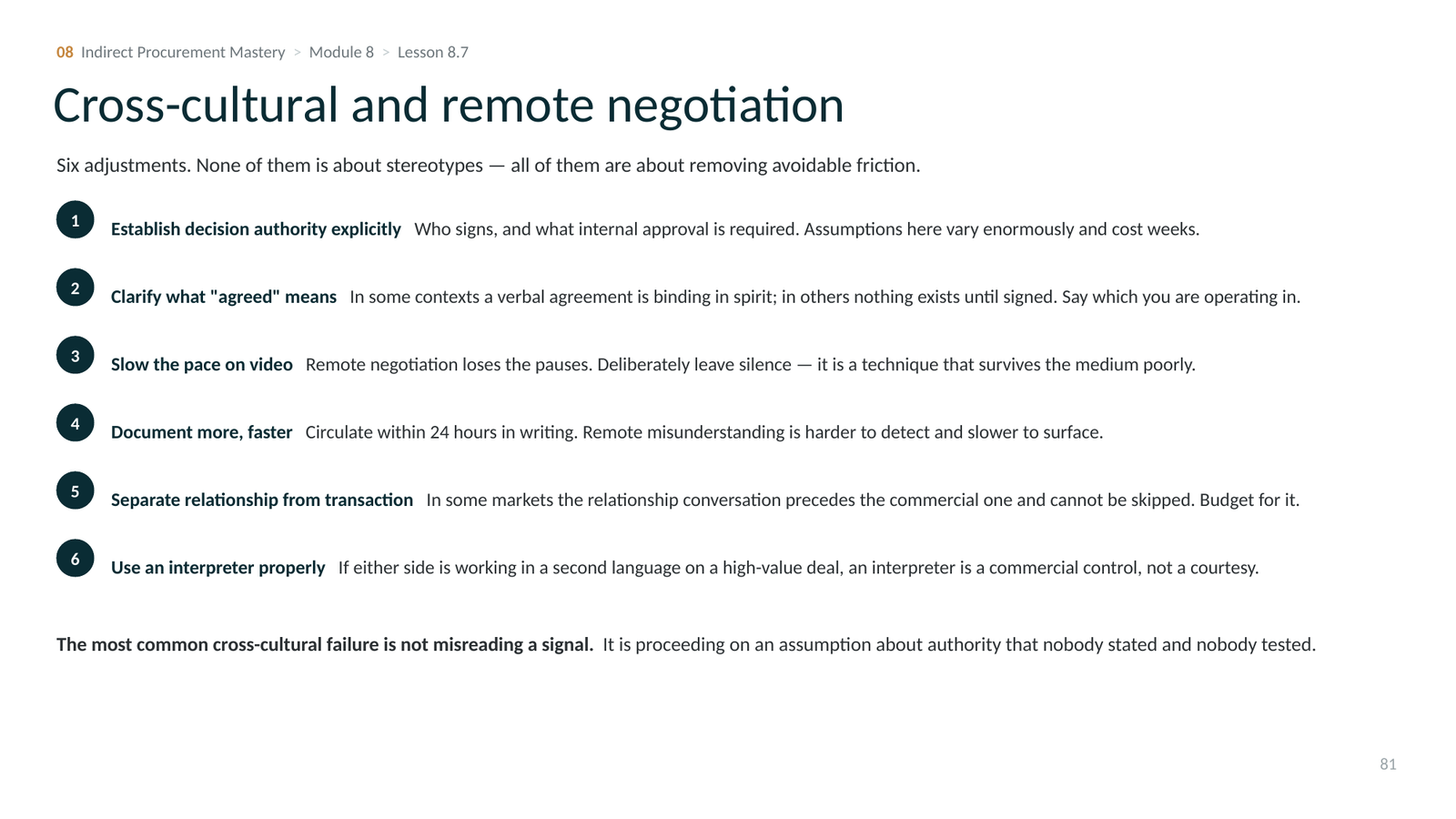
1 PowerPoint guide (11 slides), 5 Excel commercial models, 2 Word playbooks. Unlocked, live formulas.

Acquire business license for $49.00

Add to cart

Add to bookmarks

Discuss

Further information

• Assess your leverage honestly before planning anything.
• Decompose a price into its cost stack and negotiate on that.
• Choose a pricing mechanism that fits the category rather than the habit.
• Plan concessions as trades, and debrief within 48 hours.

• You negotiate contracts of material value and want a structured commercial approach.
• You are stuck in discount conversations and want to move to cost.
• You want to build negotiation capability across a team consistently.

• You want behavioural negotiation training or role-play material; this is commercial modelling.
• Your negotiations are all low-value transactional buying.
• You need supplier cost data; the models structure your own analysis, they do not supply data.


0.0 / 5 (0 votes)

please wait...